
Karl Marlantes
Author of Matterhorn
About the Author
Karl Marlantes grew up in Seaside, Oregon. He was a National Merit Scholar, attended Yale University, and was a Rhodes Scholar at Oxford. He served as a lieutenant in the United States Marine Corps during the Vietnam War. He received the Navy Cross, two Navy Commendation Medals for valor, two show more Purple Hearts and ten Air Medals. His first book, Matterhorn: A Novel of the Vietnam War, was written in 1977, but wasn't published until 2010. His other work, What It Is Like to Go to War, was published in 2011. (Bowker Author Biography) show less
Works by Karl Marlantes
Associated Works
MHQ: The Quarterly Journal of Military History — Autumn 2011 (2011) — Author "What It Takes to Be a Hero" — 3 copies
Tagged
Common Knowledge
- Legal name
- Marlantes, Karl
- Birthdate
- 1944-12-24
- Gender
- male
- Education
- Yale University
University of Oxford - Occupations
- consultant
- Organizations
- US Marine Corps
- Awards and honors
- Navy Cross
Bronze Star
Navy Commendation Medal (2)
Purple Heart (2)
Air Medal (10) - Short biography
- Karl Marlantes, a cum laude graduate of Yale University and Rhodes Scholar at Oxford University, was a marine in Vietnam, where he was awarded the Navy Cross, the Bronze Star, two Navy Commendation Medals for valor, two Purple Hearts, and ten Air Medals. He has lived and traveled all over the world and now writes full time. He and his wife, Anne, have five children and live on a small lake in Washington.
- Nationality
- USA
- Birthplace
- Astoria, Oregon, USA
- Places of residence
- Woodinville, Washington, USA
Seaside, Oregon, USA - Associated Place (for map)
- Oregon, USA
Members
Reviews

Karl Marlantes is a highly decorated Marine, graduate of Yale, and was a Rhodes Scholar at Oxford. He first tried publishing his novel about the Vietnam War in 1977. For the next thirty years he rewrote, resubmitted, and waited for the public to be ready for the type of story he wanted to tell. Based upon his experiences as a white, college-educated, volunteer Marine, Matterhorn addresses issues far beyond the war itself: the Black Power movement as it swept through the military, the show more ambitions of young officers and the hubris of old ones, and the nature of evil itself.
He thought of the jungle, already regrowing around him to cover the scars they had created. He thought of the tiger, killing to eat. Was that evil? And ants? They killed. No, the jungle wasn't evil. It was indifferent. So, too, was the world. Evil, then, must be the negation of something man had added to the world. Ultimately, it was caring about something that made the world liable to evil. Caring. And then the caring gets torn asunder. Everybody dies, but not everybody cares.
It occurred to Mellas that he could create the possibility of good or evil through caring. He could nullify the indifferent world. But in so doing he opened himself up to the pain of watching it get blown away. His killing that day would not have been evil if the dead soldiers hadn't been loved by mothers, sisters, friends, wives. Mellas understood that in destroying the fabric that linked those people, he had participated in evil, but this evil had hurt him as well. He also understood that his participation in evil, was a result of being human. Being human was the best he could do. Without man there would be no evil. But there was also no good, nothing moral built over the world of fact. Humans were responsible for it all. He laughed at the cosmic joke, but he felt heartsick.
In addition, Matterhorn is a retelling of the myth of Parzival and his epic spiritual quest for the Holy Grail. From the opening scenes, the myth is recreated as a reflection of young Lieutenant Mellas's passage to male adulthood. This literary analogy deepened my understanding of the story and explained a few unusual plot elements. I highly recommend a second look at Matterhorn through this lens, if you missed it the first time, as I did. Particularly helpful for me in making the connections is an article called "Wounded Masculinity: Parsifal and the Fisher King Wound" by Richard A. Sanderson, available online at http://howellgroup.org/parsifal.html. show less
He thought of the jungle, already regrowing around him to cover the scars they had created. He thought of the tiger, killing to eat. Was that evil? And ants? They killed. No, the jungle wasn't evil. It was indifferent. So, too, was the world. Evil, then, must be the negation of something man had added to the world. Ultimately, it was caring about something that made the world liable to evil. Caring. And then the caring gets torn asunder. Everybody dies, but not everybody cares.
It occurred to Mellas that he could create the possibility of good or evil through caring. He could nullify the indifferent world. But in so doing he opened himself up to the pain of watching it get blown away. His killing that day would not have been evil if the dead soldiers hadn't been loved by mothers, sisters, friends, wives. Mellas understood that in destroying the fabric that linked those people, he had participated in evil, but this evil had hurt him as well. He also understood that his participation in evil, was a result of being human. Being human was the best he could do. Without man there would be no evil. But there was also no good, nothing moral built over the world of fact. Humans were responsible for it all. He laughed at the cosmic joke, but he felt heartsick.
In addition, Matterhorn is a retelling of the myth of Parzival and his epic spiritual quest for the Holy Grail. From the opening scenes, the myth is recreated as a reflection of young Lieutenant Mellas's passage to male adulthood. This literary analogy deepened my understanding of the story and explained a few unusual plot elements. I highly recommend a second look at Matterhorn through this lens, if you missed it the first time, as I did. Particularly helpful for me in making the connections is an article called "Wounded Masculinity: Parsifal and the Fisher King Wound" by Richard A. Sanderson, available online at http://howellgroup.org/parsifal.html. show less
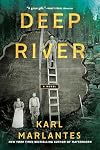
The Publisher Says: Karl Marlantes's debut novel Matterhorn has been hailed as a modern classic of war literature. In his new novel, Deep River, Marlantes turns to another mode of storytelling—the family epic—to craft a stunningly expansive narrative of human suffering, courage, and reinvention.
In the early 1900s, as the oppression of Russia's imperial rule takes its toll on Finland, the three Koski siblings—Ilmari, Matti, and the politicized young Aino—are forced to flee to the show more United States. Not far from the majestic Columbia River, the siblings settle among other Finns in a logging community in southern Washington, where the first harvesting of the colossal old-growth forests begets rapid development, and radical labor movements begin to catch fire.
The brothers face the excitement and danger of pioneering this frontier wilderness—climbing and felling trees one-hundred meters high—while Aino, foremost of the book's many strong, independent women, devotes herself to organizing the industry's first unions. As the Koski siblings strive to rebuild lives and families in an America in flux, they also try to hold fast to the traditions of a home they left behind.
Layered with fascinating historical detail, this is a novel that breathes deeply of the sun-dappled forest and bears witness to the stump-ridden fields the loggers, and the first waves of modernity, leave behind. At its heart, Deep River is an ambitious and timely exploration of the place of the individual, and of the immigrant, in an America still in the process of defining its own identity.
I RECEIVED A DRC FROM THE PUBLISHER VIA EDELWEISS+. THANK YOU.
My Review: Remember when I warbled my fool lungs out about how awful, painful, and enraging Matterhorn was, and then gave it my annual 6-stars-of-five nod? And told y'all to move quick and get the book? No?! What do you mean, "no"?! You don't commit all my reviews to memory?! Ingrates....
The wattage of warbling is lower this time, but then again I'm ten years older. Everything is lower. (I hate you, Gravity.) What is not lower is Karl Marlantes' level of writing:
It's to your taste, or it's not; but it is not describable as bad. I've heard the "purple prose" calumny tossed lightly about in reference to Marlantes's work; I am not on board with this. What might seem purple to some readers is, in my way of looking at it, period-appropriate formality. And the lush sensory world is a feature, not a bug, to me...in historical fiction it adds a layer of depth to the world I spend time and effort creating in my reading eye.
What is, I fear, describable as "bad" is Author Marlantes's gender politics. Women, I am here to tell you, do not think about their breasts unless a man is ogling them, or they've chosen that man's attention to attract. (I listen when women talk instead of staring at their boobs. Try it sometime! Fascinating what women know.) I fear that the author's cishet maleness rears its head here. Fly over it (my solution, since I care nothing about boobs) or pass on by. Similarly I Rose Above a character's christian beliefs. Mostly because she's an actual, not a religious, christian. Icky, but endurable since she's not all gawd and church and suchlike bullshit.
So all that dealt with, let me say that I think the lushness and enfolding sensual reality of the work is worth the things I don't find to my personal taste. I won't say I'll give it all the stars, I've mentioned places that take away from that level of enjoyment, but the story of the Koskis leaving oppressed-by-colonialism Finland to become the colonial despoilers of the Pacific Northwest's glorious rainforests struck me as very interesting and quite moving.
Their fates are, as one can intuit from early on, set in the Old Country. Who you are, at your core, is set early in life. All the Koskis are Finns to the bone. What they do, as immigrants ever have, is try on the identity of "American" over their Finnishness. This is a process that I've always found deeply, profoundly moving. To leave the place that formed you because it has no room for you is painful. But the fact is that when Home doesn't want you, it ain't home anymore.
There is no part of this read that I was not able to enjoy. Realizing I am not a woman, I offer the caution above; and I am old, so many anti-colonial younger persons aren't going to resonate as I did to the theme of discovering the identity "American" and trying it on for size. A few of the queer young folk (especially my trans friends) might find the enforced emigration from Home familiar. show less
In the early 1900s, as the oppression of Russia's imperial rule takes its toll on Finland, the three Koski siblings—Ilmari, Matti, and the politicized young Aino—are forced to flee to the show more United States. Not far from the majestic Columbia River, the siblings settle among other Finns in a logging community in southern Washington, where the first harvesting of the colossal old-growth forests begets rapid development, and radical labor movements begin to catch fire.
The brothers face the excitement and danger of pioneering this frontier wilderness—climbing and felling trees one-hundred meters high—while Aino, foremost of the book's many strong, independent women, devotes herself to organizing the industry's first unions. As the Koski siblings strive to rebuild lives and families in an America in flux, they also try to hold fast to the traditions of a home they left behind.
Layered with fascinating historical detail, this is a novel that breathes deeply of the sun-dappled forest and bears witness to the stump-ridden fields the loggers, and the first waves of modernity, leave behind. At its heart, Deep River is an ambitious and timely exploration of the place of the individual, and of the immigrant, in an America still in the process of defining its own identity.
I RECEIVED A DRC FROM THE PUBLISHER VIA EDELWEISS+. THANK YOU.
My Review: Remember when I warbled my fool lungs out about how awful, painful, and enraging Matterhorn was, and then gave it my annual 6-stars-of-five nod? And told y'all to move quick and get the book? No?! What do you mean, "no"?! You don't commit all my reviews to memory?! Ingrates....
The wattage of warbling is lower this time, but then again I'm ten years older. Everything is lower. (I hate you, Gravity.) What is not lower is Karl Marlantes' level of writing:
Then, like a seaborne Sisyphus, the ship clawed to the top of the next towering wave, as the sailors fought gravity and slippery decks to maintain their balance and their lives.
–and–
With those you love, you accept that there are only two ways you will not get hurt when you lose them. You stop loving them or you die first.
It's to your taste, or it's not; but it is not describable as bad. I've heard the "purple prose" calumny tossed lightly about in reference to Marlantes's work; I am not on board with this. What might seem purple to some readers is, in my way of looking at it, period-appropriate formality. And the lush sensory world is a feature, not a bug, to me...in historical fiction it adds a layer of depth to the world I spend time and effort creating in my reading eye.
What is, I fear, describable as "bad" is Author Marlantes's gender politics. Women, I am here to tell you, do not think about their breasts unless a man is ogling them, or they've chosen that man's attention to attract. (I listen when women talk instead of staring at their boobs. Try it sometime! Fascinating what women know.) I fear that the author's cishet maleness rears its head here. Fly over it (my solution, since I care nothing about boobs) or pass on by. Similarly I Rose Above a character's christian beliefs. Mostly because she's an actual, not a religious, christian. Icky, but endurable since she's not all gawd and church and suchlike bullshit.
So all that dealt with, let me say that I think the lushness and enfolding sensual reality of the work is worth the things I don't find to my personal taste. I won't say I'll give it all the stars, I've mentioned places that take away from that level of enjoyment, but the story of the Koskis leaving oppressed-by-colonialism Finland to become the colonial despoilers of the Pacific Northwest's glorious rainforests struck me as very interesting and quite moving.
Their fates are, as one can intuit from early on, set in the Old Country. Who you are, at your core, is set early in life. All the Koskis are Finns to the bone. What they do, as immigrants ever have, is try on the identity of "American" over their Finnishness. This is a process that I've always found deeply, profoundly moving. To leave the place that formed you because it has no room for you is painful. But the fact is that when Home doesn't want you, it ain't home anymore.
There is no part of this read that I was not able to enjoy. Realizing I am not a woman, I offer the caution above; and I am old, so many anti-colonial younger persons aren't going to resonate as I did to the theme of discovering the identity "American" and trying it on for size. A few of the queer young folk (especially my trans friends) might find the enforced emigration from Home familiar. show less
I have fired a gun in sport but never in anger or in defence of my country. I have never heard the cries of those dying far from their homes and calling for their mothers or their wives or to look upon their children for one last time. I have no idea - thank heavens what napalm looks like, smells like or tastes like.
I do, however, recognize authenticity when I see it and this has this quality in spades. Marlantes has obviously seen and experienced things that would break many men and it has show more transformed him as a man whilst not defeating entirely his humanity.
This is excellent. This is unsparing. This is recommended. show less
I do, however, recognize authenticity when I see it and this has this quality in spades. Marlantes has obviously seen and experienced things that would break many men and it has show more transformed him as a man whilst not defeating entirely his humanity.
This is excellent. This is unsparing. This is recommended. show less
I picked this partially fictionalized Vietnam War memoir up off of the recommendation of James Fallows, one of my favorite journalists. It was absolutely riveting, one of the best books I've read this year and one of the best war novels I've ever read, up there with All Quiet On the Western Front and other books of that caliber. It's the story of Lieutenant Mellas, a young Ivy League graduate fresh on the ground and his participation in patrol and combat operations in the northern border show more areas that strike me as unbelievably nightmarish, but were apparently par for the course. I feel like war stories (whether told through books, movies, or video games) are almost paradoxically becoming more common as war becomes less real to the majority of the country. I might be wrong, but I couldn't help feeling a little lost after I finished this book - it certainly feels real (and considering it opens with a Marine having a leech crawl up his urethra, maybe a little too real), and many other reviewers who actually have military experience have nothing but praise for it, but all the book's heartbreaking and unflinching looks at the boring, terrifying, and unforgettable nature of war made me feel like a spectator, an outsider having the world told to me instead of experiencing it myself. Obviously it's as impossible to convey the true nature of combat as it is to tell what it's like to land on the moon, or to be a king, but something about the way the people in the book lived and died lifted it far beyond what I had previously thought was the baseline level of a simple war story. Maybe it was due to Marlantes' direct experience in the war; the book has taken him 30 years to write and reportedly had to be cut down from over 1600 pages to a shade over 600, of which none feel wasted. Fallows himself has a semi-personal connection to the story of the war - he once wrote a recollection of his own personal experiences as a young Ivy League graduate dodging the Vietnam draft called What Did You Do In the Class War, Daddy? It's a great piece, and if you read it right beside Matterhorn, the comparison between one man's feelings of never serving with another man's feelings of having served is incredibly moving. Don't miss this book. show less
Lists
Awards


You May Also Like


Associated Authors
Statistics
- Works
- 5
- Also by
- 2
- Members
- 4,410
- Popularity
- #5,678
- Rating
- 4.2
- Reviews
- 192
- ISBNs
- 107
- Languages
- 7
- Favorited
- 5

