
Sebastian Junger
Author of The Perfect Storm: A True Story of Men against the Sea
About the Author
Sebastian Junger was born in 1962 in Belmont, Massachusetts. He received his BA degree from Wesleyan University in Cultural Anthropology in 1984. He is a freelance journalist who writes for numerous magazines, including Outside, American Heritage, Men's Journal, and the New York Times Magazine. As show more an underemployed journalist who assigned himself stories and worked as a stringer for the Associated Press in Bosnia, Junger was fascinated by the dangers that people face regularly while doing ordinary jobs. Junger was working as a climber for a tree removal service when the storm occurred that provided the inspiration for his first book. The Perfect Storm (1997) is a carefully researched account of the wreck of the swordfishing boat Andrea Gail, The wreck took place during what one meteorologist called a "perfect storm"--a storm with the worst possible conditions. In order to relate the story of a disaster that left no survivors and had no eyewitnesses, Junger used a combination of sound research, technical detail, and personal insight to reconstruct the final hours. After the publication of this book he was nicknamed the new Hemingway. In 2000, this book was made into a film starring George Clooney and Mark Wahlberg. He wrote several books such as War which is about his time spent with a U.S. Army platoon in Afghanistan. At the Sundance Film Festival in 2010 his documentary Restrepo won Grand Jury Prize for a domestic documentary. Junger's book, Tribe, made the New York Times Bestseller list in 2016. (Bowker Author Biography) show less
Works by Sebastian Junger
In My Time of Dying: How I Came Face to Face with the Idea of an Afterlife (2024) 282 copies, 12 reviews
Associated Works
The Book That Changed My Life: 71 Remarkable Writers Celebrate the Books That Matter Most to Them (2006) — Contributor — 411 copies, 18 reviews
Why We Write: 20 Acclaimed Authors on How and Why They Do What They Do (2013) — Contributor — 211 copies, 10 reviews
Fire Fighters: Stories of Survival from the Front Lines of Firefighting (2002) — Contributor — 16 copies
Reader's Digest Today's Best Nonfiction 45 1997: The Perfect Storm / Streisand: A Biography / Working on a Miracle / Captured by History (1997) — Author — 4 copies
RDCBLP v094 The Perfect Storm: A True Story of Men Against the Sea | The Cat Who Tailed a Thief (1998) — Author — 3 copies
Tagged
Common Knowledge
- Canonical name
- Junger, Sebastian
- Birthdate
- 1962-01-17
- Gender
- male
- Education
- Concord Academy (1980)
Wesleyan University (BA | Cultural Anthropology) - Occupations
- journalist
author - Organizations
- Vanity Fair
- Awards and honors
- National Magazine Award
SAIS Novartis Prize for journalism - Relationships
- Deghati, Reza (colleague)
- Short biography
- Sebastian Junger is a freelance journalist and award-winning author with expertise in covering dangerous work around the globe. He has reported from such places as Liberia, Sierra Leone, Kosovo, Kashmir, Cyprus, the American West and, most recently, Afghanistan.
- Nationality
- USA
- Birthplace
- Belmont, Massachusetts, USA
- Places of residence
- Belmont, Massachusetts, USA
- Associated Place (for map)
- Belmont, Massachusetts, USA
Members
Reviews

It doesn't take Sebastian Junger's quotations from Moby-Dick and the Bible, used to open some of his chapters in The Perfect Storm, to make you realise that the sea and the men who navigate it has long been fertile ground for literary endeavours. The true story recorded in Junger's breakout piece of narrative journalism would be innately fascinating told by any hand: a crew of six hardened fishermen aboard a small commercial fishing vessel find themselves at the mercy of a once-in-a-century show more "meteorological hell" (pg. 104) in the open Atlantic. A storm – the "perfect storm", in fact (pg. 150) – a confluence of various extreme weather fronts over our doomed everymen, including a hurricane, that ultimately sinks the Andrea Gail and its occupants without trace.
That the ship and its men are lost is not a spoiler, for want of a better term, for how could it be otherwise? Junger goes into great detail about the circumstances surrounding the loss of the Andrea Gail and its souls: how such a 'perfect' storm brewed; about so-called 'rogue' waves and how even top-of-the-line ships can have their backs broken by them; about how oil tankers and even aircraft carriers would be at risk faced with a single big wave, let alone a small fishing boat facing countless numbers of them, from all directions, relentlessly over the course of many hours.
A mere recitation of some of the facts Junger unpacks is mind-boggling: "the combined nuclear arsenals of the United States and the former Soviet Union don't contain enough energy to keep a hurricane going for one day" (pg. 102); on one large ship, the storm peeled shipping containers "open like sardine cans, forty feet above the surface" (pg. 114); during a rescue elsewhere in the storm, the waves took the man in the water thirty feet higher than the rescuers in a hovering helicopter (pg. 197). The waves in the Perfect Storm topped 100 feet, among the highest waves ever recorded (pg. 119). There may well have been higher ones throughout history, but they are so unpredictable and so devastating that those who likely encountered them did not live to tell it. I read part of Junger's book at work, in the break-room of my office building, and was stunned to realise, looking down, that the waves which struck the men of the Andrea Gail would be almost twice as high as from where I stood. I'm not of a mind to quit my desk job and join the fishing fleet, let me tell you.
I took my time reading the book, because even the contemplation of any single part of this scenario is frightening. To know that these people – real people, to those lives Junger devotes many pages – actually faced that, at their end, in the dark, is unimaginable. Junger, nevertheless, undertakes a number of strategies to bridge the imagination gap. His account of the final moments of the Andrea Gail, he freely admits, can only be conjecture, but he bases his conjecture on research and on the experiences of those who survived similar events, including fishermen who counted the men of the Andrea Gail among their friends. He supplements this with in-depth yet readable information on sword-fishing, search-and-rescue, and meteorology. By the time the reader finishes the book, Junger has given them so much relevant information that even the most complacent reader no longer wonders how mere water and wind could sink a modern sea-going vessel. In fact, the reader likely goes to the opposite extreme, and wonders how or why any man would ever choose to lose sight of shore. When we first read, on page 70, of how "more people are killed on fishing boats, per capita, than in any other job in the United States", we think of possible negligence and safety measures and technological advances. By the end, we look back on that quote and reach, like the fishermen often do, for superstition, fate, and a primal respect for the naked forces which brawl across the world.
Junger supplements his account of the men of the Andrea Gail with other "nightmarish, white-knuckle business" which took place during the Perfect Storm (pg. 182), not least the afore-mentioned helicopter rescue. Knowing that other men died during the storm helps provide some perspective: this is not a romance of the sea, a tragic tale that affected the Andrea Gail especially, the ship a unique icon marked out for some moral lesson about the hubris of man. Junger strips away pretensions, sentimentality and literary artifice; he soberly constructs an environment where the smallness of man and the arbitrariness of the ocean – a place where 70-foot waves roam "like surly giants" (pg. 138) – are the only possible conclusions. When the Andrea Gail goes down, there is no music playing, no nobility on display; only desperation and futile human struggle. This is one great advantage the book has over its movie adaptation of the same name. Not only does the movie have the music playing, but it feels obliged to add some counterfeit drama to the story: George Clooney's character is portrayed as having deliberately headed into the storm when he could have escaped it. Hollywood abhors a narrative vacuum; if those men had to die on screen there had to be a token moral lesson behind it, and the token they reached for was hubris, and perhaps greed.
Junger, in contrast – and to his great credit – has no qualms about facing the reality of the true story. The circumstances he has laid out show us clearly that the Andrea Gail had no time or ability to escape; not only were storms an occupational hazard for seasoned fishermen, but the boat steps into the Perfect Storm "the way one might step into a room" (pg. 105). Such turns of phrase are not infrequent in the book, and Junger's deployment of them does much to keep the reader anchored during the wild unfathomability of the events described. Nowhere is the depth and reality of the tragedy more apparent than in the sequence of pages where, with the Andrea Gail going down with all hands, Junger dissects, at torturous length, the sensations and the medical immediacy of drowning (pp140-6). Strange as it might sound, I mean the word 'torturous' positively; Junger's unavoidable forensic reality mimics the helplessness and the banal tragedy of these men in that moment. It's so potent it's unbearable.
And yet, strangely, it's not voyeuristic; Junger recognises a wound is healed by being touched with care, not by being ignored. The deaths are appalling – and they were real men – but it would be disrespectful if the story was told using euphemisms and polite evasions. This is great, mature writing, and throughout The Perfect Storm Junger achieves a balancing act of respect towards the dead, respect towards the sea, and respect towards what the reader can take in (emotionally and meteorologically). I mentioned at the start of my review that stories of the sea have long been fertile ground for our imagination, and the story of The Perfect Storm would have been arresting even if told by a second-rate writer. That Junger is able to add writing of real calibre to the piece makes it truly special. show less
That the ship and its men are lost is not a spoiler, for want of a better term, for how could it be otherwise? Junger goes into great detail about the circumstances surrounding the loss of the Andrea Gail and its souls: how such a 'perfect' storm brewed; about so-called 'rogue' waves and how even top-of-the-line ships can have their backs broken by them; about how oil tankers and even aircraft carriers would be at risk faced with a single big wave, let alone a small fishing boat facing countless numbers of them, from all directions, relentlessly over the course of many hours.
A mere recitation of some of the facts Junger unpacks is mind-boggling: "the combined nuclear arsenals of the United States and the former Soviet Union don't contain enough energy to keep a hurricane going for one day" (pg. 102); on one large ship, the storm peeled shipping containers "open like sardine cans, forty feet above the surface" (pg. 114); during a rescue elsewhere in the storm, the waves took the man in the water thirty feet higher than the rescuers in a hovering helicopter (pg. 197). The waves in the Perfect Storm topped 100 feet, among the highest waves ever recorded (pg. 119). There may well have been higher ones throughout history, but they are so unpredictable and so devastating that those who likely encountered them did not live to tell it. I read part of Junger's book at work, in the break-room of my office building, and was stunned to realise, looking down, that the waves which struck the men of the Andrea Gail would be almost twice as high as from where I stood. I'm not of a mind to quit my desk job and join the fishing fleet, let me tell you.
I took my time reading the book, because even the contemplation of any single part of this scenario is frightening. To know that these people – real people, to those lives Junger devotes many pages – actually faced that, at their end, in the dark, is unimaginable. Junger, nevertheless, undertakes a number of strategies to bridge the imagination gap. His account of the final moments of the Andrea Gail, he freely admits, can only be conjecture, but he bases his conjecture on research and on the experiences of those who survived similar events, including fishermen who counted the men of the Andrea Gail among their friends. He supplements this with in-depth yet readable information on sword-fishing, search-and-rescue, and meteorology. By the time the reader finishes the book, Junger has given them so much relevant information that even the most complacent reader no longer wonders how mere water and wind could sink a modern sea-going vessel. In fact, the reader likely goes to the opposite extreme, and wonders how or why any man would ever choose to lose sight of shore. When we first read, on page 70, of how "more people are killed on fishing boats, per capita, than in any other job in the United States", we think of possible negligence and safety measures and technological advances. By the end, we look back on that quote and reach, like the fishermen often do, for superstition, fate, and a primal respect for the naked forces which brawl across the world.
Junger supplements his account of the men of the Andrea Gail with other "nightmarish, white-knuckle business" which took place during the Perfect Storm (pg. 182), not least the afore-mentioned helicopter rescue. Knowing that other men died during the storm helps provide some perspective: this is not a romance of the sea, a tragic tale that affected the Andrea Gail especially, the ship a unique icon marked out for some moral lesson about the hubris of man. Junger strips away pretensions, sentimentality and literary artifice; he soberly constructs an environment where the smallness of man and the arbitrariness of the ocean – a place where 70-foot waves roam "like surly giants" (pg. 138) – are the only possible conclusions. When the Andrea Gail goes down, there is no music playing, no nobility on display; only desperation and futile human struggle. This is one great advantage the book has over its movie adaptation of the same name. Not only does the movie have the music playing, but it feels obliged to add some counterfeit drama to the story: George Clooney's character is portrayed as having deliberately headed into the storm when he could have escaped it. Hollywood abhors a narrative vacuum; if those men had to die on screen there had to be a token moral lesson behind it, and the token they reached for was hubris, and perhaps greed.
Junger, in contrast – and to his great credit – has no qualms about facing the reality of the true story. The circumstances he has laid out show us clearly that the Andrea Gail had no time or ability to escape; not only were storms an occupational hazard for seasoned fishermen, but the boat steps into the Perfect Storm "the way one might step into a room" (pg. 105). Such turns of phrase are not infrequent in the book, and Junger's deployment of them does much to keep the reader anchored during the wild unfathomability of the events described. Nowhere is the depth and reality of the tragedy more apparent than in the sequence of pages where, with the Andrea Gail going down with all hands, Junger dissects, at torturous length, the sensations and the medical immediacy of drowning (pp140-6). Strange as it might sound, I mean the word 'torturous' positively; Junger's unavoidable forensic reality mimics the helplessness and the banal tragedy of these men in that moment. It's so potent it's unbearable.
And yet, strangely, it's not voyeuristic; Junger recognises a wound is healed by being touched with care, not by being ignored. The deaths are appalling – and they were real men – but it would be disrespectful if the story was told using euphemisms and polite evasions. This is great, mature writing, and throughout The Perfect Storm Junger achieves a balancing act of respect towards the dead, respect towards the sea, and respect towards what the reader can take in (emotionally and meteorologically). I mentioned at the start of my review that stories of the sea have long been fertile ground for our imagination, and the story of The Perfect Storm would have been arresting even if told by a second-rate writer. That Junger is able to add writing of real calibre to the piece makes it truly special. show less
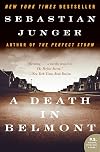
Junger wrote one of my favorite books, The Perfect Storm. (Made into a mediocre film, but that shouldn't be held against it.) I can't rate this book quite as high--that book had some absolutely awesome, spine-tingling moments I'll never forget, and this book doesn't match it. I also wouldn't agree with the blurb inside that called it reminiscent of Capote's In Cold Blood, which I read only a few days ago. It might similarly be about a gruesome murder, but their virtues are quite opposite. show more Capote claimed to have invented a new from, the "non-fiction novel." As a novel I'd rate it highly--the writing is first-rate and worthy of being called literature. But as non-fiction I consider it unreliable for a number of reasons. With Junger's A Death in Belmont, I'm not particularly impressed with the prose--indeed on that dimension it falls short of The Perfect Storm. But as non-fiction, as a work of journalism, it's first-rate and convincing in ways I feel Capote's classic book is not.
The origins of the book lie in a piece of Junger's family lore summed up in a photograph in the book--of Junger as an infant held by his mother, and caught also in the photograph Albert DeSalvo, the Boston Stranger. While DeSalvo was working for the Jungers in the Spring of 1963, Bessie Goldberg was raped and strangled to death little more than a mile from their home. A black man, Roy Smith, was convicted of her murder. Junger's mother has always believed Smith was innocent and Goldberg another victim of the Boston Stranger. In telling the story of these two men and the crimes of which they were convicted, Junger examines the American justice system and its flaws: "Between 1973 and 200 more than one hundred people have been released from death row--over 3 percent of the current death-row population--because they were later proved to be innocent." He later adds that of those found to be innocent "one out of five confessed to the crime." Those are sobering statistics. Moreover, half-way in the book given the evidence Junger had related, I thought Smith was probably guilty--although I wouldn't have voted for conviction had I been on the jury--by the end of the book Junger convinced me he was probably innocent.
Note the qualification "probably" and one thing Junger wrestles with throughout is the question not simply of guilt and innocence but doubt--particularly that elusive definition of "reasonable doubt" and how society comes to terms with it. For the "ability of citizens to scrutinize the theories insisted on by their government is their only protection against abuse of power and, ultimately, against tyranny." I do like how Junger used the cases involving DeSalvo and Smith to examine that issue. If I have any complaint, it's that I wish Junger had included his sources--there are no notes of them. At one point for instance, he stated that the polygraph has "error rates of 30 percent." I have no problem believing that--polygraphs after all don't really measure truth--only a physiological response. But I'd have liked to have known on what basis that and other claims were made. Definitely an engrossing book that asked questions every citizen that has to sit in a jury box should think about. show less
The origins of the book lie in a piece of Junger's family lore summed up in a photograph in the book--of Junger as an infant held by his mother, and caught also in the photograph Albert DeSalvo, the Boston Stranger. While DeSalvo was working for the Jungers in the Spring of 1963, Bessie Goldberg was raped and strangled to death little more than a mile from their home. A black man, Roy Smith, was convicted of her murder. Junger's mother has always believed Smith was innocent and Goldberg another victim of the Boston Stranger. In telling the story of these two men and the crimes of which they were convicted, Junger examines the American justice system and its flaws: "Between 1973 and 200 more than one hundred people have been released from death row--over 3 percent of the current death-row population--because they were later proved to be innocent." He later adds that of those found to be innocent "one out of five confessed to the crime." Those are sobering statistics. Moreover, half-way in the book given the evidence Junger had related, I thought Smith was probably guilty--although I wouldn't have voted for conviction had I been on the jury--by the end of the book Junger convinced me he was probably innocent.
Note the qualification "probably" and one thing Junger wrestles with throughout is the question not simply of guilt and innocence but doubt--particularly that elusive definition of "reasonable doubt" and how society comes to terms with it. For the "ability of citizens to scrutinize the theories insisted on by their government is their only protection against abuse of power and, ultimately, against tyranny." I do like how Junger used the cases involving DeSalvo and Smith to examine that issue. If I have any complaint, it's that I wish Junger had included his sources--there are no notes of them. At one point for instance, he stated that the polygraph has "error rates of 30 percent." I have no problem believing that--polygraphs after all don't really measure truth--only a physiological response. But I'd have liked to have known on what basis that and other claims were made. Definitely an engrossing book that asked questions every citizen that has to sit in a jury box should think about. show less
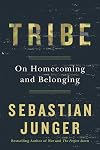
This book dropped my jaw again and again, and not in a good way. The author does a very superficial job of interrogating his beliefs and practices lots of confirmation bias while at the same time refuting his own opinions and theories in the next chapter because he apparently can't be bothered to keep track of things. What really, really angers me about this book is that there are interesting moments, where the author shares facts and insight from field professionals. Then he gets distracted show more by a pet theory, bulks it up with mental leaps, and sputters off into the abyss.
The author adores the noble savage myths, lumps a diverse group of people with diverse beliefs and practices under the name "American Indians" and treats them as interchangeable for the first ~1/2 of the book, refers to them as a Stone Age society, despite what we know about their advance governments, city designing, and agricultural accomplishments, and fails to acknowledge the role of racism in his tales. Also: pet peeve. Why does he spell Lakotah with an "h?" I honest to God googled it. My first hand experience with Lakota individuals is short, but I stood in probably 8 community buildings, spoke with 100s of Lakota individuals and read dozens of signs, and not a single one included an "h" in the spelling. My google search seems to agree based on a search of Lakota Nation. I trust them more than the author.
He makes mental leaps about the differences between men and women, despite our now established recognition that assigning behaviors by gender isn't backed up by science, and much of what we consider gender divides are actually due to long trained societal norms, not differences set in stone by genetic differences. He is so deep in his white male power fantasies about the tribe that he doesn't even catch himself when he makes claims about "Stone Age" societies not having a hierarchy because all the men come together to shun the badly behaving men, not just the leader. The men. Men. Men only. Do you know why that is men only? Because in most societies ("Stone Age" or not) they are hierarchical along lines of gender. If all you see is men, then you're not seeing the vast majority of society, including women, children of any gender, and non-binary people. If you can't see the hierarchy because you only study the top strata, you're doing a shit job of researching. (Just today my mother was horrified that I tried to stop and help someone with vehicle issues, because as a woman that could get me killed or raped, whereas for men that's far less likely, and they never get talks like "never leave your drink alone" which leaves us female types potently aware of how dangerous everyday life is. That is, IMHO, 99% of the reason you don't see women helping with physical things. Because it's mostly strangers and it puts us at risk. Does the author interrogate why women help in one way and men in another? No, he's too busy buying into the gender role binary and skipping on.)
The author claims he thought referencing throughout the text would be distracting, as such, he often presents his opinions and mental math as facts. There were places where I knew he was using superficial knowledge and that a more thorough reading of the text I suspected he was building off of would unravel his theory. Hard to search out what document he was using because he failed to drop a tiny little digit down to allow fact checking against any references. He also, at least twice, spends a chapter arguing something, and then in the next chapter skims over a comment or statement that completely unravels his entire argument. Sloppy. Lazy. Confirmation bias all over the place. Just an absolute disappointment because I think the topic is interesting and he mostly did a poor job discussing the military and American Indian groups. (No comment on whether that should be the properly used term, as he decided it is thanks to that one person he spoke to, and he clearly believes groups are a monolith.)
Overall, a huge disappointment. show less
The author adores the noble savage myths, lumps a diverse group of people with diverse beliefs and practices under the name "American Indians" and treats them as interchangeable for the first ~1/2 of the book, refers to them as a Stone Age society, despite what we know about their advance governments, city designing, and agricultural accomplishments, and fails to acknowledge the role of racism in his tales. Also: pet peeve. Why does he spell Lakotah with an "h?" I honest to God googled it. My first hand experience with Lakota individuals is short, but I stood in probably 8 community buildings, spoke with 100s of Lakota individuals and read dozens of signs, and not a single one included an "h" in the spelling. My google search seems to agree based on a search of Lakota Nation. I trust them more than the author.
He makes mental leaps about the differences between men and women, despite our now established recognition that assigning behaviors by gender isn't backed up by science, and much of what we consider gender divides are actually due to long trained societal norms, not differences set in stone by genetic differences. He is so deep in his white male power fantasies about the tribe that he doesn't even catch himself when he makes claims about "Stone Age" societies not having a hierarchy because all the men come together to shun the badly behaving men, not just the leader. The men. Men. Men only. Do you know why that is men only? Because in most societies ("Stone Age" or not) they are hierarchical along lines of gender. If all you see is men, then you're not seeing the vast majority of society, including women, children of any gender, and non-binary people. If you can't see the hierarchy because you only study the top strata, you're doing a shit job of researching. (Just today my mother was horrified that I tried to stop and help someone with vehicle issues, because as a woman that could get me killed or raped, whereas for men that's far less likely, and they never get talks like "never leave your drink alone" which leaves us female types potently aware of how dangerous everyday life is. That is, IMHO, 99% of the reason you don't see women helping with physical things. Because it's mostly strangers and it puts us at risk. Does the author interrogate why women help in one way and men in another? No, he's too busy buying into the gender role binary and skipping on.)
The author claims he thought referencing throughout the text would be distracting, as such, he often presents his opinions and mental math as facts. There were places where I knew he was using superficial knowledge and that a more thorough reading of the text I suspected he was building off of would unravel his theory. Hard to search out what document he was using because he failed to drop a tiny little digit down to allow fact checking against any references. He also, at least twice, spends a chapter arguing something, and then in the next chapter skims over a comment or statement that completely unravels his entire argument. Sloppy. Lazy. Confirmation bias all over the place. Just an absolute disappointment because I think the topic is interesting and he mostly did a poor job discussing the military and American Indian groups. (No comment on whether that should be the properly used term, as he decided it is thanks to that one person he spoke to, and he clearly believes groups are a monolith.)
Overall, a huge disappointment. show less

War is as good as combat reporting gets. This is the account of 15 months with Battle Company in the Korengal Valley between 2007 and 2008,a supremely tough 10x10 km patch of mountains, and the love and courage of a few hundred men. This book is the Dispatches of the Global War on Terror, a moving and lyrical account of the terror and excitement of combat that transcends little things like politics and morality and objectivity to get at some sort of Truth.
Part of this book is about strategy show more and tactics: Leaving an isolated outpost in the unimportant and distant Korengal to protect the important and populated Pech valley; human terrain and Taliban fighters and villagers caught in between, desperate firefights to survive long enough for the Apaches and A-10s to arrive, Prophet-the American intel unit listening to enemy radios. But mostly this book is about courage; about acting under fire so that the unit will survive, even if it means you might die. About brotherhood and love, and the fact that in 20 minutes in a firefight a man can live a lifetime. In a combat platoon, friendship and who you were before doesn't matter. All that matters is your dedicated to the unit and your ability to fight.
Junger's thesis, which is an important corrective in our post-modern age of detachment, is that defense of the group is a profoundly basic and moving action. It's like a powerful drug (although he writes directly against this metaphor towards the end of the book, I think it's an important one. Drugs obliterate reality and sensation, they can be used for good or abused.) Soldiers fight for each other, their entire universe closes down to the platoon, and all the advanced technology or clever counter-insurgency theory in the world, cannot replace this primal bond. Invoke it only with great seriousness.
For media types, it's also interesting to compare this book to Restrepo, a documentary filmed and directed by Junger and Tim Hetherington, covering the exact same events. It's been a while since I've seen Restrepo, but I remember it being far more bleak and nihilistic than the book. What's true? The beautiful words, or the ugly images? Can the same people interpret the same sources differently in different mediums? show less
Part of this book is about strategy show more and tactics: Leaving an isolated outpost in the unimportant and distant Korengal to protect the important and populated Pech valley; human terrain and Taliban fighters and villagers caught in between, desperate firefights to survive long enough for the Apaches and A-10s to arrive, Prophet-the American intel unit listening to enemy radios. But mostly this book is about courage; about acting under fire so that the unit will survive, even if it means you might die. About brotherhood and love, and the fact that in 20 minutes in a firefight a man can live a lifetime. In a combat platoon, friendship and who you were before doesn't matter. All that matters is your dedicated to the unit and your ability to fight.
Junger's thesis, which is an important corrective in our post-modern age of detachment, is that defense of the group is a profoundly basic and moving action. It's like a powerful drug (although he writes directly against this metaphor towards the end of the book, I think it's an important one. Drugs obliterate reality and sensation, they can be used for good or abused.) Soldiers fight for each other, their entire universe closes down to the platoon, and all the advanced technology or clever counter-insurgency theory in the world, cannot replace this primal bond. Invoke it only with great seriousness.
For media types, it's also interesting to compare this book to Restrepo, a documentary filmed and directed by Junger and Tim Hetherington, covering the exact same events. It's been a while since I've seen Restrepo, but I remember it being far more bleak and nihilistic than the book. What's true? The beautiful words, or the ugly images? Can the same people interpret the same sources differently in different mediums? show less
Lists
Awards


You May Also Like


Associated Authors
Statistics
- Works
- 17
- Also by
- 14
- Members
- 13,370
- Popularity
- #1,741
- Rating
- 3.9
- Reviews
- 307
- ISBNs
- 220
- Languages
- 13
- Favorited
- 10


