On This Page
Description
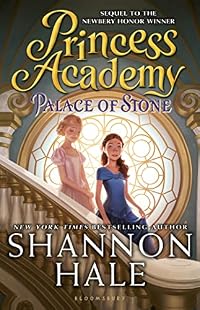
Miri returns to Asland and calls upon all of her knowledge of rhetoric and other useful lessons learned at the Princess Academy when she and the other girls face strong opposition while working for a new, fair charter.Tags
Recommendations







Member Reviews
{Second of 3; Princess Academy series. Fantasy, children’s, YA} (2012)
Re-read
Following on some months after the end of Princess Academy a couple of the Academy girls have gone to Asland, the capital of Danland. Prince Steffan is to marry his chosen bride next spring and she has invited her Mount Eskel friends from the Academy to help her get ready for her wedding. There is a place for Miri at the Queen's Castle, the foremost institution of learning in Danland, and Peder, Miri's childhood friend, is set to accompany them to Asland to learn more about carving linder. However Marda, Miri's sister, stays behind so Miri can only write letters to her and collect them to be sent with the next trading caravan which will travel up to Mount show more Eskel in the spring. This is not an epistolary but letters do play a large part in the story.
At the beginning of the book Miri receives two letters; one from Katar
and one from Britta
I love the contrast between the two styles, which encapsulates the personalities of the senders perfectly.
This was a gentle story and was easy to re-read although it hadn't been very long since I read it the first time. It has a similar feel to Johanna Spyri's Heidi (which I read several times as a child). It emphasises family and friendship; the story revolves around the different types of friendships Miri shares with those around her and her quest to find a non-violent way to balance them all. I like the way, for instance, that Katar's and Miri's relationship has developed from competitiveness in the first book through grudging respect to teasing friendship.
As well as personal friendship the story addresses the love of country and the determination to do the best for it - although different people have different ideas as to the best ways that can be achieved and so there are serious rumblings of revolution which brings danger to Miri and her friends. The first time I read thisI felt some forebodings of doom - but Hale does my kind of happy ever afters . We learn incidentally about some of the history of Danland, some royal secrets and more secrets about linder - the stone quarried on Mount Eskel - are revealed.
And it's not just about the differences that Miri finds between the capital and her home on Mount Eskel; I like the way a lot of the girls from the Academy end up finding new life-paths that suit them, that they're passionate about and that they plan to use to benefit their community on Mount Eskel.
Although there is some romance in the story (after all Miri is 'of an age to be betrothed'), it is not a focus and (almost) all the attachments are grounded in friendship and genuine affection.
This one tugs at the heartstrings and there were a few moments when I was cheering on a person who had seemed to be a background character until then. You go girl!
4.5 stars show less
Re-read
Following on some months after the end of Princess Academy a couple of the Academy girls have gone to Asland, the capital of Danland. Prince Steffan is to marry his chosen bride next spring and she has invited her Mount Eskel friends from the Academy to help her get ready for her wedding. There is a place for Miri at the Queen's Castle, the foremost institution of learning in Danland, and Peder, Miri's childhood friend, is set to accompany them to Asland to learn more about carving linder. However Marda, Miri's sister, stays behind so Miri can only write letters to her and collect them to be sent with the next trading caravan which will travel up to Mount show more Eskel in the spring. This is not an epistolary but letters do play a large part in the story.
At the beginning of the book Miri receives two letters; one from Katar
Addressing Miri Larensdaughter, Lady of the Princess,
Mount Eskel
Miri,
This is a letter. A letter is like talking to someone who is far away. Do not show the others in case I am doing it wrong.
and one from Britta
Miri Larensdaughter, Mount Eskel
Dearest Miri,
I am delighted to write to you! Though I would rather talk to you in person and sit in the shade of the princess academy, watching the hawks glide. At least I have good news to share.
I love the contrast between the two styles, which encapsulates the personalities of the senders perfectly.
This was a gentle story and was easy to re-read although it hadn't been very long since I read it the first time. It has a similar feel to Johanna Spyri's Heidi (which I read several times as a child). It emphasises family and friendship; the story revolves around the different types of friendships Miri shares with those around her and her quest to find a non-violent way to balance them all. I like the way, for instance, that Katar's and Miri's relationship has developed from competitiveness in the first book through grudging respect to teasing friendship.
'So ... did she just agree to sponsor the charter?' asked Katar.
'I thinks so,' Miri whispered.
'You think so?' Katar grabbed the paper from Miri. 'If I present this in session and {she} doesn't offer her sponsorship, "I think so" isn't going to save my head.'
'Your head will be fine,' said Miri. 'It's your neck you should worry about.'
'Miri!'
As well as personal friendship the story addresses the love of country and the determination to do the best for it - although different people have different ideas as to the best ways that can be achieved and so there are serious rumblings of revolution which brings danger to Miri and her friends. The first time I read this
And it's not just about the differences that Miri finds between the capital and her home on Mount Eskel; I like the way a lot of the girls from the Academy end up finding new life-paths that suit them, that they're passionate about and that they plan to use to benefit their community on Mount Eskel.
Although there is some romance in the story (after all Miri is 'of an age to be betrothed'), it is not a focus and (almost) all the attachments are grounded in friendship and genuine affection.
This one tugs at the heartstrings and there were a few moments when I was cheering on a person who had seemed to be a background character until then. You go girl!
4.5 stars show less
Like the first book, this is another I'd love to see by kids of all genders. Miri continues to be a great role model and is now learning about life in the bigger world and the injustices between different classes. The author clearly did a lot of research on the revolutions in the 1700s and 1800s and depicts it well, while not being graphic. (Assign it as extra credit in World History.) I appreciated that Miri was a main character who could see both sides (poor herself, but with dear friends in the monarchy). She's torn and tries to find a middle way that takes everyone's interests to heart. We could learn from that pattern.
Note: This review contains unavoidable spoilers for Book One in the Princess Academy series, but no spoilers for this second book.
Despite the perhaps misleading reference to princesses in the title, the girls in the “Princess Academy” series, while fictional, still present some of the best role models for young girls you can find in children’s books. These are girls who are determined to made a difference with their lives, and do so!
I loved the first book in this series, Princess Academy. You don’t need to read it to enjoy fully this continuation of the story of the heroine Miri, but the two books are so enjoyable and inspirational you might as well read them both!
Miri comes from Mount Eskel, a village known for its mining of show more linder, a silvery marble-like stone. This fictional substance conveys a kind of extra-sensory perceptiveness to those who work in the quarries, breathe in its dust, and drink the water from streams that run through the linder mountain. “Lowlanders” in the kingdom of Danland look down upon those from up on Mount Eskel; nevertheless, traders from the Lowlands come three times a year to haul the valuable stone down the mountain, and bring food and other provisions in return.
This time, when the traders come, some of the girls from Mount Eskel will be going back with them to Asland, where the King and Queen live. The year before, royal priests had divined that Mount Eskel was the home of the future Princess. So all eligible girls were required to attend a “Princess Academy” to learn about the subjects they might need to know if selected by Prince Steffan. Although Miri was the top student, the Prince picked Miri’s friend Britta to be his bride. Now Britta has invited Miri to come, along with five other Academy girls, to attend her wedding. Also, she told Miri there was an opening for her at the Queen’s Castle, a university in Asland at which Miri could continue the studies she had grown to love. Britta even arranged for Miri’s crush Peder to get an apprenticeship with a stone carver in the capital. They could all go down to Asland together.
There were some dark notes to this bright opportunity, however. Miri would miss her father and her older sister Marda terribly. Additionally, Katar - one of the girls from the Academy who went to Asland to be a delegate to the royal court – wrote Miri that there was some kind of trouble brewing there.
Miri joins the trader wagons for the trip with mixed feelings, but soon she is caught up in the excitement of a big city and in the wonder of the new subjects she is learning. At first history is a disappointment – there are no books about Mount Eskel! But the whole idea of history suggests something new to her: does it have to be a "dead" subject about static names on a page, or can memories come alive and change the world? What she learns in ethics also stymies her: how do you decide between two equally unpleasant choices? Is there any time when ends justify the means, no matter how repugnant? Does the greater good ever outweigh individual values?
These aren’t just academic questions. The threat of revolution is roiling Asland. Too many people go hungry, and the Nobles and the King take too much in tributes. Miri knows about poverty and injustice from her background on Mount Eskel, and wants to side with the "shoeless." But one of her dearest friends is about to become Princess of the hated establishment! How can she choose between them? How much credence should she give to her head, and how much to her heart?
She even faces choices on the romantic front. Her crush Peder doesn’t pay all that much attention to her, not like Timon, a worldly fellow scholar….
Discussion: Is this book in the category of Middle Grade or Young Adult? It certainly has nothing in it that would be objectionable for younger readers, but neither does it have anything in it that won’t appeal to older readers, including this WAY older reader.
Evaluation: Don’t be put off by the word “princess” in the titles! These books are totally not related to the whole girls-just-want-to-be-princesses trope. On the contrary, Miri and her friends want to make their marks in the world, and they do so with pluck, aplomb, intelligence, and humor. Miri and the other girls are terrific role models, and wonderful characters.
When Shannon Hale is on her game, she is one charming and engaging story teller! show less
Despite the perhaps misleading reference to princesses in the title, the girls in the “Princess Academy” series, while fictional, still present some of the best role models for young girls you can find in children’s books. These are girls who are determined to made a difference with their lives, and do so!
I loved the first book in this series, Princess Academy. You don’t need to read it to enjoy fully this continuation of the story of the heroine Miri, but the two books are so enjoyable and inspirational you might as well read them both!
Miri comes from Mount Eskel, a village known for its mining of show more linder, a silvery marble-like stone. This fictional substance conveys a kind of extra-sensory perceptiveness to those who work in the quarries, breathe in its dust, and drink the water from streams that run through the linder mountain. “Lowlanders” in the kingdom of Danland look down upon those from up on Mount Eskel; nevertheless, traders from the Lowlands come three times a year to haul the valuable stone down the mountain, and bring food and other provisions in return.
This time, when the traders come, some of the girls from Mount Eskel will be going back with them to Asland, where the King and Queen live. The year before, royal priests had divined that Mount Eskel was the home of the future Princess. So all eligible girls were required to attend a “Princess Academy” to learn about the subjects they might need to know if selected by Prince Steffan. Although Miri was the top student, the Prince picked Miri’s friend Britta to be his bride. Now Britta has invited Miri to come, along with five other Academy girls, to attend her wedding. Also, she told Miri there was an opening for her at the Queen’s Castle, a university in Asland at which Miri could continue the studies she had grown to love. Britta even arranged for Miri’s crush Peder to get an apprenticeship with a stone carver in the capital. They could all go down to Asland together.
There were some dark notes to this bright opportunity, however. Miri would miss her father and her older sister Marda terribly. Additionally, Katar - one of the girls from the Academy who went to Asland to be a delegate to the royal court – wrote Miri that there was some kind of trouble brewing there.
Miri joins the trader wagons for the trip with mixed feelings, but soon she is caught up in the excitement of a big city and in the wonder of the new subjects she is learning. At first history is a disappointment – there are no books about Mount Eskel! But the whole idea of history suggests something new to her: does it have to be a "dead" subject about static names on a page, or can memories come alive and change the world? What she learns in ethics also stymies her: how do you decide between two equally unpleasant choices? Is there any time when ends justify the means, no matter how repugnant? Does the greater good ever outweigh individual values?
These aren’t just academic questions. The threat of revolution is roiling Asland. Too many people go hungry, and the Nobles and the King take too much in tributes. Miri knows about poverty and injustice from her background on Mount Eskel, and wants to side with the "shoeless." But one of her dearest friends is about to become Princess of the hated establishment! How can she choose between them? How much credence should she give to her head, and how much to her heart?
She even faces choices on the romantic front. Her crush Peder doesn’t pay all that much attention to her, not like Timon, a worldly fellow scholar….
Discussion: Is this book in the category of Middle Grade or Young Adult? It certainly has nothing in it that would be objectionable for younger readers, but neither does it have anything in it that won’t appeal to older readers, including this WAY older reader.
Evaluation: Don’t be put off by the word “princess” in the titles! These books are totally not related to the whole girls-just-want-to-be-princesses trope. On the contrary, Miri and her friends want to make their marks in the world, and they do so with pluck, aplomb, intelligence, and humor. Miri and the other girls are terrific role models, and wonderful characters.
When Shannon Hale is on her game, she is one charming and engaging story teller! show less
I find it difficult to make a clear judgment about Palace of Stone. Taking it as a story at face value, I feel that the plot is too grand for itself and doesn't really live up to what it could be, that the solutions are all far too easy and the protagonist is too involved with every little element. However, it is a book in the Middle Grade demographic, and often with MG books, too-big plots with convenient, too easy solutions are more permissible, and it's much more common for the protagonists to be the ones to solve all the problems, whether directly or not.
So I liked the book, and I appreciate the way it continues many of the themes of Princess Academy about finding one's place in the world and the comfort of home and a small village show more vs. education and knowing the world and the big city. But I feel like Palace of Stone departs a little too much from those, I guess simpler?, themes and goes headlong into a "French revolution" style plot - one which Miri gets plopped into the middle of and ultimately saves the day (and her royal friends).
I've read other MG books recently where the protagonist isn't the one to solve everything, and I think I missed that here, where it is through Miri's actions that the revolution gets sparked rather than simmering along, and also through her actions that it gets suppressed and shifted into something less dangerous and scary.
I think some of the warmth and depth to the secondary characters is also lost. One of the things I liked about Princess Academy is the way it takes the very common story of a girl being unhappy in her small town and feeling unappreciated and tied down and puts Miri into that position - except that she loves her small town and wants to do more for it. The traditional character arc is given to secondary characters instead. But with Palace of Stone, we're back to the usual style, complete with a love triangle. (And, boy, am I tired of love triangles!)
So on the whole, Palace of Stone isn't a bad book, especially if you're reading it from an MG perspective. But it could be a lot better, and it has lost a lot of the elements that made Princess Academy so special. show less
So I liked the book, and I appreciate the way it continues many of the themes of Princess Academy about finding one's place in the world and the comfort of home and a small village show more vs. education and knowing the world and the big city. But I feel like Palace of Stone departs a little too much from those, I guess simpler?, themes and goes headlong into a "French revolution" style plot - one which Miri gets plopped into the middle of and ultimately saves the day (and her royal friends).
I've read other MG books recently where the protagonist isn't the one to solve everything, and I think I missed that here, where it is through Miri's actions that the revolution gets sparked rather than simmering along, and also through her actions that it gets suppressed and shifted into something less dangerous and scary.
I think some of the warmth and depth to the secondary characters is also lost. One of the things I liked about Princess Academy is the way it takes the very common story of a girl being unhappy in her small town and feeling unappreciated and tied down and puts Miri into that position - except that she loves her small town and wants to do more for it. The traditional character arc is given to secondary characters instead. But with Palace of Stone, we're back to the usual style, complete with a love triangle. (And, boy, am I tired of love triangles!)
So on the whole, Palace of Stone isn't a bad book, especially if you're reading it from an MG perspective. But it could be a lot better, and it has lost a lot of the elements that made Princess Academy so special. show less
Which is worse - acting in the wrong or not acting at all? Page 196
The continuing adventures of Miri and the graduates of the Princess Academy is filled with the looming threat of revolution. As typical YA fare goes, the story has its share of love interests, triangles and such, but thankfully it is not the focus of the book and by no means heavy handed. The bulk of the story is focused on the ethical questions of rulership, class disparity, government representation, and the rights of the people versus the rule of a monarchy. A charming story that is accessible to both a younger audience, but can also be appreciated by adults as well.
The continuing adventures of Miri and the graduates of the Princess Academy is filled with the looming threat of revolution. As typical YA fare goes, the story has its share of love interests, triangles and such, but thankfully it is not the focus of the book and by no means heavy handed. The bulk of the story is focused on the ethical questions of rulership, class disparity, government representation, and the rights of the people versus the rule of a monarchy. A charming story that is accessible to both a younger audience, but can also be appreciated by adults as well.
As Britta's wedding approaches, Miri is called to go down into the lowlands away from her beloved mountains to brave politics and a world beyond what she knows.
I picked this up on a whim because I knew it'd be a fairly easy read and I had pretty good memories of the first book. Ultimately this was an okay book. I am not terribly disappointed, but that's mostly because I didn't have high expectations anyway.
The book opens with an unbelievable scenario when Miri uses Diplomacy to change Peder's father's mind. Um no, a couple of diplomatic sentences would not cause a grown man to reverse his decision that he's already made publicly because men are proud. That's the theme in this book: characters feel unnatural and forced into decisions show more because it advances the plot.
It's just an unbelievable book. That the delegates would even flaunt their humiliating gifts to the king. Are you kidding me? The king has the army behind him. He could flog each of them and then take their lands as tribute. No way in politics would something that overt happen. If there was true dissent, it would not happen publicly.
That Miri could join a revolutionary group and become the pinnacle of the people.
That the mountains would never receive books. Surely the traders would realize the lack of knowledge and bring a couple.
It's just so deus ex machina with the linder and the royal family as well.
I am just too blase about all of this because I didn't care enough. It was unbelievable and the characters were so-so, but I wasn't invested.
Two stars. I can see how it's an okay sequel to the last book. I definitely wouldn't recommend it to anyone, but if you're hungering for a continuation of the girls, knock yourself out. show less
I picked this up on a whim because I knew it'd be a fairly easy read and I had pretty good memories of the first book. Ultimately this was an okay book. I am not terribly disappointed, but that's mostly because I didn't have high expectations anyway.
The book opens with an unbelievable scenario when Miri uses Diplomacy to change Peder's father's mind. Um no, a couple of diplomatic sentences would not cause a grown man to reverse his decision that he's already made publicly because men are proud. That's the theme in this book: characters feel unnatural and forced into decisions show more because it advances the plot.
It's just an unbelievable book. That the delegates would even flaunt their humiliating gifts to the king. Are you kidding me? The king has the army behind him. He could flog each of them and then take their lands as tribute. No way in politics would something that overt happen. If there was true dissent, it would not happen publicly.
That Miri could join a revolutionary group and become the pinnacle of the people.
That the mountains would never receive books. Surely the traders would realize the lack of knowledge and bring a couple.
It's just so deus ex machina with the linder and the royal family as well.
I am just too blase about all of this because I didn't care enough. It was unbelievable and the characters were so-so, but I wasn't invested.
Two stars. I can see how it's an okay sequel to the last book. I definitely wouldn't recommend it to anyone, but if you're hungering for a continuation of the girls, knock yourself out. show less
In this sequel to Princess Academy, the girls of Mount Eskel go to the capital city and find political danger and a country on the edge of rebellion.
I loved this look at the greater world outside of Mount Eskel, and its greater plot complexity of politics, ethics, and morality. I also really loved how Miri's understanding of quarry speech comes back in the end to save the day. Loved it more than the first.
I loved this look at the greater world outside of Mount Eskel, and its greater plot complexity of politics, ethics, and morality. I also really loved how Miri's understanding of quarry speech comes back in the end to save the day. Loved it more than the first.
Members
- Recently Added By
Author Information

93+ Works 47,646 Members
Shannon Hale was born in Salt Lake City, Utah on January 26, 1974. She received a bachelor's degree in English from the University of Utah and a master's degree in creative writing from the University of Montana. Her first book, The Goose Girl, was published in 2003. She writes for both adults and young adults. Her adult books include Austenland, show more Midnight in Austenland, and The Actor and the Housewife. Her young adult books include Book of a Thousand Days, Princess Academy, Palace of Stone, and the Ever after High series. She co-wrote the graphic novels Rapunzel's Revenge and Calamity Jack with husband Dean Hale. (Bowker Author Biography) show less
Awards and Honors
Series

Common Knowledge
- Canonical title
- Palace of Stone
- Original publication date
- 2012
- People/Characters
- Miri Larensdaughter; Peder; Marda Larensdaughter; Katar; Britta
- Important places
- Mount Eskel; Asland; Danlan
- Epigraph
- The rock-lined road is the way to work
The rock-lined road takes the work away
The rock-lined road is the way to take
If you take that road away you'll always take that way back home
Take you there and take you h... (show all)ome, there's nothing but the rocky road - Dedication
- for my Dinah
a princess in her own right - First words
- Miri woke to the insistent bleat of a goat.
- Quotations
- The rock-lined road is the way to work
The rock-lined road takes the work away
The rock-lined road is the way to take
If you take that road away you'll always take that way back home
Take you there and take you h... (show all)ome, there's nothing but the rocky road
We learn and talk and think so that when it's time to act, we know what to do.
Some say we are what we do, not where we come from. I say we are both. - Last words
- (Click to show. Warning: May contain spoilers.)She took Peder's hand and walked toward home.
- Original language
- English
Classifications
Statistics
- Members
- 1,461
- Popularity
- 15,915
- Reviews
- 48
- Rating
- (3.88)
- Languages
- Chinese, English, German
- Media
- Paper, Audiobook, Ebook
- ISBNs
- 21
- ASINs
- 8