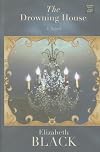
The Drowning House
by Elizabeth Black
On This Page
Description
A gripping suspense story about a woman who returns to Galveston, Texas after a personal tragedy and is irresistibly drawn into the insular world she's struggled to leave.Photographer Clare Porterfield's once-happy marriage is coming apart, unraveling under the strain of a family tragedy. When she receives an invitation to direct an exhibition in her hometown of Galveston, Texas, she jumps at the chance to escape her grief and reconnect with the island she hasn't seen for ten years. There show more Clare will have the time and space to search for answers about her troubled past and her family's complicated relationship with the wealthy and influential Carraday family.
Soon she finds herself drawn into a century-old mystery involving Stella Carraday. Local legend has it that Stella drowned in her family's house during the Great Hurricane of 1900, hanged by her long hair from the drawing room chandelier. Could Stella have been saved? What is the true nature of Clare's family's involvement? The questions grow like the wildflower vines that climb up the walls and fences of the island. And the closer Clare gets to the answers, the darker and more disturbing the truth becomes.
Steeped in the rich local history of Galveston, The Drowning House portrays two families, inextricably linked by tragedy and time.
"The Drowning House marks the emergence of an impressive new literary voice. Elizabeth Black's suspenseful inquiry into dark family secrets is enriched by a remarkable succession of images, often minutely observed, that bring characters, setting, and story sharply into focus." —John Berendt, author of Midnight in the Garden of Good and Evil. show less
Tags
Recommendations
































Member Reviews
At times hazy, at times sharply in focus, this novel's blurry/clear path mirrors the main character's own discovery of things that have been hidden from her.
Clare is a photographer whose young daughter died in an accident. She feels estranged from her husband, who grieves differently (more quickly?) than she does, and when she receives a job offer from her hometown - the island of Galveston, TX - she goes. Clare hasn't been back to the island since she was sent away at age 14, after a tragic fire in which a girl died. Ever since, she has missed her neighbor, Patrick Carraday, but he seems to be avoiding her.
Once home, Clare focuses only partly on the job; she also begins to unravel secrets from the past. Some are hidden in her own show more memory, some are hidden in plain sight, and some are hidden in the binding of a journal. There is incest, abuse, and infidelity, and Clare crosses back and forth between distance and discovery.
The writing is poetic but not flowery. The roles of the characters, if not the characters themselves, are familiar: the black maid, the eccentric old woman, the graceful mother, the charming patriarch, the handsome outsider, the elusive old love. I'm not sure how long the story will stay with me, but I very much enjoyed reading it.
Quotes:
There is so little to rest the eye on. Is the emptiness too much to bear? So that without understanding why, Islanders will do anything to fill it? I don't know how it happens. But islands have a way of taking over, of seizing the imagination. So that the people who live on them become different too, become wishful thinkers, fabulists, rearrangers of facts. What those on the mainland would probably call liars. It's not surprising really in a place where survival, life itself, is the result of a kind of stubborn reinvention. (67)
You are waiting for the world to end, and part of you wants to see it happen. (67)
And for a time, I still believed what Islanders do - that if you look hard enough into the distance, you can see the thing you want most coming toward you. (77)
"If you're going to take the blame for what happens in your life, you must learn to take the credit too. All success entails some element of chance." (Harriet to Clare, 135)
We imagine people in the past as different from ourselves. We see their clothing - all those layers - and confuse it with the bodies underneath....We picture them as simpler beings.
But people don't change in any essential way....Underneath, things are not so different. (150)
I think now that desire runs like a thread through the fabric of our experience, holding our lives together. And when that thread unravels, everything gathered around it comes apart. (189)
It should be easy to tell this story. I know what happened, and when. I should be able to put the events in order, line them up like beads on a string. But I think now that time is not a line but a spiral, bending back on itself, delivering us again and again and again to the same places. (249) show less
Clare is a photographer whose young daughter died in an accident. She feels estranged from her husband, who grieves differently (more quickly?) than she does, and when she receives a job offer from her hometown - the island of Galveston, TX - she goes. Clare hasn't been back to the island since she was sent away at age 14, after a tragic fire in which a girl died. Ever since, she has missed her neighbor, Patrick Carraday, but he seems to be avoiding her.
Once home, Clare focuses only partly on the job; she also begins to unravel secrets from the past. Some are hidden in her own show more memory, some are hidden in plain sight, and some are hidden in the binding of a journal. There is incest, abuse, and infidelity, and Clare crosses back and forth between distance and discovery.
The writing is poetic but not flowery. The roles of the characters, if not the characters themselves, are familiar: the black maid, the eccentric old woman, the graceful mother, the charming patriarch, the handsome outsider, the elusive old love. I'm not sure how long the story will stay with me, but I very much enjoyed reading it.
Quotes:
There is so little to rest the eye on. Is the emptiness too much to bear? So that without understanding why, Islanders will do anything to fill it? I don't know how it happens. But islands have a way of taking over, of seizing the imagination. So that the people who live on them become different too, become wishful thinkers, fabulists, rearrangers of facts. What those on the mainland would probably call liars. It's not surprising really in a place where survival, life itself, is the result of a kind of stubborn reinvention. (67)
You are waiting for the world to end, and part of you wants to see it happen. (67)
And for a time, I still believed what Islanders do - that if you look hard enough into the distance, you can see the thing you want most coming toward you. (77)
"If you're going to take the blame for what happens in your life, you must learn to take the credit too. All success entails some element of chance." (Harriet to Clare, 135)
We imagine people in the past as different from ourselves. We see their clothing - all those layers - and confuse it with the bodies underneath....We picture them as simpler beings.
But people don't change in any essential way....Underneath, things are not so different. (150)
I think now that desire runs like a thread through the fabric of our experience, holding our lives together. And when that thread unravels, everything gathered around it comes apart. (189)
It should be easy to tell this story. I know what happened, and when. I should be able to put the events in order, line them up like beads on a string. But I think now that time is not a line but a spiral, bending back on itself, delivering us again and again and again to the same places. (249) show less
The Drowning House is the story of Claire, a professional photographer, who, having lost her daughter, returns home to Galveston Island where she confronts a past filled with secrets and lies.
This is a southern gothic novel that some have described as a suspense thriller. I think if I’d been expecting a suspense thriller, I’d have been sorely disappointed. What I suspect was to have been a major tell was fairly obvious early on. Still, the story was compelling and although there may have been too many plot lines thrown in the mix and the mid-section seemed a bit muddled, this debut novel was worth a read. The hurricane that struck Galveston in 1900 is an essential element of one of the storylines and the historical aspect, as well show more as the description of Galveston, was interesting.
Elizabeth Black is a poet and her prose is beautiful. And it was that talent, more than the story itself, that kept me reading long past the point where I was tempted to abandon the book. I’m looking forward to her next effort. show less
This is a southern gothic novel that some have described as a suspense thriller. I think if I’d been expecting a suspense thriller, I’d have been sorely disappointed. What I suspect was to have been a major tell was fairly obvious early on. Still, the story was compelling and although there may have been too many plot lines thrown in the mix and the mid-section seemed a bit muddled, this debut novel was worth a read. The hurricane that struck Galveston in 1900 is an essential element of one of the storylines and the historical aspect, as well show more as the description of Galveston, was interesting.
Elizabeth Black is a poet and her prose is beautiful. And it was that talent, more than the story itself, that kept me reading long past the point where I was tempted to abandon the book. I’m looking forward to her next effort. show less
This book is filled with ghosts. It's no Turn of the Screw, where unaccountable figures appear and create an aura of dread, or "Ghosthunters", where intrepid investigators try to provoke taps and disembodied voices. This book is filled with the kind of spectres most everyone has to live with. Something terrible happened in the course of an ordinary day – was there anything you could have done to prevent it? Everyone else in the world proceeds through such commonplaces with no misfortune – how could it have gone so horribly for you? An accident in the past – also with terrible and unforeseen results, some immediate and some farther reaching – again, why? How? A figure from the past, once closer than anyone but not seen in years, show more seems to evade you – why? Has he, someone asks, been in touch in all the years since the last time you saw him? Well, no – but … No. He lingers just outside your field of vision, almost glimpsed, almost sensed. Another ghost.
There is a Galveston legend, according to this book, of a girl who ran off with her lover, not realizing a hurricane was about to strike; she died, and did so rather spectacularly. This old and dear friend, evading contact now, is almost as ephemeral as that girl's spectre. Or perhaps it is she who is almost as real and present as he is.
The Drowning House is the sort of book which makes it very easy to make assumptions about the author. It's such an intimate portrait of Galveston – she must have lived there, and probably was born there. It's about the loss of a child – it's so intimate and raw she must have lost a child. It's about the end of a marriage – not with the bang nor even the whimper but more with a sort of sad sigh – she must have seen a marriage end like this. The main character's own horrible childhood – the author must have experienced something like this for it to be so real. But, truly, this just serves to take away from the ability of the writer. Maybe Elizabeth Black is just like Clare, her main character; maybe she was born and raised in Moldavia and any resemblance to fictional persons, living or dead, is purely coincidental. It doesn't matter. What matters is that she has created a beautiful book.
This was a Netgalley offering, read with thanks. show less
There is a Galveston legend, according to this book, of a girl who ran off with her lover, not realizing a hurricane was about to strike; she died, and did so rather spectacularly. This old and dear friend, evading contact now, is almost as ephemeral as that girl's spectre. Or perhaps it is she who is almost as real and present as he is.
The Drowning House is the sort of book which makes it very easy to make assumptions about the author. It's such an intimate portrait of Galveston – she must have lived there, and probably was born there. It's about the loss of a child – it's so intimate and raw she must have lost a child. It's about the end of a marriage – not with the bang nor even the whimper but more with a sort of sad sigh – she must have seen a marriage end like this. The main character's own horrible childhood – the author must have experienced something like this for it to be so real. But, truly, this just serves to take away from the ability of the writer. Maybe Elizabeth Black is just like Clare, her main character; maybe she was born and raised in Moldavia and any resemblance to fictional persons, living or dead, is purely coincidental. It doesn't matter. What matters is that she has created a beautiful book.
This was a Netgalley offering, read with thanks. show less
In Elizabeth Black's debut novel, The Drowning House, photographer Clare Porterfield's life is in turmoil. Her six-year-old daughter has died. She is immersed in inescapable grief and her marriage is drowning under the weight of her sorrows. She accepts an invitation to return to her hometown of Galveston, Texas, in order to select the material for a photography exhibition funded by the wealthy Will Carraday.
Clare has been gone from the island for many years and, along with others, is questioning her real reasons for returning. In fact, Clare has had a long time relationship with the Carraday family. She had left the island after a tragedy involving her and her friend, Patrick Carraday. He was sent away and they were kept show more apart.
Galveston has a past seeped in tragedy and that feeling imbibes the novel. Part of the novel explores the mystery surrounding Stella Carraday’s drowning during the hurricane that devastated Galveston on September 8-9, 1900.
Clare may be in Galveston to look at photographs, but what she really seeks are answers to decades old questions, some of which she didn't even know she needed to ask. She has some questions about her past and her family that need to be answered. As she tries to come to terms with her new life, memories start to come to light in a new way.
While the writing in The Drowning House is superb, I'm going to admit that I knew, without a lot of effort, the big secret(s) the novel was going to reveal very early on. If Black had allowed that the reader would have that foreknowledge, leaving us to feel oh-so-slightly-smug at our deductive prowess, and then did a little flip with the plot, I would be applauding her for the extremely well-written novel with the clever plot twist.
Black has written a sensitive, atmospheric, southern gothic mystery. While readers might know as quickly as I did the secrets that are going to be revealed, Black has done an amazing job developing her characters, as well as life in Galveston in this finely crafted novel.
Highly Recommended
Disclosure: My Kindle edition was courtesy of Knopf Doubleday and Netgalley for review purposes.
http://shetreadssoftly.blogspot.com/ show less
Clare has been gone from the island for many years and, along with others, is questioning her real reasons for returning. In fact, Clare has had a long time relationship with the Carraday family. She had left the island after a tragedy involving her and her friend, Patrick Carraday. He was sent away and they were kept show more apart.
Galveston has a past seeped in tragedy and that feeling imbibes the novel. Part of the novel explores the mystery surrounding Stella Carraday’s drowning during the hurricane that devastated Galveston on September 8-9, 1900.
Clare may be in Galveston to look at photographs, but what she really seeks are answers to decades old questions, some of which she didn't even know she needed to ask. She has some questions about her past and her family that need to be answered. As she tries to come to terms with her new life, memories start to come to light in a new way.
While the writing in The Drowning House is superb, I'm going to admit that I knew, without a lot of effort, the big secret(s) the novel was going to reveal very early on. If Black had allowed that the reader would have that foreknowledge, leaving us to feel oh-so-slightly-smug at our deductive prowess, and then did a little flip with the plot, I would be applauding her for the extremely well-written novel with the clever plot twist.
Black has written a sensitive, atmospheric, southern gothic mystery. While readers might know as quickly as I did the secrets that are going to be revealed, Black has done an amazing job developing her characters, as well as life in Galveston in this finely crafted novel.
Highly Recommended
Disclosure: My Kindle edition was courtesy of Knopf Doubleday and Netgalley for review purposes.
http://shetreadssoftly.blogspot.com/ show less
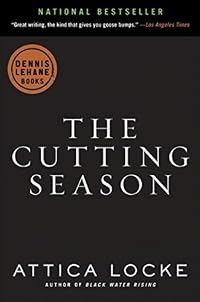
One of the best debuts I've read all year, The Drowning House is a beautifully written atmospheric thriller that asks and explores all the best questions - What does is mean to live through loss, to return home, to discover things about your past, to put everything together into a new future? Galveston is as much a character in the book as Clare Porterfield and the authors's knowledge of place informs every sentence. This is related in my mind to The Cutting Season (another fabulous book) by Attica Locke for subject matter and quality of writing about place. The Drowning House is a great read all on its own, but read Isaac's Storm by Erik Larson for an even better experience. Highly recommended.
Clare Porterfield has made a successful life for herself. As a photographer, she is invited back to her hometown of Galveston, Texas for an exhibition. Reeling from a family tragedy and unraveling marriage, she takes refuge in the offer to reconnect with the comfort of familiarity there.
In revisiting the past, Clare is able to reexamine her own past, as well as research her family history. She is seeking answers involving her family’s connection to a longtime influential family, the Carradays.
Clare is intrigued by the unusual drowning of Stella Carraday, who drowned in the family home during the Great Hurricane of 1900. She had drowned hanging by her hair from the chandelier. The unusual circumstances have long been a mystery. Now show more Clare’s curiosity grows, drawing her into a dark and unsettling past.
This dark mystery tells some of the history of Galveston, while telling the stories of two families. A fascinating and well developed suspense novel, it is one not to be missed. show less
In revisiting the past, Clare is able to reexamine her own past, as well as research her family history. She is seeking answers involving her family’s connection to a longtime influential family, the Carradays.
Clare is intrigued by the unusual drowning of Stella Carraday, who drowned in the family home during the Great Hurricane of 1900. She had drowned hanging by her hair from the chandelier. The unusual circumstances have long been a mystery. Now show more Clare’s curiosity grows, drawing her into a dark and unsettling past.
This dark mystery tells some of the history of Galveston, while telling the stories of two families. A fascinating and well developed suspense novel, it is one not to be missed. show less
Elizabeth Black is a poet. I suspected as much reading descriptions such as, "Around her, I felt as though every minute was already full, that all the air in any room that contained us both had already been used up." and "that the air and water are often so close to body temperature you sometimes feel, if it weren't for the accident of your skin, you could melt into either one." She can evoke all of the senses with her lovely words. Black describes Galveston so the reader experiences the island. This is worth reading the novel alone. And there is a relatable and painful story here that has many layers, perhaps too many layers. Death, abuse, addiction, marital infidelity, lies. Or Sex, Lies, and Photographs.
Clare Porterfield is a show more photographer who returns home after ten years to grieve after a personal tragedy. There are many characters, her mother, her sister, old neighbors and new. And an old mystery involving Stella Carrady, who is believed to have drowned during the Great Hurricane that hit Galveston in 1900. There is just a little too much going on to really develop some of the characters, and I felt like I didn't get to know some of them the way they deserved. Black is a talented writer, and her first novel is promising, and poetic.
Received by the publisher on Net Galley. show less
Clare Porterfield is a show more photographer who returns home after ten years to grieve after a personal tragedy. There are many characters, her mother, her sister, old neighbors and new. And an old mystery involving Stella Carrady, who is believed to have drowned during the Great Hurricane that hit Galveston in 1900. There is just a little too much going on to really develop some of the characters, and I felt like I didn't get to know some of them the way they deserved. Black is a talented writer, and her first novel is promising, and poetic.
Received by the publisher on Net Galley. show less
Members
- Recently Added By
Published Reviews
A perceptive young woman, an art photographer by trade, returns to Galveston, Texas, looking for answers to questions from her past that haunt her present. The young woman’s Galveston isn’t the backwater of Jimmy Webb’s country song. Rather, she comes from the moneyed side of town, a neighbourhood that Black depicts in elegant and evocative style. Still, for all its wealth and grace, show more this Galveston has its dark secrets, and before the book is done, our young heroine sees all the old secrets blown away. show less
added by VivienneR
Author Information
1 Work 212 Members
Some Editions
Common Knowledge
- Canonical title
- The Drowning House
- Original publication date
- 2013
- First words
- If there was a sign, I missed it. But I knew I was in Texas when I swerved to avoid a shape by the side of the road. It must have been around six in the morning, the first thin light just visible through the pines, when I cro... (show all)ssed over the state line. -Chapter 1
- Canonical DDC/MDS
- 813.6
- Canonical LCC
- PS3602.L275
Classifications
Statistics
- Members
- 213
- Popularity
- 152,778
- Reviews
- 16
- Rating
- (3.11)
- Languages
- English
- Media
- Paper, Audiobook, Ebook
- ISBNs
- 6
- ASINs
- 2