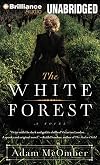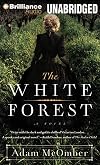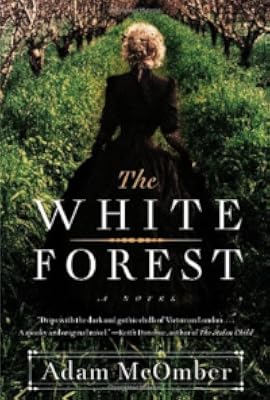
The White Forest: A Novel
by Adam McOmber
On This Page
Description
Young Jane Silverlake lives with her father in a crumbling family estate on the edge of Hampstead Heath. Jane has a secret -- an unexplainable gift that allows her to see the souls of man-made objects -- and this talent isolates her from the outside world. Her greatest joy is wandering the wild heath with her neighbors, Madeline and Nathan. But as the friends come of age, their idyll is shattered by the feelings both girls develop for Nathan, and by Nathan's interest in a cult led by Ariston show more Day, a charismatic mystic popular with London's elite. Day encourages his followers to explore dream manipulation with the goal of discovering a strange hidden world, a place he calls the Empyrean. A year later, Nathan has vanished, and the famed Inspector Vidocq arrives in London to untangle the events that led up to Nathan's disappearance. As a sinister truth emerges, Jane realizes she must discover the origins of her talent, and use it to find Nathan herself, before it's too late. show lessTags
Recommendations


Member Reviews
Fantastical and haunting, from the start THE WHITE FOREST has me riveted to the page. I can't tell if our narrator is out of JANE EYRE or THE TELL-TALE HEART, but her measured description of her strange world has me captivated. Jane is a contradictory mix of petty emotion and open-hearted loneliness, making her grateful and jealous of the attention of her friends. Even more intriguing, her otherworldly gift seems both dangerous and innocuous, linked both to her mother's death and a meaningless presentation of colors and sounds when she touches certain objects.
The mystery of THE WHITE FOREST unfolds on so many different levels. At the present day, Nathan is missing. Below that lurks the secret of Jane's gift and how it relates to both show more Nathan's disappearance and Jane's future. And then deeper still, simmering in the background is the complex alchemy of these relationships; Jane and Maddie and Nathan meshed together in friendship, jealousy, and attraction. I could never tell if the cynical way Jane views her value to Maddie and Nathan was realistic or not, and that tension as much as any other kept me reading for clues.
Though many elements of THE WHITE FOREST remind me of other books and movies that I've enjoyed (THE HISTORIAN and Pan's Labrynth to name two), Jane herself is a singular experience. Other characters in THE WHITE FOREST comment on her strange charisma, how she isn't as plain as they first thought. This never comes across as the romance trope of a plain heroine who doesn't realize how beautiful she is, or only her true love sees her inner beauty. Rather, even on the written page Jane seems both muted and mesmerizing. Her narration is almost deadpan, but the circumstances of her story reveal very strong emotions. I can't even say that I liked her, and certainly much of her actions aren't admirable in the typical "heart of gold" sense. She can be cruel, she feels the seduction of weilding power over another, and her attachment to Maddie and Nathan is almost smothering. At the halfway point I couldn't see any happily ever after for Jane, or even predict where this story's strange magic would take me, but I didn't need either of those things to keep me riveted to the page.
THE WHITE FOREST isn't the usual thrilling, sexy urban fantasy, but I love it all the more for being something rarer. Jane manages to be magnetic and fascinating without being charming, she drew me into the mystery of her circumstances without being predictable, and the pathos of the story is certainly one of foreboding and dread without ever dipping into melodrama or horror. A captivating ghost story, a gothic to curl up around and savor, I enjoyed slowing down and immersing myself in this strange, dark world. As the story spirals further and further outside human experience, I found myself no less affected. An "ever after" of silence and peace, is that happiness?
Full review to follow. show less
The mystery of THE WHITE FOREST unfolds on so many different levels. At the present day, Nathan is missing. Below that lurks the secret of Jane's gift and how it relates to both show more Nathan's disappearance and Jane's future. And then deeper still, simmering in the background is the complex alchemy of these relationships; Jane and Maddie and Nathan meshed together in friendship, jealousy, and attraction. I could never tell if the cynical way Jane views her value to Maddie and Nathan was realistic or not, and that tension as much as any other kept me reading for clues.
Though many elements of THE WHITE FOREST remind me of other books and movies that I've enjoyed (THE HISTORIAN and Pan's Labrynth to name two), Jane herself is a singular experience. Other characters in THE WHITE FOREST comment on her strange charisma, how she isn't as plain as they first thought. This never comes across as the romance trope of a plain heroine who doesn't realize how beautiful she is, or only her true love sees her inner beauty. Rather, even on the written page Jane seems both muted and mesmerizing. Her narration is almost deadpan, but the circumstances of her story reveal very strong emotions. I can't even say that I liked her, and certainly much of her actions aren't admirable in the typical "heart of gold" sense. She can be cruel, she feels the seduction of weilding power over another, and her attachment to Maddie and Nathan is almost smothering. At the halfway point I couldn't see any happily ever after for Jane, or even predict where this story's strange magic would take me, but I didn't need either of those things to keep me riveted to the page.
THE WHITE FOREST isn't the usual thrilling, sexy urban fantasy, but I love it all the more for being something rarer. Jane manages to be magnetic and fascinating without being charming, she drew me into the mystery of her circumstances without being predictable, and the pathos of the story is certainly one of foreboding and dread without ever dipping into melodrama or horror. A captivating ghost story, a gothic to curl up around and savor, I enjoyed slowing down and immersing myself in this strange, dark world. As the story spirals further and further outside human experience, I found myself no less affected. An "ever after" of silence and peace, is that happiness?
Full review to follow. show less
Review courtesy of All Things Urban Fantasy.
allthingsuf.com
Fantastical and haunting, from the start THE WHITE FOREST had me glued to the page. I couldn’t tell if our narrator was out of JANE EYRE or THE TELL-TALE HEART, but Jane’s measured description of her strange world had me captivated. Jane is a contradictory mix of petty emotion and open-hearted loneliness, making her both grateful and jealous of the attention of her friends. Even more intriguing, her otherworldly gift seems simultaneously dangerous and innocuous, linked both to her mother’s death and the meaningless colors and sounds the souls of man-made objects project to her.
Though many elements of THE WHITE FOREST remind me of other books and movies that I’ve enjoyed show more (THE HISTORIAN and Pan’s Labyrinth to name two), Jane herself is a singular experience. Other characters in THE WHITE FOREST comment on her strange charisma, how she isn’t as plain as they first thought. This never comes across as the romance trope of a plain heroine who doesn’t realize how beautiful she is, or only where only her true love sees her inner beauty. Rather, even on the written page Jane seems both muted and mesmerizing. Her narration is almost deadpan, but the circumstances of her story reveal very strong emotions. I can’t even say that I liked her, and certainly much of her actions aren’t admirable in the typical “heart of gold” sense. She can be cruel, she feels the seduction of wielding power over others, and her attachment to Maddie and Nathan is almost smothering. At the halfway point I couldn’t see any happily ever after for Jane, or even predict where this story’s strange magic would take me, but I didn’t need either of those things to keep me riveted to the page.
The mystery of THE WHITE FOREST unfolds on so many different levels. In the present moment, Jane’s friend Nathan is missing. Below that lurks the secret of Jane’s gift and how it relates to both Nathan’s disappearance and Jane’s future. And then deeper still, simmering in the background is the complex alchemy of these relationships; Jane and Maddie and Nathan meshed together in friendship, jealousy, and attraction. I could never tell if the cynical way Jane views her value to Maddie and Nathan was realistic or not, and that tension as much as any other kept me reading for clues.
THE WHITE FOREST isn’t the usual thrilling, sexy urban fantasy, or anything close to steampunk, but I love it all the more for being something out of the norm for me. Jane manages to be magnetic and fascinating without being charming. She drew me into the mystery of her circumstances without becoming predictable and the pathos of the story is one of foreboding and dread without ever dipping into melodrama or horror. As the story spirals further and further outside human experience, I found myself no less affected. A captivating ghost story, a gothic to savor, I enjoyed slowing down and immersing myself in this strange, dark world.
Sexual Content: Kissing, references to sex. show less
allthingsuf.com
Fantastical and haunting, from the start THE WHITE FOREST had me glued to the page. I couldn’t tell if our narrator was out of JANE EYRE or THE TELL-TALE HEART, but Jane’s measured description of her strange world had me captivated. Jane is a contradictory mix of petty emotion and open-hearted loneliness, making her both grateful and jealous of the attention of her friends. Even more intriguing, her otherworldly gift seems simultaneously dangerous and innocuous, linked both to her mother’s death and the meaningless colors and sounds the souls of man-made objects project to her.
Though many elements of THE WHITE FOREST remind me of other books and movies that I’ve enjoyed show more (THE HISTORIAN and Pan’s Labyrinth to name two), Jane herself is a singular experience. Other characters in THE WHITE FOREST comment on her strange charisma, how she isn’t as plain as they first thought. This never comes across as the romance trope of a plain heroine who doesn’t realize how beautiful she is, or only where only her true love sees her inner beauty. Rather, even on the written page Jane seems both muted and mesmerizing. Her narration is almost deadpan, but the circumstances of her story reveal very strong emotions. I can’t even say that I liked her, and certainly much of her actions aren’t admirable in the typical “heart of gold” sense. She can be cruel, she feels the seduction of wielding power over others, and her attachment to Maddie and Nathan is almost smothering. At the halfway point I couldn’t see any happily ever after for Jane, or even predict where this story’s strange magic would take me, but I didn’t need either of those things to keep me riveted to the page.
The mystery of THE WHITE FOREST unfolds on so many different levels. In the present moment, Jane’s friend Nathan is missing. Below that lurks the secret of Jane’s gift and how it relates to both Nathan’s disappearance and Jane’s future. And then deeper still, simmering in the background is the complex alchemy of these relationships; Jane and Maddie and Nathan meshed together in friendship, jealousy, and attraction. I could never tell if the cynical way Jane views her value to Maddie and Nathan was realistic or not, and that tension as much as any other kept me reading for clues.
THE WHITE FOREST isn’t the usual thrilling, sexy urban fantasy, or anything close to steampunk, but I love it all the more for being something out of the norm for me. Jane manages to be magnetic and fascinating without being charming. She drew me into the mystery of her circumstances without becoming predictable and the pathos of the story is one of foreboding and dread without ever dipping into melodrama or horror. As the story spirals further and further outside human experience, I found myself no less affected. A captivating ghost story, a gothic to savor, I enjoyed slowing down and immersing myself in this strange, dark world.
Sexual Content: Kissing, references to sex. show less
This story, set in 1850s England, starts out seeming to be a simple historical novel, perhaps a historical romance. We have two young women and a young man who are best friends, but who, in their early twenties, are feeling attraction for each other. In a rural area just outside London, they are cut off from most people and have spent most of their free time together for years. Soon- very soon- fantastical elements enter the story. The narrator, Jane Silverlake, has an odd power- she hears objects. Everything makes sounds. And when in direct contact with her skin, others can hear these strange sounds. Her friends, Maddy and Nathan, are aware of this.
The novel jumps around in time a lot, frequently going back over the same time span show more with added information. The story revolves around the disappearance of Nathan and the search for him; no one knows if he is dead or alive. He had become obsessed with a cult that seeks a paradise called the Empyrean- and thinks Jane can help them get there. The leader of the cult will stop at nothing to achieve his paradise; Maddy and Jane will stop at nothing to find Nathan. There is more to Jane’s abilities than hearing the souls of objects and this may be the key to Nathan’s fate. As images of a chthonic goddess start appearing around London, Jane tries to figure out her powers
This is a very dark story. The first layer is the simple one of friends roaming the woods; the further the novel goes, the deeper we dig into their psyches and emotions, as well as into the backstory of Nathan’s interest in the cult. At the deepest layer, we find that nothing is as we thought it was, and the ended totally surprised me. Well crafted and very detailed, this book held my attention all the way. show less
The novel jumps around in time a lot, frequently going back over the same time span show more with added information. The story revolves around the disappearance of Nathan and the search for him; no one knows if he is dead or alive. He had become obsessed with a cult that seeks a paradise called the Empyrean- and thinks Jane can help them get there. The leader of the cult will stop at nothing to achieve his paradise; Maddy and Jane will stop at nothing to find Nathan. There is more to Jane’s abilities than hearing the souls of objects and this may be the key to Nathan’s fate. As images of a chthonic goddess start appearing around London, Jane tries to figure out her powers
This is a very dark story. The first layer is the simple one of friends roaming the woods; the further the novel goes, the deeper we dig into their psyches and emotions, as well as into the backstory of Nathan’s interest in the cult. At the deepest layer, we find that nothing is as we thought it was, and the ended totally surprised me. Well crafted and very detailed, this book held my attention all the way. show less
I have mixed feelings about this book ~ it left me in a weird mood, kind of depressed and grouchy and blank. The imagery is cold and frigid, not of this earth. I kept picturing the landscape like one that had the life sucked out of it and all that was left was a white husk.
The story is told from the point of view of Jane Silverlake - a plain girl who sounds like she has an ethereal beauty, white skin and gray eyes. She is not a nice person, not really. She torments her maid, and her feelings for her friends, Maddy and Nathan, are excessive bordering on obsessive. I think the story being told from her viewpoint is one reason the book is so cold ~ Jane is not that warm of a person. She is isolated and removed and detached from the world, show more with the exception of her friends. And even that is a little messed up ~ she wants all their attention, Maddy's and Nathan's, and doesn't seem to even want to share them with each other.
Jane also has a special talent ~ she can feel the vibrations and colors from man made objects, their souls if they had one. If one were to touch her skin, they would feel this through her. Her power can kill and topple buildings and swallow people up, sending them to a world called the Empyrean. Nathan is obsessed with her power, and wants to feel more and more of it. Nathan and Maddy also have a special relationship, without Jane. This leads to some major issues, and Nathan disappears.
The rest of the book is finding Nathan, and learning more about his interests and Jane's talents. It gets all mystical, with the White Forest, white apes, Ariston Day and his fetches, the Lady of the Flowers and the Empyrean.
I did love the prose-like writing of this novel ~ it flowed beautifully and evoked haunting images, and the story itself was haunting as well. You really felt transported to another world and time, and the mystery kept your attention.
This book was unexpected ~ it was not like what I thought it would be like at all. It was transcendent, and even a little abstract. Although it was all a surprise, I did find myself liking it, although it was a little weird and cold. I could picture reading in winter, when the world outside was just as white and unearthly. show less
The story is told from the point of view of Jane Silverlake - a plain girl who sounds like she has an ethereal beauty, white skin and gray eyes. She is not a nice person, not really. She torments her maid, and her feelings for her friends, Maddy and Nathan, are excessive bordering on obsessive. I think the story being told from her viewpoint is one reason the book is so cold ~ Jane is not that warm of a person. She is isolated and removed and detached from the world, show more with the exception of her friends. And even that is a little messed up ~ she wants all their attention, Maddy's and Nathan's, and doesn't seem to even want to share them with each other.
Jane also has a special talent ~ she can feel the vibrations and colors from man made objects, their souls if they had one. If one were to touch her skin, they would feel this through her. Her power can kill and topple buildings and swallow people up, sending them to a world called the Empyrean. Nathan is obsessed with her power, and wants to feel more and more of it. Nathan and Maddy also have a special relationship, without Jane. This leads to some major issues, and Nathan disappears.
The rest of the book is finding Nathan, and learning more about his interests and Jane's talents. It gets all mystical, with the White Forest, white apes, Ariston Day and his fetches, the Lady of the Flowers and the Empyrean.
I did love the prose-like writing of this novel ~ it flowed beautifully and evoked haunting images, and the story itself was haunting as well. You really felt transported to another world and time, and the mystery kept your attention.
This book was unexpected ~ it was not like what I thought it would be like at all. It was transcendent, and even a little abstract. Although it was all a surprise, I did find myself liking it, although it was a little weird and cold. I could picture reading in winter, when the world outside was just as white and unearthly. show less
I have mixed feelings about this book ~ it left me in a weird mood, kind of depressed and grouchy and blank. The imagery is cold and frigid, not of this earth. I kept picturing the landscape like one that had the life sucked out of it and all that was left was a white husk.
The story is told from the point of view of Jane Silverlake - a plain girl who sounds like she has an ethereal beauty, white skin and gray eyes. She is not a nice person, not really. She torments her maid, and her feelings for her friends, Maddy and Nathan, are excessive bordering on obsessive. I think the story being told from her viewpoint is one reason the book is so cold ~ Jane is not that warm of a person. She is isolated and removed and detached from the world, show more with the exception of her friends. And even that is a little messed up ~ she wants all their attention, Maddy's and Nathan's, and doesn't seem to even want to share them with each other.
Jane also has a special talent ~ she can feel the vibrations and colors from man made objects, their souls if they had one. If one were to touch her skin, they would feel this through her. Her power can kill and topple buildings and swallow people up, sending them to a world called the Empyrean. Nathan is obsessed with her power, and wants to feel more and more of it. Nathan and Maddy also have a special relationship, without Jane. This leads to some major issues, and Nathan disappears.
The rest of the book is finding Nathan, and learning more about his interests and Jane's talents. It gets all mystical, with the White Forest, white apes, Ariston Day and his fetches, the Lady of the Flowers and the Empyrean.
I did love the poetic-like writing of this novel ~ it flowed beautifully and evoked haunting images, and the story itself was haunting as well. You really felt transported to another world and time, and the mystery kept your attention.
This book was unexpected ~ it was not like what I thought it would be like at all. Although it was all a surprise, I did find myself liking it, although it was a little weird and cold. I could picture reading in winter, when the world outside was just as white and unearthly. show less
The story is told from the point of view of Jane Silverlake - a plain girl who sounds like she has an ethereal beauty, white skin and gray eyes. She is not a nice person, not really. She torments her maid, and her feelings for her friends, Maddy and Nathan, are excessive bordering on obsessive. I think the story being told from her viewpoint is one reason the book is so cold ~ Jane is not that warm of a person. She is isolated and removed and detached from the world, show more with the exception of her friends. And even that is a little messed up ~ she wants all their attention, Maddy's and Nathan's, and doesn't seem to even want to share them with each other.
Jane also has a special talent ~ she can feel the vibrations and colors from man made objects, their souls if they had one. If one were to touch her skin, they would feel this through her. Her power can kill and topple buildings and swallow people up, sending them to a world called the Empyrean. Nathan is obsessed with her power, and wants to feel more and more of it. Nathan and Maddy also have a special relationship, without Jane. This leads to some major issues, and Nathan disappears.
The rest of the book is finding Nathan, and learning more about his interests and Jane's talents. It gets all mystical, with the White Forest, white apes, Ariston Day and his fetches, the Lady of the Flowers and the Empyrean.
I did love the poetic-like writing of this novel ~ it flowed beautifully and evoked haunting images, and the story itself was haunting as well. You really felt transported to another world and time, and the mystery kept your attention.
This book was unexpected ~ it was not like what I thought it would be like at all. Although it was all a surprise, I did find myself liking it, although it was a little weird and cold. I could picture reading in winter, when the world outside was just as white and unearthly. show less
Jane, Maddy, and Nathan have been close friends since Maddy Jane to join in the other two’s adventures on London’s Hampstead Heath. This friendship continued into their young adulthood. However, the friendship has been threatened since Nathan’s return from Malta and the Crimean War. Both women noticed a change in Nathan’s personality, which only became worse when he became involved with the charismatic Ariston Day and the Temple of the Lamb. The cult had attracted many of London’s young aristocratic males into its exploration of arcane philosophies. One night, after one of the Temple’s rites, Nathan mysteriously disappears.
Jane’s mother died in an accident on the heath when Jane was a young girl. Shortly after, she show more discovered that she possesses a supernatural gift which enables her to see the souls of man-made objects, a gift that can be shared with others during physical contact. Although Nathan and Maddy had kept Jane’s secret, which could be disturbing to others when shared, for years, Nathan shared the secret with Ariston, who became convinced that Jane was the “doorway” into a mysterious world known as the Empyrean and could be the instrument in removing the barrier between the two worlds, an action Ariston believes would unleash paradise. Jane hopes to find Nathan using her gift while avoiding being drawn into Ariston’s plans that Jane believes would unleash hell rather than Eden.
Although I enjoyed the book, it wasn’t without its flaws. I initially found the plot convoluted, which made it difficult for me to follow. This wasn’t helped with the addition of characters I thought would be major ones only to scratch my head regarding the reason for their inclusion. The pace dragged at moments but plot elements would be added as Jane discovered what happened to Nathan, which kept me reading. I especially enjoyed the evolution of Jane’s gift and her increasing awareness of her abilities. show less
Jane’s mother died in an accident on the heath when Jane was a young girl. Shortly after, she show more discovered that she possesses a supernatural gift which enables her to see the souls of man-made objects, a gift that can be shared with others during physical contact. Although Nathan and Maddy had kept Jane’s secret, which could be disturbing to others when shared, for years, Nathan shared the secret with Ariston, who became convinced that Jane was the “doorway” into a mysterious world known as the Empyrean and could be the instrument in removing the barrier between the two worlds, an action Ariston believes would unleash paradise. Jane hopes to find Nathan using her gift while avoiding being drawn into Ariston’s plans that Jane believes would unleash hell rather than Eden.
Although I enjoyed the book, it wasn’t without its flaws. I initially found the plot convoluted, which made it difficult for me to follow. This wasn’t helped with the addition of characters I thought would be major ones only to scratch my head regarding the reason for their inclusion. The pace dragged at moments but plot elements would be added as Jane discovered what happened to Nathan, which kept me reading. I especially enjoyed the evolution of Jane’s gift and her increasing awareness of her abilities. show less
Where I got the book: I was offered a free review copy by Simon & Schuster in return for an honest review. Touchstone, the publisher of The White Forest, is a S&S imprint.
***SPOILER ALERT*** I’ve tried very hard not to give the story away, but hints of it may show through in this very long review. I’m really writing for those who have already read the book and want to know what others think about it. So if you’re here because you’re wondering whether to read this novel, you might want to read it first and then come back.
A word about my rating: In many respects, I dislike the star rating system for books. This is one of those moments when trying to rate a book turns my brain into a pretzel as I weigh up the writer’s ability to show more use prose to create an atmosphere, his fundamental writing skills seen as an art rather than a precise science, whether I found the story’s premise convincing or not AND whether another type of reader, looking for different things in a novel, would either love or hate this book. The White Forest gets four stars because while I had serious issues with some aspects of it, to be fair as a reviewer I have to give the writer credit for the other elements.
The story: Jane leads an isolated life on Hampstead Heath, a wild area of north London. Since the death of her mother when Jane was six, Jane has experienced inanimate objects as animate beings that give off sound, colors, lights, even memories. She can transfer the sensations she feels to other people by touch, and mute their effect on herself by remaining grounded in the natural world (notably by wearing flowers tied to her wrist). Her abilities isolate her from other people—who naturally fear them—and her only friends are Maddy, another of society’s outcasts because she is the daughter of a medium and a disgraced daguerrotype artist, and Nathan, the object of both girls’ yearning. Maddy fears Jane’s “ability” and is jealous of the hold it has over Nathan, who sees Jane as a way to reach an otherworldly place they call the Empyrean. When Nathan disappears into a cult society to which his search for the Empyrean has led him, Maddy and Jane work to bring him back, both together and in competition.
What I liked about the novel: To begin with, it was well-written—good dialogue, vivid descriptions, nice pacing and so on. I noted a couple of spelling/grammar snafus in passing (like someone being in the “throws” of some sort of dilemma) but these days that’s usually due to overworked, short-staffed editing departments. And the writing had depth to it; I found myself caught up in wondering if Jane was a reliable narrator or a deluded hysteric (bring on the hysterical Victorian ladies!) and transfixed by the sexual imagery of Jane as the doorway (something to be opened and explored), the stag, the hole in the tree, the red dress, the animals in the white forest…toward the end I began to see the story as an allegory of sexual frustration, a woman taking power over the physical world in a desperate effort to reach fulfillment. And there was the more overt theme of the imbalance of the male power of technology with the female power of the natural world; all very interesting and thought-provoking, although I struggled to find a structure to the narrative that would make it clear what the author thought about these matters. Possibly—since this is a debut novel—the inchoate impression I received is due to the author grasping for half-formed themes that will be worked out in later writings. Given the amount of vapid fluff that makes up about 80% of novel writing, I should be glad to see a writer with some ballast in his brainbox, right?
Where I had issues: Early on in this novel I began to wonder which decade of the Victorian era we were in. Those who follow my reviews may know that I’m not generally a stickler for historical accuracy and will accept that an author may, for the sake of the story, alter an event or a place from time to time. In my own writing I like to invent locations, and I love the world-building elements in the fantasy sub-genres when done right. I was tickled to death, for example, when in Abraham Lincoln: Vampire Hunter the reason given for Lincoln’s determination to win over the Confederacy was that those darn Southerners were EVUL VAMPIRES. The preposterousness of the premise made it obvious that the filmmakers had little regard for the historical record and therefore I could sit back and enjoy the movie without a care in the world about accuracy (although others do care, and the list of goofs for this movie on IMDb makes entertaining reading).
So why did The White Forest turn me into the History Police? It began, as I said above, because I started to wonder when, exactly, this story was unfolding. Chapter 1 is subheaded, unhelpfully or is it teasingly? “Hampstead Heath, 18—“ and much of the tone of the story seemed to indicate that it was set in the very late 19th century, after 1885, say. References to, for example, dream theory and the New Woman sounded very fin-de-siècle.
Flipping to the Author’s Note revealed only that he admitted to not moving the Crystal Palace to its post-1854 location, but nothing else. So what was niggling at me? Then I realized that Nathan had just returned from the Crimean War, dating the novel to around 1857—and that pretty much all other checkable references were therefore anachronistic (see my updates for details). Including the snortable fact that Inspector Vidocq, who comes to London to investigate Nathan’s disappearance, died in 1857 so must in fact have been a zombie detective, not a bad idea when I come to think of it: Sherlock Holmes, Zombie Sleuth might be a worthy contribution to the recent spate of mashups aimed at bored kids who despise history and literature anyway. Can’t be much worse than the Robert Downey Jr. version. Harrumph.
But I digress, and heaven knows this review is long enough without the digressions. At some point while I was merrily pointing out the anachronisms on Goodreads the author contacted me and cheerfully admitted that he was playing with the historical record. And yes, I knew going in that this was supposed to be a Gothic fantasy novel. I felt that a fantasy reader looking purely for the thrill of strange theories and weird happenings might have no problem with the anachronisms, and actually I’d rather like comments from readers with a taste for fantasy based in the past—what bookfriend Ashley called "...historically-influenced fantasy as opposed to simply fiction set in an historical period with some small fantastical elements."
So can a Gothic story ignore the rules of historical fiction? The best quote I could find about Gothic novels was by critic Ellen Moers, who said, “But what I mean -- or anyone else means -- by "the Gothic" is not so easily stated except that it has to do with fear. In Gothic writings fantasy predominates over reality, the strange over the commonplace, and the supernatural over the natural, with one definite auctorial intent: to scare.” I have read very little by H.P. Lovecraft (to be honest, I can’t stand Cthulhu) but I did recognize this novel as Lovecraftian, “a sub-genre of horror fiction which emphasizes the cosmic horror of the unknown (in some cases, unknowable) over gore or other elements of shock, though these may still be present.” So we’re talking about writing in which the emphasis is on creating a certain atmosphere and eliciting chills by putting the reader imaginatively in touch with a supernatural world, and The White Forest does this pretty well.
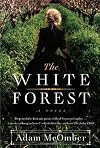
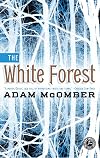
On the other hand, this novel is packaged so as to attract the historical fiction reader, although the cover of my copy—a Blair Witchy “trees in the night” design—is less overtly HF than the original back-view-of-Victorian-chick motif. And indeed it first came to my attention because it was being added to the lists of HF readers. Now, the readers of historical fiction tend to expect a certain level of trust in their authors; they want to feel that said authors have at least tried to locate their story within a certain historical framework and gone to some effort to ensure, if not “accuracy” (a slippery word when applied to history—for example, the discovery of the Mary Rose in England radically changed many ideas about life in Tudor times), at least plausibility. The debate about historical accuracy in fiction just never dies, as the recent flood of writing about the televised version of Philippa Gregory’s Cousins’ War books shows, and I’m constantly coming across great writing about where fact ends and imagination begins and how genres such as steampunk deliberately manipulate the past to the delight of readers.
Some readers get extremely upset about novelists altering history to suit their own purposes, especially when they imbue real historical people with traits—often negative—that readers do not think they had COUGHCOUGHPHILIPPAGREGORY. While writing this review I followed a Facebook thread about how casual (i.e. historically uninformed—HF readers tend to be smug about this) viewers of Gregory’s series now believe Edward of Lancaster was a rapist and this is WRONG! The past, many readers feel, is not the novelist’s private playground; these were real people who lived and died, sometimes horribly, and did or did not love their wives—they are, in fact, us, and how would we feel if a novelist misrepresented us in all our glorious complexity? So the argument goes that any writer who attempts to set his or her work in a defined historical era must try to be true to that era’s history and the psychological makeup of its people.
So when a writer like McOmber begins to play around with the historical timeline, some readers may be incensed. For many of the HF readers I know, anachronisms are a dealbreaker. So my next thought is, can the same be said of the readers of literary fiction? Because The White Forest could also be dropped into that bookshelf due to the quality of the writing and its themes AND the fact that it doesn’t fit perfectly with either historical fiction or fantasy. I find myself wondering if the new cover (and the fact that it has a reading group guide) is an attempt to push the novel in that direction.
I feel I’ve spent way more time on this novel than I really should, but it has certainly raised some interesting questions. Reading being the incredibly subjective art that it is, many of those questions will never receive satisfactory answers, and I’m the last person to suggest that writers should be bound and gagged by a set of rules. In particular, I want to see new writers explore and struggle, and I think that’s what I’m seeing here. Some writers decide they are going to write in a specific genre, learn the rules of that genre thoroughly and then apply them rigorously. That’s a pretty quick way to commercial success if you also have some talent, but to my mind it’s not doing the craft of writing—or the writer—any favors. I read many, many, many HF books where the writer has applied the “formula”—beats, acts, layering, short sentences, blah blah blah—with greater or lesser success, but somehow that formula always shows through like black paint under white. I have a great deal of time for writers who write what they want to, and damn the consequences. I will therefore be looking out for what McOmber does next. show less
***SPOILER ALERT*** I’ve tried very hard not to give the story away, but hints of it may show through in this very long review. I’m really writing for those who have already read the book and want to know what others think about it. So if you’re here because you’re wondering whether to read this novel, you might want to read it first and then come back.
A word about my rating: In many respects, I dislike the star rating system for books. This is one of those moments when trying to rate a book turns my brain into a pretzel as I weigh up the writer’s ability to show more use prose to create an atmosphere, his fundamental writing skills seen as an art rather than a precise science, whether I found the story’s premise convincing or not AND whether another type of reader, looking for different things in a novel, would either love or hate this book. The White Forest gets four stars because while I had serious issues with some aspects of it, to be fair as a reviewer I have to give the writer credit for the other elements.
The story: Jane leads an isolated life on Hampstead Heath, a wild area of north London. Since the death of her mother when Jane was six, Jane has experienced inanimate objects as animate beings that give off sound, colors, lights, even memories. She can transfer the sensations she feels to other people by touch, and mute their effect on herself by remaining grounded in the natural world (notably by wearing flowers tied to her wrist). Her abilities isolate her from other people—who naturally fear them—and her only friends are Maddy, another of society’s outcasts because she is the daughter of a medium and a disgraced daguerrotype artist, and Nathan, the object of both girls’ yearning. Maddy fears Jane’s “ability” and is jealous of the hold it has over Nathan, who sees Jane as a way to reach an otherworldly place they call the Empyrean. When Nathan disappears into a cult society to which his search for the Empyrean has led him, Maddy and Jane work to bring him back, both together and in competition.
What I liked about the novel: To begin with, it was well-written—good dialogue, vivid descriptions, nice pacing and so on. I noted a couple of spelling/grammar snafus in passing (like someone being in the “throws” of some sort of dilemma) but these days that’s usually due to overworked, short-staffed editing departments. And the writing had depth to it; I found myself caught up in wondering if Jane was a reliable narrator or a deluded hysteric (bring on the hysterical Victorian ladies!) and transfixed by the sexual imagery of Jane as the doorway (something to be opened and explored), the stag, the hole in the tree, the red dress, the animals in the white forest…toward the end I began to see the story as an allegory of sexual frustration, a woman taking power over the physical world in a desperate effort to reach fulfillment. And there was the more overt theme of the imbalance of the male power of technology with the female power of the natural world; all very interesting and thought-provoking, although I struggled to find a structure to the narrative that would make it clear what the author thought about these matters. Possibly—since this is a debut novel—the inchoate impression I received is due to the author grasping for half-formed themes that will be worked out in later writings. Given the amount of vapid fluff that makes up about 80% of novel writing, I should be glad to see a writer with some ballast in his brainbox, right?
Where I had issues: Early on in this novel I began to wonder which decade of the Victorian era we were in. Those who follow my reviews may know that I’m not generally a stickler for historical accuracy and will accept that an author may, for the sake of the story, alter an event or a place from time to time. In my own writing I like to invent locations, and I love the world-building elements in the fantasy sub-genres when done right. I was tickled to death, for example, when in Abraham Lincoln: Vampire Hunter the reason given for Lincoln’s determination to win over the Confederacy was that those darn Southerners were EVUL VAMPIRES. The preposterousness of the premise made it obvious that the filmmakers had little regard for the historical record and therefore I could sit back and enjoy the movie without a care in the world about accuracy (although others do care, and the list of goofs for this movie on IMDb makes entertaining reading).
So why did The White Forest turn me into the History Police? It began, as I said above, because I started to wonder when, exactly, this story was unfolding. Chapter 1 is subheaded, unhelpfully or is it teasingly? “Hampstead Heath, 18—“ and much of the tone of the story seemed to indicate that it was set in the very late 19th century, after 1885, say. References to, for example, dream theory and the New Woman sounded very fin-de-siècle.
Flipping to the Author’s Note revealed only that he admitted to not moving the Crystal Palace to its post-1854 location, but nothing else. So what was niggling at me? Then I realized that Nathan had just returned from the Crimean War, dating the novel to around 1857—and that pretty much all other checkable references were therefore anachronistic (see my updates for details). Including the snortable fact that Inspector Vidocq, who comes to London to investigate Nathan’s disappearance, died in 1857 so must in fact have been a zombie detective, not a bad idea when I come to think of it: Sherlock Holmes, Zombie Sleuth might be a worthy contribution to the recent spate of mashups aimed at bored kids who despise history and literature anyway. Can’t be much worse than the Robert Downey Jr. version. Harrumph.
But I digress, and heaven knows this review is long enough without the digressions. At some point while I was merrily pointing out the anachronisms on Goodreads the author contacted me and cheerfully admitted that he was playing with the historical record. And yes, I knew going in that this was supposed to be a Gothic fantasy novel. I felt that a fantasy reader looking purely for the thrill of strange theories and weird happenings might have no problem with the anachronisms, and actually I’d rather like comments from readers with a taste for fantasy based in the past—what bookfriend Ashley called "...historically-influenced fantasy as opposed to simply fiction set in an historical period with some small fantastical elements."
So can a Gothic story ignore the rules of historical fiction? The best quote I could find about Gothic novels was by critic Ellen Moers, who said, “But what I mean -- or anyone else means -- by "the Gothic" is not so easily stated except that it has to do with fear. In Gothic writings fantasy predominates over reality, the strange over the commonplace, and the supernatural over the natural, with one definite auctorial intent: to scare.” I have read very little by H.P. Lovecraft (to be honest, I can’t stand Cthulhu) but I did recognize this novel as Lovecraftian, “a sub-genre of horror fiction which emphasizes the cosmic horror of the unknown (in some cases, unknowable) over gore or other elements of shock, though these may still be present.” So we’re talking about writing in which the emphasis is on creating a certain atmosphere and eliciting chills by putting the reader imaginatively in touch with a supernatural world, and The White Forest does this pretty well.
On the other hand, this novel is packaged so as to attract the historical fiction reader, although the cover of my copy—a Blair Witchy “trees in the night” design—is less overtly HF than the original back-view-of-Victorian-chick motif. And indeed it first came to my attention because it was being added to the lists of HF readers. Now, the readers of historical fiction tend to expect a certain level of trust in their authors; they want to feel that said authors have at least tried to locate their story within a certain historical framework and gone to some effort to ensure, if not “accuracy” (a slippery word when applied to history—for example, the discovery of the Mary Rose in England radically changed many ideas about life in Tudor times), at least plausibility. The debate about historical accuracy in fiction just never dies, as the recent flood of writing about the televised version of Philippa Gregory’s Cousins’ War books shows, and I’m constantly coming across great writing about where fact ends and imagination begins and how genres such as steampunk deliberately manipulate the past to the delight of readers.
Some readers get extremely upset about novelists altering history to suit their own purposes, especially when they imbue real historical people with traits—often negative—that readers do not think they had COUGHCOUGHPHILIPPAGREGORY. While writing this review I followed a Facebook thread about how casual (i.e. historically uninformed—HF readers tend to be smug about this) viewers of Gregory’s series now believe Edward of Lancaster was a rapist and this is WRONG! The past, many readers feel, is not the novelist’s private playground; these were real people who lived and died, sometimes horribly, and did or did not love their wives—they are, in fact, us, and how would we feel if a novelist misrepresented us in all our glorious complexity? So the argument goes that any writer who attempts to set his or her work in a defined historical era must try to be true to that era’s history and the psychological makeup of its people.
So when a writer like McOmber begins to play around with the historical timeline, some readers may be incensed. For many of the HF readers I know, anachronisms are a dealbreaker. So my next thought is, can the same be said of the readers of literary fiction? Because The White Forest could also be dropped into that bookshelf due to the quality of the writing and its themes AND the fact that it doesn’t fit perfectly with either historical fiction or fantasy. I find myself wondering if the new cover (and the fact that it has a reading group guide) is an attempt to push the novel in that direction.
I feel I’ve spent way more time on this novel than I really should, but it has certainly raised some interesting questions. Reading being the incredibly subjective art that it is, many of those questions will never receive satisfactory answers, and I’m the last person to suggest that writers should be bound and gagged by a set of rules. In particular, I want to see new writers explore and struggle, and I think that’s what I’m seeing here. Some writers decide they are going to write in a specific genre, learn the rules of that genre thoroughly and then apply them rigorously. That’s a pretty quick way to commercial success if you also have some talent, but to my mind it’s not doing the craft of writing—or the writer—any favors. I read many, many, many HF books where the writer has applied the “formula”—beats, acts, layering, short sentences, blah blah blah—with greater or lesser success, but somehow that formula always shows through like black paint under white. I have a great deal of time for writers who write what they want to, and damn the consequences. I will therefore be looking out for what McOmber does next. show less
Members
- Recently Added By
Lists

Gaslamp Fantasy
87 works; 15 members
Author Information

7+ Works 331 Members
Common Knowledge
- First words
- When Nathan Ashe disappeared from the ruined streets of Southwark, I couldn't help but think the horror was, at least in my part, my own design
- Last words
- (Click to show. Warning: May contain spoilers.)Yet the child herself was silent and lovely upon the earth
Classifications
Statistics
- Members
- 247
- Popularity
- 132,028
- Reviews
- 27
- Rating
- (3.32)
- Languages
- English
- Media
- Paper, Ebook
- ISBNs
- 9
- ASINs
- 4