On This Page
Description
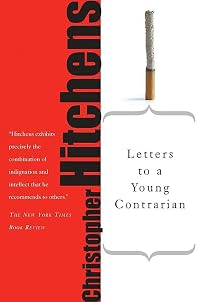
From bestselling author and provocateur Christopher Hitchens, the classic guide to the art of principled dissent and disagreement. In "Letters to a Young Contrarian", bestselling author and world-class provocateur Christopher Hitchens inspires the radicals, gadflies, mavericks, rebels, and angry young (wo)men of tomorrow. Exploring the entire range of "contrary positions"-from noble dissident to gratuitous nag-Hitchens introduces the next generation to the minds and the misfits who show more influenced him, invoking such mentors as Emile Zola, Rosa Parks, and George Orwell. As is his trademark, Hitchens pointedly pitches himself in contrast to stagnant attitudes across the ideological spectrum. No other writer has matched Hitchens's understanding of the importance of disagreement-to personal integrity, to informed discussion, to true progress, to democracy itself. show lessTags
Recommendations
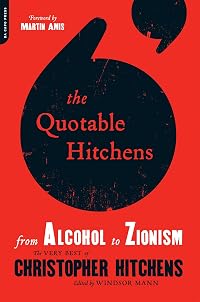

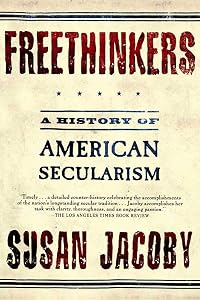
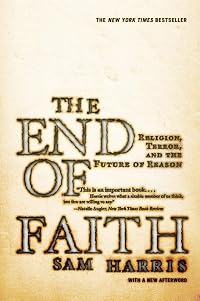
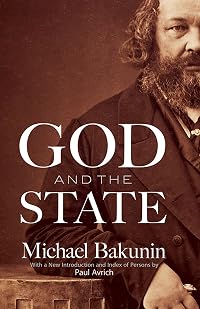
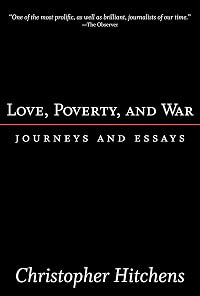
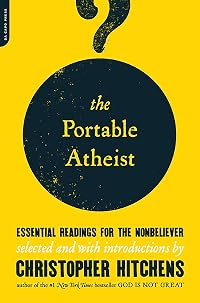
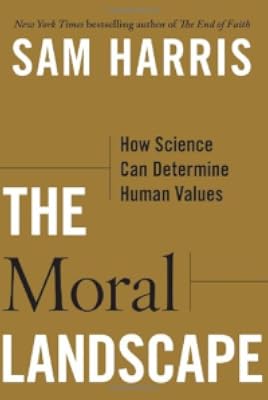
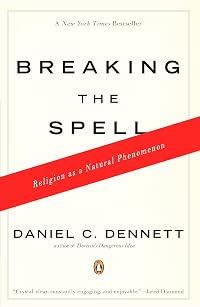
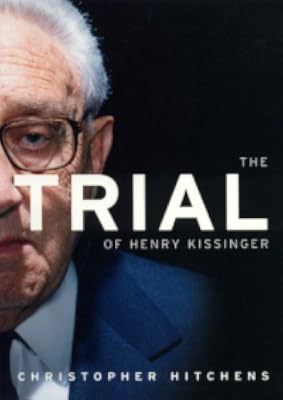
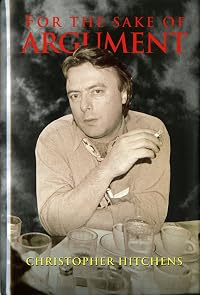
Member Recommendations
Member Reviews
In the early years of the twentieth century, the German poet Rainer Maria Rilke engaged in correspondence with an aspiring poet who solicited his advice, and his responses morphed into a spiralling series of amiable lectures which took in poetry, art, philosophy and the human condition. The result, Letters to a Young Poet, was published in 1929, a few years after Rilke's death, and it is quietly astonishing. Writing in a style of homage to Rilke's work, Christopher Hitchens is similarly wide-ranging and yet concise in his own Letters to a Young Contrarian.
Anyone who's read any of Hitchens' words or seen any of his debates will know that he advocates what he considers "to be the glories of Promethean revolt and the pleasures of skeptical show more inquiry" (pg. 66). This book is – although he would rightly reject and pour scorn on the term – the closest he came to a manifesto. It is not dogmatic, and in fact on almost every page he passionately implores an open mind, a rejection of dogma, and to prize conflict and dissent over submission and mute acquiescence. He doesn't advocate dissent for its own sake and points out that sometimes the majority view is correct ("the radical conservative is not a contradiction in terms" (pg. 100)). He makes the distinction between a rebel (who wants the status quo, so he can position himself against it) and a revolutionary (who wants change), and even points out the inadequacy of the word 'contrarian' in the book's title. He unpacks in these 141 pages much more than this, but the whole purpose of the book is about articulating "the constituents that might go to make up an independent and a questioning person; a dissenter and freethinker" (pg. 63). Hitchens is the perfect mentor for this aim, and in Letters he achieves it.
Religion is – obviously – a main target (this argument, he argues, "is the origin of all arguments; one must always be striving to deepen and refine it" (pg. 65)) and it is interesting to read Hitchens' comments on this pre-9/11 (the book was published in July 2001). His principles and reasoning remained the same after those attacks, but it is notable that there's scarcely a mention of Islam in this book, whereas that cult would feel the full force of the Hitchslap in subsequent years. I won't go over everything Hitchens discusses in this review, because like Rilke before him he says so much in such a small arena. There are a lot of exceptional points made, and like the best of Hitchens there's a ton of forceful arguments gently unpacked. The book is timeless, even when talking about politics of the time, because it recognised the principles underneath. Towards the end, there is a warning to avoid 'identity politics' like the plague (pg. 112), and anyone who has noticed how much that has come to dominate Western political discourse in the years since Hitchens' death will notice how prescient the warning is, and how enduring the man's arguments were. "Never be a spectator of unfairness or stupidity. Seek out argument and disputation for their own sake; the grave will supply plenty of time for silence." (pg. 140). But even years after his death, Hitchens is not silent: he is speaking loud and clear – to those with an open mind to listen. show less
Anyone who's read any of Hitchens' words or seen any of his debates will know that he advocates what he considers "to be the glories of Promethean revolt and the pleasures of skeptical show more inquiry" (pg. 66). This book is – although he would rightly reject and pour scorn on the term – the closest he came to a manifesto. It is not dogmatic, and in fact on almost every page he passionately implores an open mind, a rejection of dogma, and to prize conflict and dissent over submission and mute acquiescence. He doesn't advocate dissent for its own sake and points out that sometimes the majority view is correct ("the radical conservative is not a contradiction in terms" (pg. 100)). He makes the distinction between a rebel (who wants the status quo, so he can position himself against it) and a revolutionary (who wants change), and even points out the inadequacy of the word 'contrarian' in the book's title. He unpacks in these 141 pages much more than this, but the whole purpose of the book is about articulating "the constituents that might go to make up an independent and a questioning person; a dissenter and freethinker" (pg. 63). Hitchens is the perfect mentor for this aim, and in Letters he achieves it.
Religion is – obviously – a main target (this argument, he argues, "is the origin of all arguments; one must always be striving to deepen and refine it" (pg. 65)) and it is interesting to read Hitchens' comments on this pre-9/11 (the book was published in July 2001). His principles and reasoning remained the same after those attacks, but it is notable that there's scarcely a mention of Islam in this book, whereas that cult would feel the full force of the Hitchslap in subsequent years. I won't go over everything Hitchens discusses in this review, because like Rilke before him he says so much in such a small arena. There are a lot of exceptional points made, and like the best of Hitchens there's a ton of forceful arguments gently unpacked. The book is timeless, even when talking about politics of the time, because it recognised the principles underneath. Towards the end, there is a warning to avoid 'identity politics' like the plague (pg. 112), and anyone who has noticed how much that has come to dominate Western political discourse in the years since Hitchens' death will notice how prescient the warning is, and how enduring the man's arguments were. "Never be a spectator of unfairness or stupidity. Seek out argument and disputation for their own sake; the grave will supply plenty of time for silence." (pg. 140). But even years after his death, Hitchens is not silent: he is speaking loud and clear – to those with an open mind to listen. show less
Think for yourself, writes Christopher Hitchens to his Young Contrarian. And although the kind of unemotional, contemplative life he suggests we should live is not always tempting, he manages to wake me (and the Young Contrarian I assume) up, asks me to make up my own mind about everything, question every authority and truth, and shows me the rewards for me and wy world if I chose to live like that. I admire Hitchens more than I agree with him. His letters, particularly the "as if" letter and the closing chapter are full of wisdom and great quotes - but he does sound joyless at times, even when descibing the merit of wit. If you tend to agree with the last speaker, this book is your wake-up call.
I disagree with almost everything Hitchens says politically, except when he talks about the rights of the individual, the War on Terrorism, and the evils of all kinds of totalitarianism. Yet, I have always enjoyed his wit, his writing, and his liver. It is a treat to read Hitchens because he is funny, he does make you think, and he does make some points. But then again, I don't know if I learned anything from this book. How to be a contrarian? He never gives a precise definition, yet it seems at times to be less "to thine own self be true" than "piss everyone off and don't be in the majority." In Texas we call that "on'ry." There is a lot of history and literature thrown in, some biography, and, of course, opinions left and right. He show more takes left and right to task, and, again, makes the condescending assumption that "religion poisons everything," to quote the subtitle to his most recent tome. Hitchens seems to take the position in this book that you are lead astry if you believe in anything greater than yourself, if you have any set of unifying (or edifying) principles that you subscribe to. I think you can be an "individualist" (this is a better term than "contrarian," though he never uses it) and still believe in God or America or capitalism or any -ology or -ism (even the bad ones, like communism). There is no necessary conflict between skepticism and belief, or God and science. You can believe in God and not be fooled by religious totalitarianism, you can be a Republican and not be fooled by a "Republican" and so on. Still, a short, interesting read if you can get it cheaply. show less
This is a brief book about what it takes to be a good contrarian. I think in an era where either people favor being loud, obnoxious, and ill-informed (or just willfully ignorant) or the intelligent people tend to just remain quiet to avoid, as Peter from the film Office Space would say, "avoid being hassled," Hitchens gives advice on how to stand up for something. Argue. Question everything. Do so well prepared. Being well read also helps. The book is written in a style very much like Letters to a young artist. This is a book that can be read in a short time, but it is also a book that invites rereading. I know I probably should try to reread it soon. I also think it is a book we should be handing out to more young people, maybe in high show more school, so they can learn a thing or two about how to handle good arguments, how to question things, and how to stand up for their beliefs in the face of opposition. Those are certainly skills that are not taught very well to young people these days.
On a more personal note, this book was timely for me given the discussions of certain folks in libraryland about whether the librarianship profession can handle argument and discussion or not. It is pretty well known the profession does not handle dissidents very well. I think this book may have a thing or two to say to those who aspire to raise questions and have discussions without being silenced by certain privileged folks. Anyhow, it gave me some food for thought in that regard.
Overall, this is a book worth reading. And if you have not read Hitchens before, it may be a pretty accessible introduction to his work and thinking. show less
On a more personal note, this book was timely for me given the discussions of certain folks in libraryland about whether the librarianship profession can handle argument and discussion or not. It is pretty well known the profession does not handle dissidents very well. I think this book may have a thing or two to say to those who aspire to raise questions and have discussions without being silenced by certain privileged folks. Anyhow, it gave me some food for thought in that regard.
Overall, this is a book worth reading. And if you have not read Hitchens before, it may be a pretty accessible introduction to his work and thinking. show less
How to be Christopher Hitchens, in a few 'letters' to the reader. Principled talk, focused on how to think rather than what to think (although of course the correct 'how' will exclude many a 'what'). Rambles a bit sometimes, but the aim really is to raise a variety of subjects rather than to go into depth on them, so that never becomes too much of a problem. Where I disagreed with him it was worth disagreeing with him; he provokes thought, which is always good. The last two essays, one on Bosnia and the other as a summation of what had gone before, were by far the best, making for a pleasing end.
This slim volume by Christopher Hitchens is aimed at igniting the “contrarian” (as he calls it) in all of us. Letters to a Young Contrarian mimics Rainer Maria Rilke's Letters to a Young Poet, except instead of writing on the subject of poetry, Hitchens writes on the subject of dissent.
He describes what it means to be an oppositionist, and recognizes that the title of “dissenter” is to be earned; this view deflates the egos of all the self-proclaimed “dissenters” out there. He also elucidates a few other intellectual positions, mainly: argument is good, and people are much too comforted by the thought of being apart of a crowd. As he says, “I don't think that the solidarity of belonging is much of a prize.”
As usual, show more Hitchens' wit and erudition shines through in his writing; he gives the reader prose that is simply delightful to read. It is simple, however what he writes about is nothing of the sort. Often, one can get lost in the references to certain historical figures and events. It isn't entirely over the heads of the average, well-educated person, but prepare to find out who people like Jean Jaures, Karl Liebknecht, and Aleksandr Solzhenitsyn are if you don't already. Hitchens also sprinkles Latinisms here and there throughout his letters. Obviously the books is not to be taken as an easy read, for Hitchens expects the reader to have a good grasp of history and its great men and women. If not, well, one will gain an education just by reading the book.
The figures in history Hitchens refers to are Emile Zola, MLK Jr., Thomas Paine (to name some of the more well-known ones)—people who represent what it means to be a dissenter. He notes—drawing from his vast knowledge of history, politics, and philosophy—that dissenters are rarely the people one expects them to be. More often, it's the person on the corner that's rarely seen sober; one day he is put in a situation in which he must choose to speak out, to act in the name of Justice, to do what is right without being told by anyone that he should do so.
Hitchens makes an eloquent case for oppositionism, convincing the reader that it is an honor to be known as an iconoclast, as contrary. What you get from the author is graceful prose combined with an uplifting message. That message: "Seek out argument and disputation for their own sake; the grave will supply plenty of time for silence." show less
He describes what it means to be an oppositionist, and recognizes that the title of “dissenter” is to be earned; this view deflates the egos of all the self-proclaimed “dissenters” out there. He also elucidates a few other intellectual positions, mainly: argument is good, and people are much too comforted by the thought of being apart of a crowd. As he says, “I don't think that the solidarity of belonging is much of a prize.”
As usual, show more Hitchens' wit and erudition shines through in his writing; he gives the reader prose that is simply delightful to read. It is simple, however what he writes about is nothing of the sort. Often, one can get lost in the references to certain historical figures and events. It isn't entirely over the heads of the average, well-educated person, but prepare to find out who people like Jean Jaures, Karl Liebknecht, and Aleksandr Solzhenitsyn are if you don't already. Hitchens also sprinkles Latinisms here and there throughout his letters. Obviously the books is not to be taken as an easy read, for Hitchens expects the reader to have a good grasp of history and its great men and women. If not, well, one will gain an education just by reading the book.
The figures in history Hitchens refers to are Emile Zola, MLK Jr., Thomas Paine (to name some of the more well-known ones)—people who represent what it means to be a dissenter. He notes—drawing from his vast knowledge of history, politics, and philosophy—that dissenters are rarely the people one expects them to be. More often, it's the person on the corner that's rarely seen sober; one day he is put in a situation in which he must choose to speak out, to act in the name of Justice, to do what is right without being told by anyone that he should do so.
Hitchens makes an eloquent case for oppositionism, convincing the reader that it is an honor to be known as an iconoclast, as contrary. What you get from the author is graceful prose combined with an uplifting message. That message: "Seek out argument and disputation for their own sake; the grave will supply plenty of time for silence." show less
Christopher Hitchens professes a great admiration for Oscar Wilde in this book - mainly for Wilde's wit, but you can see that Hitchens is also influenced by Wilde's public facade. Like Morrissey, it's hard to tell what about Hitchens is real and what is adopted persona - in "Letters to a Young Contrarian" he writes in earnest about the necessity of noconformity to the survival of modern liberal society, but he also likes to show off his breadth of knowledge, his acidity and mercilessness towards cowards and fools, and his literary connections. I think Hitchens sees himself as a classical man of letters, but also concerns himself a little too much with sparring with people and crafting his own public image. That said, we could use a lot show more more of people like Hitchens in the public sphere.
my link text show less
my link text show less
Members
- Recently Added By
Lists

TED 2013 Summer Reading List
190 works; 13 members

Atheism, humanism, freethought, &c. — Best nonfiction books in favour of
167 works; 14 members

Books Read in 2021
5,361 works; 114 members
Author Information

89+ Works 29,926 Members
Christopher Hitchens was born in Portsmouth, England on April 13, 1949. He was a contributing editor to Vanity Fair and wrote for numerous other publications throughout his lifetime. He was the author of numerous books including No One Left to Lie To, For the Sake of Argument, Prepared for the Worst, God Is Not Great, Hitch-22: A Memoir, and show more Arguably. He died due to complication from esophageal cancer on December 15, 2011 at the age of 62. (Bowker Author Biography) show less
Series

Common Knowledge
- Canonical title
- Letters to a Young Contrarian
- Original title
- Letters to a Young Contrarian
- Original publication date
- 2001
- People/Characters
- Christopher Hitchens; "X" (The Reader)
- Dedication
- In memory of Peter Sedgwick
- First words
- My Dear X,
- Last words
- (Click to show. Warning: May contain spoilers.)May it be so with you, and may you keep your powder dry for the battles ahead, and know when and how to recognise them.
Classifications
- Genres
- Nonfiction, Philosophy, General Nonfiction, Religion & Spirituality
- DDC/MDS
- 303.32 — Society, government, & culture Social sciences, sociology & anthropology Social processes Coordination and control Socialization
- LCC
- HM1246 .H57 — Social sciences Sociology (General) Sociology Social psychology Social influence. Social pressure
- BISAC
Statistics
- Members
- 1,515
- Popularity
- 15,311
- Reviews
- 23
- Rating
- (3.96)
- Languages
- 8 — Chinese, English, German, Italian, Polish, Spanish, Turkish, Portuguese (Portugal)
- Media
- Paper, Audiobook, Ebook
- ISBNs
- 16
- ASINs
- 9