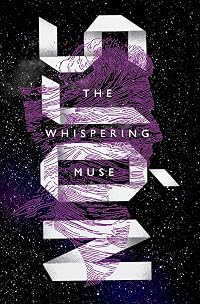
The Whispering Muse
by Sjón
On This Page
Description
Invited to sail on a Danish merchant ship in 1949, eccentric Icelander Valdimar Haraldsson discovers the second mate on the ship is none other than Caeneus, the hero of Greek mythology, who regales his fellow shipmates with tales of the Golden Fleece.Tags
Recommendations

































Member Reviews
It is 1949, and a somewhat eccentric Icelander (with ideas about the consumption of fish and the superiority of the Nordic race), is invited aboard a Danish merchant vessel on a voyage from Copenhagen to Norway. He accepts. Undercover as the 2nd mate on the crew is the mythical Caeneus, who entertains the crew with his tales each evening. The tales and the trip seem to merge at time, blurring the lines between reality and fantasy….
I enjoyed this amusing and clever book, despite my lack of knowledge in the realm of mythology. Sjon is one of those smart & clever authors, a wizard of a kind, creatively disrespectful of the borders between the real and not. I enjoy his books, and look forward to more.
I enjoyed this amusing and clever book, despite my lack of knowledge in the realm of mythology. Sjon is one of those smart & clever authors, a wizard of a kind, creatively disrespectful of the borders between the real and not. I enjoy his books, and look forward to more.
This slim novel offers more than meets the eye as mythologies crash together in strange harmonies. The story is sweeping and otherworldly but narrowly filtered through the view of an octogenarian with an obsession for pescoterian ethnocentrism. Through careful storytelling new dimensions are layered together to hint at something more, but held just out of reach from our point of view. It is a poetic work that leaves you struggling to find solid ground. It's also an excellent introduction to Sjón.
Re-read at Xmas. Still a ton of fun.
Re-read at Xmas. Still a ton of fun.
A slender volume, comprising a story within a story. Valdimar Haraldsson—pompous, self-centered, and vain—is invited on board a Danish merchant ship in 1949 to entertain the other passengers by talking about his theory that Nordic civilization is superior because of their fish consumption. Instead, he (and hopefully the reader) is entranced by the stories he hears each night from second mate Caeneus, stories about his adventures with Jason on the Argo to retrieve the Golden Fleece. It’s probably not irrelevant that Caeneus’s “muse” is a sliver of wood which he claims is from the Argo’s hull and which “speaks” to him, telling him how and what to tell. Not mystical realism, not fantasy—well, not exactly. The clash show more between these two narratives is great and shouldn't work. But it does, thanks to Sjón’s talents. Humorous with distinctly dark undertones, and yet an interesting mix of the mythic past and the somewhat present. It’s myth! It’s fiction! It’s history! It’s a little bit of a lot of things in fewer than 150 pages. Although there is more to it than meets the eye, I do not think it a great work and like other works of his, it leaves me still undecided about his true talent. show less
Sjon is an Icelandic novelist, poet, lyricist and playwright. AS Byatt recently had a glowing review of his work as a novelist in the NY Review of Books, saying that he has changed the way she thinks about reading and writing.
Borges, according to AS Byatt, said, "realist fiction was a betrayal of literature at its core, that you are abusing story telling and literature by not employing the elements of the sublime or fantastic or mythical or folkloric. Because that's what we are keeping alive." The Whispering Muse certainly includes all these elements.
It is 1949 and Valdimar Haraldsson, an eccentric with strange views on how consumption of fish has determined the pre-eminence of the Nordic race, joins a Danish merchant ship on its way show more to the Black Sea. Among the crew is the mythical hero Caeneus, one of the sailors with Jason on the Argo in search of the Golden Fleece; Caeneus entertains the crew most evenings with stories of the adventures of the Argonauts, inspired by him ‘listening’ to a piece of the Argo that he carries with him for inspiration. Haraldsson is not as impressed and thinks the crew should benefit more from his scientific notions on fish consumption. In the end, the ship is not what it seems, though what it is, is not exactly clear because then we are into the world of the fantastic. The experience does not change Haraldsson in his theories, but does make him sexually more potent thanks to the stimulation of smelling the Argo splinter. It sounds a bit goofy when you lay it out like this, but it reads better than it might seem, even if I don’t think it really hangs together as a ‘novel’. But perhaps that is the point. At one point, Haraldsson asks what is the point of travelling if it does not broaden the mind; the same can be said about reading.
One element I do think important in considering the book is that it entails a high degree of farce. The examples are legion: the whole theory about the link between consumption of fish and culture beginning with the assertion that a "fish evolved into a higher life-form that resembled man, which subsequently continued its development to become human"; the assertion that the Nordic race's "astonishing prowess in every field" (which includes the invention of the steam engine, discovery of electricity, invention of the airplane and wireless: none of which were discovered or invented in the Nordic countries) is due to the consumption of fish; the great lines about how the physical development of the European races diminishes as one moves south from the Nordic ideal into countries that consume less fish, with the argument that the "yellow peril" from the East is due to the "energy and industriousness of the fish-eating nation of Japan", conveniently ignoring the fact that, particularly in 1949, the Japanese were considerably shorter and swarthier than even the benighted southern Italians. These racial comments and sterotypes are hardly surprising in our protagonist because we learn, almost as a throw-away line, that he spent the war in Berlin broadcasting news in his native tongue; not quite Lord Haw Haw perhaps, but at best a collaborator, at worst, a war criminal, and one with the Nazis who spent so much intellectual energy building philosophical and social reasonings to buttress their putrid theories about race; and then, he describes his work on Berlin radio as Gesamtkunstwerk which means "total artwork; an artistic creation such as an operatic performance that encompasses music, theatre and the visual arts"--a modest assertion; also interesting to note that the word was, apparently, coined by Richard Wagner, that well-known anti-Semite, in his theoretical essays about opera. And how about the story of the Argonaut who had to "poleax" the monkey every time he wanted to have sex with his woman; not to mention Haraldsson himself discovering the aphrodisiac qualities of the smell of the splinter of wood which had, perhaps, "been split off a female tree" such that his "old chap" was, "perhaps not quite as sprightly as the last time this fit was upon him---but he was lively enough." And the story of the purser's wife who was held responsible for the death of a child in her care and was "handed over" to a Soviet tank platoon for raping and subsequently rescued by the purser from a whorehouse in exchange for a leg of dried ham. It goes on and on. And then there is the weird stuff at the end where the ships changes into something else and a ceremony in the hold that reminded me of nothing more than scenes from the early Indiana Jones movies.
What does this mean in terms of trying to come to grips with this book? I'm not sure. Maybe it goes back to that quote from Borges. Maybe it's part of the Byatt's view that Sjon represents a whole new way of thinking about writing. I found these aspects at least entertaining as they grew more and more outlandish and maybe it is only through the fantastic that we illuminate our ‘reality’ which, from a neutral distant observer, would certainly have its own fantastic elements. show less
Borges, according to AS Byatt, said, "realist fiction was a betrayal of literature at its core, that you are abusing story telling and literature by not employing the elements of the sublime or fantastic or mythical or folkloric. Because that's what we are keeping alive." The Whispering Muse certainly includes all these elements.
It is 1949 and Valdimar Haraldsson, an eccentric with strange views on how consumption of fish has determined the pre-eminence of the Nordic race, joins a Danish merchant ship on its way show more to the Black Sea. Among the crew is the mythical hero Caeneus, one of the sailors with Jason on the Argo in search of the Golden Fleece; Caeneus entertains the crew most evenings with stories of the adventures of the Argonauts, inspired by him ‘listening’ to a piece of the Argo that he carries with him for inspiration. Haraldsson is not as impressed and thinks the crew should benefit more from his scientific notions on fish consumption. In the end, the ship is not what it seems, though what it is, is not exactly clear because then we are into the world of the fantastic. The experience does not change Haraldsson in his theories, but does make him sexually more potent thanks to the stimulation of smelling the Argo splinter. It sounds a bit goofy when you lay it out like this, but it reads better than it might seem, even if I don’t think it really hangs together as a ‘novel’. But perhaps that is the point. At one point, Haraldsson asks what is the point of travelling if it does not broaden the mind; the same can be said about reading.
One element I do think important in considering the book is that it entails a high degree of farce. The examples are legion: the whole theory about the link between consumption of fish and culture beginning with the assertion that a "fish evolved into a higher life-form that resembled man, which subsequently continued its development to become human"; the assertion that the Nordic race's "astonishing prowess in every field" (which includes the invention of the steam engine, discovery of electricity, invention of the airplane and wireless: none of which were discovered or invented in the Nordic countries) is due to the consumption of fish; the great lines about how the physical development of the European races diminishes as one moves south from the Nordic ideal into countries that consume less fish, with the argument that the "yellow peril" from the East is due to the "energy and industriousness of the fish-eating nation of Japan", conveniently ignoring the fact that, particularly in 1949, the Japanese were considerably shorter and swarthier than even the benighted southern Italians. These racial comments and sterotypes are hardly surprising in our protagonist because we learn, almost as a throw-away line, that he spent the war in Berlin broadcasting news in his native tongue; not quite Lord Haw Haw perhaps, but at best a collaborator, at worst, a war criminal, and one with the Nazis who spent so much intellectual energy building philosophical and social reasonings to buttress their putrid theories about race; and then, he describes his work on Berlin radio as Gesamtkunstwerk which means "total artwork; an artistic creation such as an operatic performance that encompasses music, theatre and the visual arts"--a modest assertion; also interesting to note that the word was, apparently, coined by Richard Wagner, that well-known anti-Semite, in his theoretical essays about opera. And how about the story of the Argonaut who had to "poleax" the monkey every time he wanted to have sex with his woman; not to mention Haraldsson himself discovering the aphrodisiac qualities of the smell of the splinter of wood which had, perhaps, "been split off a female tree" such that his "old chap" was, "perhaps not quite as sprightly as the last time this fit was upon him---but he was lively enough." And the story of the purser's wife who was held responsible for the death of a child in her care and was "handed over" to a Soviet tank platoon for raping and subsequently rescued by the purser from a whorehouse in exchange for a leg of dried ham. It goes on and on. And then there is the weird stuff at the end where the ships changes into something else and a ceremony in the hold that reminded me of nothing more than scenes from the early Indiana Jones movies.
What does this mean in terms of trying to come to grips with this book? I'm not sure. Maybe it goes back to that quote from Borges. Maybe it's part of the Byatt's view that Sjon represents a whole new way of thinking about writing. I found these aspects at least entertaining as they grew more and more outlandish and maybe it is only through the fantastic that we illuminate our ‘reality’ which, from a neutral distant observer, would certainly have its own fantastic elements. show less
The Whispering Muse, by Sjón, is a delightful and totally unique gem of a novella that kept me smiling from beginning to end. It constantly entertained by switching between two types of contrasting pleasures: the pleasure of social satire and the joy of enthralling storytelling in the heroic tradition.
First, it’s a very funny satire about a stuffy, bigoted, socially inept nincompoop of an elderly scholar named Valdimar Haraldsson. It is Haraldsson who narrates the book and serves as its antihero. At the beginning of the book, we find this academic numbskull embarking as a guest on a merchant ship owned by the father of a friend. The friend is an ardent admirer of the dolt’s thesis that a diet high in seafood is the reason for the show more unquestionable superiority of the Nordic race. Haraldsson has published this thesis through a series of seventeen volumes of a periodical called “Fish and Culture.” He has devoted twenty years of his life to this endeavor. Mr. Haraldsson is obsessed by fish, his opinion concerning fish and Nordic culture, and all things pertaining to the sea. Naturally, he wants to share his obsession with everyone on board. He is totally unaware of his social shortcomings and absolutely blind to the pleasures of everyday life. Numbers, machines, mechanical processes—these are the things that command his attention.
So, how do you create an interesting story with an antihero narrator like that? Well, Sjón demonstrates that it is no problem at all.
The author deftly embeds in this tale another character who is a mythical heroic storyteller. He is Caeneus…yes, the very same Caeneus who was once an Argonaut accompanying Jason on his quest for the Golden Fleece! Still alive and working the sea some thousands of years later, he is a titan of a man with a divine gift for the verbal tradition of storytelling. Every night after dinner, Caeneus holds a small piece of wood to his ear and listens intently. Once he has the rapt attention of his audience, he recounts—in lavish, lyrical, mesmerizing fashion—the story of Jason and the Argonauts and their journey to the island of Lemnos, a bewitched island populated solely by women. His storytelling skill appears to derive from the piece of wood he holds to his ear. He says it’s a relic from the bow of the Jason’s ship, the Argo, and that it holds divine powers straight from Zeus’ sacred grove of whispering oaks.
Caeneus is not the book’s only fascinating storyteller. The purser also tells an entertaining story that helps the plot along. And in the end, well…something very odd and mysterious happens that causes our otherwise boring narrator to tell us a spellbinding tale what happens to him on the last night aboard ship. Is it a dream, or has our trickster of an author taken all of us through-the-looking-glass into the very heart of the fable itself?
I had no idea how this wondrous book would end, but I was extremely satisfied with how it turned out—the end was unexpected and brilliant, perfect and fitting.
The literary counterpoint between the humorous satire and the lyrical myth is magnificent. It is certainly one of the finest examples I’ve seen of synergism derived from a plotting element.
The Whispering Muse won the Nordic Council Literary Prize, the equivalent of the Man Booker Prize, and “Best Icelandic Novel” in 2005. This is important, because in Iceland, reading and literature are more important than in just about any other place on Earth; no other country has a larger proportion of writers and readers.
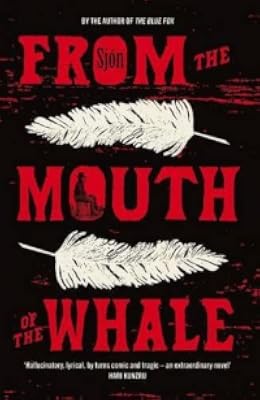
And that gets me to the last point. Recently, Farrar, Straus, and Giroux released into the U. S. market a trilogy of Sjón books, each one translated by Victoria Cribb. The Whispering Muse is the first book in this trilogy. The other two are The Blue Fox and From the Mouth of the Whale. What higher praise can I communicate about this work than to tell you that I’ve just downloaded the other two books and I will be taking them with me on vacation later this summer? show less
First, it’s a very funny satire about a stuffy, bigoted, socially inept nincompoop of an elderly scholar named Valdimar Haraldsson. It is Haraldsson who narrates the book and serves as its antihero. At the beginning of the book, we find this academic numbskull embarking as a guest on a merchant ship owned by the father of a friend. The friend is an ardent admirer of the dolt’s thesis that a diet high in seafood is the reason for the show more unquestionable superiority of the Nordic race. Haraldsson has published this thesis through a series of seventeen volumes of a periodical called “Fish and Culture.” He has devoted twenty years of his life to this endeavor. Mr. Haraldsson is obsessed by fish, his opinion concerning fish and Nordic culture, and all things pertaining to the sea. Naturally, he wants to share his obsession with everyone on board. He is totally unaware of his social shortcomings and absolutely blind to the pleasures of everyday life. Numbers, machines, mechanical processes—these are the things that command his attention.
So, how do you create an interesting story with an antihero narrator like that? Well, Sjón demonstrates that it is no problem at all.
The author deftly embeds in this tale another character who is a mythical heroic storyteller. He is Caeneus…yes, the very same Caeneus who was once an Argonaut accompanying Jason on his quest for the Golden Fleece! Still alive and working the sea some thousands of years later, he is a titan of a man with a divine gift for the verbal tradition of storytelling. Every night after dinner, Caeneus holds a small piece of wood to his ear and listens intently. Once he has the rapt attention of his audience, he recounts—in lavish, lyrical, mesmerizing fashion—the story of Jason and the Argonauts and their journey to the island of Lemnos, a bewitched island populated solely by women. His storytelling skill appears to derive from the piece of wood he holds to his ear. He says it’s a relic from the bow of the Jason’s ship, the Argo, and that it holds divine powers straight from Zeus’ sacred grove of whispering oaks.
Caeneus is not the book’s only fascinating storyteller. The purser also tells an entertaining story that helps the plot along. And in the end, well…something very odd and mysterious happens that causes our otherwise boring narrator to tell us a spellbinding tale what happens to him on the last night aboard ship. Is it a dream, or has our trickster of an author taken all of us through-the-looking-glass into the very heart of the fable itself?
I had no idea how this wondrous book would end, but I was extremely satisfied with how it turned out—the end was unexpected and brilliant, perfect and fitting.
The literary counterpoint between the humorous satire and the lyrical myth is magnificent. It is certainly one of the finest examples I’ve seen of synergism derived from a plotting element.
The Whispering Muse won the Nordic Council Literary Prize, the equivalent of the Man Booker Prize, and “Best Icelandic Novel” in 2005. This is important, because in Iceland, reading and literature are more important than in just about any other place on Earth; no other country has a larger proportion of writers and readers.
And that gets me to the last point. Recently, Farrar, Straus, and Giroux released into the U. S. market a trilogy of Sjón books, each one translated by Victoria Cribb. The Whispering Muse is the first book in this trilogy. The other two are The Blue Fox and From the Mouth of the Whale. What higher praise can I communicate about this work than to tell you that I’ve just downloaded the other two books and I will be taking them with me on vacation later this summer? show less
Short and interesting, it intermixes a classic greek myth with a modern story, creating some strange (but appealing) resonance.
Myth or Mythos, From the Ancient Greek μῦθος (muthos, “report”, “tale”, “story”)
A story or set of stories relevant to or having a significant truth or meaning for a particular culture, religion, society, or other group.
Anything delivered by word of mouth: a word, speech, conversation, or similar; a story, tale, or legend, especially a poetic tale.
A tale, story, or narrative, usually verbally transmitted, or otherwise recorded into the written form from an alleged secondary source.
The interrelationship of value structures and historical experiences of a people, usually given expression through the arts.
The year is 1949, the year Iceland joined NATO, sparking off what is arguably Iceland’s most famous riot in March of show more this year. The riot was prompted by the decision of Althingi, the Icelandic parliament, to join the newly formed NATO, thereby involving Iceland directly in the Cold War, opposing the Soviet Union and re-militarizing the country. All this appears to have bypassed the hero of Sjon’s book The Whispering Muse, the self obsessed eccentric Valdimar Haraldsson, who has little regard for his fellow countrymen and whose thoughts are elsewhere because, also in March of this year, Haraldsson received a letter inviting him to join a Danish merchant ship on its way to the Black Sea. Haraldsson has been invited on this voyage because of his promotion of the idea that the predominantly fish diet of the Nordic race has led to their superiority, an idea he shared with the recently deceased son of the Danish shipping line owner, Haraldsson is a solitary man obsessed with this ideal and who has spent his life writing his journal Fisk og Kultur with aim of recording this perceived superiority.
Every evening on board the ship, everyone gathers round the captains table and one member of the crew regales them with tales of his adventures and exploits as a member of the crew of the legendary Argo.
This crewmember, claims to be Caeneus, who according to Greek mythology was originally a beautiful maiden named Caenis and was raped by Poseidon, who then promised to grant her anything she wished; she wished to become a man, so that nothing like this could ever happen to her again. Poseidon granted her wish, and in addition, made her/him invulnerable to all weapons. At the wedding of Pirithous, when fighting broke out between the Lapiths and the Centaurs, Caeneus slew many of the Centaurs but remained unharmed himself. The Centaurs tried in vain to kill him. Finally a mob of Centaurs began piling pine trees upon him, because they could not kill him, but Caeneus changed again and he flew away as a bird.
We learn this & much more as each evening Caeneus enthralls his fellow travellers, starting every tale by removing a piece of wood, a splinter from the bow of the Argo and holding it to his ear appearing to listen to its whisperings, then the telling unfolds as Caeneus entwines both Greek and Scandinavian mythology into his own story. Each evening he holds the passengers in the palm of his hand as he unfolds the tale of Jason and his heroes, of himself.
Mythos = anything delivered by word of mouth: a word, speech, conversation, or similar; a story, tale, or legend, especially a poetic tale, is an apt description of this fantastic (with all its meanings) yarn. Sjon’s fiction trawls the world of myth and fable, gaily highlighting the absurdity and surrealism inherent within the genres. He has the ability to astonish with his storytelling and yet the language is precise, appearing to be pared back to the marrow with nothing extraneous or out of place. This is the second book of Sjon’s I have read and I’m amazed how he can create a world that is, at the same point on the page, both totally believable and yet is also hallucinatory, grotesque, phantasmagorical and fabulous, this is a writer I want to know more about.
http://parrishlantern.blogspot.co.uk/2012/07/whispering-muse-by-sjon.html show less
A story or set of stories relevant to or having a significant truth or meaning for a particular culture, religion, society, or other group.
Anything delivered by word of mouth: a word, speech, conversation, or similar; a story, tale, or legend, especially a poetic tale.
A tale, story, or narrative, usually verbally transmitted, or otherwise recorded into the written form from an alleged secondary source.
The interrelationship of value structures and historical experiences of a people, usually given expression through the arts.
The year is 1949, the year Iceland joined NATO, sparking off what is arguably Iceland’s most famous riot in March of show more this year. The riot was prompted by the decision of Althingi, the Icelandic parliament, to join the newly formed NATO, thereby involving Iceland directly in the Cold War, opposing the Soviet Union and re-militarizing the country. All this appears to have bypassed the hero of Sjon’s book The Whispering Muse, the self obsessed eccentric Valdimar Haraldsson, who has little regard for his fellow countrymen and whose thoughts are elsewhere because, also in March of this year, Haraldsson received a letter inviting him to join a Danish merchant ship on its way to the Black Sea. Haraldsson has been invited on this voyage because of his promotion of the idea that the predominantly fish diet of the Nordic race has led to their superiority, an idea he shared with the recently deceased son of the Danish shipping line owner, Haraldsson is a solitary man obsessed with this ideal and who has spent his life writing his journal Fisk og Kultur with aim of recording this perceived superiority.
Every evening on board the ship, everyone gathers round the captains table and one member of the crew regales them with tales of his adventures and exploits as a member of the crew of the legendary Argo.
This crewmember, claims to be Caeneus, who according to Greek mythology was originally a beautiful maiden named Caenis and was raped by Poseidon, who then promised to grant her anything she wished; she wished to become a man, so that nothing like this could ever happen to her again. Poseidon granted her wish, and in addition, made her/him invulnerable to all weapons. At the wedding of Pirithous, when fighting broke out between the Lapiths and the Centaurs, Caeneus slew many of the Centaurs but remained unharmed himself. The Centaurs tried in vain to kill him. Finally a mob of Centaurs began piling pine trees upon him, because they could not kill him, but Caeneus changed again and he flew away as a bird.
We learn this & much more as each evening Caeneus enthralls his fellow travellers, starting every tale by removing a piece of wood, a splinter from the bow of the Argo and holding it to his ear appearing to listen to its whisperings, then the telling unfolds as Caeneus entwines both Greek and Scandinavian mythology into his own story. Each evening he holds the passengers in the palm of his hand as he unfolds the tale of Jason and his heroes, of himself.
Mythos = anything delivered by word of mouth: a word, speech, conversation, or similar; a story, tale, or legend, especially a poetic tale, is an apt description of this fantastic (with all its meanings) yarn. Sjon’s fiction trawls the world of myth and fable, gaily highlighting the absurdity and surrealism inherent within the genres. He has the ability to astonish with his storytelling and yet the language is precise, appearing to be pared back to the marrow with nothing extraneous or out of place. This is the second book of Sjon’s I have read and I’m amazed how he can create a world that is, at the same point on the page, both totally believable and yet is also hallucinatory, grotesque, phantasmagorical and fabulous, this is a writer I want to know more about.
http://parrishlantern.blogspot.co.uk/2012/07/whispering-muse-by-sjon.html show less
Members
- Recently Added By
Lists

water on the brain: maritime fiction
74 works; 18 members
Author Information

32+ Works 2,641 Members
Some Editions
Awards and Honors
Awards
Distinctions
Common Knowledge
- Canonical title
- The Whispering Muse
- Original title
- Argóarflísin
- Original publication date
- 2005; 2005 (original Icelandic) (original Icelandic); 2012 (English: Cribb) (English: Cribb)
- People/Characters
- Valdimar Haraldsson; Caeneus
- Important places
- Norway; Lemnos
- First words
- I, Valdimar Haraldsson, was in my twenty-seventh year when I embarked on the publication of a small journal devoted to my chief preoccupation, the link between fish consumption and the superiority of the Nordic race.
- Last words
- (Click to show. Warning: May contain spoilers.)To the lady's great amusement I mimicked it:
'ARRK! ARRK!'
And drew the curtains again. - Original language
- Icelandic
Classifications
- Genres
- Fiction and Literature, General Fiction
- DDC/MDS
- 839.6935 — Literature & rhetoric German & related literatures Other Germanic literatures Old Norse, Old Icelandic, Icelandic, Faroese literatures Modern West Scandinavian; Modern Icelandic Modern Icelandic fiction 21st Century
- LCC
- PT7511 .S62 .A7413 — Language and Literature German, Dutch and Scandinavian literatures Modern Icelandic literature Individual authors or works 19th-20th centuries
- BISAC
Statistics
- Members
- 390
- Popularity
- 80,250
- Reviews
- 19
- Rating
- (3.48)
- Languages
- 8 — Danish, Dutch, English, Finnish, Icelandic, Norwegian (Bokmål), Spanish, Swedish
- Media
- Paper, Audiobook, Ebook
- ISBNs
- 14
- ASINs
- 3