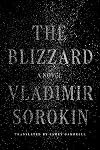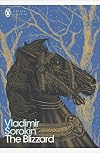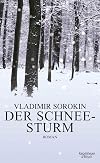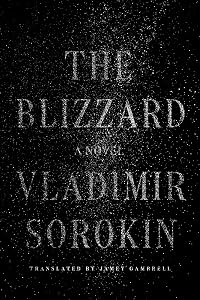
The Blizzard
by Vladimir Sorokin
On This Page
Description
"A dazzling, utterly distinctive saga from Russia's most celebrated-and most controversial-novelist. Vladimir Sorokin is one of Russia's most popular and provocative novelists. In his scabrous dystopian satire Day of the Oprichnik, American readers were introduced to his distinctive style, which combines an edgy avant-garde sensibility with a fondness for the absurd and even the grotesque-all in service of bringing out stinging truths about life in modern-day Russia. In The Blizzard, we are show more immersed in the atmosphere of a nineteenth-century Russia. Garin, a district doctor, is desperately trying to reach the village of Dolgoye, where a mysterious epidemic is turning people into zombies. He carries with him a vaccine that will prevent the spread of this terrible disease but is stymied in his travels by an all-consuming snowstorm, an impenetrable blizzard that turns a drive that should last only a few hours into a voyage of days and, finally, a journey into eternity. The Blizzard dramatizes a timeless metaphysical predicament. The characters in this nearly postapocalyptic world are constantly in motion and yet somehow trapped and frozen-spending day and night fighting their way through the storm on an expedition filled with extraordinary encounters, dangerous escapades, torturous imaginings, and amorous adventures. Hypnotic, fascinating, and richly descriptive, The Blizzard is a seminal work from one of the most inventive writers working today"-- "In this short, surreal twist on the classic Russian novel, a doctor travels to a distant village to save its citizens from an epidemic, but a metaphysical snowstorm gets in his way"-- show lessTags
Recommendations











Member Reviews
Essentially a two-hander, this short novel follows a sleigh-driver and a doctor as the former tries to transport the latter through a winter tempest to deliver vaccines to a plague (or zombie) infested settlement. The whiteout dissolves everyday forms, renders the familiar unknowable; unexpected hard objects lurk beneath the drifted snow to impede their progress. Reality is misshapen, too, in several delightful ways (people and horses come in three Gulliverian sizes; nomadic mages seem able to spraypaint matter into existence) and there’s a tantalizing near-future dystopia lurking beneath the surface story. I love how Sorokin works in the literary tradition of Russian sleigh- or coach-trips, especially in terms of the master/servant show more dynamic that waxes and wanes between Garin and Crouper as their relationship succumbs to the shifting of the wind and snow. It reminded me of the journeyings of Tchtchikov as much as the sleighride in War & Peace but I’m sure there’s a ton of references to Russian lit that went over my head — I did catch the phrase “foundation pit” which surely isn’t there by chance. There’s a hallucinogenic sequence which is actually relevant AND readable, one of many (a blizzard of) encounters that ensure the narrative never congeals or gets too introspective. I think the breadth of imagination, depth of the two main characters, and spectacularly sad ending make this my favorite Sorokin so far. show less
I finished re-reading The Blizzard this weekend and when I got to the end my feeling was one of exalted revelation. It felt like a completely different book from the last time. Once more I'm amazed at the way books can mean very different things, depending on who we are when we read them.
This time for me The Blizzard was about how what one thinks is important in life turns out to be not important at all. It's about how even our most terrible mistakes in life can reveal themselves over time to be glorious and meaningful, if we've lived honestly. The novel suggests that a life lived with quiet acceptance of what can't be helped leads to peace, whereas a life lived by striving forward from one goal to the next leads to nothing.
Last time I show more framed the characters in this novel differently. I thought of the doctor as the protagonist and everyone else as a secondary character. This time the full nature of the relationship between Garin and "Crouper" became the focal point of the novel for me, and it led to a deeper interpretation.
The first time I read the novel I was also distracted by the flurry of events that come one after another in its pages. There is a relentless series of happenings in the story, a metaphorical blizzard of bizarre experiences and scenic wonders. This time the blizzard of happenings felt like they were written to demonstrate the way we humans allow ourselves to be trapped in strife and frustration, from moment to moment. The real story here beats more deeply, like a huge and generous heart.
first review:
Well wow. This is an interesting and captivating read and not like anything I've read before. Even as I write that I'm thinking, "yes-but..." --because this novel keeps fooling me into thinking it's exactly "THIS" kind of novel--a survival novel...a "To Build a Fire" story of human hubris...a 19th century Russian story...whaa, a ZOMBIE novel? and all the while it keeps artfully skirting the edge of multiple literary tropes, including ones that align with realism, and then something extremely unexpected happens and the story veers wildly away and plunges me back into a fantastic world where I have no idea what will happen next. The way some aspects of the story-telling mimics a dream state reminds me of avant-garde or absurdist writing. But there is a big difference: so many avant-guard novels feel like fairly static thought-pieces to me, whereas the narrative tension in The Blizzard never flags.
This time for me The Blizzard was about how what one thinks is important in life turns out to be not important at all. It's about how even our most terrible mistakes in life can reveal themselves over time to be glorious and meaningful, if we've lived honestly. The novel suggests that a life lived with quiet acceptance of what can't be helped leads to peace, whereas a life lived by striving forward from one goal to the next leads to nothing.
Last time I show more framed the characters in this novel differently. I thought of the doctor as the protagonist and everyone else as a secondary character. This time the full nature of the relationship between Garin and "Crouper" became the focal point of the novel for me, and it led to a deeper interpretation.
The first time I read the novel I was also distracted by the flurry of events that come one after another in its pages. There is a relentless series of happenings in the story, a metaphorical blizzard of bizarre experiences and scenic wonders. This time the blizzard of happenings felt like they were written to demonstrate the way we humans allow ourselves to be trapped in strife and frustration, from moment to moment. The real story here beats more deeply, like a huge and generous heart.
first review:
Well wow. This is an interesting and captivating read and not like anything I've read before. Even as I write that I'm thinking, "yes-but..." --because this novel keeps fooling me into thinking it's exactly "THIS" kind of novel--a survival novel...a "To Build a Fire" story of human hubris...a 19th century Russian story...whaa, a ZOMBIE novel? and all the while it keeps artfully skirting the edge of multiple literary tropes, including ones that align with realism, and then something extremely unexpected happens and the story veers wildly away and plunges me back into a fantastic world where I have no idea what will happen next. The way some aspects of the story-telling mimics a dream state reminds me of avant-garde or absurdist writing. But there is a big difference: so many avant-guard novels feel like fairly static thought-pieces to me, whereas the narrative tension in The Blizzard never flags.
Dr. Garin is on a very important mission to deliver vaccines to the Russian town of Dolgoye in an effort to thwart a zombie outbreak. Due to the recent inclement weather, the only transportation in town to be had is via a sledmobile driven by Crouper, the local bread deliveryman. Though Crouper is hesitant due to heavy snow falling and obscuring the road, the doctor is insistent that they leave immediately. What follows is a fateful journey for both men.
Although the plot is driven by a zombie situation taking place in the periphery, it is the journey itself that is the story here. I was frequently reminded of the 1970s computer game Oregon Trail, had it taken place in a surreal, alternate future.
Although the plot is driven by a zombie situation taking place in the periphery, it is the journey itself that is the story here. I was frequently reminded of the 1970s computer game Oregon Trail, had it taken place in a surreal, alternate future.
Ein Buch, in dem das absolut Bizarre nicht Selbstzweck ist, weiß ich doch sehr zu schätzen. Ein Arzt fährt mit einem Mobil, das von 50 Miniatur-Pferden betrieben wird, durch einen Schneesturm, um ein Dorf gegen Zombie-Befall zu impfen. Ein archaisches Abenteuer, durchsetzt von surrealistischen Szenerien und aus der Zeit gefallenen Erfindungen und das alles im Rahmen einer sehr klassischen Erzählung. Hier passt Goethes Definition einer Novelle wirklich. Was "Unerhörtes" und so. Ihr wisst schon.
This is a fairly strange book: a combination of magical realism, satire, and fantasy (none of which is normally my thing) that still grabbed me right away, probably because I'm intrigued by all things snow (especially Antarctica, but one can't always be choosy).
A doctor in Russia, at a time when Stalin is almost a myth, must find a way to deliver a vaccine to a small village in the middle of a blizzard. The vaccine is against a type of zombie illness, but the zombie thing is very secondary to the story. First he finds a man with a 50 HP sled - 50 HP as in 50 tiny horses each the size of a figurine, and they're off. Every few hours something untoward occurs, usually involving strange beings or machines. As I say, not really my thing, show more but for some reason intriguing.
I didn't like the ending, which seemed unnecessarily opaque and off on a tangent that didn't seem to fit, but it was an entertaining story nevertheless. show less
A doctor in Russia, at a time when Stalin is almost a myth, must find a way to deliver a vaccine to a small village in the middle of a blizzard. The vaccine is against a type of zombie illness, but the zombie thing is very secondary to the story. First he finds a man with a 50 HP sled - 50 HP as in 50 tiny horses each the size of a figurine, and they're off. Every few hours something untoward occurs, usually involving strange beings or machines. As I say, not really my thing, show more but for some reason intriguing.
I didn't like the ending, which seemed unnecessarily opaque and off on a tangent that didn't seem to fit, but it was an entertaining story nevertheless. show less
My second Sorokin of the year took me through a snow storm of biblical proportions. ‘The Blizzard’ tells the tale of a Doctor’s struggle to reach an out-of-the-way Russian town to which he must take an antidote for a mysterious plague that has made its way there from Bolivia (apparently). He hires a baker with a sled and a countless band of fantastical mini horses to help him navigate the storm and reach his destination, but upon the way, various events crop up (namely illicit liaisons with a midget’s wife, Kazakh drug merchants selling 3-dimensionally shaped hallucinogens, a garage/cocoon device, a huge snowmen and giants) impeding and delaying their progress.
Having read Day of the Oprichnik, I guess I anticipated a reasonable show more amount of bizarreness but this novel-come-fable felt like a purposefully strange piece of writing and in hindsight, reminds me of a Studio Ghibli production (albeit with a lot more realism) crossed with budget 1980s cartoon films adaptations. Despite there not being a clear discernible meaning in the work, after various discussions it seemed that the struggle of life offered by a buddy reader was a good punt as to the message of the novel. Furthermore, the Odyssian overtures to their quest to deliver the antidote, left us wondering if Sorokin ever really intended ‘The Blizzard’ to be passable.
I can’t say I loved ‘The Blizzard’ but I didn’t particularly dislike it either. It provoked good discussion, reminded me of the work of Lazslo Krasznahorkai and made me think a lot about those tiny horses and whether they were warm enough! show less
Having read Day of the Oprichnik, I guess I anticipated a reasonable show more amount of bizarreness but this novel-come-fable felt like a purposefully strange piece of writing and in hindsight, reminds me of a Studio Ghibli production (albeit with a lot more realism) crossed with budget 1980s cartoon films adaptations. Despite there not being a clear discernible meaning in the work, after various discussions it seemed that the struggle of life offered by a buddy reader was a good punt as to the message of the novel. Furthermore, the Odyssian overtures to their quest to deliver the antidote, left us wondering if Sorokin ever really intended ‘The Blizzard’ to be passable.
I can’t say I loved ‘The Blizzard’ but I didn’t particularly dislike it either. It provoked good discussion, reminded me of the work of Lazslo Krasznahorkai and made me think a lot about those tiny horses and whether they were warm enough! show less
A doctor sets off in a snowstorm, asking for fresh horses at a station, because he needs to bring a vaccine to a stricken village. Of course, there are none, and so far this seems like a classic Russian scene. But quickly, things turn weird, as only Sorokin can make them. For the stationmaster uses a telephone to call another man who might have a sled and horses. A telephone? Travel by horse? This is only the beginning of the weirdness. The other man, Zozma (known as Crouper from a childhood bout with the croup) has 50 tiny horses, the size of partridges, that fit under the hood of the sled, their hooves running the drive shaft. (it seems there are also giant horses, capable of pulling a carriage of a train or even a whole train.) The show more horses are almost pets for Crouper, each with its own personality, and he is reluctant to set off in a snowstorm but agrees because of the urgency -- and money -- of the doctor.
And so they set off for what should be less than a day's journey away. Calamity strikes when a runner of the sled hits a mysterious glass pyramid and cracks. Through ingenuity, and some of the doctor's supplies, they fix it, but eventually it breaks again. They must get out of the storm to fix it once more, and go to a miller's house even though Crouper has vowed to never stop there again. The miller turns out to be the size of a samovar and drinks vodka out of his wife's thimble (his wife is a normal size). The doctor lusts after the miller's wife and gives in to temptation, even thought he previously stressed the urgency of getting to the village that night, and they stay overnight and well into the next morning.
The next day it is still snowing, and they constantly lose contact with the road, and also their way. They end up lost and see a capacious tent that belongs to a group of Vitaminders. Among other activities, Vitaminders manufacture hallucinogens in geometric shapes; their newest one is in the shape of a pyramid. The doctor again yields to temptation and takes a pyramid with the Vitaminders, while Crouper and the horses wait in a newly, somewhat magically, built tent. Again, they lose time while Sorokin details the doctor's terrifying hallucination.
Later, they leave the Vitaminders with "directions" for how to get to the next village that Crouper remembers. Of course, hardships and calamities follow. It develops that there are giants as well as small people (comparable to the horses), and the sled encounters the nose of one (shades of Gogol) who has frozen by the wayside. It also develops that the illness in the village, which someone has brought from Bolivia, is that the people have become zombies; the vaccine is supposed to protect people who haven't yet been bitten. And it is further revealed, in passing, that the Stalin era was a long time ago, so this tale is set sometime in the future.
The ending of this story is somewhat ambiguous, but Sorokin has had fun parodying and honoring some classics of Russian fiction, with snowstorms and hardships and doctors. show less
And so they set off for what should be less than a day's journey away. Calamity strikes when a runner of the sled hits a mysterious glass pyramid and cracks. Through ingenuity, and some of the doctor's supplies, they fix it, but eventually it breaks again. They must get out of the storm to fix it once more, and go to a miller's house even though Crouper has vowed to never stop there again. The miller turns out to be the size of a samovar and drinks vodka out of his wife's thimble (his wife is a normal size). The doctor lusts after the miller's wife and gives in to temptation, even thought he previously stressed the urgency of getting to the village that night, and they stay overnight and well into the next morning.
The next day it is still snowing, and they constantly lose contact with the road, and also their way. They end up lost and see a capacious tent that belongs to a group of Vitaminders. Among other activities, Vitaminders manufacture hallucinogens in geometric shapes; their newest one is in the shape of a pyramid. The doctor again yields to temptation and takes a pyramid with the Vitaminders, while Crouper and the horses wait in a newly, somewhat magically, built tent. Again, they lose time while Sorokin details the doctor's terrifying hallucination.
Later, they leave the Vitaminders with "directions" for how to get to the next village that Crouper remembers. Of course, hardships and calamities follow. It develops that there are giants as well as small people (comparable to the horses), and the sled encounters the nose of one (shades of Gogol) who has frozen by the wayside. It also develops that the illness in the village, which someone has brought from Bolivia, is that the people have become zombies; the vaccine is supposed to protect people who haven't yet been bitten. And it is further revealed, in passing, that the Stalin era was a long time ago, so this tale is set sometime in the future.
The ending of this story is somewhat ambiguous, but Sorokin has had fun parodying and honoring some classics of Russian fiction, with snowstorms and hardships and doctors. show less
Members
- Recently Added By
Lists

Viral Outbreaks and Pandemics
82 works; 8 members

Franklit
95 works; 1 member
Author Information

67+ Works 3,015 Members
Some Editions
Awards and Honors
Awards
Common Knowledge
- Canonical title
- The Blizzard
- Original title
- Метель
- Original publication date
- 2010; 2015 (English) (English)
- People/Characters*
- Doktor Garin
- Important places
- Russia
- Epigraph*
- Покойник спать ложится
На белу постель,
В окне легко крутится
Спокойная метель...
АЛЕКСАНДР БЛОК - First words*
- - Да, поймите же вы, мне надо непременно ехать! - в сердцах взмахнул руками Платон Ильич.
- Last words*
- (Click to show. Warning: May contain spoilers.)И лишь неугомонный чалый пронзительно заржал, навсегда прощаясь со своим хозяином.
- Original language*
- Russisch
*Some information comes from Common Knowledge in other languages. Click "Edit" for more information.
Classifications
- Genres
- Fiction and Literature, General Fiction, Science Fiction
- DDC/MDS
- 891.73 — Literature & rhetoric Literatures of other languages East Indo-European and Celtic literatures Russian and East Slavic languages Russian fiction
- LCC
- PG3488 .O66 .M4813 — Language and Literature Slavic languages and literatures. Baltic languages. Albanian language Slavic. Baltic. Albanian Russian literature Individual authors and works 1961-2000
- BISAC
Statistics
- Members
- 296
- Popularity
- 108,155
- Reviews
- 18
- Rating
- (3.61)
- Languages
- 12 — Czech, Danish, English, Estonian, Finnish, French, German, Hungarian, Italian, Polish, Russian, Swedish
- Media
- Paper, Ebook
- ISBNs
- 24
- ASINs
- 3