Vergil's Aeneid, Books I-VI (translations only)
by Virgil
The Aeneid (Collections and Selections — 01-06)
On This Page
Description
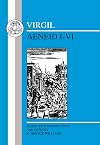
This is the first volume of R. Deryck Williams' classic edition of the Aeneid, covering books I-VI. It includes the Latin text, with English introduction, an extensive commentary and notes by this renowned Virgilian scholar. Designed for upper school and university students, the commentary discusses the life and works of Virgil, the legend of Aeneas, structure and themes and Virgil's hexameter. It interprets the poetic methods and intentions of the Aeneid, and explains not only what Virgil show more says, but how he says it and why he says it in the particular way which he chooses. Williams considers the limitations and similarities of diction from English poets - particularly Spenser and Milton - in order to illuminate the literary impact of the Virgilian passage. Williams' aim was to be "concise rather than omissive" and his notes remain an example of clarity and good sense for any student approaching the first half of the Aeneid in whole or in part. show lessTags
Recommendations






Member Reviews
Pharr's edition of the Aeneid saved me as a Latin student and is still an enjoyable read years later. I particularly appreciate the pop-out list of frequent words glued to the inside back cover of most editions. My only two frustrations (and they are very, very minor) are that the translations for tricky passages are given very liberally (I would prefer to see about half as many full-phrase translations) and that it can be frustrating, to have multiple glossaries (if one doesn't know the frequency of the word, one could end up looking in three separate places). However, these are minor issues: this book is a pleasure to read and works well when teaching a variety of ages (I've taught Pharr's edition in both middle school and high school show more and also used it as a student at university). show less
Dit is de vertaling van Vergilius' werk door priester-dichter Anton Van Wilderode, gepubliceerd in de jaren '70. In die tijd zat ik op de schoolbanken (middelbare school) en kreeg ik in het vijfde jaar Nederlands van hem (Cyriel Coupé was zijn eigenlijke naam), uiteraard een bijzondere ervaring. Eén keer gaf hij gedetailleerd uitleg over hoe hij de Latijnse hexameters van Vergilius had omgezet naar het Nederlands, geen eenvoudige klus, zoals we in de oefeningen zelf ook merkten. Van Wilderode werd op dat moment (1977) volop gelauwerd voor zijn vertaling (onder meer met een eredoctoraat aan de Katholieke Universiteit Leuven).
Van Wilderode stond zowel in zijn eigen dichtwerk als in zijn vertalingen van Vergilius en Horatius voor een show more erg klassieke, elegische aanpak. Dat beroert nog altijd een gevoelige snaar bij mij (zeker zijn betere dichtwerk), maar als ik eerlijk ben - we zijn nu meer dan 40 jaar later - is de stijl van zijn vertalingen nu wel echt uit de tijd. Hij benadrukte toen trouwens zelf dat klassieke werken (zoals die van Vergilius) minstens elke generatie een nieuwe vertaling behoeven. show less
Van Wilderode stond zowel in zijn eigen dichtwerk als in zijn vertalingen van Vergilius en Horatius voor een show more erg klassieke, elegische aanpak. Dat beroert nog altijd een gevoelige snaar bij mij (zeker zijn betere dichtwerk), maar als ik eerlijk ben - we zijn nu meer dan 40 jaar later - is de stijl van zijn vertalingen nu wel echt uit de tijd. Hij benadrukte toen trouwens zelf dat klassieke werken (zoals die van Vergilius) minstens elke generatie een nieuwe vertaling behoeven. show less
Dec 17, 2017Dutch
Edição bilíngue
Jul 29, 2021Portuguese (Brazil)
Ratings
Members
- Recently Added By
Author Information

535+ Works 38,521 Members
Virgil was born on October 15, 70 B.C.E., in Northern Italy in a small village near Mantua. He attended school at Cremona and Mediolanum (Milan), then went to Rome, where he studied mathematics, medicine and rhetoric, and finally completed his studies in Naples. He entered literary circles as an "Alexandrian," the name given to a group of poets show more who sought inspiration in the sophisticated work of third-century Greek poets, also known as Alexandrians. In 49 BC Virgil became a Roman citizen. After his studies in Rome, Vergil is believed to have lived with his father for about 10 years, engaged in farm work, study, and writing poetry. After the battle of Philippi in 42 B.C.E. Virgil¿s property in Cisalpine Gaul, was confiscated for veterans. In the following years Virgil spent most of his time in Campania and Sicily, but he also had a house in Rome. During the reign of emperor Augustus, Virgil became a member of his court circle and was advanced by a minister, Maecenas, patron of the arts and close friend to the poet Horace. He gave Virgil a house near Naples. Between 42 and 37 B.C.E. Virgil composed pastoral poems known as Bucolic or Eclogues and spent years on the Georgics. The rest of his life, from 30 to 19 B.C., Virgil devoted to The Aeneid, the national epic of Rome, and the glory of the Empire. Although ambitious, Virgil was never really happy about the task. Virgil died in 19 B. C. (Bowker Author Biography) show less
Some Editions
Series

Work Relationships
Is contained in
Is abridged in
Common Knowledge
- Canonical title
- Vergil's Aeneid, Books I-VI (translations only) (translations only)
- Original title
- L'Énéide - Livres I à VI
- Original publication date
- c. 20 BCE
- People/Characters
- Aeneas; Anchises; Ascanius; Venus; Dido; Ajax the Lesser
- Important places
- Troy [modern Turkey]; Carthage [modern Tunisia]
- Important events
- Trojan War; Founding of Carthage
- Original language
- Latin
Classifications
- Genres
- Poetry, Fiction and Literature
- DDC/MDS
- 873.01 — Literature & rhetoric Latin & Italic literatures Latin epic poetry and fiction to ca. 499, Roman period
- LCC
- PA6802 .A1 .P5 — Language and Literature Greek language and literature. Latin language and literature Roman literature Individual authors Vergilius Maro, Publius (Virgil)
- BISAC
Statistics
- Members
- 600
- Popularity
- 48,887
- Reviews
- 3
- Rating
- (4.24)
- Languages
- 6 — Dutch, English, French, German, Latin, Swedish
- Media
- Paper
- ISBNs
- 17
- ASINs
- 21