
Catullus
Author of The Poems of Catullus
About the Author
Image credit: Courtesy Wikipedia.
Works by Catullus
Libellus: Selections from Horace, Martial, Ovid, and Catullus. Handbook (Cambridge Latin Texts) (1978) 15 copies
Carmi scelti 4 copies
Carmi: antologia delle antologie 3 copies
Catulli, Tibulli, et Propertii opera 3 copies
Catullo. Le poesie 3 copies
Poesie 3 copies
Catvlli Veronensis liber 3 copies
Catullus Selected Poems 3 copies
Книга стихотворений 3 copies
XII from Catullus 2 copies
Liebeslieder 2 copies
Pěvci lásky 2 copies
CATULLUS Selections From The Poems 2 copies
Attis and Other Poems 2 copies
Catullus, Tibullus et Propertius 2 copies
Catulli, Tibulli, Propertii Carmina accedunt Laevii Calvi Cinnae Aliorum reliquiae et Priapea (1885) 2 copies
Carmina selecta 2 copies
Catull 2 copies
Elegiaci Romani 1 copy
Catulli, Tibulli, Propertii Carmina : accedunt Laevii Calvi Cinnae aliorum reliquiae et Priapea 1 copy
Catullus. The Complete Poems. A new translation with introduction and commentary by Jack Lindsay 1 copy
G. Valerio Catulo Poesías 1 copy
Catullo: Le poesie 1 copy
Poesies 1 copy
Catulli Carmina 1 copy
Poesias 1 copy
BLM, nr 6/1995 1 copy
Leseras 1 copy
POSIA COMPLETA 1 copy
Catullus összes versei 1 copy
[Стихотворения] 1 copy
Catullus Költeményei 1 copy
Catul 1 copy
CARMI 1 copy
Poesías selectas 1 copy
Catulo: POEMAS 1 copy
The Poems of Catullus. 1 copy
I canti 1 copy
Catullus Complete Poetry 1 copy
25 Carmes 1 copy
Poems (tr. James Michie) 1 copy
Carmenes 1 copy
Carmina 1 copy
Select Poems 1 copy
CANTI 1 copy
I Carmi di C. Valerio Catullo. Illustrati, commentati e tradotti dal Prof. Vittorio Cecchini. 1 copy
C. V. Catullo: le poesie 1 copy
Catullus, Part II 1 copy
Catvllvs Tibvllvs Propertivs 1 copy
Sämtliche Gedichte Catull [Gaius Velerius Catullus] ; Hrsg., eingel. u. übers. von Otto Weinreich 1 copy
Catuls Kærlighed og Had 1 copy
C. Valerii Catulli carmina varietate lectionis et perpetua adnotatione illustr. a F.G. Doering 1 copy
Die Gedichte des Catullus 1 copy
Poesie d'amore 1 copy
The Catullus of William Hull 1 copy
A commentary on Catullus 1 copy
Catullus Gaelach : leaganacha de Dhánta Catullus ó fhilína Gaeilge = Les poèmes de Catulle en gaélique (2010) 1 copy
[Catullus Mureti] 1 copy
Amo malamo : de Katulo 1 copy
Il fiore della lirica 1 copy
(Collections English 1854) 1 copy
Le poesie di Catullo 1 copy
Antologia catulliana 1 copy
diVersi 1 copy
I Canti 1 copy
Il fiore della lirica 1 copy
Carmina selecta 1 copy
Le poesie: Carmina 1 copy
Catullo. La poesia e la vita 1 copy
Poésies (Canti - Carmi) 1 copy
Le poesie - Catullo 1 copy
Le Poesie 1 copy
Catulls Sappho 1 copy
Gaius Valerius Catullus versei : irodalomtörténeti tanulmánnyal bevezetve és jegyzetekkel kísérve 1 copy
Catullo (I Carmi) 1 copy
Die Locke Der Berenike: Sämtl. Gedichte / Gaius Valerius Catullus.- Sammlung Dieterich. Sonderausg. (1968) 1 copy
Catullus: Catulli Carmina 1 copy
Zhořklé polibky 1 copy
Catull. Horaz. 1 copy
Catulls Gedichte. Lateinisch und Deutsch. Deutsche Nachdichtungen von Hermann Sternbach (1927) 1 copy
Catull. Horaz. 1 copy
Liebeslieder: Gedichte 1 copy
Poésies 1 copy
Associated Works
World Poetry: An Anthology of Verse from Antiquity to Our Time (1998) — Contributor — 499 copies, 2 reviews
Queer: A Collection of LGBTQ Writing from Ancient Times to Yesterday (2021) — Contributor, some editions — 65 copies
Games of Venus: An Anthology of Greek and Roman Erotic Verse from Sappho to Ovid (The New Ancient World) (1991) — Contributor — 56 copies, 1 review
The Bibelot: A Reprint of Poetry and Prose for Book Lovers, Chose in Part From Scarce Editions and Sources Not Generally Known. Perviligilium Veneris. — Contributor, some editions — 5 copies
Latijnse lyriek : een keuze van vertalingen uit Catullus, Horatius, Tibullus en Propertius (1949) — Contributor — 5 copies
Latijnse geschiedschrijvers : bloemlezing uit de werken van Sallustius, Caesar, Livius en Tacitus (1952) — Contributor — 4 copies
Ode to Boy: An Anthology of Same-Sex Attraction in Literature, Volume One: From Antiquity Through the Eighteenth Century (2014) — Contributor — 3 copies
Roger Eliot Stoddard at Sixty-Five: A Celebration — Contributor — 1 copy
Tagged
Common Knowledge
- Canonical name
- Catullus
- Legal name
- Catullus, Gaius Valerius
- Other names
- Catullus, C. Valerius
- Birthdate
- 0084 BCE
- Date of death
- 0054 BCE
- Gender
- male
- Occupations
- poet
provincial administrator - Relationships
- Lesbia (beloved and subject of many of his poems, real name probably Clodia Metelli)
- Short biography
- The Latin poet Catullus was born at Verona, Italy, around 84 BCE. He moved to Rome as soon as he could, and pursued a career as a lyric poet. He and his friends were the avant-garde of the period both in their lifestyles and their literary productions. Catullus's wit, family wealth, and talent gave him entree to the high society of his time. He spent one year as an assistant to the governor of the province of Bithynia in modern Turkey. Catullus died young, in 54 BCE, probably at Rome. Itʻs doubtful that the picture shown on the upper left of this page even purports to be a picture of Catullus. Men didnʻt wear beards in his time, and the picture is in any case of a much older man; Catullus died at about 30.
- Nationality
- Roman Republic
- Birthplace
- Verona, Roman Republic
- Places of residence
- Verona, Roman Republic
Rome, Roman Republic
Bithynia, Roman Republic
Tibur, Roman Republic - Place of death
- Rome, Roman Republic
- Burial location
- Rome, Italy
- Map Location
- Italy
Members
Discussions
Group Read in Latin: Catullus in 75 Books Challenge for 2011 (July 2011)
Reviews

"Odi et amo. quare id faciam fortasse requiris?
nescio, sed fieri sentio et excrucior.'"
I hate and I love. Why I do this, perhaps you ask?
I do not know, but I feel it happening and I am being torn apart.
nescio, sed fieri sentio et excrucior.'"
I hate and I love. Why I do this, perhaps you ask?
I do not know, but I feel it happening and I am being torn apart.
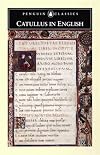
What a delight. I must admit, my assumption has always been toward having at least two of these three things when it comes to poems by the ancients:
1) completeness, i.e. an attempt to cover the canon
2) modernity, thus allowing for perhaps more nuance and range than was allowed in more censorious eras of the past
3) fame, where a particular past author may not meet criteria #2 but their particular translations have become part of the bedrock of the work on the particular poet or poets.
I had show more never thought, really, about an anthology of this type until I stumbled upon it in a second-hand bookstore. Catullus has been one of my homeboys since highschool, and this Penguin edition brings together a vast range of approaches to his texts. At least one translation of every poem among his Carmina is here, ranging from full-length to excerpts, from the earliest translators to the present day (at time of publication), from witty to sorrowful, from direct to roundabout translations. With useful introductions, this provides the joy of Catullus while also allowing us an exploration of how poetry, translation, and culture intersect.
No volume is perfect, and this cannot be so either. For a start, the poems are not in 'order' nor are they necessarily all presented in the best possible version (that's the very nature of this anthology). Second, as the back cover says, much of Catullus' history in English has been about avoiding his more sordid or shocking elements; this was over by 2001, but nevertheless this volume cannot capture all of the poems in perhaps their most honest translations. And finally, but unsurprisingly, this doesn't include Latin texts of the poems. Again this is understandable, as it won't be of interest to most readers, and those us who can read the language will already have an edition. But just worth noting. The book says what it does on the cover.
A gem. show less
1) completeness, i.e. an attempt to cover the canon
2) modernity, thus allowing for perhaps more nuance and range than was allowed in more censorious eras of the past
3) fame, where a particular past author may not meet criteria #2 but their particular translations have become part of the bedrock of the work on the particular poet or poets.
I had show more never thought, really, about an anthology of this type until I stumbled upon it in a second-hand bookstore. Catullus has been one of my homeboys since highschool, and this Penguin edition brings together a vast range of approaches to his texts. At least one translation of every poem among his Carmina is here, ranging from full-length to excerpts, from the earliest translators to the present day (at time of publication), from witty to sorrowful, from direct to roundabout translations. With useful introductions, this provides the joy of Catullus while also allowing us an exploration of how poetry, translation, and culture intersect.
No volume is perfect, and this cannot be so either. For a start, the poems are not in 'order' nor are they necessarily all presented in the best possible version (that's the very nature of this anthology). Second, as the back cover says, much of Catullus' history in English has been about avoiding his more sordid or shocking elements; this was over by 2001, but nevertheless this volume cannot capture all of the poems in perhaps their most honest translations. And finally, but unsurprisingly, this doesn't include Latin texts of the poems. Again this is understandable, as it won't be of interest to most readers, and those us who can read the language will already have an edition. But just worth noting. The book says what it does on the cover.
A gem. show less

This review is for Stephanie McCarter's translation.
A new English translation of Catullus's poetry, with the original Latin text included.
Catullus did write some beautiful and moving poems, but he's more memorable when he was being catty and sex obsessed. This collection is full of bawdy and vulgar lines and is 100% worth reading.
McCarter's translation is clear and easy to follow, although I'm not sure about a few of her neologisms. Her introduction is informative, and the robust notes at show more the end provide context and also assure the reader that yes, Catullus was saying exactly what you think he was saying there.
Received via NetGalley. show less
A new English translation of Catullus's poetry, with the original Latin text included.
Catullus did write some beautiful and moving poems, but he's more memorable when he was being catty and sex obsessed. This collection is full of bawdy and vulgar lines and is 100% worth reading.
McCarter's translation is clear and easy to follow, although I'm not sure about a few of her neologisms. Her introduction is informative, and the robust notes at show more the end provide context and also assure the reader that yes, Catullus was saying exactly what you think he was saying there.
Received via NetGalley. show less

Probably not for everybody (but what poetry is?), Catullus writes brilliantly of the everyday, the minor quibbles, the less profound proverbs, and sometimes even ancient (for his time even!) myth. His hit rate is extremely high, which leaves one wanting more, and in the hands of translator Frank O. Copley his poetry gets reset and re-punctuated into 20th century standards and norms. This is a great help because Catullus was immediate, of his time, and highly dialect-oriented in approach. All show more of this demands that he be right next to you as the reading or reciting goes.
Stand-outs in the collection include what often goes first "One" which perhaps states a poet's wish better than any other poem, and "Sixty Four" which tells the story of Theseus and Ariadne along with the prophecy of Achilles, son of Peleus. The voice and concerns of Catullus actually echo the voice of the main character in Satyricon at times and the propensities for humor that both exhibit do not escape this particular reviewer. Both books may not be the height of what literature has to offer (especially Greek) but they are indeed a lot of fun and perhaps damning portraits of a corrupt and/or corruptible society. show less
Stand-outs in the collection include what often goes first "One" which perhaps states a poet's wish better than any other poem, and "Sixty Four" which tells the story of Theseus and Ariadne along with the prophecy of Achilles, son of Peleus. The voice and concerns of Catullus actually echo the voice of the main character in Satyricon at times and the propensities for humor that both exhibit do not escape this particular reviewer. Both books may not be the height of what literature has to offer (especially Greek) but they are indeed a lot of fun and perhaps damning portraits of a corrupt and/or corruptible society. show less
Lists
Awards


You May Also Like


Associated Authors
Statistics
- Works
- 332
- Also by
- 20
- Members
- 5,764
- Popularity
- #4,276
- Rating
- 4.0
- Reviews
- 57
- ISBNs
- 360
- Languages
- 21
- Favorited
- 46
