
Lucan (1) (0039–0065)
Author of Civil War
For other authors named Lucan, see the disambiguation page.
Lucan (1) has been aliased into Marcus Annaeus Lucanus.
About the Author
Grandson of Seneca the Rhetorican and nephew of Seneca the Philosopher, Lucan was born in Spain and educated in rhetoric in Rome. He was a favorite at Nero's court until the emperor took offense at his precocious literary talent and prevented him from displaying it in public. Lucan then joined a show more conspiracy against the monarch and was forced to commit suicide. His epic poem "Bellum Civile" (Civil War), also called "Pharsalia," sided with Pompey in his fatal struggle with Julius Caesar. His complex rhetorical style was acclaimed in the Middle Ages; Dante and Chaucer ranked him high as a poet. (Bowker Author Biography) show less
Image credit: Nuremberg Chronicle also known as Schedelsche Weltchronik
Series
Works by Lucan
Works have been aliased into Marcus Annaeus Lucanus.
Lucan 4 copies
The civil war, books I-X 1 copy
Pharsalia. Edited With English Notes by C.E. Haskins. With an Introd. by W.E. Heitland (2017) 1 copy
Adnotationes super Lucanum 1 copy
De Bello Civili Book 4 1 copy
Lucan Centennial Cookbook 1 copy
Associated Works
Works have been aliased into Marcus Annaeus Lucanus.
Christopher Marlowe: The Complete Poems and Translations (1971) — Contributor, some editions — 310 copies, 4 reviews
Women in Power: Classical Myths and Stories, from the Amazons to Cleopatra (2024) — Contributor — 34 copies
Tagged
Common Knowledge
- Legal name
- Lucanus, Marcus Annaeus
- Birthdate
- 0039-11-03
- Date of death
- 0065-04-30
- Gender
- male
- Nationality
- Roman Empire
- Birthplace
- Corduba (Córdoba), Hispania Baetica
Members
Reviews
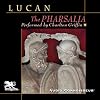
Reader CHARLTON GRIFFIN Translator J D DUFF
Audio Connoisseur, 2017
Audiobook Digital File 10 hours 39 min
Epics Date Completed 2021-01-09 Rating ****
I have always been a fan of Julius Caesar and enjoyed reading how he put those effete and parasitic senators in their place. I didn’t much attention to the views of the other side. I have now heard them, and through an unexpected source. I learned through some algorithm that a poet named Lucan turned the history of the Civil War into an epic show more poem on the scale of Homer and Virgil. I thought at first (hoped? Expected?) that he had been forced to commit suicide at the age of 25 because the chief critic of the day, Nero, took exception to his take on his ancestor. According to Wikipedia, though, it seems that the youth was part of the conspiracy of 65 AD.
Lucan never lets his reader forget that everything Julius Caesar did, from the Rubicon onwards, was illegal and, therefore, tyrannical. He doesn’t make Pompey come alive as a worthy opponent, despite referring to him as Magnus, spending a book on his death, underlining the nobility of his widow, etc. Caesar’s true antagonist is Cato the Younger, the embodiment of every virtue the old Romans admired. He becomes more than a marble model in book nine, where he is shown holding an army together after Pompey’s defeat and murder and setting so impressive an example of duty and self-control that a dying soldier would feel ashamed to groan in his presence. I was especially impressed that Cato felt that his patrician values made him feel bound to demand nothing of his men that he wouldn’t do.
Lucan has many great set pieces: an official protected the treasury while letting the state go to heck; a Roman trying to learn his fate from the oracle at Delphi; Pompey’s unworthy son consulting a Thessalian witch before the climatic battle; Caesar crossing the sea at night during a storm; Cato marching his men through the snakes of the Libyan desert. Lucan was in the middle of describing another one, Caesar’s embattlement at Alexandria, when he was forced to end his work and his life.
Lucan, like Homer especially, provided bloody battle descriptions, most effectively in the siege of Massilia, where he provides all the action a movie could desire. I wish I thought that the court poet had seen a battle himself. Lucan also provides many lessons in geography. I wished that I had made attention to them better. I had to wonder what living under Nero and treating this subject did to his soul. One character, after Pompey’s defeat, snarled that Chance, not Justice, ruled the world. I wondered if he believed that.
A great listen, thanks again to that perfect reader of classical texts, the organ-voiced Charlton Griffin. show less
Audio Connoisseur, 2017
Audiobook Digital File 10 hours 39 min
Epics Date Completed 2021-01-09 Rating ****
I have always been a fan of Julius Caesar and enjoyed reading how he put those effete and parasitic senators in their place. I didn’t much attention to the views of the other side. I have now heard them, and through an unexpected source. I learned through some algorithm that a poet named Lucan turned the history of the Civil War into an epic show more poem on the scale of Homer and Virgil. I thought at first (hoped? Expected?) that he had been forced to commit suicide at the age of 25 because the chief critic of the day, Nero, took exception to his take on his ancestor. According to Wikipedia, though, it seems that the youth was part of the conspiracy of 65 AD.
Lucan never lets his reader forget that everything Julius Caesar did, from the Rubicon onwards, was illegal and, therefore, tyrannical. He doesn’t make Pompey come alive as a worthy opponent, despite referring to him as Magnus, spending a book on his death, underlining the nobility of his widow, etc. Caesar’s true antagonist is Cato the Younger, the embodiment of every virtue the old Romans admired. He becomes more than a marble model in book nine, where he is shown holding an army together after Pompey’s defeat and murder and setting so impressive an example of duty and self-control that a dying soldier would feel ashamed to groan in his presence. I was especially impressed that Cato felt that his patrician values made him feel bound to demand nothing of his men that he wouldn’t do.
Lucan has many great set pieces: an official protected the treasury while letting the state go to heck; a Roman trying to learn his fate from the oracle at Delphi; Pompey’s unworthy son consulting a Thessalian witch before the climatic battle; Caesar crossing the sea at night during a storm; Cato marching his men through the snakes of the Libyan desert. Lucan was in the middle of describing another one, Caesar’s embattlement at Alexandria, when he was forced to end his work and his life.
Lucan, like Homer especially, provided bloody battle descriptions, most effectively in the siege of Massilia, where he provides all the action a movie could desire. I wish I thought that the court poet had seen a battle himself. Lucan also provides many lessons in geography. I wished that I had made attention to them better. I had to wonder what living under Nero and treating this subject did to his soul. One character, after Pompey’s defeat, snarled that Chance, not Justice, ruled the world. I wondered if he believed that.
A great listen, thanks again to that perfect reader of classical texts, the organ-voiced Charlton Griffin. show less

Bella per Emathios plus quam civilia campos
iusque datum sceleri canimus, populumque potentem
in sua victrici conversum viscera dextra
cognatasque acies, et rupto foedere regni
certatum totis concussi viribus orbis
in commune nefas, infestisque obvia signis
signa, pares aquilas et pila minantia pilis.
Wars worse than civil we sing, fought on Emathian plains,
And justice given over to crime; how Rome's mighty people
Directed their victorious hand against their own vitals.
Frontlines of armies akin and show more broken the tyrant's pact.
All the shaken world's forces locked in one struggle;
In common guilt, hostile encounter of standard with
standard, of the same eagles, spear threatening spear.
victrix causa deis placuit sed victa Catoni.
The winner pleased the gods, but Cato preferred the lost.
Liber I, line 157
hoc hostibus unum, quod vincas, ignosce tuis.
Forgive your foes one thing: that you are the winner.
Liber IV, line 344 - 362
Vel dominus rerum vel tanti funeris heres
Will I be ruler of the world or heir to death and doom?
Liber VI, second part show less
iusque datum sceleri canimus, populumque potentem
in sua victrici conversum viscera dextra
cognatasque acies, et rupto foedere regni
certatum totis concussi viribus orbis
in commune nefas, infestisque obvia signis
signa, pares aquilas et pila minantia pilis.
Wars worse than civil we sing, fought on Emathian plains,
And justice given over to crime; how Rome's mighty people
Directed their victorious hand against their own vitals.
Frontlines of armies akin and show more broken the tyrant's pact.
All the shaken world's forces locked in one struggle;
In common guilt, hostile encounter of standard with
standard, of the same eagles, spear threatening spear.
victrix causa deis placuit sed victa Catoni.
The winner pleased the gods, but Cato preferred the lost.
Liber I, line 157
hoc hostibus unum, quod vincas, ignosce tuis.
Forgive your foes one thing: that you are the winner.
Liber IV, line 344 - 362
Vel dominus rerum vel tanti funeris heres
Will I be ruler of the world or heir to death and doom?
Liber VI, second part show less

Marcus Lucanus (AD 39 - 65) was a rich Roman who penned this long poem about the Pompey/Caesar civil war as the ornament of his brief life. Once an intimate of the emperor Nero, he was involved in the Piso led conspiracy to rid Rome of that unfortunate emperor. He was forced to commit suicide by Nero, after implicating other conspirators. Now, to the poem. Sadly, this is a prose redaction of the Latin text into English prose by the English poet and novelist, Robert Graves, and is, I am sure show more accurate about language and emphasis. Though incomplete due to the death of the author, it is worth the read, though the ISBN given here is of a later publication by Penguin books. As a reader, I found it to be a pleasant experience. show less
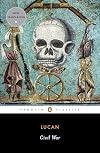
A dark, surreal, fictionalized epic revealing the psychological breaks in the Roman national consciousness.
Lists
Awards

You May Also Like


Associated Authors
Statistics
- Works
- 28
- Also by
- 4
- Members
- 1,303
- Popularity
- #19,699
- Rating
- 3.9
- Reviews
- 15
- ISBNs
- 95
- Languages
- 11
- Favorited
- 2