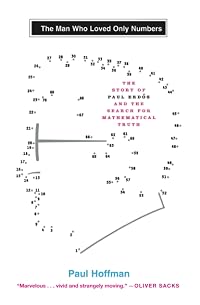
The Man Who Loved Only Numbers: The Story of Paul Erdos and the Search for Mathematical Truth
by Paul Hoffman
On This Page
Description
"Paul Erdos, the most prolific and eccentric mathematician of our time, forsook all creature comforts - including a hometo pursue his lifelong study of numbers. He was a man who possessed unimaginable powers of thought yet was unable to manage some of the simplest daily tasks." "For more than six decades, Erdos lived out of two tattered suitcases, crisscrossing four continents at a frenzied pace, chasing mathematical problems and fresh talent. Erdos saw mathematics as a search for lasting show more beauty and ultimate truth. It was a search Erdos never abandoned, even as his life was torn asunder by some of the major political dramas of our time." "In this biography, Hoffman uses Erdos's life and work to introduce readers to a cast of remarkable geniuses, from Archimedes to Stanislaw Ulam, one of the chief minds behind the Los Alamos nuclear project. He draws on years of interviews with Ronald Graham and Fan Chung, Erdos's chief American caretakers and devoted collaborators. With an eye for the hilarious anecdote, Hoffman explains mathematical problems from Fermat's Last Theorem to the more frivolous "Monty Hall dilemma." What emerges is an intimate look at the world of mathematics and an indelible portrait of Erdos, a charming and impish philosopher-scientist whose accomplishments continue to enrich and inform our world."--Jacket. show lessTags
Recommendations
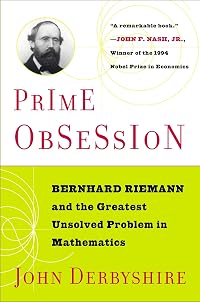
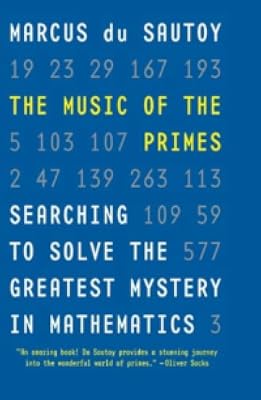
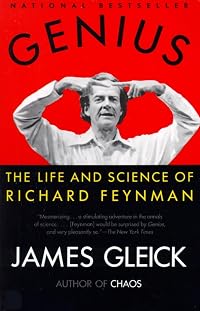
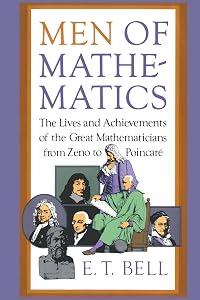

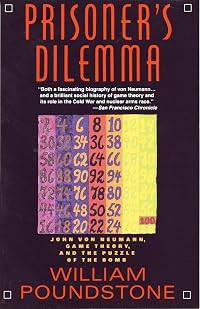
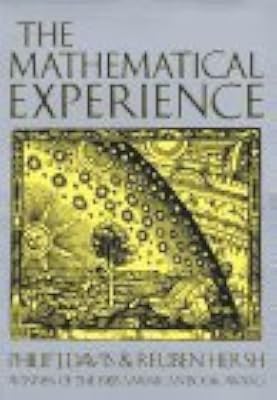
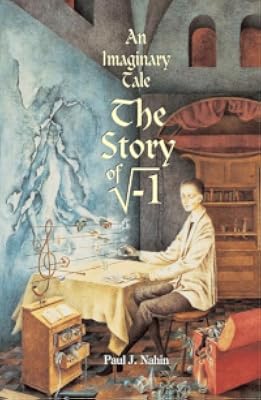
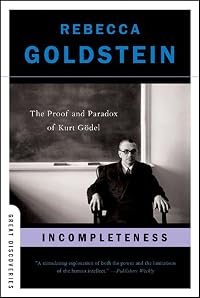
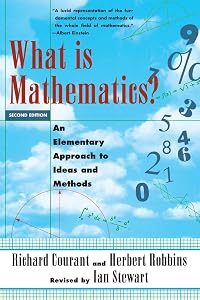


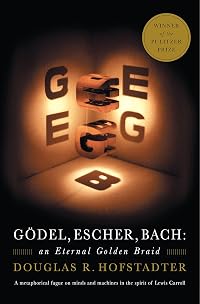

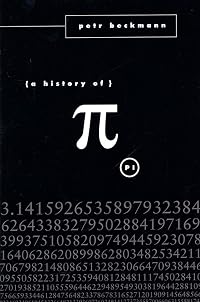
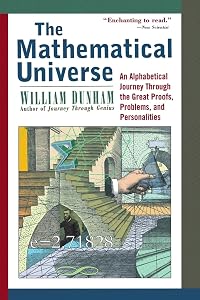


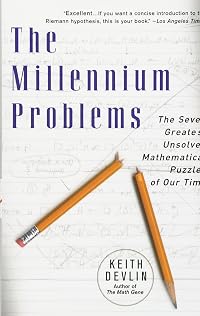
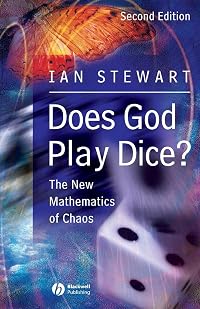
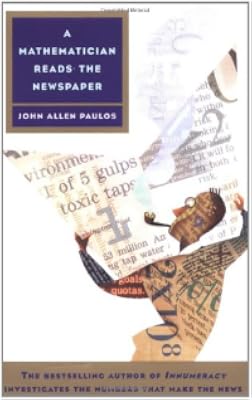

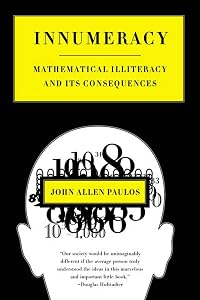


Member Recommendations
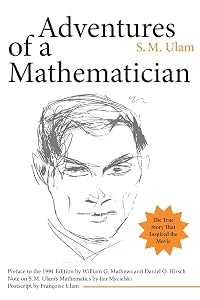
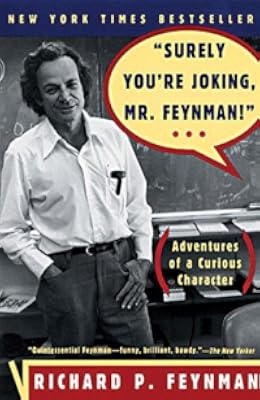
beyondthefourthwall Lively, hilarious, thought-provoking biographies of mathematicians.
Member Reviews
the best math book for nonmathematicians I have ever read. a perfect mix of explanations of theorems, history, and hysterical anecdotes (which I read aloud to anyone who would listen).
There seems to be a thin line between being an eccentric genius and an incandescent excretory orifice; Paul Hoffman’s biography of Paul Erdős, The Man Who Loved Only Numbers, sometimes puts Erdős straddling the line. I think some of this is sour grapes; there’s a temptation for the ordinary to find lapses in the genius – hence all the stories about Einstein forgetting to wear socks.
Nevertheless, Erdős was definitely at least a quarter bubble off level. His typical routine consisted of showing up – often unannounced – at a colleague’s house and expecting to be fed and maintained for a couple of weeks. His initial greeting would be something like “Hello. Let n be an integer…” He would fiddle with the air conditioning, show more try to feed the dogs breakfast cereal, make disastrous attempts at cooking for himself, and generally act like Sheridan Whiteside in The Man Who Came to Dinner – except the host would get several academic papers out of the encounter. This led to the invention of the Erdős number: if you were Paul Erdős, your Erdős number was zero. If you had published a paper with Paul Erdős, your Erdős number is 1. If you published a paper with someone who had, in turn, published a paper with Erdős, your Erdős number is 2, and so on. Hoffman is not a mathematician and is thus sometimes at a loss for things to say about Erdős; thus he relates that when Henry Aaron was trying to break Babe Ruth’s home run record, Emory mathematician Carl Pomerance noted that 714 X 715 (Ruth’s number and Aaron’s target) was the product of the first seven primes, and that the sum of the prime factors of 714 was also the sum of the prime factors of 715, leading to the discovery of “Ruth-Aaron Numbers”, consecutive integers with these properties (the next pair is 18490 and 18491). Erdős had never heard of Pomerance but called him, leading to the publication of 21 papers. Pomerance persuaded Erdős to come to Emory and get an honorary degree; by coincidence Henry Aaron received an honorary degree at the same convocation and Pomerance persuaded them to sign a baseball – leading to Hoffman’s point in the anecdote: Henry Aaron has an Erdős number of 1, if you count baseballs.
There are lots of amusing little anecdotes like this – I suppose this is the only way a casual reader is likely to read the book. My favorite is the account of René Descartes encountering a ruffian while escorting a lady of the evening, quickly whipping out his rapier and disarming the thug, then commenting that he wouldn’t kill him because “…he was too ugly to die before such a beautiful lady”. I never realized Descartes was a swordsman. It would take the mind of a sadist to expand on the anecdote and speculate what might have happened if he had stepped to the front to defend an entire troop of harlots this way – but that would be putting Descartes before the whores.
It is somewhat gratifying to find that Erdős was stumped by Marilyn vos Savant’s “Monty Hall” problem; Erdős, like a substantial fraction of the world’s mathematicians, assumed that no advantage would be gained by switching doors (if you’re not familiar with the problem I suggest googling, it’s too long to explain it here). Hoffman correctly points out that this is actually a case of Bayesian probability – but unfortunately doesn’t explain why. Interestingly enough for a book on a mathematician whose main interest was number theory, when I tried to look up the details I found that the book’s index is incorrect. Apparently a 16-page photo section was added without re-indexing; thus every index entry after page 148 is incorrect. I was pleased to find that I still have a sufficient grasp of mathematics to b e able to add 16 to everything. Although I tried subtracting 16 first.
Good light reading for the slightly mathematically inclined. show less
Nevertheless, Erdős was definitely at least a quarter bubble off level. His typical routine consisted of showing up – often unannounced – at a colleague’s house and expecting to be fed and maintained for a couple of weeks. His initial greeting would be something like “Hello. Let n be an integer…” He would fiddle with the air conditioning, show more try to feed the dogs breakfast cereal, make disastrous attempts at cooking for himself, and generally act like Sheridan Whiteside in The Man Who Came to Dinner – except the host would get several academic papers out of the encounter. This led to the invention of the Erdős number: if you were Paul Erdős, your Erdős number was zero. If you had published a paper with Paul Erdős, your Erdős number is 1. If you published a paper with someone who had, in turn, published a paper with Erdős, your Erdős number is 2, and so on. Hoffman is not a mathematician and is thus sometimes at a loss for things to say about Erdős; thus he relates that when Henry Aaron was trying to break Babe Ruth’s home run record, Emory mathematician Carl Pomerance noted that 714 X 715 (Ruth’s number and Aaron’s target) was the product of the first seven primes, and that the sum of the prime factors of 714 was also the sum of the prime factors of 715, leading to the discovery of “Ruth-Aaron Numbers”, consecutive integers with these properties (the next pair is 18490 and 18491). Erdős had never heard of Pomerance but called him, leading to the publication of 21 papers. Pomerance persuaded Erdős to come to Emory and get an honorary degree; by coincidence Henry Aaron received an honorary degree at the same convocation and Pomerance persuaded them to sign a baseball – leading to Hoffman’s point in the anecdote: Henry Aaron has an Erdős number of 1, if you count baseballs.
There are lots of amusing little anecdotes like this – I suppose this is the only way a casual reader is likely to read the book. My favorite is the account of René Descartes encountering a ruffian while escorting a lady of the evening, quickly whipping out his rapier and disarming the thug, then commenting that he wouldn’t kill him because “…he was too ugly to die before such a beautiful lady”. I never realized Descartes was a swordsman. It would take the mind of a sadist to expand on the anecdote and speculate what might have happened if he had stepped to the front to defend an entire troop of harlots this way – but that would be putting Descartes before the whores.
It is somewhat gratifying to find that Erdős was stumped by Marilyn vos Savant’s “Monty Hall” problem; Erdős, like a substantial fraction of the world’s mathematicians, assumed that no advantage would be gained by switching doors (if you’re not familiar with the problem I suggest googling, it’s too long to explain it here). Hoffman correctly points out that this is actually a case of Bayesian probability – but unfortunately doesn’t explain why. Interestingly enough for a book on a mathematician whose main interest was number theory, when I tried to look up the details I found that the book’s index is incorrect. Apparently a 16-page photo section was added without re-indexing; thus every index entry after page 148 is incorrect. I was pleased to find that I still have a sufficient grasp of mathematics to b e able to add 16 to everything. Although I tried subtracting 16 first.
Good light reading for the slightly mathematically inclined. show less
I wish there were more people like Paul Erdös. I was only ever decent at math in high school, and terrible at math after that, so his exploits make me jealous in a good way. I think for many people, and certainly frequently for me, math beyond a certain point is a dense, lightless thicket of symbols. Maybe everyone is born with a certain amount of math facility, and once you learn up to the point where your returns have diminished to uselessness, you have no choice but to forget about it and move on to something else. I made it through calculus and still remember some of what I learned, but I wouldn't want to bet anyone's life on me being able to integrate anything more complicated than a sine function very quickly. That's why it's so show more cool to read an account of a genuine math genius at work - even though I know that this guy who published over 1,500 papers in his lifetime is on another plane entirely when it comes to mathematics, he's so dedicated to the wonders of the subject that it gradually infected me through the pages and I came away wishing I had stuck with my math classes.
I often wonder to what extent being good at math is simply an innate quality, a gift that you either have or you don't. One of the things that struck me when I was reading Gödel Escher Bach is that Douglas Hofstader's explanations of complicated mathematical issues were much more comprehensible than that same explanation from a textbook (or even Wikipedia), and a large part of it was due to the fact that he gave a lot of history and narrative behind the various problems instead of just laying out symbols and variables. Humans naturally learn through narratives and stories, and it takes a rare kind of person to be able to strip away all of the scene-setting and background and get straight to the abstract symbol-manipulation. Probably some people are just born with the potential to understand things like Russell's paradox and some aren't, but I would really like to know exactly why that is, what separates the neurology of an Erdös from that of a mere mortal. I like that the book doesn't make Erdös - a fairly weird guy even by the relaxed standards of mathematicians - out to be some kind of freak, which I've frequently seen done to some of the more singular characters in science history like Newton.
Instead it's filled with plenty of testimonials about his kindness, his many friendships, and of course his unbelievable gift for probing the relationships between numbers. Explaining higher-level mathematics to a lay audience is one of the toughest tasks a writer can undertake, and Hoffman does a good job of giving the reader a brief tour of some of the many areas of math that Erdös influenced or revolutionized in some way. It's almost comforting to realize that even many professional mathematicians were baffled by what he was doing, and really the way he was able to find patterns in numbers is one of those things that just got more and more impressive with each page. I don't know what kind of mental circuitry lies behind mathematical talent, but I wish I had it, because many of the problems Erdös struggled with are extremely interesting in their own right, if you're curious at all at the mysterious relationships behind the world that we see. There are just so many weird things about prime numbers that you can forgive Erdös' monastic devotion to the subject. I wish I had read this when I was struggling with differential equations, it might have given me some inspiration and fortitude to remember that mathematics is an infinite field. No one can know everything, and that leaves plenty of room for even the most meager contributor to make a mark. show less
I often wonder to what extent being good at math is simply an innate quality, a gift that you either have or you don't. One of the things that struck me when I was reading Gödel Escher Bach is that Douglas Hofstader's explanations of complicated mathematical issues were much more comprehensible than that same explanation from a textbook (or even Wikipedia), and a large part of it was due to the fact that he gave a lot of history and narrative behind the various problems instead of just laying out symbols and variables. Humans naturally learn through narratives and stories, and it takes a rare kind of person to be able to strip away all of the scene-setting and background and get straight to the abstract symbol-manipulation. Probably some people are just born with the potential to understand things like Russell's paradox and some aren't, but I would really like to know exactly why that is, what separates the neurology of an Erdös from that of a mere mortal. I like that the book doesn't make Erdös - a fairly weird guy even by the relaxed standards of mathematicians - out to be some kind of freak, which I've frequently seen done to some of the more singular characters in science history like Newton.
Instead it's filled with plenty of testimonials about his kindness, his many friendships, and of course his unbelievable gift for probing the relationships between numbers. Explaining higher-level mathematics to a lay audience is one of the toughest tasks a writer can undertake, and Hoffman does a good job of giving the reader a brief tour of some of the many areas of math that Erdös influenced or revolutionized in some way. It's almost comforting to realize that even many professional mathematicians were baffled by what he was doing, and really the way he was able to find patterns in numbers is one of those things that just got more and more impressive with each page. I don't know what kind of mental circuitry lies behind mathematical talent, but I wish I had it, because many of the problems Erdös struggled with are extremely interesting in their own right, if you're curious at all at the mysterious relationships behind the world that we see. There are just so many weird things about prime numbers that you can forgive Erdös' monastic devotion to the subject. I wish I had read this when I was struggling with differential equations, it might have given me some inspiration and fortitude to remember that mathematics is an infinite field. No one can know everything, and that leaves plenty of room for even the most meager contributor to make a mark. show less
Couldn't tie his shoes or turn off a faucet, Erdos was a speed freak celibate number theorist and child prodigy against whom every subsequent mathematician is measured. Hoffman turns Erdos' life and work into a genuine page-turner where other impossible mathematicians make cameo appearances making for a scary hilarious window into the human capacity for and obsession with symbolic reasoning. A book for number haters, lovers, and head-scratchers alike.
This is a well written biography of paul erdos, a prolific hungarian mathematician who spends over 19 hours a day doing mathematics and has published over 1400 papers. He was a man who had no home and had travelled around the world giving lectures and staying at his friends place's.
To anyone who is interested in mathematics, this book is great and very fun to read.
To anyone who is interested in mathematics, this book is great and very fun to read.
Eminently Fascinating: Having stopped learning math in high school, competent, but not excellent at it, this book was a great romp of mathematical trivia. As a biography it is a little scattered in focus, but the life of Paul Erdos was befitting of such an approach. One of the great minds in the history of math, more published than almost any other, thinking things only a handful of others could grasp, Erdos was a personification of the absent-minded thinker. Which could sometimes make for a hard subject to write the life of. Having never heard of Erdos until I read this book, it proved to be a competent and entertaining book about the man's life and quirks and some of his ideas. But the true strength of this book is its branching out show more into the ideas of the world of mathematics. Taking asides that last ten pages or more, Paul Hoffman explores the foundations and revolutions and some of the quirkier trivia tidbits of the world of mathematics. Making this work as much a fun romp through the interesting parts of math and part biography of a quixotic man who lived math.
I have heard there is another biography of Erdos out there that deals more directly with his life and ideas, and if one were looking for a more focused biography, it would probably be a better choice. But The Man Who Loved Only Numbers is a great read for its insight and entertainment value. Yes, it made math fun, and for the most part understandable. show less
[5/5] One of the most interesting memoirs I've read ever! You don't need deep mathematical knowledge to appreciate one of the quaintest minds of the 20th century, and most everyone can benefit from his insight, his commitment, his desire to help others.
The book is a memoir, not a biography, which means it's full of anecdotes rather than a series of dates and facts. But as far as anecdotes go, this is one it's chock full of references to appropriate books, journals, papers and letters about Paul Erdös and his many colleagues, so the interested reader can advance in either the technical or the biographical aspects of the most prolific mathematician of the last 100 years
The book is a memoir, not a biography, which means it's full of anecdotes rather than a series of dates and facts. But as far as anecdotes go, this is one it's chock full of references to appropriate books, journals, papers and letters about Paul Erdös and his many colleagues, so the interested reader can advance in either the technical or the biographical aspects of the most prolific mathematician of the last 100 years
Members
- Recently Added By
Lists

HS Mathematics class library
79 works; 6 members

In Our Time books
4,934 works; 2 members
Author Information

9 Works 2,769 Members
Some Editions
Awards and Honors
Awards
Notable Lists
Common Knowledge
- Canonical title*
- L'uomo che amava solo i numeri: la storia di Paul Erdos, un genio alla ricerca della verità matematica
- Original publication date
- 1998
- People/Characters
- Paul Erdős
- Important places
- Budapest, Hungary
- Epigraph
- Mathematical truth is immutable; it lies outside physical reality. . . . This is our belief; this is our core motivating force. Yet our attempts to describe this belief to our nonmathematical friends are akin to describing t... (show all)he Almighty to an atheist. Paul embodied this belief in mathematical truth. His enormous talents and energies were given entirely to the Temple of Mathematics. He harbored no doubts about the importance, the absoluteness, of his quest. To see his faith was to be given faith. The religious world might better have understood Paul's special personal qualities. We knew him as Uncle Paul.
―Joel Spencer
To find another life this century as intensely devoted to abstraction, one must reach back to Ludwig Wittgenstein (1889–1951), who stripped his life bare for philosophy. But whereas Wittgenstein discarded his family fortun... (show all)e as a form of self-torture, Mr. Erdős gave away most of the money he earned because he simply did not need it. . . . And where Wittgenstin was driven by near suicidal compulsions, Mr. Erdős simply constructed his life to extract the maximum amount of happiness.
―The Economist - Dedication
- To Pali bácsi,
der Zauberer von Budapest,
who got by with a little help from his friends
and achieved immortality with his proofs and conjectures
To Ron,
who made the last 39.76 percent of Paul's life easi... (show all)er
and gave generously of his time in helping me
understand Paul's world
To Ann,
who loves frogs, poetry, and me - First words
- It was dinnertime in Greenbrook, New Jersey, on a cold spring day in 1987, and Paul Erdős, then seventy-four, had lost four mathematical colleagues, who were sitting fifty feet in front of him, sipping green tea.
- Last words
- (Click to show. Warning: May contain spoilers.)That was Erdős, always thinking about the epsilons.
- Blurbers
- Sacks, Oliver; Singh, Simon
*Some information comes from Common Knowledge in other languages. Click "Edit" for more information.
Classifications
Statistics
- Members
- 2,075
- Popularity
- 9,988
- Reviews
- 25
- Rating
- (3.97)
- Languages
- 11 — Danish, Dutch, English, French, German, Greek, Hebrew, Hungarian, Italian, Portuguese, Spanish
- Media
- Paper, Ebook
- ISBNs
- 20
- ASINs
- 10