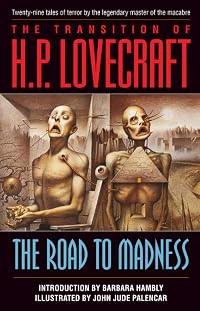
The Transition of H. P. Lovecraft: The Road to Madness
by H. P. Lovecraft
On This Page
Description
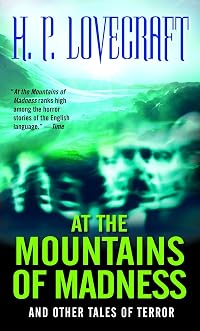
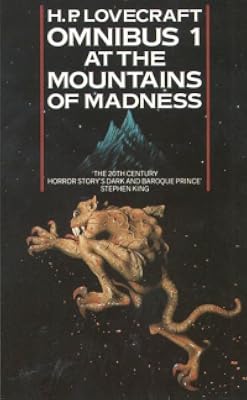
One of the most influential practitioners of American horror, H.P. Lovecraft inspired the work of Stephen King, Anne Rice, and Clive Barker. As he perfected his mastery of the macabre, his works developed from seminal fragments into acknowledged masterpieces of terror. This volume traces his chilling career and includes: IMPRISONED WITH THE PHARAOHS--Houdini seeks to reveal the demons that inhabit the Egyptian night. AT THE MOUNTAINS OF MADNESS--An unsuspecting expedition uncovers a city of show more untold terror, buried beneath an Antarctic wasteland. Plus, for the first time in any Del Rey edition: HERBERT WEST: REANIMATOR--Mad experiments yield hideous results in this, the inspiration for the cult film Re-Animator. COOL AIR--An icy apartment hides secrets no man dares unlock. THE TERRIBLE OLD MAN--The intruders seek a fortune but find only death! AND TWENTY-FOUR MORE BLOOD-CHILLING TALES show lessTags
Recommendations










Member Reviews
I read "At the Mountains of Madness," Lovecraft's weird, visionary tale of abandoned cities in Antarctica, on the day of a blizzard, laying in a recliner next to a cold window, sandwiched between two thick blankets, and weighed down by two fat cats. In those days, reading was my life and I knew how to do it right.
I enjoyed this collection of short stories and novellas by H.P. Lovecraft. My favorites included "Herbert West--Renanimator," "Imprisoned with the Pharoahs," and "At the Mountains of Madness." The first one I liked because of the way the narrator told the story - first a little bit, and then it repeats with more and more detail. I liked the second story because it was told from the point of view of Harry Houdini. And finally, I liked the third story because it was a good mix of discovery, adventure, and horror. Plus, it takes place in one of my favorite literary settings, Antarctica.
Magnificent Jungian/Alchemical horror where narrators are driven mad by the impossibility of integrating The Other -- "At the Mountains of Madness" a vast, pre-human city in Antarctica destroyed by it's own creative genius; "The Horror at Red Hook" a white supremacist tale -- could be rewritten today about the tinderbox issue of illegal immigration; "In the Walls of Eryx" a grail quest that ends at an invisible labyrinth; "Herbert West -- Reanimator" (made into the most bizarrely comical horror movie I have EVER seen) existential horror -- there is no unifying spirit or meaning -- "life" is separated pieces of animated tissue --
"... the sense of latent mystery in existence ... concealed rotteness ... terrors behind the commonest shapes show more and objects..." pg. 223
Edgar Allan Poe's only novel, THE NARRATIVE OF ARTHUR GORDON PYM, published in 1838, is an Antarctic adventure with a startling and puzzling ending. The book inspired at least 3 writers to create their own versions of Pym's quest for the South Pole. Each book is a fun read in its own way.
THE SPHINX OF THE ICE REALM by Jules Verne, 1897
AT THE MOUNTAINS OF MADNESS by H.P. Lovecraft, 1936
PYM: A NOVEL by Mat Johnson, 2011 show less
"... the sense of latent mystery in existence ... concealed rotteness ... terrors behind the commonest shapes show more and objects..." pg. 223
Edgar Allan Poe's only novel, THE NARRATIVE OF ARTHUR GORDON PYM, published in 1838, is an Antarctic adventure with a startling and puzzling ending. The book inspired at least 3 writers to create their own versions of Pym's quest for the South Pole. Each book is a fun read in its own way.
THE SPHINX OF THE ICE REALM by Jules Verne, 1897
AT THE MOUNTAINS OF MADNESS by H.P. Lovecraft, 1936
PYM: A NOVEL by Mat Johnson, 2011 show less
I must admit that this was the first time I actually came across the author H. P. Lovecraft. I found this book at the Strand Bookstall in Mumbai after it fell on my head as I was rummaging through a bookshelf containing some other great books on philosophy.
I was taken aback when I read on the back cover of the book that Lovecraft had inspired many of my own favourite authors of the macabre like Anne Rice, Stephen King & Clive Barker. As I poured over the stories at night UNDER my study table with the table lamp on, I was transported to a realm quite different from my own understanding of terror & fantasy. Lovecraft's ideas were not only macabre but also quite morbid & blood chilling. True that his works are steeped in grand show more descriptions which normally puts a casual reader of, but a true lover of literature & horror will certainly realize after reading Lovecraft's works like 'At The Mountains Of Madness', 'Reanimator', 'Imprisoned With The Pharaohs' etc that, the descriptions are all meaningful to completely realize the actual horror behind it all.
As Barbara Hambly stated, H.P. Lovecraft struggles to bring out his ideas to the reader....it is his idea that is powerful & extraordinary. His pseudo - Poe short stories take on another turn as they get more original & more bizzare as the years go by. Lovecraft's characters too keep on undergoing transformations & at times reappear in other stories. He in the bargain creates a niche for himself in the horror & fantasy genre which no one can rob.
He is excellent as I have observed in first person accounts of the story, making the reader grip the book tightly in a cold sweat as he administers the opiate of fear into our system....almost like his warped character Herbert West does by administering a special powder into the veins of dead bodies or organs to bring them to life in the 'Reanimator'(this was better than Frankenstein). Most of Lovecraft's protagonists I have observed are men (its always men !!!) who are :
1] Well educated
2] Intelligent
3] Believe in the dark forces & works of very sinister personalities (eg., the constant repition of the book Necronomicon by the Arab Abdul Alhazred who was a genius par excellance)
4] Have this constant habit of getting into trouble inspite of their intelligence
No doubt that at times his stories have a certain amount of Racism present in it, never the less, Lovecraft still pens his stories with a masterstroke of a true wizard of the terrible. Most of his main characters as I have stated before are common scholars or scientists except for 'Imprisoned With The Pharoahs' where the poor person imprisoned is the world famous escape artist (got to love him) Harry Houdini.
My personal favourites in this book were ;
1) The Transition Of Juan Romero
2) The Temple
3) The Terrible Old Man
4) Reanimator (lots of gross descriptions & lots of blood....too good !)
5) Imprisoned With The Pharaohs (I love Houdini)
6) The Horror At Red Hook (out of this world !) &
7) In The Walls Of Eryx (he co -authored this with Kenneth Sterling)
Lovecraft refers a lot to Edgar Allen Poe in most of his early works especially in 'The Shunned House' where it looks like he really was enamoured by the original creator of the macabre.
All in all.......a thumbs up for Lovecraft & his 'madness'. Now I am going to check out all the movies that have been based on this stories. Indeed, many movies have found their genesis in the works of this master of ghastly descriptions.
I shall post some more information & links after I finish my research. Got to get my students to check this guy out. show less
I was taken aback when I read on the back cover of the book that Lovecraft had inspired many of my own favourite authors of the macabre like Anne Rice, Stephen King & Clive Barker. As I poured over the stories at night UNDER my study table with the table lamp on, I was transported to a realm quite different from my own understanding of terror & fantasy. Lovecraft's ideas were not only macabre but also quite morbid & blood chilling. True that his works are steeped in grand show more descriptions which normally puts a casual reader of, but a true lover of literature & horror will certainly realize after reading Lovecraft's works like 'At The Mountains Of Madness', 'Reanimator', 'Imprisoned With The Pharaohs' etc that, the descriptions are all meaningful to completely realize the actual horror behind it all.
As Barbara Hambly stated, H.P. Lovecraft struggles to bring out his ideas to the reader....it is his idea that is powerful & extraordinary. His pseudo - Poe short stories take on another turn as they get more original & more bizzare as the years go by. Lovecraft's characters too keep on undergoing transformations & at times reappear in other stories. He in the bargain creates a niche for himself in the horror & fantasy genre which no one can rob.
He is excellent as I have observed in first person accounts of the story, making the reader grip the book tightly in a cold sweat as he administers the opiate of fear into our system....almost like his warped character Herbert West does by administering a special powder into the veins of dead bodies or organs to bring them to life in the 'Reanimator'(this was better than Frankenstein). Most of Lovecraft's protagonists I have observed are men (its always men !!!) who are :
1] Well educated
2] Intelligent
3] Believe in the dark forces & works of very sinister personalities (eg., the constant repition of the book Necronomicon by the Arab Abdul Alhazred who was a genius par excellance)
4] Have this constant habit of getting into trouble inspite of their intelligence
No doubt that at times his stories have a certain amount of Racism present in it, never the less, Lovecraft still pens his stories with a masterstroke of a true wizard of the terrible. Most of his main characters as I have stated before are common scholars or scientists except for 'Imprisoned With The Pharoahs' where the poor person imprisoned is the world famous escape artist (got to love him) Harry Houdini.
My personal favourites in this book were ;
1) The Transition Of Juan Romero
2) The Temple
3) The Terrible Old Man
4) Reanimator (lots of gross descriptions & lots of blood....too good !)
5) Imprisoned With The Pharaohs (I love Houdini)
6) The Horror At Red Hook (out of this world !) &
7) In The Walls Of Eryx (he co -authored this with Kenneth Sterling)
Lovecraft refers a lot to Edgar Allen Poe in most of his early works especially in 'The Shunned House' where it looks like he really was enamoured by the original creator of the macabre.
All in all.......a thumbs up for Lovecraft & his 'madness'. Now I am going to check out all the movies that have been based on this stories. Indeed, many movies have found their genesis in the works of this master of ghastly descriptions.
I shall post some more information & links after I finish my research. Got to get my students to check this guy out. show less
The centerpiece of this collection is At the Mountains of Madness, which is excellent and maybe Lovecraft's very best work. The other stuff in this volume is really scraping the bottom of the Lovecraft barrel. Most of the best short stories are published in other Del Rey volumes.
One of Lovecraft's most riveting tales. He keeps the reader turning the pages in anticipation of something... anything and then leaves us all wondering.
This is a compilation of HP Lovecraft's works. This one includes a few of his early tales along with Dagon, Imprisoned with the Pharaohs, and At the Mountains of Madness. His works are definitely a favorite of mine and I would recommend this to anyone.
Members
- Recently Added By
Lists

Weird and Weirder Fiction
270 works; 35 members

eXTREME cOVER art
2 works; 1 member

Books That Go Bump in the Night
42 works; 6 members
Author Information

1,931+ Works 73,999 Members
Howard Phillips Lovecraft, 1890 - 1937 H. P. Lovecraft was born on August 20, 1890 in Providence, Rhode Island. His mother was Sarah Susan Phillips Lovecraft and his father was Winfield Scott Lovecraft, a traveling salesman for Gorham & Co. Silversmtihs. Lovecraft was reciting poetry at the age of two and when he was three years old, his father show more suffered a mental breakdown and was admitted to Butler Hospital. He spent five years there before dying on July 19, 1898 of paresis, a form of neurosyphillis. During those five years, Lovecraft was told that his father was paralyzed and in a coma, which was not the case. His mother, two aunts and grandfather were now bringing up Lovecraft. He suffered from frequent illnesses as a boy, many of which were psychological. He began writing between the ages of six and seven and, at about the age of eight, he discovered science. He began to produce the hectographed journals, "The Scientific Gazette" (1899-1907) and "The Rhode Island Journal of Astronomy" (1903-07). His first appearance in print happened, in 1906, when he wrote a letter on an astronomical matter to The Providence Sunday Journal. A short time later, he began writing a monthly astronomy column for The Pawtuxet Valley Gleaner - a rural paper. He also wrote columns for The Providence Tribune (1906-08), The Providence Evening News (1914-18), The Asheville (N.C.) Gazette-News (1915). In 1904, his grandfather died and the family suffered severe financial difficulties, which forced him and his mother to move out of their Victorian home. Devastated by this, he apparently contemplated suicide. In 1908, before graduating from high school, he suffered a nervous breakdown. He didn't receive a diploma and failed to get into Brown University, both of which caused him great shame. Lovecraft was not heard from for five years, re-emerging because of a letter he wrote in protest to Fred Jackson's love story in The Argosy. His letter was published in 1913 and caused great controversy, which was noted by Edward F. Daas, President of the United Amateur Press Association (UAPA). Daas invited Lovecraft to join the UAPA, which he did in early 1914. He eventually became President and Official Editor of the UAPA and served briefly as President of the rival National Amateur Press Association (NAPA). He published thirteen issues of his own paper, The Conservative (1915-23) and contributed poetry and essays to other journals. He also wrote some fiction which titles include "The Beast in the Cave" (1905), "The Alchemist" (1908), "The Tomb" and "Dagon" (1917). In 1919, Lovecraft's mother was deteriorating, mentally and physically, and was admitted to Butler Hospital. On May 24, 1921, his mother died from a gall bladder operation. While attending an amateur journalism convention in Boston, Lovecraft met his future wife Sonia Haft Greene, a Russian Jew. They were married on March 3, 1924 and Lovecraft moved to her apartment in Brooklyn. Sonia had a shop on Fifth Avenue that went bankrupt. In 1925, Sonia went to Cleveland for a job and Lovecraft moved to a smaller apartment in the Red Hook district of Brooklyn. In 1926, he decided to move back to Providence. Lovecraft had his aunts bar his wife, Sonia, from going to Providence to start a business because he couldn't have the stigma of a tradeswoman wife. They were divorced in 1929. After his return to Providence, he wrote his greatest fiction, which included the titles "The Call of Cthulhu" (1926), "At the Mountains of Madness" (1931), and "The Shadow Out of Time" (1934-35). In 1932, his aunt, Mrs. Clark, died; and he moved in with his other aunt, Mrs. Gamwell, in 1933. Suffering from cancer of the intestine, Lovecraft was admitted to Jane Brown Memorial Hospital and on March 15, 1937 he died. (Bowker Author Biography) show less
Some Editions
Work Relationships
Contains
Common Knowledge
- Canonical title
- The Transition of H. P. Lovecraft: The Road to Madness
- People/Characters
- Herbert West
- Important places
- Antarctica; Arkham, Massachusetts, USA
Classifications
Statistics
- Members
- 1,021
- Popularity
- 25,512
- Reviews
- 9
- Rating
- (4.19)
- Languages
- English, French
- Media
- Paper, Ebook
- ISBNs
- 3
- ASINs
- 2