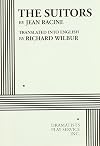
The Suitors
by Jean Racine
On This Page
Description
This scarce antiquarian book is a facsimile reprint of the original. Due to its age, it may contain imperfections such as marks, notations, marginalia and flawed pages. Because we believe this work is culturally important, we have made it available as part of our commitment for protecting, preserving, and promoting the worlds literature in affordable, high quality, modern editions that are true to the original work.Tags
Recommendations








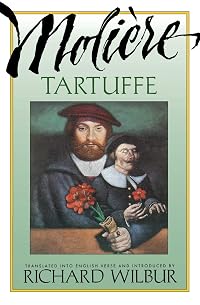
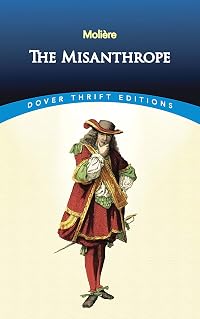



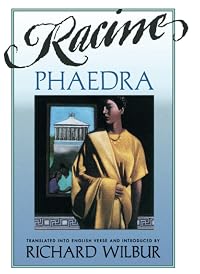
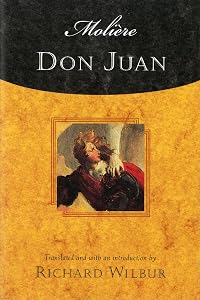












Member Recommendations

Artymedon In 425 before Christ, Aristophanes makes a play, The Wasps, about popular justice which inspires Jean Racine to write the Suitors in 1668.
Member Reviews
Really, now I think I have read all of Richard Wilbur's translations of French verse. Found this play in the Dramatist's Play Service version for productions, not a regular publisher like his others. And according to Google this is it.
That said, the most compelling reasons to read this is a completist urge. It is short, at times funny, but not nearly funny enough to justify its absurd and flimsy plot about an increasingly deranged judge, his highly litiginous neighbor, and the trial of a dog accused of stealing food from the kitchen. According to the preface it is widely produced in France and considered one of the funniest plays, but I thought it fell far short of Racine's Andromoche or Phaedra or any of Moliere's comedies.
That said, the most compelling reasons to read this is a completist urge. It is short, at times funny, but not nearly funny enough to justify its absurd and flimsy plot about an increasingly deranged judge, his highly litiginous neighbor, and the trial of a dog accused of stealing food from the kitchen. According to the preface it is widely produced in France and considered one of the funniest plays, but I thought it fell far short of Racine's Andromoche or Phaedra or any of Moliere's comedies.
Really, now I think I have read all of Richard Wilbur's translations of French verse. Found this play in the Dramatist's Play Service version for productions, not a regular publisher like his others. And according to Google this is it.
That said, the most compelling reasons to read this is a completist urge. It is short, at times funny, but not nearly funny enough to justify its absurd and flimsy plot about an increasingly deranged judge, his highly litiginous neighbor, and the trial of a dog accused of stealing food from the kitchen. According to the preface it is widely produced in France and considered one of the funniest plays, but I thought it fell far short of Racine's Andromoche or Phaedra or any of Moliere's comedies.
That said, the most compelling reasons to read this is a completist urge. It is short, at times funny, but not nearly funny enough to justify its absurd and flimsy plot about an increasingly deranged judge, his highly litiginous neighbor, and the trial of a dog accused of stealing food from the kitchen. According to the preface it is widely produced in France and considered one of the funniest plays, but I thought it fell far short of Racine's Andromoche or Phaedra or any of Moliere's comedies.
Les Plaideurs (1668) est une comédie en 3 actes (comportant respectivement 8, 14 et 4 scènes) et en vers (884 alexandrins) de Jean Racine. C’est la seule comédie écrite par Racine. Il s’est inspiré des Guêpes d’Aristophane mais en a retiré toute la portée politique. La pièce de Racine, qui suit Andromaque et précède Britannicus, est une farce inattendue dans son œuvre. Un juge sort de chez lui par la fenêtre, des chiens urinent sur la scène, deux jeunes amoureux se jouent du père de la jeune fille, le tout en alexandrins. La pièce a été représentée à l’Hôtel de Bourgogne en novembre 1668. Plus grand succès de Racine jusqu’au XIXe siècle, Les Plaideurs ont concurrencé les comédies les plus populaires show more de Molière avant de sombrer dans un demi-oubli au cours du XXe siècle.
Résumé :
* Acte 1 - Dandin, juge à moitié fou, veut sans cesse juger des procès. Son fils Léandre, aidé de Petit Jean et de l’Intimé, parvient à l’empêcher de sortir de chez lui. Surviennent le bourgeois Chicanneau et la comtesse de Pimbesche, qui viennent voir Dandin pour des causes différentes. Les deux plaideurs finissent par se chamailler entre eux. Or Léandre cherche un moyen d’obtenir la main d’Isabelle, fille de Chicanneau.
* Acte 2 - Sur une idée de Léandre, l’Intimé se déguise en huissier et va présenter un billet à Isabelle. Chicanneau s’interpose. Léandre, déguisé en commissaire, réussit à lui faire signer un papier qui soi-disant règle cette affaire. Dandin, quant à lui, réclame toujours un procès à juger. Léandre lui propose de s’occuper du cas d’un chien qui a volé un chapon.
* Acte 3 - Le procès du chien se tient chez Dandin. Petit Jean et l’Intimé, avocats improvisés, tiennent des discours incohérents. Enfin Léandre présente à son père le contrat qu’il a fait signer à Chicanneau. C’est une promesse de marier sa fille au jeune homme. Dandin donne son arrêt : le contrat est valide et le mariage aura lieu ! show less
Résumé :
* Acte 1 - Dandin, juge à moitié fou, veut sans cesse juger des procès. Son fils Léandre, aidé de Petit Jean et de l’Intimé, parvient à l’empêcher de sortir de chez lui. Surviennent le bourgeois Chicanneau et la comtesse de Pimbesche, qui viennent voir Dandin pour des causes différentes. Les deux plaideurs finissent par se chamailler entre eux. Or Léandre cherche un moyen d’obtenir la main d’Isabelle, fille de Chicanneau.
* Acte 2 - Sur une idée de Léandre, l’Intimé se déguise en huissier et va présenter un billet à Isabelle. Chicanneau s’interpose. Léandre, déguisé en commissaire, réussit à lui faire signer un papier qui soi-disant règle cette affaire. Dandin, quant à lui, réclame toujours un procès à juger. Léandre lui propose de s’occuper du cas d’un chien qui a volé un chapon.
* Acte 3 - Le procès du chien se tient chez Dandin. Petit Jean et l’Intimé, avocats improvisés, tiennent des discours incohérents. Enfin Léandre présente à son père le contrat qu’il a fait signer à Chicanneau. C’est une promesse de marier sa fille au jeune homme. Dandin donne son arrêt : le contrat est valide et le mariage aura lieu ! show less
Jan 9, 2011French
Ratings
Members
- Recently Added By
Author Information

311+ Works 7,046 Members
Jean Racine is considered the greatest of French tragic dramatists. If Shakespeare's (see Vol. 1) theater is characterized by exploration and invention, Racine's is defined by restraint and formal perfection. His themes are derived from Greco-Roman, biblical, and oriental sources and are developed in the neoclassic manner: keeping to few show more characters, observing the "three unities" defined by Aristotle (see Vols. 3, 4, and 5) as essential to tragedy (i. e., unity of time, place, and action), and writing in regular 12-syllable verses called "alexandrines." In contrast to Corneille, whose theater is eminently political and concerned with moral choices, Racine locates tragic intrigue in the conflict of inner emotions. He is a master at exploring the power of erotic passion to transform and pervert the human psyche. As a Jansenist who believed that a person deprived of grace was subject to the tyranny of instincts, Racine was interested in portraying human passions---particularly the passion of love---in a state of crisis. Racine is also one of the greatest of all French poets, and his plays are a challenge to any translator. His major tragedies include Andromaque (1667), Britannicus (1669), e Berenice (1670), Iphigenie (1674), and Phedre (1677). (Bowker Author Biography) show less
Some Editions
Series
Belongs to Publisher Series
Work Relationships
Is contained in
Was inspired by
Common Knowledge
- Canonical title
- The Suitors
- Original title
- Les plaideurs
- Alternate titles
- The litigants ; The suitors
- Original publication date
- 1668
- People/Characters
- Dandin (judge); Léandre (son of Dandin); Chicanneau (Bourgeois); Isabelle (Daughter of Chicanneau); The Countess; L'Intimé (secretary) (show all 7); Petit-Jean (Concierge)
- Important places
- Caen, Calvados, Normandy, France
- Important events
- Foundation of the Opera Academy by Louis XIV (1669)
- First words
- Ma foi, sur l'avenir bien fou qui se fira:
- Quotations
- Those who make fun of this Comedy deserve to be made fun of. "Moliere"
- Last words
- (Click to show. Warning: May contain spoilers.)Allons nous délasser à voir d'autres procès . (Let's divert ourselves and go see some litigation)
Classifications
- DDC/MDS
- 792.0944 — Arts & recreation Recreation, sports, and performing arts Theater: Plays, Ballet, Opera modified standard subdivisions History, geographic treatment, biography; Description, critical appraisal of specific theatres and companies Europe France & Monaco
- LCC
- PQ1899 .A3 — Language and Literature French, Italian, Spanish and Portuguese literatures French literature Modern literature 17th century
- BISAC
Statistics
- Members
- 90
- Popularity
- 355,414
- Reviews
- 3
- Rating
- (3.20)
- Languages
- Dutch, English, French
- Media
- Paper, Ebook
- ISBNs
- 17
- ASINs
- 9