Man-Eaters of Kumaon
by Jim Corbett
On This Page
Description
Man-Eaters of Kumaon is the best known of Corbett's books, one which offers ten fascinating and spine-tingling tales of pursuing and shooting tigers in the Indian Himalayas during the early years of this 19th Century. The stories also offer first-hand information about the exotic flora, fauna, and village life in this obscure and treacherous region of India, making it as interesting a travelogue as it is a compelling look at a bygone era of hunting. No one understood the ways of the Indian show more jungle better than Corbett. A skilled tracker, he preferred to hunt alone and on foot, sometimes accompanied by his small dog Robin. Corbett derived intense happiness from observing wildlife and he was a fervent conservationist as well as a tracker. He empathised with the impoverished people amongst whom he lived, in what is today Uttarakhand, and he established India's first tiger sanctuary there. Corbett's writing is as immediate and accessible today as it was when first published in 1944. show lessTags
Recommendations






























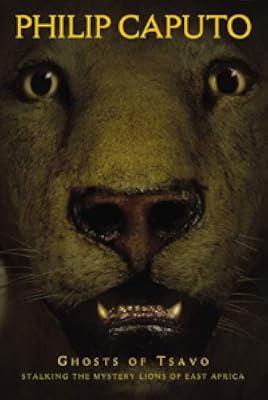
Member Recommendations
Member Reviews
Here's another book I've read over and over again. First acquired in paperback when I was 12, I read it until it started to disintegrate (and I'm careful with books). About 30 years ago I was able to procure, used, the above edition, and I have no idea how many more times I've read it. Like Velocity, but in a totally different genre, Corbett draws you in, painting word-pictures of the art of hunting man-eating tigers, the Indian hill country, and the wonderful people who live there. Still today, over a half century later, the book still captivates me.
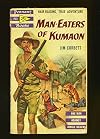
First read and enjoyed when I was 12 years old (it was the first American edition, published in 1946, with the wonderful dust jacket shown here). A re-read so much later (in an unadorned tan cover, 1944) and I am less accepting of the style. Corbett was meticulous in describing the scenery and the villagers where the rogue tigers caused problems ~ descriptions invaluable in setting the story in its day. However, the author repeatedly disrupts the flow of the adventures with backstory sometimes of little relevance in the middle of tracking the animals, to the point of confusing the reader.
My Indian edition carried a few photographs, which were perhaps acceptable in 1944, but by 2022, the blurry greyscale images are useless in helping show more illustrate the subject. Despite these criticisms, Corbett was a thoughtful conservationist and explains the reasons for having to hunt down these tigers who've lost their fear of humans largely due to the human population's effects on the tiger's habitat. show less
My Indian edition carried a few photographs, which were perhaps acceptable in 1944, but by 2022, the blurry greyscale images are useless in helping show more illustrate the subject. Despite these criticisms, Corbett was a thoughtful conservationist and explains the reasons for having to hunt down these tigers who've lost their fear of humans largely due to the human population's effects on the tiger's habitat. show less
When I was a boy at school the Chaplain devoted the last divinity lesson of each term to reading us a chapter from Man Eaters of Kumaon. What I didn't appreciate was that the Chaplain, like Corbett, lived in Naini Tal, and came from a domiciled family in India and left the country when it became independent. I never did manage to digest the Chaplain's muscular christianity (or come to terms with his prickly character), but as a result of the stories I fell in love with the idea of India and tigers. When many years later I sat in a jeep listening for alarm calls from deer or monkies in the forests of central India, hoping for them to betray the presence of a tiger, Corbett's books came instantly to mind. I was even curious enough to go show more to Naini Tal, where it was so cold that the diesel froze in the car. The books are a marvellous read, and I still go on re-reading them (even though I know how each of the stories ends). show less
What makes Jim Corbett's "Man-Eaters of Kuamon" so wonderful is his eye for detail. Corbett traveled on foot across India hunting man-eating tigers from in the 1920's and 1930's. His book, not only reports his adventures stalking tigers, but gives a great sense of the jungle and a small taste of the people living in the region. His tales are so descriptive, you can really imagine yourself next to him hearing a tiger's roar disconcertingly close by as you're crouched in the bush or up a tree. Very entertaining reading.
His team tracked them, he shot them, and then he wrote it up. Leopards are more dangerous than Tigers, who are meaner than Lions. This is a curious by-way of British Indian history. I first encountered this book as a Reader's Digest Condensed Book, and it wears well on the re-read.
While this book is largely based on Tiger(man-eater)hunting experience by Jim corbett ,it certainly changes our perspective of what we think about a man-hunting tiger.As violent as they may seem,it is mostly about a gun-shot or some other wound that eventually renders the Tiger weak and consequently,forces it to choose weaker target,that is Human.
Jim Corbett was a sportsman famous for hunting down man-eating tigers in India between 1910 and 1938. In his pursuit of tigers, Corbett traveled on foot to many remote areas, taking teams of men to assist him, but If it came to stalking a tiger on foot through the jungle, he usually did that solo. Although the reading is often quite dry, his accounts are full of fascinating details. Corbett describes much of his hunting lore: what information he could glean about the tigers from villagers' accounts and inspecting tracks, abandoned kills and other signs the big cats left behind; how his understanding of a tiger's habits enabled him to plan his encounters with them; how he could learn of a tigers' whereabouts by observing the behavior of show more other jungle animals; how he could lure the beast right to him by imitating tiger calls. He also explains why most tigers became man-eaters, and debunks some misconceptions about them. The descriptions of close encounters with tigers, whether Corbett's own cautious and carefully executed maneuvers or an ordinary villager's act of bravery, are truly hair-raising.
Even though Corbett was using his skills to hunt down man-eating tigers, he was not one who enjoyed hunting for the sake of killing. He was a naturalist, and spent just as much time tracking tigers to simply observe their behavior, photograph or film them. He writes of their beauty and power with respect. He shares observations of many other kinds of wildlife, including encounters with leopards and snakes, and one whole chapter is just about a day spent fly-fishing on a jungle stream. What an intriguing book.
from the Dog Ear Diary show less
Even though Corbett was using his skills to hunt down man-eating tigers, he was not one who enjoyed hunting for the sake of killing. He was a naturalist, and spent just as much time tracking tigers to simply observe their behavior, photograph or film them. He writes of their beauty and power with respect. He shares observations of many other kinds of wildlife, including encounters with leopards and snakes, and one whole chapter is just about a day spent fly-fishing on a jungle stream. What an intriguing book.
from the Dog Ear Diary show less
Members
- Recently Added By
Lists

History: Asia
103 works; 1 member

Writers In Public Domain 2026
90 works; 1 member
Author Information

30+ Works 1,548 Members
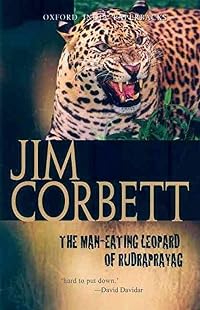
Jim Corbett (1875-1955), well-known hunter, naturalist, and conservationist, is the author of several acclaimed classics, including Man-Eaters of Kumaon (1944), The Man-Eating Leopard of Rudrapravag (1948), and My India (1952).
Awards and Honors
Series
Belongs to Publisher Series
Work Relationships
Is contained in
Has the adaptation
Common Knowledge
- Canonical title
- Man-Eaters of Kumaon
- Alternate titles
- Man-Eaters
- Original publication date
- 1944
- Important places
- Kumaon, UP, India; Nepal
- Dedication
- DEDICATED to the GALLANT SOLDIERS, SAILORS, AND AIRMEN of the United Nations, who during this war HAVE LOST THEIR SIGHT in the service of their country
Classifications
Statistics
- Members
- 655
- Popularity
- 44,061
- Reviews
- 18
- Rating
- (4.08)
- Languages
- 7 — Czech, Dutch, English, Finnish, Greek (Ancient), Norwegian (Bokmål), Swedish
- Media
- Paper, Audiobook, Ebook
- ISBNs
- 21
- ASINs
- 42