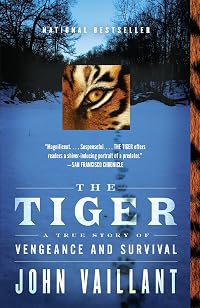
The Tiger: A True Story of Vengeance and Survival
by John Vaillant
On This Page
Description
It's December 1997, and a man-eating Siberian tiger is on the prowl outside a remote village in Russia's Far East. The tiger isn't just killing people, it's annihilating them, and a team of men and their dogs must hunt it on foot through the forest in the brutal cold. As the trackers sift through the gruesome remains of the victims, they discover that these attacks aren't random. An absolutely gripping tale of man and nature that leads inexorably to a final showdown in a clearing deep in the show more taiga. show lessTags
Recommendations


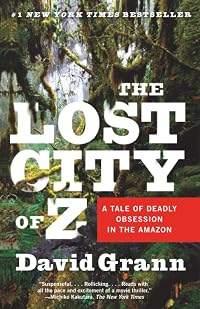

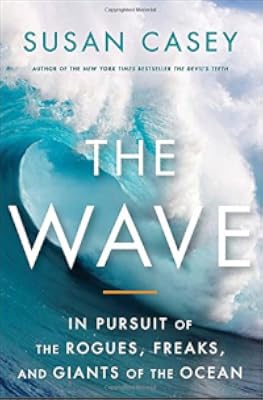
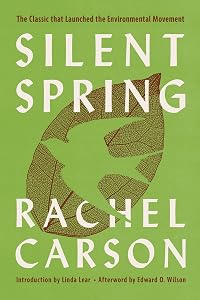
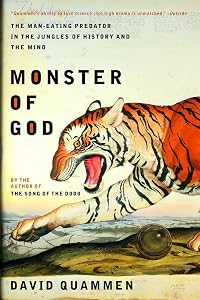





















Member Recommendations




LynnB I liked this one even more than The Tiger.

Member Reviews
A truly brilliant work, this combines the true story of a wounded, starving tiger who hunts down the poacher who (last) shot him. The story reads as a detailed thriller. It is the details that I loved; the in-depth research on tigers,on Primorye- the Far Eastern Border area of Russia, on the effects of the post perestroika policies on the people of the region (both indigenous and not), the flora and fauna, the local mythology, and the history of tigers and humans in the region. It is the extent of the details that some readers find distracting to the narrative. To me they put the plight of the tigers, and the humans in perspective.
The characters in this story are quite fascinating, we get to understand the motives of both the hunters show more and the hunted. In the past, in this region, man and tiger lived in respectful harmony. No longer. This is also a conservation story, a reminder of what we are doing to our fellow inhabitants on this planet. The writing is so beautiful and poetic that I often forgot I was reading a work of non-fiction.
A CBC Canada Reads semi-finalist. show less
The characters in this story are quite fascinating, we get to understand the motives of both the hunters show more and the hunted. In the past, in this region, man and tiger lived in respectful harmony. No longer. This is also a conservation story, a reminder of what we are doing to our fellow inhabitants on this planet. The writing is so beautiful and poetic that I often forgot I was reading a work of non-fiction.
A CBC Canada Reads semi-finalist. show less
Let's start with the moral of the story first: Do not fuck with an Amur tiger. Because if you do, she'll probably hunt you down, break into your cabin, drag your mattress across a frozen river, and lie down on it while she waits for you to come home so she can eat you. Literally eat you.
John Vaillant's narrative about Amur tigers and the people who live with them in the remote village of Sobolonye, Russia is compelling enough that you'll start looking suspiciously at your cat by the time you're a quarter of the way through. But although the narrative is brilliant, and possibly the star of the book, the book is far more than just narrative, as Vaillant paints a fully-realized portrait not only of the tiger, but of post-communist Russia show more and the people who live there.
Vaillant also happens to be a crack stylist:
I loved this book so much it's almost absurd. show less
John Vaillant's narrative about Amur tigers and the people who live with them in the remote village of Sobolonye, Russia is compelling enough that you'll start looking suspiciously at your cat by the time you're a quarter of the way through. But although the narrative is brilliant, and possibly the star of the book, the book is far more than just narrative, as Vaillant paints a fully-realized portrait not only of the tiger, but of post-communist Russia show more and the people who live there.
Vaillant also happens to be a crack stylist:
"When the tiger met Markov, he would have been in full arctic mode: thickly furred in a way that his southern counterparts would never be, he was insulated by a dense, wooly undercoat laid over with long, luxuriant guard hairs. From certain angles, he appeared as bushy as a lynx. His tail was a furry python as thick as a man's arm. This was the winter tiger: not the svelte, languorous creatures of long grass and jungle pools, but the heavy-limbed sovereign of mountains, snow, and moonlight, resplendent and huge in his cool blue solitude."
I loved this book so much it's almost absurd. show less
This is an expertly researched, wonderfully written book about a Russian team investigating, and tracking down a Tiger in eastern Russia that has killed two men. It reads like a very entertaining textbook, incredibly dense with interesting facts about the region's politics, history, economy and sociology of the area. It's impossible not to be completely transported and understand how these people live in such a remote, harsh area.
It's not a quick read by any means, but thoroughly entertaining. As a fan of Tigers, I liked learning how cunning and dangerous they are. I also appreciated tidbits about conservation, and of course, learning about Yuri Trush who sounds about as badass as a Russian Tiger Game Warden/Tiger Murder Investigator show more should.
This book made me feel very grateful that I'm indoors and far, far away from the kind of dangers they face while tracking the tiger. Pretty magnificent book. show less
It's not a quick read by any means, but thoroughly entertaining. As a fan of Tigers, I liked learning how cunning and dangerous they are. I also appreciated tidbits about conservation, and of course, learning about Yuri Trush who sounds about as badass as a Russian Tiger Game Warden/Tiger Murder Investigator show more should.
This book made me feel very grateful that I'm indoors and far, far away from the kind of dangers they face while tracking the tiger. Pretty magnificent book. show less
The Tiger: A True Story of Vengeance and Survival by John Vaillant
This is a book that can broaden your perspective of not only tigers, but also human proclivities and the paradoxes of evolving Russian life.
With exceptional skill the writer weaves a spellbinding account with the thread of hunter and hunted, alternating roles between Amur tiger and man throughout, the detail of the telling magnetic. It's a veritable adventure/thriller/horror book. That is only the binding of the book though. What I found equally immersing was the extensive augmenting material. Such being the relative effects of Russian history from Lenin through perestroika, China's benighted potions market, tiger history and interactions, constructive and aggravating show more human activities, individual histories and mindsets, topography of the Primorye region, indeed most anything relevant.
There are also a good many individuals involved, enough so that some I had to search back through the text to reacquaint myself with. A characters reference in the back matter, like I included in my own book, would have been helpful.
Any drawback to this remarkable literary achievement lies paradoxically with the extensive augmenting material. Readers along for only the joyride may find the book wearing, not understanding that like narrow-minded perspectives are at the root of humankind's problems.
As the story begins:
“When Trush and his men climbed down from the Kung [a military vehicle], they heard the crows’ raucous kvetching concentrated just west of the entrance road. Trush noted the way their dark bodies swirled and flickered above the trees and, even if he hadn’t been warned ahead of time, this would have told him all he needed to know: something big was dead, or dying, and it was being guarded.”
“The camera doesn’t waver as it pans across the pink and trampled snow, taking in the hind foot of a dog, a single glove, and then a bloodstained jacket cuff before halting at a patch of bare ground about a hundred yards into the forest. At this point the audio picks up a sudden, retching gasp. It is as if he has entered Grendel’s den.”
In investigating the first attack:
“Some in the village felt sure he had invited his own death by robbing the tiger of its kill. 'It became a bit of a joke,' said one local resident, 'that he brought that meat to his own funeral.' Regardless of their other feelings about tigers, the residents of Sobolonye had great respect for the tiger's intelligence and hunting prowess, and the idea that these powers might be directed against them—at random—was terrifying. This tiger’s presence had cast a pall over the village”
At another incident in a different setting:
“Whatever it was made the tiger change direction, and he stalked this new information with a single-minded intensity that would have been chilling to behold.
. . .
“What Alexander Pochepnya found is something no parent is equipped to see. Fifty yards into the snowy forest lay a heap of blood-blackened clothing in a circle of exposed earth. It looked more like a case of spontaneous combustion than an animal attack. There was nothing left but shredded cloth and empty boots.”
To understand and appreciate:
“It is only in the past two hundred years—out of two million—that humans have seriously contested the tiger’s claim to the forest and all it contains. As adaptable as tigers are, they have not evolved to accommodate this latest change in their environment, and this lack of flexibility, when combined with armed, entitled humans and domestic animals, is a recipe for disaster.”
Along with what drives much of the illegal trade in tiger-based supplements. The brandname Viagra is derived from vyaaghra, the Sanskrit word for tiger. Hormones control our thinking.
It isn't surprising that the reflections pertaining to the tiger's umwelt herein are in general accordance with those expressed in the book "Are We Smart Enough to Know How Smart Animals Are?" by Frans de Waal, even those in the book "The Elephant Whisperer" by Lawrence Anthony, and no doubt others. We are all cut from the same cloth, and the ‘all too human’ behavior of man is ‘all too animal.’
“In hunting societies, such as the Udeghe, the !Kung, the Haida, or the Sioux, animals were not merely food, they were seen as blood relatives, spiritual companions, hunting guides, and sources of power and connection to the surrounding world. The boundaries between the umwelten of humans and animals were, of necessity, much less rigidly defined.”
The augmenting material is every bit as interesting. For example there is this about Russia's far Eastern wilderness known as the Taiga:
“Primorye’s bizarre assemblage of flora and fauna leaves one with the impression that Noah’s ark had only recently made landfall, and that, rather than dispersing to their proper places around the globe, many of its passengers had simply decided to stay, including some we never knew existed. Within this waterbound envelope live unclassifiable species like the raccoon dog, as well as a bizarre tropical canid called a dhole that hunts in packs, and has been reputed to attack humans and tigers, along with more traditional prey. Here, too, can be found red-legged ibis, paradise flycatchers, and parrotlike reed sutoras, along with five species of eagle, nine species of bat, and more than forty kinds of fern. In the spring, improbable moths and butterflies like the Artemis Emperor, the Exclusive Underwing, and the as-yet unstudied Pseudopsychic hatch out to spangle and iridesce by the roadsides. In the dead of winter, giant ladybugs with reverse color schemes cruise the walls of village kitchens like animated wallpaper. This Boreal Jungle (for lack of a better term) is unique on earth, and it nurtures the greatest biodiversity of any place in Russia, the largest country in the world. It is over this surreal menagerie that the Amur tiger reigns supreme.”
“Of the six surviving subspecies of tiger, the Amur is the only one habituated to arctic conditions. In addition to having a larger skull than other subspecies, it carries more fat and a heavier coat, and these give it a rugged, primitive burliness that is missing from its sleeker tropical cousins. The thickly maned head can be as broad as a man’s chest and shoulders, and winter paw prints are described using hats and pot lids for comparison.”
“... there is no creature in the taiga that is off limits to the tiger; it alone can mete out death at will. Amur tigers have been known to eat everything from salmon and ducks to adult brown bears [Kamchatka brown bears twelve to fourteen hundred pounds, larger than Alaskan Kodiak bears]. There are few wolves in Primorye, not because the environment doesn’t suit them, but because the tigers eat them, too. The Amur tiger, it could be said, takes a Stalinist approach to competition. It is also an extraordinarily versatile predator, able to survive in temperatures ranging from fifty below zero Fahrenheit to one hundred above, and to turn virtually any environment to its advantage.”
“Within every major ecosystem nature has produced, she has evolved a singularly formidable predator to rule over it. In Primorye, the Amur tiger is the latest, most exquisitely lethal manifestation of this creative impulse.”
“By regularly bringing down large prey like elk, moose, boar, and deer, the tiger feeds countless smaller animals, birds, and insects, not to mention the soil. Every such event sends another pulse of lifeblood through the body of the forest."
Regarding Russian history in understanding human impact, you will see the conflicts and contradictions of heavy handed human ecosystem destruction hand in hand with conservation measures. A battle in itself with our blind weedy species weighing ever more on one end of the teeter-totter.
“The Great Patriotic War had scarcely concluded before the USSR began rebuilding and retooling for the Cold War. While Soviet engineers and scientists perfected the now ubiquitous AK-47 and tested the country’s first nuclear weapons, the general population reeled from the catastrophic synergy generated by six years of war and the seemingly endless nightmare of Stalin’s psychotic reign. During the two decades prior to Markov’s birth, the Soviet Union lost approximately 35 million citizens—more than one fifth of its population—to manufactured famines, political repression, genocide, and war. Millions more were imprisoned, exiled, or forced to relocate, en masse, across vast distances. With the possible exception of China under Mao Zedong, it is hard to imagine how the fabric of a country could have been more thoroughly shredded from within and without.”
“There is a famous quote: “You can’t understand Russia with your mind,” and the zapovednik is a case in point. In spite of the contemptuous attitude the Soviets had toward nature, they also allowed for some of the most stringent conservation practices in the world. A zapovednik is a wildlife refuge into which no one but guards and scientists are allowed—period. The only exceptions are guests—typically fellow scientists—with written permission from the zapovednik’s director. There are scores of these reserves scattered across Russia, ranging in size from more than sixteen thousand square miles down to a dozen square miles.”
With such a wealth of information in this book, the reader will also come across such as:
Hunting for prime specimens of a species can also morphologically, at a minimum, affect a species in reducing the gene pool. An example is the anthropogenic selection the moose of eastern North America went through. Sport hunters wanting bull moose with the largest antlers, such were systematically removed from the gene pool while the smaller-antlered bulls were left to pass on their more modest genes, year after year.
In the end I found this a sorrowful story, our narrow minded weedy species at loggerheads with a magnificent specimen of Nature's life-fueled-by-life closed loop continuum of physical life. Not all of us of course, but those that through greed and/or ignorance of the Amur tiger's keystone role in balancing fundamental biodiversity caused this individual's transformation to a man-eater. But, yet all of us in expanding our deadly role of crowding out the biodiversity that is essential to our own existence. Seen in the larger picture of all creatures affecting and changing their habitat which spurs ongoing evolution in adapting new physical life forms this incident may be minor, but telling of the ever accelerating pace of our own undoing. show less
This is a book that can broaden your perspective of not only tigers, but also human proclivities and the paradoxes of evolving Russian life.
With exceptional skill the writer weaves a spellbinding account with the thread of hunter and hunted, alternating roles between Amur tiger and man throughout, the detail of the telling magnetic. It's a veritable adventure/thriller/horror book. That is only the binding of the book though. What I found equally immersing was the extensive augmenting material. Such being the relative effects of Russian history from Lenin through perestroika, China's benighted potions market, tiger history and interactions, constructive and aggravating show more human activities, individual histories and mindsets, topography of the Primorye region, indeed most anything relevant.
There are also a good many individuals involved, enough so that some I had to search back through the text to reacquaint myself with. A characters reference in the back matter, like I included in my own book, would have been helpful.
Any drawback to this remarkable literary achievement lies paradoxically with the extensive augmenting material. Readers along for only the joyride may find the book wearing, not understanding that like narrow-minded perspectives are at the root of humankind's problems.
As the story begins:
“When Trush and his men climbed down from the Kung [a military vehicle], they heard the crows’ raucous kvetching concentrated just west of the entrance road. Trush noted the way their dark bodies swirled and flickered above the trees and, even if he hadn’t been warned ahead of time, this would have told him all he needed to know: something big was dead, or dying, and it was being guarded.”
“The camera doesn’t waver as it pans across the pink and trampled snow, taking in the hind foot of a dog, a single glove, and then a bloodstained jacket cuff before halting at a patch of bare ground about a hundred yards into the forest. At this point the audio picks up a sudden, retching gasp. It is as if he has entered Grendel’s den.”
In investigating the first attack:
“Some in the village felt sure he had invited his own death by robbing the tiger of its kill. 'It became a bit of a joke,' said one local resident, 'that he brought that meat to his own funeral.' Regardless of their other feelings about tigers, the residents of Sobolonye had great respect for the tiger's intelligence and hunting prowess, and the idea that these powers might be directed against them—at random—was terrifying. This tiger’s presence had cast a pall over the village”
At another incident in a different setting:
“Whatever it was made the tiger change direction, and he stalked this new information with a single-minded intensity that would have been chilling to behold.
. . .
“What Alexander Pochepnya found is something no parent is equipped to see. Fifty yards into the snowy forest lay a heap of blood-blackened clothing in a circle of exposed earth. It looked more like a case of spontaneous combustion than an animal attack. There was nothing left but shredded cloth and empty boots.”
To understand and appreciate:
“It is only in the past two hundred years—out of two million—that humans have seriously contested the tiger’s claim to the forest and all it contains. As adaptable as tigers are, they have not evolved to accommodate this latest change in their environment, and this lack of flexibility, when combined with armed, entitled humans and domestic animals, is a recipe for disaster.”
Along with what drives much of the illegal trade in tiger-based supplements. The brandname Viagra is derived from vyaaghra, the Sanskrit word for tiger. Hormones control our thinking.
It isn't surprising that the reflections pertaining to the tiger's umwelt herein are in general accordance with those expressed in the book "Are We Smart Enough to Know How Smart Animals Are?" by Frans de Waal, even those in the book "The Elephant Whisperer" by Lawrence Anthony, and no doubt others. We are all cut from the same cloth, and the ‘all too human’ behavior of man is ‘all too animal.’
“In hunting societies, such as the Udeghe, the !Kung, the Haida, or the Sioux, animals were not merely food, they were seen as blood relatives, spiritual companions, hunting guides, and sources of power and connection to the surrounding world. The boundaries between the umwelten of humans and animals were, of necessity, much less rigidly defined.”
The augmenting material is every bit as interesting. For example there is this about Russia's far Eastern wilderness known as the Taiga:
“Primorye’s bizarre assemblage of flora and fauna leaves one with the impression that Noah’s ark had only recently made landfall, and that, rather than dispersing to their proper places around the globe, many of its passengers had simply decided to stay, including some we never knew existed. Within this waterbound envelope live unclassifiable species like the raccoon dog, as well as a bizarre tropical canid called a dhole that hunts in packs, and has been reputed to attack humans and tigers, along with more traditional prey. Here, too, can be found red-legged ibis, paradise flycatchers, and parrotlike reed sutoras, along with five species of eagle, nine species of bat, and more than forty kinds of fern. In the spring, improbable moths and butterflies like the Artemis Emperor, the Exclusive Underwing, and the as-yet unstudied Pseudopsychic hatch out to spangle and iridesce by the roadsides. In the dead of winter, giant ladybugs with reverse color schemes cruise the walls of village kitchens like animated wallpaper. This Boreal Jungle (for lack of a better term) is unique on earth, and it nurtures the greatest biodiversity of any place in Russia, the largest country in the world. It is over this surreal menagerie that the Amur tiger reigns supreme.”
“Of the six surviving subspecies of tiger, the Amur is the only one habituated to arctic conditions. In addition to having a larger skull than other subspecies, it carries more fat and a heavier coat, and these give it a rugged, primitive burliness that is missing from its sleeker tropical cousins. The thickly maned head can be as broad as a man’s chest and shoulders, and winter paw prints are described using hats and pot lids for comparison.”
“... there is no creature in the taiga that is off limits to the tiger; it alone can mete out death at will. Amur tigers have been known to eat everything from salmon and ducks to adult brown bears [Kamchatka brown bears twelve to fourteen hundred pounds, larger than Alaskan Kodiak bears]. There are few wolves in Primorye, not because the environment doesn’t suit them, but because the tigers eat them, too. The Amur tiger, it could be said, takes a Stalinist approach to competition. It is also an extraordinarily versatile predator, able to survive in temperatures ranging from fifty below zero Fahrenheit to one hundred above, and to turn virtually any environment to its advantage.”
“Within every major ecosystem nature has produced, she has evolved a singularly formidable predator to rule over it. In Primorye, the Amur tiger is the latest, most exquisitely lethal manifestation of this creative impulse.”
“By regularly bringing down large prey like elk, moose, boar, and deer, the tiger feeds countless smaller animals, birds, and insects, not to mention the soil. Every such event sends another pulse of lifeblood through the body of the forest."
Regarding Russian history in understanding human impact, you will see the conflicts and contradictions of heavy handed human ecosystem destruction hand in hand with conservation measures. A battle in itself with our blind weedy species weighing ever more on one end of the teeter-totter.
“The Great Patriotic War had scarcely concluded before the USSR began rebuilding and retooling for the Cold War. While Soviet engineers and scientists perfected the now ubiquitous AK-47 and tested the country’s first nuclear weapons, the general population reeled from the catastrophic synergy generated by six years of war and the seemingly endless nightmare of Stalin’s psychotic reign. During the two decades prior to Markov’s birth, the Soviet Union lost approximately 35 million citizens—more than one fifth of its population—to manufactured famines, political repression, genocide, and war. Millions more were imprisoned, exiled, or forced to relocate, en masse, across vast distances. With the possible exception of China under Mao Zedong, it is hard to imagine how the fabric of a country could have been more thoroughly shredded from within and without.”
“There is a famous quote: “You can’t understand Russia with your mind,” and the zapovednik is a case in point. In spite of the contemptuous attitude the Soviets had toward nature, they also allowed for some of the most stringent conservation practices in the world. A zapovednik is a wildlife refuge into which no one but guards and scientists are allowed—period. The only exceptions are guests—typically fellow scientists—with written permission from the zapovednik’s director. There are scores of these reserves scattered across Russia, ranging in size from more than sixteen thousand square miles down to a dozen square miles.”
With such a wealth of information in this book, the reader will also come across such as:
Hunting for prime specimens of a species can also morphologically, at a minimum, affect a species in reducing the gene pool. An example is the anthropogenic selection the moose of eastern North America went through. Sport hunters wanting bull moose with the largest antlers, such were systematically removed from the gene pool while the smaller-antlered bulls were left to pass on their more modest genes, year after year.
In the end I found this a sorrowful story, our narrow minded weedy species at loggerheads with a magnificent specimen of Nature's life-fueled-by-life closed loop continuum of physical life. Not all of us of course, but those that through greed and/or ignorance of the Amur tiger's keystone role in balancing fundamental biodiversity caused this individual's transformation to a man-eater. But, yet all of us in expanding our deadly role of crowding out the biodiversity that is essential to our own existence. Seen in the larger picture of all creatures affecting and changing their habitat which spurs ongoing evolution in adapting new physical life forms this incident may be minor, but telling of the ever accelerating pace of our own undoing. show less
I loved this book so much that I bought my own paper copy after listening to it and starting reading again immediately.
The main layer of the book is, of course, about an Amur Tiger who kills people in the Russian Far East and a group of tiger hunters who set out to put him down because he killed another hunter. However, this book is about so much more and that really made it into the great book it is for me.
Many times I thought about the immense amount of research that must have gone into this book because it talks about the vegetation in that part of the Taiga; the native people and their history, culture, and traditions; Russian and Soviet history and conflicts with Asian neighbors; the impact of the dying and now dead Soviet empire show more on the livelihood of people in the Far East.
It is also very much a book about how we as selfish humans leave no room for other living creatures and then are surprised that these creatures lash out in desperate acts of self-defense. I will give this book to many people and recommend it to everybody I know. Very informative and entertaining. show less
The main layer of the book is, of course, about an Amur Tiger who kills people in the Russian Far East and a group of tiger hunters who set out to put him down because he killed another hunter. However, this book is about so much more and that really made it into the great book it is for me.
Many times I thought about the immense amount of research that must have gone into this book because it talks about the vegetation in that part of the Taiga; the native people and their history, culture, and traditions; Russian and Soviet history and conflicts with Asian neighbors; the impact of the dying and now dead Soviet empire show more on the livelihood of people in the Far East.
It is also very much a book about how we as selfish humans leave no room for other living creatures and then are surprised that these creatures lash out in desperate acts of self-defense. I will give this book to many people and recommend it to everybody I know. Very informative and entertaining. show less
Based on what I had heard about this book I expected it to be the true tale of a man-eating tiger and the hunt to kill it. And it is that but it is also so much more. Vaillant weaves in facts about ecology, anthropology, shamanic beliefs, predation, recent and ancient history and psychology to the basic story. He captured the horror of a tiger attack and the beauty of the ancient taiga forest. He showed how the native Russians lived in harmony with the land while the newcomers, for the most part, saw it as a place of resources to be pillaged. He also demonstrated how these same newcomers suffered once perestroika removed the support of the state. Without the need to put food on the table by hunting the same animals that the tiger hunted show more Markov, the first victim, might still be alive. The people who live in this area are desperately poor and that desperation causes them to take risks.
The Siberian tigers are amazing creatures able to survive in the harshest climate. Unfortunately they have lost much of their traditional hunting area because of man. Sometimes the tigers become desperate too. Thus the conflict between man and beast arises. Will there be tigers in the wild 100 years from now? I hope so and Vaillant shows there have been some recent attempts at protection. Time will tell how effective these measures will be. show less
The Siberian tigers are amazing creatures able to survive in the harshest climate. Unfortunately they have lost much of their traditional hunting area because of man. Sometimes the tigers become desperate too. Thus the conflict between man and beast arises. Will there be tigers in the wild 100 years from now? I hope so and Vaillant shows there have been some recent attempts at protection. Time will tell how effective these measures will be. show less
The Tiger is an immensely fascinating study of tigers in the taiga of Siberia, focusing closely on the true-life drama of a man-eating tiger that terrorized the area in 1997. Delving deeply into the psychology, political and socio-economic factors of the humans who populated the region, Mr. Vaillant portrays as accurate and clear an image of what occurred during that snowy and bitterly cold December as possible. Any reader of The Tiger will walk away from the novel have a better appreciation for these magnificent animals and the delicate balance required to keep them in existence.
Mr. Vaillant excels at showcasing the true danger to the natural world. Tigers are known throughout history for being ferocious, extremely dangerous, and show more absolutely lethal. Yet, humans have always held a fascination for that which most terrifies us. Tigers are no exception. For generations, tigers have been hunted to the brink of extinction because of fear and the desire to prove one's manhood as much as the black market needs. Tiger populations have been decimated over the past several decades, proving that as fearsome as these animals are, humans are the more lethal of the two.
One cannot read The Tiger and not walk away with a better appreciation for tigers and, more importantly, for the need to protect these magnificent animals. As dangerous as they are, their impact on the food chain cannot be denied, and our world would be a poorer place without them. Much of what afflicts the tiger in the story is a result of direct contact with humans, and a reader is not hard-pressed to imagine how different the story might have ended had the tiger been ignored by all humans from the very first. Mr. Vaillant does not hide a tiger’s potential for lethal conduct but showcases how important they are to the taiga and how humans for hundreds of thousands of years have been able to live side-by-side with them in spite of the danger. If anything, The Tiger ends on a note of hope, as the tiger’s ability to adapt and survive has been proven over the years, and with a little help from humans, can recover and continue to grace this Earth.
Extremely well-written, The Tiger will attract readers of multiple genres. While The Tiger is nonfiction, the descriptions and pacing reads more like a suspense novel. Mr. Vaillant takes his time introducing each character and setting the scene to build tension for the final showdown between tiger and man. It is a thrilling glimpse into a world that is foreign and remote to all but a select, hardy few and well worth the read for the chance to better understand these gorgeous animals. show less
Mr. Vaillant excels at showcasing the true danger to the natural world. Tigers are known throughout history for being ferocious, extremely dangerous, and show more absolutely lethal. Yet, humans have always held a fascination for that which most terrifies us. Tigers are no exception. For generations, tigers have been hunted to the brink of extinction because of fear and the desire to prove one's manhood as much as the black market needs. Tiger populations have been decimated over the past several decades, proving that as fearsome as these animals are, humans are the more lethal of the two.
One cannot read The Tiger and not walk away with a better appreciation for tigers and, more importantly, for the need to protect these magnificent animals. As dangerous as they are, their impact on the food chain cannot be denied, and our world would be a poorer place without them. Much of what afflicts the tiger in the story is a result of direct contact with humans, and a reader is not hard-pressed to imagine how different the story might have ended had the tiger been ignored by all humans from the very first. Mr. Vaillant does not hide a tiger’s potential for lethal conduct but showcases how important they are to the taiga and how humans for hundreds of thousands of years have been able to live side-by-side with them in spite of the danger. If anything, The Tiger ends on a note of hope, as the tiger’s ability to adapt and survive has been proven over the years, and with a little help from humans, can recover and continue to grace this Earth.
Extremely well-written, The Tiger will attract readers of multiple genres. While The Tiger is nonfiction, the descriptions and pacing reads more like a suspense novel. Mr. Vaillant takes his time introducing each character and setting the scene to build tension for the final showdown between tiger and man. It is a thrilling glimpse into a world that is foreign and remote to all but a select, hardy few and well worth the read for the chance to better understand these gorgeous animals. show less
Members
- Recently Added By
Lists

Top Five Books of 2013
1,562 works; 715 members

CBC's 100 True Stories
100 works; 6 members

2008-2012 Notable Books for Adults
127 works; 10 members

Canada Reads Winners and Nominees
129 works; 9 members

Favorite Animal Non-Fiction
293 works; 144 members

Evergreen Award™ Winners and Nominees 2005–2024
200 works; 3 members

Ryan Holiday's Books To Base Your Life On
97 works; 2 members
Author Information

5+ Works 3,560 Members
Awards and Honors
Awards
Distinctions
Common Knowledge
- Canonical title*
- La tigre. Un'avventura siberiana di vendetta e sopravvivenza
- Original publication date
- 2010
- Important places
- Primorye; Bikin Rivery valley, Russia; Siberia, Russia
- Epigraph
- "In the taiga there are no witnesses"
- V. K. Arseniev, Dersu the Trapper
"no easy bargain
Would be made in that place by any man"
- Beowulf - First words
- Hanging in the trees, as if caught there, is a sickle of a moon.
- Last words
- (Click to show. Warning: May contain spoilers.)Summoning a Russian proverb, he added, "Hope dies last."
- Canonical DDC/MDS
- 599.75609577
- Canonical LCC
- SK305.T5
*Some information comes from Common Knowledge in other languages. Click "Edit" for more information.
Classifications
- Genres
- Hunting and Fishing, General Nonfiction, Science & Nature, Nonfiction
- DDC/MDS
- 599.75609577 — Natural sciences & mathematics Animals Mammals Carnivora; Cats, Dogs, Bears, Seals Felines Tigers History, geography, biography Asia Siberia
- LCC
- SK305 .T5 — Agriculture Hunting Hunting sports Big game
- BISAC
Statistics
- Members
- 1,480
- Popularity
- 15,688
- Reviews
- 75
- Rating
- (4.01)
- Languages
- 11 — Dutch, English, Finnish, French, German, Italian, Norwegian, Polish, Portuguese, Russian, Spanish
- Media
- Paper, Audiobook, Ebook
- ISBNs
- 26
- ASINs
- 13