
On This Page
Description
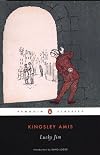
Porterhouse is a backwoods institution which is supported by fee-paying students who buy their degrees. When Sir Godber Evans becomes Master, whispers of radical change echo through the cloisters. Standing in his way is Skullion, the college porter.Tags
Recommendations
















Member Recommendations

Member Reviews
I was prompted to pick this up again on reading of Sharpe’s death last week. He was, as the obituarists all say, undoubtedly one of the greatest English comic writers of the last century, and will be sadly missed.
I didn't like Porterhouse Blue as much as his South African books and Wilt when I first read it, but now I find it has grown on me. Perhaps I was too close to my own college days then to see the funny side of academic life. On re-reading it, I think one of the most attractive things about it in hindsight is the way it links into a chain of great comic writing: Sharpe builds on Zuleika Dobson and the Oxford chapters of Decline and Fall; his cantankerous, gluttonous and decidedly unscholarly Bursar, Dean and Senior Tutor in show more turn gave Terry Pratchett the basis for his even more bizarre academics. But it’s a treasure in its own right. In between the Rabelaisian excess and the exploding condoms, there is some very sharp social satire. A lot of what he has to say about politics, the media and attitudes to education still rings very true nowadays, even if the last real Porterhouse was forced to modernise decades ago.
Robert McCrum in the Observer insists (inevitably) on comparing Sharpe to Wodehouse. The two corresponded and seem to have admired each others work, but they were very different sorts of comic writers. I don't mean that one was unstoppably ribald and the other did his best to ignore the existence of sex: that’s a purely trivial difference, which has more to do with the markets they were writing for than anything else. More to the point, perhaps, is that Sharpe sets his books in a world where evil exists and foolish acts can have serious consequences; in Wodehouse there is no irreversible event other than marriage, and even that is only allowed to happen offstage. Maybe that difference has something to do with Sharpe's firsthand experience of South Africa in the Apartheid era, but if we are going to suggest that, we have to remember that Wodehouse spent the war years in occupied France and Nazi Germany without any apparent effect on his escapist style. I think Wodehouse was convinced that his sole mission as a writer was to entertain. If he had anger to express, he didn't think it right to inflict it on his readers.
They were both very clever at setting up and exploiting comic situations, but Wodehouse was always a much more technical writer than Sharpe. A Wodehouse novel is constructed like a stage play, with infinite attention to structure and balance of the plot. The chaotic element appears only in Wodehouse’s fantastically creative approach to language. Sharpe, on the other hand, doesn't want to appear to care a bit about structure, and he only very occasionally gets fancy with words. He’s perfectly prepared to kill off a key character a third of the way through the book if that gives him a good comic climax, and he never misses the opportunity for a good joke or a satirical effect, even if they don't directly contribute to the storyline. The necessary chaos in a Sharpe plot is there at a very deep level, and the order only seems to be the superficial minimum needed to get him to some sort of conclusion. show less
I didn't like Porterhouse Blue as much as his South African books and Wilt when I first read it, but now I find it has grown on me. Perhaps I was too close to my own college days then to see the funny side of academic life. On re-reading it, I think one of the most attractive things about it in hindsight is the way it links into a chain of great comic writing: Sharpe builds on Zuleika Dobson and the Oxford chapters of Decline and Fall; his cantankerous, gluttonous and decidedly unscholarly Bursar, Dean and Senior Tutor in show more turn gave Terry Pratchett the basis for his even more bizarre academics. But it’s a treasure in its own right. In between the Rabelaisian excess and the exploding condoms, there is some very sharp social satire. A lot of what he has to say about politics, the media and attitudes to education still rings very true nowadays, even if the last real Porterhouse was forced to modernise decades ago.
Robert McCrum in the Observer insists (inevitably) on comparing Sharpe to Wodehouse. The two corresponded and seem to have admired each others work, but they were very different sorts of comic writers. I don't mean that one was unstoppably ribald and the other did his best to ignore the existence of sex: that’s a purely trivial difference, which has more to do with the markets they were writing for than anything else. More to the point, perhaps, is that Sharpe sets his books in a world where evil exists and foolish acts can have serious consequences; in Wodehouse there is no irreversible event other than marriage, and even that is only allowed to happen offstage. Maybe that difference has something to do with Sharpe's firsthand experience of South Africa in the Apartheid era, but if we are going to suggest that, we have to remember that Wodehouse spent the war years in occupied France and Nazi Germany without any apparent effect on his escapist style. I think Wodehouse was convinced that his sole mission as a writer was to entertain. If he had anger to express, he didn't think it right to inflict it on his readers.
They were both very clever at setting up and exploiting comic situations, but Wodehouse was always a much more technical writer than Sharpe. A Wodehouse novel is constructed like a stage play, with infinite attention to structure and balance of the plot. The chaotic element appears only in Wodehouse’s fantastically creative approach to language. Sharpe, on the other hand, doesn't want to appear to care a bit about structure, and he only very occasionally gets fancy with words. He’s perfectly prepared to kill off a key character a third of the way through the book if that gives him a good comic climax, and he never misses the opportunity for a good joke or a satirical effect, even if they don't directly contribute to the storyline. The necessary chaos in a Sharpe plot is there at a very deep level, and the order only seems to be the superficial minimum needed to get him to some sort of conclusion. show less
I listened to this on CD, narrated by Griff Rhys Jones, and the characterisation of the voices was superb. It's a very funny, if a little bit twisted, piece of commentary on the role of privilege in a modern society. There's the new Master, who wants to make sweeping changes (while bearing a grudge against his treatment from his old college while an undergrad) and the existing fellows (who want their nice cosy life to continue), the porter (who is more stick in the mud than the stickiest mud imaginable) and a whole range of social types of more or less virtue. Had me in fits of giggles; the confidential talk with the Chaplain and the disposal of condoms being two particular highlights. Just really cleverly written, almost cruel show more caricature, but with genuinely funny moments to savour. show less
I´ve lost count of the number of times I´ve read "Porterhouse Blue". What memorable characters - Scullion, the reactionary porter who hates change and fondly recalls the good old feudal days when he used to get kicked by the aristocratic students. Sir Godber Evans, the wet former cabinet minister exiled to Porterhouse and his politically correct wife, Lady Mary, who wants to introduce healthy food, condom machines and women into Porterhouse. Sir Cathcart Death, head of the Porterhouse alumni association, who has a Japanese bodyguard, holds orgies in his stately home and tells Scullion to make sure the cook gives him tea on his way out. Cornelius Carrington, the slimy TV presenter, Mrs. Biggs, the randy middle-aged cleaner who tries to show more seduce the unwitting student Zipser who is writing a dissertation on “The Influence of Pumpernickel on the Politics of 16th Century Osnabruck” and too many others to mention. My family still think I am nuts when I laugh out loud reading about Wilt's adventures. Perhaps only the Mortimer Rumpole escapades have had the same laugh out loud impact since then. I remember weeping with laughter at the image of the Kommandant chained to the bed and dangling from the window with a stonking erection whilst dressed in a pink latex nightdress as his men discuss whether to shoot him as a pervert. All the time my mother was asking me go explain what was so funny. Not an easy task when you were 16.
Do people frown upon at all-out satire today? There's more than enough raw material. But would anyone read a rib-tickling send up ...of the British police? Of José Socrates, our former Prime-Minister, and his financial dealings? Of the dunces that ran the banks while posing (with the cheerleading support of our esteemed newspapers… all of them) as pirate captains of the corporate world? Of our tottering political "leaders", the boys who push in front of the class and declare themselves our betters?
On a serious note, in the Porterhouse and Riotous Assembly novels, Sharpe managed to capture the awful snobbery of one institution and the ridiculous racism of another. In the 80s I would regularly see fellow passengers reading on the train home, totally riveted and often chortling away with abandon. Occasionally curiosity would get the better of me & I'd either watch for a glance of the cover or pluck the courage up to ask what they were reading.
Bottom-line: Sharpe’s books gave me so many hours of laugh-out-loud delight. Timeless humour. And I would love to think that many of today's young people would pick up Sharpe’s books to sample real humour is crafted. He has left a library of wonderfully funny books - nothing to be ashamed of. I think I might pull out Ancestral Vices for another read isn't it :-)) Any write who can make you choke back the laughter when reading on a bus has to be OK. That was the effect of “Porterhouse Blues” for me. show less
Do people frown upon at all-out satire today? There's more than enough raw material. But would anyone read a rib-tickling send up ...of the British police? Of José Socrates, our former Prime-Minister, and his financial dealings? Of the dunces that ran the banks while posing (with the cheerleading support of our esteemed newspapers… all of them) as pirate captains of the corporate world? Of our tottering political "leaders", the boys who push in front of the class and declare themselves our betters?
On a serious note, in the Porterhouse and Riotous Assembly novels, Sharpe managed to capture the awful snobbery of one institution and the ridiculous racism of another. In the 80s I would regularly see fellow passengers reading on the train home, totally riveted and often chortling away with abandon. Occasionally curiosity would get the better of me & I'd either watch for a glance of the cover or pluck the courage up to ask what they were reading.
Bottom-line: Sharpe’s books gave me so many hours of laugh-out-loud delight. Timeless humour. And I would love to think that many of today's young people would pick up Sharpe’s books to sample real humour is crafted. He has left a library of wonderfully funny books - nothing to be ashamed of. I think I might pull out Ancestral Vices for another read isn't it :-)) Any write who can make you choke back the laughter when reading on a bus has to be OK. That was the effect of “Porterhouse Blues” for me. show less
"His had been an intellectual decision founded on his conviction that if a little knowledge was a dangerous thing, a lot was lethal."
Set in the late 1950's Cambridge. Porterhouse University admits male students based on the size of their families' wealth rather than on whether or not they have passed an entrance exam. It has become renowned for its sporting prowess rather than academic achievement. It has been run on similar grounds for hundreds of years and refuses to conform with modern day norms.
When an ex-politician is appointed the Master of this university, he proposes to admit students, including women, based upon academic ability rather than family wealth, financed by replacing gourmet faculty meals with a self-serve show more cafeteria.
The new Master is soon at war with the entire staff of the college, who want it to remain as it has been for 500 years, a place for rich young men to drink and cavort while the faculty do no work and eat like lords. His most dangerous opponent is the "Head Porter" who supervises all non-teaching activities at the college.
This is such a lovely satire of British University life with an amusing sub-plot of a researcher named Zipster. I have read other books by Sharpe in the past and although I must admit that this did not make me laugh out loud as often as with others there are elements of extreme farce that did tickle me somewhat. A lovely well crafted and very amusing book. show less
Set in the late 1950's Cambridge. Porterhouse University admits male students based on the size of their families' wealth rather than on whether or not they have passed an entrance exam. It has become renowned for its sporting prowess rather than academic achievement. It has been run on similar grounds for hundreds of years and refuses to conform with modern day norms.
When an ex-politician is appointed the Master of this university, he proposes to admit students, including women, based upon academic ability rather than family wealth, financed by replacing gourmet faculty meals with a self-serve show more cafeteria.
The new Master is soon at war with the entire staff of the college, who want it to remain as it has been for 500 years, a place for rich young men to drink and cavort while the faculty do no work and eat like lords. His most dangerous opponent is the "Head Porter" who supervises all non-teaching activities at the college.
This is such a lovely satire of British University life with an amusing sub-plot of a researcher named Zipster. I have read other books by Sharpe in the past and although I must admit that this did not make me laugh out loud as often as with others there are elements of extreme farce that did tickle me somewhat. A lovely well crafted and very amusing book. show less
(Alistair) Sometimes I'm in the mood for satire.
Sometimes I'm in the mood for really good satire.
And when I am in that particular mood, I can always rely on Tom Sharpe to deliver.
This is actually a new copy of Porterhouse Blue, my well-worn old copy not having survived the transatlantic voyage. As the blurb says:
To Porterhouse College, Cambridge, famous for rowing, low academic standards and a proud cuisine, comes a new Master, an ex-grammar-school boy, demanding Firsts, women students, a self-service canteen and a slot-machine for contraceptives, to challenge the established order with catastrophic results...
While not having attended Cambridge myself, my former university was certainly old and traditional enough in spots to make the show more conservative academic traditions being satirized clearly recognizable, and the likewise satirized liberal reformist tendency of the new Master is, of course, commonplace in many times and places. The story flows fast through the conflict between these two tendencies, the former personified in Skullion, the old and crusty college porter, drawing together his usual cast of absurd but nonetheless real characters through absurdity and farcical happenings to a thoroughly satisfying and twisted climax.
Very highly recommended, although a cautionary note that those not accustomed to exceptionally English humor may want to become so first; you'll appreciate the book more that way.
--------------------------------------------------------------------------------
On the topic of Tom Sharpe, I was amused to note that the Amazon editorial review of Porterhouse Blue concludes thus:
"He is the author of eight other novels and two non-fiction books, Riotous Assembly and Indecent Exposure, about South Africa."
Considering that they're both biting absurdist satires of life under apartheid, which involve, say, a widowed rubber fetishist murdering her Zulu cook with an automatic elephant gun, a police chief stealing the heart of an Englishman from a framed Bishop, much of a city being demolished by exploding ostriches, and the entire local police force becoming flamingly queer after a dominatrix psychiatrist persuades the mad fascist secret police commandant to treat them all with anti-miscegenation electroshock therapy... well, I kind of hope the reviewer in question hadn't actually read either book.
( http://weblog.siliconcerebrate.com/cerebrate/2008/05/porterhouse-blue-tom-sharpe... ) show less
Sometimes I'm in the mood for really good satire.
And when I am in that particular mood, I can always rely on Tom Sharpe to deliver.
This is actually a new copy of Porterhouse Blue, my well-worn old copy not having survived the transatlantic voyage. As the blurb says:
To Porterhouse College, Cambridge, famous for rowing, low academic standards and a proud cuisine, comes a new Master, an ex-grammar-school boy, demanding Firsts, women students, a self-service canteen and a slot-machine for contraceptives, to challenge the established order with catastrophic results...
While not having attended Cambridge myself, my former university was certainly old and traditional enough in spots to make the show more conservative academic traditions being satirized clearly recognizable, and the likewise satirized liberal reformist tendency of the new Master is, of course, commonplace in many times and places. The story flows fast through the conflict between these two tendencies, the former personified in Skullion, the old and crusty college porter, drawing together his usual cast of absurd but nonetheless real characters through absurdity and farcical happenings to a thoroughly satisfying and twisted climax.
Very highly recommended, although a cautionary note that those not accustomed to exceptionally English humor may want to become so first; you'll appreciate the book more that way.
--------------------------------------------------------------------------------
On the topic of Tom Sharpe, I was amused to note that the Amazon editorial review of Porterhouse Blue concludes thus:
"He is the author of eight other novels and two non-fiction books, Riotous Assembly and Indecent Exposure, about South Africa."
Considering that they're both biting absurdist satires of life under apartheid, which involve, say, a widowed rubber fetishist murdering her Zulu cook with an automatic elephant gun, a police chief stealing the heart of an Englishman from a framed Bishop, much of a city being demolished by exploding ostriches, and the entire local police force becoming flamingly queer after a dominatrix psychiatrist persuades the mad fascist secret police commandant to treat them all with anti-miscegenation electroshock therapy... well, I kind of hope the reviewer in question hadn't actually read either book.
( http://weblog.siliconcerebrate.com/cerebrate/2008/05/porterhouse-blue-tom-sharpe... ) show less
I really enjoyed Porterhouse Blue. It is a satire of the English Oxbridge universities and the privileged lifestyle that these institutions stem from and preserve. First published in 1974 it is very witty, linguistically clever, and highlights the arrogance, pomposity, bigotry, prejudice and lack of connection with the real world that can exist in such elitist establishments.
Porter House is a fictitious college in Cambridge and Sharpe uses it as a microcosm of life and attitudes in Oxford and Cambridge, Britain's most prestigious universities. By coincidence the article linked to below appeared yesterday and it suggests the elitist and privileged attitudes are not confined to a single fictitious college in Oxford or Cambridge, but that show more they permeate all the colleges of Oxbridge.
http://www.huffingtonpost.co.uk/joe-goodman/cambridge-university_b_7866420.html
The one thing Porterhouse will resist is, "Change". The college prides itself on its kitchens, its long heritage, archaic traditions, and a total disregard for intellectual achievement.
There is pathos in this novel but it does not take away from the powerful message that is delivered in a most humorous fashion. show less
Porter House is a fictitious college in Cambridge and Sharpe uses it as a microcosm of life and attitudes in Oxford and Cambridge, Britain's most prestigious universities. By coincidence the article linked to below appeared yesterday and it suggests the elitist and privileged attitudes are not confined to a single fictitious college in Oxford or Cambridge, but that show more they permeate all the colleges of Oxbridge.
http://www.huffingtonpost.co.uk/joe-goodman/cambridge-university_b_7866420.html
The one thing Porterhouse will resist is, "Change". The college prides itself on its kitchens, its long heritage, archaic traditions, and a total disregard for intellectual achievement.
There is pathos in this novel but it does not take away from the powerful message that is delivered in a most humorous fashion. show less
Porterhouse, the college in which this comic novel is set, bears more than a nominal resemblance to a certain real Cambridge college counterpart. Anyone who has studied, or is studying, at Cambridge, either at graduate or undergraute level, should get hold of this book now, and place it at the top of their pile of books to read.
I haven't read a funnier book since Evelyn Waugh's Black Mischief, which I consider to be the best comic novel I have read. What is great about Porterhouse Blue is nearly everything, the plot, the piercing satire, the set piece events, the charicatures, and the exquisite farce. The book was written in the seventies, and is about an old-fashioned college that is set in its ways, which the new master is trying to show more reform. This is met with resistance by the fellows, with the subsequent goings-on, blunders, and scheming, making up the bulk of the plot. Of course, the colleges now aren't quite like how Porterhouse is portrayed in the book, but they were, and the vestiges of what is described by this book, in many of them, remain. What some of the best parts of the book owe their humour to is absurdity, but this absurdity never goes beyond what is believable, at a stretch, and what one could imagine taking place under the circumstances. The characters, despite being somewhat exaggerated, are still believably human, and it is the ability of the reader to empathise with them, and their roles within the running farce, that contributes in part to what makes this book work. It is the Porter, who one would ordinarily pass by each day without giving much thought, who stars here. This shows the reader what goes on in the parts of the college which an undergraduate would not normally see. It is predominantly about those who are senior members of the college, in positions of authority and responsibility - those who are in charge of the smooth daily running. The fact they are the ones who are subject to the ridiculous circumstances makes this all the funnier. show less
I haven't read a funnier book since Evelyn Waugh's Black Mischief, which I consider to be the best comic novel I have read. What is great about Porterhouse Blue is nearly everything, the plot, the piercing satire, the set piece events, the charicatures, and the exquisite farce. The book was written in the seventies, and is about an old-fashioned college that is set in its ways, which the new master is trying to show more reform. This is met with resistance by the fellows, with the subsequent goings-on, blunders, and scheming, making up the bulk of the plot. Of course, the colleges now aren't quite like how Porterhouse is portrayed in the book, but they were, and the vestiges of what is described by this book, in many of them, remain. What some of the best parts of the book owe their humour to is absurdity, but this absurdity never goes beyond what is believable, at a stretch, and what one could imagine taking place under the circumstances. The characters, despite being somewhat exaggerated, are still believably human, and it is the ability of the reader to empathise with them, and their roles within the running farce, that contributes in part to what makes this book work. It is the Porter, who one would ordinarily pass by each day without giving much thought, who stars here. This shows the reader what goes on in the parts of the college which an undergraduate would not normally see. It is predominantly about those who are senior members of the college, in positions of authority and responsibility - those who are in charge of the smooth daily running. The fact they are the ones who are subject to the ridiculous circumstances makes this all the funnier. show less
Members
- Recently Added By
Lists

The Guardian's 1000 Novels Everyone Must Read
1,005 works; 552 members

Best Campus Novels
99 works; 18 members

Academia in Fiction
158 works; 23 members

A Rainbow of Books: Colors in the Title
570 works; 24 members
Author Information

40+ Works 13,823 Members
Thomas Ridley Sharpe (born March 30, 1928) was an English satirical author, best known for his Wilt series, as well as Porterhouse Blue and Blott on the Landscape, which were both adapted for British television. Sharpe died in Spain on June 6, 2013. He was 85 years old. (Bowker Author Biography)
Some Editions
Awards and Honors
Series

Belongs to Publisher Series
Work Relationships
Common Knowledge
- Canonical title
- Porterhouse Blue
- Original title
- Porterhouse Blue
- Original publication date
- 1974
- People/Characters
- Skullion; Sir Godber Evans; Lionel Zipser; Cornelius Carrington
- Important places
- Porterhouse College, University of Cambridge, Cambridge, Cambridgeshire, England, UK (fictional); University of Cambridge, Cambridge, Cambridgeshire, England, UK; Cambridge, Cambridgeshire, England, UK; Cambridgeshire, England, UK; England, UK; United Kingdom
- Dedication
- To Ivan and Pam Hattingh
- First words
- It was a fine feast.
- Last words
- (Click to show. Warning: May contain spoilers.)In his corner by the fire the Master was seen to twitch deferentially at this joke at his own expense, but then Skullion had always known his place.
- Blurbers
- Isabel Quigley; Maurice Wiggan; Anthony Thwaite; Elizabeth Berridge; Auberon Waugh; Robert Nye (show all 7); Roy Foster
Classifications
Statistics
- Members
- 1,363
- Popularity
- 17,558
- Reviews
- 21
- Rating
- (3.53)
- Languages
- 9 — Catalan, Dutch, English, French, German, Italian, Portuguese, Spanish, Swedish
- Media
- Paper, Audiobook, Ebook
- ISBNs
- 34
- ASINs
- 14