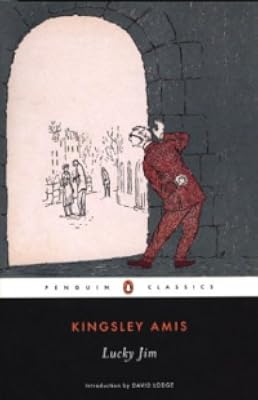
Lucky Jim
by Kingsley Amis
On This Page
Description
A hilarious satire about college life and high class manners, this is a classic of postwar English literature.Regarded by many as the finest, and funniest, comic novel of the twentieth century, Lucky Jim remains as trenchant, withering, and eloquently misanthropic as when it first scandalized readers in 1954. This is the story of Jim Dixon, a hapless lecturer in medieval history at a provincial university who knows better than most that "there was no end to the ways in which nice things are show more nicer than nasty ones." Amis's scabrous debut leads the reader through a gallery of emphatically English bores, cranks, frauds, and neurotics, with each of whom Dixon must contend in one way or another in order to hold on to his cushy academic perch and win the girl of his fancy.
More than just a merciless satire of cloistered college life and stuffy post-war manners, Lucky Jim is an attack on the forces of boredom, whatever form they may take, and a work of art that at once distills and extends an entire tradition of English comic writing, from Fielding and Dickens through Wodehouse and Waugh. As Christopher Hitchens has written, "if you can picture Bertie or Jeeves being capable of actual malice, and simultaneously imagine Evelyn Waugh forgetting about original sin, you have the combination of innocence and experience that makes this short romp so imperishable.". show less
Tags
Recommendations





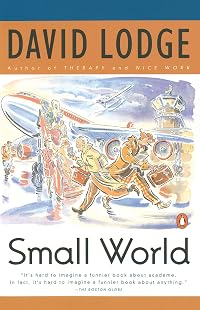
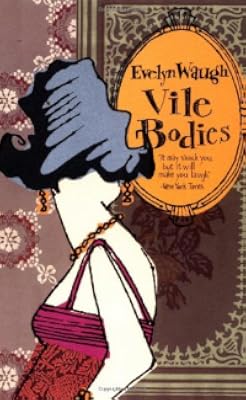










Member Recommendations
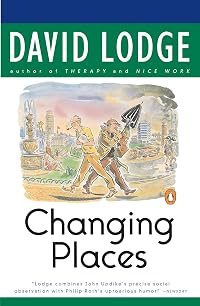
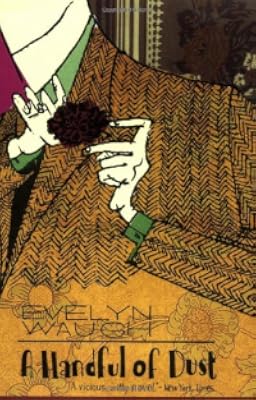
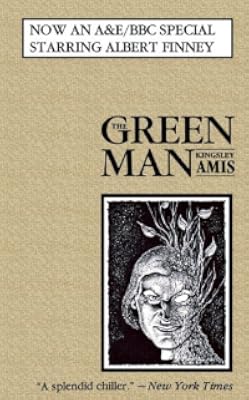
browner56 Both books are often hilarious and great examples of the Campus Novel.
42

hazzabamboo These are two of the only books that make me laugh out loud. Also, both are entertaining (and very English) accounts of young men coming of age with more than a little truth to them.

charlie68 One of the funniest books in the English language.
12


by anonymous user







Member Reviews
Lucky Jim tells the comic tale of James Dixon, a man of very modest ability and enthusiasm recently appointed lecturer in Medieval History at one of the lesser red brick universities in the 1950s. As he has a two year probationary period, he must make a good impression in the department, especially with its head, Professor Welch. This involves attending awkward social functions in the Professor's home, producing academic work, and avoiding all the potential social disasters and farcical mishaps that await him. Two very different love interests provide further source for calamity: Margeret who is another lecturer in the department, and Christine who is already involved with Professor Welch's son.
The set-piece larks are written large and show more revolve around some excellently conceived faux pas. Slightly more subtle, but no less effective throughout, is the savage skewering of pretensions and personalities, which adds another layer to the humour.
This is undoubtedly a very good comic novel, and has a different style than other academia-based dark humour novels such as Tom Sharpe's Porterhouse Blue, being somewhat less exaggerated and targeting a more realistic world with its satire. Lucky Jim is also probably better suited to contemporary tastes than Sharpe or Waugh's best comic novels, and so I would highly recommend it to anyone with an interest in the subject matter or genre. show less
The set-piece larks are written large and show more revolve around some excellently conceived faux pas. Slightly more subtle, but no less effective throughout, is the savage skewering of pretensions and personalities, which adds another layer to the humour.
This is undoubtedly a very good comic novel, and has a different style than other academia-based dark humour novels such as Tom Sharpe's Porterhouse Blue, being somewhat less exaggerated and targeting a more realistic world with its satire. Lucky Jim is also probably better suited to contemporary tastes than Sharpe or Waugh's best comic novels, and so I would highly recommend it to anyone with an interest in the subject matter or genre. show less
It's hard to get me to laugh out loud - but this 70 year old novel did. It is irreverent, bold and pokes a middle finger at academic self-regard (as much needed now as it ever was).
Professor Welch is, I believe, modelled on J.R.R. Tolkein, a bumbling ineffective Head of Department; and Margaret modelled on Monica Jones, Philip Larkins' needy long-term lady friend.
It is a funny satire, so value judgements about the characters are pointless. They are larger than life, by definition. The pace of the novel is even; it develops at a rate that never flags. Kingsley is a keen observer of the ridiculous and sufficiently intelligent to expose it without mercy.
There is a film treatment of this book, but nothing would match the novel.
Professor Welch is, I believe, modelled on J.R.R. Tolkein, a bumbling ineffective Head of Department; and Margaret modelled on Monica Jones, Philip Larkins' needy long-term lady friend.
It is a funny satire, so value judgements about the characters are pointless. They are larger than life, by definition. The pace of the novel is even; it develops at a rate that never flags. Kingsley is a keen observer of the ridiculous and sufficiently intelligent to expose it without mercy.
There is a film treatment of this book, but nothing would match the novel.
The last Kingsley Amis novel I read was his "The Alteration" way back in my MA days which only feels like a forever ago time. The novel then was, to my recollection, an excellently written narrative concerning the circumstances surrounding a Church singer, a young boy, in an alternate history where Catholicism in England never lost its influence after Martin Luther of all people became Pope. I dug it a lot.
But we have here a different kind of novel. Kingsley Amis, clearly drawing from experience and evidencing a deliciously love/hate relationship with academia (and way more in favor of the latter) elucidates a world of up their own ass intelligent people doing unintelligent things. From infidelity to binge drinking, social climbing to show more the handling of mental and emotional illness, Amis through his mordantly hilarious protagonist Dixon tears apart the ivory towers of posh university life to reveal its other side: a zoo of human frailty masquerading as precious (and precocious) intellectualism.
Now, this isn't to say that I'm against higher education. Far from it. I'm looking to, hopefully soon but at least eventually, begin the process of obtaining my PhD in English from (insert university with cache name appeal). But I'm not blind to the shortcomings of an advanced education. As much as I love the idea of (re)entering the marketplace of ideas I've (from the perspective of a middle school teacher and former student) realize that a good chunk of it, like everything else I suppose, is healthily suffused with several crocks of shit. The politics, the in-fighting, the frustrating pointlessness of its inherent bureaucratic insanity, all of it. All of it horrible.
But if that was all it was then it wouldn't be worth anything. The observe of the negatives of a university education are, for me at least, too numerous to list. I wouldn't go so far as to say that Amis counterbalances his parody with a loving wink towards the university, that would have made the whole novel too bulky and dulled its satirical edge, but I will say it was very fun to read a story devoted to smart people decimating other smart people with elevated loquaciousness.
So this novel hit me at the right time. I can recommend it but only if you have the stomach for douche bag intellects running over each other for no other reason than because they're not quite smart enough to know better. I loved it. show less
But we have here a different kind of novel. Kingsley Amis, clearly drawing from experience and evidencing a deliciously love/hate relationship with academia (and way more in favor of the latter) elucidates a world of up their own ass intelligent people doing unintelligent things. From infidelity to binge drinking, social climbing to show more the handling of mental and emotional illness, Amis through his mordantly hilarious protagonist Dixon tears apart the ivory towers of posh university life to reveal its other side: a zoo of human frailty masquerading as precious (and precocious) intellectualism.
Now, this isn't to say that I'm against higher education. Far from it. I'm looking to, hopefully soon but at least eventually, begin the process of obtaining my PhD in English from (insert university with cache name appeal). But I'm not blind to the shortcomings of an advanced education. As much as I love the idea of (re)entering the marketplace of ideas I've (from the perspective of a middle school teacher and former student) realize that a good chunk of it, like everything else I suppose, is healthily suffused with several crocks of shit. The politics, the in-fighting, the frustrating pointlessness of its inherent bureaucratic insanity, all of it. All of it horrible.
But if that was all it was then it wouldn't be worth anything. The observe of the negatives of a university education are, for me at least, too numerous to list. I wouldn't go so far as to say that Amis counterbalances his parody with a loving wink towards the university, that would have made the whole novel too bulky and dulled its satirical edge, but I will say it was very fun to read a story devoted to smart people decimating other smart people with elevated loquaciousness.
So this novel hit me at the right time. I can recommend it but only if you have the stomach for douche bag intellects running over each other for no other reason than because they're not quite smart enough to know better. I loved it. show less
I read this for a group challenge with the 1001 books to read before you die group. The challenge was to read a book from the list that someone else hated. This was on my shelf and so I decided to give it a try. As such, I went into it with low expectations, but actually I quite liked it. It made me laugh many times.
This is a comedic telling of the life of a first-year college professor. Jim Dixon is trying to navigate school politics, get along with his boring and eccentric colleagues, cover up the fact that he knows little about his professed field of expertise - Medieval Studies, and avoid the girl he doesn't want a relationship with while trying to build a relationship with a different girl.
I found Dixon real and annoying and show more funny and ultimately rooted for him. I'm glad I read this and might even read some more [[Kingsley Amis]] books.
Also, I thought this was a brilliant description of waking up with a hangover:
The light did him harm, but not as much as looking at things did; he resolved, having done it once, never to move his eyeballs again. A dusty thudding in his head made the scene before him beat like a pulse. His mouth had been used as a latrine by some small creature of the night, and then as its mausoleum. During the night, too, he'd somehow been on a cross-county run and then been expertly beaten up by secret police. He felt bad. show less
This is a comedic telling of the life of a first-year college professor. Jim Dixon is trying to navigate school politics, get along with his boring and eccentric colleagues, cover up the fact that he knows little about his professed field of expertise - Medieval Studies, and avoid the girl he doesn't want a relationship with while trying to build a relationship with a different girl.
I found Dixon real and annoying and show more funny and ultimately rooted for him. I'm glad I read this and might even read some more [[Kingsley Amis]] books.
Also, I thought this was a brilliant description of waking up with a hangover:
The light did him harm, but not as much as looking at things did; he resolved, having done it once, never to move his eyeballs again. A dusty thudding in his head made the scene before him beat like a pulse. His mouth had been used as a latrine by some small creature of the night, and then as its mausoleum. During the night, too, he'd somehow been on a cross-county run and then been expertly beaten up by secret police. He felt bad. show less
‘Lucky Jim’ was recommended to me as a hilarious satire on academic life. It is, in a sense, however the fact that it intermittently amused me did not make up for its poisonous misogyny. All the male characters in the piece were terrible human beings and none of the women were allowed to be human beings at all. Particularly notable was Margaret. Despite being nominally an academic, she was discussed purely in terms of her hysteria (the word was used repeatedly) which supposedly stemmed from not being pretty. There were points in the book when I nearly stopped reading because the toxic attitude to women made me so angry. The main character, Dixon, was a lazy, often drunk, vicious incompetent whose efforts to keep his job descended show more perpetually into farcical disaster. The most entertaining subplot concerned his efforts to conceal the damage he’d caused by setting fire to bedclothes with a cigarette while drunk. I had no sympathy for his tribulations with employment or romance, as both academia and womankind were clearly better off as far away from him as possible. In short, what prevented this book from being the amusing satire I’d hoped for was its cruelty, especially to women. show less
This review contains spoilers.
Received opinion tells us that Kingsley Amis went from Angry Young Man to cantankerous old devil; from liberal left-winger to illiberal right-winger. Having finally read Lucky Jim, his first novel published in 1954, I couldn’t help wondering. Perhaps Amis’s outlook hardened over the years but, on this evidence, he didn’t travel very far. Rather astonishingly he was a member of the British Communist Party when he wrote this, but it feels like the work of an instinctive conservative, albeit of the Tory-anarchist variety. If the book has a message it is that you should follow your own true feelings and desires, even if that might involve treading on other people’s; hardly a socialist lesson. It’s a show more lesson nonetheless that Amis’s hero, probationary history lecturer Jim Dixon, takes to heart as he metamorphoses from downtrodden underling to Machiavellian schemer. At the end he finally gets the girl he has been chasing and leaves his provincial university to head off to London to work in a well-paid job as private secretary to a millionaire businessman. Jim looks set to do well in the world of business, so good riddance to stuffy old academia! It’s clear that Amis intends this as a happy ending entirely free of irony.
Lucky Jim inaugurated both the campus novel and the whole Angry Young Man business, even if the term itself wasn’t in currency until after the 1956 premiere of John Osborne’s Look Back in Anger. It seethes very entertainingly with ill will, rage, venom, bile and loathing; spleen, in a word. There’s little, though, in the way of political anger from this Angry Young Man. His main satirical target is not the inequities of society but culture bores, pretentious poseurs, and pseudo-intellectuals. I can well imagine that in the stuffy Britain of the early 1950s it must have been wonderfully liberating to read about a university lecturer ‘whose policy it was to read as little as possible of any given book’, who decided to specialise in medieval history because he thought it was the easy option, or Jim contriving his way out of a chamber recital to sneak off to the pub and get bladdered, and talking of ‘filthy Mozart’. If this all seems no more than quaintly amusing now, like an Ealing comedy, that’s not Amis’s fault. There were certainly many at the time who were not amused. According to Anthony Powell ‘in certain quarters Lucky Jim was looked on quite simply as a shower of brickbats hurled by a half-educated hooligan at the holiest and most fragile shrine of arts and letters, not to mention music’. This reputation for anti-intellectualism, or even outright philistinism, clung to Amis throughout his career, indeed he appeared to enjoy cultivating it, but his real attack, and undoubtedly in this book, was on those who use culture to give themselves a spurious sense of superiority and distinction, rather than culture itself.
At the centre of the novel is a love triangle (no, come to think of it, it’s a love quartet). Jim, who through a vague yet nagging sense of responsibility has landed himself with the histrionic and emotionally manipulative Margaret, is increasingly attracted to Christine, girlfriend of the snobby would-be artist Bertrand, son of Jim’s boss, the preternaturally self-obsessed Professor Welch. Others before me have commented on the sexism inherent in much of this. They have a point, but I think the passage of time might be the main culprit. In a society where rumours of the death of Queen Victoria had been greatly exaggerated the frankness about relationships and sexual desire probably felt like a daring step forward, even if our modern sensibilities can’t help noticing that all the ‘frankness’ is emanating from the male gaze. It’s also in this strand of the story that the book’s central theme of the importance of following your true feelings rather than duty or convention - or to put it less positively, the necessity of looking after number one - snaps into focus.
Social comedy tends to date badly, it’s audacious defiance of contemporary conventions rendered innocuous, or even reactionary, by their supersession by new ones. Lucky Jim is rather like a mid-century piece of furniture, an old sideboard perhaps, once on-trend and now attracting embarrassed glances. There is one important respect, however, in which it still feels contemporary: the prose style. Amis’s prose combines dyspeptic wit with a buoyancy of spirit to very pleasing effect. It’s conversational yet stylish, a sort of Welfare State Wodehousian. He was also a poet and there is more than a touch of poetry in his prose. The book is full of brilliantly witty sentences of a deceptively throwaway kind, and Dixon’s inebriated ‘Merrie England’ lecture fully deserves its reputation as a bravura display of sustained comic writing. The funniest comedy in the book arises entirely from Amis’s way with words rather than contrived situations. Through a sense of obligation to others, or simply out of the need to keep his job, Jim is constantly biting his tongue, but his thoughts betray his true feelings-:
‘Do you hate me, James?’ she said.
Dixon wanted to rush at her and tip her backwards in the chair, to make a deafening rude noise in her face, to push a bead up her nose.
‘How do you mean?’ he asked.
If in many ways Lucky Jim seems stranded in time, dated rather than classic, requiring a certain amount of historical imagination to understand why it might once have seemed dangerously modern, and in some respects ‘problematic’, as we say nowadays, the ultimate test of a comic novel is whether it still makes you laugh; it certainly made me laugh a lot, which is not bad for a book written more than seventy years ago. show less
Received opinion tells us that Kingsley Amis went from Angry Young Man to cantankerous old devil; from liberal left-winger to illiberal right-winger. Having finally read Lucky Jim, his first novel published in 1954, I couldn’t help wondering. Perhaps Amis’s outlook hardened over the years but, on this evidence, he didn’t travel very far. Rather astonishingly he was a member of the British Communist Party when he wrote this, but it feels like the work of an instinctive conservative, albeit of the Tory-anarchist variety. If the book has a message it is that you should follow your own true feelings and desires, even if that might involve treading on other people’s; hardly a socialist lesson. It’s a show more lesson nonetheless that Amis’s hero, probationary history lecturer Jim Dixon, takes to heart as he metamorphoses from downtrodden underling to Machiavellian schemer. At the end he finally gets the girl he has been chasing and leaves his provincial university to head off to London to work in a well-paid job as private secretary to a millionaire businessman. Jim looks set to do well in the world of business, so good riddance to stuffy old academia! It’s clear that Amis intends this as a happy ending entirely free of irony.
Lucky Jim inaugurated both the campus novel and the whole Angry Young Man business, even if the term itself wasn’t in currency until after the 1956 premiere of John Osborne’s Look Back in Anger. It seethes very entertainingly with ill will, rage, venom, bile and loathing; spleen, in a word. There’s little, though, in the way of political anger from this Angry Young Man. His main satirical target is not the inequities of society but culture bores, pretentious poseurs, and pseudo-intellectuals. I can well imagine that in the stuffy Britain of the early 1950s it must have been wonderfully liberating to read about a university lecturer ‘whose policy it was to read as little as possible of any given book’, who decided to specialise in medieval history because he thought it was the easy option, or Jim contriving his way out of a chamber recital to sneak off to the pub and get bladdered, and talking of ‘filthy Mozart’. If this all seems no more than quaintly amusing now, like an Ealing comedy, that’s not Amis’s fault. There were certainly many at the time who were not amused. According to Anthony Powell ‘in certain quarters Lucky Jim was looked on quite simply as a shower of brickbats hurled by a half-educated hooligan at the holiest and most fragile shrine of arts and letters, not to mention music’. This reputation for anti-intellectualism, or even outright philistinism, clung to Amis throughout his career, indeed he appeared to enjoy cultivating it, but his real attack, and undoubtedly in this book, was on those who use culture to give themselves a spurious sense of superiority and distinction, rather than culture itself.
At the centre of the novel is a love triangle (no, come to think of it, it’s a love quartet). Jim, who through a vague yet nagging sense of responsibility has landed himself with the histrionic and emotionally manipulative Margaret, is increasingly attracted to Christine, girlfriend of the snobby would-be artist Bertrand, son of Jim’s boss, the preternaturally self-obsessed Professor Welch. Others before me have commented on the sexism inherent in much of this. They have a point, but I think the passage of time might be the main culprit. In a society where rumours of the death of Queen Victoria had been greatly exaggerated the frankness about relationships and sexual desire probably felt like a daring step forward, even if our modern sensibilities can’t help noticing that all the ‘frankness’ is emanating from the male gaze. It’s also in this strand of the story that the book’s central theme of the importance of following your true feelings rather than duty or convention - or to put it less positively, the necessity of looking after number one - snaps into focus.
Social comedy tends to date badly, it’s audacious defiance of contemporary conventions rendered innocuous, or even reactionary, by their supersession by new ones. Lucky Jim is rather like a mid-century piece of furniture, an old sideboard perhaps, once on-trend and now attracting embarrassed glances. There is one important respect, however, in which it still feels contemporary: the prose style. Amis’s prose combines dyspeptic wit with a buoyancy of spirit to very pleasing effect. It’s conversational yet stylish, a sort of Welfare State Wodehousian. He was also a poet and there is more than a touch of poetry in his prose. The book is full of brilliantly witty sentences of a deceptively throwaway kind, and Dixon’s inebriated ‘Merrie England’ lecture fully deserves its reputation as a bravura display of sustained comic writing. The funniest comedy in the book arises entirely from Amis’s way with words rather than contrived situations. Through a sense of obligation to others, or simply out of the need to keep his job, Jim is constantly biting his tongue, but his thoughts betray his true feelings-:
‘Do you hate me, James?’ she said.
Dixon wanted to rush at her and tip her backwards in the chair, to make a deafening rude noise in her face, to push a bead up her nose.
‘How do you mean?’ he asked.
If in many ways Lucky Jim seems stranded in time, dated rather than classic, requiring a certain amount of historical imagination to understand why it might once have seemed dangerously modern, and in some respects ‘problematic’, as we say nowadays, the ultimate test of a comic novel is whether it still makes you laugh; it certainly made me laugh a lot, which is not bad for a book written more than seventy years ago. show less
I love the comic strip cover of this Penguin Essentials edition of Lucky Jim depicting cartoon cameos of what’s to come: the dunking of Ned, the puffs and the pints, the lethargy and ennui; the podium posturing, ill-advised bedtime smoke, epic bus journey and Christine versus Margaret.
Jim Dixon is on probation as a junior lecturer in History at a provincial university under the tutelage of absent-minded Professor Welch who assigns him the make-or-break task of delivering an end-of term discourse on Merrie England to an audience of local bigwigs, undergraduates and learned colleagues.
Once Jim had morphed into Mr Bean in my head his behind-the-back gurning and hand gestures, muttered streams of obscenities, ape impersonations, show more accident-prone mishaps, malicious practical jokes and the farcical situations he finds himself as he tries to juggle too many balls in the air became even more hysterical. Nobody seems to like, trust or believe him; everybody seems to consider him inferior, wanting or pitiable. Will he ever or does he even deserve to get lucky?
I found Lucky Jim highly entertaining and a really good read. A scathing satire on academia and the pretensions of the chattering classes that stands the test of time. show less
Jim Dixon is on probation as a junior lecturer in History at a provincial university under the tutelage of absent-minded Professor Welch who assigns him the make-or-break task of delivering an end-of term discourse on Merrie England to an audience of local bigwigs, undergraduates and learned colleagues.
Once Jim had morphed into Mr Bean in my head his behind-the-back gurning and hand gestures, muttered streams of obscenities, ape impersonations, show more accident-prone mishaps, malicious practical jokes and the farcical situations he finds himself as he tries to juggle too many balls in the air became even more hysterical. Nobody seems to like, trust or believe him; everybody seems to consider him inferior, wanting or pitiable. Will he ever or does he even deserve to get lucky?
I found Lucky Jim highly entertaining and a really good read. A scathing satire on academia and the pretensions of the chattering classes that stands the test of time. show less
Members
- Recently Added By
Published Reviews
ThingScore 100
"Lucky Jim, Kingsley Amis's comic masterpiece, may be the funniest book of the past half century "
added by danielx
Lists

The Guardian's 1000 Novels Everyone Must Read
1,005 works; 550 members

1001 Books You Must Read Before You Die
1,448 works; 1,134 members

Classics you know you should have read but probably haven't
421 works; 408 members
Best of British Literature
226 works; 41 members

Favourite Books
1,819 works; 316 members

Best Campus Novels
99 works; 18 members
Top-Rated Books on LibraryThing
272 works; 117 members

Read the book and saw the movie
1,170 works; 192 members
Best Satire
188 works; 29 members

The Guardian's 100 greatest novels of all time
100 works; 16 members
Time Magazine's "All-Time 100"
113 works; 15 members
20th Century Literature
1,161 works; 54 members

Anthony Burgess 99 Post War Novels
99 works; 7 members

Canon de la narrativa universal del siglo XX
254 works; 6 members
Folio Society
831 works; 48 members

Top Five Books of 2017
757 works; 230 members

Summer Reads 2014
207 works; 69 members

Books tagged favorites
390 works; 30 members

Classic British Humor
41 works; 8 members
TML 200 Best Books 1950-1999
202 works; 10 members
Time's All-Time 100 Novels
100 works; 27 members

1,001 BYMRBYD Concensus
723 works; 27 members
My list of 100 books to read next
100 works; 4 members

NPR Readers Poll: 100 Favorite Funny Books
100 works; 5 members

Best Antiheroes and Antiheroines
119 works; 7 members

A Novel Cure
742 works; 23 members

Tagged by Tim or Meh!
91 works; 8 members

Academia in Fiction
158 works; 23 members
United Kingdom
82 works; 5 members
First Novels
373 works; 16 members

University literature
145 works; 5 members
Undiscovered Classics to Read
70 works; 15 members

Books Read in 2022
5,166 works; 114 members

Books Read in 2020
4,379 works; 124 members
Books to Reread Someday
53 works; 7 members
Nifty Fifties
129 works; 13 members

My TBR
371 works; 3 members

Books Read in 2018
4,360 works; 110 members

Fiction with Men's Given Names in the Title
302 works; 11 members

Literary Works Read in College
316 works; 15 members

Least favourite books of 2013
10 works; 2 members

Best books I read in 2013
152 works; 3 members

Edward Gorey Covers
150 works; 8 members

Mustich's 1000 Books to Read Before You Die: A Life Changing List
1,001 works; 19 members
Books You Read For University
184 works; 3 members
Canon de la narrativa universal del s. XX (cicutadry)
499 works; 3 members
Reading LIst
648 works; 1 member

Books Read in 2025
4,091 works; 97 members
.
396 works; 1 member

The Modern Library (The Two Hundred Best Novels....
202 works; 1 member

Michael Dirda's 100 Best Comic Novels
100 works; 1 member
Author Information

103+ Works 19,628 Members
Kingsley Amis is generally considered one of the "angry young men" of the 1950s. He was born in London in 1922 and educated at the City of London School. He received a degree in English language and literature from St. John's College, Oxford, in 1947. Until 1961 Amis lectured in English at University College, Swansea, and for the following two show more years at Cambridge. In 1947 Amis published his first collection of poems, Bright November. Frame of Mind followed in 1953 and Poems: Fantasy Portraits in 1954. His first novel, Lucky Jim (1954), established his reputation as a writer. He followed with That Uncertain Feeling (1956), and I Like It Here (1958). A longtime James Bond devotee, Amis wrote a James Bond adventure after the death of Ian Fleming in 1964. Amis's study of the famous spy was titled The James Bond Dossier (1965). Amis received the Booker Prize for the Old Devils (1986). Amis's later works include Memoirs (1990), and The King's English, a collection of essays on the craft of writing well. Amis was knighted in 1990. He died in 1995. (Bowker Author Biography) show less
Some Editions
Awards and Honors
Awards
Notable Lists
Torchlight List (#103)
Series
Belongs to Publisher Series
Work Relationships
Is contained in
Has the adaptation
Common Knowledge
- Canonical title
- Lucky Jim
- Original title
- Lucky Jim
- Original publication date
- 1954
- People/Characters
- Jim Dixon; Margaret Peel; Professor Welch; Christine Callaghan; Bertrand Welch; Professor Gore-Urquhart
- Important places
- England, UK
- Related movies
- Lucky Jim (1957 | IMDb); Lucky Jim (2003 | IMDb)
- Epigraph
- Oh, lucky Jim,
How I envy him.
Oh, lucky Jim,
how I envy him.
Old Song - Dedication
- To
Philip Larkin - First words
- 'They made a silly mistake, though,' the Professor of History said, and his smile, as Dixon watched, gradually sank beneath the surface of his features at the memory.
Lucky Jim was first published by Victor Gollancz in January 1954. (Introduction) - Quotations
- Christine was still prettier and nicer than Margaret, and all the deductions that could be drawn from that fact should be drawn: there was no end to the ways in which nice things are nicer than nasty ones.
"I am sorry to hear of your difficulties, Mr Dickinson, but I'm afraid things are too difficult here for me to be very seriously concerned about your difficulties..."
The light did him harm, but not as much as looking at things did; he resolved, having done it once, never to move his eyeballs again. A dusty thudding in his head made the scene before him beat like a pulse. His mouth had bee... (show all)n used as a latrine by some small creature of the night, and then as its mausoleum. During the night, too, he'd somehow been on a cross-county run and then been expertly beaten up by secret police. He felt bad. - Last words
- (Click to show. Warning: May contain spoilers.)The whinnying and clanging of Welch's self-starter began behind them, growing fainter and fainter as they walked on until it was altogether overlaid by the other noises of the town and by their own voices.
(Click to show. Warning: May contain spoilers.)As Kingsley Amis allowed these nasty things to impinge more and more on the world of his later novels they became progressively darker, to the disappointment of many readers of Lucky Jim, but also deeper. (Introduction) - Blurbers
- Lodge, David; Mortimer, John; Dunmore, Helen
- Original language
- English
Classifications
Statistics
- Members
- 6,373
- Popularity
- 1,927
- Reviews
- 161
- Rating
- (3.70)
- Languages
- 15 — Catalan, Czech, Dutch, English, Estonian, Finnish, French, German, Hungarian, Italian, Polish, Portuguese, Spanish, Swedish, Turkish
- Media
- Paper, Audiobook, Ebook
- ISBNs
- 63
- ASINs
- 68