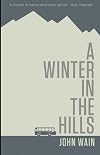
A Winter in the Hills
by John Wain
On This Page
Description
The scene is North Wales, where the people speak their own language. Into this alien country comes an English philologist to acquire fluence Welsh.Tags
Recommendations












Member Recommendations
Member Reviews
A very good book with a couple of small weaknesses. The main character (Roger) does not come across as a particularly likeable person (which, given his central place in the tale, I feel he should). The second small fault is the weakness of the opening chapters. When I first read it I nearly gave up until the 'bus stealing' incident. That point introduces a set of most fascinating and likeable characters and one easily becomes involved in the battle between the local power-hungry businessman and the bunch of Welsh small businessmen who fight him. Some great moments and a definite annual re-read for me - the atmospheric picturing of North Wales is extremely well done.
(somewhat longer version at http://wp.me/pBfTB-1o0)
Plot
The storyline concerns Roger Furnivall, a washed-up 40-year-old academic who has been caring for his brother Geoffrey, mentally incapacitated after being caught in a flying bomb attack in World War II. After Geoffrey dies, Roger decides to go to North Wales so as to learn Welsh and hence get a job in Uppsala, where there will be many tall, compliant blonde girls. Roger is (quite naturally as he sees it) desperate for sex, and in the course of the book we learn about his attempts with Beverley (a young American tourist), Rhiannon (the beautiful and well-dressed hotel receptionist who must be a kept woman) and Jenny (married with two young children, but love will find a way). We also show more learn about his past with Margot, a red-haired green-eyed insatiable lover.
As well as the above, Roger also becomes involved with Gareth Jones, proprietor of a one-man bus concern who is the last survivor holding out against Dic Sharp, the local Mr Big, and Madog an epic Welsh-language poet (working in an estate agency) together with a number of other colourful local characters.
The narration is carried on in the third person, but it might as well be the first since we never see any scene where Roger is not present. The book was published in 1970; since Jenny drives a Mini (which was popular from the mid-1960s) and there is some reference to the possible nationalisation of the buses (which presumably refers to the Labour government of 1964-70) we can take the action to be set at the same time.
Roger the philologist
Roger is presented as a specialist in ‘philology’, but this is a nineteenth-century term, and in this century it would be called historical linguistics. He actually gives Jenny a pretty good explanation of what historical linguistics is, but that still leaves some serious problems. If you want to be a historical linguist you need to know the earliest attested languages from various families–for Celtic languages, you need to know Old Irish as a starting point. Modern Welsh is of comparatively little use, being both modern and contaminated by English.
As well as Roger learning Welsh with implausible ease (but that was necessary for the plot), he also fails to notice any of the many features of Welsh that would force themselves upon the attention of a real philologist.
Roger and the women
In the past Roger has had a relationship with red-haired Margot, which foundered due to her rejecting the proper woman’s role of caring for his disabled brother Geoffrey. During the course of the book, he persuades Beverley, an young blonde American, to take him up into the mountains on her scooter and attempts to have sex with her. She rebuffs him and abandons him on the cold hill’s side. (Castration may have been more to the point.) Afterwards Roger thinks of her unkindly as that slab of processed cheese from California.
He also tries to get it on with Rhiannon the kept woman, who is beautiful and mysterious and knows everything that is going on, as well as helping Roger find a new home in a converted chapel. And always seems to be wearing a green suede coat, together with a short black leather skirt and a coral-red blouse, all of which seems to be rather too tasteless even for 1970. We are also expected to believe that while she lives with her family and half of her village works like her in the nearby town, nobody has told her mother or her father the deacon about her international career as a rich man’s plaything. 'A girl like Rhiannon must affect the lives of many men in a few short years, before her beauty faded.'
Then we have Jenny, the typical Movement heroine under the heading 'Girls are nicer than us' who is modest and dark-haired and from Lancashire (later changed to Cheshire but these places are all the same) and has already produced offspring for Roger to dote on–they are of course quite unconcerned by a change of Daddies–and sexually insatiable when she meets the right man in Roger. We note that she also manages to be both innocent ('Gerald caught me so young, before I’d had a go at managing life by myself') and experienced ('Don’t forget a woman gets very good at detecting line-shooting. We have to listen to so much of it between sixteen and twenty-five') at the same time–that’s the Eternal Feminine for you, in decorous provincial form and wearing a 'damson-coloured woollen dress'.
We should also put in a word for another kept woman, Fräulein Inge, whose residence Roger occupies in her absence. Roger catches sight of here as a young woman 'with pouting, almost bee-stung lips'. 'She might have been the girl-friend of one of the foreign poets'. Clearly, being a female she couldn’t be a poet herself–she can only manage 'the childish art-play of Fräulein Inge'–and neither could Jenny, who finds her subaltern feminine fulfilment as administrative assistant to the Celtic Poets’ Colloquium (as well as in Roger’s bed).
Under these circumstances, it seems best to pass rapidly over the sub-Lawrentian Bad Sex:
'It used to make me feel I’d give anything, anything at all, to get right inside her, into her innermost fibres, right in where she lived, to find the central core that was Margot and nothing else but Margot, find it and shoot hot sperm into it.'
and also over
'Roger was just about to formulate the thought that there was, after all, something to be said for sexual assault as a pastime for a man in early middle age when Gareth’s voice recalled him to actuality.'
Roger in Wales
In his preface to the reissue, the author’s son states that the novel’s ‘Caerfenai’ is to be identified with Caernarvon, and the original of the village ‘Llancrwys’ was home to the Welsh language writer Kate Roberts, which would make it Rosgadfan.
There are indeed some effective scenes from Welsh life, as of being caught on the mountain when the weather changes or going to visit Gareth’s blind Mam in her cottage and indeed An Englishman’s Christmas In Wales with the roast hare that Gareth has snared himself and the shop-bought pudding with Roger’s whisky burning on it and Gareth’s Mam smelling the snow as violets in the wind.
The question remains as to whether these Welsh characters have any life of their own as opposed to merely furnishing Roger’s solipsistic fantasies. Gareth as the hunchbacked indomitable son of mountain and slate-mine seems to be meant as some embodiment of Wales, crippled in body as Geoffrey was crippled in mind. Then we have the colourful inhabitants of Llamcrwys, all surnamed Jones, the colourful hauliers Ivo and Gito, the colourful fat young poet Madog not at all like fat young Dylan Thomas who brings about Jenny’s escape from durance vile through his Colloquium of Celtic Poets.
All of these seem to be merely there as aids in Roger’s path to self-realisation:
'he knew at last that Madog’s poem was Gareth’s yellow bus and that he, Roger Furnivall, had ridden up into the mountains now in one, now in the other, and that they had taken him to where he had found himself.'
Without Roger, the Welsh characters seem to be unable to do anything for themselves and in particular to stand up to Dic Sharp. Dic Sharp is allowed to make some good points in his confrontations with Roger–that Roger has not the slightest idea of how to run a business, that having had his fun he’ll be on his way leaving the locals to sort out the mess, even the Brechtian idea that morals are only for rich folk–and he might indeed have become something independent of Roger if he had been further developed.
Among the many plot holes, the main ones concern Dic Sharp’s attempts to force Gareth out of business. The thing about loosening the nuts on the wheel of Roger’s hire car is complete nonsense, since it could easily have killed him and brought the police swarming all over the place. Similarly for the device of the evil twin bus taking away Gareth’s passengers, when all they needed to do was to put Gareth’s bus out of action for a few weeks and he would have gone bust.
There seems to be some attempt at symbolic realism in the bus doppelganger, together with Roger’s progress from the Palace Hotel to Mrs Pylon Jones’s holiday flatlet to the converted chapel and then back to the Palace Hotel, and the parallelism between Geoffrey and Gareth, but none of it worked or if it did I didn’t notice.
Conclusion
As it stands this is all Roger’s solipsistic half-drunken fantasy lying alone in his hotel room. But in that case it’s like the weak wish-fulfilment story that Roger spins Gareth and his Mam about having recently been at the marriage between Geoffrey and Margot, and maybe here the author is indicating that he understands what kind (and quality) of thing his book is, even if we don’t. show less
Plot
The storyline concerns Roger Furnivall, a washed-up 40-year-old academic who has been caring for his brother Geoffrey, mentally incapacitated after being caught in a flying bomb attack in World War II. After Geoffrey dies, Roger decides to go to North Wales so as to learn Welsh and hence get a job in Uppsala, where there will be many tall, compliant blonde girls. Roger is (quite naturally as he sees it) desperate for sex, and in the course of the book we learn about his attempts with Beverley (a young American tourist), Rhiannon (the beautiful and well-dressed hotel receptionist who must be a kept woman) and Jenny (married with two young children, but love will find a way). We also show more learn about his past with Margot, a red-haired green-eyed insatiable lover.
As well as the above, Roger also becomes involved with Gareth Jones, proprietor of a one-man bus concern who is the last survivor holding out against Dic Sharp, the local Mr Big, and Madog an epic Welsh-language poet (working in an estate agency) together with a number of other colourful local characters.
The narration is carried on in the third person, but it might as well be the first since we never see any scene where Roger is not present. The book was published in 1970; since Jenny drives a Mini (which was popular from the mid-1960s) and there is some reference to the possible nationalisation of the buses (which presumably refers to the Labour government of 1964-70) we can take the action to be set at the same time.
Roger the philologist
Roger is presented as a specialist in ‘philology’, but this is a nineteenth-century term, and in this century it would be called historical linguistics. He actually gives Jenny a pretty good explanation of what historical linguistics is, but that still leaves some serious problems. If you want to be a historical linguist you need to know the earliest attested languages from various families–for Celtic languages, you need to know Old Irish as a starting point. Modern Welsh is of comparatively little use, being both modern and contaminated by English.
As well as Roger learning Welsh with implausible ease (but that was necessary for the plot), he also fails to notice any of the many features of Welsh that would force themselves upon the attention of a real philologist.
Roger and the women
In the past Roger has had a relationship with red-haired Margot, which foundered due to her rejecting the proper woman’s role of caring for his disabled brother Geoffrey. During the course of the book, he persuades Beverley, an young blonde American, to take him up into the mountains on her scooter and attempts to have sex with her. She rebuffs him and abandons him on the cold hill’s side. (Castration may have been more to the point.) Afterwards Roger thinks of her unkindly as that slab of processed cheese from California.
He also tries to get it on with Rhiannon the kept woman, who is beautiful and mysterious and knows everything that is going on, as well as helping Roger find a new home in a converted chapel. And always seems to be wearing a green suede coat, together with a short black leather skirt and a coral-red blouse, all of which seems to be rather too tasteless even for 1970. We are also expected to believe that while she lives with her family and half of her village works like her in the nearby town, nobody has told her mother or her father the deacon about her international career as a rich man’s plaything. 'A girl like Rhiannon must affect the lives of many men in a few short years, before her beauty faded.'
Then we have Jenny, the typical Movement heroine under the heading 'Girls are nicer than us' who is modest and dark-haired and from Lancashire (later changed to Cheshire but these places are all the same) and has already produced offspring for Roger to dote on–they are of course quite unconcerned by a change of Daddies–and sexually insatiable when she meets the right man in Roger. We note that she also manages to be both innocent ('Gerald caught me so young, before I’d had a go at managing life by myself') and experienced ('Don’t forget a woman gets very good at detecting line-shooting. We have to listen to so much of it between sixteen and twenty-five') at the same time–that’s the Eternal Feminine for you, in decorous provincial form and wearing a 'damson-coloured woollen dress'.
We should also put in a word for another kept woman, Fräulein Inge, whose residence Roger occupies in her absence. Roger catches sight of here as a young woman 'with pouting, almost bee-stung lips'. 'She might have been the girl-friend of one of the foreign poets'. Clearly, being a female she couldn’t be a poet herself–she can only manage 'the childish art-play of Fräulein Inge'–and neither could Jenny, who finds her subaltern feminine fulfilment as administrative assistant to the Celtic Poets’ Colloquium (as well as in Roger’s bed).
Under these circumstances, it seems best to pass rapidly over the sub-Lawrentian Bad Sex:
'It used to make me feel I’d give anything, anything at all, to get right inside her, into her innermost fibres, right in where she lived, to find the central core that was Margot and nothing else but Margot, find it and shoot hot sperm into it.'
and also over
'Roger was just about to formulate the thought that there was, after all, something to be said for sexual assault as a pastime for a man in early middle age when Gareth’s voice recalled him to actuality.'
Roger in Wales
In his preface to the reissue, the author’s son states that the novel’s ‘Caerfenai’ is to be identified with Caernarvon, and the original of the village ‘Llancrwys’ was home to the Welsh language writer Kate Roberts, which would make it Rosgadfan.
There are indeed some effective scenes from Welsh life, as of being caught on the mountain when the weather changes or going to visit Gareth’s blind Mam in her cottage and indeed An Englishman’s Christmas In Wales with the roast hare that Gareth has snared himself and the shop-bought pudding with Roger’s whisky burning on it and Gareth’s Mam smelling the snow as violets in the wind.
The question remains as to whether these Welsh characters have any life of their own as opposed to merely furnishing Roger’s solipsistic fantasies. Gareth as the hunchbacked indomitable son of mountain and slate-mine seems to be meant as some embodiment of Wales, crippled in body as Geoffrey was crippled in mind. Then we have the colourful inhabitants of Llamcrwys, all surnamed Jones, the colourful hauliers Ivo and Gito, the colourful fat young poet Madog not at all like fat young Dylan Thomas who brings about Jenny’s escape from durance vile through his Colloquium of Celtic Poets.
All of these seem to be merely there as aids in Roger’s path to self-realisation:
'he knew at last that Madog’s poem was Gareth’s yellow bus and that he, Roger Furnivall, had ridden up into the mountains now in one, now in the other, and that they had taken him to where he had found himself.'
Without Roger, the Welsh characters seem to be unable to do anything for themselves and in particular to stand up to Dic Sharp. Dic Sharp is allowed to make some good points in his confrontations with Roger–that Roger has not the slightest idea of how to run a business, that having had his fun he’ll be on his way leaving the locals to sort out the mess, even the Brechtian idea that morals are only for rich folk–and he might indeed have become something independent of Roger if he had been further developed.
Among the many plot holes, the main ones concern Dic Sharp’s attempts to force Gareth out of business. The thing about loosening the nuts on the wheel of Roger’s hire car is complete nonsense, since it could easily have killed him and brought the police swarming all over the place. Similarly for the device of the evil twin bus taking away Gareth’s passengers, when all they needed to do was to put Gareth’s bus out of action for a few weeks and he would have gone bust.
There seems to be some attempt at symbolic realism in the bus doppelganger, together with Roger’s progress from the Palace Hotel to Mrs Pylon Jones’s holiday flatlet to the converted chapel and then back to the Palace Hotel, and the parallelism between Geoffrey and Gareth, but none of it worked or if it did I didn’t notice.
Conclusion
As it stands this is all Roger’s solipsistic half-drunken fantasy lying alone in his hotel room. But in that case it’s like the weak wish-fulfilment story that Roger spins Gareth and his Mam about having recently been at the marriage between Geoffrey and Margot, and maybe here the author is indicating that he understands what kind (and quality) of thing his book is, even if we don’t. show less
Ratings
Members
- Recently Added By
Published Reviews
John Wain, whose anger (and flair) of the '40's has been subsiding ever since into a steadfast seriousness has written an old-fashioned (this is not intended pejoratively) novel shaped by the clannish, resistant and admirably changeless small Welsh village in which it is set. Roger Furnivall, a philologist of forty, comes there to extend his language and sexual skills. And he becomes involved show more in two seemingly lost causes which will end in small triumphs: his attempt to help Gareth, a hunchbacked bus driver and the last one to oppose a local monopolist, even to the extent of personal violence; and his reclamation of Jenny, unhappily married to a smooth economist, which will end in his full responsibility for her and her children. . . . Wain, no more innovational a stylist than the material he uses, still keeps his story signally well sustained while juxtaposing man's individual, stress individual, existence against the encroachments of the century (bullying bureaucracy, greed, materialism, etc.). The novel has both stamina and sympathetic concern. show less
added by KayCliff
Author Information

72+ Works 1,920 Members
Some Editions
Common Knowledge
- Canonical title
- A Winter in the Hills
- Original title
- A Winter in the Hills
- Original publication date
- 1970
- Important places
- Wales, UK
- First words
- The man with the spade bent down and shovelled some earth on to Geoffrey's coffin.
- Quotations
- Modern clothes for women are designed to make the idea of chastity seem ridiculous.
... that stubborn misgiving about art which appears in every human generation, that icy fear that its power may be, after all, the power of the devil. For does it not build a leaning tower of joy on a quicksand of suffering, ... (show all)often the suffering of the forgotten and nameless who are beyond its help and who ought to be remembered in silence and prayer?
Words, sentences - they had so much healing and controlling power.... Language distanced experience, put it into a frame for contemplation. How rough the animals must find their wordless existence, having to swallow experienc... (show all)e just as it came!
Classifications
Statistics
- Members
- 47
- Popularity
- 636,644
- Reviews
- 2
- Rating
- (3.50)
- Languages
- Czech, English, Hungarian
- Media
- Paper, Ebook
- ISBNs
- 5
- ASINs
- 1