
On This Page
Description
Three Men in a Boat was meant to be a serious travel guide to the Thames, between Kingston and Oxford. Instead, it is one of the wittiest, funniest fictional jaunts down a river ever written. The three men are based on author Jerome and two of his friends. The dog "developed out of that area of inner consciousness which, in all Englishmen, contains an element of the dog."Tags
Recommendations



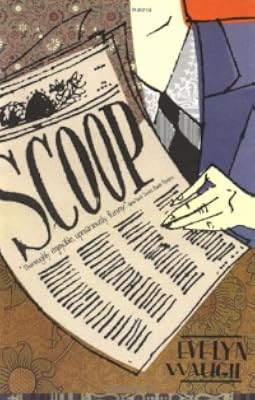

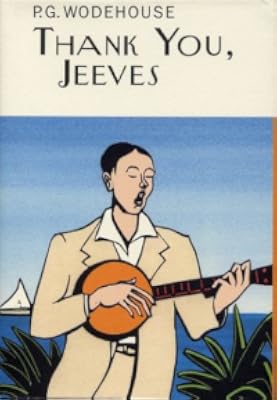
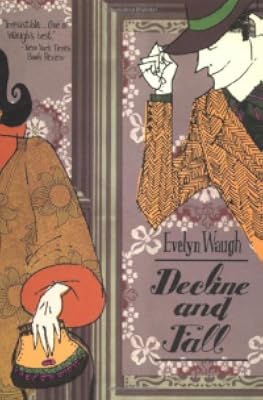


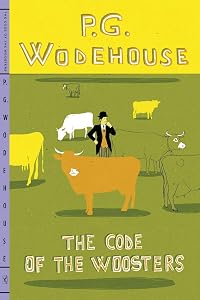


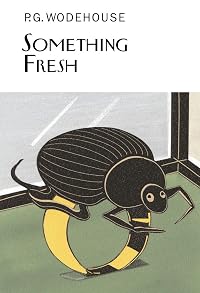
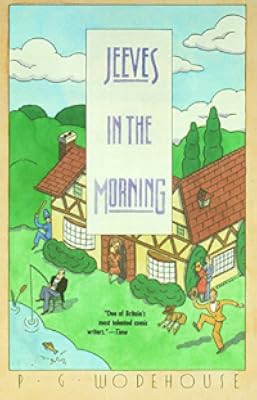






Member Recommendations
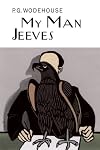
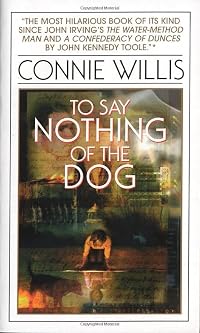
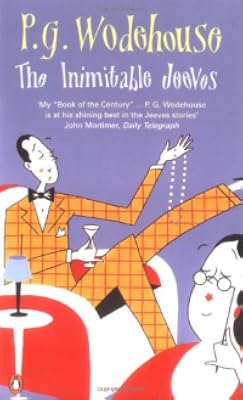
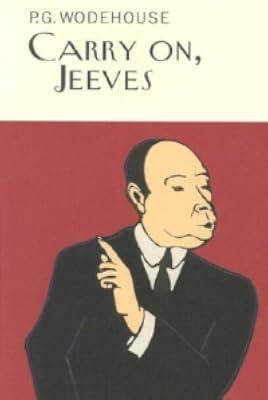
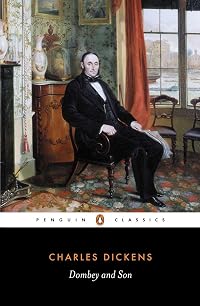
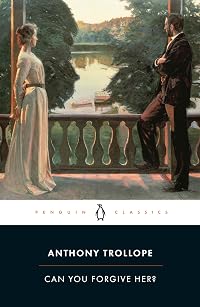
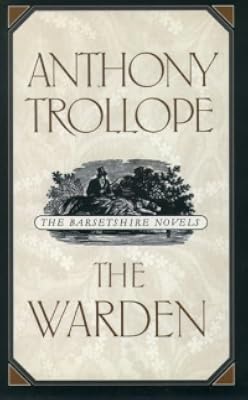
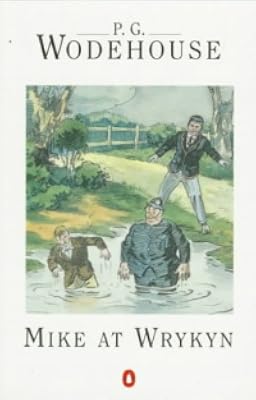
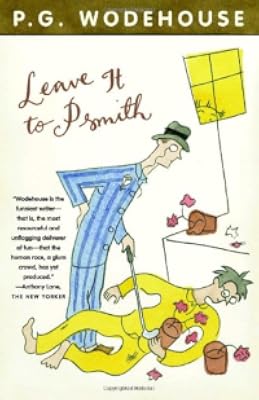
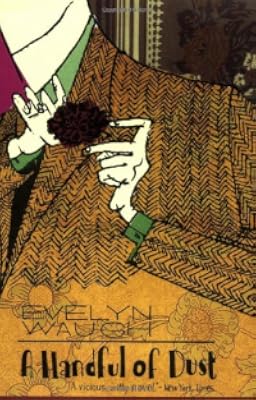
TadAD Imagine Bertie, Bingo and Barmie trying to organize a two-week boating expedition up the Thames. Conversely, imagine J., Harris and George trying to steal a cow creamer for their aunt. There you have it.
130
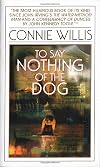


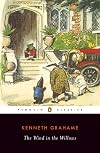
raizel Both have spiritual, transcendent moments in what are, for the most part, silly stories.
72

myshelves Victorian police novel utilizing the theme of Jerome's book.
10


cbl_tn If you enjoy humorous travel stories, you can't go wrong with either one of these books. Both books include descriptions of visits to the Hampton Court maze.
01
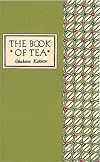
aulsmith Two books which appear to be about mundane matters on the surface, but are really about how to live life to the fullest

Cecilturtle version moderne sur une rivière française


cf66 It's the same scenary


Member Reviews
Light, amusing and occasionally brilliantly written (I'm a sucker for alliteration). Full of digressions, each of which is just about precisely the right length.
> I do think that, of all the silly, irritating tomfoolishness by which we are plagued, this “weather-forecast” fraud is about the most aggravating. It “forecasts” precisely what happened yesterday or a the day before, and precisely the opposite of what is going to happen today. … But who wants to be foretold the weather? It is bad enough when it comes, without our having the misery of knowing about it beforehand.
> We had just commenced the third course—the bread and jam—when a gentleman in shirtsleeves and a short pipe came along, and wanted to know if we knew show more that we were trespassing. We said we hadn’t given the matter sufficient consideration as yet to enable us to arrive at a definite conclusion on that point, but that, if he assured us on his word as a gentleman that we were trespassing, we would, without further hesitation, believe it. He gave us the required assurance, and we thanked him, but he still hung about, and seemed to be dissatisfied, so we asked him if there was anything further that we could do for him; and Harris, who is of a chummy disposition, offered him a bit of bread and jam.…
> It always does seem to me that I am doing more work than I should do. It is not that I object to the work, mind you; I like work: it fascinates me. I can sit and look at it for hours. I love to keep it by me: the idea of getting rid of it nearly breaks my heart. You cannot give me too much work; to accumulate work has almost become a passion with me: my study is so full of it now, that there is hardly an inch of room for any more. I shall have to throw out a wing soon. And I am careful of my work, too. Why, some of the work that I have by me now has been in my possession for years and years, and there isn’t a fingermark on it.
> The river—with the sunlight flashing from its dancing wavelets, gilding gold the grey-green beech-trunks, glinting through the dark, cool wood paths, chasing shadows o’er the shallows, flinging diamonds from the mill-wheels, throwing kisses to the lilies, wantoning with the weirs’ white waters, silvering moss-grown walls and bridges, brightening every tiny townlet, making sweet each lane and meadow, lying tangled in the rushes, peeping, laughing, from each inlet, gleaming gay on many a far sail, making soft the air with glory—is a golden fairy stream.
> But the river—chill and weary, with the ceaseless raindrops falling on its brown and sluggish waters, with a sound as of a woman, weeping low in some dark chamber; while the woods, all dark and silent, shrouded in their mists of vapour, stand like ghosts upon the margin; silent ghosts with eyes reproachful, like the ghosts of evil actions, like the ghosts of friends neglected—is a spirit-haunted water through the land of vain regrets. show less
> I do think that, of all the silly, irritating tomfoolishness by which we are plagued, this “weather-forecast” fraud is about the most aggravating. It “forecasts” precisely what happened yesterday or a the day before, and precisely the opposite of what is going to happen today. … But who wants to be foretold the weather? It is bad enough when it comes, without our having the misery of knowing about it beforehand.
> We had just commenced the third course—the bread and jam—when a gentleman in shirtsleeves and a short pipe came along, and wanted to know if we knew show more that we were trespassing. We said we hadn’t given the matter sufficient consideration as yet to enable us to arrive at a definite conclusion on that point, but that, if he assured us on his word as a gentleman that we were trespassing, we would, without further hesitation, believe it. He gave us the required assurance, and we thanked him, but he still hung about, and seemed to be dissatisfied, so we asked him if there was anything further that we could do for him; and Harris, who is of a chummy disposition, offered him a bit of bread and jam.…
> It always does seem to me that I am doing more work than I should do. It is not that I object to the work, mind you; I like work: it fascinates me. I can sit and look at it for hours. I love to keep it by me: the idea of getting rid of it nearly breaks my heart. You cannot give me too much work; to accumulate work has almost become a passion with me: my study is so full of it now, that there is hardly an inch of room for any more. I shall have to throw out a wing soon. And I am careful of my work, too. Why, some of the work that I have by me now has been in my possession for years and years, and there isn’t a fingermark on it.
> The river—with the sunlight flashing from its dancing wavelets, gilding gold the grey-green beech-trunks, glinting through the dark, cool wood paths, chasing shadows o’er the shallows, flinging diamonds from the mill-wheels, throwing kisses to the lilies, wantoning with the weirs’ white waters, silvering moss-grown walls and bridges, brightening every tiny townlet, making sweet each lane and meadow, lying tangled in the rushes, peeping, laughing, from each inlet, gleaming gay on many a far sail, making soft the air with glory—is a golden fairy stream.
> But the river—chill and weary, with the ceaseless raindrops falling on its brown and sluggish waters, with a sound as of a woman, weeping low in some dark chamber; while the woods, all dark and silent, shrouded in their mists of vapour, stand like ghosts upon the margin; silent ghosts with eyes reproachful, like the ghosts of evil actions, like the ghosts of friends neglected—is a spirit-haunted water through the land of vain regrets. show less
I originally read this because I'm a big fan of Connie Willis and she went on and on about it, but when I actually read it, I was charmed for its own sake. :)
It's all so very droll.
Fish stories, laziness, incompetence, dishonesty, pathos and great verve stud these pages. It's an adventure for the ages! Of course, it's just three men in a boat, to say nothing of the dog.
Set in Victorian England, it captures the overblown hypochondriac feel of the age. :)
Well worth the read, and now I think I'm gonna hunt down takers for a first or re-read of Connie Willis' To Say Nothing of the Dog, which, I might add, might be a bit superior in every way. :)
It's all so very droll.
Fish stories, laziness, incompetence, dishonesty, pathos and great verve stud these pages. It's an adventure for the ages! Of course, it's just three men in a boat, to say nothing of the dog.
Set in Victorian England, it captures the overblown hypochondriac feel of the age. :)
Well worth the read, and now I think I'm gonna hunt down takers for a first or re-read of Connie Willis' To Say Nothing of the Dog, which, I might add, might be a bit superior in every way. :)
Three men and another passenger of whom I cannot speak embark upon a watercraft to explore the upper reaches of the Thames. Jerome was poking fun at stuffy types who undertake adventures while believing bookish intelligence will adequately take the place of practical knowledge. I am happy to say I only read about these fools instead of adding to their number, keeping my foolishness at home where it belongs.
It's fun to know that long before people googled illness symptoms on the Internet they were already doing it in medical books and coming to the same erroneous conclusions. Modern technology merely makes this more convenient. Similarly, road-rage has a precursor in 19th century riverboating: "The mildest tempered people, when on land, show more become violent and blood-thirsty when in a boat." We are following a time-honoured tradition when we get behind the wheel and begin cursing everyone else.
Obligatory observation: strange tonal changes appear when the comedic adventure is rudely interrupted at unexpected times by poetical landscape descriptions or dramatically depicted historical scenes. Do not worry, more absurdity will soon follow. show less
It's fun to know that long before people googled illness symptoms on the Internet they were already doing it in medical books and coming to the same erroneous conclusions. Modern technology merely makes this more convenient. Similarly, road-rage has a precursor in 19th century riverboating: "The mildest tempered people, when on land, show more become violent and blood-thirsty when in a boat." We are following a time-honoured tradition when we get behind the wheel and begin cursing everyone else.
Obligatory observation: strange tonal changes appear when the comedic adventure is rudely interrupted at unexpected times by poetical landscape descriptions or dramatically depicted historical scenes. Do not worry, more absurdity will soon follow. show less
Hee! And more hee! This is meandering and relatable and silly and almost infinitely charming. It’s pastiche and satire and travelogue and slice-of-life all rolled into one, with an unreliable narrator, long set-ups to the jokes, and pratfalls. So many pratfalls. Victorian literature this is not! Except that, of course, it is.
I’m still mulling over how Jerome made this work. It shouldn’t. There’s no plot or character development, just a series of moments and memories and general buffoonery. There’s barely even dialogue as we’re used to it! But the characters, especially the narrator J, absolutely shine and everything from the episodes to the colloquial narration feels timeless and familiar. I, too, have had trouble cooking show more scrambled eggs. I, too, have had nights out camping when I just can’t get comfortable. I, too, complain about traffic and get sentimental about views.
I think the real beauty of this book is that it works on many levels, because while I’m talking up the “look at this doofuses” comedy stuff, this is also a travelogue. It does tell you the sites and the history and the good pubs. It just also happens to be so over-the-top about it that it becomes a parody of travel guides—and there is the time capsule aspect too. Jerome’s portrait of English life and the Thames Valley of the 1880s is perfect. It’s a reminder that however stuffy the Victorians seem, they also had a fabulous sense of humour about themselves.
Recommended to anyone who likes silly British people or silly British books, but especially to fans of P.G. Wodehouse.
Warnings: One instance of the n-slur. Two instances of the g-slur within a single paragraph. One use of “Oriental” in reference to fashion. Victorian opinions of women not necessarily shared by the author.
8/10 show less
I’m still mulling over how Jerome made this work. It shouldn’t. There’s no plot or character development, just a series of moments and memories and general buffoonery. There’s barely even dialogue as we’re used to it! But the characters, especially the narrator J, absolutely shine and everything from the episodes to the colloquial narration feels timeless and familiar. I, too, have had trouble cooking show more scrambled eggs. I, too, have had nights out camping when I just can’t get comfortable. I, too, complain about traffic and get sentimental about views.
I think the real beauty of this book is that it works on many levels, because while I’m talking up the “look at this doofuses” comedy stuff, this is also a travelogue. It does tell you the sites and the history and the good pubs. It just also happens to be so over-the-top about it that it becomes a parody of travel guides—and there is the time capsule aspect too. Jerome’s portrait of English life and the Thames Valley of the 1880s is perfect. It’s a reminder that however stuffy the Victorians seem, they also had a fabulous sense of humour about themselves.
Recommended to anyone who likes silly British people or silly British books, but especially to fans of P.G. Wodehouse.
Warnings: One instance of the n-slur. Two instances of the g-slur within a single paragraph. One use of “Oriental” in reference to fashion. Victorian opinions of women not necessarily shared by the author.
8/10 show less
Jerome K. Jerome wrote a leisurely chronicle of a summer's boating holiday on the Thames. It was published in 1889 when he was only thirty years old. It was a success as a popular humorous book and has remained in print to this day. While some of the book is pure farce his main approach to humor was understatement and outrageous exaggeration in a style that reminds one of some of Twain's comic writings. He described his technique thus:
"Some people are under the impression that all that is required to make a good fisherman is the ability to tell lies easily and without blushing: but this is a mistake. Mere bald fabrication is useless; the veriest tyro can manage that. It is in the circumstantial detail, the embellishing touches of show more probability, the general air of scrupulous---almost pedantic---veracity, that the experienced angler is seen."
His humor relies on the diabolic malice of inanimate objects when they escape from civilization: of the infrangibility of cans when the can opener has been left behind, the ingenuity of an untended rope, the cunning of kettles and leaking kerosene. His narrator is known simply as J. while his companions are Harris and George (though they are somewhat shadowy characters) and of course there is Montmorency, the dog.
"To look at Montmorency you would imagine that he was an angel sent upon the earth, for some reason withheld from mankind, in the shape of a small fox-terrier. There is a sort of Oh-what-a-wicked-world-this-is-and-how-I-wish-I-could-do-something-to-make-it-better-and -nobler expression about Montmorency that has been known to bring tears into the eyes of pious old ladies and gentlemen."
With a convivial narrator and two friends, to say nothing of the dog, this tale of a boat trip is simply one of the funniest and most delightful short books that I have ever read. show less
"Some people are under the impression that all that is required to make a good fisherman is the ability to tell lies easily and without blushing: but this is a mistake. Mere bald fabrication is useless; the veriest tyro can manage that. It is in the circumstantial detail, the embellishing touches of show more probability, the general air of scrupulous---almost pedantic---veracity, that the experienced angler is seen."
His humor relies on the diabolic malice of inanimate objects when they escape from civilization: of the infrangibility of cans when the can opener has been left behind, the ingenuity of an untended rope, the cunning of kettles and leaking kerosene. His narrator is known simply as J. while his companions are Harris and George (though they are somewhat shadowy characters) and of course there is Montmorency, the dog.
"To look at Montmorency you would imagine that he was an angel sent upon the earth, for some reason withheld from mankind, in the shape of a small fox-terrier. There is a sort of Oh-what-a-wicked-world-this-is-and-how-I-wish-I-could-do-something-to-make-it-better-and -nobler expression about Montmorency that has been known to bring tears into the eyes of pious old ladies and gentlemen."
With a convivial narrator and two friends, to say nothing of the dog, this tale of a boat trip is simply one of the funniest and most delightful short books that I have ever read. show less
"I like work; it fascinates me. I can sit and look at it for hours." (pg. 144)
One of those rare, effortlessly enjoyable reads that is only heightened by how surprisingly fresh it is when you come across it. Upon first hearing of Three Men in a Boat, Jerome K. Jerome's 1889 jaunty travelogue, a modern reader feels a chill in their veins. 'Classic' Victorian 'humour', you think, preserved as fondly-remembered 'light' literature: surely it would be an absolute travesty; unfunny, overblown and aging about as well as the fashion sense?
Not a bit of it. It's not only Jerome's boat journey down the river Thames which is bracing, but the humour itself. Quite simply, the book is a delight to read; fresh, colourful, wholesome and legitimately show more funny. Jerome is a natural raconteur and his boyish banter with Harris and George, his two boon companions, shines through the pages. There are comic encounters, wry asides and satirical observations, all of which hit home. To keep the pace of his narrative running smoothly, Jerome frequently digresses into outlandish anecdotes to illustrate the point he is making; it proves to be a winning formula. And I've not yet said anything of the dog: the three men in a boat are accompanied by Montmorency, a fox terrier who "laboured under the fixed belief that, whenever Harris or George reached out their hand for anything, it was his cold damp nose that they wanted" (pg. 39).
I'm conflicted in how to approach this review, for though I want to produce some of the novel's funniest moments and asides as evidence for the book's casual charm, I find that most of them work much better in context; Jerome's set-up and narrative voice add a persistent tone to the piece that really makes it all work together. Suffice to say there are many good examples; a fact which itself recommends the book, considering it is less than 200 pages long.
The bum notes are few: there are occasional flowery digressions into more regular travelogue material, but these are harmless enough. The only real flaw came late on, when Jerome details finding the dead body of a suicidal woman floating in the river. It's hard to get back into the hat-at-a-jaunty-angle swing of things after that. Nevertheless, Three Men in a Boat is a surprising, endearing breeze of a book that would be charming enough if it was just relating a Victorian river-jaunt through lovely countryside. Adding genuine humour, camaraderie and a Bank Holiday picnic-y freshness makes this slight, unassuming volume something really special. show less
One of those rare, effortlessly enjoyable reads that is only heightened by how surprisingly fresh it is when you come across it. Upon first hearing of Three Men in a Boat, Jerome K. Jerome's 1889 jaunty travelogue, a modern reader feels a chill in their veins. 'Classic' Victorian 'humour', you think, preserved as fondly-remembered 'light' literature: surely it would be an absolute travesty; unfunny, overblown and aging about as well as the fashion sense?
Not a bit of it. It's not only Jerome's boat journey down the river Thames which is bracing, but the humour itself. Quite simply, the book is a delight to read; fresh, colourful, wholesome and legitimately show more funny. Jerome is a natural raconteur and his boyish banter with Harris and George, his two boon companions, shines through the pages. There are comic encounters, wry asides and satirical observations, all of which hit home. To keep the pace of his narrative running smoothly, Jerome frequently digresses into outlandish anecdotes to illustrate the point he is making; it proves to be a winning formula. And I've not yet said anything of the dog: the three men in a boat are accompanied by Montmorency, a fox terrier who "laboured under the fixed belief that, whenever Harris or George reached out their hand for anything, it was his cold damp nose that they wanted" (pg. 39).
I'm conflicted in how to approach this review, for though I want to produce some of the novel's funniest moments and asides as evidence for the book's casual charm, I find that most of them work much better in context; Jerome's set-up and narrative voice add a persistent tone to the piece that really makes it all work together. Suffice to say there are many good examples; a fact which itself recommends the book, considering it is less than 200 pages long.
The bum notes are few: there are occasional flowery digressions into more regular travelogue material, but these are harmless enough. The only real flaw came late on, when Jerome details finding the dead body of a suicidal woman floating in the river. It's hard to get back into the hat-at-a-jaunty-angle swing of things after that. Nevertheless, Three Men in a Boat is a surprising, endearing breeze of a book that would be charming enough if it was just relating a Victorian river-jaunt through lovely countryside. Adding genuine humour, camaraderie and a Bank Holiday picnic-y freshness makes this slight, unassuming volume something really special. show less
Generally, I dislike Victorian authors. Many, like Dickens, were writing for serialized publication in magazines for which they were paid by the word, and it shows. JKJ, on the other hand, strikes the right balance for a modern audience. His work is just florid enough to evoke an after-dinner conversation with a skilled raconteur. He has a fine sense of how long he can indulge in describing a place before moving on to something happening. 3MiaB is filled with fine dashes of gentle, self-deprecating irony and occasional stabbing wit. One need not be a scholar of 19th century history or literature to appreciate its content.
Members
- Recently Added By
Lists

The Guardian's 1000 Novels Everyone Must Read
1,005 works; 552 members

1001 Books You Must Read Before You Die
1,448 works; 1,137 members

Classics you know you should have read but probably haven't
421 works; 409 members
BBC Big Read
191 works; 46 members
501 Must-Read Books
529 works; 72 members

Favourite Books
1,820 works; 316 members
Best of British Literature
226 works; 41 members

wilfully eccentric little england (cosy read novels, england)
45 works; 15 members

Best Laugh Out Loud Books
143 works; 49 members

Best Books About Journeys and Quests
117 works; 30 members

Favourite 19th century fiction
257 works; 62 members

Best Friendship Stories
205 works; 16 members
Folio Society
831 works; 53 members

The Guardian's 100 greatest novels of all time
100 works; 16 members
Books That Changed Me
158 works; 47 members

Books Set in Great Britain
191 works; 13 members
Books I've Read More Than Once
602 works; 49 members

Classic British Humor
41 works; 8 members

Blue Pyramid 1,276 Best Books of All Time
1,248 works; 32 members

Pleasant Surprises: Books That Exceeded Our Expectations
418 works; 142 members
19th Century
190 works; 16 members
Out of Copyright
244 works; 14 members
Five star books
1,767 works; 110 members

Top Five Books of 2014
1,064 works; 397 members

NPR Readers Poll: 100 Favorite Funny Books
100 works; 5 members

A Novel Cure
742 works; 23 members

Literary Travel Fiction
6 works; 4 members

Victorian Period
113 works; 10 members

Publisher's Weekly Bestsellers Prior to 1895 in Chronological Order
95 works; 6 members

Books With Numbers in the Title
308 works; 13 members

Books Read in 2014
2,344 works; 86 members

The Guardian's 100 Best Novels Written in English
105 works; 13 members

SHOULD Read Books!
354 works; 9 members

SomethingAwful TBB BOTM
66 works; 2 members

End of Your Life Book Club
134 works; 4 members

Books Read in 2017
4,249 works; 130 members

Underappreciated little gems
2 works; 2 members

Summer Books
82 works; 9 members

Books Read in 2015
3,299 works; 129 members
Funny Books
33 works; 2 members

Books Read in 2020
4,379 works; 123 members
BingoDOG - Animals in Adult Fiction
78 works; 20 members

Books I want to read
25 works; 3 members
Our Favorite Comfort Reads
334 works; 200 members

Ambleside Books
459 works; 18 members
Favorite Book Titles
35 works; 1 member

NOVELAS Y RELATOS DE HUMOR
60 works; 1 member
Books With the Most Memorable Titles
478 works; 158 members

Books Read in 2024
4,727 works; 128 members

Llibres que he llegit el 2026
44 works; 2 members

DigitalDreamDoor top 300
300 works; 4 members

Books talked about in Pamela Dean's Tam Lin
74 works; 1 member

Books Read in 2011
684 works; 20 members
Reading LIst
648 works; 1 member

Books We Love to Reread
695 works; 298 members

Biggest Disappointments
606 works; 168 members

Comedy of Manners
73 works; 1 member
Books available on Open Library
171 works; 4 members

Books Read in 2010
631 works; 11 members

Books Read in 2018
4,360 works; 110 members
Novels Set on Rivers
14 works; 2 members
Life and How to Live It
21 works; 4 members

Sonlight Books
1,487 works; 25 members

Books Read in 2012
816 works; 34 members

Best Dog Stories
109 works; 13 members

Works with inappropriate subject headings on LibraryThing
35 works; 5 members

Non-Fiction Worth Reading
1,025 works; 264 members

Ignore This List
2 works; 2 members

Books Read in 2026
2,131 works; 70 members
Fiction For Men
142 works; 11 members
Best Satire
188 works; 29 members
Author Information

Jerome K. Jerome was born in Walsall, Staffordshire, England on May 2, 1859. He grew up in London and had to leave school at the age of 14 because of his parents' death. Afterwards, he worked as a clerk, an actor, a journalist, and a school teacher. In 1885, he published his first book On the Stage - and Off: The Brief Career of a Would-Be Actor. show more This was followed by numerous plays, books, and magazine articles including Idle Thoughts of an Idle Fellow, Second Thoughts of an Idle Fellow, Three Men in a Boat, and Three Men on the Bummel. He founded the weekly magazine To-Day in 1893 and edited it and a monthly magazine called The Idler until 1898. He also worked as a lecturer. During World War I, he enlisted in the French army as an ambulance driver because he was rejected for active service in his own country. He published his autobiography My Life and Times in 1926. He suffered a paralytic stroke and a cerebral hemorrhage and died on June 14, 1927. (Bowker Author Biography) show less
Some Editions
Awards and Honors
Series

Belongs to Publisher Series
Work Relationships
Is contained in
Jerome K. Jerome Collection, Vol 1: Three Men in a Boat, Three Men on the Bummel, Tea-Table Talk by Jerome K. Jerome
Jerome K. Jerome: 14 books in 1. 3 Men in Boat (To Say Nothing of Dog)-3 Men on Bummel-Diary of Pilgrimage-Novel Notes-Paul Kelver-Tommy & Co-They & I-All Roads Lead to Calvary-Idle Ideas in 1905 by Jerome K. Jerome
The Collected Complete Works of Jerome K. Jerome (Huge Collection Including Three Men in a Boat, The Philosopher's Joke, Three Men on the Bummel, Idle Thoughts of an Idle Fellow, And More) by Jerome K. Jerome
Three Men in a Boat | Three Men on the Bummel | Idle Thoughts of an Idle Fellow: The best of Jerome K. Jerome by Jerome K. Jerome
Has the adaptation
Is abridged in
Inspired
Has as a student's study guide
Common Knowledge
- Canonical title
- Three Men in a Boat
- Original title
- Three Men in a Boat
- Alternate titles
- Three Men in a Boat (To Say Nothing of the Dog) (To Say Nothing of the Dog)
- Original publication date
- 1889
- People/Characters
- Jerome 'J.'; George; William Samuel Harris; Montmorency
- Important places
- River Thames, England, UK; Kingston upon Thames, London, England, UK; Reading, Berkshire, England, UK; Wallingford, Oxfordshire, England, UK; Oxford, Oxfordshire, England, UK; Marlow, Buckinghamshire, England, UK
- Related movies
- Three Men in a Boat (1920 | IMDb); Three Men in a Boat (1933 | IMDb); Three Men in a Boat (1956 | IMDb); Three Men in a Boat (1975 | IMDb); Hanging a Picture (1915 | IMDb); Drei Mann in einem Boot (1961 | IMDb)
- First words
- There were four of us - George, and William Samuel Harris, and myself, and Montmorency.
- Quotations
- I can't sit still and see another man slaving and working. I want to get up and superintend, and walk round with my hands in my pockets, and tell him what to do. It's my energetic nature. I can't help it.
I like work; it fascinates me. I can sit and look at it for hours.
You start on Monday with the idea implanted in your bosom that you are going to enjoy yourself. You wave an airy adieu to the boys on shore, light your biggest pipe, and swagger about the deck as if you were Captain Cook, Sir... (show all) Francis Drake, and Christopher Columbus all rolled into one. On Tuesday, you wish you hadn't come. On Wednesday, Thursday, and Friday, you wish you were dead. On Saturday, you are able to swallow a little beef tea, and to sit up on deck, and answer with a wan, sweet smile when kind-hearted people ask you how you feel now. On Sunday, you begin to walk about again, and take solid food. And on Monday morning, as, with your bag and umbrella in your hand, you stand by the gunwale, waiting to step ashore, you begin to thoroughly like it.
...George, who would not be able to get away from the City till the afternoon (George goes to sleep at a bank from ten to four each day, except Saturdays, when they wake him up and put him outside at two), would meet us there... (show all).
The case was becoming serious. It was now past midnight. The hotels at Shiplake and Henley would be crammed; and we could not go round, knocking up cottagers and householders in the middle of the night, to know if they let ap... (show all)artments! George suggested walking back to Henley and assaulting a policeman, and so getting a night's lodging in the station-house. But then there was the thought, "Suppose he only hits us back and refuses to lock us up!"
We could not pass the whole night fighting policemen. Besides, we did not want to overdo the thing and get six months.
He told us that it had been a fine day to-day, and we told him that it had been a fine day yesterday, and then we all told each other that we thought it would be a fine day to-morrow; and George said the crops seemed to be co... (show all)ming up nicely.
That is the only way to get a kettle to boil up the river. If it sees that you are waiting for it and are anxious, it will never even sing. You have to go away and begin your meal, as if you were not going to have any tea at ... (show all)all. You must not even look round at it. Then you will soon hear it sputtering away, mad to be made into tea.
Fox-terriers are born with about four times as much original sin in them as other dogs are, and it will take years and years of patient effort on the part of us Christians to bring about any appreciable reformation in rowdine... (show all)ss of the fox-terrier nature.
And yet it seems so full of comfort and of strength, the night. In its great presence, our small sorrows creep away, ashamed. The day has been so full of fret and care, and our hearts have been so full of evil and of bitter t... (show all)houghts, and the world has seemed so hard and wrong to us. Then Night, like some great loving mother, gently lays her hand upon our fevered head, and turns our little tear-stained faces up to hers, and smilies; and, though she does not speak, we know what she would say, and lay our hot flushed cheek against her bosom, and the pain is gone.
In later years, Reading seems to have been regarded as a handy place to run down to, when matters were becoming unpleasant in London. Parliament generally rushed off to Reading whenever there was a plague on at Westminster; a... (show all)nd, in 1625, the Law followed suit, and all the courts were held at Reading. It must have been worth while having a mere ordinary plague now and then in London to get rid of both the lawyers and the Parliament. - Last words
- (Click to show. Warning: May contain spoilers.)And Montmorency, standing on his hind legs, before the window, peering out into the night, gave a short bark of decided concurrence with the toast.
- Original language
- English
- Disambiguation notice
- unabridged
Contains Three Men in a Boat, Idle Thoughts of an Idle Fellow, Second Thoughts of an Idle Fellow and Three Men on the Bummel.
Classifications
Statistics
- Members
- 8,716
- Popularity
- 1,260
- Reviews
- 329
- Rating
- (3.88)
- Languages
- 41 — Arabic, Armenian, Belarusian, Bulgarian, Catalan, Czech, Danish, Dutch, English, Esperanto, Estonian, Finnish, French, Georgian, German, Irish, Greek, Hebrew, Hungarian, Indonesian, Italian, Japanese, Korean, Latvian, Lithuanian, Norwegian (Bokmål), Farsi/Persian, Polish, Romanian, Russian, Serbian, Croatian, Slovak, Slovenian, Spanish, Swedish, Turkish, Ukrainian, Portuguese (Portugal), Portuguese (Brazil), Chinese, simplified
- Media
- Paper, Audiobook, Ebook
- ISBNs
- 580
- UPCs
- 2
- ASINs
- 226