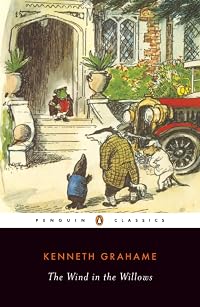
There is 1 current discussion about this work.
On This Page
Description
The escapades of four animal friends who live along a river in the English countryside--Toad, Mole, Rat, and Badger.Tags
Recommendations
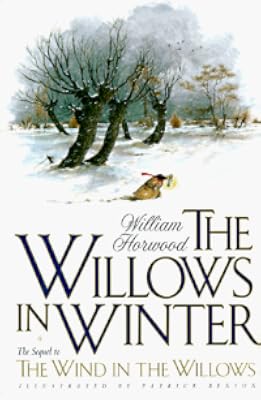
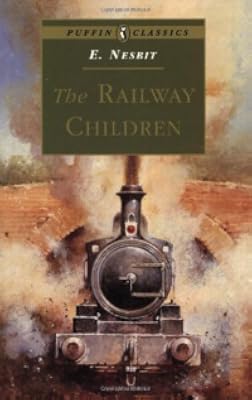
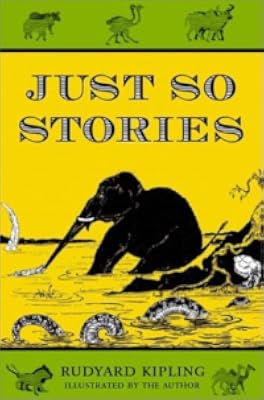
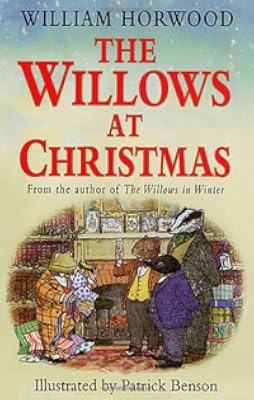
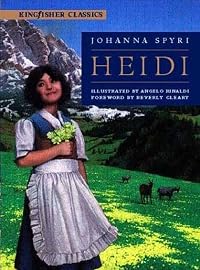
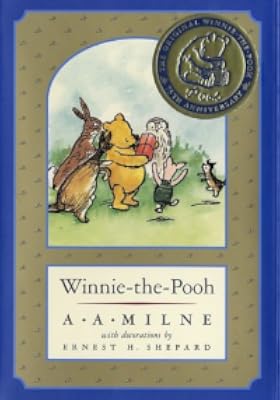
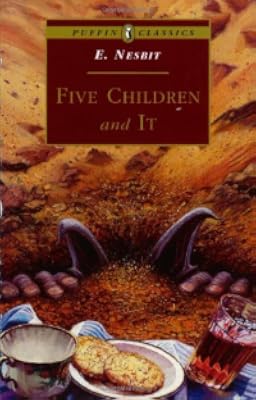
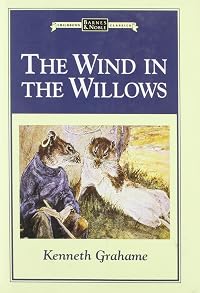

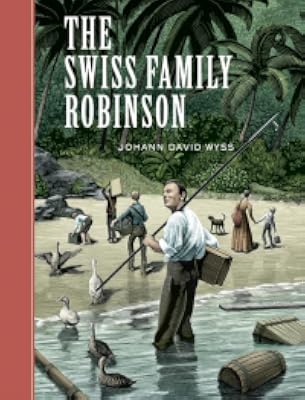
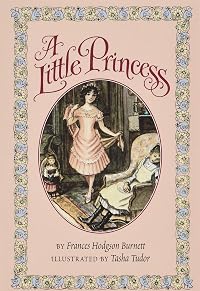
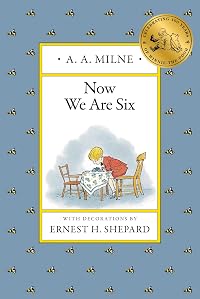
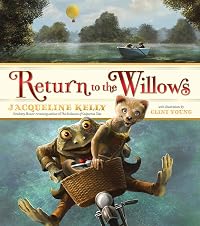
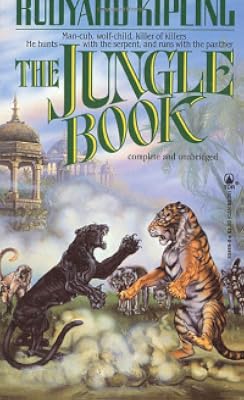

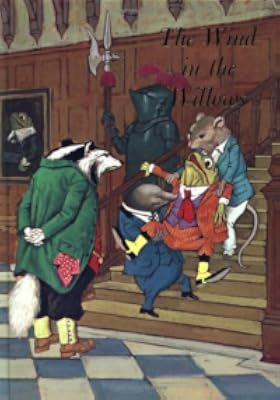
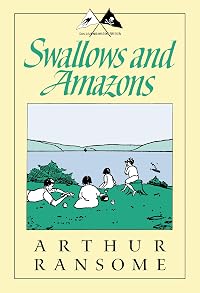
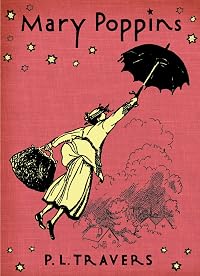



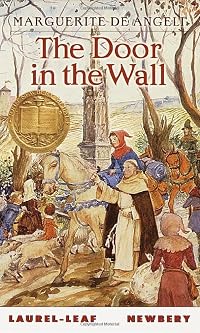
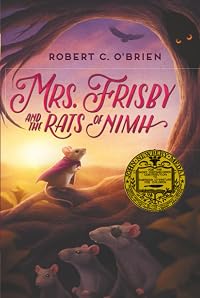

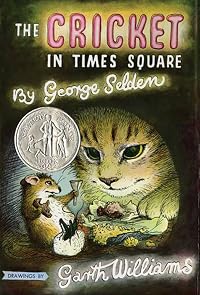

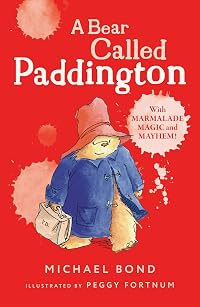

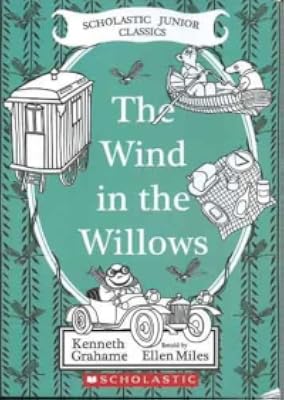
Member Recommendations
atimco Both Narnia and Willows feature anthropomorphized animal heroes who nevertheless retain the quirks of their species. The narrative voice is humorous and quintessentially British. Both stories also include spiritual/religious undertones. Willows predates Narnia by over forty years and was a big influence on Lewis (he even wrote a poem with some of Grahame's characters in it).
145
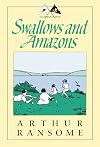
rakerman Both Swallows and Amazons and The Wind in the Willows are classic stories for children that involve boating and adventures.
60
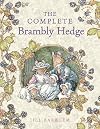
PitcherBooks Both are amusing, well-told and well-illustrated animal stories.
60

rakerman Although for an older audience than Wind in the Willows, Three Men in a Boat is a classic humourous story of misadventures with boats.
62
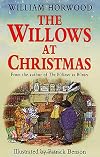
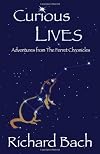
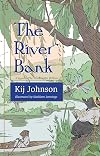
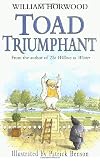

MissBrangwen Motoring adventures!


ToadsUSA Both these stories create a strong nostalgia for me. There is a darkness or trouble that follows the characters but always warmth as well.
Member Reviews
In the English language, there is no book more charming. There are wittier books, more audacious ones, and more incisive, but I know none more charming. The charm lies partly in the language—the fine, flowing prose that breaks sometimes into rhyme—and partly in the characters, the unbeatable Mole, Rat, Toad, and Badger. Through adventure and misadventure, songs and tears, Grahame’s prose and his spirited characters together compose an idyll fringed with darkness. Indeed, charming doesn’t mean innocent. But that part of The Wind in the Willows I encourage you to discover for yourself.
Surprisingly, I didn't love this quite so much as I was expecting. I thought for sure it would be 5 stars. Still, it was good vibes for the most part.
- Toad is an a-hole. I feel we're kind of supposed to be like "Oh, what a silly rascal!" and get behind his turning over of a new leaf, but I didn't buy it, and he didn't deserve to have Ratty, Moly, or Badger in his corner. Toad in the bin!
- Badger and Mole are sweetie-pie angels. When we were talking about it, I said "I wish I were a Badger, but I think more of a Mole" and my partner felt that was accurate. Which is not a self-deprecation; I love Moly, I'll take it!
- You cannot tell me that Rat and Mole weren't a couple. Look, I'm all for normalizing affectionate, deep, platonic show more relationships — soft masculinity heck yah; toxic masculinity in the bin — but this is giving Bert and Ernie before Bert and Ernie were a thing, and I said what I said. show less
- Toad is an a-hole. I feel we're kind of supposed to be like "Oh, what a silly rascal!" and get behind his turning over of a new leaf, but I didn't buy it, and he didn't deserve to have Ratty, Moly, or Badger in his corner. Toad in the bin!
- Badger and Mole are sweetie-pie angels. When we were talking about it, I said "I wish I were a Badger, but I think more of a Mole" and my partner felt that was accurate. Which is not a self-deprecation; I love Moly, I'll take it!
- You cannot tell me that Rat and Mole weren't a couple. Look, I'm all for normalizing affectionate, deep, platonic show more relationships — soft masculinity heck yah; toxic masculinity in the bin — but this is giving Bert and Ernie before Bert and Ernie were a thing, and I said what I said. show less
I apologize to the majority of my GR friends who absolutely adored this book, but I’m on the side of the weasels and ferrets and evil little stoats.
If a kid grew up influenced purely by the characters and morals in this book, they would become a terrible, arrogant, selfish, pompously annoying person (and possibly commit crimes, fully anticipating no consequences). I would not want my child to read this until they were much older, but I would tell them not to bother.
It was amusing looking at StoryGraph reviews and seeing the content warnings tagged for this children’s book: gun violence, racism, racial slurs, classism, sexism, misogyny, fatphobia… I know it’s a product of it’s time, but this is not exactly great.
I don’t show more know how this became a beloved children’s classic because it sets a horrible example for children. It is whimsical and charming and written nicely, but that’s about it.
This doesn’t affect my review as 1) it was already negative and 2) again, I know the book was a product of its time, and oh how I wish I could remember exactly what it was, but there was a comment so blatantly and utterly sexist that I visibly gaped (and then laughed). The rest of the book is rife with inherent sexism but it’s at least under-handed and normalized, am I right ladies?! Yet another terrible example for impressionable young children.
Also, I’m trying not to question the implications of these characters using and eating animal products, and how there’s humans but also tiny toads driving cars, and a million other worldbuilding inconsistencies.
(Do they drive on the same road? Do the animals get their own roads? Do toads drive human-sized cars, somehow?! Literally actually HOW was a toad able to pass for a human woman? Where does the meat the animals eat come from? Do they know? Is a big secret being kept from them by the humans? Or are cows seen as an inferior species and put in death camps? Is this secretly a horror novel?)
I don’t expect kids to care too much about that, but it’s another reason I’m surprised by the status this book has as a rewarded classic. It’s adorable, sure, but it’s messy and random and nothing makes sense. Which I could look past in a cute kid’s book if I wasn’t being PROVOKED every other minute by the constant whining and bursting into tears and never learning any lesson, ever.
If a good editor looked over it today, there would be much reckoning. show less
If a kid grew up influenced purely by the characters and morals in this book, they would become a terrible, arrogant, selfish, pompously annoying person (and possibly commit crimes, fully anticipating no consequences). I would not want my child to read this until they were much older, but I would tell them not to bother.
It was amusing looking at StoryGraph reviews and seeing the content warnings tagged for this children’s book: gun violence, racism, racial slurs, classism, sexism, misogyny, fatphobia… I know it’s a product of it’s time, but this is not exactly great.
I don’t show more know how this became a beloved children’s classic because it sets a horrible example for children. It is whimsical and charming and written nicely, but that’s about it.
This doesn’t affect my review as 1) it was already negative and 2) again, I know the book was a product of its time, and oh how I wish I could remember exactly what it was, but there was a comment so blatantly and utterly sexist that I visibly gaped (and then laughed). The rest of the book is rife with inherent sexism but it’s at least under-handed and normalized, am I right ladies?! Yet another terrible example for impressionable young children.
Also, I’m trying not to question the implications of these characters using and eating animal products, and how there’s humans but also tiny toads driving cars, and a million other worldbuilding inconsistencies.
(Do they drive on the same road? Do the animals get their own roads? Do toads drive human-sized cars, somehow?! Literally actually HOW was a toad able to pass for a human woman? Where does the meat the animals eat come from? Do they know? Is a big secret being kept from them by the humans? Or are cows seen as an inferior species and put in death camps? Is this secretly a horror novel?)
I don’t expect kids to care too much about that, but it’s another reason I’m surprised by the status this book has as a rewarded classic. It’s adorable, sure, but it’s messy and random and nothing makes sense. Which I could look past in a cute kid’s book if I wasn’t being PROVOKED every other minute by the constant whining and bursting into tears and never learning any lesson, ever.
If a good editor looked over it today, there would be much reckoning. show less
Proust for Kids This is not a book for children, nor for adults, nor for those caught in between. It is not a book for anyone. I will not recommend it, or share it, or ask my wife to read it. It is a book only for me, as all books are, and no one else in the world will ever curl up in a rainbow hammock under variable skies and follow the languid walks over emotional landscapes, alien and yet natural, and see through the eyes of those who are not people, are not animals, either, nor anything in between. I have just read the chapter in which Rat, the steadfast, loyal, mildly gruff yet dependable and neighborly, the erstwhile partner of the innocent Mole, observes the goings on of the migratory animals in early autumn and first rejects, show more then finds himself envious of, then is bewitched by and then released from, the notion of wandering to new unknown lands and leaving behind his structure and his self. In a bit of reversal, he is "rescued" from having the far off eyes of a very different rat by his partner Mole, who perhaps learned the trick of it and the sometimes necessity from the earlier failed attempts to heal toad of his inherent toadness. At the end, Mole provides paper and pencil and suggests to an uncertain Rat that he hasn't written poetry in a while, and perhaps he might scribble a bit, at least to get down the rhymes. And rat does. He is not Robert Frost, our rat. He's not a literary artist. But he is himself, and his poetic spirit is with him always, and applies itself at just the right moment in just the right way, when fumbling with the natural world after an encounter with the divine, for example. His poems will never quite be complete, but there is something there that answers who he is and who he longs to be, and it is enough. My word, what an odd, odd book. "Rich" is the obvious description... Ludicrously rich. Very little happens, everything happens, and we get swept up in it until we realize we are reading a book about everything, and everything that ever was anywhere or ever will be. It's Proust for children. Nostalgia is my least favorite flavor, so I have no reason to love this book, but I do. We are rat, and mole, and sometimes toad, and we might unwisely aspire to be badger, who is clean out of fucks long before the phrase was invented, and we shall ever wander and skip through our lives like the twittering sparrows. show less
A classic of children’s literature (published in 1908) that I never heard or read as a child and somehow never got around to reading until now. A great pity. I have no doubt whatsoever that I would have loved this as a child; one of my delights was the edition I read had absolutely wonderful illustrations. The storyline is simple: two friends, Mole and Rat—together with Badger and a small, assorted cast of others—devote their energies to saving Mr. Toad from his lack of judgment. There are a number of short adventures tucked in as well and a truly lovely, evocative paean to the English countryside runs throughout. The animals’ personalities are beautifully drawn and I cannot imagine any child (or adult, for that matter) who show more would not be enchanted by this gentle tale. Highly recommended. show less
I have so many thoughts about this classic. I'd never read it before, then the audiobook came across my desk and I decided it was time. As I started listening, my mind completely wandered from the story and I had to start over. Again and again this kept happening (there's not a lot of action in the beginning to hold one's attention). I had to really concentrate to understand what was happening and when I did...
Is this a book about a bunch of gay men?
Mole, Water Rat, Toad and Badger are all animals with the characteristics and habits of humans--to be specific, well-to-do human males from the year 1908. They picnic, go boating, have luncheons, smoke and drink coffee. They wear waistcoats and own estates. They're all adults--they live on show more their own and make their own livings. None of them has a wife or children or any immediate family. They're fiercely loyal to each other and seem to be like a clique.
Seriously, if I didn't know that this was supposed to be a children's book, I'd swear Mole and Ratty were between-the-lines lovers, the bedrock couple of the group. Badger is the older, wiser, grumpier member, and Mr. Toad is obviously the wild and crazy kid that everyone loves but also can't stand.
So that's my reading of this book. It's basically Queer as Folk in a Downton Abbey setting. Only there's no sex because, duh, it's a children's book. show less
Is this a book about a bunch of gay men?
Mole, Water Rat, Toad and Badger are all animals with the characteristics and habits of humans--to be specific, well-to-do human males from the year 1908. They picnic, go boating, have luncheons, smoke and drink coffee. They wear waistcoats and own estates. They're all adults--they live on show more their own and make their own livings. None of them has a wife or children or any immediate family. They're fiercely loyal to each other and seem to be like a clique.
Seriously, if I didn't know that this was supposed to be a children's book, I'd swear Mole and Ratty were between-the-lines lovers, the bedrock couple of the group. Badger is the older, wiser, grumpier member, and Mr. Toad is obviously the wild and crazy kid that everyone loves but also can't stand.
So that's my reading of this book. It's basically Queer as Folk in a Downton Abbey setting. Only there's no sex because, duh, it's a children's book. show less
Originally published in 1908, this classic British animal fantasy began as a series of bedtime stories that the author created for his young son, and only found its way into print after Grahame retired from his career in banking. Described as everything from a paean to the beauty of English country life, to a portrait of the class structure of late Victorian Britain, The Wind in the Willows is one of those stories that can be interpreted in diverse ways, and appreciated on many different levels. The tale of four friends - humble Mole, who happens upon a new life and a new social circle one day, when he sticks his nose up out of his burrow; friendly Ratty, a stouthearted sailor and happy-go-lucky river-dweller, who serves to bind the show more friends together; wise and retiring Badger, who may prefer the solitude of his woods, but nevertheless proves a valuable ally and friend; and spoiled Toad (of Toad Hall), the conceited son of privilege, who has a better heart than either judgment or resolve - it is as engaging as it is well written, and every bit as relevant as the day it was first published.
Chosen as our December selection, over in The Children's Fiction Book Club to which I belong, The Wind in the Willows is one of those books (of which there are far too many, I am afraid) that I have long been meaning to read, but to which I never seem to get to. How glad I am that my book-club commitments finally gave me the push I needed to pick it up, as I absolutely adored it! I can see why so many readers have recommended it to me over the years. The social analysis is certainly of interest - I find the idea (put forward in our book discussion, amongst other places) that the four friends each represent a different strata of the middle and upper classes, while the residents of The Wild Wood (the weasels, stoats and ferrets) represents the "underclass," quite convincing - although it was the beauty of the language that really stood out, on this initial read. The playful use of language, with made-up words and plenty of alliteration - So he scraped and scratched and scrabbled and scrooged and then he scrooged again and scrabbled and scratched and scraped, working busily with his little paws..." - the lyrical descriptions of the world of river and wood, and the gorgeous dreamlike passages leading up to the breathlessly magical encounter with Pan, in "Pipers at the Gates of Dawn," all left a powerful impression on me. I will be wanting to read this again, I think, and will be thinking of it for some time to come. It's just a lovely, lovely little book! show less
Chosen as our December selection, over in The Children's Fiction Book Club to which I belong, The Wind in the Willows is one of those books (of which there are far too many, I am afraid) that I have long been meaning to read, but to which I never seem to get to. How glad I am that my book-club commitments finally gave me the push I needed to pick it up, as I absolutely adored it! I can see why so many readers have recommended it to me over the years. The social analysis is certainly of interest - I find the idea (put forward in our book discussion, amongst other places) that the four friends each represent a different strata of the middle and upper classes, while the residents of The Wild Wood (the weasels, stoats and ferrets) represents the "underclass," quite convincing - although it was the beauty of the language that really stood out, on this initial read. The playful use of language, with made-up words and plenty of alliteration - So he scraped and scratched and scrabbled and scrooged and then he scrooged again and scrabbled and scratched and scraped, working busily with his little paws..." - the lyrical descriptions of the world of river and wood, and the gorgeous dreamlike passages leading up to the breathlessly magical encounter with Pan, in "Pipers at the Gates of Dawn," all left a powerful impression on me. I will be wanting to read this again, I think, and will be thinking of it for some time to come. It's just a lovely, lovely little book! show less
Members
- Recently Added By
Lists

Favorite Childhood Books
1,651 works; 519 members

The Guardian's 1000 Novels Everyone Must Read
1,005 works; 552 members

1001 Books You Must Read Before You Die
1,448 works; 1,137 members

Best Fantasy Novels
821 works; 361 members
1001 Children's Books You Must Read Before You Grow Up
774 works; 100 members

Favorite Animal Fiction
359 works; 156 members
BBC Big Read
191 works; 46 members

Read the book and saw the movie
1,170 works; 195 members
501 Must-Read Books
529 works; 72 members

Best Children's Books You've Read
197 works; 75 members

Classics you know you should have read but probably haven't
421 works; 409 members

Books Set in Great Britain
191 works; 13 members

Radcliffe's 100 Best Novel of the 20th Century
100 works; 32 members

100 books to read in a lifetime
102 works; 37 members
Best of British Literature
226 works; 41 members
Children's Fantasy
73 works; 10 members

Childhood Favorites
427 works; 24 members

Best Friendship Stories
205 works; 16 members

Elevenses
316 works; 88 members

Books I've Read More Than Once
602 works; 49 members

Best middle grade books
130 works; 24 members
Nonhuman Protagonists
245 works; 35 members

Best Books About Animals
143 works; 48 members

Newsweek's Top 100 Books: The Meta-List
100 works; 18 members

1900s (Decade, not century)
73 works; 17 members
Survey of Fantasy Classics
111 works; 23 members

The Telegraph's 110 Best Books: The Perfect Library
101 works; 18 members
20th Century Literature
1,161 works; 55 members

1,000 Good Books of John Senior
36 works; 6 members
my children books reading list-from 100 great books
101 works; 7 members

Hayao Miyazaki's 50 Recommended Children's Books
48 works; 6 members
Honey For a Child's Heart
1,152 works; 25 members
Ambleside Books
459 works; 18 members
BBC Big Read
100 works; 10 members

The Guardian's 100 greatest novels of all time
100 works; 16 members

Works That Inspired Disney Movies
119 works; 13 members
Banned Books Week 2014
268 works; 63 members
Favourite Books
1,820 works; 316 members
Satori Smiles Children's Book List
262 works; 7 members

Children's Classics Worth Reading
68 works; 9 members
Survey of Science Fiction and Fantasy
101 works; 13 members
Folio Society
831 works; 53 members
The Seven-League Shelf
57 works; 3 members

Best 20th Century Books as of 1924
100 works; 6 members

Recommend the 20 best books you've read in the last five years
2,168 works; 607 members
Books tagged favorites
390 works; 30 members

CCE 1000 Good Books List
1,033 works; 12 members
Literature of Honor for Boys
91 works; 3 members

Religion in Fantasy and Horror
38 works; 9 members

Blue Pyramid 1,276 Best Books of All Time
1,248 works; 32 members

Geek Dad Read to Your Kids List
79 works; 4 members

Books Read in 2023
5,638 works; 147 members

Huxley's reading log 2016
84 works; 3 members

Pleasant Surprises: Books That Exceeded Our Expectations
418 works; 143 members
LibraryThingers' 1001 Books You Must Read Before You Die
442 works; 30 members
Speculative Fiction to Read
706 works; 32 members
Out of Copyright
244 works; 14 members

Top Five Books of 2018
802 works; 265 members

4th Grade Books
312 works; 5 members

Top Five Books of 2014
1,064 works; 398 members

Generation Joshua
115 works; 3 members

Romalda Spalding's Writing Road To Reading
213 works; 3 members

Puffin Books 70th anniversary handbook recommendations
537 works; 10 members
1970s
657 works; 23 members

living room bookshelf
150 works; 1 member

Recommended Reading List
219 works; 1 member

Top Five Books of 2023
767 works; 317 members
Children's Literature 1900 - 1950 in order
413 works; 8 members
Books We Love to Reread
695 works; 298 members

Spring Reading
11 works; 1 member

Mustich's 1000 Books to Read Before You Die: A Life Changing List
1,001 works; 20 members
Best Audiobooks
240 works; 114 members

DigitalDreamDoor top 300
300 works; 4 members

Reading Glasses Podcast
410 works; 3 members

.
194 works; 2 members
The Five Books That Represent Us
391 works; 150 members

.
396 works; 1 member
Read For Your Life
157 works; 1 member
HMS: Make Your Child a Lover of Books, Ages 7-9
52 works; 2 members

Books talked about in Pamela Dean's Tam Lin
74 works; 1 member

Favorite Kids Books (chapter, middle grade)
170 works; 4 members
Books We Loved As Children
603 works; 254 members

Read in 2019
48 works; 1 member
'Books You Can't Live Without: The Top 100', The Guardian, 2007
156 works; 7 members
Best literature ever!
39 works; 1 member
Book Worlds We'd Like To Visit
322 works; 158 members

Dishonorable Mentions of 2024
8 works; 2 members

Books Read in 2024
4,727 works; 128 members
Overdue Podcast
808 works; 9 members
Recommended Reading : 600 Classics Reviewed, Editors of Salem Press, 2015
634 works; 6 members
EGBERTINA'S List of childhood books worthy of merit or unspeakable delight
155 works; 7 members

Before Austen Comes Aesop
318 works; 9 members
Books to Reread Someday
53 works; 7 members

Ambleside Y2
33 works; 1 member

You Couldn't Pay Me to Read That (Take 2)
213 works; 87 members
Best books I read in 2013
152 works; 3 members

A Novel Cure
742 works; 23 members
Accidents in Fiction
22 works; 5 members

Books Read in 2014
2,344 works; 89 members
Country Life
13 works; 3 members
The Greatest Books
99 works; 5 members
Life and How to Live It
21 works; 4 members
Victorian Period
113 works; 10 members
Ten Books That Have Stayed With Me
160 works; 30 members
Works Referenced in The League of Extraordinary Gentlemen
122 works; 6 members
The League of Extraordinary Gentlemen
87 works; 4 members

Western World's Greatest Books - Project Gutenberg
295 works; 15 members

Books Read in 2015
3,299 works; 129 members
Speculative Fiction: The Classics
36 works; 5 members
Books Read in 2016
4,666 works; 199 members
2022 Christmas Gifts
60 works; 13 members

Books Read in 2017
4,249 works; 130 members
Books on my Kindle
162 works; 3 members
Read
28 works; 1 member
United Kingdom
82 works; 5 members
BBC Top Books
78 works; 3 members

Books Read in 2019
4,052 works; 110 members
Books available on Open Library
171 works; 4 members

Books Read in 2020
4,379 works; 124 members
Books With Trees and Plants in the Title
27 works; 2 members
Banned or Challenged Books
402 works; 43 members
My Favourite Books
86 works; 5 members
Michael Dirda's Desert Island Books
62 works; 5 members

Unread books
1,063 works; 87 members

The Guardian's 100 Best Novels Written in English
105 works; 13 members
Goalhanger Book Club
22 works; 1 member
Talk Discussions
Current Discussions
the illustrators of The Wind in the Willows - part 2 in Tattered but still lovely (May 28)
Past Discussions
Signed Wind in the Willows SE - 200 copies in Folio Society Devotees (March 2024)
Hand & Eye The Wind in the Willows in Fine Press Forum (December 2022)
OT - The Wind in the Willows - illustrated by Chris Dunn, Kickstarter in Folio Society Devotees (November 2022)
Mad Parrot Press Wind in the Willows in Fine Press Forum (September 2022)
Chas. Van Sandwyk's Wind in the Willows in Fine Press Forum (October 2021)
the illustrators of The Wind in the Willows in Tattered but still lovely (January 2016)
The Wind in the Willows in British & Irish Children's Fiction (October 2009)
Author Information

317+ Works 36,732 Members
Kenneth Grahame was born in Edinburgh on March 3, 1859. When he was five years old, his mother died of scarlet fever and he nearly died himself, of the same disease. His father became an alcoholic and sent the children to Berkshire to live with relatives. They were later reunited with their father, but after a failed year, the children never heard show more from him again. Sometime later, one of his brothers died at the age of fifteen. He attended St. Edward's School as a child and intended to go on to Oxford University, but his relatives wanted him to go into banking. He worked in his uncle's office, in Westminster, for two years then went to work at the Bank of England as a clerk in 1879. He spent nearly thirty years there and became the Secretary of the Bank at the age of thirty-nine. He retired from the bank right before The Wind in the Willows was published in 1908. He wrote essays on topics that included smoking, walking and idleness. Many of the essays were published as the book Pagan Papers (1893) and the five orphan characters featured in the papers were developed into the books The Golden Age (1895) and Dream Days (1898). The Wind in the Willows (1908) was based on bedtime stories and letters to his son and it is where the characters Rat, Badger, Mole and Toad were created. In 1930, Milne's stage version was brought to another audience in Toad of Toad Hall. Grahame died on July 6, 1932. (Bowker Author Biography) show less
Some Editions
Awards and Honors
Awards
Notable Lists
BBC's Big Read (16)
Series

Belongs to Publisher Series
Livros de Bolso PEA (597)
Airmont Classics (105)
Work Relationships
Is contained in
Contains
Is retold in
Has the (non-series) sequel
Has the adaptation
Is abridged in
Inspired
Has as a reference guide/companion
Has as a study
Has as a commentary on the text
Has as a student's study guide
Common Knowledge
- Canonical title
- The Wind in the Willows
- Original title
- The Wind in the Willows
- Alternate titles*
- De avonturen van Mr. Mol
- Original publication date
- 1908-10-08
- People/Characters
- Mole [The Wind in the Willows]; Rat [The Wind in the Willows]; Mr. Toad; Mr. Badger; Otter [The Wind in the Willows]; Portly (show all 11); Pan; The Gaoler's Daughter; The Wayfarer; The Engine Driver; The Barge Woman
- Important places
- Toad Hall; The River; The Wild Wood
- Related movies
- The Wind in the Willows (1984 | IMDb); The Adventures of Ichabod and Mr. Toad (1949 | IMDb); The Wind in the Willows (1983/I | IMDb); The Wind in the Willows (1996 | IMDb); The Wind in the Willows (1995 | IMDb); The Wind in the Willows (2006 | IMDb)
- Dedication
- This edition, with its illustrations, is dedicated to the illustrator's grandson.
For Nikhil.
The illustrator wishes to dedicate the artwork in this edition to his grandmother, Violet King. - First words
- The Mole had been working very hard all the morning, spring-cleaning his little home.
- Quotations
- "Believe me, my young friend, there is NOTHING—absolutely nothing—half so much worth doing as simply messing about in boats."
"After all, the best part of a holiday is perhaps not so much to be resting yourself, as to see all the other fellows busy working."
'Hang spring-cleaning!' - Last words
- (Click to show. Warning: May contain spoilers.)This was a base libel on Badger, who, though he cared little about Society, was rather fond of children; but it never failed to have its full effect.
- Original language
- English
- Disambiguation notice
- Before combining, please ensure that you are NOT combining an abridgment, an adaptation, a junior edition or a selection from the story with the complete Wind in the Willows.
The first Dutch edition does not car... (show all)ry the title De wind in de wilgen, but is called De avonturen van Mr. Mol
Several wrong covers are displayed in this work, which by the title should be a Great Illustrated Classic.
The Usborne edition is complete and unabridged and can be combined with the main title.
This is the Ladybird Spanish edition, adapted by Antonia Maria Martel.
The text of 'Steam in the Willows' is the same as 'The Wind in the Willows.' The illustrator begs to stand apart because of her visual re-interpretations.
ISBN 0590447742 is a Scholastics Apple Classics edition of The Wind in the Willows.
ISBN 0517223619 is a Gramercy Books edition of The Wind in the Willows.
ISBN 1568651155 is an International Collectors Library edition of The Wind in the Willows.
ISBN 1435139712 is a Barnes & Noble edition of The Wind in the Willows.
*Some information comes from Common Knowledge in other languages. Click "Edit" for more information.
Classifications
Statistics
- Members
- 27,896
- Popularity
- 141
- Reviews
- 370
- Rating
- (4.09)
- Languages
- 28 — Afrikaans, Basque, Catalan, Chinese, Cornish, Czech, Danish, Dutch, English, Estonian, Finnish, French, German, Irish, Galician, Hebrew, Indonesian, Italian, Japanese, Norwegian (Bokmål), Norwegian, Polish, Russian, Spanish, Swedish, Turkish, Urdu, Portuguese (Portugal)
- Media
- Paper, Audiobook, Ebook
- ISBNs
- 1,092
- UPCs
- 17
- ASINs
- 503