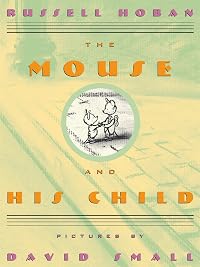
The Mouse and His Child
by Russell Hoban
On This Page
Description
Two discarded toy mice survive perilous adventures in a hostile world before finding security and happiness with old friends and new.Tags
Recommendations











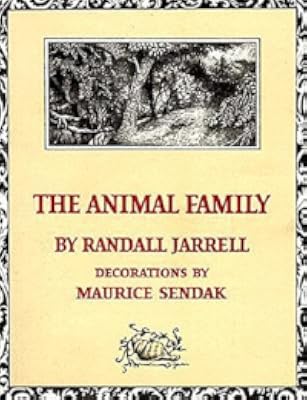
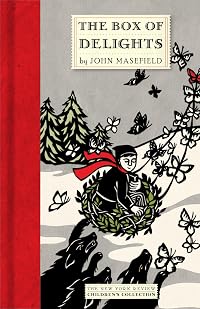
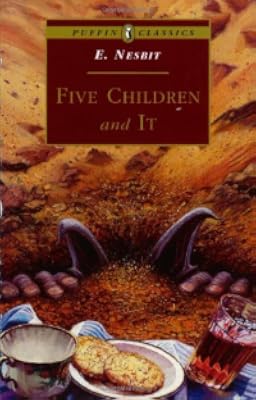
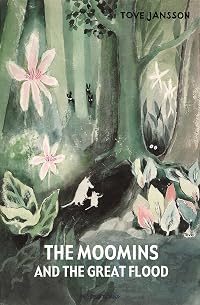
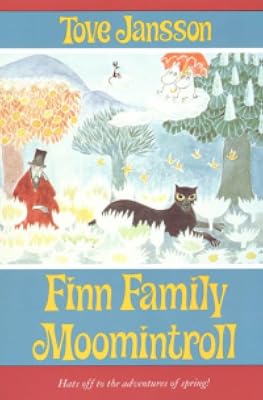
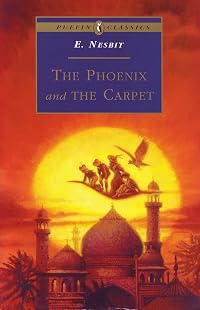
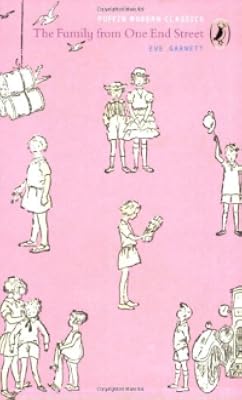
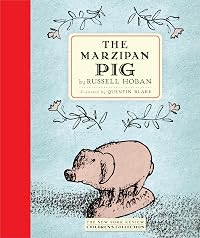
Member Recommendations
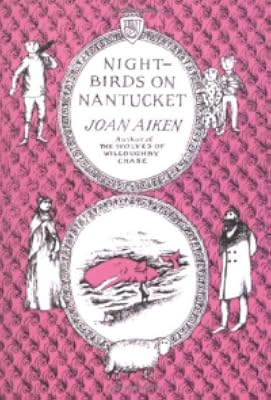
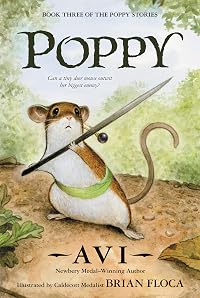
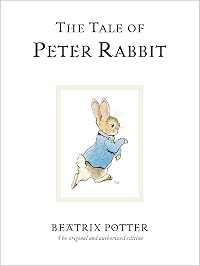
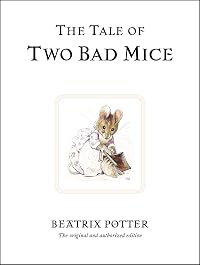
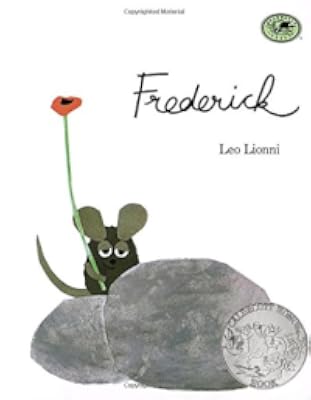
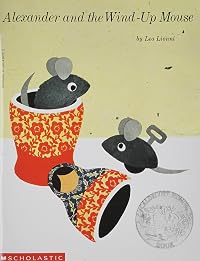
themulhern Animals with characters based on their physiology and also perhaps, mediaeval legend, form an essential part of both stories.
Member Reviews
Russell Hoban is one of those authors I probably haven't given enough of a chance. I've read one book of his I really loved (Amaryllis Night and Day), one I did not get on with at all (The Medusa Frequency), and bits and pieces of a third which, while very, very interesting, would feel more like an intellectual exercise than an entertainment no matter who was writing it (Riddley Walker). Over all of them looms the shadow of The Mouse and His Child, an existentialist children's fantasy that I first encountered as an unforgettably dark and uncompromising cartoon before rediscovering it as an even darker and more uncompromising novel.
Yeah. Yeah.
It's pretty clear to me, at this point, that Hoban must have been an exceptionally smart man, show more and possessed of an exceptional mind to be able to think up even that handful of stories which - regardless of whether I liked them or not - are all pretty startlingly varied and original pieces of writing. Based on that one fact, you'd think it would be clear that I should read more of his work. Yet as I sat re-reading The Mouse and His Child, it occurred to me that there is an increasingly clear separation in my mind between great writers and great storytellers. For a long time, I've thought that there are many great storytellers - L. Frank Baum, for instance, being a wonderful example within the children's literature genre - who are not particularly great writers. They don't write overly memorable prose and may even have a tin ear for dialogue, but their sheer ability to carry you along in a story renders them able to tell you, sometimes, roughly the same story again and again and again, and you never get bored. Now I'm starting to think that the opposite can be true: there are great writers in the world, commanders of language, theme and style, who are - confoundingly - so smart or so full of a need to communicate an idea that it gets in the way of telling an entertaining story. I say this, specifically, because all the way through The Mouse and His Child I admired Hoban's actual writing. He has a really ingenious way of putting across a fairly sideways point of view in a deceptively straightforward way. There are some incredibly vivid images in the story, both terrifying and beautiful, and the questions Hoban asks of the reader are vivid enough to have stuck with me more than twenty years. There's just one problem.
I did not enjoy reading this book. I really, really did not enjoy reading this book.
A large part of that, admittedly, is the tone. This is, for a large portion of its proceedings, a very grim children's story. It is about suffering, pain, loss of family, pursuit, torture, and sudden death. Perhaps more importantly, the quest for individual identity - "self-winding" - that serves as the book's focus is so startlingly different from other children's literature, so reflective and melancholy, as to actually be haunting. This is heavy, heady stuff. You can tell - palpably - that it is written by someone who fought in war. Sometimes, it just feels relentless.
Some of the novel's eccentricities, though, come off like the favored children of a first-time novelist, and those can just become annoying. I can't for the life of me figure out, for instance, why Hoban stops the story dead for a prolonged satire of Waiting for Godot, or why the Muskrat's peculiar "much-and-little" algebraic equations (cog plus key equals winding!) are drummed quite so hard into the dialogue of the second half of the book. The Last Visible Dog symbolism, while certainly effective, also feels incredibly heavy-handed, especially in the undersea sequence. It's all there to support the existentialist theme - in fact, it's impossible to understand these elements any other way - but in an already very depressing story, that uncomfortable feeling that you are being lectured at by someone who desperately wants you to understand his message is just about enough to make me put the book down and walk away. And I did. Several times.
So where does that leave me with The Mouse and His Child? I'm really not sure. I respect it, and more, I find myself respecting Hoban for his unique vision. I find it a nearly impossible book to recommend, though. Unlike many readers, I wouldn't call it "magical." That's too light, too pleasant, too sweet. I would call it a very original work that also happens to be overwhelmingly sad and wistful. Hoban's world is not a world I want to revisit, probably ever again. I already know it's a world I can't forget. show less
Yeah. Yeah.
It's pretty clear to me, at this point, that Hoban must have been an exceptionally smart man, show more and possessed of an exceptional mind to be able to think up even that handful of stories which - regardless of whether I liked them or not - are all pretty startlingly varied and original pieces of writing. Based on that one fact, you'd think it would be clear that I should read more of his work. Yet as I sat re-reading The Mouse and His Child, it occurred to me that there is an increasingly clear separation in my mind between great writers and great storytellers. For a long time, I've thought that there are many great storytellers - L. Frank Baum, for instance, being a wonderful example within the children's literature genre - who are not particularly great writers. They don't write overly memorable prose and may even have a tin ear for dialogue, but their sheer ability to carry you along in a story renders them able to tell you, sometimes, roughly the same story again and again and again, and you never get bored. Now I'm starting to think that the opposite can be true: there are great writers in the world, commanders of language, theme and style, who are - confoundingly - so smart or so full of a need to communicate an idea that it gets in the way of telling an entertaining story. I say this, specifically, because all the way through The Mouse and His Child I admired Hoban's actual writing. He has a really ingenious way of putting across a fairly sideways point of view in a deceptively straightforward way. There are some incredibly vivid images in the story, both terrifying and beautiful, and the questions Hoban asks of the reader are vivid enough to have stuck with me more than twenty years. There's just one problem.
I did not enjoy reading this book. I really, really did not enjoy reading this book.
A large part of that, admittedly, is the tone. This is, for a large portion of its proceedings, a very grim children's story. It is about suffering, pain, loss of family, pursuit, torture, and sudden death. Perhaps more importantly, the quest for individual identity - "self-winding" - that serves as the book's focus is so startlingly different from other children's literature, so reflective and melancholy, as to actually be haunting. This is heavy, heady stuff. You can tell - palpably - that it is written by someone who fought in war. Sometimes, it just feels relentless.
Some of the novel's eccentricities, though, come off like the favored children of a first-time novelist, and those can just become annoying. I can't for the life of me figure out, for instance, why Hoban stops the story dead for a prolonged satire of Waiting for Godot, or why the Muskrat's peculiar "much-and-little" algebraic equations (cog plus key equals winding!) are drummed quite so hard into the dialogue of the second half of the book. The Last Visible Dog symbolism, while certainly effective, also feels incredibly heavy-handed, especially in the undersea sequence. It's all there to support the existentialist theme - in fact, it's impossible to understand these elements any other way - but in an already very depressing story, that uncomfortable feeling that you are being lectured at by someone who desperately wants you to understand his message is just about enough to make me put the book down and walk away. And I did. Several times.
So where does that leave me with The Mouse and His Child? I'm really not sure. I respect it, and more, I find myself respecting Hoban for his unique vision. I find it a nearly impossible book to recommend, though. Unlike many readers, I wouldn't call it "magical." That's too light, too pleasant, too sweet. I would call it a very original work that also happens to be overwhelmingly sad and wistful. Hoban's world is not a world I want to revisit, probably ever again. I already know it's a world I can't forget. show less
Once upon a time, on the counter of a toyshop in a small snowy town, there lived a clockwork mouse, who when wound up danced round and round with his son in his arms. Their friends, a very superior clockwork elephant and a seal who balanced a ball on her nose, lived in the reflected glory of the most magnificent dolls house ever seen. An opulently furnished three-storied dolls house with everything that an upper-class doll needs: an ebony piano; potted ferns in the conservatory; a telescope in the observatory; and silver dishes, plaster cakes and pastries on the white damask cloth on the dining room table. Such a perfect, peaceful and gentle picture.
Time moves on. The mouse and his child are sold, and played with carefully each show more Christmas until the fateful day when a vase falls on them, and they are broken and thrown away. Found and fixed by a passing tramp rummaging in the rubbish, the mouse and his child are set loose upon the world. And the world is very different from the happy, caring world of the toy shop. The toys immediately encounter Manny Rat, a gangster rat making his way ruthlessly in the sleazy and violent world of the town dump, who runs a slave workforce of thrown away clockwork toys. By the end of the third chapter, animals and toys are dropping like flies and there is carnage everywhere: a toy is murdered; Manny Rat's henchman is eaten by a badger; major warfare between tribes of shrews results in the survivors being mown down by a pair of weasels who in turn are dispatched by a horned owl with a talon through each of their brains. And one of the cast of an experimental theatre group is killed and eaten by its own audience when the play proves too avant garde for its taste.
So perhaps not the usual children's book about talking toys and animals. I read this to my son when he was seven or eight, and remember looking at the cover which shows the cuddly toy mice and wondering if he was a bit too old for it. By the end of a couple of chapters I was wondering whether he was too young. I've never read a children's book before or since which has been so different to what I was expecting. In the end, as the mouse and his child search for the security and happiness of their early days, it does become a heart-warming story of the importance of friends and family, but there's certainly some severe trials along the way.
This is a book that I love but one which can appeal to adults rather than children. But I think that for the right sort of child, and at the right age, that transitional age when they will still read about talking animals, but are hankering afer more excitement, it is a wonderful book too. Certainly my son really enjoyed it when we read it together. But not recommended for children of a particularly nervous disposition ... show less
Time moves on. The mouse and his child are sold, and played with carefully each show more Christmas until the fateful day when a vase falls on them, and they are broken and thrown away. Found and fixed by a passing tramp rummaging in the rubbish, the mouse and his child are set loose upon the world. And the world is very different from the happy, caring world of the toy shop. The toys immediately encounter Manny Rat, a gangster rat making his way ruthlessly in the sleazy and violent world of the town dump, who runs a slave workforce of thrown away clockwork toys. By the end of the third chapter, animals and toys are dropping like flies and there is carnage everywhere: a toy is murdered; Manny Rat's henchman is eaten by a badger; major warfare between tribes of shrews results in the survivors being mown down by a pair of weasels who in turn are dispatched by a horned owl with a talon through each of their brains. And one of the cast of an experimental theatre group is killed and eaten by its own audience when the play proves too avant garde for its taste.
So perhaps not the usual children's book about talking toys and animals. I read this to my son when he was seven or eight, and remember looking at the cover which shows the cuddly toy mice and wondering if he was a bit too old for it. By the end of a couple of chapters I was wondering whether he was too young. I've never read a children's book before or since which has been so different to what I was expecting. In the end, as the mouse and his child search for the security and happiness of their early days, it does become a heart-warming story of the importance of friends and family, but there's certainly some severe trials along the way.
This is a book that I love but one which can appeal to adults rather than children. But I think that for the right sort of child, and at the right age, that transitional age when they will still read about talking animals, but are hankering afer more excitement, it is a wonderful book too. Certainly my son really enjoyed it when we read it together. But not recommended for children of a particularly nervous disposition ... show less
Absolutely brilliant: A riveting pseudo-quest through a series of adventures that may seem mundane on the surface but which reveal Hoban's sharp critiques of human society, such as the warlike shrews and the self-centered avant-garde. One of the rare books that works equally well for kids and adults, standing up to deeper analysis even as it works as a (not-so) simple adventure.
Considering that the story is about the misadventures of a clockwork father mouse and child, and their encounters with various talking birds/animals, this is actually quite a dark tale and not at all twee. Instead, violence, death and squalor are evident in abundance, with a wry black comedy setting, such as the alternative society developed by rats in the dump, and the avant garde travelling player company run by crows. Similarly, a dog food label provides the philosophical linking theme, as the Last Visible Dog becomes the symbol for eternity.
A book that works on a number of levels, and I would've rated it more highly, only for me, it loses momentum once the eponymous characters start to achieve their goal of being reunited with the show more clockwork elephant and seal from the toyshop where they all began, and acquiring the dollhouse from there. show less
A book that works on a number of levels, and I would've rated it more highly, only for me, it loses momentum once the eponymous characters start to achieve their goal of being reunited with the show more clockwork elephant and seal from the toyshop where they all began, and acquiring the dollhouse from there. show less
The Mouse and his Child is such a wonderful fantasy! Russell Hoban has woven a tale around the child's wonder as to whether little windup, tin toys have private lives of their own when we humans are not around.
Beginning in a toy shop at Christmas we meet the principle players, tin windups who live a magical life between midnight and dawn. We follow them as they are bought, live in people's homes, are broken, thrown away and... magically they still live, albeit tattered and bent. For some reason, Father Mouse and his Child have broken through the midnight to dawn barrier and have attained the ability to think and talk and reason throughout the day and night! They meet and interact with many field animals, river animals, and birds; all show more of which help them to attain their dream of becoming self winding (they rely on the animals to keep them wound so they can move around) and find their original friends from the toy shop, Elephant and Seal.
We meet the evil Manny Rat who is the leader of rats in the dump and has a cadre of windup toys who forcibly work for him in his quest for dominance. Because Father Mouse and his Son are able to get away from Manny Rat, he has a vendetta of revenge and search for the two, in order to destroy them, becomes the vehicle which moves the story along.
Needless to say, it all has a happy ending, but getting to that ending, the adventures they all go through; the characters they meet, that is all heartwarming and thought provoking.
The story seems simple, but how Russell Hoban constructed it, describes the characters, how he shows the evolution of the tin windup toys- that is what makes the story magical. show less
Beginning in a toy shop at Christmas we meet the principle players, tin windups who live a magical life between midnight and dawn. We follow them as they are bought, live in people's homes, are broken, thrown away and... magically they still live, albeit tattered and bent. For some reason, Father Mouse and his Child have broken through the midnight to dawn barrier and have attained the ability to think and talk and reason throughout the day and night! They meet and interact with many field animals, river animals, and birds; all show more of which help them to attain their dream of becoming self winding (they rely on the animals to keep them wound so they can move around) and find their original friends from the toy shop, Elephant and Seal.
We meet the evil Manny Rat who is the leader of rats in the dump and has a cadre of windup toys who forcibly work for him in his quest for dominance. Because Father Mouse and his Son are able to get away from Manny Rat, he has a vendetta of revenge and search for the two, in order to destroy them, becomes the vehicle which moves the story along.
Needless to say, it all has a happy ending, but getting to that ending, the adventures they all go through; the characters they meet, that is all heartwarming and thought provoking.
The story seems simple, but how Russell Hoban constructed it, describes the characters, how he shows the evolution of the tin windup toys- that is what makes the story magical. show less
Don't be misled by this book's cover, with its gentle picture of a windup toy mousehand in hand with his small son. The Mouse and His Child is and isn't a children's book but it is not recommended for the soft hearted of any age. The title characters, a mouse and his child, are toys who seem quite astonished to find themselves in the world, moving from a toyshop to display items under a Christmas tree to, quite suddenly, the dump. Despite his father's doubts, despite the adversity of the world including the wicked Manny Rat, the child holds onto and attempts to realize his dream of finding and making his toyshop companions, a windup elephant and a windup seal, his mother and sister, and finding and making the toyshop's dolls' house his show more family home. I'm making it sound much more treacly than it is, however. There is hope and redemption in this story, but there is also cruelty and death. Like most good children's stories, it can be read simply as a wonderful adventure if you are ten or as a sophisticated fantasy with clever dialogue and deep meaning if you are twenty. I liked it so much that I went right back and read it again when I finished. I would caution against reading by or with the most sensitive of readers. show less
Good children’s books make good family reading, for the stories and characters in a good children’s book capture the imagination of youngsters hearing them read aloud, and a really good children’s book is also intriguing to the adults reading them. Perhaps it’s their style or themes; perhaps it’s a folkloric or mythic dimension; perhaps parents simply recall and relive their own childhood fascination. Often good children’s books have a subtle, second level of appeal, to which children respond unconsciously and their adult readers, consciously.
Witness such classics as Wind in the Willows, Winnie the Pooh, The Hobbit and C. S. Lewis’s Narnia series, as well as the more recent Harry Potter fantasies. The Mouse and His Child show more (Harper, 1967) by Russell Hoban is another such book, unfortunately not as well known. On the surface its premise seems to be like that of The Velveteen Rabbit. The mouse and his child are a wind-up toy, dancing in the window of a toy shop right before Christmas. But wind-up toys seldom last. They eventually wear out, or all too often they are broken and trashed sooner rather than later. So by the end of the first chapter, the mouse and his child find themselves cast out, abandoned in a trash can.
And that’s where their adventures begin. In their picaresque travels, they go from endangerment to escape to endangerment to escape. Sometimes they are rescued (by a tramp, by a muskrat, by a bittern); sometimes they figure out a way to achieve their own freedom. But the mouse’s child has a dream: he wants a home like the doll house in the toy shop window; he wants a family like the other toys he remembers there; and most of all he and his father long to be self-winding.
Of course, there is a villain; the sinister Manny Rat, a real live rodent, sees them as his find: if not rations, then they will be foragers enslaved in his service. But in Hoban’s subtle rendering, even Manny Rat turns out to be a villain with a difference.
The creatures the mouse and his child encounter in their travels are all special and memorable to children, but to adults they have a double meaning, recognizable from our real, adult world—in ever so satiric a style. There is Crow with his theatrical troop, the Caws of Art, not unlike theater of the absurd. There is Muskrat, a philosopher/tutor who prefers to play with abstractions; there are the militaristic shrews; and there is the existentialist mud turtle C. Serpentina. “One rises afresh,” Serpentina says, “to new investigations of TO BE. . . . there is no way out. Each way out of one situation necessarily being the way into another situation . . . .”
Well, of course, the mouse and his child do find their “way out,” but not without many complications. And not without the help of their friends. Even Manny Rat. But that’s the rest of the story. Children find it delightful. Their adults find plenty to reflect upon.
“What do you contemplate?” the mouse's child asks Serpentina
Eventually Serpentina, the self-proclaimed “voice of swamp and pond,” answers for us all.
“‘Infinity,’ said Serpentina with a proprietary air. ‘There’s no end to it. There comes a time when each of us must contemplate it.’”
That’s where the old rusty Bonzo Dog Food can comes in. But I’m not gonna tell you any more than that. show less
Witness such classics as Wind in the Willows, Winnie the Pooh, The Hobbit and C. S. Lewis’s Narnia series, as well as the more recent Harry Potter fantasies. The Mouse and His Child show more (Harper, 1967) by Russell Hoban is another such book, unfortunately not as well known. On the surface its premise seems to be like that of The Velveteen Rabbit. The mouse and his child are a wind-up toy, dancing in the window of a toy shop right before Christmas. But wind-up toys seldom last. They eventually wear out, or all too often they are broken and trashed sooner rather than later. So by the end of the first chapter, the mouse and his child find themselves cast out, abandoned in a trash can.
And that’s where their adventures begin. In their picaresque travels, they go from endangerment to escape to endangerment to escape. Sometimes they are rescued (by a tramp, by a muskrat, by a bittern); sometimes they figure out a way to achieve their own freedom. But the mouse’s child has a dream: he wants a home like the doll house in the toy shop window; he wants a family like the other toys he remembers there; and most of all he and his father long to be self-winding.
Of course, there is a villain; the sinister Manny Rat, a real live rodent, sees them as his find: if not rations, then they will be foragers enslaved in his service. But in Hoban’s subtle rendering, even Manny Rat turns out to be a villain with a difference.
The creatures the mouse and his child encounter in their travels are all special and memorable to children, but to adults they have a double meaning, recognizable from our real, adult world—in ever so satiric a style. There is Crow with his theatrical troop, the Caws of Art, not unlike theater of the absurd. There is Muskrat, a philosopher/tutor who prefers to play with abstractions; there are the militaristic shrews; and there is the existentialist mud turtle C. Serpentina. “One rises afresh,” Serpentina says, “to new investigations of TO BE. . . . there is no way out. Each way out of one situation necessarily being the way into another situation . . . .”
Well, of course, the mouse and his child do find their “way out,” but not without many complications. And not without the help of their friends. Even Manny Rat. But that’s the rest of the story. Children find it delightful. Their adults find plenty to reflect upon.
“What do you contemplate?” the mouse's child asks Serpentina
Eventually Serpentina, the self-proclaimed “voice of swamp and pond,” answers for us all.
“‘Infinity,’ said Serpentina with a proprietary air. ‘There’s no end to it. There comes a time when each of us must contemplate it.’”
That’s where the old rusty Bonzo Dog Food can comes in. But I’m not gonna tell you any more than that. show less
Members
- Recently Added By
Lists

Best Children's Books You've Read
197 works; 75 members

EEK! A Mouse ::: Best Children's Books
95 works; 13 members

Christmas Books
370 works; 39 members

1001 Children's Books You Must Read Before You Grow Up
774 works; 101 members

Favorite Animal Fiction
359 works; 156 members
Five books to read aloud to your kids
35 works; 17 members

Best Family Stories
241 works; 22 members

Read the book and saw the movie
1,170 works; 195 members

Satori Smiles Children's Book List
262 works; 7 members
Honey For a Child's Heart
1,152 works; 25 members

Toy Stories: Living Dolls, Bears and Other Toys
129 works; 7 members

Children's Classics Worth Reading
68 works; 9 members

Geek Dad Read to Your Kids List
79 works; 4 members
Books I Wish I’d Read as a Kid
32 works; 4 members

Miniature, little, tiny characters -- children's/young adult fiction
278 works; 13 members
Favourite Books
1,819 works; 316 members

1960s
281 works; 16 members
One Book, Many Authors
441 works; 40 members

Books Read in 2006
421 works; 8 members
Michael Dirda's Desert Island Books
62 works; 5 members
Novels featuring Fathers
56 works; 7 members

Middle-Grade Novels with Mice
24 works; 9 members

Five star books
1,757 works; 108 members
Before Austen Comes Aesop
318 works; 9 members

Mustich's 1000 Books to Read Before You Die: A Life Changing List
1,001 works; 19 members
Talk Discussions
Past Discussions
Children's book about clockwork mice in Name that Book (April 2009)
Author Information

110+ Works 30,613 Members
Russell Hoban was born in Lansdale, Pennsylvania on February 4, 1925. He attended art school in Philadelphia and during World War II, he served in the Army and earned a Bronze Star. He taught art in New York and Connecticut, and also worked as an advertising copywriter and a freelance illustrator before beginning his career as a writer. He began show more publishing children's books in the late 1950s, including What Does It Do and How Does It Work?, Bedtime for Frances and the six other books featuring Frances, The Story of Hester Mouse Who Became a Writer, What Happened When Jack and Daisy Tried to Fool the Tooth Fairies, and The Mouse and His Child, which was adapted as an animated film in 1977. In 1973, he published his first adult novel, The Lion of Boaz-Jachin and Jachin-Boaz. His other books for adults include Turtle Diary, Pilgermann, and Ridley Walker. He received the John W. Campbell Memorial Award and the Australian Science Fiction Achievement Award for Ridley Walker. He died on December 13 at the age of 86. In 2015 he made the Kate Greenaway Medal shortlist for his title Jim's Lion wth illlustrator Alexis Deacon. (Bowker Author Biography) show less
Some Editions
Awards and Honors
Series
Belongs to Publisher Series
Work Relationships
Has the adaptation
Common Knowledge
- Canonical title
- The Mouse and His Child
- Original publication date
- 1967
- People/Characters
- Uncle Frog; C Serpentina; Manny Rat
- Related movies
- The Mouse and His Child (1977 | IMDb)
- Epigraph
- The sense of danger must not disappear:
The way is certainly both short and steep,
However gradual it looks from her;
Look if you like, but you will have to leap,
W H Auden - Dedication
- These pages are dedicated
to the memory of three fathers:
A.T Hoban,
Edward Lewis Wallant,
and
Harvey Cushman, under whose
Christmas tree I first saw
the mouse and his child dance.
-----------R.... (show all)H.
February 1967
To Randy, my friend
to Harold, my healer
To Sarah, my soul
----------D.S
September 2001 - First words
- The tramp was big and squarely built, and he walked with the rolling stride of the long road, his steps too big for the little streets of the little town.
- Last words
- (Click to show. Warning: May contain spoilers.)'Be happy,' said the tramp.
Classifications
- Genres
- Children's Books, Fiction and Literature
- DDC/MDS
- 813.54 — Literature & rhetoric American literature in English American fiction in English 1900-1999 1945-1999
- LCC
- PZ7 .H637 .M — Language and Literature Fiction and juvenile belles lettres Fiction and juvenile belles lettres Juvenile belles lettres
- BISAC
Statistics
- Members
- 1,152
- Popularity
- 21,836
- Reviews
- 32
- Rating
- (4.20)
- Languages
- 7 — Dutch, English, Finnish, French, German, Italian, Swedish
- Media
- Paper, Audiobook, Ebook
- ISBNs
- 40
- ASINs
- 14