
On This Page
Description
The story of the boy who grows up to be King Arthur. Guided by the powerful magician Merlin, Arthur is transformed into animals in order to learn by experiencing different points of view.Tags
Recommendations


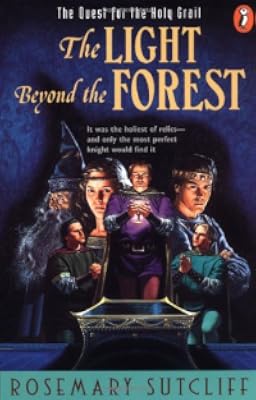

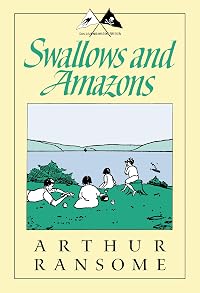


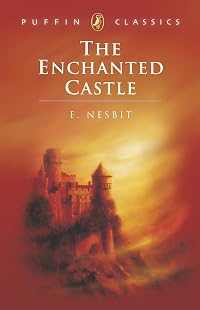
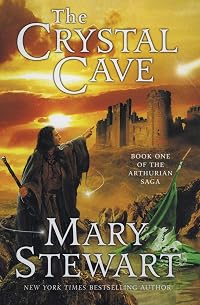

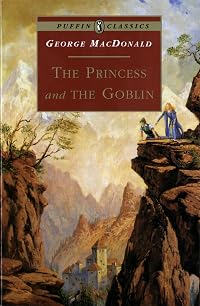
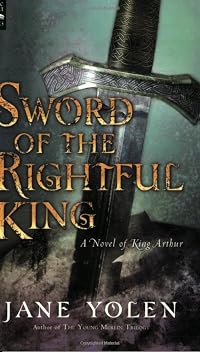
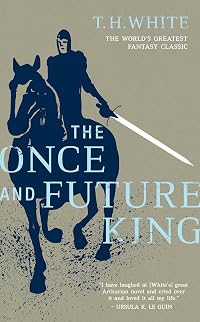
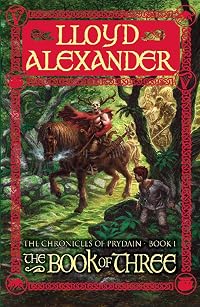
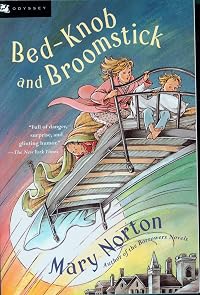
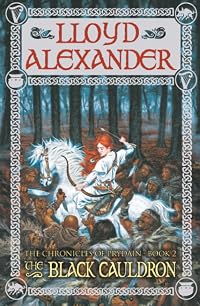
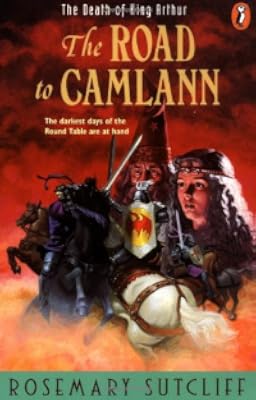
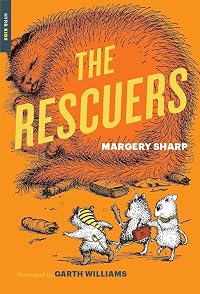

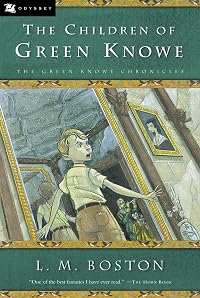
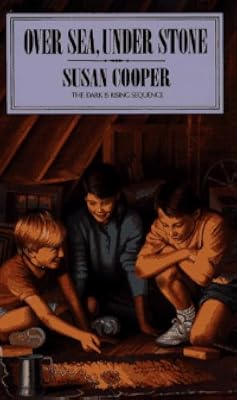
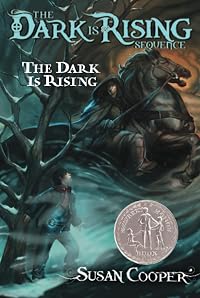
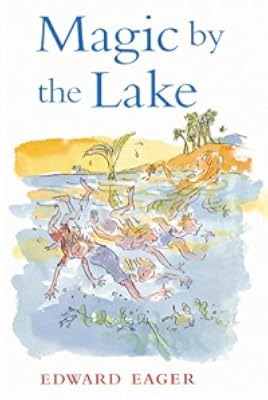
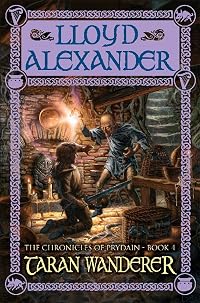

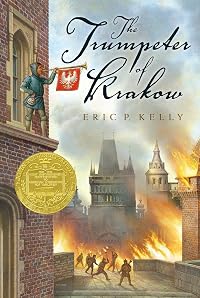
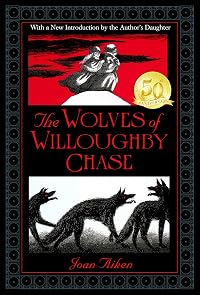
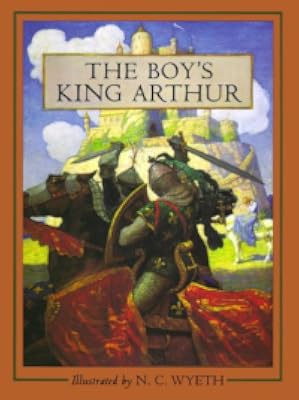
Member Recommendations

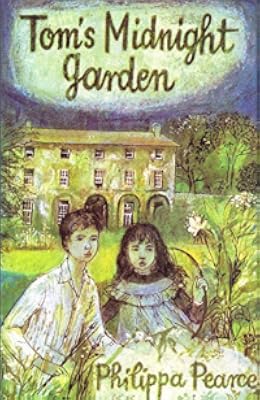
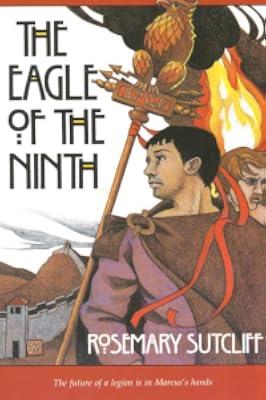
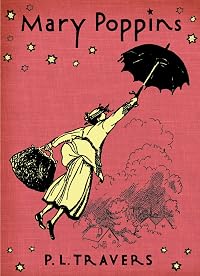
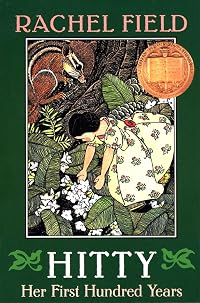
themulhern Animals with characters based on their physiology and also perhaps, mediaeval legend, form an essential part of both stories.
Member Reviews
For a long holiday road trip with my son, I thought he'd enjoy this introduction to Arthurian mythology. I did it with some hesitation, as The Once and Future King was one of my favorite books as a child and I feared it may not hold up to nostalgia. I'm pleased though that this first installment of the tetralogy is still an enjoyable, modernist spin on the story of King Arthur, filling in the story of Arthur's childhood. Of course, I always thought the The Sword in the Stone was the best of the four parts. One thing I didn't know is that White actually made major changes when he incorporated The Sword in the Stone into The Once and Future King, and while I can't really remember enough to recognize most of the changes I was surprised show more that Disney didn't actually make up the duel between Merlyn and Madame Mim. Another thing I didn't notice is a kid was just how blatant the anachronisms are, with Meryln living backwards in time making them a running gag. Knowing how much White loved hunting, I also noticed that he puts a lot of detail into his descriptions of hunts throughout the book, something I must have glazed over as a child. What remains the same is that the book contains a lot of humor, adventure, animal lore, a cameo by Robin Hood (er, Robin Wood), and surreptitious pacifist social satire. And my son, well he covered his ears a lot during the scary party, but insisted we keep listening to the story and that we move on to The Witch in the Wood next. show less
I'm very surprised I never got turned on to this when I was younger, since I loved myths, legends, and fantasy. I suppose I lumped it in with [b:Le Morte d'Arthur: King Arthur and the Legends of the Round Table|672875|Le Morte d'Arthur King Arthur and the Legends of the Round Table|Thomas Malory|https://i.gr-assets.com/images/S/compressed.photo.goodreads.com/books/1309288301l/672875._SY75_.jpg|1361856] or [b:The Faerie Queene|765427|The Faerie Queene|Edmund Spenser|https://i.gr-assets.com/images/S/compressed.photo.goodreads.com/books/1328308492l/765427._SY75_.jpg|19904] and thought it would be a straight-forward telling of the King Arthur myths, something dense and old-fashioned that I really ought to read but wasn't very excited about show more diving into. I had seen the Disney film of "The Sword in the Stone" and really liked it, but it didn't really click with me that I needed to seek out the source material.
It was only in reading [a:Helen Macdonald|314021|Helen Macdonald|https://images.gr-assets.com/authors/1400594607p2/314021.jpg]'s memoir [b:H is for Hawk|18803640|H is for Hawk|Helen Macdonald|https://i.gr-assets.com/images/S/compressed.photo.goodreads.com/books/1442151714l/18803640._SY75_.jpg|26732095] a few years back that I got an inkling of what a strange, moving, and hilarious series of tales [b:The Once and Future King|43545|The Once and Future King (The Once and Future King, #1-4)|T.H. White|https://i.gr-assets.com/images/S/compressed.photo.goodreads.com/books/1338741283l/43545._SY75_.jpg|1140206] really is. The writing is smooth, the humor layered, the central morality of the story is deeply touching. The figure of Merlin, who T.H. White brilliantly envisions as a man moving backwards through time, is absolutely brilliant and delightful.
I'm working through the rest of the cycle now, and I couldn't be more charmed so far. On to "The Witch in the Woods"! show less
It was only in reading [a:Helen Macdonald|314021|Helen Macdonald|https://images.gr-assets.com/authors/1400594607p2/314021.jpg]'s memoir [b:H is for Hawk|18803640|H is for Hawk|Helen Macdonald|https://i.gr-assets.com/images/S/compressed.photo.goodreads.com/books/1442151714l/18803640._SY75_.jpg|26732095] a few years back that I got an inkling of what a strange, moving, and hilarious series of tales [b:The Once and Future King|43545|The Once and Future King (The Once and Future King, #1-4)|T.H. White|https://i.gr-assets.com/images/S/compressed.photo.goodreads.com/books/1338741283l/43545._SY75_.jpg|1140206] really is. The writing is smooth, the humor layered, the central morality of the story is deeply touching. The figure of Merlin, who T.H. White brilliantly envisions as a man moving backwards through time, is absolutely brilliant and delightful.
I'm working through the rest of the cycle now, and I couldn't be more charmed so far. On to "The Witch in the Woods"! show less
What an amazing book, full to the brim with imagination, wonders and delights. It manages to be thrilling, extremely funny and very moving without even really seeming to try. The curious blend of ancient, mythic and modern (or at least contemporary) works brilliantly, to create something that feels far more of a fantasy than it would have otherwise. First and foremost, though, it captures more accurately than any book I've ever read the pure joy of childhood.
Loosely based on the legend of King Arthur, this novel reads in places like something Lewis Carroll would have composed. Its language is reminiscent of Barrie's Peter Pan: very advanced for today's young readers, too much for my nine year old who lost interest in the first chapter. Anachronisms crop up throughout, probably for fun; the author acknowledges them subtly and makes little effort to reconcile them. Merlyn is said to live backwards through time as justification, but small details invalidate this explanation. His student Wart is a rather dull character and develops not a whit: he is good-natured and sensible on the first page, and remains so to the last. There's no evident value gained from the so-called education he receives, show more and by the fourth or fifth time Wart was made an animal I was exasperated.
For a positive there are fascinating descriptions that display the author's enormous medieval knowledge: detailed contents and operations of the hay field, the mews, Merlyn's study, Sir Ector's fortifications, jousting, the uses for various woods, etc. Even an adult can learn a lot here (except from the astronomy, which states the universe began "a few thousand million years ago".) There's some interesting things about this novel and relating to it, but judging this book on its own merits it's not really that brilliant and a bit of a relic. I won't trouble my son with it again.
Note: my review is for the original edition with Madam Mim, the troubling anthropophagi, etc. show less
For a positive there are fascinating descriptions that display the author's enormous medieval knowledge: detailed contents and operations of the hay field, the mews, Merlyn's study, Sir Ector's fortifications, jousting, the uses for various woods, etc. Even an adult can learn a lot here (except from the astronomy, which states the universe began "a few thousand million years ago".) There's some interesting things about this novel and relating to it, but judging this book on its own merits it's not really that brilliant and a bit of a relic. I won't trouble my son with it again.
Note: my review is for the original edition with Madam Mim, the troubling anthropophagi, etc. show less
A young boy named Wart, being fostered in the home of Sir Ector, finds himself being tutored by the wizard Merlyn in this classic treatment of the youth of King Arthur. Transformed into various different creatures during the course of his education - a fish, a hawk, an ant, a goose and a badge - Wart learns about the nature of power and of warfare, and is taught to question the issues of fairness and justice. Unbeknownst to him, he is in training for his future as a king, and the book ends at the tournament in London, where the future monarch will be revealed by his ability to pull the sword from its stone...
Originally published in 1938 in a slightly different form than its current one - I believe the episode with the ants was added show more later - The Sword in the Stone was eventually published, together with three sequels - The Witch in the Wood, The Ill-Made Knight and The Candle in the Wind - as the first part of The Once and Future King, T.H. White's epic reimagining of the Arthurian saga. Although the larger work is not considered a children's book, The Sword in the Stone often is, and I recall reading it myself as a girl. White's work was included in the syllabus of the course on the history of children's literature that I took while getting my masters, and I was glad to encounter it again. I found the animal transformations here quite interesting, and was quite struck by the passage in which Wart reflects on Merlyn's teaching style: "the Wart did not know what Merlyn was talking about, but he liked him to talk. He did not like the grown-ups who talked down to him, but the ones who went on talking in their usual way, leaving him to leap along in their wake, jumping at meanings, guessing, clutching at known words, and chuckling at complicated jokes as they suddenly dawned. He had the glee of the porpoise the, pouring and leaping through strange seas."
This is an influential book, inspiring a Disney animated film, and providing the template, in the figure of Merlyn, for such authors as Neil Gaiman and J.K. Rowling, who have both acknowledged a debt to White. I think I also see White's influence in some of Susan Cooper's Arthurian-linked fantasy series, The Dark Is Rising sequence. Well worth the time of any reader who enjoys fantasy fiction. For my part, I'd like to get to the longer work, The Once and Future King at some point. show less
Originally published in 1938 in a slightly different form than its current one - I believe the episode with the ants was added show more later - The Sword in the Stone was eventually published, together with three sequels - The Witch in the Wood, The Ill-Made Knight and The Candle in the Wind - as the first part of The Once and Future King, T.H. White's epic reimagining of the Arthurian saga. Although the larger work is not considered a children's book, The Sword in the Stone often is, and I recall reading it myself as a girl. White's work was included in the syllabus of the course on the history of children's literature that I took while getting my masters, and I was glad to encounter it again. I found the animal transformations here quite interesting, and was quite struck by the passage in which Wart reflects on Merlyn's teaching style: "the Wart did not know what Merlyn was talking about, but he liked him to talk. He did not like the grown-ups who talked down to him, but the ones who went on talking in their usual way, leaving him to leap along in their wake, jumping at meanings, guessing, clutching at known words, and chuckling at complicated jokes as they suddenly dawned. He had the glee of the porpoise the, pouring and leaping through strange seas."
This is an influential book, inspiring a Disney animated film, and providing the template, in the figure of Merlyn, for such authors as Neil Gaiman and J.K. Rowling, who have both acknowledged a debt to White. I think I also see White's influence in some of Susan Cooper's Arthurian-linked fantasy series, The Dark Is Rising sequence. Well worth the time of any reader who enjoys fantasy fiction. For my part, I'd like to get to the longer work, The Once and Future King at some point. show less
Flip open this book to any page and you are guaranteed to find the most beautiful prose. It brims with wonderful creative ideas, clever intertextuality, and rich metaphors. It is a work of art.
It is, sadly, difficult to read; long, meandering, dense. The pacing is very poor. I really wanted to like it more than I did (that is to say - I liked it, but I didn't like reading it), and I can see why so many readers give up part-way through.
Perhaps it was aimed at a young adult audience, owing to a heavy helping of slapstick and coming-of-age elements along with perfectly blended humour and nonsense, but this would be entirely esoteric to most young readers today. It does also feature some archaic language and attitudes that shouldn't be show more consumed without a critical eye.
I read the rewritten version in [b:The Once and Future King|28434662|The Once and Future King (The Once and Future King #1-4)|T.H. White|https://i.gr-assets.com/images/S/compressed.photo.goodreads.com/books/1451774552l/28434662._SY75_.jpg|1140206] (which is longer... perhaps I would have enjoyed the shorter version more) so I am willing to continue onto the next volume in the series [b:The Witch in the Wood|6400069|The Witch in the Wood (The Once and Future King, #2)|T.H. White|https://i.gr-assets.com/images/S/compressed.photo.goodreads.com/books/1318128502l/6400069._SX50_.jpg|6588779] purely for the fact that it is mercifully short and I already have it in my hands. show less
It is, sadly, difficult to read; long, meandering, dense. The pacing is very poor. I really wanted to like it more than I did (that is to say - I liked it, but I didn't like reading it), and I can see why so many readers give up part-way through.
Perhaps it was aimed at a young adult audience, owing to a heavy helping of slapstick and coming-of-age elements along with perfectly blended humour and nonsense, but this would be entirely esoteric to most young readers today. It does also feature some archaic language and attitudes that shouldn't be show more consumed without a critical eye.
I read the rewritten version in [b:The Once and Future King|28434662|The Once and Future King (The Once and Future King #1-4)|T.H. White|https://i.gr-assets.com/images/S/compressed.photo.goodreads.com/books/1451774552l/28434662._SY75_.jpg|1140206] (which is longer... perhaps I would have enjoyed the shorter version more) so I am willing to continue onto the next volume in the series [b:The Witch in the Wood|6400069|The Witch in the Wood (The Once and Future King, #2)|T.H. White|https://i.gr-assets.com/images/S/compressed.photo.goodreads.com/books/1318128502l/6400069._SX50_.jpg|6588779] purely for the fact that it is mercifully short and I already have it in my hands. show less
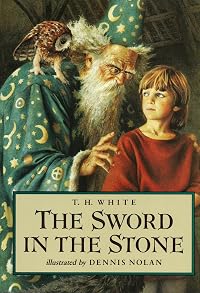
One of the most difficult books for children is certainly this one. The original wasn't intended for them, but Dennis Nolan's lovely illustrations in this edition are. Even adults might find it difficult to read at times due to the old-fashioned British text's lengthy descriptions, accents, sophisticated terminology, literary and historical allusions, and very dry wit. I think the enjoyment from the fascinating and imaginative historical narrative makes reading this book worth the effort.
Members
- Recently Added By
Lists

The Guardian's 1000 Novels Everyone Must Read
1,005 works; 550 members

Favorite Childhood Books
1,646 works; 518 members

Read the book and saw the movie
1,170 works; 195 members

Best Fantasy Novels
821 works; 359 members

Best Arthurian Fiction
104 works; 33 members

501 Must-Read Books
529 works; 72 members
Gateway Book: Fantasy
19 works; 34 members

Best Children's Books You've Read
197 works; 75 members
1001 Children's Books You Must Read Before You Grow Up
774 works; 101 members

Recommended Faerie books
67 works; 22 members
Children's Fantasy
73 works; 10 members

Books I've Read More Than Once
602 works; 49 members
Best of British Literature
226 works; 41 members
NPRs Ultimate Backseat Bookshelf: 100 Must-Reads for kids 9-14
222 works; 30 members

Books Set in Great Britain
191 works; 13 members

Fiction Featuring Cranky, Eccentric Old Folks
80 works; 35 members
Survey of Science Fiction and Fantasy
101 works; 13 members

Childhood Favorites
427 works; 24 members

Favourite Books
1,817 works; 310 members

Faerie Mythology
87 works; 13 members

Works That Inspired Disney Movies
119 works; 13 members

Top Five Books of 2020
982 works; 350 members
20th Century Literature
1,161 works; 54 members
Satori Smiles Children's Book List
262 works; 7 members

Formative books
20 works; 4 members

Quirky Characters
24 works; 7 members

Genre Benders: Comic Fantasy
97 works; 16 members
Speculative Fiction to Read
706 works; 32 members

BingoDOG - Books With Mythical Creatures
57 works; 16 members

Books Read in 2023
5,547 works; 145 members
Modern Arthurian Fiction
237 works; 16 members

BingoDOG - Prophecy, Signs, or Portents are part of the plot
18 works; 9 members

Books About Boys
175 works; 15 members

4th Grade Books
312 works; 5 members

Favorite Kids Books (chapter, middle grade)
168 works; 4 members
Our Favorite Comfort Reads
334 works; 200 members

Book club books
22 works; 1 member

Before Austen Comes Aesop
318 works; 9 members

um actually
76 works; 3 members

Books mentioned in Fire and Hemlock by Diana Wynne Jones
33 works; 1 member
1930s
262 works; 5 members

Books Read in 2013
1,630 works; 51 members
Ambleside Books
459 works; 18 members

Fiction For Men
142 works; 11 members
Five star books
1,755 works; 108 members
Honey For a Child's Heart
1,152 works; 25 members

In or About the 1930s
198 works; 27 members

Michael Dirda's 100 Best Comic Novels
100 works; 1 member
Author Information

49+ Works 31,652 Members
Terence Hanbury White was born on May 29, 1906 in Bombay, India. He attended Cheltenham College, Gloucestershire, and Queen's College, Cambridge. The success of his autobiography, England Have My Bones, allowed him to leave teaching after six years and devote his time to writing. Although he wrote a wide array of novels and some poetry, he is best show more known for The Once and Future King, his four-volume retelling of the legend of King Arthur, which became the basis for both the musical, Camelot, and the Disney film, The Sword in the Stone. White died on January 17, 1964, while returning home from a lecture tour in America. (Bowker Author Biography) show less
Some Editions
Awards and Honors
Awards
Notable Lists
Series

Belongs to Publisher Series
Armada Lions (C417)
Work Relationships
Is contained in
Has the adaptation
Is abridged in
Common Knowledge
- Canonical title*
- Das Schwert im Stein
- Original title
- The Sword in the Stone
- Original publication date
- 1938
- People/Characters
- King Arthur (as Wart); Sir Kay; Merlin (as Merlyn); Sir Ector; King Pellinore; Madam Mim (show all 13); Cavall; Robin Wood; Sir Grummore Grummursum; Archimedes (owl); Hob; The Faerie Queen; Hecate
- Important places
- England, UK; Forest Sauvage
- Related movies
- The Sword in the Stone (1963 | IMDb)
- Dedication
- For Sir Thomas Maleore
Knight
"I pray you all, gentlemen and gentlewomen that readeth this book, from the beginning to the ending, pray for me while I am on live, that God send me good deliverance, and when I am dea... (show all)d, I pray you all pray for my soul."
Sir Thomas Maleore, Knight.
July 31st, 1485. - First words
- On Mondays, Wednesdays and Fridays it was Court Hand and Summulae Logicales, while the rest of the week it was the Organon, Repetition and Astrology.
- Quotations
- "Castor and Pollux blow me to Bermuda!"
- Last words
- (Click to show. Warning: May contain spoilers.)"Or rather, as I should say (or is it have said?) Yes, King Arthur."
- Original language*
- Englisch
*Some information comes from Common Knowledge in other languages. Click "Edit" for more information.
Classifications
Statistics
- Members
- 3,829
- Popularity
- 4,130
- Reviews
- 53
- Rating
- (3.90)
- Languages
- 9 — Czech, English, French, German, Italian, Norwegian, Polish, Spanish, Portuguese (Portugal)
- Media
- Paper, Audiobook, Ebook
- ISBNs
- 54
- UPCs
- 1
- ASINs
- 77