
Gregory Maguire
Author of Wicked: The Life and Times of the Wicked Witch of the West
About the Author
Gregory Maguire was born June 9, 1954 in Albany, New York. He received a B.A. from the State University of New York at Albany and a Ph.D. in English and American literature from Tufts University. He is a founder and co-director of Children's Literature New England, Incorporated, a non-profit show more educational charity established in 1987. He writes for both adults and children. His first book, The Lighting Time, was published in 1978. His adult works include Wicked, Confessions of and Ugly Stepsister, Lost, Mirror Mirror, Son of a Witch, and A Lion Among Men. The Broadway play Wicked is based on his book of the same title. His children's books include the picture book Crabby Cratchitt, the novel The Good Liar, and the Hamlet Chronicles series. (Bowker Author Biography) show less
Series
Works by Gregory Maguire
Leaping Beauty: And Other Animal Fairy Tales (2004) — Narrator, some editions — 556 copies, 14 reviews
The Wicked Years Complete Collection: Wicked, Son of a Witch, A Lion Among Men, and Out of Oz (2012) 167 copies, 1 review
Innocence and Experience: Essays and Conversations on Childrens Literature (1987) — Editor — 75 copies
Scarecrow [short story] 3 copies
Novels by Gregory Maguire: Wicked: the Life and Times of the Wicked Witch of the West, Son of a Witch, a Lion Among Men (2010) 2 copies
Rut 2 copies
The Oakthing 2 copies
Gregory Maguire Collection Complete Wicked Years Oz Series and Fairy Tales 7 Novel Set (2012) 1 copy
The Lost Day [short story] — Author — 1 copy
Puz_le 1 copy
The Freshwater Mermaid 1 copy
The Prank [short fiction] 1 copy
Associated Works
My Mother She Killed Me, My Father He Ate Me: Forty New Fairy Tales (2010) — Foreword — 1,110 copies, 27 reviews
Wicked: The Grimmerie, a Behind-the-Scenes Look at the Hit Broadway Musical (2005) — Contributor — 1,064 copies, 16 reviews
The Chronicles of Harris Burdick: Fourteen Amazing Authors Tell the Tales (2011) — Contributor — 981 copies, 48 reviews
The Dragon Book: Magical Tales from the Masters of Modern Fantasy (2009) — Contributor — 489 copies, 14 reviews
Queen Victoria's Book of Spells: An Anthology of Gaslamp Fantasy (2013) — Contributor — 401 copies, 18 reviews
The Letter Q: Queer Writers' Notes to their Younger Selves (2012) — Contributor — 297 copies, 5 reviews
The Year's Best Fantasy and Horror: Fifteenth Annual Collection (2002) — Contributor — 275 copies, 4 reviews
The Year's Best Fantasy and Horror: Eighteenth Annual Collection (2005) — Contributor — 231 copies, 5 reviews
Oz Reimagined: New Tales from the Emerald City and Beyond (2013) — Foreword — 167 copies, 12 reviews
A Wonderful Welcome to Oz: Marvelous Land of Oz, Ozma of Oz & The Emerald City of Oz (2006) — Editor — 86 copies
Navigating The Golden Compass: Religion, Science & Dæmonology in Philip Pullman's His Dark Materials (2005) — Contributor — 65 copies, 1 review
Totally Middle School: Tales of Friends, Family, and Fitting In (2018) — Contributor — 22 copies, 1 review
Story Time: Essays on the Betsy Beinecke Shirley Collection of American Children's Literature (2016) — Contributor — 6 copies
Confessions of an Ugly Stepsister [2002 TV movie] — Original novel — 1 copy
Tagged
Common Knowledge
- Canonical name
- Maguire, Gregory
- Birthdate
- 1954-06-09
- Gender
- male
- Education
- State University of New York, Albany (BA)
Tufts University (PhD) - Occupations
- author
- Organizations
- Children's Literature New England
National Children's Book and Literacy Alliance - Agent
- William Reiss (John Hawkins and Associates)
- Relationships
- Newman, Andy (spouse)
- Nationality
- USA
- Birthplace
- Albany, New York, USA
- Places of residence
- Albany, New York, USA (birth)
Dublin, County Dublin, Ireland
London, England, UK
Cambridge, Massachusetts, USA
Vermont, USA - Map Location
- New York, USA
Members
Discussions
Wicked in Someone explain it to me... (November 2025)
Gregory Maguire’s Wicked, Deluxe Limited Edition, Item 6533, 495 USD in Easton Press Collectors (November 2025)
Gregory Maguire in Fairy Tales Retold (May 2007)
Reviews
Wicked: The Life and Times of the Wicked Witch of the West (The Wicked Years, #1) by Gregory Maguire

So everyone loves Wicked, right? At least, thats what I've heard. "Wicked's so good!" "An immediate classic!" "A best-selling original novel!" I call Maguire's bluff. I've been fed lies.
I heard of Wicked from the Broadway advertisements. Its super popular, and when its coming to your city, it tends to be EVERYWHERE. You see the TV ads, hear the radio commercials and see the billboards & flyers. People around you have begun reading it, even people you know who you never thought could show more actually read or even knew what a book was. You read reviews and everyone says its "one of the best books I've ever read." I pick this book up and start it and find myself wondering: "What in the heck is wrong with you people?!?! I've been conned!!!" Yep. That's right. I'll say it now: THIS BOOK IS TRASH. Did you hear me? TRASH. In case that doesn't stick, here are some more: Excrement, Garbage, Filth, Junk, Muck, Rubbish, Sewage, Slop, Waste, Atrocious, Awful, Carelessly Written, Crummy, Dissatisfactory, Dreadful, Icky, Junky, Lousy, A Rip-Off, and completely UNACCEPTABLE. What has gotten into people's minds? This "wonderful piece of literature" falls flat in every possible way.
In all honesty, I read only the first part of this book. That's all I could stomach. However, I skimmed the rest and my reading partner finished it off for me and completely filled me in. I read other excerpts and whatnot. So, I am pretty well informed with this book. I might as well have read it, but luckily I was able to salvage whatever willpower I was left with after being subjected to torture of the worse kind. This is poorly written, insubstantial, overly perverted and completely blasphemous. I care nothing for Elphaba...this story doesn't even remotely tell us ANYTHING about her, except that LIKE HER MOTHER, she enjoys an affair. She is wicked, without a doubt, but you never find out why. People were nice to her and she was mean in turn. She had friends, but I guess that wasn't enough for her. She was a vegetarian and LOVED animals. What in the heck went wrong?? No one knows, because Mr. Maguire refused to tell us. It is even states in the text that no one knows why she is wicked, she just is. What the heck am I doing here reading this then? I figured that "The Life and Times of the Wicked Witch of the West" would at least give us some insight into why the Wicked Witch is the way she is today. I figured she probably was ill-treated when she was young or that something set her off, but seriously? Nothing. No explanation whatsoever. If this was just supposed to be about the way Oz is run then why not entitle it: "Wicked-A Brief Glance at How The Land of Oz is Run and its Citizens." Because, that's all I felt I read about. I found affairs, animal rights activists, selfish leaders, and just overall disgusting writing.
Is this the best book we can be given in this day and age? You would figure that since we, people as a whole, have come so far that we could afford to write better books. In my opinion, I am ashamed to live in an era where people think Wicked is actually worth wasting time on. How pathetic can you get?? I've read some pretty bad books, but this one takes the cake. Thanks very much for making me do this Mr. Maguire. Now I feel I have to take it upon myself to protect all the people who actually read for substance from this book of erroneous bull-monkey. Oh wait, I'm sorry, flying monkey feces. My apologies.
This book doesn't actually deserve a star, but as it is, Goodreads does not allow me to do that. I'm actually doing an injustice by just handing that star over. So, do yourselves a favor and don't even bother with Wicked. Just look it up and read a synopsis, because reading the book won't give you anymore than that. I am really glad I borrowed this from the library and didn't waste any money.
P.S. Mr. Maguire: Cheap shots at the Church do not a good book make! show less
I heard of Wicked from the Broadway advertisements. Its super popular, and when its coming to your city, it tends to be EVERYWHERE. You see the TV ads, hear the radio commercials and see the billboards & flyers. People around you have begun reading it, even people you know who you never thought could show more actually read or even knew what a book was. You read reviews and everyone says its "one of the best books I've ever read." I pick this book up and start it and find myself wondering: "What in the heck is wrong with you people?!?! I've been conned!!!" Yep. That's right. I'll say it now: THIS BOOK IS TRASH. Did you hear me? TRASH. In case that doesn't stick, here are some more: Excrement, Garbage, Filth, Junk, Muck, Rubbish, Sewage, Slop, Waste, Atrocious, Awful, Carelessly Written, Crummy, Dissatisfactory, Dreadful, Icky, Junky, Lousy, A Rip-Off, and completely UNACCEPTABLE. What has gotten into people's minds? This "wonderful piece of literature" falls flat in every possible way.
In all honesty, I read only the first part of this book. That's all I could stomach. However, I skimmed the rest and my reading partner finished it off for me and completely filled me in. I read other excerpts and whatnot. So, I am pretty well informed with this book. I might as well have read it, but luckily I was able to salvage whatever willpower I was left with after being subjected to torture of the worse kind. This is poorly written, insubstantial, overly perverted and completely blasphemous. I care nothing for Elphaba...this story doesn't even remotely tell us ANYTHING about her, except that LIKE HER MOTHER, she enjoys an affair. She is wicked, without a doubt, but you never find out why. People were nice to her and she was mean in turn. She had friends, but I guess that wasn't enough for her. She was a vegetarian and LOVED animals. What in the heck went wrong?? No one knows, because Mr. Maguire refused to tell us. It is even states in the text that no one knows why she is wicked, she just is. What the heck am I doing here reading this then? I figured that "The Life and Times of the Wicked Witch of the West" would at least give us some insight into why the Wicked Witch is the way she is today. I figured she probably was ill-treated when she was young or that something set her off, but seriously? Nothing. No explanation whatsoever. If this was just supposed to be about the way Oz is run then why not entitle it: "Wicked-A Brief Glance at How The Land of Oz is Run and its Citizens." Because, that's all I felt I read about. I found affairs, animal rights activists, selfish leaders, and just overall disgusting writing.
Is this the best book we can be given in this day and age? You would figure that since we, people as a whole, have come so far that we could afford to write better books. In my opinion, I am ashamed to live in an era where people think Wicked is actually worth wasting time on. How pathetic can you get?? I've read some pretty bad books, but this one takes the cake. Thanks very much for making me do this Mr. Maguire. Now I feel I have to take it upon myself to protect all the people who actually read for substance from this book of erroneous bull-monkey. Oh wait, I'm sorry, flying monkey feces. My apologies.
This book doesn't actually deserve a star, but as it is, Goodreads does not allow me to do that. I'm actually doing an injustice by just handing that star over. So, do yourselves a favor and don't even bother with Wicked. Just look it up and read a synopsis, because reading the book won't give you anymore than that. I am really glad I borrowed this from the library and didn't waste any money.
P.S. Mr. Maguire: Cheap shots at the Church do not a good book make! show less
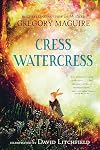
Gregory Maguire turns his trademark wit and wisdom to an animal adventure about growing up, moving on, and finding community. When Papa doesn't return from a nocturnal honey-gathering expedition, Cress holds out hope, but her mother assumes the worst. It’s a dangerous world for rabbits, after all. Mama moves what’s left of the Watercress family to the basement unit of the Broken Arms, a run-down apartment oak with a suspect owl landlord, a nosy mouse super, a rowdy family of squirrels, show more and a pair of songbirds who broadcast everyone’s business. Can a dead tree full of annoying neighbors, and no Papa, ever be home? In the timeless spirit of E. B. White and The Wind and the Willows—yet thoroughly of its time—this read-aloud and read-alone gem for animal lovers of all ages features an unforgettable cast that leaps off the page in glowing illustrations by David Litchfield. show less
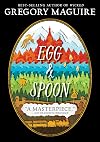
Set in the last years of the Russian monarchy, Egg and Spoon is a fanciful mix of history, folklore, philosophy, childhood fantasy, silliness, and very clever writing.
In a rural village, peasant Elena cares for her sick mother, scouring the desolate countryside for food, while mourning the loss of her dead father and her two brothers who have been pressed into service. Cat (born Ekaterina), a wealthy Russian girl leaves her London boarding school to go to St. Petersburg where she will meet show more (and possibly catch the eye of ) the godson of the Tsar. Cat's train must wait for repairs near Elena's village, and the two girls meet. When Cat shows Elena a Faberge egg intended as a gift for the Tsar, an accident happens that causes the girls to trade places, setting them on a string of unlikely adventures and eventually on a quest to save the firebird, Russia and the entire world. The story includes a vast array of incredible characters including (but not limited to) Baba Yaga, the witch from Russian folktale; Zmey-Azdaja, the ice dragon; Dumb Doma, a house with legs; Anton, the tsar's godson; a magical cat named Mewster; a collection of oversized matryoshka dolls; and our insightful narrator, an imprisoned monk who, like Scheherazade, tells this story in parts, in the hope of saving his life.
By turns ridiculously silly and deeply profound, Egg and Spoon is an utter delight. Elena and Cat perform magnificently, both as examples of social class and as individual personalities. The two wend their ways through a magical, bizarre, and funny Russian wonderland. In the end, Maguire drops a serious message in a light-hearted manner: saving the world is something everyone can do, and it isn't as hard as it might seem. Highly Recommended. show less
In a rural village, peasant Elena cares for her sick mother, scouring the desolate countryside for food, while mourning the loss of her dead father and her two brothers who have been pressed into service. Cat (born Ekaterina), a wealthy Russian girl leaves her London boarding school to go to St. Petersburg where she will meet show more (and possibly catch the eye of ) the godson of the Tsar. Cat's train must wait for repairs near Elena's village, and the two girls meet. When Cat shows Elena a Faberge egg intended as a gift for the Tsar, an accident happens that causes the girls to trade places, setting them on a string of unlikely adventures and eventually on a quest to save the firebird, Russia and the entire world. The story includes a vast array of incredible characters including (but not limited to) Baba Yaga, the witch from Russian folktale; Zmey-Azdaja, the ice dragon; Dumb Doma, a house with legs; Anton, the tsar's godson; a magical cat named Mewster; a collection of oversized matryoshka dolls; and our insightful narrator, an imprisoned monk who, like Scheherazade, tells this story in parts, in the hope of saving his life.
By turns ridiculously silly and deeply profound, Egg and Spoon is an utter delight. Elena and Cat perform magnificently, both as examples of social class and as individual personalities. The two wend their ways through a magical, bizarre, and funny Russian wonderland. In the end, Maguire drops a serious message in a light-hearted manner: saving the world is something everyone can do, and it isn't as hard as it might seem. Highly Recommended. show less

Sometimes Gregory Maguire does things with fairy tales that I don't really appreciate. He's kind of hit or miss for me.
In this case, he weaves a wonderful, enthralling tale that is Russian to the core and perfect in its balance between story and fable, magic and awful, starving reality. Also, I'm a sucker for Baba Yaga's chicken-legged house and I find his use of it an utter delight. It's a prince and the pauper story, a Vasilisa the Brave story, a Firebird and marvels story. Mostly, though, show more it's a story about young people learning empathy, with some salty and hilarious commentary from our cannibal friend, Baba Yaga. Not to be missed. show less
In this case, he weaves a wonderful, enthralling tale that is Russian to the core and perfect in its balance between story and fable, magic and awful, starving reality. Also, I'm a sucker for Baba Yaga's chicken-legged house and I find his use of it an utter delight. It's a prince and the pauper story, a Vasilisa the Brave story, a Firebird and marvels story. Mostly, though, show more it's a story about young people learning empathy, with some salty and hilarious commentary from our cannibal friend, Baba Yaga. Not to be missed. show less
Lists
Unread books (5)
Check Library (1)
Ghosts (1)
Movies/Shows (1)
Overdue Podcast (1)
SFFCat 2015 (1)
Gaslamp Fantasy (1)
Page Turners (1)
Five star books (1)
al.vick-series (1)
Sense of place (1)
Books with Twins (1)
Witchy Fiction (1)
1990s (1)
Carole's List (2)
2010s (2)
All Things Oz (4)
To Read (1)
Best Satire (1)
Wishlist (1)
Parallel Novels (1)
Awards


You May Also Like


Associated Authors
Statistics
- Works
- 67
- Also by
- 46
- Members
- 80,412
- Popularity
- #152
- Rating
- 3.6
- Reviews
- 1,662
- ISBNs
- 465
- Languages
- 13
- Favorited
- 186


