
Frank Beddor
Author of The Looking Glass Wars
About the Author
Image credit: (c) Elizabeth Talbott
Series
Works by Frank Beddor
Hatter M: The Looking Glass Wars #2.5 - Deep Travel Symposium: Questions, Answers, and Revelations (2005) — Author — 15 copies
Hatter M: The Looking Glass Wars #3 — Author — 4 copies
Frank Beddor's The Looking Glass Wars Trilogy Books 1-3 in the Series (Set Includes: The Looking Glass Wars, Seeing Redd and Arch Enemy). (2015) 4 copies, 1 review
The Looking Glass Wars Soundtrack — Producer — 2 copies
Hatter M: The Looking Glass Wars #1 — Author — 1 copy
Tagged
Common Knowledge
- Canonical name
- Beddor, Frank
- Birthdate
- 1959
- Gender
- male
- Occupations
- film producer
author
champion freestyle skiier - Nationality
- USA
- Birthplace
- Minneapolis, Minnesota, USA
- Places of residence
- Los Angeles, California, USA
Minneapolis, Minnesota, USA - Associated Place (for map)
- USA
Members
Discussions
The Looking Glass Wars by Frank Beddor in Fairy Tales Retold (April 2009)
Reviews
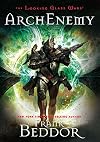
This is a good story and retelling of Alice in Wonderland. To be fair I love the world building and I love the characters however there is so much detailing into describing characters and things that it gets boring, he could've shorten some of the description just a bit which is why I gave it a 3 star.
Update: Reread
*“Imagination is more important than knowledge.”*
*“You can’t kill Imagination.”*
Welcome to the Wonderland you *thought* you knew… and then immediately realize you show more absolutely did not. ⚔️
🩸 What It’s About
Meet **Alyss Heart** — the *real* Alice — orphaned princess, heir to the Wonderland throne, and certified trauma survivor. When her murderous Aunt Redd stages a bloody coup (yes, Wonderland gets DARK), Alyss escapes through the Pool of Tears and crash-lands in Victorian London.
There, she meets a hopeful little writer named **Lewis Carroll** and entrusts him with the truth of her life so someone might rescue her.
…He butchers it.
He waters it down.
He spells her name wrong.
Sir really said: *Let me turn your trauma into a cute children’s book.* 😭📖
Meanwhile, her fiercely loyal royal bodyguard **Hatter Madigan** (aka: walking legend, emotional damage, certified badass) is tearing through worlds trying to find her and restore her to her rightful throne — so she can return to Wonderland and absolutely body Aunt Redd in a war powered by **Imagination itself**.
Forget mad tea parties — this is **war, grief, loyalty, swords, and shattered childhoods.**
💭 My Thoughts
I DNF’d this YEARS ago… but I came crawling back because:
1️⃣ Alice in Wonderland retelling? Say less.
2️⃣ A real girl trapped in our world who must return and reclaim her throne with imagination as her literal superpower? I was too intrigued to ignore it again.
And I’m SO glad I didn’t.
The plot? **Immaculate.**
The world-building? **Wild.**
The vibes? **Steampunk chaos meets dark fantasy heartbreak.**
Hatter Madigan? **Would die for him. Would follow him into war. Would let him emotionally destroy me.**
And The Cat being EVIL? 😈🗡️
Sir.
Excuse me.
**Absolutely feral and I loved every second of it.** 🐱🩸
This book feels like:
> Alice in Wonderland x Steampunk x War of the Roses x Childhood Trauma x “Imagination is a Weapon”
There *are* moments where the descriptions linger a *tiny* bit longer than necessary — but honestly? The payoff is worth it.
This was a full redemption arc for me and I will not be ignoring the rest of the series. 😌✨
🧷 Tropes
* 👑 Lost Heir / Rightful Queen
* 🪞 Dark Retelling
* ⚔️ Loyal Bodyguard
* 🩸 Evil Queen Aunt
* 🌪 Portal Fantasy
* 🕰 Steampunk Aesthetic
* 🪄 Imagination as Power
* 🐱 Villain Cat (because of course)
* 🏰 Fight for the Throne
* 🧠 Trauma + Growth
* 📖 Story Within a Story
If you thought Wonderland was whimsical and safe — **this book will absolutely correct that assumption.** show less
Update: Reread
*“Imagination is more important than knowledge.”*
*“You can’t kill Imagination.”*
Welcome to the Wonderland you *thought* you knew… and then immediately realize you show more absolutely did not. ⚔️
🩸 What It’s About
Meet **Alyss Heart** — the *real* Alice — orphaned princess, heir to the Wonderland throne, and certified trauma survivor. When her murderous Aunt Redd stages a bloody coup (yes, Wonderland gets DARK), Alyss escapes through the Pool of Tears and crash-lands in Victorian London.
There, she meets a hopeful little writer named **Lewis Carroll** and entrusts him with the truth of her life so someone might rescue her.
…He butchers it.
He waters it down.
He spells her name wrong.
Sir really said: *Let me turn your trauma into a cute children’s book.* 😭📖
Meanwhile, her fiercely loyal royal bodyguard **Hatter Madigan** (aka: walking legend, emotional damage, certified badass) is tearing through worlds trying to find her and restore her to her rightful throne — so she can return to Wonderland and absolutely body Aunt Redd in a war powered by **Imagination itself**.
Forget mad tea parties — this is **war, grief, loyalty, swords, and shattered childhoods.**
💭 My Thoughts
I DNF’d this YEARS ago… but I came crawling back because:
1️⃣ Alice in Wonderland retelling? Say less.
2️⃣ A real girl trapped in our world who must return and reclaim her throne with imagination as her literal superpower? I was too intrigued to ignore it again.
And I’m SO glad I didn’t.
The plot? **Immaculate.**
The world-building? **Wild.**
The vibes? **Steampunk chaos meets dark fantasy heartbreak.**
Hatter Madigan? **Would die for him. Would follow him into war. Would let him emotionally destroy me.**
And The Cat being EVIL? 😈🗡️
Sir.
Excuse me.
**Absolutely feral and I loved every second of it.** 🐱🩸
This book feels like:
> Alice in Wonderland x Steampunk x War of the Roses x Childhood Trauma x “Imagination is a Weapon”
There *are* moments where the descriptions linger a *tiny* bit longer than necessary — but honestly? The payoff is worth it.
This was a full redemption arc for me and I will not be ignoring the rest of the series. 😌✨
🧷 Tropes
* 👑 Lost Heir / Rightful Queen
* 🪞 Dark Retelling
* ⚔️ Loyal Bodyguard
* 🩸 Evil Queen Aunt
* 🌪 Portal Fantasy
* 🕰 Steampunk Aesthetic
* 🪄 Imagination as Power
* 🐱 Villain Cat (because of course)
* 🏰 Fight for the Throne
* 🧠 Trauma + Growth
* 📖 Story Within a Story
If you thought Wonderland was whimsical and safe — **this book will absolutely correct that assumption.** show less
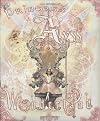
This is a companion book to Frank Beddor’s The Looking Glass Wars books, in which we hear the “real” story of Alice Alyss of Wonderland. Lewis Carroll got it all wrong, and this is Alyss’s scrapbook from when she was in London, showing Alyss’s innermost thoughts on imagination, her experiences in London, the betrayal of Lewis Carroll, and her own self-discovery.
The Response
Okay, so I didn’t particularly like Seeing Redd, and I decided I wasn’t going to read anything else in show more this series, but omg!!! I saw this book and FELL IN LOVE. Yes. I am in love with an inanimate object. Do you want to know why?
This book came with letters!
And fold-out maps!
And lovely “playing” cards! (Though only have half a deck, so it doesn’t really count as REAL playing cards.)
And beautiful page designs and illustrations and wonderful stuff!
How could anyone who loves beautiful books walk away from this?
And you know what? It’s okay that I didn’t like Seeing Redd, because this all covers before Alyss gets back to Wonderland in The Looking Glass Wars. Also? Because it takes place before all of that other stuff, it’s not even really necessary to know what the story is really even about.
My one quibble with this book is that Alyss sounds much older than the eleven years she’s supposed to be when she started this scrapbook – it says in the first entry that she arrived in London four years ago, when she was seven, and then proceeds to talk in a very grown-up tone for the rest of the entry.
But! That is my ONLY quibble! The rest of it was lovely and wonderful and GORGEOUS.
The Bottom Line
Even if you’ve never read The Looking Glass Wars, as long as you know the basic premise – that Lewis Carroll got the story all wrong, and that Alyss was really a princess trapped in our world – then you should get this book. It is all things WONDERFUL and I have positively DROOLED over it. show less
The Response
Okay, so I didn’t particularly like Seeing Redd, and I decided I wasn’t going to read anything else in show more this series, but omg!!! I saw this book and FELL IN LOVE. Yes. I am in love with an inanimate object. Do you want to know why?
This book came with letters!
And fold-out maps!
And lovely “playing” cards! (Though only have half a deck, so it doesn’t really count as REAL playing cards.)
And beautiful page designs and illustrations and wonderful stuff!
How could anyone who loves beautiful books walk away from this?
And you know what? It’s okay that I didn’t like Seeing Redd, because this all covers before Alyss gets back to Wonderland in The Looking Glass Wars. Also? Because it takes place before all of that other stuff, it’s not even really necessary to know what the story is really even about.
My one quibble with this book is that Alyss sounds much older than the eleven years she’s supposed to be when she started this scrapbook – it says in the first entry that she arrived in London four years ago, when she was seven, and then proceeds to talk in a very grown-up tone for the rest of the entry.
But! That is my ONLY quibble! The rest of it was lovely and wonderful and GORGEOUS.
The Bottom Line
Even if you’ve never read The Looking Glass Wars, as long as you know the basic premise – that Lewis Carroll got the story all wrong, and that Alyss was really a princess trapped in our world – then you should get this book. It is all things WONDERFUL and I have positively DROOLED over it. show less
What an utter disappointment. The concept of a dark Wonderland is, of course, exhilarating, and the idea of fictional characters learning to grow up by association with the real world - particularly if they're children or teenagers - has a long and storied history in fiction.
Unfortunately, Frank Beddor is not really interested in these concepts, at least not from a literary perspective, and his writing style indicates a limited understanding of basic structural tenets of creative writing. As show more with most youth-oriented books that I read, I try to view it from the perspective of my cousins in that age group. This book, however, would barely satisfy them, written as it is in such a startlingly underplayed prose.
Beddor's main issues are threefold. First, his dialogue is woefully stilted, with all characters sounding like they walked out of the same Edwardian era children's book. Similar to my issues with the (overall more successful) Taran Wanderer series, characters speak in the same manner regardless of whether they are holding court or running from a maniacal killer. It severely limits audience engagement with the text, completely cutting side-swiping any attempts at paciness or narrative energy.
Second, the text has a bizarre approach to which parts of the narrative are crucial. While there are some beautiful ideas here (for instance, the Mad Hatter's decade spent searching for his mistress, where he becomes a kind of mythical figure in the lives of 19th century Europeans), many of the key character moments are rushed through (notably, young Alyss' relationship with Lewis Carroll) while we spend a tiring amount of time with the oppressed people back in Wonderland. I don't like to review works by saying what they should have done (honest, I don't!), but "The Looking Glass Wars" smacks of a missed opportunity to tell a cohesive story instead of a set of images.
Because, ultimately, that is the issue here. My third issue with the book encompasses all the problems (and occasional solid moments) mentioned above. Beddor wants to write a comic book or a graphic novel. There's a great concept here for a truly gorgeous visual world, one unifying Victorian decor with gothic fantasy. The story beats are adequate, if not extraordinary, but they would have made far more sense in a visual format. Instead, this feels as if a comic writer is trying to become a novelist by literally transferring the skills of one medium into another - and that almost never works.
I'm going to have to read a few of the rave reviews of this series in an attempt to understand what people see in this - perhaps they, too, have an overactive imagination and are able to overlay this empty husk of a story with some perceived depth from their own mind. I don't have any problem with readers doing that; we all have! (It's how many academics make a living, after all.) But it's always a shame when a book with an intriguing concept leaves me with such a sour taste. show less
Unfortunately, Frank Beddor is not really interested in these concepts, at least not from a literary perspective, and his writing style indicates a limited understanding of basic structural tenets of creative writing. As show more with most youth-oriented books that I read, I try to view it from the perspective of my cousins in that age group. This book, however, would barely satisfy them, written as it is in such a startlingly underplayed prose.
Beddor's main issues are threefold. First, his dialogue is woefully stilted, with all characters sounding like they walked out of the same Edwardian era children's book. Similar to my issues with the (overall more successful) Taran Wanderer series, characters speak in the same manner regardless of whether they are holding court or running from a maniacal killer. It severely limits audience engagement with the text, completely cutting side-swiping any attempts at paciness or narrative energy.
Second, the text has a bizarre approach to which parts of the narrative are crucial. While there are some beautiful ideas here (for instance, the Mad Hatter's decade spent searching for his mistress, where he becomes a kind of mythical figure in the lives of 19th century Europeans), many of the key character moments are rushed through (notably, young Alyss' relationship with Lewis Carroll) while we spend a tiring amount of time with the oppressed people back in Wonderland. I don't like to review works by saying what they should have done (honest, I don't!), but "The Looking Glass Wars" smacks of a missed opportunity to tell a cohesive story instead of a set of images.
Because, ultimately, that is the issue here. My third issue with the book encompasses all the problems (and occasional solid moments) mentioned above. Beddor wants to write a comic book or a graphic novel. There's a great concept here for a truly gorgeous visual world, one unifying Victorian decor with gothic fantasy. The story beats are adequate, if not extraordinary, but they would have made far more sense in a visual format. Instead, this feels as if a comic writer is trying to become a novelist by literally transferring the skills of one medium into another - and that almost never works.
I'm going to have to read a few of the rave reviews of this series in an attempt to understand what people see in this - perhaps they, too, have an overactive imagination and are able to overlay this empty husk of a story with some perceived depth from their own mind. I don't have any problem with readers doing that; we all have! (It's how many academics make a living, after all.) But it's always a shame when a book with an intriguing concept leaves me with such a sour taste. show less
I'll confess first thing that I did not finish this book. I had heard of it and thought it sounded fun, an expansion of Wonderland that would seek to preserve Carroll's wonderful cleverness and sense of random dreaminess. Well, it didn't.
The first problem is how the book thumbs its nose at the original story of Alice in Wonderland. The opening scene of this book portrays Charles Dodgson in a very ugly light, showing him as a liar and a thief. Beddor's whole premise is that Alice Liddell, show more Dodgson's muse, was actually a fugitive from Wonderland and was sorely disappointed with his "re-imagining" of her adventures. She calls him "cruel" for lying about her story, with some angry denunciations of the poetry. She thinks "he'd transformed her memories of a world alive with hope and possibility and danger into make-believe, the foolish stuff of children" (p. 3, my emphasis). Alice in Wonderland is, according to Alice, a "stupid, nonsensical book" (p. 4).
Wow, can't you just feel the respect for Dodgson here? Nice. You would think Beddor would show a little respect for the genius he's piggybacking. But no, to make his book work he has to make Dodgson look bad, so Beddor can tell the "real" story.
I can't get along well with a book that starts off by calling its source stupid, when that source has been an undisputed classic of children's literature for well over a century. Alice in Wonderland is not stupid, or nonsensical in a negative way; in fact, it's far more imaginative and clever than Beddor's lackluster, clichéd re-imagining could ever hope to be.
And Alice in Wonderland has far more interesting characters than The Looking Glass Wars. I started rolling my eyes when we read how the king loves his wife, the Queen, because of her (politically correct) strength and firm decisions — oh spare me. Lame! The characters have about as much dimension as paper dolls. Alyss is a brat and everyone around her is so stereotypical and boring, stock characters lifted ineptly from better works.
Don't even get me started on the abysmal prose. When we come to the first battle and Beddor starts writing about "adrenaline-induced war cries" and "agony-infused moans," I almost gave an agony-infused moan myself (p. 27). And these two doozies came in the same sentence, no less! You have to wonder if Beddor is TRYING to hurt his readers. Wouldn't "agonized moans" be so much better? "Agony-infused" makes me think of someone injecting agony into the moans with a needle. (Hand me that moan, would you? I've got to infuse it.) And the book is full of similar problems: jerky sentence structure, unintentionally funny word choices, and clichéd descriptions.
With the ugly disrespect for Charles Dodgson, the flat characters, and the horrible prose, I found I just couldn't force myself to keep going. It was quite a pity because I'd been looking forward to this series for awhile, and even waited until I had procured the second book before starting this one. That was a mistake! Both are going up on PaperBackSwap pronto, in hopes that someone else will be able to enjoy them. But I doubt it. show less
The first problem is how the book thumbs its nose at the original story of Alice in Wonderland. The opening scene of this book portrays Charles Dodgson in a very ugly light, showing him as a liar and a thief. Beddor's whole premise is that Alice Liddell, show more Dodgson's muse, was actually a fugitive from Wonderland and was sorely disappointed with his "re-imagining" of her adventures. She calls him "cruel" for lying about her story, with some angry denunciations of the poetry. She thinks "he'd transformed her memories of a world alive with hope and possibility and danger into make-believe, the foolish stuff of children" (p. 3, my emphasis). Alice in Wonderland is, according to Alice, a "stupid, nonsensical book" (p. 4).
Wow, can't you just feel the respect for Dodgson here? Nice. You would think Beddor would show a little respect for the genius he's piggybacking. But no, to make his book work he has to make Dodgson look bad, so Beddor can tell the "real" story.
I can't get along well with a book that starts off by calling its source stupid, when that source has been an undisputed classic of children's literature for well over a century. Alice in Wonderland is not stupid, or nonsensical in a negative way; in fact, it's far more imaginative and clever than Beddor's lackluster, clichéd re-imagining could ever hope to be.
And Alice in Wonderland has far more interesting characters than The Looking Glass Wars. I started rolling my eyes when we read how the king loves his wife, the Queen, because of her (politically correct) strength and firm decisions — oh spare me. Lame! The characters have about as much dimension as paper dolls. Alyss is a brat and everyone around her is so stereotypical and boring, stock characters lifted ineptly from better works.
Don't even get me started on the abysmal prose. When we come to the first battle and Beddor starts writing about "adrenaline-induced war cries" and "agony-infused moans," I almost gave an agony-infused moan myself (p. 27). And these two doozies came in the same sentence, no less! You have to wonder if Beddor is TRYING to hurt his readers. Wouldn't "agonized moans" be so much better? "Agony-infused" makes me think of someone injecting agony into the moans with a needle. (Hand me that moan, would you? I've got to infuse it.) And the book is full of similar problems: jerky sentence structure, unintentionally funny word choices, and clichéd descriptions.
With the ugly disrespect for Charles Dodgson, the flat characters, and the horrible prose, I found I just couldn't force myself to keep going. It was quite a pity because I'd been looking forward to this series for awhile, and even waited until I had procured the second book before starting this one. That was a mistake! Both are going up on PaperBackSwap pronto, in hopes that someone else will be able to enjoy them. But I doubt it. show less
Lists
Awards


You May Also Like


Associated Authors
Statistics
- Works
- 24
- Members
- 10,442
- Popularity
- #2,278
- Rating
- 3.7
- Reviews
- 345
- ISBNs
- 90
- Languages
- 3
- Favorited
- 19

