On This Page
Description
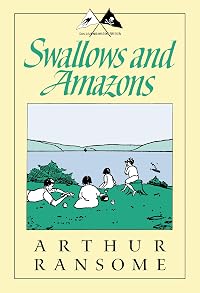
The classic English series begins with a tale of two families of children uniting against a common foe: an uncle who claims he's too busy for his nieces. The Walker children (John, Susan, Titty and Roger) are on school holiday in the Lake District and are sailing a borrowed catboat named Swallow, when they meet the Blackett children (Nancy and Peggy), who sail the boat Amazon. The children camp together on Wild Cat Island where a plot is hatched against the Blacketts' Uncle Jim who is too show more busy writing his memoirs to be disturbed. Fireworks-literally-ensue along with a dangerous contest, a run-in with houseboat burglars, and the theft of Uncle Jim's manuscript. How all this is resolved makes for an exciting and very satisfying story. Uncle Jim ends up apologizing for missing his nieces' adventures all summer-thankfully, readers won't miss a thing. Arthur Ransome's Swallows and Amazons series has stood the test of time. More than just great stories, each one celebrates independence and initiative with a colorful, large cast of characters. Like the entire series that follows, this book is for children or grownups, anyone captivated by a world of adventure and imagination, exploring and setting sail. The basis for the 2016 film starring Kelly MacDonald, Andrew Scott, and Rafe Spall. show lessTags
Recommendations
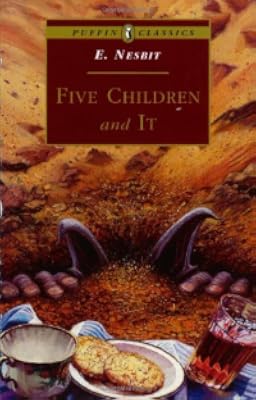
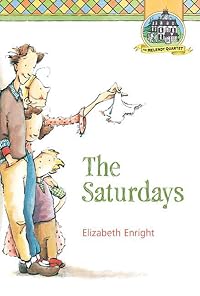
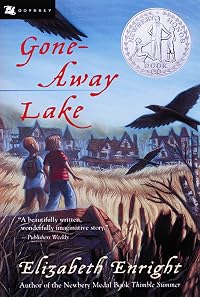
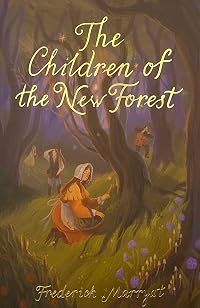
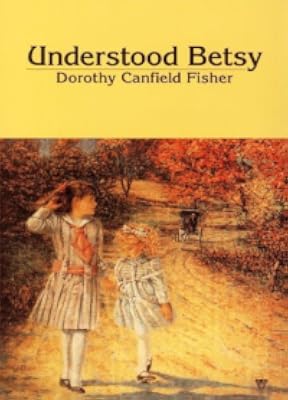


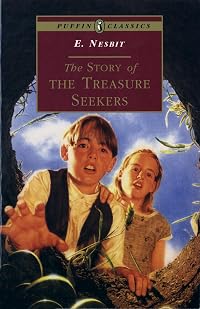
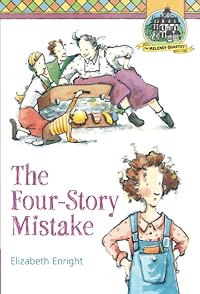
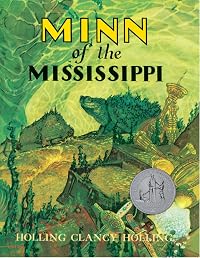

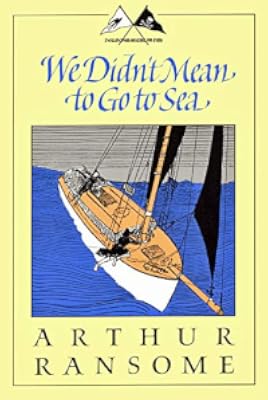




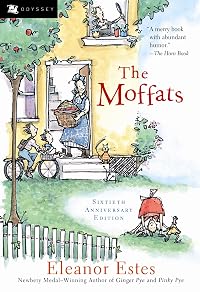
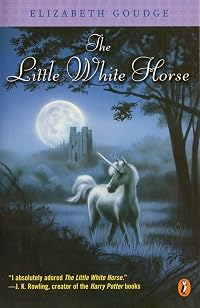
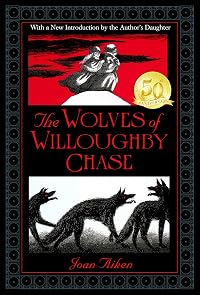
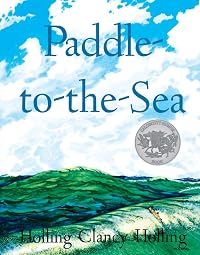




Member Recommendations
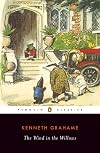
rakerman Both Swallows and Amazons and The Wind in the Willows are classic stories for children that involve boating and adventures.
40
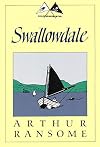
rakerman If you enjoyed Swallows and Amazons, you should enjoy Swallowdale, as it is a direct sequel with the same characters, set one year later.
40

Aquila Written by two school girls, and recommended for publishing by Arthur Ransome, holidays with ponies and rafts, a lovely read.
41

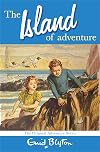
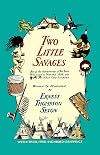
thesmellofbooks Both books have a benign sense of human nature and a love of the outdoors. Both teach lots of interesting things about what the kids are doing as well as entertain. S&A teaches sailing craft, for the most part, and TLS teaches woodcraft. (Don't be put off by the "savages". The book is respectful; the language is dated.)
21


Cecrow In Mace's story, the characters refer to S&A for survival advice.
Member Reviews
Lovely as always. Every time I read this book I'm struck by how much freedom these kids are allowed - can you imagine a modern parent allowing a 7-year-old up to a maybe 11- or 12-year-old to go out on the water, sail their own boat, camp on an island that can't easily be reached (half an hour by rowing boat)....? The adventures Titty makes up aren't a patch on the real thing, what they're actually doing. It's wonderful. I read this first when I was about Titty's age, though I always identified with John (as the eldest, and the responsible and capable one). Susan never really appealed to me - she apparently enjoys doing all the camp work and the like, but it would drive me nuts. And Roger was and is too young and silly (rash, show more thoughtless, adventurous...) to suit me. But between them, and Nancy and Peggy, there's someone to appeal to everyone. You can actually learn at least some of the concepts of sailing and camping from the book, too - there's details of how to lay a fire, what to watch for when sailing before the wind, and so on. And what to do - and not to do - when things go wrong, as well. Good story, that has rewarded multiple rereads in the last 30-some years. show less
This is not my thing. Something in the telling annoyed me and siblings that get along frictionlesly are so beyond my ability to imagine that I was kept at a further emotional distance. Susan's assumed assumption of all cooking chores and the basic we're explorers, everyone else is natives speaks to a long history of colonialism.
The four Walker children are staying on a farm in the Lake District of England with their mother and baby sister for the summer while their sailor father is away. After staring at an island in the lake for several days, they get permission from their parents to take the sailboat, The Swallow, out and camp on it. The kids, who range in age from 8 to probably 12 or 14, plan what they will need, load the boat, and sail off. Mom rows over the first night to check on them, but then the kids are on their own. Every morning they row to the nearest farm, where their mother has arranged for them to get milk and other staples (and also allows her to keep a secondhand eye on them), and spend the rest of the day exploring, charting the "high seas", show more and fishing for sharks (i.e. perch). One day two pirates (Nancy and Peggy) appear in another sailboat, the Amazon, and request a parlay. They agree to a war and whoever succeeds in capturing the other's sailboat will get to be the flagship, and the captain a commodore. The race is on!
I loved this book, with highly imaginative children allowed the responsibility and freedom of summer adventures free of adult hovering. They sail, swim, camp, fish, all the while problem-solving and working together. Although First Mate, Susan, does have to do all the cooking (apropos of the 30s), she is also a first-rate sailor, and Nancy and Peggy are incorrigible, getting into all sorts of scrapes (such as setting off a firecracker on the roof of their uncle's houseboat). If you like sailing or independent kids, I highly recommend this book. show less
I loved this book, with highly imaginative children allowed the responsibility and freedom of summer adventures free of adult hovering. They sail, swim, camp, fish, all the while problem-solving and working together. Although First Mate, Susan, does have to do all the cooking (apropos of the 30s), she is also a first-rate sailor, and Nancy and Peggy are incorrigible, getting into all sorts of scrapes (such as setting off a firecracker on the roof of their uncle's houseboat). If you like sailing or independent kids, I highly recommend this book. show less
Like a fresh breeze, reading this delightful children's novel - first published in 1930 - had an invigorating effect, making me feel young and carefree again, with all of the summer holidays stretching before me - endless days of pleasure reading and outdoor fun to enjoy, and no wishes (so I imagined) save my own to consult. The story of the four Walker children - on holiday with their mother in the Lake District - their adventures sailing the Swallow and camping on Wild Cat Island, their friendship (and maritime rivalry) with those daring Amazons, Nancy and Peggy Blackett, and their eventual reconciliation with the piratical Captain Flint, unfolds at a leisurely pace. Despite the lack of rush - or perhaps, because of it? - I found show more Ransome's narrative absolutely absorbing, feeling almost as if I were sinking into another world, as I read it.
There were many things I enjoyed about Swallows and Amazons, from the attention Ransome gives to the details of sailing, which I didn't always really understand (having only been sailing once in my life, and that many years ago), but which added to the sense of this being a "real" adventure, to the mutual trust shown by the Swallows and their mother. I liked how the imaginative play - all the adults being "natives," Nancy and Peggy's Uncle Jim being a pirate - was seamlessly worked in with more practical concerns, like how to lay a fire correctly, or set up tents so they wouldn't collapse. The frequent use of the term "native," and the colonial mindset it represents, were a little problematic for me, but I didn't find its use vicious, and Ransom was writing, after all, in a time when Britain was still an empire.
Finally, although there were some traditional gender ideas here - Susan being the "little mother" who must cook and wash up after everyone - I really appreciated the fact that both boys and girls had important roles to play, in the adventuring. I loved Captain Nancy, and suspect that if I had read this as a girl, I would have identified most with her, although Titty's capture of the Amazon might have tempted me in her direction as well! Overall, this was just a charming story, and I came away from it with a desire to read the entire series. show less
There were many things I enjoyed about Swallows and Amazons, from the attention Ransome gives to the details of sailing, which I didn't always really understand (having only been sailing once in my life, and that many years ago), but which added to the sense of this being a "real" adventure, to the mutual trust shown by the Swallows and their mother. I liked how the imaginative play - all the adults being "natives," Nancy and Peggy's Uncle Jim being a pirate - was seamlessly worked in with more practical concerns, like how to lay a fire correctly, or set up tents so they wouldn't collapse. The frequent use of the term "native," and the colonial mindset it represents, were a little problematic for me, but I didn't find its use vicious, and Ransom was writing, after all, in a time when Britain was still an empire.
Finally, although there were some traditional gender ideas here - Susan being the "little mother" who must cook and wash up after everyone - I really appreciated the fact that both boys and girls had important roles to play, in the adventuring. I loved Captain Nancy, and suspect that if I had read this as a girl, I would have identified most with her, although Titty's capture of the Amazon might have tempted me in her direction as well! Overall, this was just a charming story, and I came away from it with a desire to read the entire series. show less
The Swallows and Amazons books were among my favourite reading when I was a child, and I still dip into them occasionally with a great deal of pleasure, even though they are now at least twice as old as they were when I first met them. (Not very long ago, I met a nine-year-old Arthur Ransome addict who told me that she intends to become a pirate when she grows up, so the books are clearly still working their magic...)
So, why are they so special? Superficially, they don't seem very promising: books about overprivileged middle-class kids doing dangerous things unsupervised and without proper safety equipment, rife with gender-stereotyping; full of obscure sailing terms and in-jokes referring to classical texts no schoolchild reads any show more more. Commander Walker's philosophy of "better drowned than duffers" hardly fits in with the orthodoxy of modern parenting (even if many modern parents would secretly agree with him...). There must be more to it than that for them to appeal to so many kids.
I think the key might be the natural, matter-of-fact way that Ransome gives equal value to the real world in which the characters are children messing about in sailing dinghies on a family holiday and the imaginative world in which they are pirates, explorers and sailors. Swallows and Amazons is never a fantasy world in which something impossible is happening, but equally the imaginative element is never treated as childish and unimportant. I think this balance between the two worlds matters a lot to a child: even if you don't happen to have access to the same facilities as the children in the stories, you know that all you really need if you want to have an adventure is a bit of imagination.
The technical stuff is important, too: at a certain age, there's a lot of pleasure to be had in knowing words like halliard, backstay and mainsheet, in understanding the hierarchy of captain, mate and able seaman, and in feeling that you know (at least in theory) how to put up a tent, light a campfire, compose secret messages in Morse code, or sail against the wind. Ransome always gives us this kind of stuff with a great deal of convincing detail, without being obviously didactic It scarcely seems to matter that modern camping equipment and sailing boats aren't quite the same as those of the 1930s.
Even on gender issues, Ransome is probably a lot less reprehensible than most of his contemporaries. He may be a child of the Edwardian age, but he's also a veteran of the Russian revolution, after all. He has absolutely no problem with girls who act "like boys" in adventurous roles, and he has quite a few adult female characters who are far from the stereotypical housewife (Mrs Walker, for one). On the other hand, he doesn't allow his male characters to step much outside male stereotypes: male sailors are allowed to know how to cook and sew, of course, but they shouldn't be too good at those things, and if you need someone to be motherly and sympathetic, it has to be a girl.
One odd thing is the way the literary references in the books work for modern readers, which is probably more or less the opposite of what Ransome intended. In Chapter 1 of Swallows and Amazons, most people reading the book for the first time at the age of eight or nine will be in the same situation I was, and not have a clue what the children mean by "a peak in Darien" or who "Stout Cortez" might have been. All you are likely to understand is that it's an exotic location that belongs to the world of the children's imagination. Then, years later perhaps, when you're reading Keats, the penny drops, and you get an extra little pulse of pleasure from unexpectedly finding a Swallows and Amazons reference tucked away in his famous sonnet. It's no less fun that way than the proper way round!
So, what about "better drowned than duffers"? I think (once we're grown up, at least) we're supposed to realise that Commander Walker is joking and isn't really a heartless parent! He's expressing his confidence in the common-sense of the children, and they respond to that by acting (mostly) responsibly. Obviously he's giving his children a bit more independence than most parents of his generation would, and a great deal more than most modern parents do, but (a) this is supposed to be an adventure story, and (b) maybe kids could use a bit more responsibility and independence... show less
So, why are they so special? Superficially, they don't seem very promising: books about overprivileged middle-class kids doing dangerous things unsupervised and without proper safety equipment, rife with gender-stereotyping; full of obscure sailing terms and in-jokes referring to classical texts no schoolchild reads any show more more. Commander Walker's philosophy of "better drowned than duffers" hardly fits in with the orthodoxy of modern parenting (even if many modern parents would secretly agree with him...). There must be more to it than that for them to appeal to so many kids.
I think the key might be the natural, matter-of-fact way that Ransome gives equal value to the real world in which the characters are children messing about in sailing dinghies on a family holiday and the imaginative world in which they are pirates, explorers and sailors. Swallows and Amazons is never a fantasy world in which something impossible is happening, but equally the imaginative element is never treated as childish and unimportant. I think this balance between the two worlds matters a lot to a child: even if you don't happen to have access to the same facilities as the children in the stories, you know that all you really need if you want to have an adventure is a bit of imagination.
The technical stuff is important, too: at a certain age, there's a lot of pleasure to be had in knowing words like halliard, backstay and mainsheet, in understanding the hierarchy of captain, mate and able seaman, and in feeling that you know (at least in theory) how to put up a tent, light a campfire, compose secret messages in Morse code, or sail against the wind. Ransome always gives us this kind of stuff with a great deal of convincing detail, without being obviously didactic It scarcely seems to matter that modern camping equipment and sailing boats aren't quite the same as those of the 1930s.
Even on gender issues, Ransome is probably a lot less reprehensible than most of his contemporaries. He may be a child of the Edwardian age, but he's also a veteran of the Russian revolution, after all. He has absolutely no problem with girls who act "like boys" in adventurous roles, and he has quite a few adult female characters who are far from the stereotypical housewife (Mrs Walker, for one). On the other hand, he doesn't allow his male characters to step much outside male stereotypes: male sailors are allowed to know how to cook and sew, of course, but they shouldn't be too good at those things, and if you need someone to be motherly and sympathetic, it has to be a girl.
One odd thing is the way the literary references in the books work for modern readers, which is probably more or less the opposite of what Ransome intended. In Chapter 1 of Swallows and Amazons, most people reading the book for the first time at the age of eight or nine will be in the same situation I was, and not have a clue what the children mean by "a peak in Darien" or who "Stout Cortez" might have been. All you are likely to understand is that it's an exotic location that belongs to the world of the children's imagination. Then, years later perhaps, when you're reading Keats, the penny drops, and you get an extra little pulse of pleasure from unexpectedly finding a Swallows and Amazons reference tucked away in his famous sonnet. It's no less fun that way than the proper way round!
So, what about "better drowned than duffers"? I think (once we're grown up, at least) we're supposed to realise that Commander Walker is joking and isn't really a heartless parent! He's expressing his confidence in the common-sense of the children, and they respond to that by acting (mostly) responsibly. Obviously he's giving his children a bit more independence than most parents of his generation would, and a great deal more than most modern parents do, but (a) this is supposed to be an adventure story, and (b) maybe kids could use a bit more responsibility and independence... show less
This is an old classic of children's literature.
I grew up with Enid Blyton's books, where a group of young children went on holidays on their own, came across some strange going-ons and had adventures, outwitting some hapless criminal gang. I just loved the sense of freedom of those kids, allowed to organize a holiday on their own, their friendship, the thrill of an adventure without adults. Blyton was already writing in 1930, when this book was published, but she still had not started writing adventure books like the ones I have described. I have no doubt that this book influenced her.
However, despite the similarities the style here is different. Swallows and Amazons is written in more complex language, and it describes a more idyllic show more childhood holiday. It's really enchanting and timeless.
The story begins with a group of siblings vacationing with their mother, their baby sister and the baby's nurse in a house by a lake. Using a spyglass from a nearby hill, the Walker children watch wistfully a small desert island in the middle of the lake. They have asked their mother for permission to take their boat and camp there on their own, and she has agreed provided their father also gives permission. Shortly afterwards, the father's reply comes by telegram, giving permission in this way: "Better drowned than duffers, if not duffers won't drown."
So the children cheer and start preparing. Twelve-year-old John will be the captain; ten-year-old Susan will be ship's mate; eight-year-old Titty will be able-seaman; and seven-year-old Roger will also be allowed to go as ship's boy, provided he listens to his older siblings. Soon afterwards they are sailing in their small sailboat, the Swallow, towards the island. They establish their camp, and soon afterwards they meet a couple of girls who have their own sailboat, the Amazon. Rivals at first, they start a friendly war. The side that is able to capture the enemy's ship wins, and the winning captain will lead the joint navy in a war against the retired pirate who lives on a houseboat on the lake.
The story is filled with the magic, innocence and the joy of childhood. The children are responsible and self-sufficient in their outdoors adventures, but they live in a world of fantasy and games. They are pirates or explorers, as required, and their fantasy world is more real to them than the world of the adults (whom they call "the natives"). They explore their lake, play, learn and have a great time. Nothing much happens apart from their games, although there is a real burglary, but in their minds they have lived the greatest adventures.
The story is a bit slow to begin with, with some difficult sailing vocabulary, but it soon gets very interesting once the competition between the "swallows" and the "amazons" begins. We watch the children making their plans and being outwitted by the other side, only for the competition being decided by a daring and clever action.
Can be enjoyed by children, if it's not too old-fashioned for them, with the freedom given to children and the absence of smartphones, and by adults, who will remember their childhood with nostalgia. show less
I grew up with Enid Blyton's books, where a group of young children went on holidays on their own, came across some strange going-ons and had adventures, outwitting some hapless criminal gang. I just loved the sense of freedom of those kids, allowed to organize a holiday on their own, their friendship, the thrill of an adventure without adults. Blyton was already writing in 1930, when this book was published, but she still had not started writing adventure books like the ones I have described. I have no doubt that this book influenced her.
However, despite the similarities the style here is different. Swallows and Amazons is written in more complex language, and it describes a more idyllic show more childhood holiday. It's really enchanting and timeless.
The story begins with a group of siblings vacationing with their mother, their baby sister and the baby's nurse in a house by a lake. Using a spyglass from a nearby hill, the Walker children watch wistfully a small desert island in the middle of the lake. They have asked their mother for permission to take their boat and camp there on their own, and she has agreed provided their father also gives permission. Shortly afterwards, the father's reply comes by telegram, giving permission in this way: "Better drowned than duffers, if not duffers won't drown."
So the children cheer and start preparing. Twelve-year-old John will be the captain; ten-year-old Susan will be ship's mate; eight-year-old Titty will be able-seaman; and seven-year-old Roger will also be allowed to go as ship's boy, provided he listens to his older siblings. Soon afterwards they are sailing in their small sailboat, the Swallow, towards the island. They establish their camp, and soon afterwards they meet a couple of girls who have their own sailboat, the Amazon. Rivals at first, they start a friendly war. The side that is able to capture the enemy's ship wins, and the winning captain will lead the joint navy in a war against the retired pirate who lives on a houseboat on the lake.
The story is filled with the magic, innocence and the joy of childhood. The children are responsible and self-sufficient in their outdoors adventures, but they live in a world of fantasy and games. They are pirates or explorers, as required, and their fantasy world is more real to them than the world of the adults (whom they call "the natives"). They explore their lake, play, learn and have a great time. Nothing much happens apart from their games, although there is a real burglary, but in their minds they have lived the greatest adventures.
The story is a bit slow to begin with, with some difficult sailing vocabulary, but it soon gets very interesting once the competition between the "swallows" and the "amazons" begins. We watch the children making their plans and being outwitted by the other side, only for the competition being decided by a daring and clever action.
Can be enjoyed by children, if it's not too old-fashioned for them, with the freedom given to children and the absence of smartphones, and by adults, who will remember their childhood with nostalgia. show less
I enjoyed this classic 1929 children's novel during a holiday in the Lake District where I was staying near lake Coniston, on which the fictional lake in this novel is mostly based. It is of its time, of course, but it is refreshing to reflect on the power of these children's imaginations, seeing a whole ocean full of dangers, pirates, and God knows what on this friendly English lake. This was my dad's favourite book from this own childhood during the Second World War, and I read to him from it while he was in his care home bed last year a few months before his death from dementia. So it has emotional connections for me through him. I'm not sure I will read any of the sequels but I may pick some of them up at some point.
Members
- Recently Added By
Published Reviews
ThingScore 100
It taught me all I know about survival.
added by Cynfelyn
It is easily imaginable that "Swallows and Amazons" attained its special quality of happiness in its author's mind when, as correspondent to the London Daily News and the Manchester Guardian, he was living through the tragedies of the Front or exploring the chaos of revolutionary Russia. For here is everything that the Front was not and that Russia is not - peace, innocence, family life at its show more loveliest, laughter and security.
The story is plotted so slightly that the American boy, weaned on "westerns," may turn up his nose at such a low-pitched tale. It will be his loss. Four children go camping on an island in one of the English lakes. Two rival campers - girls, at that - appear, and joyfully agree on war.
But Mr. Ransome has marshalled many aides. First, a reality of scene. As in Defoe, no detail is too insignificant to gloss over, yet the itemizing never grows wearisome, and a store of handy things to know about sailing is secreted in the pages. Second, a reality of characters. They are born alive and do not have to be described.
"Swallows and Amazons" will gain by being read aloud. The child who hears will live gaily, whether on Wild Cat Island or in Octopus Lagoon, while the parent who reads will remember idyllic hours. For this book is both silvery present and golden retrospect. ... show less
The story is plotted so slightly that the American boy, weaned on "westerns," may turn up his nose at such a low-pitched tale. It will be his loss. Four children go camping on an island in one of the English lakes. Two rival campers - girls, at that - appear, and joyfully agree on war.
But Mr. Ransome has marshalled many aides. First, a reality of scene. As in Defoe, no detail is too insignificant to gloss over, yet the itemizing never grows wearisome, and a store of handy things to know about sailing is secreted in the pages. Second, a reality of characters. They are born alive and do not have to be described.
"Swallows and Amazons" will gain by being read aloud. The child who hears will live gaily, whether on Wild Cat Island or in Octopus Lagoon, while the parent who reads will remember idyllic hours. For this book is both silvery present and golden retrospect. ... show less
added by Cynfelyn
Lists

Favorite Childhood Books
1,651 works; 519 members

Best Children's Books You've Read
197 works; 75 members

BBC Big Read
191 works; 46 members
1001 Children's Books You Must Read Before You Grow Up
774 works; 101 members

Elevenses
316 works; 87 members
501 Must-Read Books
529 works; 72 members

School Library Journal - 2012 Top 100 Children's Novels
68 works; 8 members
Five books to read aloud to your kids
35 works; 17 members

Best Adventure Stories
66 works; 15 members

Best middle grade books
130 works; 24 members

Read the book and saw the movie
1,170 works; 195 members

Hayao Miyazaki's 50 Recommended Children's Books
48 works; 6 members

The Telegraph's 110 Best Books: The Perfect Library
101 works; 18 members
Ambleside Books
459 works; 18 members
Books I Wish I’d Read as a Kid
32 works; 4 members
Honey For a Child's Heart
1,152 works; 25 members

Brightly Beaming Curriculum Books
281 works; 8 members

Satori Smiles Children's Book List
262 works; 7 members

BBC Big Read
100 works; 10 members

4th Grade Books
312 works; 5 members

CCE 1000 Good Books List
1,033 works; 12 members

Blue Pyramid 1,276 Best Books of All Time
1,248 works; 32 members

End of Your Life Book Club
134 works; 4 members

Books About Boys
175 works; 15 members

Mustich's 1000 Books to Read Before You Die: A Life Changing List
1,001 works; 20 members

HMS: Make Your Child a Lover of Books, Ages 9 & up
111 works; 2 members

Books We Loved As Children
610 works; 254 members
Our Favorite Comfort Reads
334 works; 200 members

Ambleside Year 3
47 works; 1 member
'Books You Can't Live Without: The Top 100', The Guardian, 2007
156 works; 7 members

Book Review Roundup
254 works; 2 members

Hughes' Children's Library-Some still need to be vetted
19 works; 1 member

Top Five Books of 2023
767 works; 317 members

Books We'd Want on a Desert Island
204 works; 133 members

Books With the Most Memorable Titles
478 works; 158 members

In or About the 1930s
198 works; 27 members

Ambleside Y3
36 works; 1 member

Recommend the 20 best books you've read in the last five years
2,168 works; 608 members

1930s
262 works; 5 members

Top Five Books of 2013
1,562 works; 715 members

Books Read in 2021
5,361 works; 113 members

Favorite Series
238 works; 94 members

Huxley's Reading Log 2020
24 works; 1 member

Spirit of Place
46 works; 1 member

Top Five Books of 2016
795 works; 228 members

Geek Dad Read to Your Kids Additions List
66 works; 4 members
Books That Changed Me
158 works; 47 members
Children's Adventure
53 works; 4 members

Animals in the Title
498 works; 11 members
Author Information

100+ Works 18,577 Members
Children's author Arthur Ransome was born in Leeds, England on January 18, 1884. As a child, he spent many vacations sailing, camping, and exploring the countryside in England's Lake Country. He studied chemistry for one year at Yorkshire College before dropping out to become a writer. He worked for a London publisher and then for the Manchester show more Guardian newspaper. He wrote his first book, Bohemia in London, in 1907 and went to study folklore in Russia in 1913. In 1916, he published Old Peter's Russian Tales, a collection of 21 folktales. During World War I, he became a reporter for the Daily News and covered the war on the Eastern Front. While in Russia, he also covered the Russian Revolution in 1917. He eventually settled in England's Lake District with his second wife. In 1929, he wrote Swallows and Amazons, which was the first book in his well-know Swallows and Amazons series about children who sail and explore the lakes and mountains of England. He drew inspiration for the books from his own childhood memories. In 1936, he won the Carnegie Medal for children's literature for Pigeon Post. He died on June 3, 1967. (Bowker Author Biography) show less

Arthur Ransome has a Legacy Library. Legacy libraries are the personal libraries of famous readers, entered by LibraryThing members from the Legacy Libraries group.
Some Editions
Awards and Honors
Notable Lists
BBC's Big Read (57)
Series

Belongs to Publisher Series
Work Relationships
Is contained in
Has the adaptation
Inspired
Has as a reference guide/companion
Has as a study
Common Knowledge
- Canonical title*
- Pääskyt ja amatsonit
- Original title
- Swallows and Amazons
- Original publication date
- 1930
- People/Characters
- John Walker; Susan Walker; Titty Walker; Roger Walker; Nancy Blackett; Peggy Blackett (show all 9); Captain Flint; James Turner; Uncle Jim
- Important places
- Lake District, England; Wild Cat Island, England (fictional); Holly Howe, England (fictional); Rio, England (fictional | based on Bowness-on-Windermere)
- Related movies
- Swallows and Amazons (BBC TV series | 1963 | IMDb); Swallows and Amazons (1974 | IMDb); Swallows and Amazons (2016 | IMDb)
- Epigraph
- "Or like stout Cortez, when with eagle eyes,
He stared at the Pacific -- and all his men
Looked at each other with a wild surmise --
Silent, upon a peak in Darien."
Chapter I - The peak in Darien.
"What care I for a goose-feather bed,
With the sheet turned down so bravely, O?
For to-night I shall sleep in the cold open field
Along with the wraggle-taggle gipsies, O!"
Chapter II - Making ready.
"There were three sailors of Bristol City
Who took a boat and went to sea;
But first with beef and captain's biscuits
And pickled pork they loaded she"
THACKERAY
Chapter III - The voyage to the island... (show all)>.
"Then, having washed the blood away, we'd little else to do
Than to dance a quiet hornpipe as the old salts taught us to."
MASEFIELD
Chapter XXVII - The battle in Houseboat Bay. - Dedication
- For the six for whom it was written, in exchange for a pair of slippers.
- First words
- I have often been asked how I came to write Swallows and Amazons.
Author's note, 19 May 1958 (some post-1958 editions).
Roger, aged seven, and no longer the youngest of the family, ran in wide zigzags, to and fro, across the steep field that sloped up from the lake to Holly Howe, the farm where they were staying for part of the summer holidays... (show all). - Quotations
- BETTER DROWNED THAN DUFFERS IF NOT DUFFERS WONT DROWN
"Mrs. Jackson has been good enough to let you have your pillows here," said the female native. "You can sleep without them, I know, but a pillow makes such a lot of difference that I'm sure Christopher Columbus himself always... (show all) took his own pillow with him." - Last words
- (Click to show. Warning: May contain spoilers.)"Hullo, there's mother and Vicky coming down the field."
- Blurbers
- Mais, S. P. B.; Lynd, Sylvia
- Original language
- English
- Disambiguation notice
- This record is for the original work, Swallows and Amazons (Jonathan Cape, 1930), and still in print. Also translations and unabridged audiobooks. Please do not combine with extracts, or with The Swallows and the Am... (show all)azons (Amazon Publications, 1997), a limited edition annotated transcript of an early draft of S&A.
*Some information comes from Common Knowledge in other languages. Click "Edit" for more information.
Classifications
- Genres
- Children's Books, Fiction and Literature, Kids
- DDC/MDS
- 823.912 — Literature & rhetoric English & Old English literatures English fiction 1900- 1901-1999 1901-1945
- LCC
- PZ7 .R175 .S — Language and Literature Fiction and juvenile belles lettres Fiction and juvenile belles lettres Juvenile belles lettres
- BISAC
Statistics
- Members
- 4,508
- Popularity
- 3,280
- Reviews
- 97
- Rating
- (4.15)
- Languages
- 15 — Chinese, Czech, Dutch, English, English (Middle), Finnish, French, German, Hungarian, Japanese, Latvian, Norwegian, Slovak, Spanish, Swedish
- Media
- Paper, Audiobook, Ebook
- ISBNs
- 61
- UPCs
- 1
- ASINs
- 62