On This Page
Description
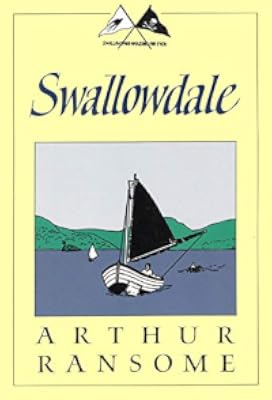
A group of English children share a summer adventure, featuring a shipwreck, a secret valley and cave, a thrilling mountain hike, and a stickler aunt. On summer holiday, the Swallows (John, Susan, Titty and Roger Walker) and the Amazons (Nancy and Peggy Blackett) meet up on Wild Cat Island. Unfortunately, though, the Amazons have a problem: their Great Aunt Maria has come to visit and she demands that the Amazon pirates act like "young ladies." Things get worse when the Swallows discover a show more very high hill that just begs to be How the Amazons escape the Great Aunt, arrange a rendezvous, and mount an expedition to sleep under the stars on the summit makes a very exciting and satisfying story. Friendship, resourcefulness, and sailing, too: Arthur Ransome's Swallows and Amazons series has stood the test of time. More than just great stories, each one celebrates independence and initiative with a colorful, large cast of characters. Swallowdale (originally published in 1931) is the second title in the Swallows and Amazons series, books for children or grownups, anyone captivated by a world of adventure and imagination. show lessTags
Recommendations















Member Reviews
The four Walker children are back on Wild Cat Island, eager for another summer of adventure with the pirates, Nancy and Peggy. Unfortunately, the Blackett girls are marooned at home with a dreadfully traditional great-aunt, who wants them in pinafores and reciting poetry. While out exploring, John runs the Swallow into a rock, and they must swim for it. Shipwrecked on shore while the Swallow is under repairs, they discover a hidden vale, perfect for a temporary camp. More adventures await as they cross the moors to sneak into Beckfoot under cover of darkness to meet the crew of the Amazon, climb the rugged Kanchenjunca, get lost in fog, and more. Swallows and Amazons forever!
I love both the idea of children having adventures without show more adult hovering and Ransome's writing. The kids are allowed to create imaginary worlds and test themselves in the real one. Sailing, camping, and hiking on their own gives them a resiliency and ability to problem-solve that makes them seem older than they are, yet their make-believe world is very much the product of children. Ransome writes with such detail and understanding that it is no surprise to me that his books draw upon his own experiences with his brother and sisters growing up. Like the Walkers, they would go to a lake for the summer holidays and were set free to explore the lake and hills. What I wouldn't give to have had such a childhood! Fortunately, landlubbers like myself have the books to carry us away and let us live such a childhood vicariously.
"It's no good their trying to make the owl call," said Roger. "They can't do it."
"What they're good at is ducks," said John. "I've never heard anybody quack so well as Peggy."
"Nobody can be good at everything," said Titty. show less
I love both the idea of children having adventures without show more adult hovering and Ransome's writing. The kids are allowed to create imaginary worlds and test themselves in the real one. Sailing, camping, and hiking on their own gives them a resiliency and ability to problem-solve that makes them seem older than they are, yet their make-believe world is very much the product of children. Ransome writes with such detail and understanding that it is no surprise to me that his books draw upon his own experiences with his brother and sisters growing up. Like the Walkers, they would go to a lake for the summer holidays and were set free to explore the lake and hills. What I wouldn't give to have had such a childhood! Fortunately, landlubbers like myself have the books to carry us away and let us live such a childhood vicariously.
"It's no good their trying to make the owl call," said Roger. "They can't do it."
"What they're good at is ducks," said John. "I've never heard anybody quack so well as Peggy."
"Nobody can be good at everything," said Titty. show less
The second in Arthur Ransome's classic series about a group of children (a few groups of children, really) and their holiday adventures in the great outdoors, this delightful novel is more than the equal of its predecessor, Swallows and Amazons. Opening as the four Swallows - the Walker children: Captain John, Mate Susan, Able-Seaman Titty, and Ship's Boy Roger - return to the lake, eager for another summer of sailing, Swallowdale soon shifts focus, as two catastrophes - one maritime, the other familial - prevent their complete reunion with their friendly ally-adversaries, the Amazons. Landlocked, and unable to spend much time with Captain Nancy and Mate Peggy, the Swallows confront a summer stripped of all the delights they had spent a show more year anticipating. Until, that is, Titty and Roger discover a secret valley - the beautiful Swallowdale - and another sort of adventure begins...
As with the first entry in the series, I was impressed by how engaging Ransome's narrative proved to be, given its leisurely pace, and lack of sensational incident. Everything that occurs - the discovery of Swallowdale, the Swallows camping out in their new valley stronghold, climbing Kanchenjunga (as they name a local peak), getting lost on a foggy moor - is realistically depicted. Despite that fact, or perhaps because of it, the reader is drawn into the story, following along with the adventures, enjoying the lovely descriptions, and taking the good-hearted, but wholly human children to heart.
I was also particularly struck, while reading Swallowdale, by Ransome's understated humor, which I found just to my taste. The scene in which the Swallows are horrified to witness the Amazons being forced to wear dresses, and drive out with their dreaded Great Aunt, was quite amusing, as was Roger's observation, while resident with Young Billy the charcoal burner, that dreaming of a certain kind of adventure was one thing, but living it quite another! All in all, a delightful second installment of a series I am now determined to finish. I think I may save the next for the winter, though... show less
As with the first entry in the series, I was impressed by how engaging Ransome's narrative proved to be, given its leisurely pace, and lack of sensational incident. Everything that occurs - the discovery of Swallowdale, the Swallows camping out in their new valley stronghold, climbing Kanchenjunga (as they name a local peak), getting lost on a foggy moor - is realistically depicted. Despite that fact, or perhaps because of it, the reader is drawn into the story, following along with the adventures, enjoying the lovely descriptions, and taking the good-hearted, but wholly human children to heart.
I was also particularly struck, while reading Swallowdale, by Ransome's understated humor, which I found just to my taste. The scene in which the Swallows are horrified to witness the Amazons being forced to wear dresses, and drive out with their dreaded Great Aunt, was quite amusing, as was Roger's observation, while resident with Young Billy the charcoal burner, that dreaming of a certain kind of adventure was one thing, but living it quite another! All in all, a delightful second installment of a series I am now determined to finish. I think I may save the next for the winter, though... show less
Another wholesome romp. It's like mindfulness the story except also revelling in the imagination. Constantly makes me want to go camping and I have to remind myself that for some reason going to the toilet is conspicuously absent on these trips. I was rather glad that the Swallow sank because I can never follow all the boating terms.
With the Walker children returning to the Lake District for a second summer, the difficulty facing Arthur Ransome is obvious: any sensible child that had a perfect summer holiday the year before would want to do exactly the same thing this year, and that would have made for an exceedingly dull novel...
So Ransome introduces two problems: the Amazons have a Great Aunt staying with them, and are obliged to submit to the torture of turning up for meals and behaving like proper young ladies; only a couple of days into the holiday, the Swallows have an unfortunate accident that puts their boat out of action for a while. So they are forced to shift their camp from the island to the mainland, and get the opportunity to discover a few more new show more facets of Lakeland life.
When I was a child, I used to find these "problem" books (Pigeon Post, Winter Holiday, and Picts and Martyrs all operate in similar ways) rather frustrating — I think I really just wanted to keep on re-reading Swallows and Amazons — but there is a lot of very interesting and enjoyable stuff in them. Despite being a largely shore-based novel, Swallowdale has a couple of very good sailing sequences in it, and there's also a lot of interest in the ascent of Kanchenjunga and the subsequent fog-chapters. As others have observed, it's quite amusing to see Nancy and Peggy dolled up in smart frocks and white gloves (did middle-class young women really still wear gloves for driving out in 1932?). Re-reading this, I also found I'd forgotten what a splendid new character Mary Swainson makes: a tough young woman who seems to be running her elderly parents' farm for them single-handed, but still has time to flirt with woodmen and darn Roger's shorts. show less
So Ransome introduces two problems: the Amazons have a Great Aunt staying with them, and are obliged to submit to the torture of turning up for meals and behaving like proper young ladies; only a couple of days into the holiday, the Swallows have an unfortunate accident that puts their boat out of action for a while. So they are forced to shift their camp from the island to the mainland, and get the opportunity to discover a few more new show more facets of Lakeland life.
When I was a child, I used to find these "problem" books (Pigeon Post, Winter Holiday, and Picts and Martyrs all operate in similar ways) rather frustrating — I think I really just wanted to keep on re-reading Swallows and Amazons — but there is a lot of very interesting and enjoyable stuff in them. Despite being a largely shore-based novel, Swallowdale has a couple of very good sailing sequences in it, and there's also a lot of interest in the ascent of Kanchenjunga and the subsequent fog-chapters. As others have observed, it's quite amusing to see Nancy and Peggy dolled up in smart frocks and white gloves (did middle-class young women really still wear gloves for driving out in 1932?). Re-reading this, I also found I'd forgotten what a splendid new character Mary Swainson makes: a tough young woman who seems to be running her elderly parents' farm for them single-handed, but still has time to flirt with woodmen and darn Roger's shorts. show less
This one's as good as Swallows and Amazons. Here, people screw up - make wrong choices - and actually have to deal with the consequences, though they're never extreme. A genuine shipwreck, in deep(ish) water; getting lost on the moors in a fog; dealing with "native" (or "grownup") trouble...and the children just deal with it, handling what comes and turning it into an event and not a disaster. Swallowdale itself is lovely - a perfect hidden valley for them to camp in, and the cave is just icing on the cake. The Amazon attack is truly funny. Oh, and I absolutely adore the cache on Kanchenjunga - makes me want to read _their_ story(s) as well. Good story, and good sequel to S&A.
I've reread this series, particularly the earlier books, several times since my childhood. I am in the process of collecting the entire series in recent paperbacks because my dad's old, much loved hardbacks are showing their age and I am scared to touch them too much. It is a joy to reread each one as I add the new copy to my collection.
Notes on most recent reread: Once again, an utter joy. I found myself wondering why exactly I find these books so engaging. It's not pure nostalgia for cosy childhood days spent sharing the Cumbrian lakes with the Swallows and the Amazons. It's also the quality of the writing which translates perfectly to my adult reader's tastes. There is a refreshing lack of twee, in my opinion, and thankfully Ransome show more avoids the syrup and sanctimonious overtones too apparent in much writing for children (can you tell I don't like Enid Blighton?) These kids are polite and in general well behaved but they are pretty much anti-prissy. The thrills are gentle but still compelling and I found myself reading for much longer at each sitting than I had intended, not wanting to put it down.
The 1/2 star off is only because I think the first book, Swallows and Amazons, holds together and grips just that smidge more convincingly. Both are brilliant books. show less
Notes on most recent reread: Once again, an utter joy. I found myself wondering why exactly I find these books so engaging. It's not pure nostalgia for cosy childhood days spent sharing the Cumbrian lakes with the Swallows and the Amazons. It's also the quality of the writing which translates perfectly to my adult reader's tastes. There is a refreshing lack of twee, in my opinion, and thankfully Ransome show more avoids the syrup and sanctimonious overtones too apparent in much writing for children (can you tell I don't like Enid Blighton?) These kids are polite and in general well behaved but they are pretty much anti-prissy. The thrills are gentle but still compelling and I found myself reading for much longer at each sitting than I had intended, not wanting to put it down.
The 1/2 star off is only because I think the first book, Swallows and Amazons, holds together and grips just that smidge more convincingly. Both are brilliant books. show less
There's a reason Swallowdale is a classic. It's a very well written book.
It's one of those novels where nothing happens on a grand scale - afterwards, you wonder what the plot was - and then you realise the difference between having a plot and telling a good story.
Lots of things happen in Swallowdale, but they happen on a smaller scale. More like a series of episodes. The images that linger in the mind are Titty and Roger exploring, and inventing their own rules as to how to explore, how to avoid inconvenient things like roads, how to leave secret signals, etc. Or Titty meeting the woodsmen and riding on the timber haulage
Sometimes, it's the setting, and the realisation of how far it now is in the past. It's a world where cars are still show more few and far between: where milk comes in a jug, not a tetrapack; where timber is extracted from woods and hauled out be horses; where a shipyard has steam boxes for bending planks. The Lake District is less crowded and there's a feeling of space which would be hard to imagine now.
1930, when the book was written, is less than a century ago, and yet is different in so many ways. show less
It's one of those novels where nothing happens on a grand scale - afterwards, you wonder what the plot was - and then you realise the difference between having a plot and telling a good story.
Lots of things happen in Swallowdale, but they happen on a smaller scale. More like a series of episodes. The images that linger in the mind are Titty and Roger exploring, and inventing their own rules as to how to explore, how to avoid inconvenient things like roads, how to leave secret signals, etc. Or Titty meeting the woodsmen and riding on the timber haulage
Sometimes, it's the setting, and the realisation of how far it now is in the past. It's a world where cars are still show more few and far between: where milk comes in a jug, not a tetrapack; where timber is extracted from woods and hauled out be horses; where a shipyard has steam boxes for bending planks. The Lake District is less crowded and there's a feeling of space which would be hard to imagine now.
1930, when the book was written, is less than a century ago, and yet is different in so many ways. show less
Members
- Recently Added By
Lists

Favorite Childhood Books
1,646 works; 518 members
Honey For a Child's Heart
1,152 works; 25 members
Ambleside Books
459 works; 18 members

Top Five Books of 2014
1,064 works; 398 members

Spirit of Place
46 works; 1 member

2024-25 reading
36 works; 1 member

HMS: Make Your Child a Lover of Books, Ages 9 & up
111 works; 2 members
Author Information

99+ Works 18,522 Members
Children's author Arthur Ransome was born in Leeds, England on January 18, 1884. As a child, he spent many vacations sailing, camping, and exploring the countryside in England's Lake Country. He studied chemistry for one year at Yorkshire College before dropping out to become a writer. He worked for a London publisher and then for the Manchester show more Guardian newspaper. He wrote his first book, Bohemia in London, in 1907 and went to study folklore in Russia in 1913. In 1916, he published Old Peter's Russian Tales, a collection of 21 folktales. During World War I, he became a reporter for the Daily News and covered the war on the Eastern Front. While in Russia, he also covered the Russian Revolution in 1917. He eventually settled in England's Lake District with his second wife. In 1929, he wrote Swallows and Amazons, which was the first book in his well-know Swallows and Amazons series about children who sail and explore the lakes and mountains of England. He drew inspiration for the books from his own childhood memories. In 1936, he won the Carnegie Medal for children's literature for Pigeon Post. He died on June 3, 1967. (Bowker Author Biography) show less

Arthur Ransome has a Legacy Library. Legacy libraries are the personal libraries of famous readers, entered by LibraryThing members from the Legacy Libraries group.
Some Editions
Series

Belongs to Publisher Series
Work Relationships
Is contained in
Is retold in
Has as a reference guide/companion
Common Knowledge
- Canonical title
- Swallowdale
- Original title
- Swallowdale
- Original publication date
- 1931-11
- People/Characters
- John Walker; Susan Walker; Titty Walker; Roger Walker; Nancy Blackett; Peggy Blackett (show all 9); Captain Flint; Uncle Jim; James Turner
- Important places
- Lake District, England; Amazon River, England; Beckfoot, England; Heald Wood, England; Holly Howe, England; Horseshoe Cove, England (show all 12); Kangchenjunga, England; Peter Duck's cave, England; Pike Rock, England; Swainson's Farm, England; Swallowdale, England; Wild Cat Island, England, UK
- Epigraph
- "A handy ship, and a handy crew, Handy, my boys, so handy: ... (show all) A handy ship and a handy crew, Handy my boys, AWAY HO!"
Sea Chanty - Dedication
- To Elizabeth Abercrombie
- First words
- "Wild Cat Island in sight!" cried Roger, the ship's boy, who was keeping a look-out, wedged in before the mast, and finding that a year had made a lot of difference and that there was much less room for him in there with the ... (show all)anchor and ropes than there used to be the year before when he was only seven.
- Last words
- (Click to show. Warning: May contain spoilers.)The Swallows and Amazons went down again into their camp.
- Original language
- English
Classifications
- Genres
- Children's Books, Fiction and Literature, Kids
- DDC/MDS
- 823.912 — Literature & rhetoric English & Old English literatures English fiction 1900- 1901-1999 1901-1945
- LCC
- PZ7 .R175 .S — Language and Literature Fiction and juvenile belles lettres Fiction and juvenile belles lettres Juvenile belles lettres
- BISAC
Statistics
- Members
- 1,647
- Popularity
- 13,618
- Reviews
- 24
- Rating
- (4.19)
- Languages
- 9 — Czech, English, English (Middle), Finnish, French, Hungarian, Japanese, Polish, Swedish
- Media
- Paper, Audiobook, Ebook
- ISBNs
- 33
- UPCs
- 1
- ASINs
- 59