On This Page
Description
The six Bastable children try to restore their family's fortune using a variety of schemes taken from books, including finding buried treasure, rescuing someone from bandits, and starting a newspaper.Tags
Recommendations


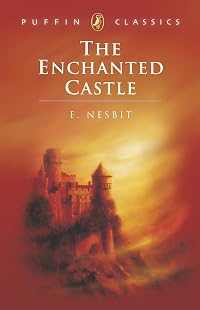
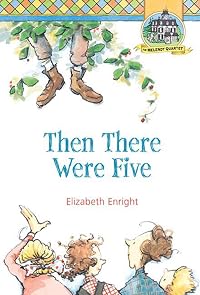
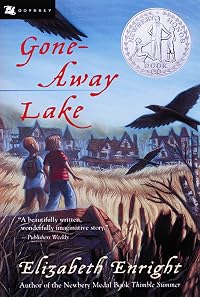
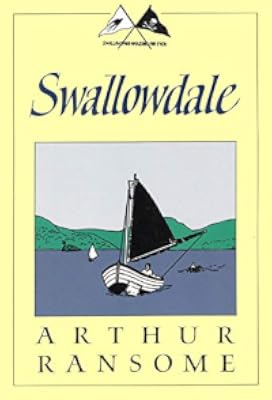


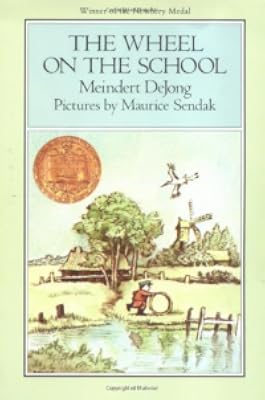
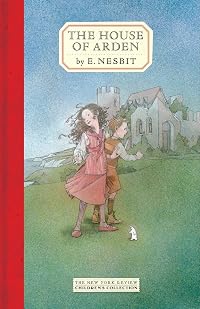
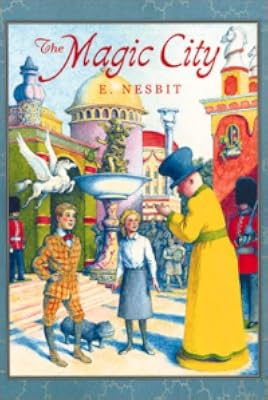
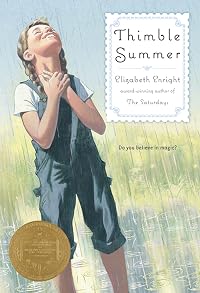


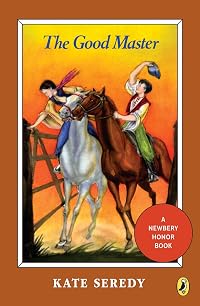
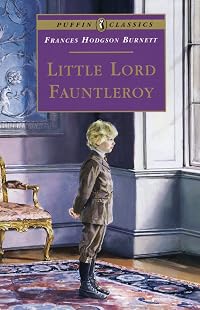


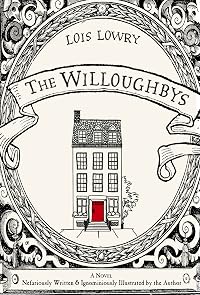

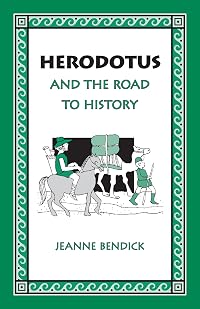
Member Recommendations

aulsmith Nesbit and Mitchell depict their children very similarly. The children in Rising of the Moon in the end have to deal with a real murderer, which the Nesbit children never do, so young readers might not be ready for the Mitchell book
20
ed.pendragon More feelgood adventures chanced on by young members of liberal middle-class families in Victorian England.

ed.pendragon Features the Bastable children again.
11
Member Reviews
Having a lovely time re-reading all my E Nesbits, starting with this as it's the first (1899). It's probably the first re-read since childhood, so I was appalled by Chapter 9, "The G B" (generous benefactor). The irony is that the man they apply to for money is not portrayed as a generous benefactor at all, but in a slyly stereotypical way as the "archetypal" Jewish moneylender. As a kid I would have not got the references at all, but now they leap out at you. Edith, I'm ashamed of you, even for those days.
The rest of the story is a wonderful, funny romp, and very enjoyable, apart of course from the "N" word at the end.
I'd never say don't read a book because of its archaic, perhaps unintentional racism, but do put your mental filters on.
The rest of the story is a wonderful, funny romp, and very enjoyable, apart of course from the "N" word at the end.
I'd never say don't read a book because of its archaic, perhaps unintentional racism, but do put your mental filters on.
E. Nesbit did not write for children.
Oh, yes, I quite enjoyed Five Children and It and The Phoenix and the Carpet and so on when I was a child; they're magnificent children's books. But listening to the Librivox recording of The Story of the Treasure-Seekers makes it very, very clear that the magnificent Ms. Nesbit had very firmly in mind the parents who would be reading the books aloud at bedtime. One beautiful example is a scene in which an adult abruptly rises from his seat and walks away to stand at the window with his back to the children in his office. The narrator says he believes the man was trying to conceal his emotions. Which is very true; the emotions, however, were not what the narrator thought. But the narrator, and any show more child reading or listening who has utter faith that all is just as the narrator perceives it, may believe one thing; the beautiful layer of comedy in the moment is reserved for the grown-ups.
Thank goodness we get something; in almost everything else the children are the fortunate ones.
The Bastable children possess an innocence which I'm very much afraid is impossible for even a twelve-year-old today. I've seen comments out there amongst the reviews about "imperialist overtones" and casual racism. Thing is, though, this was first published in 1899, and like it or not the world was a very different place then, and as I read it even what could be considered racist has an innocence that keeps it from being offensive. The children are given to understand that a visitor is an Indian, and – fed on adventure novels – assume Amerind, and ask him about beavers. He's India Indian, though, and has no information on such creatures. I honestly don't see how the children's honest excitement about and sympathy for someone from far away who describes himself as a poor broken-down fellow (which they also take literally) can be translated as racist, especially in 1899, and the one extremely unfortunate exclamation that can be (the same as is found in L.M. Montgomery's A Tangled Web) was, sadly, a much more common epithet a hundred years ago.
These are the sort of fictional children that make me despair over today's kids: imaginative, well-read, well-spoken, thoughtful under the childish self-centeredness, and self-sufficient; they make today's kids (American, at least) look like Neanderthals. They're not perfect little angels – E. Nesbit was never stupid. But they do set a ludicrously high standard.
Dora, the eldest (at 13 or 14?), comes off as a bit of a prig (though this is dealt with in a later chapter in such a way that it made me cry), desperately trying to maintain some moral high ground in a horde of siblings who think it would be absolutely smashing if there were still highwaymen on the heath – or, even better, if they could be highwaymen on the heath. Her objection is that it's "wrong" – as in illegal and people hang for such things, not so much as in the victims of the highwaymen didn't think it was quite so smashing. The again-innocent bloodthirstiness of the kids is remarkable, and just fun.
Oswald, the oldest boy at 12 and (you might guess, or you might not!) the narrator of the story, is very nearly as brave and honourable as he wants to appear, and very straightforward. It's rather lovely to see him reluctantly, realistically doing the right thing throughout the book, proceeding quietly and alone when practical – the older ones all do that, shouldering responsibility and striving to make things right when they go wrong. The fierce affection and loyalty among the siblings is, like their father's poverty and worries, never explicitly stated: it doesn't have to be. It is shown, not told.
The four younger children – Noel and Alice and H.O. and Dickie, ranging down to I believe six years old – are every one expected by their elder siblings to be just as sharp and responsible and willing and able to contribute as Oswald and Dora. Some allowances are made for their extreme youth, but for the most part they are equal partners in the treasure-seeking, receiving an equal share in any profits – though sometimes excused by protective siblings from punishments.
I don't remember E. Nesbit reducing me to tears in the past. This did. And, yes, I laughed out loud. I missed the magic element of some of the other books – but only at first. It didn't take long to realize that most of the magic of E. Nesbit's writing is actually in E. Nesbit's writing.
To that point: "No book is really worth reading at the age of ten which is not equally – and often far more – worth reading at the age of fifty and beyond." ~ C.S. Lewis. I look forward to reading E. Nesbit when I'm fifty, and beyond. show less
Oh, yes, I quite enjoyed Five Children and It and The Phoenix and the Carpet and so on when I was a child; they're magnificent children's books. But listening to the Librivox recording of The Story of the Treasure-Seekers makes it very, very clear that the magnificent Ms. Nesbit had very firmly in mind the parents who would be reading the books aloud at bedtime. One beautiful example is a scene in which an adult abruptly rises from his seat and walks away to stand at the window with his back to the children in his office. The narrator says he believes the man was trying to conceal his emotions. Which is very true; the emotions, however, were not what the narrator thought. But the narrator, and any show more child reading or listening who has utter faith that all is just as the narrator perceives it, may believe one thing; the beautiful layer of comedy in the moment is reserved for the grown-ups.
Thank goodness we get something; in almost everything else the children are the fortunate ones.
The Bastable children possess an innocence which I'm very much afraid is impossible for even a twelve-year-old today. I've seen comments out there amongst the reviews about "imperialist overtones" and casual racism. Thing is, though, this was first published in 1899, and like it or not the world was a very different place then, and as I read it even what could be considered racist has an innocence that keeps it from being offensive. The children are given to understand that a visitor is an Indian, and – fed on adventure novels – assume Amerind, and ask him about beavers. He's India Indian, though, and has no information on such creatures. I honestly don't see how the children's honest excitement about and sympathy for someone from far away who describes himself as a poor broken-down fellow (which they also take literally) can be translated as racist, especially in 1899, and the one extremely unfortunate exclamation that can be (the same as is found in L.M. Montgomery's A Tangled Web) was, sadly, a much more common epithet a hundred years ago.
These are the sort of fictional children that make me despair over today's kids: imaginative, well-read, well-spoken, thoughtful under the childish self-centeredness, and self-sufficient; they make today's kids (American, at least) look like Neanderthals. They're not perfect little angels – E. Nesbit was never stupid. But they do set a ludicrously high standard.
Dora, the eldest (at 13 or 14?), comes off as a bit of a prig (though this is dealt with in a later chapter in such a way that it made me cry), desperately trying to maintain some moral high ground in a horde of siblings who think it would be absolutely smashing if there were still highwaymen on the heath – or, even better, if they could be highwaymen on the heath. Her objection is that it's "wrong" – as in illegal and people hang for such things, not so much as in the victims of the highwaymen didn't think it was quite so smashing. The again-innocent bloodthirstiness of the kids is remarkable, and just fun.
Oswald, the oldest boy at 12 and (you might guess, or you might not!) the narrator of the story, is very nearly as brave and honourable as he wants to appear, and very straightforward. It's rather lovely to see him reluctantly, realistically doing the right thing throughout the book, proceeding quietly and alone when practical – the older ones all do that, shouldering responsibility and striving to make things right when they go wrong. The fierce affection and loyalty among the siblings is, like their father's poverty and worries, never explicitly stated: it doesn't have to be. It is shown, not told.
The four younger children – Noel and Alice and H.O. and Dickie, ranging down to I believe six years old – are every one expected by their elder siblings to be just as sharp and responsible and willing and able to contribute as Oswald and Dora. Some allowances are made for their extreme youth, but for the most part they are equal partners in the treasure-seeking, receiving an equal share in any profits – though sometimes excused by protective siblings from punishments.
I don't remember E. Nesbit reducing me to tears in the past. This did. And, yes, I laughed out loud. I missed the magic element of some of the other books – but only at first. It didn't take long to realize that most of the magic of E. Nesbit's writing is actually in E. Nesbit's writing.
To that point: "No book is really worth reading at the age of ten which is not equally – and often far more – worth reading at the age of fifty and beyond." ~ C.S. Lewis. I look forward to reading E. Nesbit when I'm fifty, and beyond. show less
I read this story as part of The Dead Writers Society Genre Challenge for January which was to read a book in the Action/Adventure/Travel genre and I chose this book.
Told be a unnamed narrator (which honestly you figure out quite quickly) readers find out that the narrator is one of the Bastable Children. There are six Bastable children in all and I am not going to lie, sometimes i got a bit confused by them all. The children are: Dora, Oswald, Dicky, Alice, Noel, and H. O. We find out that the family's fortunes have changed since the children's mother has died and it seems their father's business partner has absconded with the money from the business. So the entire book is the many schemes that the children hatch in order to get money show more to help out their father.
Our narrator was quite funny and I loved Nesbit pretty much letting readers in on the joke of the narrator telling us throughout the whole story which of the children is narrating the story. Eventually readers are told it quite plainly and I snickered because frankly if you hadn't been paying attention I could maybe see how that one got by you.
The various schemes the children try are clever and at the end there is some mischief that they get themselves into. I felt sorry for the children, but I loved about the book is that they have no idea how badly off they all are and when adults around them call them poor little beggars or are sad over their lack of a mother the narrator seems puzzled by it and proceeds to tell us that all of them are puzzled by it.
The writing really does read as if a child is telling the story which was a welcomed surprise. I don't really like children's books that have a supposedly child narrator speaking as if he knows the Queen's English from birth and can understand everything that is being said by everyone. I didn't give this book five stars just because honestly I thought the story should have been over a lot quicker than this book. After about the fifth scheme I did find myself growing bored with the children's ideas to figure out how to find treasure.
The setting in Victorian England was very well used. It was so weird to read about children having games of hunting in the forest and cooking up their game or just finding endless ways to amuse themselves. It made me smile a bit and reminisce about the games my brothers and friends played as children. I mean I used to be able to waste an entire afternoon in our backyard and we would play that it was a deep dark forest and we would be tracking animals in the bush and having to hide from attacks and the porch was our base of operations. We would then go into the house and make cheese sandwiches for lunch and pass that out and eat that with kool-aid, water, or any soda we had that my mother wouldn't yell at us for grabbing and using. Summer days as a child are long and magical and you wish that they would never end. So I definitely thank this book for causing me to smile and sigh and remember.
The ending was the other reason why I didn't give it five stars. We have a happily ever after for the children (which I was happy about by the way) but thought it all a bit odd and the ending was very rushed. I know there are other books in this series so if I get some time I will take a peek at them. show less
Told be a unnamed narrator (which honestly you figure out quite quickly) readers find out that the narrator is one of the Bastable Children. There are six Bastable children in all and I am not going to lie, sometimes i got a bit confused by them all. The children are: Dora, Oswald, Dicky, Alice, Noel, and H. O. We find out that the family's fortunes have changed since the children's mother has died and it seems their father's business partner has absconded with the money from the business. So the entire book is the many schemes that the children hatch in order to get money show more to help out their father.
Our narrator was quite funny and I loved Nesbit pretty much letting readers in on the joke of the narrator telling us throughout the whole story which of the children is narrating the story. Eventually readers are told it quite plainly and I snickered because frankly if you hadn't been paying attention I could maybe see how that one got by you.
The various schemes the children try are clever and at the end there is some mischief that they get themselves into. I felt sorry for the children, but I loved about the book is that they have no idea how badly off they all are and when adults around them call them poor little beggars or are sad over their lack of a mother the narrator seems puzzled by it and proceeds to tell us that all of them are puzzled by it.
The writing really does read as if a child is telling the story which was a welcomed surprise. I don't really like children's books that have a supposedly child narrator speaking as if he knows the Queen's English from birth and can understand everything that is being said by everyone. I didn't give this book five stars just because honestly I thought the story should have been over a lot quicker than this book. After about the fifth scheme I did find myself growing bored with the children's ideas to figure out how to find treasure.
The setting in Victorian England was very well used. It was so weird to read about children having games of hunting in the forest and cooking up their game or just finding endless ways to amuse themselves. It made me smile a bit and reminisce about the games my brothers and friends played as children. I mean I used to be able to waste an entire afternoon in our backyard and we would play that it was a deep dark forest and we would be tracking animals in the bush and having to hide from attacks and the porch was our base of operations. We would then go into the house and make cheese sandwiches for lunch and pass that out and eat that with kool-aid, water, or any soda we had that my mother wouldn't yell at us for grabbing and using. Summer days as a child are long and magical and you wish that they would never end. So I definitely thank this book for causing me to smile and sigh and remember.
The ending was the other reason why I didn't give it five stars. We have a happily ever after for the children (which I was happy about by the way) but thought it all a bit odd and the ending was very rushed. I know there are other books in this series so if I get some time I will take a peek at them. show less
I read this story as part of The Dead Writers Society Genre Challenge for January which was to read a book in the Action/Adventure/Travel genre and I chose this book.
Told be a unnamed narrator (which honestly you figure out quite quickly) readers find out that the narrator is one of the Bastable Children. There are six Bastable children in all and I am not going to lie, sometimes i got a bit confused by them all. The children are: Dora, Oswald, Dicky, Alice, Noel, and H. O. We find out that the family's fortunes have changed since the children's mother has died and it seems their father's business partner has absconded with the money from the business. So the entire book is the many schemes that the children hatch in order to get money show more to help out their father.
Our narrator was quite funny and I loved Nesbit pretty much letting readers in on the joke of the narrator telling us throughout the whole story which of the children is narrating the story. Eventually readers are told it quite plainly and I snickered because frankly if you hadn't been paying attention I could maybe see how that one got by you.
The various schemes the children try are clever and at the end there is some mischief that they get themselves into. I felt sorry for the children, but I loved about the book is that they have no idea how badly off they all are and when adults around them call them poor little beggars or are sad over their lack of a mother the narrator seems puzzled by it and proceeds to tell us that all of them are puzzled by it.
The writing really does read as if a child is telling the story which was a welcomed surprise. I don't really like children's books that have a supposedly child narrator speaking as if he knows the Queen's English from birth and can understand everything that is being said by everyone. I didn't give this book five stars just because honestly I thought the story should have been over a lot quicker than this book. After about the fifth scheme I did find myself growing bored with the children's ideas to figure out how to find treasure.
The setting in Victorian England was very well used. It was so weird to read about children having games of hunting in the forest and cooking up their game or just finding endless ways to amuse themselves. It made me smile a bit and reminisce about the games my brothers and friends played as children. I mean I used to be able to waste an entire afternoon in our backyard and we would play that it was a deep dark forest and we would be tracking animals in the bush and having to hide from attacks and the porch was our base of operations. We would then go into the house and make cheese sandwiches for lunch and pass that out and eat that with kool-aid, water, or any soda we had that my mother wouldn't yell at us for grabbing and using. Summer days as a child are long and magical and you wish that they would never end. So I definitely thank this book for causing me to smile and sigh and remember.
The ending was the other reason why I didn't give it five stars. We have a happily ever after for the children (which I was happy about by the way) but thought it all a bit odd and the ending was very rushed. I know there are other books in this series so if I get some time I will take a peek at them. show less
Told be a unnamed narrator (which honestly you figure out quite quickly) readers find out that the narrator is one of the Bastable Children. There are six Bastable children in all and I am not going to lie, sometimes i got a bit confused by them all. The children are: Dora, Oswald, Dicky, Alice, Noel, and H. O. We find out that the family's fortunes have changed since the children's mother has died and it seems their father's business partner has absconded with the money from the business. So the entire book is the many schemes that the children hatch in order to get money show more to help out their father.
Our narrator was quite funny and I loved Nesbit pretty much letting readers in on the joke of the narrator telling us throughout the whole story which of the children is narrating the story. Eventually readers are told it quite plainly and I snickered because frankly if you hadn't been paying attention I could maybe see how that one got by you.
The various schemes the children try are clever and at the end there is some mischief that they get themselves into. I felt sorry for the children, but I loved about the book is that they have no idea how badly off they all are and when adults around them call them poor little beggars or are sad over their lack of a mother the narrator seems puzzled by it and proceeds to tell us that all of them are puzzled by it.
The writing really does read as if a child is telling the story which was a welcomed surprise. I don't really like children's books that have a supposedly child narrator speaking as if he knows the Queen's English from birth and can understand everything that is being said by everyone. I didn't give this book five stars just because honestly I thought the story should have been over a lot quicker than this book. After about the fifth scheme I did find myself growing bored with the children's ideas to figure out how to find treasure.
The setting in Victorian England was very well used. It was so weird to read about children having games of hunting in the forest and cooking up their game or just finding endless ways to amuse themselves. It made me smile a bit and reminisce about the games my brothers and friends played as children. I mean I used to be able to waste an entire afternoon in our backyard and we would play that it was a deep dark forest and we would be tracking animals in the bush and having to hide from attacks and the porch was our base of operations. We would then go into the house and make cheese sandwiches for lunch and pass that out and eat that with kool-aid, water, or any soda we had that my mother wouldn't yell at us for grabbing and using. Summer days as a child are long and magical and you wish that they would never end. So I definitely thank this book for causing me to smile and sigh and remember.
The ending was the other reason why I didn't give it five stars. We have a happily ever after for the children (which I was happy about by the way) but thought it all a bit odd and the ending was very rushed. I know there are other books in this series so if I get some time I will take a peek at them. show less
The six Bastable children used to be rich, but then their mother passed away and their father's business partner ran away with their money. Now the children must restore the fallen fortunes of their house by looking for treasure. Whether they are selling poetry, becoming bandits, making medicine, saving a rich old man from deadly peril, or even just digging for treasure, the Bastables must all learn something that's even more important than buried gold.
The Story of the Treasure Seekers (25/4/22-26/4/22)
This is another classic Nesbit children's book, the first of her trilogy about the six Bastable children who live with their widowed father in Lewisham in south London. In order to save their father's straitened finances, they develop a range of bizarre but mostly endearing schemes to raise money, including digging for treasure in their garden, selling sherry, rescuing an old gentleman from being attacked by their (the children's) own dog, kidnapping their next door neighbour, and pretending to be bandits and newspaper editors. It's all good light hearted fun, though not for me as good as Five Children and It or The Railway Children.
This is another classic Nesbit children's book, the first of her trilogy about the six Bastable children who live with their widowed father in Lewisham in south London. In order to save their father's straitened finances, they develop a range of bizarre but mostly endearing schemes to raise money, including digging for treasure in their garden, selling sherry, rescuing an old gentleman from being attacked by their (the children's) own dog, kidnapping their next door neighbour, and pretending to be bandits and newspaper editors. It's all good light hearted fun, though not for me as good as Five Children and It or The Railway Children.
The six Bastable children used to be rich, but then their mother passed away and their father's business partner ran away with their money. Now the children must restore the fallen fortunes of their house by looking for treasure. Whether they are selling poetry, becoming bandits, making medicine, saving a rich old man from deadly peril, or even just digging for treasure, the Bastables must all learn something that's even more important than buried gold.
Members
- Recently Added By
Lists

Best Children's Books You've Read
197 works; 74 members

1001 Children's Books You Must Read Before You Grow Up
774 works; 101 members

Childhood Favorites
427 works; 24 members

Best of British Literature
226 works; 41 members

Best Family Stories
241 works; 22 members

Best Friendship Stories
205 works; 16 members

Satori Smiles Children's Book List
262 works; 7 members
Ambleside Books
459 works; 18 members
Honey For a Child's Heart
1,152 works; 25 members

4th Grade Books
312 works; 5 members
Treasure Lost and Found
8 works; 5 members
One Book, Many Authors
441 works; 40 members

Books with Twins
175 works; 12 members

Books Set in London
49 works; 3 members

Books mentioned in Fire and Hemlock by Diana Wynne Jones
33 works; 1 member

Recommended Reading List
219 works; 1 member

Ambleside Year 5
55 works; 1 member

Books Read in 2026
2,044 works; 68 members
Author Information

302+ Works 32,024 Members
E. Nesbit (1858-1924) wrote her first highly successful work for children, The Story of the Treasure Seekers, in 1899. Her many books for young readers, including The Magic City, Wet Magic, The Railway Children, Five Children and It, and The Enchanted Castle, gained her a popularity that has lasted for more than a century Peter Glassman is the show more owner of Books of Wonder, the New York City bookstore and publisher specializing in both new and old imaginative books for children show less
Some Editions
Awards and Honors
Series

Belongs to Publisher Series
Work Relationships
Is contained in
THE BASTABLE FAMILY – Complete Series (Illustrated): The Treasure Seekers, The Wouldbegoods, The New Treasure Seekers & Oswald Bastable and Others (Adventure Classics for Children) by Edith Nesbit
Common Knowledge
- Canonical title
- The Story of the Treasure Seekers
- Alternate titles
- The Story of the Treasure Seekers: being the adventures of the Bastable children in search of a fortune
- Original publication date
- 1899
- People/Characters
- Oswald Bastable [The Treasure Seekers]; Dora Bastable; Dicky Bastable; Alice Bastable; Noel Bastable; Horace Octavious Bastable (show all 15); Eliza (the maid); Albert Morrison 'Albert-next-door'; Princess Pauline; Mr Z Rosenbaum; Lord Tottenham; Mr Mallow; Mr Foulkes; Mr Dick Bastable; Mrs Leslie
- Important places
- Lewisham, London, England, UK; Blackheath ('the Heath')
- Related movies
- The Treasure Seekers (1996 | IMDb)
- Dedication
- To
OSWALD BARRON
Without whom this book could never have been written
The Treasure Seekers is dedicated in
memory of childhoods identical
but for the accidents of
time and space - First words
- This is the story of the different ways we looked for treasure, and I think when you have read it you will see that we were not lazy about the looking.
- Original language
- English
Classifications
Statistics
- Members
- 2,109
- Popularity
- 9,777
- Reviews
- 30
- Rating
- (3.88)
- Languages
- 8 — Dutch, English, French, German, Italian, Spanish, Swedish, Thai
- Media
- Paper, Audiobook, Ebook
- ISBNs
- 115
- UPCs
- 1
- ASINs
- 46