
Eleanor Graham (1896–1984)
Author of The Children Who Lived in a Barn
About the Author
Works by Eleanor Graham
Famous Fairy Tales: Jack and the Beanstalk, The Princess and the Pea, Hansel and Gretel (1946) 17 copies
Grimm's Fairy Tales 3 copies
Kenneth Grahame 3 copies
Black Beauty 2 copies
Nashville Families & Homes 1 copy
Associated Works
Tagged
Common Knowledge
- Birthdate
- 1896-01-09
- Date of death
- 1984-03-08
- Gender
- female
- Education
- North London Collegiate School
- Occupations
- editor
children's book author
book reviewer - Awards and honors
- Eleanor Farjeon Award (1973)
- Short biography
- Eleanor Graham was born in Walthamstow, England. Her father was the editor of the popular periodical Country Life. She became an editor for the publishing houses Heinemann and Methuen, as well as a reviewer of children's books at The Sunday Times and others. During World War II, she was the editor of Penguin's children's imprint Puffin Books.
She also wrote her own books, including
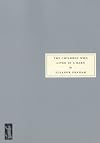
The Children Who Lived in a Barn (1938). - Nationality
- UK
- Birthplace
- Walthamstow, London, England, UK
- Places of residence
- London, England, UK
- Place of death
- London, England, UK
- Associated Place (for map)
- London, England, UK
Members
Reviews

When their parents are called away unexpectedly, in order to care for their maternal grandmother who is living abroad, the five Dunnett children are left very much on their own in this vintage British children's novel. When mother and father Dunnett do not return, and the landlord turns them out of their rented house in the small village of Wyden, thirteen-year-old Susan, twelve-year-old Bob, nine-year-old twins Joseph and Samuel (Jumbo and Sambo), and seven-year-old Alice move into the barn show more offered by their neighbor, Farmer Pearl. Here, throughout the spring, summer and autumn seasons, they must care for themselves, with a little adult help, and keep the interfering "do-gooder" women of the village from splitting them up and sending them to homes and orphanages. Their father told them to stick together, and so they will, becoming the children who live in a barn...
Originally published in 1938 by the London-based G. Routledge, The Children Who Lived in a Barn was reprinted in revised format in 1955 by Puffin Books, and featured newly-commissioned artwork from illustrator Mary Gernat (the original illustrator was J.D. Evans). It was then reprinted more recently, in 2001, by Persephone Books, who do not usually produce children's titles. The author was the editor of Puffin Books, beginning during the Second World War, so it is not difficult to see how the title was selected for republication in the 1950s. What changes were made between the original and the new edition I couldn't say, having only read the latter, but the colophon of my paperback Puffin copy does indicate that it is a revised edition. In any case, leaving that publication history aside, I found this an engaging read, and am glad it was selected by the group of friends with whom I regularly meet, in order to discuss (amongst other things) the children's books we are reading. I was conscious while reading of some annoyance with Susan's siblings, who always left her the lion's share of the work, and how this was validated in the narrative, but other than that I thought the story here was very entertaining, and I enjoyed seeing how the Dunnett children dealt with their unusual situation. I also appreciated the glimpses offered into a different time, and couldn't help reflecting that if this were the present day, the children would not have been allowed to stick together, but would have been speedily dispatched by children's services. The happy ending here felt a little rushed, but was satisfactory all the same. Recommended to readers who enjoy vintage children's fare, and stories about children doing for themselves. show less
Originally published in 1938 by the London-based G. Routledge, The Children Who Lived in a Barn was reprinted in revised format in 1955 by Puffin Books, and featured newly-commissioned artwork from illustrator Mary Gernat (the original illustrator was J.D. Evans). It was then reprinted more recently, in 2001, by Persephone Books, who do not usually produce children's titles. The author was the editor of Puffin Books, beginning during the Second World War, so it is not difficult to see how the title was selected for republication in the 1950s. What changes were made between the original and the new edition I couldn't say, having only read the latter, but the colophon of my paperback Puffin copy does indicate that it is a revised edition. In any case, leaving that publication history aside, I found this an engaging read, and am glad it was selected by the group of friends with whom I regularly meet, in order to discuss (amongst other things) the children's books we are reading. I was conscious while reading of some annoyance with Susan's siblings, who always left her the lion's share of the work, and how this was validated in the narrative, but other than that I thought the story here was very entertaining, and I enjoyed seeing how the Dunnett children dealt with their unusual situation. I also appreciated the glimpses offered into a different time, and couldn't help reflecting that if this were the present day, the children would not have been allowed to stick together, but would have been speedily dispatched by children's services. The happy ending here felt a little rushed, but was satisfactory all the same. Recommended to readers who enjoy vintage children's fare, and stories about children doing for themselves. show less
(25 December 2011 – from Ali)
A charming book, half-remembered as I read it, so I must have absorbed the Puffin edition as a younger reader, about five siblings whose parents disappear. Set in the 1930s, a more innocent time, although obviously with more freedom, too, we see what happens when the village pulls together, in various ways, to support them when they move into a local barn. Sue struggles with the housework, her 11 year old brother does all the DIY, and the twins and youngest show more girl cause all sorts of mischief. I love it because it tells you exactly how they go about doing things, something reminiscent of the Swallows and Amazons books and very satisfying (not that I will ever feel the need to construct a haybox or cook a rabbit), and for the emotional sincerity. As other reviewers have mentioned, the part of the plot involving the parents is a little clunky, but it really doesn’t matter, as the book does what it sets out to do, and there are some great scenes and character development, as well as the excellently portrayed sibling relationships. A great read. show less
A charming book, half-remembered as I read it, so I must have absorbed the Puffin edition as a younger reader, about five siblings whose parents disappear. Set in the 1930s, a more innocent time, although obviously with more freedom, too, we see what happens when the village pulls together, in various ways, to support them when they move into a local barn. Sue struggles with the housework, her 11 year old brother does all the DIY, and the twins and youngest show more girl cause all sorts of mischief. I love it because it tells you exactly how they go about doing things, something reminiscent of the Swallows and Amazons books and very satisfying (not that I will ever feel the need to construct a haybox or cook a rabbit), and for the emotional sincerity. As other reviewers have mentioned, the part of the plot involving the parents is a little clunky, but it really doesn’t matter, as the book does what it sets out to do, and there are some great scenes and character development, as well as the excellently portrayed sibling relationships. A great read. show less

An interesting and lively read. The main premise - of five children living mostly independently, helped by some neighbours and hindered/harassed by others - is clearly marked historically (some of the villagers think it entirely reasonable that a girl of not-yet-fourteen should be looking after her whole family by herself with no parents - but this is the 30s and in a rural setting). The powerlessness of the children in the face of antagonistic adults and the hard work needed to run a house show more - indeed, the impossibility of doing so long-term in the circumstances that they're in - is well-written, and even the happy ending is not too deus ex machina. show less
The Children Who Lived in a Barn is a children’s novel, set in an English village. When Mr. and Mrs. Dunnet are called away to be with a sick relative, they leave their five children (Susan, Bob, Joseph and Samuel the twins—called Jumbo and Sambo—and Alice) at home to manage by themselves. When the children are evicted, they move into a local barn, which they quickly make into a cozy home.
It’s a charming story. Of course, the logical side of my brain keeps poking holes in the story show more line—there’s no way in real life that these children, the oldest of whom is 14, would ever be allowed to stay at home by themselves or live in a barn. But the fantasy is part of the charm of this novel, and I’m sure that if I’d read this growing up, I would have enjoyed it much more. The novel kid of reminds me of the Bobbsey twins, mixed with the Boxcar Children series that I read when I was younger.
I liked watching how the five children managed, particularly under the direction of Susan, who seems so much older than 14, and Bob, who seems much older than 13 (it’s always in novels that children seem older than they really are!). The ending is of course completely implausible, a bit of a dues ex machina with a heavy number of coincidences in order to wrap up the story, but I kind of liked it, in an odd way. Part of the fun of children’s books is how escapist they are; things don’t have to make sense, which is something I tend to forget when I’m reading! In all, an enjoyable book, but since I’m out of practice in reading children’s books,I didn’t like this one as much as some of the pther Persephones I’ve read. show less
It’s a charming story. Of course, the logical side of my brain keeps poking holes in the story show more line—there’s no way in real life that these children, the oldest of whom is 14, would ever be allowed to stay at home by themselves or live in a barn. But the fantasy is part of the charm of this novel, and I’m sure that if I’d read this growing up, I would have enjoyed it much more. The novel kid of reminds me of the Bobbsey twins, mixed with the Boxcar Children series that I read when I was younger.
I liked watching how the five children managed, particularly under the direction of Susan, who seems so much older than 14, and Bob, who seems much older than 13 (it’s always in novels that children seem older than they really are!). The ending is of course completely implausible, a bit of a dues ex machina with a heavy number of coincidences in order to wrap up the story, but I kind of liked it, in an odd way. Part of the fun of children’s books is how escapist they are; things don’t have to make sense, which is something I tend to forget when I’m reading! In all, an enjoyable book, but since I’m out of practice in reading children’s books,I didn’t like this one as much as some of the pther Persephones I’ve read. show less
Lists
Persephone (1)
You May Also Like


Associated Authors
Statistics
- Works
- 22
- Also by
- 6
- Members
- 567
- Popularity
- #44,117
- Rating
- 4.1
- Reviews
- 16
- ISBNs
- 11