
Eleanor Farjeon (1881–1965)
Author of The Little Bookroom
About the Author
Image credit: Eleanor Farjeon in 1899
Series
Works by Eleanor Farjeon
The perfect zoo 5 copies
The Fair of St. James 4 copies
Love Affair 4 copies
Morning Has broken - Mixed Voices - SATB Vocal Score a Cappella — Text — 3 copies
Over the Garden Wall 2 copies
The soul of Kol Nikon 2 copies
The Glass Slipper: A Play 2 copies
Ariadne and the bull 2 copies
The Starry Floor 2 copies
Trees 2 copies
Pegasus 1 copy
Alphabet of Magic, An 1 copy
A First Chap Book of Rounds 1 copy
The ABC of the B.B.C. 1 copy
Ladybrook 1 copy
Golden Coney 1 copy
Brave old woman 1 copy
Dark world of animals 1 copy
Elizabeth Myers 1 copy
Young folk and old 1 copy
The town child's alphabet 1 copy
Nuts and may 1 copy
The Mill of Dreams 1 copy
Second Chap-Book of Rounds 1 copy
Tunes of a Penny Piper 1 copy
First Chap-Book of Rounds 1 copy
The Mulberry Bush 1 copy
Associated Works
The Illustrated Treasury of Children's Literature, Volumes 1-2 (1955) — Contributor — 525 copies, 4 reviews
Kingfisher Christmas Book: A Collection of Stories, Poems and Carols for the Twelve Days of Christmas (1985) — Contributor — 29 copies
Ghostly Gentlewomen: Two Centuries of Spectral Stories by the Gentle Sex (1977) — Contributor — 26 copies
Clever Cooks: A Concoction of Stories, Charms, Recipes & Riddles (1973) — Contributor — 22 copies, 1 review
Three Comedies: Mine Hostess (La Locandiera), The Boors (I Rusteghi), The Fan (Il Ventaglio) (1725) — Translator, some editions — 10 copies
Edexcel Poetry Anthology for Advanced subsidiary and advanced GCE examinations in English Literature (2000) — Contributor, some editions — 6 copies
Number 12a Joy Street — Contributor — 1 copy
Stories for girls — Contributor — 1 copy
Tagged
Common Knowledge
- Birthdate
- 1881-04-13
- Date of death
- 1965-06-05
- Gender
- female
- Education
- at home
- Occupations
- children's book author
autobiographer
poet
journalist
radio broadcaster - Organizations
- Time and Tide (staff)
- Awards and honors
- Hans Christian Andersen Award (Writing ∙ 1956)
Regina Medal (1959) - Relationships
- Farjeon, B. L. (father)
Farjeon, J. Jefferson (brother)
Farjeon, Herbert (brother)
Farjeon, Harry (brother)
Farjeon, Annabel (niece, biographer) - Short biography
- Eleanor Farjeon was born in London, England to a literary family. Her parents Benjamin Farjeon and Maggie (Jefferson) Farjeon were both popular novelists. Her younger brothers Joseph and Herbert Farjeon also became writers. She had poor health as a child and was educated at home, where she was encouraged to write. Among her earliest publications was a volume of poems, Pan Worship (1908). During World War I, the family moved to Sussex, whose landscape, villages and local traditions were to influence her later writing. At age 18, she wrote the libretto for an operetta, Floretta, to music by her older brother Harry, who later became a composer and teacher of music. She also collaborated with Herbert on Kings and Queens (1932), The Two Bouquets (1938), An Elephant in Arcady (1939), and The Glass Slipper (1944).
Eleanor had a wide range of friends and moved in artistic and literary circles that included D.H. Lawrence, Walter de la Mare, and Robert Frost. She was a close friend of Edward Thomas, the poet, who was killed in World War I, and later published much of their correspondence and his diaries in her book Edward Thomas: The Last Four Years (1958).
After World War I, she earned a living as a poet, journalist, and broadcaster. Her poems and stories appeared in such publications as Punch, Time and Tide, the Daily Herald, and The New Leader, often under pseudonyms. Today she is best known as a children's book author --her most famous book, Martin Pippin in the Apple Orchard (1921) was inspired by a family holiday in France in 1907. During the 1950s, she received three major literary awards: the Carnegie Medal for British children's books; the inaugural Hans Christian Andersen Medal; and the first Regina Medal from the Catholic Library Association. She wrote an autobiography, A Nursery in the Nineties (1935). She also wrote the hymn Morning Has Broken, later recorded by singer Cat Stevens. - Nationality
- UK
- Birthplace
- London, England, UK
- Places of residence
- London, England, UK
- Place of death
- Hampstead, London, England, UK
- Burial location
- St John-at-Hampstead Church, Hampstead, London, England, UK
- Map Location
- England, UK
Members
Reviews

I’m glad I’ve reached the age when I can lie on the banks of the Murray River (the one in Sussex that only children can find, not the one in Australia) and let myself enjoy a fairy tale, particularly one that is as well-written as this.
This is a whimsical collection of tales within a tale, the first six of increasing complexity. They are set within a larger story about a wandering minstrel who undertakes to help a lovesick youth. It is all about the power of romantic love.
There are, of show more course, deeper meanings, should one care to look, beginning with the setting, an apple orchard, an Eden with no snake. While Martin’s quest requires that he beguile the six sworn man-haters guarding the object of the youth’s affection — herself equally lovesick — the girls in turn beguile him.
Add in an unexpected twist at the end (although I should have seen it coming), and it was an enjoyable read. Until now, all I’ve known of Eleanor Farjeon is the song “Morning Has Broken.” I look forward to reading more from her. show less
This is a whimsical collection of tales within a tale, the first six of increasing complexity. They are set within a larger story about a wandering minstrel who undertakes to help a lovesick youth. It is all about the power of romantic love.
There are, of show more course, deeper meanings, should one care to look, beginning with the setting, an apple orchard, an Eden with no snake. While Martin’s quest requires that he beguile the six sworn man-haters guarding the object of the youth’s affection — herself equally lovesick — the girls in turn beguile him.
Add in an unexpected twist at the end (although I should have seen it coming), and it was an enjoyable read. Until now, all I’ve known of Eleanor Farjeon is the song “Morning Has Broken.” I look forward to reading more from her. show less

I loved this as a child, read it several times. Upon re-read I'm getting more out of it, as I've learned some of the archaic and British language, and I'm catching on to to more of the word-play. And of course now I'm older than Martin, instead of the age of Sophie, Selina, Sue, Sally, Stella, and Sylvia. I will definitely look harder for [b:Martin Pippin in the Apple Orchard|889805|Martin Pippin in the Apple Orchard |Eleanor show more Farjeon|http://photo.goodreads.com/books/1179205348s/889805.jpg|2885796].
Ok, done. Wow. No surprise it's so re-readable; there's so much in it. Nonsense and poetry, philosophy and stories, fables and riddles and mystery. And magical illustrations. If you've read Elsie Piddock Skips in her Sleep" this is the source. (Sorry, 'add book' feature down right now.)
There is an issue that some would call racism. At the end, discrete and easy to skip or get ready to discuss, there appear some men from non-Sussex cultures, and they are sketched via stereotypes. Not negative stereotypes, but still generalizations that mark them as 'other.' And in the story 'The Long Man of Wilmington' the 'n' word is used - but simply to illustrate just how engrained with soot is the chimney-sweep and not perjorative at all.
I personally believe that there is so much of merit in this book that those unfortunate aspects can be ameliorated with thoughtful discussion, and that the book should definitely stay on shelves.
I was utterly enchanted. I hope you can get a copy, and enjoy falling under its spell, too." show less
Ok, done. Wow. No surprise it's so re-readable; there's so much in it. Nonsense and poetry, philosophy and stories, fables and riddles and mystery. And magical illustrations. If you've read Elsie Piddock Skips in her Sleep" this is the source. (Sorry, 'add book' feature down right now.)
There is an issue that some would call racism. At the end, discrete and easy to skip or get ready to discuss, there appear some men from non-Sussex cultures, and they are sketched via stereotypes. Not negative stereotypes, but still generalizations that mark them as 'other.' And in the story 'The Long Man of Wilmington' the 'n' word is used - but simply to illustrate just how engrained with soot is the chimney-sweep and not perjorative at all.
I personally believe that there is so much of merit in this book that those unfortunate aspects can be ameliorated with thoughtful discussion, and that the book should definitely stay on shelves.
I was utterly enchanted. I hope you can get a copy, and enjoy falling under its spell, too." show less
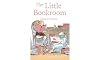
"Of all the rooms in the house, the Little Bookroom was yielded up to books as an untended garden is left to its flowers and weeds. There was no selection or sense of order here. In dining-room, study, and nursery there was choice and arrangement; but the Little Bookroom gathered to itself a motley crew of strays and vagabonds, outcasts from the ordered shelves below, the overflow of parcels bought wholesale by my father in the sales-rooms. Much trash, and more treasure. Riff-raff and show more gentlefolk and noblemen. A lottery, a lucky dip for a child who had never been forbidden to handle anything between covers."
From the very start of the Author’s Note we are drawn into the world of the bookroom. I could easily quote the whole of Farjeon’s introduction, so exquisitely does it conjure up a storeroom of reading matter, and so perfectly does it fulfil the maxim that a piece can be more than the sum of its parts. The whole — twenty-seven stories succeeding the author’s note — is delightfully complemented by Edward Ardizzone’s line illustrations, a fact the author acknowledged in a 1956 poem “To Ted” included as a introduction: ‘what the child’s eye saw, through you | The ageing eye remembers.’
Twenty-seven stories, some longer, some shorter, grace this collection. Some of the titles deliberately evoke the fairytale tradition, such as ‘The Giant and the Mite’, ‘The Seventh Princess’ or ‘The King’s Daughter Cries for the Moon’. Other tales can be viewed as parables (such as ‘The Lady’s Room’), fables (‘The Goldfish’), or simply enjoyed for their quiet humour (for instance ‘The Clumber Pup’ and ‘Pennyworth’). A couple or so hark back to traditional rhymes or literary pieces, riffing on phrases and names to seemingly ‘explain’ their obscurities (‘Leaving Paradise’ and ‘Pannychis’, for example).
Whatever their form many have a bittersweet melancholy that reminds me of Hans Christian Anderson’s offerings or a Wilde fairytale, though a little gentler perhaps. Several pieces stick in my mind. ‘The Connemara Donkey’ though set in an early 20th-century England speaks of the traditional belief that made-up stories can overcome any antagonism by becoming true, all seen through the eyes and ears of little Danny O’Toole. ‘The Girl Who Kissed the Peach-tree’ feels like a traditional Sicilian tale, one of a handful of tales in this collection that evince a genuine love for growing beautiful things despite a knowledge that life can be hard. Pre-echoes of this appear in the author’s own introduction to The Little Bookroom:
"No servant ever came with duster and broom to polish the dim panes through which the sunlight danced, or sweep from the floor the dust of long-ago. The room would not have been the same without its dust: star-dust, gold-dust, fern-dust, the dust that returns to dust under the earth, and comes up from her lap in the shape of a hyacinth."
The best tales, in my opinion, come towards the end, and somehow evoke a deep-seated yearning for things that stretch back into time. ‘San Fairy Ann’ is a beautiful tale about the love poured into a doll and how it is paralleled in the connections that we make with other humans. ‘The Glass Peacock’ with its themes of compassion and generosity is a perfect Christmas tale, a beautiful little drama contained within a forgotten urban courtyard. And what can I say about ‘And I Dance Mine Own Child’ that does it justice? This treatment of the Patient Griselda tale-type is a worthy descendant all the way from Boccaccio via Chaucer and Thomas Dekker, muting any inherent cruelty but dwelling on a basic humanity that should never go out of fashion. I’m not ashamed to say that I shed a little tear at the end of this, and that it wasn’t because dust had got into my eyes.
"When I crept out of the Little Bookroom with smarting eyes, no wonder that its mottled gold-dust still danced in my brain. its silver cobwebs still clung to the corners of my mind. No wonder that many years later, when I came to write books myself, they were a muddle of fiction and fact and fantasy and truth."
Fiction and fact and fantasy and truth, yes there is that aplenty in these tales. I challenge anybody not to feel better after reading this collection, or not to resolve to act better. These are stories to remember, and reread, and cherish, so that — as with Farjeon’s own little bookroom — we will all be able to truthfully declare that “Seven maids with seven brooms, sweeping for half-a-hundred years, have never managed to clear my mind of its dust …”
https://wp.me/s2oNj1-bookroom show less
From the very start of the Author’s Note we are drawn into the world of the bookroom. I could easily quote the whole of Farjeon’s introduction, so exquisitely does it conjure up a storeroom of reading matter, and so perfectly does it fulfil the maxim that a piece can be more than the sum of its parts. The whole — twenty-seven stories succeeding the author’s note — is delightfully complemented by Edward Ardizzone’s line illustrations, a fact the author acknowledged in a 1956 poem “To Ted” included as a introduction: ‘what the child’s eye saw, through you | The ageing eye remembers.’
Twenty-seven stories, some longer, some shorter, grace this collection. Some of the titles deliberately evoke the fairytale tradition, such as ‘The Giant and the Mite’, ‘The Seventh Princess’ or ‘The King’s Daughter Cries for the Moon’. Other tales can be viewed as parables (such as ‘The Lady’s Room’), fables (‘The Goldfish’), or simply enjoyed for their quiet humour (for instance ‘The Clumber Pup’ and ‘Pennyworth’). A couple or so hark back to traditional rhymes or literary pieces, riffing on phrases and names to seemingly ‘explain’ their obscurities (‘Leaving Paradise’ and ‘Pannychis’, for example).
Whatever their form many have a bittersweet melancholy that reminds me of Hans Christian Anderson’s offerings or a Wilde fairytale, though a little gentler perhaps. Several pieces stick in my mind. ‘The Connemara Donkey’ though set in an early 20th-century England speaks of the traditional belief that made-up stories can overcome any antagonism by becoming true, all seen through the eyes and ears of little Danny O’Toole. ‘The Girl Who Kissed the Peach-tree’ feels like a traditional Sicilian tale, one of a handful of tales in this collection that evince a genuine love for growing beautiful things despite a knowledge that life can be hard. Pre-echoes of this appear in the author’s own introduction to The Little Bookroom:
"No servant ever came with duster and broom to polish the dim panes through which the sunlight danced, or sweep from the floor the dust of long-ago. The room would not have been the same without its dust: star-dust, gold-dust, fern-dust, the dust that returns to dust under the earth, and comes up from her lap in the shape of a hyacinth."
The best tales, in my opinion, come towards the end, and somehow evoke a deep-seated yearning for things that stretch back into time. ‘San Fairy Ann’ is a beautiful tale about the love poured into a doll and how it is paralleled in the connections that we make with other humans. ‘The Glass Peacock’ with its themes of compassion and generosity is a perfect Christmas tale, a beautiful little drama contained within a forgotten urban courtyard. And what can I say about ‘And I Dance Mine Own Child’ that does it justice? This treatment of the Patient Griselda tale-type is a worthy descendant all the way from Boccaccio via Chaucer and Thomas Dekker, muting any inherent cruelty but dwelling on a basic humanity that should never go out of fashion. I’m not ashamed to say that I shed a little tear at the end of this, and that it wasn’t because dust had got into my eyes.
"When I crept out of the Little Bookroom with smarting eyes, no wonder that its mottled gold-dust still danced in my brain. its silver cobwebs still clung to the corners of my mind. No wonder that many years later, when I came to write books myself, they were a muddle of fiction and fact and fantasy and truth."
Fiction and fact and fantasy and truth, yes there is that aplenty in these tales. I challenge anybody not to feel better after reading this collection, or not to resolve to act better. These are stories to remember, and reread, and cherish, so that — as with Farjeon’s own little bookroom — we will all be able to truthfully declare that “Seven maids with seven brooms, sweeping for half-a-hundred years, have never managed to clear my mind of its dust …”
https://wp.me/s2oNj1-bookroom show less
Martin Pippin in the Apple Orchard (Dodo Press): Children's Book From The English Journalist, Broadcaster And Author Of Stories And Poems. by Eleanor Farjeon
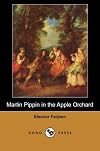
Eleanor Farjeon sure could write. This series of 6 romantic fairy tales, framed by yet another romantic story, was really impressive. Each story focused on romantic love, as told by a minstrel to an audience of milkmaids. But I found myself confused - this is usually called a children's book, and it definitely isn't. Its intended audience is clearly young adult and adult. Perhaps the confusion is because in 1922 there was no "young adult" category. Or maybe it was caused by her publishers show more hunting for an audience, and the only modern audience for fairy tales is children. The book really deserves 4 or 5 stars, but I have never much liked romances. I get impatient with everyone's foolish behavior. show less
Lists
Princess Tales (1)
Awards


You May Also Like


Associated Authors
Statistics
- Works
- 115
- Also by
- 59
- Members
- 2,880
- Popularity
- #8,895
- Rating
- 4.1
- Reviews
- 50
- ISBNs
- 176
- Languages
- 9
- Favorited
- 5