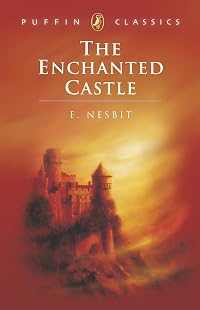
The Enchanted Castle
by E. Nesbit
On This Page
Description
Three children discover an old country estate during their school holidays. When they're exploring it they come upon a mysterious young girl claiming to be a fairy princess. She shows them the castle's treasure, including a ring that will turn you invisible. But no one is more surprised than she when she slips it on her finger ... and disappears! The ring is indeed magical, and the children waste no time finding out what else it can do.Tags
Recommendations







Member Recommendations
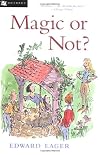
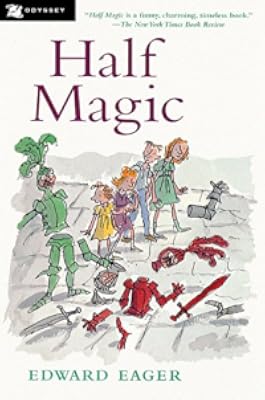
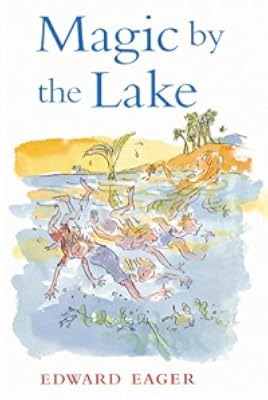
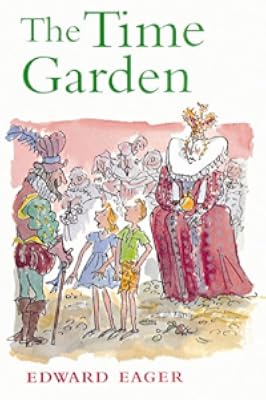
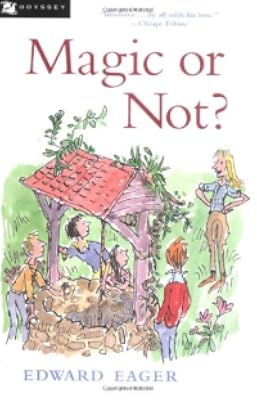
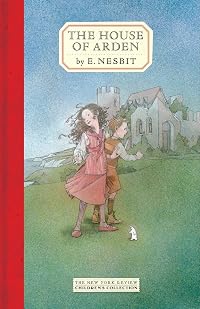
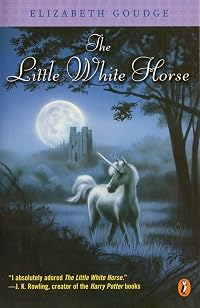
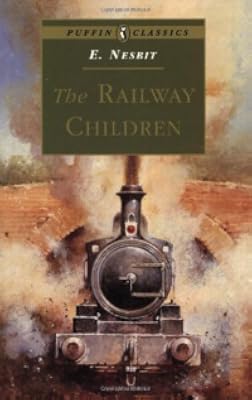
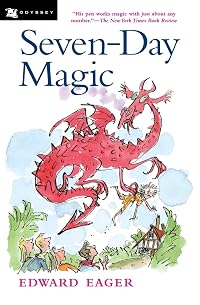
HollyMS Both Edward Eager and E. Nesbit are known for writing books for children that contain a lot of magic. In these two works, however, the magic is more muted than usual.
20
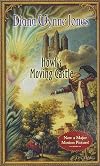
ed.pendragon Despite a castle being in the titles of both books, each novel is really about the human stories contained within and the characters' interaction with the magic they come in contact with.
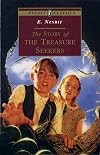
ed.pendragon More feelgood adventures chanced on by young members of liberal middle-class families in Victorian England.
Member Reviews
This book is just delightful. Nesbit doesn't create perfect little darlings, though her child characters are certainly likable and engaging--it's just that they seem to be actual people. They get hungry and irritable, and have moments of sweeping exhilaration, and want to be kinder and braver and better-organized and all that than they manage to be most of the time. The adult narrator of The Enchanted Castle has a low-lying dry wit that I enjoy; this voice seems to ally itself with the children (three siblings and a new friend on a series of adventures both magical and mundane) without sentimentalizing them--or, for that matter, magic. Interesting reflections on the relationship between magic/fantasy/dream and 'reality,' too, though my show more partner loathes the ending ...
Constantly makes me want tea with bread-and-butter, though. show less
Constantly makes me want tea with bread-and-butter, though. show less
An interestingly quirky story - like many Nesbits, a mix of fantasy and utter down-to-earth-ness. Shall we follow the Princess into the Enchanted Castle? Yes, but I want my tea... It switches, rapidly and repeatedly, from kids playing to magic to deep magic and back, and never loses the thread of the story. The governess and the lord was pretty obvious as soon as we learned about it; the burglars went off in some interesting directions. The mystery of the ring and its changeability is nicely handled - and turns out to be much deeper than a single magical artifact (though I do wonder about the other oddities in the treasure room). Fun to read (well, the kids bickering got annoying at times, but not too bad), an interesting story - and a show more possibly too simple and rounded-off ending. I enjoyed it, and may reread. show less
Three siblings can’t go to their usual place for the summer, because another child there is ill with measles. So instead they stay at an empty boarding school with a governess, who pretty much gives them leave to wander about all day. They find their way onto the grounds of a large old mansion and in the extensive, beautiful gardens which feel so magical, come across a princess sleeping on a bench. Pretend to be living in a fantasy story, and she fully entertains this notion, but then lets on that she’s really only the niece of the household maid, dressing up for fun. But she does show them around the place, and among the heirloom jewels is a ring that actually grants wishes. And other nefarious magic. It takes them a while to show more figure out what is actually happening, and then to tease out the rules of the magic- for it does work by a certain pattern. Then they have to devise a way to make it all stop. Because what they think will be great fun at first, turns into disaster nearly every time someone makes a wish. One of them becomes invisible, which creates all kinds of awkward situations. In other scenarios, they have to earn pocket money by doing tricks in the marketplace, sneak around to solve a crime, and spend all day making costumes and a stage to put on a play for their governess – only to be terrified when the makeshift audience of stuffed coats and broom handle arms becomes animated. One of them gets changed in the wink of an eye into an older, professional gentleman who suddenly doesn’t recognize his brother and sister, and on another occasion their friend gets stretched to twelve feet tall and has to avoid being seen. Through it all they argue a lot amongst themselves, sweet-talk some adults, and always eventually figure out how to deal with the situation until the magic ‘undos’ itself. The older boy is often self-narrating their adventures with grand phrases that sound like quotes from classic literature of their time.They were obviously familiar with classic literature, the kids all wanted at one point to forget all the stress the magic caused by casually reading some Robinson Crusoe or Swiss Family Robinson– both books which I found difficult to read or tiresome! so I felt were often quoting phrases or alluding to such literature and I was a bit in the dark on that . . . I really liked most of the story, especially the practical aspects of how awful some of the magic’s consequences turned out to be (very similar theme to Five Children and It). I found the ‘Uglie Wuglies’ more curious than horrifying, but for some reason the parts about the statues coming to life, and having a wonderful meal with the Greek (or was it Roman) gods in the garden, did not interest me much. And the part at the end where they had some odd experience swamping their minds with answers to everything, just felt incomprehensible. I did like that the little side story about the French governess finding her lost love turned out how I had suspected (the children in the book didn’t see what was coming, but I did!) show less
There are two types of enchantment in this book. One is the everyday sort, evidenced by how enthralled the reader might be as they proceed through the book, and especially by the young charmer Gerald who sweet-talks his way through pretty much every situation. This is enchantment that lives up to the term's origins, where chanting, speaking, singing and silent perusal of words creates the magic that keeps us literally in its spell.
Then there is the sort of enchantment that manifests itself most strikingly in this book, the kind described eloquently by Nesbit herself in Chapter Nine: "There is a curtain, thin as gossamer, clear as glass, strong as iron, that hangs forever between the world of magic and the world that seems to us to be show more real. And when once people have found one of the little weak spots in that curtain which are marked by magic rings, and amulets and the like, almost anything may happen." And in The Enchanted Castle it inevitably does.
The theme of the book can be described as "Be careful what you wish for." Siblings Gerald, Kathleen and James find themselves absolutely free to enjoy their affluent middle-class summer holiday in a West of England private school, near the fictional village of Liddlesby. A youthful expedition takes them into the grounds of Yalding Castle where they meet with housekeeper's daughter Mabel and find that magic of the everyday sort gets rapidly superceded by enchantment that makes their holidays unforgettable.
Nesbit wrote for a middle-class audience of more than a century ago and sensibilities in manners and language have shifted over that time, but not so much that we can't have sympathy for the children that Nesbit has conjured up for this tale. Witty resourceful Gerald steals the show but Mabel impresses too, and Mademoiselle's literal translations into English of French vocabulary and idioms are well and humorously observed (no doubt informed by Edith's own childhood education in France). The joyous culmination of the enchantments has much in common with 'The Piper at the Gates of Dawn' chapter of the nearly contemporary Wind in the Willows; both works perhaps were a kind of final golden vision of Edwardian England before the horrors of the Great War were visited on all and sundry.
http://calmgrove.wordpress.com/2012/11/13/enchanted/ show less
Then there is the sort of enchantment that manifests itself most strikingly in this book, the kind described eloquently by Nesbit herself in Chapter Nine: "There is a curtain, thin as gossamer, clear as glass, strong as iron, that hangs forever between the world of magic and the world that seems to us to be show more real. And when once people have found one of the little weak spots in that curtain which are marked by magic rings, and amulets and the like, almost anything may happen." And in The Enchanted Castle it inevitably does.
The theme of the book can be described as "Be careful what you wish for." Siblings Gerald, Kathleen and James find themselves absolutely free to enjoy their affluent middle-class summer holiday in a West of England private school, near the fictional village of Liddlesby. A youthful expedition takes them into the grounds of Yalding Castle where they meet with housekeeper's daughter Mabel and find that magic of the everyday sort gets rapidly superceded by enchantment that makes their holidays unforgettable.
Nesbit wrote for a middle-class audience of more than a century ago and sensibilities in manners and language have shifted over that time, but not so much that we can't have sympathy for the children that Nesbit has conjured up for this tale. Witty resourceful Gerald steals the show but Mabel impresses too, and Mademoiselle's literal translations into English of French vocabulary and idioms are well and humorously observed (no doubt informed by Edith's own childhood education in France). The joyous culmination of the enchantments has much in common with 'The Piper at the Gates of Dawn' chapter of the nearly contemporary Wind in the Willows; both works perhaps were a kind of final golden vision of Edwardian England before the horrors of the Great War were visited on all and sundry.
http://calmgrove.wordpress.com/2012/11/13/enchanted/ show less
Well this isn't as fairytale-like as the title might suggest. A very grounded story although still one with lots of magical happenings. Some of the smaller adventures seem a little similar to 'Five Children and It' which i've read previously but these are got through relatively quickly.
Its a very random/organic story, which on the one hand means your never sure what will happen next but can also make it feel a little pointless at times as you can't see the main aim of the tale.
It can get quite dark for a kids book in places, about on par with some of the scarier 'Doctor Who' episodes. Overall i like the mix of magic and reality and the strange turns the story takes. The eldest child protagonist also has some great personality traits. show more Odd but well written book.
I wonder if they stole from this for the 'Night at the Museum' films. show less
Its a very random/organic story, which on the one hand means your never sure what will happen next but can also make it feel a little pointless at times as you can't see the main aim of the tale.
It can get quite dark for a kids book in places, about on par with some of the scarier 'Doctor Who' episodes. Overall i like the mix of magic and reality and the strange turns the story takes. The eldest child protagonist also has some great personality traits. show more Odd but well written book.
I wonder if they stole from this for the 'Night at the Museum' films. show less
I listened to the audiobook read by Johanna Ward.
This is another reliable children's fantasy by E. Nesbit, featuring her facetious wit which always surprises me, as if I assume people a hundred years ago didn't have a sense of humour. In places it is horribly dated but it is still an entertaining romp. She does recycle a couple of ideas from Five Children and It though. We get it, magic is a jerk.
This is another reliable children's fantasy by E. Nesbit, featuring her facetious wit which always surprises me, as if I assume people a hundred years ago didn't have a sense of humour. In places it is horribly dated but it is still an entertaining romp. She does recycle a couple of ideas from Five Children and It though. We get it, magic is a jerk.
Much of this is routine tale-spinning, but then there are the Ugly-Wuglies: Crude dummies put together by the protagonist children, and inadvertently wished into life. Nesbit makes them both comic and genuinely terrifying, and works some wonderfully inventive variations on the theme.
Members
- Recently Added By
Lists

Children's Fantasy
73 works; 10 members

1900s (Decade, not century)
73 works; 17 members

Female Protagonist
1,056 works; 57 members
Survey of Fantasy Classics
111 works; 23 members

Childhood Favorites
427 works; 23 members

Satori Smiles Children's Book List
262 works; 7 members
Female Author
1,235 works; 66 members

Children's Classics Worth Reading
68 works; 9 members

Honey For a Child's Heart
1,152 works; 25 members
Ambleside Books
459 works; 18 members

Princess Tales
130 works; 4 members

Novels featuring siblings
133 works; 8 members

Books Read in 2023
5,547 works; 145 members

Out of Copyright
244 works; 14 members

Books Read in 2018
4,360 works; 110 members

Houses and Buildings as Characters in Fiction
182 works; 28 members

Books Read in 2004
200 works; 7 members

Works Referenced in The League of Extraordinary Gentlemen
122 works; 6 members

Used books to buy next
565 works; 1 member
Children's Literature 1900 - 1950 in order
413 works; 8 members
Talk Discussions
Past Discussions
Found: Book about girl, statue, ring and secret garden in Name that Book (June 2023)
Author Information

301+ Works 31,942 Members
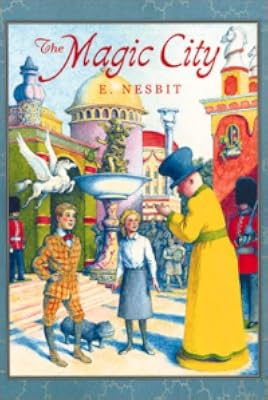
E. Nesbit (1858-1924) wrote her first highly successful work for children, The Story of the Treasure Seekers, in 1899. Her many books for young readers, including The Magic City, Wet Magic, The Railway Children, Five Children and It, and The Enchanted Castle, gained her a popularity that has lasted for more than a century Peter Glassman is the show more owner of Books of Wonder, the New York City bookstore and publisher specializing in both new and old imaginative books for children show less
Some Editions
Series
Belongs to Publisher Series
Work Relationships
Is contained in
Has the adaptation
Common Knowledge
- Canonical title
- The Enchanted Castle
- Original publication date
- 1907
- People/Characters
- Gerald 'Jerry'; James 'Jimmy'; Kathleen; Mabel; Eliza (the maid); Mademoiselle (the French mistress) (show all 8); Lord Yalding; Police Constable Johnson
- Important places
- Yalding Towers; Liddlesby, England, UK; London, England, UK
- Dedication
- To Margaret Ostler with love from E. Nesbit
- First words
- There were three of them - Jerry, Jimmy, and Kathleen.
- Last words
- (Click to show. Warning: May contain spoilers.)It is all very well for all of them to pretend that the whole of this story is my own invention: facts are facts, and you can't explain them away.
Classifications
- Genres
- Fiction and Literature, Kids, Fantasy, Children's Books
- DDC/MDS
- 823.8 — Literature & rhetoric English & Old English literatures English fiction 1837-1899
- LCC
- PZ7 .N43777 .E — Language and Literature Fiction and juvenile belles lettres Fiction and juvenile belles lettres Juvenile belles lettres
- BISAC
Statistics
- Members
- 2,795
- Popularity
- 6,512
- Reviews
- 48
- Rating
- (3.85)
- Languages
- 10 — English, Estonian, French, German, Galician, Hungarian, Japanese, Portuguese, Spanish, Swedish
- Media
- Paper, Audiobook, Ebook
- ISBNs
- 152
- ASINs
- 45