

E. H. Shepard (1879–1976)
Author of Winnie-The-Pooh's ABC
About the Author
Series
Works by E. H. Shepard
Pooh and Piglet Go Hunting Slide-and-Peek: Slide and Peek Book (A Slide and Peek Book) (1999) 9 copies
Pooh and Piglet Find a Heffalump (Pooh Graduated Chunkies) (2001) — Illustrator — 7 copies, 1 review
Pooh Goes Visiting 1 copy
Winne the Pooh's Calendar Book. 1975. Inspired by A.A.Milne. 1974. Spiral bound paper. (1974) 1 copy
The Christopher Robin 1 copy
My Very First Encyclopedia 1 copy
Pooh project book 1 copy
Winnie the pooh 1 copy
Associated Works
Winnie-the-Pooh • The House at Pooh Corner (1958) — Illustrator, some editions — 7,015 copies, 50 reviews
Winnie-the-Pooh: The Classic Collection (1926) — Illustrator, some editions — 4,236 copies, 24 reviews
When We Were Very Young • Now We Are Six (1932) — Illustrator, some editions — 1,789 copies, 12 reviews
Winnie Ille Pu (1958) — Illustrator, some editions; Cover artist, some editions — 1,500 copies, 7 reviews
Tao of Pooh and Te of Piglet Boxed Set (1992) — Illustrator, some editions — 1,389 copies, 16 reviews
Pooh and the Philosophers : In Which It Is Shown That All of Western Philosophy Is Merely a Preamble to Winnie-The-Pooh (1995) — Illustrator — 917 copies, 5 reviews
Winnie-the-Pooh's Giant Lift-the-Flap Book (1997) — Illustrator, some editions — 314 copies, 4 reviews
Three Cheers for Pooh: A Celebration of the Best Bear in All the World (2001) — Illustrator — 112 copies, 1 review
Pooh & Friends (Disney Home Pooh Collection) Leisure Arts #3262 (2001) — Original characters — 80 copies, 1 review
Tales from Winnie-the-Pooh/ Humphrey's Tiny Tales: My Treasure Hunt Trouble (2011) — Illustrator — 32 copies
The Return of the Hero (Wind in the Willows Storybook) (1987) — Illustrator, some editions — 19 copies
The River Bank and the Open Road (Wind in the Willows Storybook) (1991) — Illustrator, some editions — 16 copies
The Wind in the Willows: The Wild Wood (pop-up book ∙ Treasury Collection) (1990) — Illustrator — 15 copies
The Holly Tree and Other Christmas Stories — Illustrator — 5 copies
More "Very Young Songs": From "When We Were Very Young" and "Now We Are Six" — Illustrator — 3 copies
Winnie-the-Pooh's Calendar Book 1972 — Illustrator — 1 copy
The seventh daughter — Illustrator — 1 copy
Tagged
Common Knowledge
- Canonical name
- Shepard, E. H.
- Legal name
- Shepard, Ernest Howard
- Other names
- Shepard, E. H.
- Birthdate
- 1879-12-10
- Date of death
- 1976-03-24
- Gender
- male
- Education
- St Paul's School, London, England, UK
Heatherley's School of Fine Art
Royal Academy Schools - Occupations
- illustrator
artist - Organizations
- Punch magazine
British Army (WWI) - Awards and honors
- Military Cross (1917)
Order of the British Empire (Officer, 1972) - Relationships
- Shepard, Mary (daughter)
Knox, E. V. (son-in-law) - Nationality
- UK
- Birthplace
- St John's Wood, London, England, UK
- Places of residence
- St John's Wood, London, England, UK
Lodsworth, West Sussex, England, UK - Place of death
- London, England, UK
- Burial location
- Lodsworth Church cemetery, Chichester, West Sussex, UK
- Associated Place (for map)
- England, UK
Members
Reviews

Copiously illustrated with Shepard’s own delightful black and white drawings, these cheerful anecdotes from Shepard’s London childhood in Queen Victoria’s Golden Jubilee year of 1887 recount a golden past of horse drawn buses, crossing sweepers, elephant rides at the zoo, underground by steam train, a holiday at a Kent farm (with descriptions of hop picking and the oast house) and visits to maiden aunts.
Shepard’s parents were friends with late Victorian artists and theatrical show more artistes, including Frank Dicksee. Being a sucker for literary art, I know his La belle dame sans merci.
There is a poignant episode when Shepard visits Ramsgate and goes out on a boat to view a “torpedo-boat”, where a sailor “pulled a torpedo out of its tube, shining like a great fish, but I don’t think I believed him when he said it could blow up a big ship.” Shepard’s son was lost at sea to a U-boat in the Second World War.
A joyful read, finishing with an unexpected visit to a pantomime at the Theatre Royal, Drury Lane, with the enthralling sight of the “leading boy” (played by a well proportioned female) and her thighs clad in shimmering tights. show less
Shepard’s parents were friends with late Victorian artists and theatrical show more artistes, including Frank Dicksee. Being a sucker for literary art, I know his La belle dame sans merci.
There is a poignant episode when Shepard visits Ramsgate and goes out on a boat to view a “torpedo-boat”, where a sailor “pulled a torpedo out of its tube, shining like a great fish, but I don’t think I believed him when he said it could blow up a big ship.” Shepard’s son was lost at sea to a U-boat in the Second World War.
A joyful read, finishing with an unexpected visit to a pantomime at the Theatre Royal, Drury Lane, with the enthralling sight of the “leading boy” (played by a well proportioned female) and her thighs clad in shimmering tights. show less
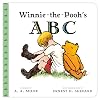
I like the idea of somebody having to comb through Ernest H. Shepard's illustrations from the four books he did with A. A. Milne and finding the 26 images that would work for an alphabet book. The dragon is a bit jarring, the island seems like more of a rock, yellow daffodil is just plain weak, and expedition is an outright cheat, but, hey, if that's what you have to work with, you make it work.
(My Pooh Project: I love Winnie the Pooh, and so does my wife. Having a daughter gave us a chance show more to indoctrinate her into the cult by buying and reading her every Pooh book we came across. How many is that? I’m going to count them this year by reading and reviewing one every day and seeing which month I finally run out. Track my progress here:
https://www.goodreads.com/review/list/23954351-rod-brown?ref=nav_mybooks&she... ) show less
(My Pooh Project: I love Winnie the Pooh, and so does my wife. Having a daughter gave us a chance show more to indoctrinate her into the cult by buying and reading her every Pooh book we came across. How many is that? I’m going to count them this year by reading and reviewing one every day and seeing which month I finally run out. Track my progress here:
https://www.goodreads.com/review/list/23954351-rod-brown?ref=nav_mybooks&she... ) show less

This board book is an adaptation of A. A. Milne's The House at Pooh Corner, Chapter Two: In Which Tigger Comes to the Forest and Has Breakfast. Eleanor Kwei has adapted Ernest H. Shepard's original illustrations to fit a highly condensed storyline.
The gimmick of this particular board book is that it is layered by die-cuts to show all the featured characters when the book is closed. As you read the story, each page turn reveals what the character is doing on their particular page.
Even at a show more fraction of the words, the essence of Milne's story shines through as Tigger tries a variety of foods -- "Tiggers don't like honey" -- in search of the perfect breakfast.
(My Pooh Project: I love Winnie the Pooh, and so does my wife. Having a daughter gave us a chance to indoctrinate her into the cult by buying and reading her every Pooh book we came across. How many is that? I’m going to count them this year by reading and reviewing one every day and seeing which month I finally run out. Track my progress here:
https://www.goodreads.com/review/list/23954351-rod-brown?ref=nav_mybooks&she... ) show less
The gimmick of this particular board book is that it is layered by die-cuts to show all the featured characters when the book is closed. As you read the story, each page turn reveals what the character is doing on their particular page.
Even at a show more fraction of the words, the essence of Milne's story shines through as Tigger tries a variety of foods -- "Tiggers don't like honey" -- in search of the perfect breakfast.
(My Pooh Project: I love Winnie the Pooh, and so does my wife. Having a daughter gave us a chance to indoctrinate her into the cult by buying and reading her every Pooh book we came across. How many is that? I’m going to count them this year by reading and reviewing one every day and seeing which month I finally run out. Track my progress here:
https://www.goodreads.com/review/list/23954351-rod-brown?ref=nav_mybooks&she... ) show less
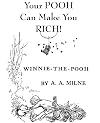
In six short paragraphs stretched out over four small pages, author Michael T. Prescott informs readers that the first Winnie-the-Pooh book is in public domain and anyone can make money off it as long as they follow two simple rules: don't use Disney's character models, and don't use Tigger.
For example, one might write up four pages of text informing readers that the first Winnie-the-Pooh book is in public domain and anyone can make money off it, and then fill out the remaining 36 pages of show more the body of the book with Ernest H. Shepard's illustrations from Winnie-the-Pooh, "so you can understand what you have to work with . . . "
I admire the audacity of this project and had a good laugh at the sweaty pitchman tone. I hope with my 99 cent Kindle purchase, Prescott's Pooh will indeed make him rich.
(My Pooh Project: I love Winnie the Pooh, and so does my wife. Having a daughter gave us a chance to indoctrinate her into the cult by buying and reading her every Pooh book we came across. How many is that? I’m going to count them this year by reading and reviewing one every day and seeing which month I finally run out. Track my progress here:
https://www.goodreads.com/review/list/23954351-rod-brown?ref=nav_mybooks&she... ) show less
For example, one might write up four pages of text informing readers that the first Winnie-the-Pooh book is in public domain and anyone can make money off it, and then fill out the remaining 36 pages of show more the body of the book with Ernest H. Shepard's illustrations from Winnie-the-Pooh, "so you can understand what you have to work with . . . "
I admire the audacity of this project and had a good laugh at the sweaty pitchman tone. I hope with my 99 cent Kindle purchase, Prescott's Pooh will indeed make him rich.
(My Pooh Project: I love Winnie the Pooh, and so does my wife. Having a daughter gave us a chance to indoctrinate her into the cult by buying and reading her every Pooh book we came across. How many is that? I’m going to count them this year by reading and reviewing one every day and seeing which month I finally run out. Track my progress here:
https://www.goodreads.com/review/list/23954351-rod-brown?ref=nav_mybooks&she... ) show less
You May Also Like


Associated Authors
Statistics
- Works
- 47
- Also by
- 100
- Members
- 999
- Popularity
- #25,803
- Rating
- 4.2
- Reviews
- 28
- ISBNs
- 51
- Languages
- 7
- Favorited
- 1