
Hans Christian Andersen (1805–1875)
Author of The Complete Hans Christian Andersen Fairy Tales
About the Author
Please do not combine The Complete Fairy Tales with Andersen's Fairy Tales, they are not the same work. The Complete Fairy Tales has all (or almost all) 168 of his stories.
The various different works entitled "Andersen's Fairy Tales" each only have a selection of his stories. Also, multi-volume copies of the Complete Fairy Tales are not the same as single-volume copies and should not be combined with them (or with each other) unless their user has listed them as a single entry.
For example, Complete Fairy Tales (Vol. 2) contains only a fraction of the stories and is not the same as a single-volume copy of Complete Fairy Tales, nor is it the same as Vol. 1, which contains different stories. On the other hand, Complete Fairy Tales (2 Vols.), though not the same as Complete Fairy Tales (Vol. 2), can be combined with the other Complete Fairy Tales, since they both contain all 168 stories in a single entry. (SEE: Part/Whole Issues under What Not to Combine.)
Series
Works by Hans Christian Andersen
Associated Works
Tagged
Common Knowledge
- Canonical name
- Andersen, Hans Christian
- Legal name
- Andersen, Hans Christian
- Other names
- Andersen, H. C.
- Birthdate
- 1805-04-02
- Date of death
- 1875-08-04
- Gender
- male
- Education
- University of Copenhagen
- Occupations
- novelist
poet
short story writer
playwright
travel writer - Awards and honors
- Harenberg Buch der 1000 Bücher
- Short biography
- Hans Christian Andersen, often referred to in Scandinavia as H. C. Andersen (2 April 1805 – 4 August 1875), was a Danish author. Although a prolific writer of plays, travelogues, novels, and poems, Andersen is best remembered for his fairy tales.
- Cause of death
- liver cancer
- Nationality
- Denmark
- Birthplace
- Odense, Denmark
- Places of residence
- Odense, Denmark
Copenhagen, Denmark - Place of death
- Copenhagen, Denmark
- Burial location
- Assistens Cemetery, Copenhagen, Denmark
- Map Location
- Denmark
- Disambiguation notice
- Please do not combine The Complete Fairy Tales with Andersen's Fairy Tales, they are not the same work. The Complete Fairy Tales has all (or almost all) 168 of his stories.
The various different works entitled "Andersen's Fairy Tales" each only have a selection of his stories. Also, multi-volume copies of the Complete Fairy Tales are not the same as single-volume copies and should not be combined with them (or with each other) unless their user has listed them as a single entry.
For example, Complete Fairy Tales (Vol. 2) contains only a fraction of the stories and is not the same as a single-volume copy of Complete Fairy Tales, nor is it the same as Vol. 1, which contains different stories. On the other hand, Complete Fairy Tales (2 Vols.), though not the same as Complete Fairy Tales (Vol. 2), can be combined with the other Complete Fairy Tales, since they both contain all 168 stories in a single entry. (SEE: Part/Whole Issues under What Not to Combine.)
Members
Discussions
Reviews

This revisionist retelling of Hans Christian Andersen's original fairy-tale, The Swineherd, misses the mark entirely, inserting a bizarrely inappropriate "happy" ending that demonstrates a fundamental misunderstanding of the story on Deborah Hahn's part. Andersen himself plays a role in this adaptation, reading his fairy-tale "play" to a boisterous crowd of animals and children, who simultaneously enact the story. When he reaches his show more (traditional) conclusion, there is an outcry from his audience, who declare that it is "Unjust...Fierce...Cruel," and set out to provide an alternative ending...
The problem with this scenario, and with the entire project, is that The Swineherd is not a tale meant to have a happy ending. The disillusionment of the lover, who discovers that his idol has feet of clay, is the entire point of the story. Not only does Hahn seem to have missed that fact, she also appears to be suffering under the misapprehension that it is the prince who is at fault. Her cast of characters produce a happy ending by reforming him, having him declare that he has been "arrogant and revengeful," "foolish and greedy." This is a rather curious inversion, as it places the blame for the princess' exile on the prince, rather than her own shallow insincerity, and takes as its assumption that he is somehow obligated to continue desiring her, even after a closer acquaintance has demonstrated her lack of both discernment and principle.
A very odd misinterpretation indeed, and one I do not recommend to any Andersen lover. show less
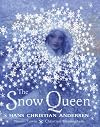
The imagery here is always so fantastic and stunning in a way other fairy tales tend to fall flat. The mirror that shatters into glittering shards, the blinding scenery of Lapland, and the witch's sickly-sweet and rainbow-colored garden ... I think it show more all kind of defined me growing up as a reader and a writer when it came to taste and style.
The Snow Queen is also one the only fairy tales to feature all the important characters -- as well as the protagonist -- as women. And they're not just lifeless cardboard cutouts; they all have life and distinct character. The kind and gentle witch who keeps Gerda because she wants company, the robber girl who's not really so bad as she seems at first (and who could have novels dedicated just to her, to be honest), and the Snow Queen herself, who in the end, was completely fair.
This translation is a lot different than others I've read. No less beautiful, but it's a little more direct and the dialogue a bit stilted. A lot more Christian as well ... or maybe that's just my memory ... In any case, the message here is very Christian (like many old fairy tales), and this version -- I think -- is also a lot sweeter than others. The illustrations are so detailed and lovely, though the human anatomy is stretched in the faces sometimes.
Everyone has their own interpretation of this story, from reading it as is (a brave girl rescuing her friend), from Gerda going into the land of Death itself to rescue Kay (who had actually died from the Snow Queen's kiss, with the language referencing children who froze to death), to a story representing the four seasons. Personally, I see it in a more mythological way, with Kay being almost like (a god/representative of) Spring being taken away by a representative Winter (the Snow Queen), and then in the end returns to bring Spring back to the land.
Kay originally is an emotional boy -- who then once the shards make homes in his eye and heart, becomes more rational, taking a liking to mathematics and arithmetic. When the Snow Queen takes him away, she also tries to teach him rational ways of thinking. It’s very different to the way Kay and definitely Gerda used to be, who are/were much more feeling people. And when Gerda rescues him, she returns to him love and feeling, much more befitting a representative of Spring.
And the Snow Queen, the “villain” of the novel, isn’t quite as evil as I remember thinking as a kid (isn’t that the way things usually are when you grow up, though?). Winter is impartial, and it’s harsh, but it’s not inherently evil (nature doesn’t know/define a difference between good and evil). And here in the novel, the Snow Queen gives Kay a riddle. If he solves it (spells the word “Eternity”), he’ll become his own master and will get his freedom. When Gerda rescues him and helps him solve it, the Snow Queen keeps her promise. She never pursues him, never curses him, etc. Winter is harsh, but not unfair.
And then Spring returns to the land after a harsh winter.
So I guess my interpretation of this overt Christian fairy tale is a slightly pre-Christian one. But I think however you interpret The Snow Queen, what really matters is what connection you have to it. And there’s no doubt that a lot of people have connected to it. It’s lasted a long time, and I think it’ll continue to do so. show less

Vladyslav Yerko, the fabulously talented Ukrainian artist and illustrator, whose edition of The Snow Queen ranks as one of my absolute favorite fairy-tale retellings, returns to the work of Hans Christian Andersen in this marvelous picture-book. Here we have the classic story of a poor soldier, returning home from the wars, who encounters an old witch on his journey and finds his fortunes changed. Agreeing to fetch the eponymous tinderbox for the show more witch, in return for all the money he can carry away from its underground hiding place, he ends up murdering the witch when she won't tell him how the tinderbox will be used, and keeping both it and the money. Becoming a gentleman of leisure with his newfound wealth, the soldier's fortune holds, until the money runs out. It is then that he discover that the tinderbox controls and summons the three magical guard dogs who watched over the witch's underground treasure - the chest with bronze coins, the one with silver, and the one with gold. Fortune restored, the soldier next uses his magical dogs to kidnap the kingdom's beautiful princess from her bed, so he might look on her in her sleep. When this results in his imprisonment and imminent execution, he uses his dogs to destroy the king and queen and their advisors, marrying the princess and becoming king himself...
I was struck during the course of reading The Tinderbox, as I always am with this story, by how amoral of a tale it is. It doesn't have, like Andersen's The Red Shoes, with its narrative of a girl who is punished for her ingratitude and impiety with a terrible bodily disfigurement and violation, a moral outlike with which I would disagree. Rather, it seems entirely lacking in a moral outlook altogether, and the narrative never seems to question the ethics of the soldier's actions, in violating his agreement with the witch, going back on his word to turn over the tinderbox to her, and eventually murdering her. Nor are his actions, in kidnapping the princess, just so he can look at her sleeping form, ever depicted as problematic. Instead, the reader is apparently meant to sympathize with his change of fortune and to applaud his use of the dogs, whilst ignoring the fact tht he is a word-breaker, a murderer, and a pervet of sorts. I've always found this rather odd, and have never been convinced, despite his one good quality, of giving generously to the poor, that the soldier is a hero worth cheering for.
All that said, this presentation of The Tinderbox is, despite my usual distaste at the tale, so phenomenally gorgeous, that I am rating the book at five stars. Vladyslav Yerko's painting are so beautiful, so marvelously detailed and engrossing, that it was a sheer pleasure to peruse them! From decorative endpaper to decorative endpaper, front to back, this is a visually stunning book. No superlative could do it justice! The detailed indoor scenes, as when the soldier fetches the treasure from its underground lair, or when he first encounters one of the dogs in his room at the inn, have a rich, golden glow, and are crammed with so many little objects of interest, that one could pore over the page endlessly:
The outdoor scenes are lighter in tone, but no less rich in detail. The scene showing the city center is particularly lovely:
I have no idea, of course, how Vladyslav Yerko views this story - presumably he enjoys it, or he would not bother illustrating it! - but the scene in which the dog servant flies through the air with the princess on his back, resonates with my feeling that the soldier is a bit of a villain. Here's the princess, still enough of a little girl to be hugging her stuffed rabbit in her sleep, being ogled by a stranger, and a grown man at that!:
However that may be, there is no question that this is one of the most beautiful fairy-tale picture-books I have encountered. A lovely, lovely volume, one I would recommend wholeheartedly to anyone who loves fairy-tales, or who appreciates gorgeously-illustrated books. show less

Originally published in 1845 as part of Andersen's Nye Eventyr. Første Bind. Tredie Samling. (New Fairy Tales, First Volume, Third Collection), this tale of a young girl who is gruesomely punished for her ingratitude to her adoptive mother, and indifference to religious devotion, has always been one of the few Andersen tales I actively dislike. There are some, such as The Little Mermaid, about which I have ambiguous feelings, and others for show more which I cannot seem to feel much of anything (and still others, of course, that I adore). But The Red Shoes is one that I absolutely loathe, and were it not for my current Andersen retrospective, I don't think I could have brung myself to read two retellings, one after the other!
Ostensibly a cautionary tale about the dangers of vanity and ingratitude, I have always been profoundly uncomfortable with its misogynist undertones, unable to divorce myself from the knowledge that moral condemnation of women's supposed preoccupation with fashion and beauty is so often the overt counterpart to a covert fear of, and hatred for, women's sexuality. The violence of the punishment meted out to Karen in this tale, and her eventual submission to her own bodily violation, only reinforces that impression.
The narrative of this retelling is faithful to the original, with veteran fairy-tale translator Anthea Bell covering all the major incidents, and retaining the explicitly religious nature of the tale. The illustrations by Japanese artist Chihiro Iwasaki, done in the 1960s, are just lovely, with watercolor figures cavorting on white pages. The sense of motion, exemplified by the cover illustration, is consistent throughout. I wish I could award more stars, for the artwork, but not for this tale, I'm afraid... show less
Lists
Awards


You May Also Like


Associated Authors
Statistics
- Works
- 3,950
- Also by
- 223
- Members
- 53,971
- Popularity
- #279
- Rating
- 4.0
- Reviews
- 1,177
- ISBNs
- 5,651
- Languages
- 48
- Favorited
- 93

