
Mary Howitt (1799–1888)
Author of The Spider and the Fly
About the Author
Image credit: Mary Howitt. Frontispiece from An autobiography (1889)
Works by Mary Howitt
Our four-footed friends 4 copies
The childhood of Mary Leeson 3 copies
Floral Gems 2 copies
Ballads and other poems 1 copy
Sowing and reaping. A tale 1 copy
A popular history of the United States of America (v.1): from the discovery of the American continent to the present time (1859) 1 copy
CALENDAR OF SEASONS 1 copy
Strive and thrive : a tale 1 copy
Martha and Mary 1 copy
With The Flowers 1 copy
Mary Howitt's New Story Book 1 copy
Who shall be greatest? 1 copy
True Story of My Life 1 copy
The children's year 1 copy
Why The Sea Is Salt 1 copy
Associated Works
Tagged
Common Knowledge
- Other names
- Botham, Mary
Botham, Mary Howitt - Birthdate
- 1799-03-12
- Date of death
- 1888-01-30
- Gender
- female
- Education
- at home
- Occupations
- poet
translator
children's book author
novelist
editor - Relationships
- Howitt, William (husband)
- Short biography
- Mary Howitt, née Botham, was born at Coleford in Gloucestershire, England, to a prosperous Quaker family. She was educated at home and read widely. She began writing poetry at a very early age. In 1821, she married William Howitt, a pharmacist, with whom she had several children. The couple began a joint writing career a few years later. Their early works consisted of poems and other pieces they contributed to annuals and periodicals; a selection was published in 1827 under the title of The Desolation of Eyam and other Poems. Eventually, they would publish 180 books together. Mary and her husband socialized with many important literary figures of the day, including Charles Dickens, Elizabeth Gaskell, and Elizabeth Barrett Browning. In 1837, they went on a tour of northern England and stayed with William and Dorothy Wordsworth. That year, Mary began writing her well-known tales for children, a long series of books that met with great success. The couple moved to London in 1843. In the early 1840s, Mary Howitt became interested in Scandinavian literature, and learned Swedish and Danish so that she could translate works from those languages into English. She introduced the British public to Hans Christian Andersen's tales and Joseph Ennemoser's History of Magic. In 1852, her husband went for a few years to Australia with his brother hoping to make a fortune, and Mary wrote and edited works on her own. These included a Popular History of the United States (1859), and a three-volume novel, The Cost of Caergwyn (1864). She is credited as the author, translator, or editor of at least 110 works. Her autobiography Reminiscences of My Later Life was published in 1886. However, she's best remembered today as the author of the poem The Spider and the Fly, published in The New Year’s Gift and Juvenile Souvenir in 1829.
- Nationality
- UK (birth)
- Birthplace
- Coleford, Gloucestershire, England, UK
- Places of residence
- Rome, Italy
London, Middlesex, England, UK
Heidelberg, Baden-Württemberg, Germany
Uttoxeter, Staffordshire, England, UK
Heanor, Derbyshire, England, UK
Nottingham, Nottinghamshire, England, UK (show all 8)
Meran, South Tirol, Austro-Hungarian Empire
Esher, Surrey, England, UK - Place of death
- Rome, Italy
- Associated Place (for map)
- England, UK
Members
Reviews

Taking the famous English children's poem, "The Spider and the Fly," as his text, talented American artist Tony DiTerlizzi creates an immensely engaging picture-book, one which was chosen as a Caldecott Honor Book in 2003. The poem itself tells the tale of a cunning spider who manages to eventually capture his prey, using a judicious mixture of flattery and tempting offers of refreshment and rest. The artwork, created using gouache and pencil and reproduced in silver and black duotone, with show more graphite ghosts superimposed upon the paintings later, captures the creepy thrills of the story unfolding in the text...
Originally published in 1829, Mary Howitt's poem was penned as a fabular warning to her children, regarding the dangers they might encounter from those who speak sweet words, but have ill intentions. I appreciated the fact that the full poem is reproduced here, with no changes, save for Americanized spelling. I was expecting more of an adaptation, textually speaking, since the title page says this is "based on the poem by Mary Howitt," but having done a line by line comparison with the original, the only changes I could see were to the aforementioned spelling. Leaving that aside, the artwork here is just gorgeous, and well worthy of the Caldecott nod it received. Apparently inspired by the Hollywood horror films of the 1920s and 30s, it captures all the creepiness of the spider/fly exchanges, and creates a Gothic mansion backdrop for the spider's machinations. Recommended to anyone looking for spookier picture-books for children, with the proviso that they be aware that this one is a cautionary tale, and doesn't have a happy ending! show less
Originally published in 1829, Mary Howitt's poem was penned as a fabular warning to her children, regarding the dangers they might encounter from those who speak sweet words, but have ill intentions. I appreciated the fact that the full poem is reproduced here, with no changes, save for Americanized spelling. I was expecting more of an adaptation, textually speaking, since the title page says this is "based on the poem by Mary Howitt," but having done a line by line comparison with the original, the only changes I could see were to the aforementioned spelling. Leaving that aside, the artwork here is just gorgeous, and well worthy of the Caldecott nod it received. Apparently inspired by the Hollywood horror films of the 1920s and 30s, it captures all the creepiness of the spider/fly exchanges, and creates a Gothic mansion backdrop for the spider's machinations. Recommended to anyone looking for spookier picture-books for children, with the proviso that they be aware that this one is a cautionary tale, and doesn't have a happy ending! show less
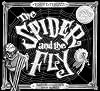
The cover art was what drew me to this book, when I first picked it up I didn't know it was a poetry book. I don't always go towards poetry books because sometimes they're harder to understand but I enjoyed this one. I loved the illustrations; I liked how they had a dark, scary look to them. The pictures make the reader question the spider's overall character. I liked the message this book had. You can't trust everyone, especially if you have your doubts about them, trust your gut. show more Throughout the book, the spider tried to convince the fly to come into his house and eat the dinner he prepared for them, but she refused and said that she'd heard stories about him eating other insects like flies. He laughs and continues to compliment her. She loves the compliments and gets caught up mentally and caught up in his web physically where he then eats her! I like how the spider also acknowledges the reader at the end and tells us about how not to get "trapped in some schemer's web." show less
Twisting this cautionary, morality poem into a nonfiction tale about how spiders catch their prey was a stroke of genius. Winner of a Caldecott Honor, DiTerlizzi's illustrations are wonderful and full of detail. The lines are lyrical, and the nonfiction connections elegant. In fact, the only reason I hesitate to give this book five stars is simply my concern about the message it sends when the creepy, scary male character successfully lures the glamorous, "silly" female character to her show more destruction with words of flattery. Even at the end, the moral of the story is that the fly deserved what came to her because she was foolish.
By itself, this book can stand as a cute tale about spiders and flies, and how one traps the other. However, one should watch the discussions generated by students, and the general content of similar themes present in the library as a whole, to avoid feeding into the "victim-blaming" trap. Essentially, this book attempts to prevent the tragedies described from happening to others by cautioning future victims rather than addressing future bullies.
These objections are not reason to remove access to the book, but are more things to keep in mind while teaching, and possibly to address in future lessons. Ex: "In the book, the spider eats the fly because that what spiders do. In our schools, is it ok to bully simply because that's what bullies do, or do we have to take responsibility for our bad choices? What's the difference between a spider bullying a fly and a kid bullying another kid?" show less
By itself, this book can stand as a cute tale about spiders and flies, and how one traps the other. However, one should watch the discussions generated by students, and the general content of similar themes present in the library as a whole, to avoid feeding into the "victim-blaming" trap. Essentially, this book attempts to prevent the tragedies described from happening to others by cautioning future victims rather than addressing future bullies.
These objections are not reason to remove access to the book, but are more things to keep in mind while teaching, and possibly to address in future lessons. Ex: "In the book, the spider eats the fly because that what spiders do. In our schools, is it ok to bully simply because that's what bullies do, or do we have to take responsibility for our bad choices? What's the difference between a spider bullying a fly and a kid bullying another kid?" show less
4yo took one look at the cover and said "too scary." And indeed, that is the point! Black-and-white illustrations in a noir style (inspired by Hollywood noir, Edward Gorey, Chaz Addams, and Tim Burton), along with the inevitable yet gruesome end of the poem, work perfectly together. A good read for Halloween time or for kids who love to feel the shivers.
Lists
Awards


You May Also Like


Associated Authors
Statistics
- Works
- 54
- Also by
- 9
- Members
- 1,786
- Popularity
- #14,415
- Rating
- 4.1
- Reviews
- 120
- ISBNs
- 46
- Languages
- 1
- Favorited
- 1
