
Ernest Lawrence Thayer (1863–1940)
Author of Casey at the Bat: A Ballad of the Republic Sung in the Year 1888
About the Author
Image credit: Courtesy of the NYPL Digital Gallery (image use requires permission from the New York Public Library)
Works by Ernest Lawrence Thayer
Associated Works
Tagged
Common Knowledge
- Legal name
- Thayer, Ernest Lawrence
- Other names
- "Phin" (nickname)
- Birthdate
- 1863-08-14
- Date of death
- 1940-08-21
- Gender
- male
- Education
- Harvard (philosophy|1885)
- Occupations
- writer
poet
humor columnist - Nationality
- USA
- Places of residence
- Lawrence, Massachusetts, USA (birth)
Worcester, Massachusetts, USA - Associated Place (for map)
- Massachusetts, USA
Members
Reviews
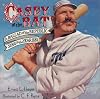
Being both a lover of poetry and baseball, "Casey at Bat" is as familiar to me as "Line-Up for Yesterday." This classic American poem, written in 1888 as the title suggests, is about a fictional baseball team, "The Mudville Nine." Down 2 runs in the ninth inning, the crowd hopes that their team's best hitter, Casey, can step up to bat. However, the first two batters of the inning fail to reach, and the fans begin to leave. The next to batters unexpectedly both get hits, which allows Casey to show more come to bat. Due to hubris, Casey allows the first two pitches to pass him as strikes. But then, on the third pitch, he takes a mighty swing...and promptly strikes out, thus ending the tale.
The character of Casey is one that students can learn from. His boneheaded actions at the plate, during a crucial time in the game, shows the downfall of having too much pride in your own abilities, especially in baseball when getting a hit just 1/3 of the time puts you in rarefied air. There's also the lesson of taking advantage of the opportunities you have, as opposed to waiting out a situation (something I often do, so I did a bit of reflection post-reading).
As for class, this is a great poem to use as an example for a "standard" poem - it's fun, it's about sports, and it has such a great build-up to a non-payoff that the situation becomes comical. While it's funny, build up is a key ingredient in developing a narrative, no matter how long, which provides engagement and investment for the reader.
The students' will likely be entertained by the text, and it adheres to both a meter and rhyme scheme. While most students at the high school level would probably be familiar with a couplet scheme, showing the consistent 7 foot meter could be educational. It could also culminate in students writing their own poems about a tense situation in their own lives, or a fictional one, provided they stick to the scheme of "Casey at Bat." show less
The character of Casey is one that students can learn from. His boneheaded actions at the plate, during a crucial time in the game, shows the downfall of having too much pride in your own abilities, especially in baseball when getting a hit just 1/3 of the time puts you in rarefied air. There's also the lesson of taking advantage of the opportunities you have, as opposed to waiting out a situation (something I often do, so I did a bit of reflection post-reading).
As for class, this is a great poem to use as an example for a "standard" poem - it's fun, it's about sports, and it has such a great build-up to a non-payoff that the situation becomes comical. While it's funny, build up is a key ingredient in developing a narrative, no matter how long, which provides engagement and investment for the reader.
The students' will likely be entertained by the text, and it adheres to both a meter and rhyme scheme. While most students at the high school level would probably be familiar with a couplet scheme, showing the consistent 7 foot meter could be educational. It could also culminate in students writing their own poems about a tense situation in their own lives, or a fictional one, provided they stick to the scheme of "Casey at Bat." show less

Casey at the Bat, illustrated and expanded by Patricia Polacco
First published in 1888, in The San Francisco Examiner, Ernest Thayer's famous baseball poem, in which an overconfident batsman strikes out, bringing disappointment and defeat to the Mudville team, has been expanded and reinvented by prolific children's author and artist Patricia Polacco in this charming picture-book, which presents the cocky batsman as a little league player. Using the poem itself as her main text - "The outlook show more wasn't brilliant for the Mudville nine that day: / The score stood four to two, with but one inning more to play" - Polacco adds a brief prose narrative at the beginning and end of her book, filling out the story, and giving it an unexpected, and ultimately heartwarming conclusion.
The only one of Polacco's many picture-books that she did not write herself (at least, not in whole), Casey at the Bat presents a unique, and entirely fitting revisionist take on this American classic. Fitting, because Polacco's body of work, as a whole, has a distinctly American ethos - I have seen her books described as "Americana," a judgment with which I would concur - and her artwork is well suited to this tale. I can't say, in all honesty, that Thayer's poem has ever been a personal favorite of mine, but Polacco's presentation certainly makes me feel its hometown charm! Recommended to young baseball enthusiasts, and to fans of the author/artist. show less
First published in 1888, in The San Francisco Examiner, Ernest Thayer's famous baseball poem, in which an overconfident batsman strikes out, bringing disappointment and defeat to the Mudville team, has been expanded and reinvented by prolific children's author and artist Patricia Polacco in this charming picture-book, which presents the cocky batsman as a little league player. Using the poem itself as her main text - "The outlook show more wasn't brilliant for the Mudville nine that day: / The score stood four to two, with but one inning more to play" - Polacco adds a brief prose narrative at the beginning and end of her book, filling out the story, and giving it an unexpected, and ultimately heartwarming conclusion.
The only one of Polacco's many picture-books that she did not write herself (at least, not in whole), Casey at the Bat presents a unique, and entirely fitting revisionist take on this American classic. Fitting, because Polacco's body of work, as a whole, has a distinctly American ethos - I have seen her books described as "Americana," a judgment with which I would concur - and her artwork is well suited to this tale. I can't say, in all honesty, that Thayer's poem has ever been a personal favorite of mine, but Polacco's presentation certainly makes me feel its hometown charm! Recommended to young baseball enthusiasts, and to fans of the author/artist. show less
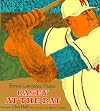
My all-time favorite baseball poem!
But the illustrations in this book kind of creeped me out. Elongated bodies, over-sized hands, and scary faces in the crowd. I would totally read this to my daughter, but I would not show her the pictures. Especially the ones showing the crowd. Yeesh...
But the illustrations in this book kind of creeped me out. Elongated bodies, over-sized hands, and scary faces in the crowd. I would totally read this to my daughter, but I would not show her the pictures. Especially the ones showing the crowd. Yeesh...
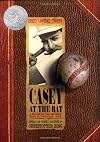
A phenomenal book. The artwork and the level of detail in the creation left me in awe. My regard for sports in general is lukewarm at best, but I love, adore, baseball. When I was little and my parents couldn't find me, they went straight to the baseball field at our local park and I'd be there in the stands, so Casey at the Bat tugs all the right heartstrings for me and I can't imagine a better presentation for this bit of American poetry.
Awesome.
Awesome.
Lists
Awards


You May Also Like


Associated Authors
Statistics
- Works
- 6
- Also by
- 10
- Members
- 1,780
- Popularity
- #14,465
- Rating
- 4.0
- Reviews
- 61
- ISBNs
- 57