
Emily Arnold McCully
Author of Mirette on the High Wire
About the Author
Emily Arnold McCully was born in Galesburg, Illinois on July 1, 1939. She graduated from Pembroke College, now a part of Brown University, in 1961 and received an M.A. in art history from Columbia University. After graduation, she held a variety of jobs in the art field that included being a show more commercial artist, a designer of paperback covers, and illustrating advertisements. When one of her illustrations was seen on an advertisement in the subway, she was asked to illustrate Greg Panetta's Sea Beach Express. She accepted that offer and went on to illustrate over 100 children's books. In 1969, she illustrated Meindert de Jong's Journey from the Peppermint Express, which was the first children's book to receive the National Book Award. Her first solo venture, Picnic, won the Christopher Award in 1985. Mirette on the High Wire won the Caldecott Medal in 1993. Her other children's books include Amazing Felix, Crossing the New Bridge, Grandmas at the Lake, My Real Family, and The Pirate Queen. (Bowker Author Biography) show less
Disambiguation Notice:
Emily Arnold McCully is the same person as Emily Arnold. Under the name Emily Arnold, she wrote two novels - A Craving and Life Drawing. Afterward publishing these two novels she began writing and illustrating books for children.
Series
Works by Emily Arnold McCully
The Escape of Oney Judge: Martha Washington's Slave Finds Freedom (Scholastic) (2007) 259 copies, 22 reviews
Clara: The (Mostly) True Story of the Rhinoceros Who Dazzled Kings, Inspired Artists, and Won the Hearts of Everyone . . . While She Ate Her Way Up and Down a Continent! (2016) 76 copies, 3 reviews
My Heart Glow: Alice Cogswell, Thomas Gallaudet, and the Birth of American Sign Language (2008) 52 copies, 3 reviews
The Eclipse of 1919: How Einstein’s Theory of General Relativity Changed Our World (2025) 12 copies, 1 review
Mirette on the High Wire [1994 film] — Narrator — 3 copies
Mirette On The High Wire 1 copy
THE CHRISMAS GIFT 1 copy
Associated Works
Dare the Wind: The Record-Breaking Voyage of Eleanor Prentiss and the Flying Cloud (2014) — Illustrator — 119 copies, 5 reviews
The Taxing Case of the Cows: A True Story About Suffrage (2010) — Illustrator — 68 copies, 5 reviews
Cricket Magazine, Vol. 4, No. 11, July 1977 — Illustrator — 2 copies
Cricket Magazine, Vol. 2, No. 11, July 1975 — Illustrator — 2 copies
Cricket Magazine, Vol. 5, No. 11, July 1978 — Contributor — 1 copy
Tagged
Common Knowledge
- Other names
- Arnold, Emily
- Birthdate
- 1939-07-01
- Gender
- female
- Education
- Brown University
Columbia University (MA|Art History)
Pembroke College, Providence - Occupations
- children's book illustrator
children's book author
novelist
actress - Short biography
- Emily Arnold was born in Galesburg, Illinois, and moved with her family to Long Island when she was five. She started to draw at about age three or four, around the same time she learned to read. At Brown University, she helped write a musical comedy and acted in plays. After graduation, she worked at an advertising agency in New York City and earned a master's degree in art history from Columbia University. In 1976, she published a short story in The Massachusetts Review, whch was followed by two novels, A Craving (1982) and Life Drawing (1986). She then began illustrating and later writing children's books. She won the 1993 Caldecott Medal for Mirette on the High Wire. In 2012, she illustrated Ballerina Swan, written by legendary New York City Ballet ballerina Allegra Kent. She has performed as an actress at Capital Rep in Albany and at The Vineyard Theater in New York City.
- Nationality
- USA
- Birthplace
- Galesburg, Illinois, USA
- Places of residence
- Garden City, Long Island, New York, USA
- Disambiguation notice
- Emily Arnold McCully is the same person as Emily Arnold. Under the name Emily Arnold, she wrote two novels - A Craving and Life Drawing. Afterward publishing these two novels she began writing and illustrating books for children.
- Associated Place (for map)
- USA
Members
Reviews
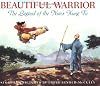
Great introduction to Buddhism and the philosophical underpinnings of Eastern martial arts. This book would make a great movie. Kind of a Karate Kid except Daniel is a girl and Mr Miyagi is a nun. They even have the training montage (flow like water, balance like crane, bend like bamboo...). I envision a climactic turning-the-tables fight scene a la River from Firefly or Hit Girl from Kick-Ass. Might not get a G rating with that kind of scene, though.
After reading two books about girls whose show more salvation comes from marrying well, it was refreshing to read a story where the girl fights not to be married and finds her own freedom. ("The world outside Shaolin Temple no longer concerned her. She forgot all about having to defeat Soong Ling in order to win her freedom. She was already free.") Not that there's anything inherently wrong with marriage, I just don't like when it's presented as a way out of hardship (or a handing over of property) rather than a loving bond between two people. show less
After reading two books about girls whose show more salvation comes from marrying well, it was refreshing to read a story where the girl fights not to be married and finds her own freedom. ("The world outside Shaolin Temple no longer concerned her. She forgot all about having to defeat Soong Ling in order to win her freedom. She was already free.") Not that there's anything inherently wrong with marriage, I just don't like when it's presented as a way out of hardship (or a handing over of property) rather than a loving bond between two people. show less

Caldecott Medal-winning picture book creator Emily Arnold McCully tells the fictionalized story of the discovery of the Lascaux cave network and its majestic treasure trove of prehistoric cave art in this wonderful work of picture book history. Opening in 1940, the narrative follows four French schoolboys in the village of Montignac as they explore a cave one had recently discovered, revealing a massive network of chambers containing an astonishing range of paintings created 17,000 to 22,000 show more years ago. Realizing the wondrous nature of their discovery, the boys eventually notify one of their teachers, and he in turns calls in Abbé Breuil, one of the country's foremost experts on prehistoric art. The book closes with an author's note giving more information about the discovery of the Lascaux caves, as well as a bibliography...
I've been on something of a parietal art kick recently, since reading my friend Hannah's picture book, Ancestory: The Mystery and Majesty of Ancient Cave Art, which gives a sort of worldwide survey of this sort of art, and explores its possible meaning. When I discovered that McCully, whose work I know well, had also created a picture book in this vein, I lost no time in tracking it down, and I was not disappointed. While a part of me wonders why it was necessary to fictionalize the story at all—surely a more factual account would be exciting enough?—my understanding is that The Secret Cave: Discovering Lascaux follows the real story fairly closely. In any case, I did find this one engaging, and think that it successfully taps into the childhood desire to discover wonderful things and uncover hidden treasure, while also highlighting an important real-life discovery. The accompanying artwork is appealing, particularly in the cave scenes, which capture some of the mystery and awe of those first moments when the boys looked at artwork not seen by human eyes for thousands of years. Recommended to picture book audiences interested in cave art in general and/or Lascaux in particular. It could be paired with something like Ancestory (author/illustrator: Hannah Salyer), or with T.A. Barron's entirely fictional picture book take on the Cave of the Hands in Argentina, Ghost Hands. show less
I've been on something of a parietal art kick recently, since reading my friend Hannah's picture book, Ancestory: The Mystery and Majesty of Ancient Cave Art, which gives a sort of worldwide survey of this sort of art, and explores its possible meaning. When I discovered that McCully, whose work I know well, had also created a picture book in this vein, I lost no time in tracking it down, and I was not disappointed. While a part of me wonders why it was necessary to fictionalize the story at all—surely a more factual account would be exciting enough?—my understanding is that The Secret Cave: Discovering Lascaux follows the real story fairly closely. In any case, I did find this one engaging, and think that it successfully taps into the childhood desire to discover wonderful things and uncover hidden treasure, while also highlighting an important real-life discovery. The accompanying artwork is appealing, particularly in the cave scenes, which capture some of the mystery and awe of those first moments when the boys looked at artwork not seen by human eyes for thousands of years. Recommended to picture book audiences interested in cave art in general and/or Lascaux in particular. It could be paired with something like Ancestory (author/illustrator: Hannah Salyer), or with T.A. Barron's entirely fictional picture book take on the Cave of the Hands in Argentina, Ghost Hands. show less
Clara: The (Mostly) True Story of the Rhinoceros Who Dazzled Kings, Inspired Artists, and Won the Hearts of Everyone... While She Ate Her Way Up and Down a Continent! by Emily Arnold McCully

Caldecott medalist Emily Arnold McCully sets out the story of Clara, an orphaned Indian rhinoceros who, in the 18th century, was purchased by a Dutch sea captain, and then toured with him for seventeen years throughout Europe. The first of her kind to be seen by most Europeans, Clara was a sensation - praised and studied by everyone from royalty to peasant. Portraits were painted, and people of all walks of life lined up for a chance to gaze into her eyes. Finally, after many years as the show more beloved companion of Captain Van der Meer, Clara closed her eyes, having introduced the wonder of her species to an entire continent...
Both engaging and informative, Clara: The (Mostly) True Story of the Rhinoceros Who Dazzled Kings, Inspired Artists, and Won the Hearts of Everyone... While She Ate Her Way Up and Down a Continent! is an excellent work of imaginative non-fiction for younger children. It's sometimes easy to forget in our contemporary world, a world in which information about far-flung parts of the globe, and the animals that live in them, is readily available, that once upon a time knowledge of distant lands and species was quite limited, and very difficult to obtain. McCully's book highlights just how wondrous and magical it must have seemed to the peoples of Europe, glimpsing their first rhinoceros. Many of them would have considered such an animal mythological, before their first glimpse of a real live specimen. McCully also manages to capture the real bond that (possibly) existed between Captain Van der Meer and Clara, so much so that I found myself tearing up a bit at the conclusion of the tale, as the rhino lay on her deathbed. Pairing an illuminating, poignant, thought-provoking text with immensely appealing, expressive illustrations, this is a picture-book I would recommend to young animal lovers, and to anyone looking for children's stories about the expansion of human knowledge about our animal kin, in previous centuries. show less
Both engaging and informative, Clara: The (Mostly) True Story of the Rhinoceros Who Dazzled Kings, Inspired Artists, and Won the Hearts of Everyone... While She Ate Her Way Up and Down a Continent! is an excellent work of imaginative non-fiction for younger children. It's sometimes easy to forget in our contemporary world, a world in which information about far-flung parts of the globe, and the animals that live in them, is readily available, that once upon a time knowledge of distant lands and species was quite limited, and very difficult to obtain. McCully's book highlights just how wondrous and magical it must have seemed to the peoples of Europe, glimpsing their first rhinoceros. Many of them would have considered such an animal mythological, before their first glimpse of a real live specimen. McCully also manages to capture the real bond that (possibly) existed between Captain Van der Meer and Clara, so much so that I found myself tearing up a bit at the conclusion of the tale, as the rhino lay on her deathbed. Pairing an illuminating, poignant, thought-provoking text with immensely appealing, expressive illustrations, this is a picture-book I would recommend to young animal lovers, and to anyone looking for children's stories about the expansion of human knowledge about our animal kin, in previous centuries. show less

Author/illustrator Emily Arnold McCully, who won a Caldecott Medal in 1993 for Mirette on the High Wire, tends to seek out unusual true stories for her picture-book biographies - she retold the tale of Irish woman pirate Gráinne Ní Mháille, in The Pirate Queen, and of inventor Margaret E. Knight in Marvelous Mattie - and Wonder Horse is no exception! The story of former slave Bill Key, who became a veterinarian and animal trainer, after being emancipated, and his incredible horse Jim, show more whom he taught to read, recognize colors, and count, it is both informative and entertaining. A "wonder horse" who toured the country in the late 19th century, Jim was a sensation, and soon attracted his share of naysayers, who claimed that he (and through him, Bill) was a fraud. This doubt prevented Bill and Jim from pairing up with the Society for the Prevention of Cruelty to Animals, in a campaign to promote respect for, and kindness toward, animals. Until a team of Harvard professors agreed to examine Jim, that is...
Although titled the "Wonder Horse," this book is as much Bill's story, as Jim's, and I found both quite interesting. I understand that the consensus now is that Jim probably wasn't reading, so much as picking up on subtle (and unconscious?) cues from his interrogators, but the tale still highlights the immense intelligence of our equine friends, and their capability for learning, when treated with the respect and kindness they deserve. Just as Jim was an incredible horse, however, Bill was an extraordinary man, and the story of his transformation after being freed - part of the respect he deserved, as a human being - was really quite inspirational. I thought it was so interesting that he used some of his personal fortune - made through sales of his horse liniment - to pay off his former owner's mortgage, as this hints at the complexity of interracial relations (was there fondness there? some strange sense of obligation?), even under the institution of slavery, and during the post-war establishment of the Jim Crow system.
This really is an excellent book, one that will engross young readers in its story, and have them rooting for Bill and Jim Key, while also gently educating them about a number of un-gentle realities, from the institution of slavery in American history, to the early campaigns to counter animal cruelty. Highly recommended to all young horse lovers, and to those interested in issues of animal intelligence! show less
Although titled the "Wonder Horse," this book is as much Bill's story, as Jim's, and I found both quite interesting. I understand that the consensus now is that Jim probably wasn't reading, so much as picking up on subtle (and unconscious?) cues from his interrogators, but the tale still highlights the immense intelligence of our equine friends, and their capability for learning, when treated with the respect and kindness they deserve. Just as Jim was an incredible horse, however, Bill was an extraordinary man, and the story of his transformation after being freed - part of the respect he deserved, as a human being - was really quite inspirational. I thought it was so interesting that he used some of his personal fortune - made through sales of his horse liniment - to pay off his former owner's mortgage, as this hints at the complexity of interracial relations (was there fondness there? some strange sense of obligation?), even under the institution of slavery, and during the post-war establishment of the Jim Crow system.
This really is an excellent book, one that will engross young readers in its story, and have them rooting for Bill and Jim Key, while also gently educating them about a number of un-gentle realities, from the institution of slavery in American history, to the early campaigns to counter animal cruelty. Highly recommended to all young horse lovers, and to those interested in issues of animal intelligence! show less
Lists
Awards


Queen of the Diamond: The Lizzie Murphy Story (Five to Nine, Information Books, Biography and Memoir – 2016)


You May Also Like


Associated Authors
Statistics
- Works
- 71
- Also by
- 52
- Members
- 10,898
- Popularity
- #2,174
- Rating
- 3.8
- Reviews
- 411
- ISBNs
- 310
- Languages
- 3
- Favorited
- 1
