
David Stuart Davies (1946–2024)
Author of The Sherlock Holmes Book: Big Ideas Simply Explained
About the Author
Series
Works by David Stuart Davies
Vintage Mystery and Detective Stories (Wordsworth Special Editions) (2006) — Editor — 69 copies, 1 review
The Darlington Substitution Scandal and the Sherlock Holmes Reichenbach Mystery (2003) — Author — 3 copies
Sherlock Holmes and the Ghost of Christmas Past (in Sherlock Holmes: The Game's Afoot - DAVIES) 1 copy
THE SHERLOCK HOLMES ADVENTURES BOOKS 1-3 three puzzling cases featuring a legendary detective 1 copy
The Curzon Street Conundrum 1 copy
Sherlockian Misprints 1 copy
Collected Ghost Stories 1 copy
Sidelights on Sherlock 1 copy
Associated Works
Twenty Thousand Leagues Under the Sea (1869) — Introduction, some editions — 21,369 copies, 283 reviews
Gaslight Grimoire: Fantastic Tales of Sherlock Holmes (2009) — Foreword; Contributor — 137 copies, 4 reviews
Night Shivers (Tales of Mystery & the Supernatural) (2008) — Introduction, some editions — 94 copies, 1 review
The Temple of Death: The Ghost Stories of A. C. & R. H. Benson (Tales of Mystery & the Supernatural) (2007) — Editor, Introduction, some editions — 72 copies, 1 review
The Castle of Otranto with Vathek and Nightmare Abbey (2009) — Introduction, some editions — 67 copies, 5 reviews
The MX Book of New Sherlock Holmes Stories, Part 3 : 1896-1929 (2015) — Foreword, some editions — 30 copies
The Dark Side 247 — Contributor — 1 copy
Tagged
Common Knowledge
- Legal name
- Davies, David Stuart
- Birthdate
- 1946-02-10
- Date of death
- 2024-08-16
- Gender
- male
- Education
- Leeds University
- Occupations
- English teacher
writer
magazine editor
scriptwriter
playwright
actor - Organizations
- Huddersfield Thespians
Mirfield Free Grammar School
Crime Writers' Association
Sherlock magazine - Awards and honors
- Baker Street Irregulars (1996)
The Detection Club (2016) - Nationality
- UK
- Birthplace
- Huddersfield, West Yorkshire, England
- Associated Place (for map)
- Huddersfield, West Yorkshire, England
Members
Reviews
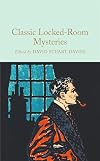
'Locked-room' mystery stories are fundamentally flawed, in that they require considerable suspension of disbelief just to accept their improbable scenarios, let alone their often even-more-improbable solutions, but once you accept all of this they become a lot of fun. This means that even though the quality of the stories in Classic Locked-Room Mysteries vary, the book itself is consistently entertaining.
After a great introduction from David Stuart Davies, who compiled this 2016 collection, show more which summarises an interesting tale from Herodotus and provides useful colour on the various authors included in the volume, Classic Locked-Room Mysteries actually begins unpromisingly, with the unspectacular 'The Aluminium Dagger'. It then proceeds to Edgar Allan Poe's 'The Murders in the Rue Morgue' which, although it deserves immense respect for practically inventing the detective genre and its formula, has a solution which is pretty silly to modern readers.
Fortunately, the book then proceeds to a quintessential 'locked-room' story in Jacques Futrelle's 'The Problem of Cell 13', complete with deductions, conundrums and outlandish solutions. The next story is a real and surprising gem, Lord Dunsany's 'The Two Bottles of Relish'. I won't spoil its rewards, but it unfolds fantastically and its success whets the appetite for the rest of the book. With this goodwill built up, Jepson & Eustace's 'The Tea Leaf' proves entertaining and has one of the best solutions of the collection. Things then dip slightly with Howel Evans' 'The Mystery of the Taxi-Cab'. Wilkie Collins' 'A Terribly Strange Bed' is a better story for its atmosphere than for any ingenuity, as is Hodgson's 'The Thing Invisible'.
A Sherlock Holmes story is always welcome in any company, and Sir Arthur Conan Doyle's 'The Adventure of the Retired Colourman' is effortlessly rewarding even if its not Holmes at his absolute best. David Stuart Davies then uses his editorial remit to insert his own story, 'The Curzon Street Conundrum'. This inevitably feels more modern than the other (classic) stories, even if it is set in the same period. But though it seems out of place, it doesn't feel inferior by any means.
The best is now past, and the rest of the book is just for the reader to indulge in the concept of the locked-room. Aldrich's 'Out of His Head' is curious, and Melville Davisson Post's 'The Doomdorf Mystery' is the best of this late sequence of stories. The American West setting of 'Doomdorf' is a nice change of pace from the British parlour-room atmosphere of most of the other selections, and its solution to the locked-room murder as delightfully far-fetched as any of the others.
The Williamsons' 'The Adventure of the Jacobean House' passed me by, unfortunately, though G. K. Chesterton's Father Brown story 'The Invisible Man' redeemed this with some quality writing. That said, Chesterton's solution seemed the most unlikely of the lot. The collection ends with the return of Jacques Futrelle, the only author included twice. 'The Motor Boat' isn't a locked-room story, making it an unusual inclusion, but it's a fun mystery regardless.
All told, Classic Locked-Room Mysteries does exactly what it says on the tin. There's just something satisfying about stories like this; figuring out how someone was murdered in a room locked from the inside, or escaped from a cell. The stories are, by-and-large, well-chosen and sequenced well and the book will entertain any willing reader throughout. show less
After a great introduction from David Stuart Davies, who compiled this 2016 collection, show more which summarises an interesting tale from Herodotus and provides useful colour on the various authors included in the volume, Classic Locked-Room Mysteries actually begins unpromisingly, with the unspectacular 'The Aluminium Dagger'. It then proceeds to Edgar Allan Poe's 'The Murders in the Rue Morgue' which, although it deserves immense respect for practically inventing the detective genre and its formula, has a solution which is pretty silly to modern readers.
Fortunately, the book then proceeds to a quintessential 'locked-room' story in Jacques Futrelle's 'The Problem of Cell 13', complete with deductions, conundrums and outlandish solutions. The next story is a real and surprising gem, Lord Dunsany's 'The Two Bottles of Relish'. I won't spoil its rewards, but it unfolds fantastically and its success whets the appetite for the rest of the book. With this goodwill built up, Jepson & Eustace's 'The Tea Leaf' proves entertaining and has one of the best solutions of the collection. Things then dip slightly with Howel Evans' 'The Mystery of the Taxi-Cab'. Wilkie Collins' 'A Terribly Strange Bed' is a better story for its atmosphere than for any ingenuity, as is Hodgson's 'The Thing Invisible'.
A Sherlock Holmes story is always welcome in any company, and Sir Arthur Conan Doyle's 'The Adventure of the Retired Colourman' is effortlessly rewarding even if its not Holmes at his absolute best. David Stuart Davies then uses his editorial remit to insert his own story, 'The Curzon Street Conundrum'. This inevitably feels more modern than the other (classic) stories, even if it is set in the same period. But though it seems out of place, it doesn't feel inferior by any means.
The best is now past, and the rest of the book is just for the reader to indulge in the concept of the locked-room. Aldrich's 'Out of His Head' is curious, and Melville Davisson Post's 'The Doomdorf Mystery' is the best of this late sequence of stories. The American West setting of 'Doomdorf' is a nice change of pace from the British parlour-room atmosphere of most of the other selections, and its solution to the locked-room murder as delightfully far-fetched as any of the others.
The Williamsons' 'The Adventure of the Jacobean House' passed me by, unfortunately, though G. K. Chesterton's Father Brown story 'The Invisible Man' redeemed this with some quality writing. That said, Chesterton's solution seemed the most unlikely of the lot. The collection ends with the return of Jacques Futrelle, the only author included twice. 'The Motor Boat' isn't a locked-room story, making it an unusual inclusion, but it's a fun mystery regardless.
All told, Classic Locked-Room Mysteries does exactly what it says on the tin. There's just something satisfying about stories like this; figuring out how someone was murdered in a room locked from the inside, or escaped from a cell. The stories are, by-and-large, well-chosen and sequenced well and the book will entertain any willing reader throughout. show less

This book blew me away. I'd rate it higher than five if I could.
Since my childhood, I have loved the Granada series starring Brett. This book has helped me to appreciate the series on a much deeper level. Davies doesn't give a biography of Brett; rather, this is a tightly focused look at Brett's involvement with the TV show. Davies discusses each episode of the show, even describing individual scenes. He traces input from executives, producers, directors, screenwriters, and actors; he show more compares the show's plots to the source material; and he demonstrates trends over time as the show ran year after year. Brett's brilliance as an actor shines through, both in these pages and on the screen. This book is a celebration—of Sherlock, of Brett, of Doyle. It's a reminder of why we loved the series. It captures the heartache of the series' end and of Brett's illness. It showed me, all over again, the brilliance and daring of an amazing actor. show less
Since my childhood, I have loved the Granada series starring Brett. This book has helped me to appreciate the series on a much deeper level. Davies doesn't give a biography of Brett; rather, this is a tightly focused look at Brett's involvement with the TV show. Davies discusses each episode of the show, even describing individual scenes. He traces input from executives, producers, directors, screenwriters, and actors; he show more compares the show's plots to the source material; and he demonstrates trends over time as the show ran year after year. Brett's brilliance as an actor shines through, both in these pages and on the screen. This book is a celebration—of Sherlock, of Brett, of Doyle. It's a reminder of why we loved the series. It captures the heartache of the series' end and of Brett's illness. It showed me, all over again, the brilliance and daring of an amazing actor. show less
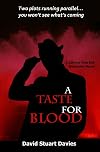
I didn't really want this story to end. I didn't know how it was going to end, and I just loved that feeling. Too often can you predict what's going to happen in a book, but A Taste For Blood? Nope. You can't.
First take a look at the cover. It's dark and twisted and broody and makes me think of Jack the Ripper, a world awash with blood.
I love crime books, I probably read one each week, but I didn't think this would be my cup of tea. How wrong I was. It was like a pot of steaming show more Darjeeling.
The narrative switches between a few different characters in this book, but that didn't bother me at all. All of the characters had their own strong voice, their own mannerisms with language which made them stand apart from each other.
The characters are really very British, so there's an abundance of tea - and we all know how I love my tea.
I grinned. "I'm anybody's for a cuppa and a biscuit."
I could relate to the characters. Well, most of them. Not really Sexton or Northcote. Eew. Although I did understand Northcote's motives towards the end. My favourite character to read was probably David Llewellyn.
This book twists and turns so unexpectedly that I re-read more than a few sections, just to make sure I'd taken it all in properly. It's gruesome and violent and more than once my toes curled. It's horrific in the way that all good crime should be, with blood and gore everywhere and enough mystery to keep you, as a reader, on your toes.
Some things didn't really work for me though. Mostly the setting. World War Two London, and the characters are popping into pubs for a sandwich and cafés for meals, and drinking lots of overly sweet tea and alcohol. It doesn't make sense to me that these resources would be so readily available in wartime London with rationing in full swing. I'm a tea addict (and tea-geek) so I know how little tea was available, not to even mention the more scarce products like sugar, and it just doesn't add up to me.
Copy provided via NetGalley in exchange for honest review. ISBN 9781907230486. show less
First take a look at the cover. It's dark and twisted and broody and makes me think of Jack the Ripper, a world awash with blood.
I love crime books, I probably read one each week, but I didn't think this would be my cup of tea. How wrong I was. It was like a pot of steaming show more Darjeeling.
The narrative switches between a few different characters in this book, but that didn't bother me at all. All of the characters had their own strong voice, their own mannerisms with language which made them stand apart from each other.
The characters are really very British, so there's an abundance of tea - and we all know how I love my tea.
I grinned. "I'm anybody's for a cuppa and a biscuit."
I could relate to the characters. Well, most of them. Not really Sexton or Northcote. Eew. Although I did understand Northcote's motives towards the end. My favourite character to read was probably David Llewellyn.
This book twists and turns so unexpectedly that I re-read more than a few sections, just to make sure I'd taken it all in properly. It's gruesome and violent and more than once my toes curled. It's horrific in the way that all good crime should be, with blood and gore everywhere and enough mystery to keep you, as a reader, on your toes.
Some things didn't really work for me though. Mostly the setting. World War Two London, and the characters are popping into pubs for a sandwich and cafés for meals, and drinking lots of overly sweet tea and alcohol. It doesn't make sense to me that these resources would be so readily available in wartime London with rationing in full swing. I'm a tea addict (and tea-geek) so I know how little tea was available, not to even mention the more scarce products like sugar, and it just doesn't add up to me.
Copy provided via NetGalley in exchange for honest review. ISBN 9781907230486. show less
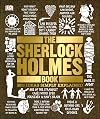
I don't usually have time for DK books, as I feel they are slight and not worth reading. But this book, part of Big Ideas Explained, is excellent. Not only does it do a great job of discussing everything in the Sherlock Holmes canon, it does a great job also of putting things in a historic context and even discussing Sherlock Holmes out of the canon. For anyone who is a Sherlock Holmes fan, this is well worth reading.
Lists
You May Also Like


Associated Authors
Statistics
- Works
- 72
- Also by
- 37
- Members
- 2,364
- Popularity
- #10,856
- Rating
- 4.0
- Reviews
- 66
- ISBNs
- 132
- Languages
- 3
- Favorited
- 1