
Loren D. Estleman
Author of Sherlock Holmes vs. Dracula
About the Author
Loren D. Estleman was born in Ann Arbor, Michigan on September 15, 1952. He received a B.A. in English literature and journalism from Eastern Michigan University in 1974. He spent several years as a reporter on the police beat before leaving to write full time in 1980. He wrote book reviews for show more such newspapers as The New York Times and The Washington Post and contributed articles to such periodicals as TV Guide. He is a writer of mysteries and westerns. His first novel was published in 1976 and since then he has published more than 70 books including the Amos Walker series, Writing the Popular Novel, Roy and Lillie: A Love Story, The Confessions of Al Capone, and a The Branch and the Scaffold. He received four Shamus Awards from the Private Eye Writers of America, five Golden Spur Awards from the Western Writers of America, the Owen Wister Award for lifetime achievement from Western Writers of America, and the Michigan Author's Award in 1997. (Bowker Author Biography) He lives in Whitmore Lake, Michigan. (Publisher Provided) show less
Image credit: Mark Coggins
Series
Works by Loren D. Estleman
Nearly Nero: The Adventures of Claudius Lyon, the Man Who Would Be Wolfe (2017) 28 copies, 4 reviews
The Amos Walker Mysteries Volume One: Motor City Blue, Angel Eyes, and The Midnight Man (2017) 12 copies
Hobnail and Other Frontier Stories: With a foreword by #1 New York Times Bestselling Author Tom Clavin (2019) 4 copies
The Bandit and Other Best Western Stories: A Western Short Story Collection (Kindle) (2024) 2 copies
Journey of the Dead 2 copies
Saturday Night at the Mikado Massage 2 copies
Bodyguards Shoot Second 2 copies
Kill the Cat 2 copies
The Used 2 copies
Red Highway: A Crime Novel 1 copy
Deadly Allies - Safe House 1 copy
Black Bart 1 copy
Fame 1 copy
Now We Are Seven 1 copy
Jingo Django 1 copy
Wolfe in the Manger 1 copy
The King of the Corner 1 copy
Associated Works
Sherlock Holmes: The Complete Novels and Stories, Vol. 1 (Bantam Classics 1/2) (1887) — Introduction, some editions — 4,086 copies, 22 reviews
Sherlock Holmes: The Complete Novels and Stories Volume II (of 2; Bantam) (1986) — Introduction, some editions — 2,446 copies, 13 reviews
The New Adventures of Sherlock Holmes: Original Stories by Eminent Mystery Writers (1976) — Contributor — 394 copies, 4 reviews
Bibliomysteries: Crime in the World of Books and Bookstores, Volume One (2013) — Contributor — 243 copies, 14 reviews
A Century of Great Western Stories-An Anthology of Western Fiction (2000) — Contributor — 126 copies
In Pursuit of Spenser: Mystery Writers on Robert B. Parker and the Creation of an American Hero (2012) — Contributor — 81 copies, 6 reviews
Alfred Hitchcock's Mystery Magazine Presents Fifty Years of Crime and Suspense (2006) — Contributor — 78 copies, 1 review
Great Stories of Crime and Detection, Volumes I-IV: Beginnings to the Present (2002) — Contributor — 73 copies
The World's Finest Mystery and Crime Stories: First Annual Collection (2000) — Contributor — 68 copies, 1 review
A Modern Treasury of Great Detective and Murder Mysteries (1994) — Contributor — 63 copies, 1 review
Writing the Private Eye Novel: A Handbook by the Private Eye Writers of America (1997) — Contributor — 59 copies
The Misadventures of Nero Wolfe: Parodies and Pastiches Featuring the Great Detective of West 35th Street (2020) — Contributor — 58 copies, 1 review
A Taste of Murder: Diabolically Delicious Recipes from Contemporary Mystery Writers (1999) — Contributor — 48 copies, 1 review
At the Scene of the Crime: Forensic Mysteries from Today's Best Writers (2008) — Contributor — 36 copies, 3 reviews
City Sleuths and Tough Guys: Crime Stories from Poe to the Present (1989) — Contributor — 32 copies, 1 review
The Eyes Have It: The First Private Eye Writers of America Anthology (1984) — Contributor — 17 copies
The Year's 25 Finest Crime and Mystery Stories: Second Annual Edition (1993) — Contributor — 13 copies
The Golden Spurs: The Best of Western Short Fiction (Western Writers of America ) (1991) — Contributor — 12 copies
Tagged
Common Knowledge
- Birthdate
- 1952-09-15
- Gender
- male
- Education
- Eastern Michigan University (BA | English Literature and Journalism | 1974)
- Occupations
- investigative reporter
book reviewer (various newspapers) - Awards and honors
- Honorary Doctorate ( [2002])
Michigan Author Award (1997)
The Eye (Lifetime Achievement Award, PWA 2013) - Relationships
- Morgan, Deborah (spouse)
- Nationality
- USA
- Birthplace
- Ann Arbor, Michigan, USA
- Places of residence
- Michigan, USA
- Associated Place (for map)
- Michigan, USA
Members
Reviews

First off, if you don’t like the Edna anthologies or deal with the devil stories, this isn’t for you. I happen to love them, they make me think of being a kid watching the twilight zone, specifically the episode where a man (later revealed as the devil) kept captive in a closet, but also the sort of feel of the series overall. And the visceral thrill of trying to get one over on the devil while matching wits with such a crafty opponent has its own perverse appeal. If you don’t mind a show more little kitsch, a little tongue in cheek self awareness and the theme itself, I highly recommend this, as the majority of the authors were and are some of the best in the sci-fi, fantasy, and horror fields. Most of them are multiple Hugo and nebula award winners, with a few relatively new comers sprinkled in for spice.
I read this for the first time many years ago while working at a crappy little independent used bookstore. Most days, we had a dozen curstomers at best, so I had lots of time to read anything I came across that caught my fancy. I remembered one particular story Winter in detail if not in name as a favorite and it haunted me for years as I could not remember where I had read it or who the author was. I was lucky enough to come across that information recently entirely on accident while down another rabbit hole, and immediately ordered myself an old paperback of this collection.
Winter still holds up as a personal favorite, and certainly more serious and dramatic in tone than many of the short stories, though by no means not the only serious one, but there’s a lot of standout work here. Several entries deal with the role of computers and technology in deals with the devil, in an era where the Internet was only really beginning. Others give us an interpretation on what can happen when the devil loses, or maybe when devil was never really the bad guy (or in fact doing God’s work) all along.
I heartily recommend for an easy, fun, and satisfying read. show less
I read this for the first time many years ago while working at a crappy little independent used bookstore. Most days, we had a dozen curstomers at best, so I had lots of time to read anything I came across that caught my fancy. I remembered one particular story Winter in detail if not in name as a favorite and it haunted me for years as I could not remember where I had read it or who the author was. I was lucky enough to come across that information recently entirely on accident while down another rabbit hole, and immediately ordered myself an old paperback of this collection.
Winter still holds up as a personal favorite, and certainly more serious and dramatic in tone than many of the short stories, though by no means not the only serious one, but there’s a lot of standout work here. Several entries deal with the role of computers and technology in deals with the devil, in an era where the Internet was only really beginning. Others give us an interpretation on what can happen when the devil loses, or maybe when devil was never really the bad guy (or in fact doing God’s work) all along.
I heartily recommend for an easy, fun, and satisfying read. show less
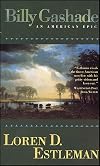
One broiling day in July 1863, a sixteen-year-old Manhattan youth wanders into riots sparked by Irish workingmen angry at Lincoln’s new conscription law. Pushed by corrupt politicians, they nevertheless have a serious gripe. Men with three hundred dollars to spare may pay for a replacement if their name is drawn; everyone else must serve in the Union Army.
This injustice should have no immediate bearing on our teenage interloper, not yet of military age and born to a sheltered existence as show more the son of a prosperous judge. But for the first time in his life, he steps forward into the breach and uses his soft, musician’s hands to stand up for someone else.
For his trouble, he earns a wicked concussion. A brothel madam takes the boy in, and when the grateful convalescent manages to restore and play the house’s damaged piano, he makes friends. He’ll need them, because there’s now a price on his head—during the riot, he wounded an ally of the infamous, powerful Boss Tweed, and getting out of town is the only answer. Taking the name Billy Gashade, he goes west.
Billy gets a job playing piano in another brothel, this one in Lawrence, Kansas, where he again winds up in a melee, this one between Federal forces and rebel militia. But though violence shapes much of Billy’s story, and its misuses and lust for it furnish key themes, the narrative really describes the character of the Old West, and the difference between the romantic legends and the truth, as Billy sees it.
And he witnesses much firsthand, for he makes the acquaintance of many well-known figures, most particularly Jesse and Frank James, but also Jim Bridger, Buffalo Bill Cody, George Armstrong Custer, and a raft of others. However, Estleman properly resists the temptation to let Billy witness the best-known scenes (the Last Stand, for instance), which would have twisted the story into a pretzel; the author knows how to make first-rate drama out of less iconic material. This narrative, though with plot aplenty, gets its drive from character.
Billy Gashade is a yarn par excellence, yet it’s more than that, continually pointing out the differences between haves and have-nots in the eyes of their fellow creatures and the “law,” like as not a corrupt, blunt instrument. Billy’s music seems the only voice of peace and understanding, and the locales in which he plies his art are beautifully conveyed. Depicting those circumstances is one way the narrative takes a bristle brush to the sheen of romance, scuffing it mightily. The Kansas sections in particular revise notions about which side has the moral high ground, abolitionist or proslavery, for the warriors fighting for each are murdering scum. Estleman forces us to take a harder look at the received wisdom we’ve been handed about the Civil War, always a useful exercise.
The author tells his tale in retrospect from 1935, a technique I’ve never liked, but it doesn’t intrude here, because only the very beginning and end take place then. The beginning sets Billy up as the man who’s seen it all and establishes his authority, as reliable narrator and a voice you want to listen to. The story also contains as many coincidences as any three Dickens novels combined, but I don’t mind; often, I’m just as happy to meet old friends as Billy is. Also, it’s not just the ride through Billy’s life that leads you on. It’s an irresistible voice.
At times, however, I feel that Estleman has replaced one romantic view with another. I don’t find Confederate guerrillas-turned-bank robbers appealing in either guise, so Jesse James repels me. I’ll grant that Billy’s quip about James’s gift for singing is one of the best lines in the book: “I’ve always believed that the world lost a good tenor when Jesse James took to robbing stages instead of appearing on them.” To an extent, Estleman’s trying to tell us our romantic heroes don’t deserve our admiration. Yet Billy’s fond of James and worries that the law will get him, though he knows better than most people what the man has done.
Still, Billy Gashade has much to offer. The wandering minstrel’s travels provide wit, humor, and an education, a tale you can wade into with gusto, and a vision of the Old West you might not find anywhere else. show less
This injustice should have no immediate bearing on our teenage interloper, not yet of military age and born to a sheltered existence as show more the son of a prosperous judge. But for the first time in his life, he steps forward into the breach and uses his soft, musician’s hands to stand up for someone else.
For his trouble, he earns a wicked concussion. A brothel madam takes the boy in, and when the grateful convalescent manages to restore and play the house’s damaged piano, he makes friends. He’ll need them, because there’s now a price on his head—during the riot, he wounded an ally of the infamous, powerful Boss Tweed, and getting out of town is the only answer. Taking the name Billy Gashade, he goes west.
Billy gets a job playing piano in another brothel, this one in Lawrence, Kansas, where he again winds up in a melee, this one between Federal forces and rebel militia. But though violence shapes much of Billy’s story, and its misuses and lust for it furnish key themes, the narrative really describes the character of the Old West, and the difference between the romantic legends and the truth, as Billy sees it.
And he witnesses much firsthand, for he makes the acquaintance of many well-known figures, most particularly Jesse and Frank James, but also Jim Bridger, Buffalo Bill Cody, George Armstrong Custer, and a raft of others. However, Estleman properly resists the temptation to let Billy witness the best-known scenes (the Last Stand, for instance), which would have twisted the story into a pretzel; the author knows how to make first-rate drama out of less iconic material. This narrative, though with plot aplenty, gets its drive from character.
Billy Gashade is a yarn par excellence, yet it’s more than that, continually pointing out the differences between haves and have-nots in the eyes of their fellow creatures and the “law,” like as not a corrupt, blunt instrument. Billy’s music seems the only voice of peace and understanding, and the locales in which he plies his art are beautifully conveyed. Depicting those circumstances is one way the narrative takes a bristle brush to the sheen of romance, scuffing it mightily. The Kansas sections in particular revise notions about which side has the moral high ground, abolitionist or proslavery, for the warriors fighting for each are murdering scum. Estleman forces us to take a harder look at the received wisdom we’ve been handed about the Civil War, always a useful exercise.
The author tells his tale in retrospect from 1935, a technique I’ve never liked, but it doesn’t intrude here, because only the very beginning and end take place then. The beginning sets Billy up as the man who’s seen it all and establishes his authority, as reliable narrator and a voice you want to listen to. The story also contains as many coincidences as any three Dickens novels combined, but I don’t mind; often, I’m just as happy to meet old friends as Billy is. Also, it’s not just the ride through Billy’s life that leads you on. It’s an irresistible voice.
At times, however, I feel that Estleman has replaced one romantic view with another. I don’t find Confederate guerrillas-turned-bank robbers appealing in either guise, so Jesse James repels me. I’ll grant that Billy’s quip about James’s gift for singing is one of the best lines in the book: “I’ve always believed that the world lost a good tenor when Jesse James took to robbing stages instead of appearing on them.” To an extent, Estleman’s trying to tell us our romantic heroes don’t deserve our admiration. Yet Billy’s fond of James and worries that the law will get him, though he knows better than most people what the man has done.
Still, Billy Gashade has much to offer. The wandering minstrel’s travels provide wit, humor, and an education, a tale you can wade into with gusto, and a vision of the Old West you might not find anywhere else. show less
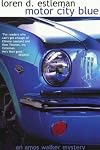
Some days, you're just in the mood for whiskey, dying mobsters, journalists in hiding, porn shop owners, and hookers with a heart of gold, all wrapped up in a 1970's bow, Detroit style. As Estleman admits in his 2000 'Afterward,' "it has everything." I enjoyed it, though it was the enjoyment of escape. Mostly, that is; although I was uncomfortably reminded of current times once or twice when one character talked about abandoned, burned-out homes, and Nixon was mentioned as a crook at the show more highest level.
Like the best classic private eyes, it's a first person narrative, a cynical but honorable detective just trying to make rent. He's smart, and street-wise, and has a tendency to narrate a touch more convoluted than he should.
"Wherever he was going, he was either already late or didn't want to be. Twice more he came close to running into pedestrians as he threaded his way through the sidewalk traffic, eyes skimming the street in search of a cab, and once he was forced to do a wild Charleston to keep from falling when he slipped on an icy patch. Not that the narrow escapes made him any more cautious. If anything, he stepped up his pace as if to make up for the lost time. I followed at what the spy novelists call a discreet distance, which means I almost broke my own neck trying to keep him in sight."
Nonetheless, I enjoyed it. I'd agree with Matthew, who felt there were a couple of creative missteps, particularly in the last third of the book (https://www.goodreads.com/review/show/1281736538?book_show_action=true&from_review_page=1). The plotting was eventually dizzying, as Estleman really did throw 'everything' into it. As he notes, it was his first book to sell--and perhaps only book--and I'm not sure he could have resisted. At any rate, his affection for the genre comes through, not that it's a frantic device meant to get the reader's attention. As fitting for the 70s, there's quite a bit woven through about black and white politics, but not nearly as much consciousness about women's roles or gay rights.
Overall, interesting and with more than adequate writing. I'll likely check out another couple to see how Estleman develops. Two-and-a-half smokes, rounding up. show less
Like the best classic private eyes, it's a first person narrative, a cynical but honorable detective just trying to make rent. He's smart, and street-wise, and has a tendency to narrate a touch more convoluted than he should.
"Wherever he was going, he was either already late or didn't want to be. Twice more he came close to running into pedestrians as he threaded his way through the sidewalk traffic, eyes skimming the street in search of a cab, and once he was forced to do a wild Charleston to keep from falling when he slipped on an icy patch. Not that the narrow escapes made him any more cautious. If anything, he stepped up his pace as if to make up for the lost time. I followed at what the spy novelists call a discreet distance, which means I almost broke my own neck trying to keep him in sight."
Nonetheless, I enjoyed it. I'd agree with Matthew, who felt there were a couple of creative missteps, particularly in the last third of the book (https://www.goodreads.com/review/show/1281736538?book_show_action=true&from_review_page=1). The plotting was eventually dizzying, as Estleman really did throw 'everything' into it. As he notes, it was his first book to sell--and perhaps only book--and I'm not sure he could have resisted. At any rate, his affection for the genre comes through, not that it's a frantic device meant to get the reader's attention. As fitting for the 70s, there's quite a bit woven through about black and white politics, but not nearly as much consciousness about women's roles or gay rights.
Overall, interesting and with more than adequate writing. I'll likely check out another couple to see how Estleman develops. Two-and-a-half smokes, rounding up. show less
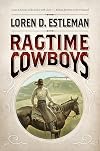
When I was a little girl and needed some comforting, my father would softly sing a song called Ragtime Cowboy Joe so when I saw there was a book called Ragtime Cowboys by Loren Estleman, of course, I had to read it. This book turned out to be a delightfully fun story about two ex-Pinkerton detectives in the early 1920’s. The two detectives are Charlie Siringo and Dashiell Hammett and they make unlikely but highly readable partners. They are brought together by Wyatt Earp as he hires them show more to find a valuable racehorse that was stolen from his stables but during their investigation they stumble onto something even bigger.
I think the author has as much fun writing this book as his readers will have with the reading. It’s a veritable who’s who of 1920’s California. Ragtime Cowboys is an entertaining adventure that’s a quick, light read. I very much enjoyed the colorful characters and the snappy dialogue and will certainly be looking for more by this author who specializes in both Westerns and Mysteries. show less
I think the author has as much fun writing this book as his readers will have with the reading. It’s a veritable who’s who of 1920’s California. Ragtime Cowboys is an entertaining adventure that’s a quick, light read. I very much enjoyed the colorful characters and the snappy dialogue and will certainly be looking for more by this author who specializes in both Westerns and Mysteries. show less
Lists
Awards


You May Also Like


Associated Authors
Statistics
- Works
- 175
- Also by
- 80
- Members
- 6,576
- Popularity
- #3,732
- Rating
- 4.1
- Reviews
- 202
- ISBNs
- 902
- Languages
- 9
- Favorited
- 15
