
Elmer Kelton (1926–2009)
Author of The Time It Never Rained
About the Author
Elmer Kelton was born on April 29, 1926 in west Texas. He earned a degree in journalism from the University of Texas at Austin and served in Europe during World War II. He worked as a livestock and farm writer for The San Angelo Standard-Times and later as an editor for the specialized publications show more Sheep and Goat Raiser magazine and Livestock Weekly while writing part-time. He wrote more than 60 books which earned him numerous awards and recognitions. He won the Spur award from Western Writers of America six times for his titles Buffalo Wagons, The Day the Cowboys Quit, The Time It Never Rained, Eye of the Hawk, Slaughter, and The Far Canyon. Four of his titles have won the Western Heritage Award from the National Cowboy Hall of Fame, Oklahoma City. In addition, he received the Barbara McCombs/Lon Tinkle Award and the Levi Strauss Golden Saddleman Award from the Western Writers of America. His title The Good Old Boys was made into a television movie in 1995. Kelton also wrote under the pseudonyms Alex Hawk, Lee McElroy and Tom Early. He died on August 22, 2009 at the age of 83. (Bowker Author Biography) show less
Image credit: Credit:Larry D. Moore, 2007 Texas Book Festival, Austin, Texas
Series
Works by Elmer Kelton
Captain's Rangers and The Day the Cowboys Quit: Two Complete Novels of the American West (2019) 7 copies
Sons of Texas and The Raiders: Sons of Texas: Two Complete Novels of the American West (2020) 6 copies
PEPPER OF THE EARTH 1 copy
Buckskin Line, Thre 1 copy
The Mam Who Rode Midnight 1 copy
Elmer Kelton 5 book set: Stand Proud/The Way Of The Coyote/Ranger's Trail/Jericho's Road/Many a River (2008) 1 copy
The Last Rebel 1 copy
Across The Pecos 1 copy
The Ghost Of Two Forks 1 copy
Associated Works
A Century of Great Western Stories-An Anthology of Western Fiction (2000) — Contributor — 126 copies
Reader's Digest Condensed Books 1978 v04: My Enemy the Queen / The Good Old Boys / By the Rivers of Babylon / Breakpoint (1978) 41 copies
Reader's Digest Condensed Books 1980 v04: Sadie Shapiro, Matchmaker / The Cradle Will Fall / Man, Woman and Child / Bess and Harry / The Wolf and the Buffalo (1980) — Contributor — 32 copies
Reader's Digest Condensed Books 1987 v05: Patriot Games / Snow on the Wind / Memoirs of an Invisible Man / The Man Who Rode Midnight (1987) 30 copies
The Golden Spurs: The Best of Western Short Fiction (Western Writers of America ) (1991) — Foreword — 12 copies
Reader's Digest Condensed Books: Windmills of the Gods • Hot Money • The Man Who Rode Midnight • The Tunnel (1988) — Author — 2 copies
Best of the West: Classic Stories from the American Frontier, Volume 2 [Audiobook] (2003) — Contributor — 1 copy
Tagged
Common Knowledge
- Canonical name
- Kelton, Elmer
- Legal name
- Kelton, Elmer Stephen
- Other names
- McElroy, Lee (pseudonym)
Hawk, Alex (pseudonym)
Early, Tom (pseudonym)
Owens, Tom (pseudonym) - Birthdate
- 1926-04-29
- Date of death
- 2009-08-22
- Gender
- male
- Education
- University of Texas (BA|1948)
- Occupations
- journalist
editor
novelist - Organizations
- The San Angelo Standard-Times
Sheep and Goat Raiser
Livestock Weekly
United States Army (WWII) - Awards and honors
- Western Literature Association's Distinguished Achievement Award (1990)
Saddleman Award (1977)
Owen Wister Award (1977)
Spur Award (1957, 1971, 1973, 1981, 1992, 1994, 2002)
Western Heritage Award (1974, 1979, 1988)
American Cowboy Culture Association Life Achievement Award (2010) (show all 9)
Barbara McCombs/Lon Tinkle Award (1987)
Lone Star Award for Lifetime Achievement (1998)
honorary member, German Association for the Study of the Western (1996) - Relationships
- Kelton, Anna (wife)
- Nationality
- USA
- Birthplace
- Horse Camp, Texas, USA
- Places of residence
- Horse Camp, Texas, USA
Upton County, Texas, USA (childhood)
Crane County, Texas, USA (childhood)
Austin, Texas, USA
San Angelo, Texas, USA - Place of death
- San Angelo, Texas, USA
- Associated Place (for map)
- Texas, USA
Members
Reviews
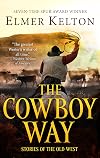
The Cowboy Way
Readers don’t need the forty-some-odd novels to know Kelton is the greatest western writer of all time. These sixteen short stories impart both the great drama of the west and, more impressively, the quiet desperation of those scratching out a living in agriculture from a harsh country. Kelton finds the majesty and human triumph in both the great and small.
We read a nice bookend of Hughey Calloway stories. The quintessential American cowboy does not disappoint. In between we show more are treated to glimpses into the lives of sheep herders, ag teachers, and working cowboys. show less
Readers don’t need the forty-some-odd novels to know Kelton is the greatest western writer of all time. These sixteen short stories impart both the great drama of the west and, more impressively, the quiet desperation of those scratching out a living in agriculture from a harsh country. Kelton finds the majesty and human triumph in both the great and small.
We read a nice bookend of Hughey Calloway stories. The quintessential American cowboy does not disappoint. In between we show more are treated to glimpses into the lives of sheep herders, ag teachers, and working cowboys. show less

I first read Elmer Kelton’s Stand Proud sometime back in the eighties, and that was plenty long enough ago for this re-read to feel like I was reading it for the very first time. I remembered almost no details concerning the book’s plot, and had only a general memory of how much I enjoyed the story the first time around. It turns out that Stand Proud explores a theme that Larry McMurtry and quite a few other writers of westerns have explored in their own fiction over the years: what show more happens to violent men who outlive their usefulness to society once times have changed for the better.
Frank Claymore is one of those men.
During the Civil War, Frank had been one of the young militia men who stayed home to protect Texas settlers from the deadly raids of the Comanche Indians who were still not willing to cede Texas to the newcomers. The situation was so desperate that the Confederacy had to stop conscripting men from that part of the state so that the small farms and ranches could survive the war years. Twenty-two-year-old Frank was one of those small ranchers himself, but all able-bodied men were required to put time in with the militia - and he put in more than most.
Frank came out of the war years with three things: a wound that would plague him the rest of his life, the location of a remote grassland valley that he would claim for himself, and a mortal enemy and competitor for everything he held dearest.
And now, over 40 years later, Frank sits in a courtroom to be judged by a jury composed of small ranch owners who resent him and all he has claimed for himself. He is accused of murder, but is still determined to play by his own rules, damn the consequences. And it’s not looking good for him.
Each chapter of Stand Proud opens on a day of Frank’s trial, followed by a longer section from Frank’s past. This allows the reader to compare the young Frank Claymore to the elderly version, and to learn the truth, in detail, about what is being testified to in the courtroom. This construction works remarkably well to explain what kind of man Frank is and why someone as respected as he once was could find himself in a mess like this one so near the end of his life.
Stand Proud is nothing like the stereotypical pulp fiction western readers unfamiliar with the genre too often think of when they think “western” novel. This is a character-driven story in which relationships and longtime grudges drive all the action, a story where disagreements are more likely to be settled by fists rather than by guns. Kelton’s later novels, such as The Time It Never Rained, The Day the Cowboy’s Quit, and The Good Old Boys brought ever more realism to his stories about the cowboying life and its relationship to an ever-changing Texas landscape. The Western Writers of America once went so far as to proclaim Kelton “the greatest Western writer of all time.” I might not go quite that far in my praise of the man, but I will tell you that his fiction has entertained me for a long, long time. And that I appreciate him. show less
Frank Claymore is one of those men.
During the Civil War, Frank had been one of the young militia men who stayed home to protect Texas settlers from the deadly raids of the Comanche Indians who were still not willing to cede Texas to the newcomers. The situation was so desperate that the Confederacy had to stop conscripting men from that part of the state so that the small farms and ranches could survive the war years. Twenty-two-year-old Frank was one of those small ranchers himself, but all able-bodied men were required to put time in with the militia - and he put in more than most.
Frank came out of the war years with three things: a wound that would plague him the rest of his life, the location of a remote grassland valley that he would claim for himself, and a mortal enemy and competitor for everything he held dearest.
And now, over 40 years later, Frank sits in a courtroom to be judged by a jury composed of small ranch owners who resent him and all he has claimed for himself. He is accused of murder, but is still determined to play by his own rules, damn the consequences. And it’s not looking good for him.
Each chapter of Stand Proud opens on a day of Frank’s trial, followed by a longer section from Frank’s past. This allows the reader to compare the young Frank Claymore to the elderly version, and to learn the truth, in detail, about what is being testified to in the courtroom. This construction works remarkably well to explain what kind of man Frank is and why someone as respected as he once was could find himself in a mess like this one so near the end of his life.
Stand Proud is nothing like the stereotypical pulp fiction western readers unfamiliar with the genre too often think of when they think “western” novel. This is a character-driven story in which relationships and longtime grudges drive all the action, a story where disagreements are more likely to be settled by fists rather than by guns. Kelton’s later novels, such as The Time It Never Rained, The Day the Cowboy’s Quit, and The Good Old Boys brought ever more realism to his stories about the cowboying life and its relationship to an ever-changing Texas landscape. The Western Writers of America once went so far as to proclaim Kelton “the greatest Western writer of all time.” I might not go quite that far in my praise of the man, but I will tell you that his fiction has entertained me for a long, long time. And that I appreciate him. show less
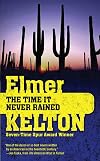
THE TIME IT NEVER RAINED is classic Kelton. It's set in 1950s drouth-ridden west Texas, so it's a bit more 'modern' than most westerns. There are elements of THE GRAPES OF WRATH in the way the approximately seven-year drouth (Kelton's choice of spelling; I always spelled it 'drought,' but then I never experienced one like this and Kelton did, so I defer) affects the ranchers and farmers, in much the same way the 1930s Dust Bowl did. Yes, families are displaced, forced to pack up and move show more elsewhere. Spirits and hearts are broken. And yes, Charlie Flagg is a man you'll remember - stubborn, principled and uncomplaining, but a man with a heart, who feels compassion for the underdog - the Mexican-Americans, in this case. Even having grown up with the regional biases, he is beginning to sense that he's been wrong, and that things are changing. There is a kind of understated environmentalism throughout the story too, about stewardship of the land. One of Charlie's lines especially hits home: "There'll come a time in this country when a barrel of water is worth more than a barrel of oil." It's certainly apt in the context of the drouth, but it is proving to be prophetic. Think climate change and despoiling the land.
Kelton knows how to create characters more human, more genuine than you will find in most westerns. Hell, in most fiction, not just westerns! There are only shades of gray in most of his people; a little good and a little bad in everyone. His west Texas vernacular and dialogue seem right too - the hard-bitten stoicism, the wry humor.
At first I thought, this book is kinda long and slow in getting started. Because it takes nearly half of its 400 pages to really begin to roll down hill and pick up momentum. But then I realized that the first half was necessary, to show the kind of man Charlie Flagg was. And the final chapters of the book came close to breaking my heart. No spoilers here, but I predict if you stick with this book, your eyes will be stinging by its end. Elmer Kelton was one hell of a good writer. I'm sure this will not be the last Kelton book I read. He's become a kind of non-guilty pleasure. And hey, if you like Kelton's fiction as much as I do, I also highly recommend his memoir, SANDHILLS BOY. Read that and you'll admire Kelton even more. A good man, a great writer. Texas should be proud. show less
Kelton knows how to create characters more human, more genuine than you will find in most westerns. Hell, in most fiction, not just westerns! There are only shades of gray in most of his people; a little good and a little bad in everyone. His west Texas vernacular and dialogue seem right too - the hard-bitten stoicism, the wry humor.
At first I thought, this book is kinda long and slow in getting started. Because it takes nearly half of its 400 pages to really begin to roll down hill and pick up momentum. But then I realized that the first half was necessary, to show the kind of man Charlie Flagg was. And the final chapters of the book came close to breaking my heart. No spoilers here, but I predict if you stick with this book, your eyes will be stinging by its end. Elmer Kelton was one hell of a good writer. I'm sure this will not be the last Kelton book I read. He's become a kind of non-guilty pleasure. And hey, if you like Kelton's fiction as much as I do, I also highly recommend his memoir, SANDHILLS BOY. Read that and you'll admire Kelton even more. A good man, a great writer. Texas should be proud. show less
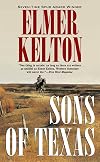
Sons of Texas by Elmer Kelton is a Western adventure story about Michael Lewis. Michael worships his wandering father but this time when he leaves, Michael follows. They end up in Texas to gather wild horses to drive back to the settlements to sell. Unfortunately the Mexican soldiers find them before they get safely back across the Sabine River. Everyone in the party is killed and Michael, wounded, is left to die. But the fifteen year old makes it back but swears revenge on Lt. Rodriguez, show more the officer who killed his father.
Years later, Michael and his younger brother again head out, looking for land for themselves. Michael remembers the rich land of Texas and they head there. Coming across the vicious Lt. Rodriguez again. But this time a group of Americans decide to hunt Rodriguez down to make him pay for his many wrongs. By the end of the book, Michael has had his fill of revenge and fallen in love with Maria, a Mexican girl. He and his brother decide to join Steven Austin who is leading a group of homesteaders into Texas to settle.
Lots of action kept this story moving along at a rapid pace. At home Michael was having battles with some low-life neighbours. When they shot his uncle and Michael manage to wound one of them, they swore that they would kill him. On the trail to Texas, Michael and his brother Andrew, had a number of
encounters of which not all of them were friendly. I have found that this is an author that I can rely upon to deliver accurate and well drawn stories where the bad guys are truly bad and the good guys fight to uphold justice. show less
Years later, Michael and his younger brother again head out, looking for land for themselves. Michael remembers the rich land of Texas and they head there. Coming across the vicious Lt. Rodriguez again. But this time a group of Americans decide to hunt Rodriguez down to make him pay for his many wrongs. By the end of the book, Michael has had his fill of revenge and fallen in love with Maria, a Mexican girl. He and his brother decide to join Steven Austin who is leading a group of homesteaders into Texas to settle.
Lots of action kept this story moving along at a rapid pace. At home Michael was having battles with some low-life neighbours. When they shot his uncle and Michael manage to wound one of them, they swore that they would kill him. On the trail to Texas, Michael and his brother Andrew, had a number of
encounters of which not all of them were friendly. I have found that this is an author that I can rely upon to deliver accurate and well drawn stories where the bad guys are truly bad and the good guys fight to uphold justice. show less
Lists
Awards


You May Also Like


Associated Authors
Statistics
- Works
- 120
- Also by
- 24
- Members
- 4,744
- Popularity
- #5,301
- Rating
- 4.0
- Reviews
- 78
- ISBNs
- 730
- Languages
- 5
- Favorited
- 9
