
Ralph Compton (1934–1998)
Author of Death Rides a Chestnut Mare
About the Author
Disambiguation Notice:
Signet Books continues to release new books under the Ralph Compton byline, though these novels are not actually written by Ralph Compton.
Series
Works by Ralph Compton
Hell Snake 1 copy
Fast Guns Out of Texas 1 copy
Dead Man's Canyon 1 copy
The Kelly Trail 1 copy
The Hunted 1 copy
Snake's Fury 1 copy
Tagged
Common Knowledge
- Canonical name
- Compton, Ralph
- Birthdate
- 1934-04-11
- Date of death
- 1998-09-16
- Gender
- male
- Occupations
- musician
radio announcer
songwriter
newspaper columnist - Nationality
- USA
- Birthplace
- St Clair County, Alabama, USA
- Place of death
- Nashville, Tennessee, USA
- Disambiguation notice
- Signet Books continues to release new books under the Ralph Compton byline, though these novels are not actually written by Ralph Compton.
- Associated Place (for map)
- USA
Members
Discussions
Western, NY cop goes to CO. in Name that Book (June 2013)
Reviews

I picked up Rawhide Flat expecting to read about a Marshal risking his life to get a convict out of a town that wants him dead. After all, that is what the description on the back told me to expect. The book wound up making a left turn about a third of the way through. It's really about a scramble for $50,000 in stolen loot and a false messiah who's planning a hostile takeover of the land.
The structure of the book was a little strange. I started to worry when about a hundred pages in the show more plot line with the convict seemed to have been wrapped up. But Joe was able to take the story in a new direction and keep the pages turning. He handles the pacing and suspense very well, often ending chapters with a cliffhanger.
I very much like Joseph A. West’s ‘voice’. He has an easy to read style that flows very well. Yet he manages to include enough detail to keep things from feeling vague. I’m wondering if he wrote this one in October, because the narrative had several gothic touches. Spectral night riders delivering severed heads, nuns with second sight and the apocalyptic preacher. Please don’t think it is anything other than a western. It’s not. And as a western, it is a good one. Lots of action and shootouts, all the things you read a western for. The gothic elements just give the book a certain kind of mood.
I liked it quite a bit. It fulfilled the promise of the previous Joseph A. West book I read, Guns of the Canyonlands. I liked the writing in that one, but there were numerous issues (a clumsy romance and characters acting out of character). Rawhide Flat is a better and more even book. Joe had a better handle on what kinds of men his characters are. I particularly liked the interaction between Marshal Crane and Sheriff Masterson and that Crane wasn't made out to be a stereotypical perfect western lawman. He was shown to have a violent temper; sometimes he had to muddle through problems and admitted when he was scared. It made him seem much more human than many pulp western heroes.
Overall the book was a quick and enjoyable read with interesting characters, exciting gunplay and a whopper of a finale. show less
The structure of the book was a little strange. I started to worry when about a hundred pages in the show more plot line with the convict seemed to have been wrapped up. But Joe was able to take the story in a new direction and keep the pages turning. He handles the pacing and suspense very well, often ending chapters with a cliffhanger.
I very much like Joseph A. West’s ‘voice’. He has an easy to read style that flows very well. Yet he manages to include enough detail to keep things from feeling vague. I’m wondering if he wrote this one in October, because the narrative had several gothic touches. Spectral night riders delivering severed heads, nuns with second sight and the apocalyptic preacher. Please don’t think it is anything other than a western. It’s not. And as a western, it is a good one. Lots of action and shootouts, all the things you read a western for. The gothic elements just give the book a certain kind of mood.
I liked it quite a bit. It fulfilled the promise of the previous Joseph A. West book I read, Guns of the Canyonlands. I liked the writing in that one, but there were numerous issues (a clumsy romance and characters acting out of character). Rawhide Flat is a better and more even book. Joe had a better handle on what kinds of men his characters are. I particularly liked the interaction between Marshal Crane and Sheriff Masterson and that Crane wasn't made out to be a stereotypical perfect western lawman. He was shown to have a violent temper; sometimes he had to muddle through problems and admitted when he was scared. It made him seem much more human than many pulp western heroes.
Overall the book was a quick and enjoyable read with interesting characters, exciting gunplay and a whopper of a finale. show less
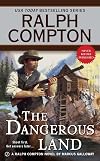
I have read several Comptons and I was looking forward to this one as I agree with the book jacket blurb that he wrote in the same vein as Louis L'Amour. However, this novel is not near the standard set by Compton. Some of the incidents and characters do not ring realistic. I had difficulty getting into the story as it was slow starting and the main characters did not grab my interest.
If you are Compton fan, skip this one.
Paul Meakes runs a general store in a small Colorado town in 1886. show more While visiting another traveling merchant to purchase supplies, they are attacked by Comanches. His daughter is wounded and after being treated by the doctor fails to recover. As the ailment doesn't seem to be because of the wound, Meakes sets out to find the cause. It turns out to be contaminated water. With the assistance of a native and a bounty hunter, he searches for the source of the problem and the remedy. show less
If you are Compton fan, skip this one.
Paul Meakes runs a general store in a small Colorado town in 1886. show more While visiting another traveling merchant to purchase supplies, they are attacked by Comanches. His daughter is wounded and after being treated by the doctor fails to recover. As the ailment doesn't seem to be because of the wound, Meakes sets out to find the cause. It turns out to be contaminated water. With the assistance of a native and a bounty hunter, he searches for the source of the problem and the remedy. show less

I’d really enjoyed the first Marcus Pelegrimas book I read: Skinners: Blood Blade. When I found out that he’d written a bunch of westerns under the pen name of ‘Marcus Galloway’, I thought I’d give them ago. Death of a Bad Man is my first, but friends, it won’t be my last.
Solomon Brakefield is a miner living in the dusty little scrap of a town of Warren, New Mexico. Really, even calling this tiny collection of tents ruled over by Charlie Lowell, the tight fisted owner of the show more silver mine; a ‘town’ is being generous.
When a gang of desperadoes ride through town and steal Charlie’s money, Sol takes it upon himself to save the day. This event and complications from it change him in unexpected ways, causing Sol to strike off and seek his fortune and the help of a bad man named Nestor Quarles.
I thought Sol’s ‘awakening’ was handled very well. Most of the characters were pretty two dimensional stock types, but there are moments with Sol that are very well done, with a better sense of characterization than I was expecting. Often the author would work in little throwaway moments of Sol reflecting on who he was and who he is becoming. This could easily have been done in a treacly or overbearing manner, but here it is pulled off pretty smoothly.
Nestor was also pretty deftly handled. He reminded me a bit of Clint Eastwood's character in Unforgiven. The author doesn't want you to hate Nestor. He doesn't go around gunning down widows or children for instance. But he never acts in a heroic, out of character manner either. As a reader you are never made to question how dangerous a man Nestor is.
Marcus Pelegrimas is never going to be confused with Henry James, but he really knows how to write good pulp novels. He has a very good sense of pacing that keeps interest in the story high. He narrates the story in a very conversational manner that gives the feel of a tale being told over a camp fire. The style is so conversational that he easily could have blown it with a turn of phrase that would have come off as too modern, pulling me out of the Old West, but he never did. I could see that he worked hard to put out writing that seems so natural.
The only real problem I had with the writing is that sometimes the description of action scenes was a little confusing. Only a very small flaw on a book that I enjoyed quite a bit.
I will be picking up the other two books he wrote under the Ralph Compton label and have already picked up the first couple of books from his Man from Boot Hill series. show less
Solomon Brakefield is a miner living in the dusty little scrap of a town of Warren, New Mexico. Really, even calling this tiny collection of tents ruled over by Charlie Lowell, the tight fisted owner of the show more silver mine; a ‘town’ is being generous.
When a gang of desperadoes ride through town and steal Charlie’s money, Sol takes it upon himself to save the day. This event and complications from it change him in unexpected ways, causing Sol to strike off and seek his fortune and the help of a bad man named Nestor Quarles.
I thought Sol’s ‘awakening’ was handled very well. Most of the characters were pretty two dimensional stock types, but there are moments with Sol that are very well done, with a better sense of characterization than I was expecting. Often the author would work in little throwaway moments of Sol reflecting on who he was and who he is becoming. This could easily have been done in a treacly or overbearing manner, but here it is pulled off pretty smoothly.
Nestor was also pretty deftly handled. He reminded me a bit of Clint Eastwood's character in Unforgiven. The author doesn't want you to hate Nestor. He doesn't go around gunning down widows or children for instance. But he never acts in a heroic, out of character manner either. As a reader you are never made to question how dangerous a man Nestor is.
Marcus Pelegrimas is never going to be confused with Henry James, but he really knows how to write good pulp novels. He has a very good sense of pacing that keeps interest in the story high. He narrates the story in a very conversational manner that gives the feel of a tale being told over a camp fire. The style is so conversational that he easily could have blown it with a turn of phrase that would have come off as too modern, pulling me out of the Old West, but he never did. I could see that he worked hard to put out writing that seems so natural.
The only real problem I had with the writing is that sometimes the description of action scenes was a little confusing. Only a very small flaw on a book that I enjoyed quite a bit.
I will be picking up the other two books he wrote under the Ralph Compton label and have already picked up the first couple of books from his Man from Boot Hill series. show less

"Who the hell was Owen Fowler?" So begins Guns of the Canyonlands by Joseph A. West. In the first chapter we learn that Owen has already caused our hero Chance Tyree some serious trouble even though the two have never met.
Eventually they do meet and Chance is drawn in to a range war in the canyonlands of Utah. The story is one of the three or four stock western stories. Tales of colorful ranchers, corrupt lawmen and hired guns. Nothing too original, but like jazz, it is fun to watch an show more author riff on an established pattern.
This is my first Joseph A. West novel and I do like his narrative. He takes care to describe the alien landscape of the canyonlands with its flat-topped buttes and treacherous box canyons, yet he doesn't bog the reader down with extraneous detail. His pacing is brisk and moves the story along quickly. The author liked to end his chapters with a cliffhanger when it worked for the tale (so not every chapter ends that way) and that kept me wanting to read just one more chapter. He does go pretty heavily into western patois in the dialog sometimes. I liked it and thought it added flavor, though occasionally he laid it on pretty thick.
The characters are all pretty flat, stock western archetypes with no real depth, but I can't say it really hurt the story. I would have liked to know a little of Chance Tyree's history. We read that he is a world weary gunslinger, but he doesn't seem to act that way. He seemed like too nice of a guy to have led the rough and tumble life we are lead to believe he lived. Ah well. Since westerns have such a strong tradition of the 'mysterious stranger' I'll let it slide.
What I can't let slide was the awful, awful romance between Chance and the rancher's daughter Lorena. As soon as Chance lays eyes on her he is swooning over her and has asked her to marry him within their first two hours together. This could have been handled well if Chance was shown to be naive or something, but as it is it was artlessly handled and clumsily presented. Chance's history seemed to clash with his puppy-dog crush. I think the book would have read better without that angle, but Mr. West at least tries to clean up his act with the introduction of Sally, a tougher character who seemed more believable a companion for Chance. Even so, the 'romantic' dialog was still pretty cheesy.
Guns of the Canyonlands was a fun read and had some bright moments. I will read more of Joseph A. West's work (Blood and Gold and Rawhide Flat both sound pretty interesting), but this one had a few too many issues for me to recommend it. show less
Eventually they do meet and Chance is drawn in to a range war in the canyonlands of Utah. The story is one of the three or four stock western stories. Tales of colorful ranchers, corrupt lawmen and hired guns. Nothing too original, but like jazz, it is fun to watch an show more author riff on an established pattern.
This is my first Joseph A. West novel and I do like his narrative. He takes care to describe the alien landscape of the canyonlands with its flat-topped buttes and treacherous box canyons, yet he doesn't bog the reader down with extraneous detail. His pacing is brisk and moves the story along quickly. The author liked to end his chapters with a cliffhanger when it worked for the tale (so not every chapter ends that way) and that kept me wanting to read just one more chapter. He does go pretty heavily into western patois in the dialog sometimes. I liked it and thought it added flavor, though occasionally he laid it on pretty thick.
The characters are all pretty flat, stock western archetypes with no real depth, but I can't say it really hurt the story. I would have liked to know a little of Chance Tyree's history. We read that he is a world weary gunslinger, but he doesn't seem to act that way. He seemed like too nice of a guy to have led the rough and tumble life we are lead to believe he lived. Ah well. Since westerns have such a strong tradition of the 'mysterious stranger' I'll let it slide.
What I can't let slide was the awful, awful romance between Chance and the rancher's daughter Lorena. As soon as Chance lays eyes on her he is swooning over her and has asked her to marry him within their first two hours together. This could have been handled well if Chance was shown to be naive or something, but as it is it was artlessly handled and clumsily presented. Chance's history seemed to clash with his puppy-dog crush. I think the book would have read better without that angle, but Mr. West at least tries to clean up his act with the introduction of Sally, a tougher character who seemed more believable a companion for Chance. Even so, the 'romantic' dialog was still pretty cheesy.
Guns of the Canyonlands was a fun read and had some bright moments. I will read more of Joseph A. West's work (Blood and Gold and Rawhide Flat both sound pretty interesting), but this one had a few too many issues for me to recommend it. show less
You May Also Like


Associated Authors
Statistics
- Works
- 112
- Members
- 3,868
- Popularity
- #6,551
- Rating
- 3.5
- Reviews
- 36
- ISBNs
- 580
- Languages
- 1
- Favorited
- 2