
Michael Kurland
Author of Ten Little Wizards
About the Author
Michael Kurland is the author of nearly forty books, including both nonfiction and fiction, though he is perhaps best known for his novels and stories featuring Professor James Moriarty. Born and raised in New York City, he lives in Petaluma, California
Image credit: Photo by Burser
Series
Works by Michael Kurland
Complete Idiot's Guide to Extraterrestrial Intelligence (The Complete Idiot's Guide) (1999) 15 copies
Victorian Villainy: A Collection of Moriarty Stories / The Trials of Quintilian: Three Stories of Rome's Greatest Detective (Wildside Myst (2011) 7 copies
Think Only This Of Me 3 copies
Images, Conceits & Lollygags 1 copy
He Couldn't Fly 1 copy
The Stolen Saint Simon 1 copy
Four Hundred Slaves 1 copy
Associated Works
The Mammoth Book of Locked-Room Mysteries and Impossible Crimes (2000) — Contributor — 134 copies, 1 review
Galaxy Science Fiction 1973 November, Vol. 34, No. 2 (1973) — Contributor, some editions — 12 copies
Tagged
Common Knowledge
- Legal name
- Kurland, Michael Joseph
- Other names
- Kurland, Michael J.
- Birthdate
- 1938-03-01
- Gender
- male
- Occupations
- author
- Relationships
- Anderson, Chester (friend)
- Nationality
- USA
- Birthplace
- New York, New York, USA
- Places of residence
- Petaluma, California, USA
San Luis Obispo, California, USA - Associated Place (for map)
- California, USA
Members
Reviews
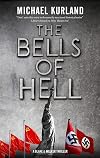
If Nick and Nora Charles in The Thin Man series could be a refreshingly witty corrective for 21st century gloom-and-doom, then Michael Kurland’s The Bells of Hell may be just the book to prove it. There are dark deeds afoot by Nazis and Communists in the late 1930s, but the main characters in this historical thriller are plunging into these events with their equilibrium and senses of humor intact.
Lord Geoffrey Saboy is a British ‘cultural attaché’—that is, a spy in the British show more Secret Service—working in Washington, DC, along with his wife, Lady Patricia. Lord Geoffrey is gay, so though the couple is close, he doesn’t begrudge his wife her amorous dalliances, some of which are for pleasure and some in service to her own approach to sleuthing. An old friend of Lord Geoffrey’s, US counter-intelligence agent Jacob Welker, has the ear of President Roosevelt, which occasionally comes in very handy.
In March 1938, a Communist agent from Germany, arrives in New York, and in a matter of days, is found naked, tied to a chair in an empty warehouse, tortured to death. Unbeknownst to his Gestapo killers, there was a reluctant witness to this execution, unemployed printer Andrew Blake. Many arms of officialdom take notice when the salesman’s identity is revealed, as worries about the German-American volksbund (the “Bund”) are on the rise.
Welker talks a reluctant Blake into taking a job printing literature for the Bund. Blake is terrified by the murder he saw and almost paralyzed with fear his spying will be discovered. He laments every assignment and drags his feet in accepting each new task, proving once again that true courage is not going boldly into the unknown, but knowing the danger and going anyway. And when his German masters, in turn, ask him to spy on the Communists, he’s a pretzel of hesitation.
Kurland develops the plot in a number of interesting ways by giving Lord Geoffrey his own brush with the Nazis when he accompanies HRH Prince Edward, Duke of Windsor, on an official visit to Germany. HRH find Hitler impressive and forceful, and Saboy responds that one likely acquires the habit of being forceful when no one dares disagree. If you are familiar with the real-life affinity HRH had for Hitler, this plotline is especially intriguing.
Meanwhile, intelligence from multiple sources suggests the Gestapo is planning a major terror event in New York, which they plan to set up so that blame lands on the Communists. But what, where, and when is this to take place? These questions preoccupy the British couple and Welker, their American friend (and possible future amour of Lady Patricia).
The nicely plotted story moves along at a sprightly pace. Though the characters are dealing with deadly serious matters, they maintain their lighthearted, let’s-not-take-ourselves-too-seriously banter. Kurland captures the spirit of the times: the oppressive gloom in Germany, the uncertainties regarding impending war in Britain, and the fear of the extremists of right and left who threaten America. show less
Lord Geoffrey Saboy is a British ‘cultural attaché’—that is, a spy in the British show more Secret Service—working in Washington, DC, along with his wife, Lady Patricia. Lord Geoffrey is gay, so though the couple is close, he doesn’t begrudge his wife her amorous dalliances, some of which are for pleasure and some in service to her own approach to sleuthing. An old friend of Lord Geoffrey’s, US counter-intelligence agent Jacob Welker, has the ear of President Roosevelt, which occasionally comes in very handy.
In March 1938, a Communist agent from Germany, arrives in New York, and in a matter of days, is found naked, tied to a chair in an empty warehouse, tortured to death. Unbeknownst to his Gestapo killers, there was a reluctant witness to this execution, unemployed printer Andrew Blake. Many arms of officialdom take notice when the salesman’s identity is revealed, as worries about the German-American volksbund (the “Bund”) are on the rise.
Welker talks a reluctant Blake into taking a job printing literature for the Bund. Blake is terrified by the murder he saw and almost paralyzed with fear his spying will be discovered. He laments every assignment and drags his feet in accepting each new task, proving once again that true courage is not going boldly into the unknown, but knowing the danger and going anyway. And when his German masters, in turn, ask him to spy on the Communists, he’s a pretzel of hesitation.
Kurland develops the plot in a number of interesting ways by giving Lord Geoffrey his own brush with the Nazis when he accompanies HRH Prince Edward, Duke of Windsor, on an official visit to Germany. HRH find Hitler impressive and forceful, and Saboy responds that one likely acquires the habit of being forceful when no one dares disagree. If you are familiar with the real-life affinity HRH had for Hitler, this plotline is especially intriguing.
Meanwhile, intelligence from multiple sources suggests the Gestapo is planning a major terror event in New York, which they plan to set up so that blame lands on the Communists. But what, where, and when is this to take place? These questions preoccupy the British couple and Welker, their American friend (and possible future amour of Lady Patricia).
The nicely plotted story moves along at a sprightly pace. Though the characters are dealing with deadly serious matters, they maintain their lighthearted, let’s-not-take-ourselves-too-seriously banter. Kurland captures the spirit of the times: the oppressive gloom in Germany, the uncertainties regarding impending war in Britain, and the fear of the extremists of right and left who threaten America. show less

Three short stories narrated by the somewhat annoying C. Plautus Maximilianus Aureus about murders solved by the historical Marcus Fabius Quintilianus. Sort of Sherlock Holmes light in a toga. Somewhat amusing and engaging.

This was the novel that turned me onto science fiction, and it illustrates the fact that SF works at all sorts of levels. I read it at the age of ten, when we were holidaying in a caravan in North Wales and I came across this book, but the cover was missing. I never knew what it was for years...
The plot: an Earth ship encounters the vanguard of an expanding alien force in deep space. They are able to defeat the aliens, but find that their invading forces are ten years behind. In their way is show more a world in a roughly medieval stage of development. The 'Prime Directive' prevents direct intervention by the humans, so instead they infiltrate the planet's society and begin shoving like mad to take them from knights in armour to technologically-advanced starflight in ten years so they can fight off the aliens themselves.
This novel stayed with me for years due to one image - a group of nobles, dressed in roughly 17th-century Cavalier-style clothing, attending comparative trials of different spaceship propulsion systems. What of course I totally missed at age ten were the satirical and earthier sides to the novel - the Sisterhood of Mother's Little Helpers in the Street of Many Flowers, for example, went completely over my head and a good thing too! And of course, there was a twist in the story right at the end which I didn't really grasp until much, much later.
This is otherwise an unremarkable 1960s SF novel, with no great pretentions to literary greatness. But as an example of the ideas that the genre can just throw off without even trying, it's perfect. show less
The plot: an Earth ship encounters the vanguard of an expanding alien force in deep space. They are able to defeat the aliens, but find that their invading forces are ten years behind. In their way is show more a world in a roughly medieval stage of development. The 'Prime Directive' prevents direct intervention by the humans, so instead they infiltrate the planet's society and begin shoving like mad to take them from knights in armour to technologically-advanced starflight in ten years so they can fight off the aliens themselves.
This novel stayed with me for years due to one image - a group of nobles, dressed in roughly 17th-century Cavalier-style clothing, attending comparative trials of different spaceship propulsion systems. What of course I totally missed at age ten were the satirical and earthier sides to the novel - the Sisterhood of Mother's Little Helpers in the Street of Many Flowers, for example, went completely over my head and a good thing too! And of course, there was a twist in the story right at the end which I didn't really grasp until much, much later.
This is otherwise an unremarkable 1960s SF novel, with no great pretentions to literary greatness. But as an example of the ideas that the genre can just throw off without even trying, it's perfect. show less
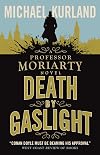
Trying hard to be fair here. I don't want to ding this book just because I don't happen to care for the idea of Moriarty as a misunderstood Robin Hood ... though I will willingly take on anyone who says this version of Moriarty is somehow more interesting, because (I would argue) the world is already full of Robin Hoods but has only ever had – will only ever have - one Master Consulting Criminal. Moreover, there are many things about this book to like, including the authentic period detail show more and competent writing.
But I think there needs to be a rule among authors who take up the character of Sherlock Holmes that, do with him what you may, you may not actually make him stupid. And this Sherlock Holmes is resoundingly stupid, failing over and over again to make the obvious series of deductions that would reveal the link connecting the locked-room murders of a series of English gentlemen. Into the gap steps Moriarty, but not really, because when Moriarty investigates the crime we get no cool forensic investigation or dazzling conclusions - merely a pedestrian sort of inquiry heavy on pre-existing knowledge and lucky guesses, and what fun is that?
Some other beefs I had with this tale:
* I get that this is a genre novel with certain accepted tropes (ex: plot trumps personalities), but if your "hook" is that you're offering more interesting and complex main characters, then shouldn't your main characters be more interesting and complex?. Kurland *tells* us all the reasons why his Moriarty & Barnett should fascinate, but then depicts them acting in ways so inauthentic, glib, and passionless that it becomes increasingly difficult to believe in (or care about) either of them. If you want your characters to seem three-dimensional, then you need to deliver more than one dimension.
* This thing is so much longer than it needs to be! I love period detail as much as anyone, and time spent on character development is never wasted, but that's not what slogs this down - it's too much unnecessary dialog, too many long scenes that could have just as effectively been communicated in a sentence or two, and way too many narrative diversions depicting Moriarty indulging in scientific pursuits or tricking Sherlock Holmes into looking like a fool. Someone should have edited this a lot more critically.
* Finally, I'm grateful that Kurland seems to possess an intimate familiarity with the Doyle canon, but it's one thing to use the info to add depth to the story, another to shower readers with so many references taken out of context that the novelty wears off long before the novel ends.
Don't get me wrong: in a world full of Holmes pastiches, this probably falls in the upper quartile of offerings. Kurland's descriptions of 1800s London are evocative, his bit characters have an O. Henry-esque charm, and there's enough plot to keep you reading on. But am not sure I’m willing to forgive the absence of so many qualities – an intriguing crime, puzzling clues, clever deductions, a satisfyingly dramatic reveal – that make me seek out Holmes pastiches in the first place. Moreover, I simply don't see the sense in adding layers of moral ambiguity to Moriarty, for all intents and purposes creating a character that merely duplicates Sherlock Holmes rather than adding new layers of complexity or depth to either character. show less
But I think there needs to be a rule among authors who take up the character of Sherlock Holmes that, do with him what you may, you may not actually make him stupid. And this Sherlock Holmes is resoundingly stupid, failing over and over again to make the obvious series of deductions that would reveal the link connecting the locked-room murders of a series of English gentlemen. Into the gap steps Moriarty, but not really, because when Moriarty investigates the crime we get no cool forensic investigation or dazzling conclusions - merely a pedestrian sort of inquiry heavy on pre-existing knowledge and lucky guesses, and what fun is that?
Some other beefs I had with this tale:
* I get that this is a genre novel with certain accepted tropes (ex: plot trumps personalities), but if your "hook" is that you're offering more interesting and complex main characters, then shouldn't your main characters be more interesting and complex?. Kurland *tells* us all the reasons why his Moriarty & Barnett should fascinate, but then depicts them acting in ways so inauthentic, glib, and passionless that it becomes increasingly difficult to believe in (or care about) either of them. If you want your characters to seem three-dimensional, then you need to deliver more than one dimension.
* This thing is so much longer than it needs to be! I love period detail as much as anyone, and time spent on character development is never wasted, but that's not what slogs this down - it's too much unnecessary dialog, too many long scenes that could have just as effectively been communicated in a sentence or two, and way too many narrative diversions depicting Moriarty indulging in scientific pursuits or tricking Sherlock Holmes into looking like a fool. Someone should have edited this a lot more critically.
* Finally, I'm grateful that Kurland seems to possess an intimate familiarity with the Doyle canon, but it's one thing to use the info to add depth to the story, another to shower readers with so many references taken out of context that the novelty wears off long before the novel ends.
Don't get me wrong: in a world full of Holmes pastiches, this probably falls in the upper quartile of offerings. Kurland's descriptions of 1800s London are evocative, his bit characters have an O. Henry-esque charm, and there's enough plot to keep you reading on. But am not sure I’m willing to forgive the absence of so many qualities – an intriguing crime, puzzling clues, clever deductions, a satisfyingly dramatic reveal – that make me seek out Holmes pastiches in the first place. Moreover, I simply don't see the sense in adding layers of moral ambiguity to Moriarty, for all intents and purposes creating a character that merely duplicates Sherlock Holmes rather than adding new layers of complexity or depth to either character. show less
Lists
Awards


You May Also Like


Associated Authors
Statistics
- Works
- 55
- Also by
- 20
- Members
- 2,338
- Popularity
- #10,976
- Rating
- 3.5
- Reviews
- 45
- ISBNs
- 126
- Languages
- 3
- Favorited
- 3