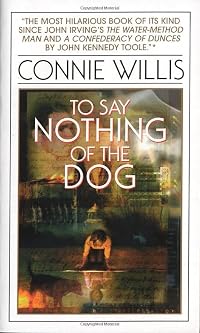
On This Page
Description
Ned Henry is badly in need of a rest. He's been shuttling between the 21st century and the 1940s searching for a Victorian atrocity called the bishop's bird stump. It's part of a project to restore the famed Coventry Cathedral, destroyed in a Nazi air raid over a hundred years earlier. But then Verity Kindle, a fellow time traveler, inadvertently brings back something from the past. Now Ned must jump back to the Victorian era to help Verity put things right--not only to save the project but show more to prevent altering history itself. show lessTags
Recommendations


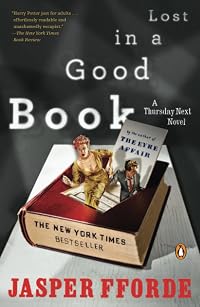
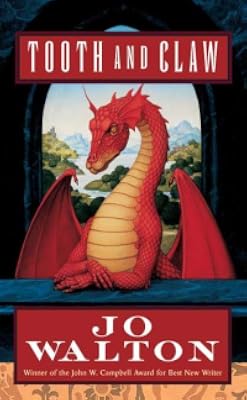

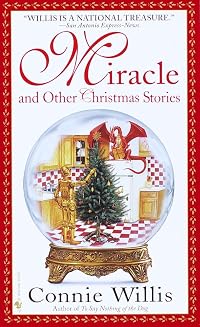
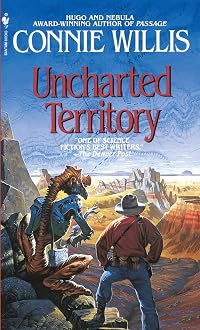
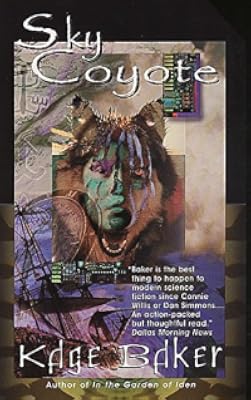
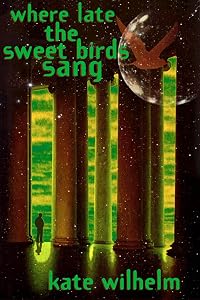
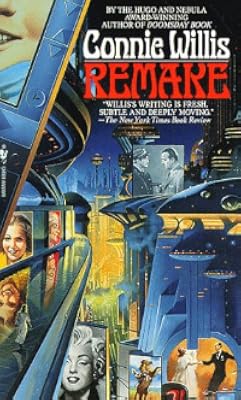

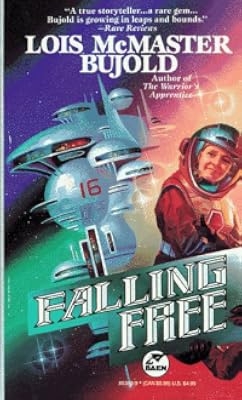


Member Recommendations

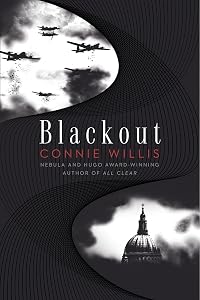
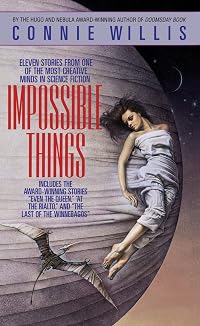
amberwitch A much darker book set in the same universe. This time the timetravel is to the dark middle ages instead of the gay Victorian era
Othemts To Say Nothing of the Dog is a more light-hearted time travel adventure which is sort of a sequel to Doomsday Book. Both are excellent, enjoyable novels.
Also recommended by Patangel
203

simon_carr Similar light hearted style and 'book travelling' rather than time travelling but chances are if you like one then you'll like the other.
104

nessreader College of Magics is a swashbuckling coming of age novel about a Ruritanian princess (who has a perfectly proper English friend, a demure witch with a passion for millinery) Jane, the English friend is the lead in the sequel, Scholar of Magics, which is a closer match for To Say Nothing..
Edwardiana, cream teas, and magic, in books told with a deft wit: that describes both To Say Nothing and Scholar of Magics.
41
nessreader Both have a flavour of screwball comedy romance and wilful anachronisms abound while the unromantic lovers sort themselves out. Corrupting Dr Nice reminded me a lot of Preston Sturges' film, The Lady Eve.
11

Keeline Also a light Victorian mystery/romance with a Wodehouse feel
11

isabelx Both are very funny time travel stories.
Member Reviews
In this book and others, Connie Willis writes of historians for whom time travel is a routine procedure. The originating period for the travelers in To Say Nothing of the Dog (written in 1997) is in the 2050s, well after the academic discovery of time travel in 2013, and the story begins in media res in 1940, but most of the chapters take place in 1888.
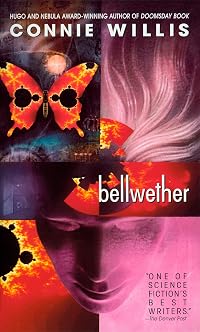
Like the only other Willis book I have read (Bellwether), this novel was for me a romantic comedy with sf features more than the other way around. The discussions of fate and free will, of the role of individual decision, and the puzzling of temporal paradoxes were all adroit and engaging, but I felt like the propulsive tensions of the book, and its moments of greatest intensity, really show more stemmed from its amorous matchmaking.
As far as the theory of time travel is concerned, the story very much avoids any sort of "many worlds" system of diverging timelines. The "continuum" is practically personified, spoken of by the historians as if it had conscious agency in its homeostatic functioning. It was almost like another name for God, in a book where none of the characters--whether from the 2050s or the 1880s--seemed to think in explicitly theological terms, despite it centering on a cathedral along with a humorous subplot about Spiritualism.
Literary allusions abound, to The Moonstone, Alice in Wonderland, Agatha Christie, Wodehouse, Shakespeare, Tennyson, Arthur Conan Doyle, and others. Now that we are well past the dates of many of the events anticipated in Willis' fiction here (including "the Pandemic" sometime between 2000 and 2013), this fiercely clever book's intertextuality keeps it "real" somehow.
This novel is the second in a series, and I haven't read the first. But I honestly felt more disadvantaged from not having read Jerome K. Jerome's Victorian Three Men in a Boat, to Say Nothing of the Dog than from having skipped Willis' Doomsday Book. And surely one should be able to read a series about time travellers in any order. I did like this one well enough that I expect I will eventually get back its predecessor. show less
Like the only other Willis book I have read (Bellwether), this novel was for me a romantic comedy with sf features more than the other way around. The discussions of fate and free will, of the role of individual decision, and the puzzling of temporal paradoxes were all adroit and engaging, but I felt like the propulsive tensions of the book, and its moments of greatest intensity, really show more stemmed from its amorous matchmaking.
As far as the theory of time travel is concerned, the story very much avoids any sort of "many worlds" system of diverging timelines. The "continuum" is practically personified, spoken of by the historians as if it had conscious agency in its homeostatic functioning. It was almost like another name for God, in a book where none of the characters--whether from the 2050s or the 1880s--seemed to think in explicitly theological terms, despite it centering on a cathedral along with a humorous subplot about Spiritualism.
Literary allusions abound, to The Moonstone, Alice in Wonderland, Agatha Christie, Wodehouse, Shakespeare, Tennyson, Arthur Conan Doyle, and others. Now that we are well past the dates of many of the events anticipated in Willis' fiction here (including "the Pandemic" sometime between 2000 and 2013), this fiercely clever book's intertextuality keeps it "real" somehow.
This novel is the second in a series, and I haven't read the first. But I honestly felt more disadvantaged from not having read Jerome K. Jerome's Victorian Three Men in a Boat, to Say Nothing of the Dog than from having skipped Willis' Doomsday Book. And surely one should be able to read a series about time travellers in any order. I did like this one well enough that I expect I will eventually get back its predecessor. show less
Book club pick ☺
I have always been fond of Three Men in a Boat. It is incredibly nice to come back to To Say Nothing of the Dog, which is basically a love letter to Jerome K. Jerome, an idealised image of Victorian England, Victorian fiction, and Golden Age mystery novels. The author turns all of the above on its head and creates a delightful time travel romp. The stakes are high, too – it’s the whole space-time continuum, no less ;)
There is something to chuckle, laugh, or smile at on every page.
“ ’What on earth were you doing in the water?’
‘Drowning’, said professor Peddick.”
I loved the effects of time-lag (it happens when you do too much time travelling), which include attacks of maudlin sentimentality. Then you say show more stuff like “It’s no wonder they call you man’s best friend. Faithful and loyal and true, you share in our sorrows and rejoice in our triumphs…” ets etc. Lovely.
There are lots of misunderstandings and people talking at each other rather than to each other, because their brains went on a holiday. Really, I wouldn’t trust any of these characters with ordering a coffee for me, let alone time travel. But it also means that you are wonderfully entertained all the way through.
Things come together very satisfyingly by the end. Don’t look too closely, though, because time travel books rarely make sense. Just go with the flow, dear reader. Enjoy the flow of the Thames... :))) show less
I have always been fond of Three Men in a Boat. It is incredibly nice to come back to To Say Nothing of the Dog, which is basically a love letter to Jerome K. Jerome, an idealised image of Victorian England, Victorian fiction, and Golden Age mystery novels. The author turns all of the above on its head and creates a delightful time travel romp. The stakes are high, too – it’s the whole space-time continuum, no less ;)
There is something to chuckle, laugh, or smile at on every page.
“ ’What on earth were you doing in the water?’
‘Drowning’, said professor Peddick.”
I loved the effects of time-lag (it happens when you do too much time travelling), which include attacks of maudlin sentimentality. Then you say show more stuff like “It’s no wonder they call you man’s best friend. Faithful and loyal and true, you share in our sorrows and rejoice in our triumphs…” ets etc. Lovely.
There are lots of misunderstandings and people talking at each other rather than to each other, because their brains went on a holiday. Really, I wouldn’t trust any of these characters with ordering a coffee for me, let alone time travel. But it also means that you are wonderfully entertained all the way through.
Things come together very satisfyingly by the end. Don’t look too closely, though, because time travel books rarely make sense. Just go with the flow, dear reader. Enjoy the flow of the Thames... :))) show less
I re-read 'To Say Nothing Of The Dog' after a twenty-five-year gap that had left me with little memory of the book beyond that it was good and it made laugh. Reading it again, I can say that it remains good and it made me laugh several times. I'd also forgotten most of the things that made the book worth reading.
What is it about? Well, that depends. The plot seems to be about a time-lagged time traveller from Oxford in the 2030s wandering along the Thames in a boat in 1888 intent on fixing an 'incongruity' that could collapse the timeline that he comes from, perhaps resulting in Germany winning World War II. The same time traveller is also returning a missing cat, falling in love at first sight with a female colleague and trying to find show more the Bishop's Bird Stump, lost during the bombing of Coventry Cathedral in 1941, so that it can be included in the reconstructed Coventry Cathedral that is about to be opened in Oxford in the 2030s.
Sound confusing? Well, I think it's supposed to because it seems to me that none of these things is what the novel is about. I think 'To Say Nothing Of The Dog' a complex puzzle meant to amuse but also to demonstrate that, although we know it is futile to try and explain the operation of massively complex chaotic systems in terms of linear cause and effect, we just can't help ourselves. We have a deep need to simplify complexity in order to have a reason for why things happened and to preserve our own sense of urgency.
Connie Willis does a masterful job of playfully using the conventions of Golden Age detective fiction by Agatha Christie and Dorothy L Sayers to show the fallacy of reasoning our way to an answer in a system where everything is connected to and affected by everything else.
Connie Willis also shows us that, although people as people don't change over time, our reference points and expectations are so different from generation to generation that we can seem absurd to one another. The world of Jerome K Jerome's 'Three Men In A Boat', written from an unthinking security that only men born the ruling class of the world's most powerful empire, looks very different when you look back from the twenty-first century and wonder how they could have so child-like, so romantic in their conception of women, and so unassailably self-confident when, in less than thirty years, their entire world will have been blown apart.
By now, you may be wondering what it was that I was laughing at. Well, the book has a very specific kind of humour. The action and some of the actors are inherently silly. Some of the humour borrows from farce, some from rom-com and some is the raise-a-rueful-eyebrow and smile kind of humour that depends on the reader understanding all the connections that are there to be seen but which one wouldn't want to have to underline too heavily.
It took me the first quarter of the book before I relaxed (gave up?) and embraced the silliness of the book. Scenes like the first entrance into Muchings Hall or the allegedly Russian medium, Madame Iritovsky's seance made me laugh out loud.
I enjoyed watching the befuddlement of Ned Henry, one of the time travellers, at aspects of Victorian life, a period for which he has not been prepped. I was amused at his disappointment that an English Breakfast doesn't include bacon, eggs or toast unless you were a member of the proletariat and his astonishment that the Victorian idea of restoring a church was to whip out the 12th Century Font and the medieval windows and replace them with nice new ones.
I liked how mystified Ned was by cats. I'm like that all the time. Ned attributes his confusion to coming from an age when cats are extinct. I attribute my confusion to the cats. They like me to be confused so they can be superior.
The story is peppered with fascinating little snippets of history. The kind of anecdotes that appeal to my sense of the memorable and make me want to say, 'So that's why Napoleon lost the battle of Waterloo' except, it eventually became clear to me that these are all there to show me how easy it is to attribute causality to something because it's simple and easy to understand but that history doesn't really work that way.
This is a novel where almost nothing is only just one thing. It's filled with so many I'm overlays of references that I sometimes felt a little time-lagged myself: watching Tossie cheating at croquet and seeing her as the Red Queen in Alice: the references to Wimsey's proposal to Vane (a scene I loved - in part because the proposal and acceptance were in Latin) and the feeling that Jeeves has just arrived in 1888 were all rather dislocating (as I'm sure they were meant to be).
My main difficulty with the book was the pace. It was so unhurried that, if the novel had been a person, I'd have been checking for a pulse. 'To Say Nothing Of The Dog' feels like a fun four-hundred-page novel that was unfortunately, five-hundred-and-twelve pages long.
Still, it is an extraordinary, one of a kind, sort of book that I'm glad I re-read. show less
First sentence: There were five of us--Carruthers and the new recruit and myself, and Mr. Spivens and the verger. It was late afternoon on November the fifteenth, and we were in what was left of Coventry Cathedral, looking for the bishop's bird stump. Or at any rate I was.
Premise/plot: Ned Henry narrates the novel. And he does a great job. When we first meet him, he's suffering from time-lag. He's spent too much time--of late--jumping through time. He's not alone. There is someone doing her very, very best to drive EVERYONE in his department crazy. Lady Schrapnell is a woman on a mission--a RICH woman on a mission. And she won't take no for an answer. If Lady Schrapnell volunteers you for a job, well, you stay volunteered until the job show more is done to her satisfaction. And what does Lady Schrapnell want most of all? The bishop's bird stump. Her project is the rebuilding of Coventry Cathedral--a cathedral destroyed/damaged during World War II. And she HAS to know if the bishop's bird stump was still in the church during the raid. She needs to know if it should be replicated as part of the 'restoration.' So Ned Henry is just one of dozens looking IN THE PAST for the answers as to what happened to the bishop's bird stump.
But that 'mission' becomes almost secondary....when it is 'discovered' that there's been an incongruity. At first they think it's simple, it's easily fixed. One of the time travelers interfered when she shouldn't. But. They'll just send another time traveler to fix that interference, and things should go smoothly. But since the time traveler they send is Ned Henry, since he's suffering from exhaustion and time-lag, since he barely heard his instructions, since he jumped into the Net to avoid being discovered by an angry Lady Schrapnell, nothing is simple. What Ned Henry soon realizes is that his arrival in June 1888 has changed things. His arrival has kept two people from meeting (and subsequently falling in love and marrying), and that's just the start.
But he isn't the only one in the past. He isn't the only time-traveler working to restore things. Verity Kindle. The beautiful Verity Kindle has a role to play as well....
Verity Kindle is the heroine of To Say Nothing of the Dog. She is on a mission of her own. While Ned Henry was given the assignment of finding out the whereabouts of the bishop's bird stump, Verity's assignment is to read Tocelyn's diary. The diary is available to read in the future. But the most relevant pages to the Coventry Cathedral project were damaged. So she's been sent to the oh-so-important summer of 1888 to read the newly written diary entries. She's having about as much success as Ned Henry. In other words, not much luck at all! These two work together as best they can. Verity manages to travel back and forth a few times to the future. Their mission--as they see it has changed a bit. They worry that they've damaged the future and that something horrible may happen as a result. Like Tocelyn, they know, was supposed to marry a "Mr. C". They know this for a fact from future diary entries. Yet here they are and she's engaged to someone else! Their "new mission" is to find the identity of "Mr. C." and make sure they meet when they're supposed to meet....
My thoughts: Read this book. That's all I have to say about that. No, not really. I have plenty to say about this one. But I don't think my review will be able to do this one justice. What is To Say Nothing of the Dog? It's a funny sci-fi mystery with a smidgen of romance.
I have a weakness for time travel. I do. And this one is a great example of a time-traveling sci-fi novel that just works really well. It's smart. It's funny.
I loved this one. I have always loved this one. It is a delightful time travel novel. I love the humor! I do! It's so very, very funny! And I love the details and the dialogue. This one is just a joy cover to cover!
Quotes:
2 Quotes About the bishop's bird stump:
"Perhaps it was removed for safekeeping," he said, looking at the windows. "Like the east windows."
"The bishop's bird stump?" I said incredulously. "Are you joking?"
"You're right," he said. "It isn't the sort of thing you'd want to keep from being blown up. Victorian art!" He shuddered. (7)
I must be getting light-headed from lack of sleep. No one, even badly shell-shocked, would steal it. Or buy it at a jumble sale. This was the bishop's bird stump. Even the munitions scrap iron drive would turn it down. Unless of course someone recognized its potential as a psychological weapon against the Nazis. (12)
About time-lag:
One of the first symptoms of time-lag is a tendency to maudlin sentimentality, like an Irishman in his cups or a Victorian poet cold-sober. (9)
And isn't this the truth:
There is nothing more helpful than shouted instructions, particularly incomprehensible ones. (153)
Verity Kindle on mystery novels:
"Of course they're usually about murder, not robbery, but they always take place in a country house like this, and the butler did it, at least for the first hundred mystery novels or so. Everyone's a suspect, and it's always the least likely person, and after the first hundred or so, the butler wasn't anymore--the least likely person, I mean--so they had to switch to unlikely criminals. You know, the harmless old lady or the vicar's devoted wife, that sort of thing, but it didn't take the reader long to catch on to that, and they had to resort to having the detective be the murderer, and the narrator, even though that had already been done in The Moonstone. The hero did it, only he didn't know it. He was sleepwalking, in his nightshirt, which was rather racy stuff for Victorian times, and the crime was always unbelievably complicated. In mystery novels. I mean, nobody ever ever just grabs the vase and runs, or shoots somebody in a fit of temper, and at the very end, when you think you've got it all figured out, there's one last plot-twist, and the crime's always very carefully thought out, with disguises and alibis and railway timetables and they have to include a diagram of the house in the frontispiece, showing everyone's bedroom and the library, which is where the body always is, and all the connecting doors, and even then you don't have a prayer of figuring it out, which is why they have to bring in a world-famous detective--"
"Who solves it with little gray cells?" I said.
"Yes. Hercule Poirot, that's Agatha Christie's detective, and he says it isn't at all necessary to go running about measuring footprints and picking up cigarette ends to solve mysteries like Sherlock Holmes. That's Arthur Conan Doyle's detective--"
"I know who Sherlock Holmes is." (205)
Well, it wasn't exactly the ending of an Agatha Christie mystery, with Hercule Poirot gathering everyone together in the drawing room to reveal the murderer and impress everyone with his astonishing deductive powers. And it definitely wasn't a Dorothy Sayers, with the detective hero saying to his heroine sidekick, "I say, we make a jolly good detectin' team. How about makin' the partnership permanent, eh, what?" and then proposing in Latin. (431)
Verity and Ned:
She peered at me. "It isn't fair, you know."
"What isn't?" I said warily.
"Your boater. It makes you look just like Lord Peter Wimsey, especially when you tilt it forward like that." (254)
"The first time I ever saw you, I thought, he looks just like Lord Peter Wimsey. You were wearing the boater and--no, that wasn't the first time," she said accusingly. "The first time was in Mr. Dunworthy's office, and you were all covered in soot. You were still adorable, though, even if your mouth was hanging open." (254)
"Lord Peter took a nap," she said. "Harriet watched him sleep, and that's when she knew she was in love with him."
She sat up again. "Of course, I knew it from the second page of Strong Poison, but it took two more books for Harriet to figure it out. She kept telling herself it was all just detecting and deciphering codes and solving mysteries together, but I knew she was in love with him. He proposed in Latin. Under a bridge. After they solved the mystery. You can't propose till after you've solved the mystery. That's a law in detective novels."
She sighed. "It's too bad. 'Placetne, magistra?' he said when he proposed, and then she said, 'Placet.' That's a fancy Oxford don way of saying yes. I had to look it up. I hate it when people use Latin and don't tell you what they mean..." (259) show less
Premise/plot: Ned Henry narrates the novel. And he does a great job. When we first meet him, he's suffering from time-lag. He's spent too much time--of late--jumping through time. He's not alone. There is someone doing her very, very best to drive EVERYONE in his department crazy. Lady Schrapnell is a woman on a mission--a RICH woman on a mission. And she won't take no for an answer. If Lady Schrapnell volunteers you for a job, well, you stay volunteered until the job show more is done to her satisfaction. And what does Lady Schrapnell want most of all? The bishop's bird stump. Her project is the rebuilding of Coventry Cathedral--a cathedral destroyed/damaged during World War II. And she HAS to know if the bishop's bird stump was still in the church during the raid. She needs to know if it should be replicated as part of the 'restoration.' So Ned Henry is just one of dozens looking IN THE PAST for the answers as to what happened to the bishop's bird stump.
But that 'mission' becomes almost secondary....when it is 'discovered' that there's been an incongruity. At first they think it's simple, it's easily fixed. One of the time travelers interfered when she shouldn't. But. They'll just send another time traveler to fix that interference, and things should go smoothly. But since the time traveler they send is Ned Henry, since he's suffering from exhaustion and time-lag, since he barely heard his instructions, since he jumped into the Net to avoid being discovered by an angry Lady Schrapnell, nothing is simple. What Ned Henry soon realizes is that his arrival in June 1888 has changed things. His arrival has kept two people from meeting (and subsequently falling in love and marrying), and that's just the start.
But he isn't the only one in the past. He isn't the only time-traveler working to restore things. Verity Kindle. The beautiful Verity Kindle has a role to play as well....
Verity Kindle is the heroine of To Say Nothing of the Dog. She is on a mission of her own. While Ned Henry was given the assignment of finding out the whereabouts of the bishop's bird stump, Verity's assignment is to read Tocelyn's diary. The diary is available to read in the future. But the most relevant pages to the Coventry Cathedral project were damaged. So she's been sent to the oh-so-important summer of 1888 to read the newly written diary entries. She's having about as much success as Ned Henry. In other words, not much luck at all! These two work together as best they can. Verity manages to travel back and forth a few times to the future. Their mission--as they see it has changed a bit. They worry that they've damaged the future and that something horrible may happen as a result. Like Tocelyn, they know, was supposed to marry a "Mr. C". They know this for a fact from future diary entries. Yet here they are and she's engaged to someone else! Their "new mission" is to find the identity of "Mr. C." and make sure they meet when they're supposed to meet....
My thoughts: Read this book. That's all I have to say about that. No, not really. I have plenty to say about this one. But I don't think my review will be able to do this one justice. What is To Say Nothing of the Dog? It's a funny sci-fi mystery with a smidgen of romance.
I have a weakness for time travel. I do. And this one is a great example of a time-traveling sci-fi novel that just works really well. It's smart. It's funny.
I loved this one. I have always loved this one. It is a delightful time travel novel. I love the humor! I do! It's so very, very funny! And I love the details and the dialogue. This one is just a joy cover to cover!
Quotes:
2 Quotes About the bishop's bird stump:
"Perhaps it was removed for safekeeping," he said, looking at the windows. "Like the east windows."
"The bishop's bird stump?" I said incredulously. "Are you joking?"
"You're right," he said. "It isn't the sort of thing you'd want to keep from being blown up. Victorian art!" He shuddered. (7)
I must be getting light-headed from lack of sleep. No one, even badly shell-shocked, would steal it. Or buy it at a jumble sale. This was the bishop's bird stump. Even the munitions scrap iron drive would turn it down. Unless of course someone recognized its potential as a psychological weapon against the Nazis. (12)
About time-lag:
One of the first symptoms of time-lag is a tendency to maudlin sentimentality, like an Irishman in his cups or a Victorian poet cold-sober. (9)
And isn't this the truth:
There is nothing more helpful than shouted instructions, particularly incomprehensible ones. (153)
Verity Kindle on mystery novels:
"Of course they're usually about murder, not robbery, but they always take place in a country house like this, and the butler did it, at least for the first hundred mystery novels or so. Everyone's a suspect, and it's always the least likely person, and after the first hundred or so, the butler wasn't anymore--the least likely person, I mean--so they had to switch to unlikely criminals. You know, the harmless old lady or the vicar's devoted wife, that sort of thing, but it didn't take the reader long to catch on to that, and they had to resort to having the detective be the murderer, and the narrator, even though that had already been done in The Moonstone. The hero did it, only he didn't know it. He was sleepwalking, in his nightshirt, which was rather racy stuff for Victorian times, and the crime was always unbelievably complicated. In mystery novels. I mean, nobody ever ever just grabs the vase and runs, or shoots somebody in a fit of temper, and at the very end, when you think you've got it all figured out, there's one last plot-twist, and the crime's always very carefully thought out, with disguises and alibis and railway timetables and they have to include a diagram of the house in the frontispiece, showing everyone's bedroom and the library, which is where the body always is, and all the connecting doors, and even then you don't have a prayer of figuring it out, which is why they have to bring in a world-famous detective--"
"Who solves it with little gray cells?" I said.
"Yes. Hercule Poirot, that's Agatha Christie's detective, and he says it isn't at all necessary to go running about measuring footprints and picking up cigarette ends to solve mysteries like Sherlock Holmes. That's Arthur Conan Doyle's detective--"
"I know who Sherlock Holmes is." (205)
Well, it wasn't exactly the ending of an Agatha Christie mystery, with Hercule Poirot gathering everyone together in the drawing room to reveal the murderer and impress everyone with his astonishing deductive powers. And it definitely wasn't a Dorothy Sayers, with the detective hero saying to his heroine sidekick, "I say, we make a jolly good detectin' team. How about makin' the partnership permanent, eh, what?" and then proposing in Latin. (431)
Verity and Ned:
She peered at me. "It isn't fair, you know."
"What isn't?" I said warily.
"Your boater. It makes you look just like Lord Peter Wimsey, especially when you tilt it forward like that." (254)
"The first time I ever saw you, I thought, he looks just like Lord Peter Wimsey. You were wearing the boater and--no, that wasn't the first time," she said accusingly. "The first time was in Mr. Dunworthy's office, and you were all covered in soot. You were still adorable, though, even if your mouth was hanging open." (254)
"Lord Peter took a nap," she said. "Harriet watched him sleep, and that's when she knew she was in love with him."
She sat up again. "Of course, I knew it from the second page of Strong Poison, but it took two more books for Harriet to figure it out. She kept telling herself it was all just detecting and deciphering codes and solving mysteries together, but I knew she was in love with him. He proposed in Latin. Under a bridge. After they solved the mystery. You can't propose till after you've solved the mystery. That's a law in detective novels."
She sighed. "It's too bad. 'Placetne, magistra?' he said when he proposed, and then she said, 'Placet.' That's a fancy Oxford don way of saying yes. I had to look it up. I hate it when people use Latin and don't tell you what they mean..." (259) show less
i have to admit that i would have never picked this book up based on the jacket description and cover image alone. but, this was the March selection for Calico Reaction, which hasn’t disappointed me yet, so i figured i’d give it a shot. and, wow, am i glad i did?!?Ned Henry is an historian from the future who is time travelling all over creation in search of a hideous piece of artwork called the bishop’s bird stump, that the Lady Schrapnell insists on having in her re-creation of the Coventry Church of England. but, he has come down with timelag from the excessive number of ‘drops’ and is sent back in time to Victorian England to rest, and to stay out of sight from the very demanding Lady Schrapnell. however, he is also given show more the simple task of… he can’t remember, but it has something to do with a cat and a marriage.with that, the opening scenes shove us directly into the hilarious disorientation of Ned Henry, who, as our narrator, has “trouble distinguishing sounds, preoccupation with irrelevancies, and tendency towards sentimentality” and clearly shouldn’t be doing anything other than sleeping. “[Lady Schrapnell:] wanted me to go back to the Blitz and look for the bishop’s bathtub.” “Bird stump,” I corrected. “That’s what I said,” he said, looking hard at me. “You’re having difficultly distinguishing sounds, aren’t you? The nurse said you were. And you’re obviously disoriented.” He shook his head. “You’re not going to be any use at all.”once in Victorian times, he meets a lovestruck Terence and the object of his attentions, a lace and frills lady named Tossie, and a whole slew of equally hilarious supporting characters. most importantly, Ned finds fellow historian Verity Kindle, who is acting as Tossie’s cousin to get Tossie married to an unknown Mr. C and gather information from her diary. from there, the mystery and romance begin to expose themselves ever so slowly.the most entertaining parts of the book, for me, were the fumblings of Ned to fit into whatever time he’d found himself. generally, when time travelling, the historian would be briefed, but given his timelag, he couldn’t remember much and had to make due with whatever historical information he could manage from memory. this ranged from him making things up to getting it all wrong, but always managed to be laugh out loud goodness. “I wasn’t prepped at all,” I said. “Two hours of subliminals, real-time, which I was too time-lagged to hear. On the subservient status of women, mostly. And fish forks.” She looked appalled. “You weren’t prepped? Victorian society’s highly mannered. Breaches of etiquette are taken very seriously.” She looked curiously at me. “How have you managed thus far?” “For the past two days I’ve been on the river with an Oxford don who quotes Herodotus, a lovesick young man who quotes Tennyson, a bulldog, and a cat,” I said. “I played it by ear.”this comedy of errors is extremely well written and has so many historical and literary references that it’ll make your head spin. and on top of that, the complexities of time travel definitely take some getting used to, with incongruities and slippage. it can be a little excessive, but it is a necessary part of the plot, so i can’t really fault it either. the dialogue is side splitting and the characters are so absurd that you can’t help but love them and although the plot is complex, it comes together very nicely in the end. i definitely recommend this book to anyone with even a hint of interest. it’s well worth the read.one side note – i do think that this would have been even more enjoyable for me if i’d known more about Victorian history and literature, but it was still highly enjoyable without. i’m actually tempted to pick up Jerome’s Three Men in a Boat now just because of this. show less
My goodness this one was hilarious. Ned travels to the Victorian era from the future to help solve the problem of restoring Conventry Cathedral. Soon he finds himself boating down the Thames, navigating Victorian etiquette and trying to save a kitten. The supporting characters like his partner in crime Verity, Baine the butler, flighty Tossie, and the abominable Lady Schrapnell are what really make the book. I just loved it and I'm glad I read Three Men in a Boat first to get all the added references.
“History was indeed controlled by blind forces, as well as character and courage and treachery and love. And accident and random chance. And stray bullets and telegrams and tips. And cats.”
“The reason Victorian society was so show more restricted and repressed was that it was impossible to move without knocking something over.”
“People will buy anything at jumble sales,' I said. 'At the Evacuated Children Charity Fair a woman bought a tree branch that had fallen on the table.” show less
“History was indeed controlled by blind forces, as well as character and courage and treachery and love. And accident and random chance. And stray bullets and telegrams and tips. And cats.”
“The reason Victorian society was so show more restricted and repressed was that it was impossible to move without knocking something over.”
“People will buy anything at jumble sales,' I said. 'At the Evacuated Children Charity Fair a woman bought a tree branch that had fallen on the table.” show less
1st Review: The problem with laughing when reading this book is that you have to put it down until you have stopped laughing. And no one, in their right mind, would want to do that. Willis is one of the best authors I have ever read! Clever, funny, and marvelously brave, she dives headfirst into complex ideas and makes it work!
2nd Review: March is the month of rereads. And this was a delight. This time around, having polished my detective skills with extensive Agatha Christie reading (See my 2018 reading list), I caught much more of the details that Willis sprinkles generously but not obstructively in the novel that make the puzzle all fit together. Truly a masterful composition by Willis. Worth the read. And the reread. And the next show more reread. show less
2nd Review: March is the month of rereads. And this was a delight. This time around, having polished my detective skills with extensive Agatha Christie reading (See my 2018 reading list), I caught much more of the details that Willis sprinkles generously but not obstructively in the novel that make the puzzle all fit together. Truly a masterful composition by Willis. Worth the read. And the reread. And the next show more reread. show less
Members
- Recently Added By
Published Reviews
ThingScore 50
To Say Nothing of the Dog is charming. It’s funny and gentle and it has Victorian England and severely time lagged time travelers from the near future freaking out over Victorian England, it’s full of jumble sales and beautiful cathedrals and kittens. This is a complicated funny story about resolving a time paradox, and at the end when all is revealed everything fits together like oiled show more clockwork. But what makes it worth reading is that it is about history and time and the way they relate to each other. If it’s possible to have a huge effect on the past by doing some tiny thing, it stands to reason that we have a huge effect on the future every time we do anything. show less
added by Shortride
I have read several stories by Connie Willis which I have enjoyed. However, these have all been short stories or novellas. At longer lengths, based on the three Willis novels I've read, I'm afraid I subscribe to the minority opinion that her work is vastly overrated. While I'm sure To Say Nothing of the Dog will sell well and may even garner Willis another Hugo or Nebula, it is another Willis show more book which adds to my opinion that she should stick with short fiction and stay away from time travel. show less
added by Shortride
Gleeful fun with a serious edge, set forth in an almost impeccable English accent.
added by Shortride
Lists

Best Science Fiction Novels
816 works; 430 members

Best Time Travel Novels
165 works; 125 members

Favorite Science Fiction by Women Authors
737 works; 196 members

Hugo Award Winning Novels
63 works; 23 members

Recommend the 20 best books you've read in the last five years
2,168 works; 602 members
Best time travel books
56 works; 22 members

Best Books About Journeys and Quests
117 works; 30 members

Books I've Read More Than Once
602 works; 49 members

Top Five Books of 2013
1,562 works; 715 members

S.F. Masterworks (Complete)
229 works; 15 members

Female Author
1,235 works; 67 members

Pleasant Surprises: Books That Exceeded Our Expectations
418 works; 142 members
Comfort Reads
221 works; 41 members

Historical Fiction
889 works; 90 members

Hugo Awards - Best Novel
69 works; 10 members

SF Masterworks
193 works; 8 members

Books Set in Great Britain
191 works; 13 members
Locus Award for Best Novel/SF Novel
53 works; 6 members
Recommended Speculative Fiction by Women and People of Color
298 works; 45 members
What Makes This Book So Great
102 works; 16 members

Top Five Books of 2019
387 works; 111 members
Page Turners
185 works; 11 members

Top Five Books of 2016
795 works; 229 members
Favourite Books
1,819 works; 310 members

Top Five Books of 2017
757 works; 231 members
Favourite books by Female Authors
43 works; 4 members

Speculative Fiction to Read
706 works; 32 members

Unread books
1,063 works; 87 members

Best of British Literature
226 works; 41 members
One Book, Many Authors
441 works; 40 members

Readers Guide to Steampunk
65 works; 1 member
Best Books of the 20th Century
193 works; 5 members

Top Five Books of 2025
954 works; 303 members

Vlogbrothers Book Recommendations
307 works; 4 members
Books With the Most Memorable Titles
478 works; 158 members

NPR Readers Poll: 100 Favorite Funny Books
100 works; 5 members

CIENCIA FICCIÓN Y FANTASÍA ESCRITA POR MUJERES
19 works; 1 member

Adult Stories Involving Animals
76 works; 6 members
Time Travel Stories
64 works; 6 members

Books Read in 2011
684 works; 20 members
Books We Love to Reread
688 works; 296 members
Top Five Books of 2024
795 works; 264 members
Books I Read Before The Invention Of The Internet.
144 works; 1 member
Our Favorite Comfort Reads
334 works; 200 members

Books Read in 2012
59 works; 1 member
Book Worlds We'd Like To Visit
322 works; 158 members

Books Read in 2017
4,249 works; 130 members

Books read in 2015
213 works; 5 members
Five star books
1,757 works; 108 members

Stories Inspired by Other Fiction
127 works; 24 members
Best Laugh Out Loud Books
143 works; 48 members
Books tagged favorites
390 works; 30 members

Genre Benders: Historical Speculative Fiction
22 works; 7 members
Victorian Period
113 works; 10 members
Best Fantasy Novels
821 works; 361 members

Books Read in 2013
1,630 works; 51 members

Best Dog Stories
109 works; 13 members

Books Read in 2012
816 works; 34 members

Genre Benders: Comic Fantasy
97 works; 16 members

Summer Books
82 works; 9 members
Favorite Science Fiction
456 works; 218 members

Alphabetical Books
211 works; 3 members

BingoDOG - Genre Benders
74 works; 14 members
Books Bought & Received as Gifts in 2014
81 works; 1 member

Books Read in 2015
3,299 works; 129 members
SantaThing 2014 Gifts
299 works; 17 members

Allie's 2015 Reading List
33 works; 1 member

Books discovered on LibraryThing
256 works; 36 members

Books on my Kindle
162 works; 3 members
Animals in the Title
498 works; 11 members
Humorous Science Fiction and Fantasy
28 works; 6 members

Novels Set on Rivers
14 works; 2 members

Books about World War II
241 works; 22 members
Talk Discussions
Past Discussions
To say nothing of the dog: Connie Wills - reading_fox's review in Reviews reviewed (January 2010)
Author Information

96+ Works 40,821 Members
Connie Willis lives in Greeley, Colorado, with her family. (Publisher Provided) Connie Willis was born on December 31, 1945. She graduated from Colorado State College in 1967. Her first story, The Secret of Santa Titicaca, was published in Worlds of Fantasy in 1971. After receiving an NEA grant in 1982, she left her teaching job to become a show more full-time writer. Her works include Doomsday Book, Lincoln's Dreams, Bellwether, To Say Nothing of the Dog, Fire Watch, Blackout, and All Clear. She has received 10 Hugo Awards, 11 Locus Poll Awards and 6 Nebula Awards. In 2009, she was inducted into the Science Fiction Hall of Fame. (Bowker Author Biography) show less
Some Editions
Awards and Honors
Awards
Distinctions
Series

Belongs to Publisher Series
Чумацький шлях (2026)
Work Relationships
Is contained in
Was inspired by
Has as a student's study guide
Common Knowledge
- Canonical title*
- Die Farben der Zeit oder ganz zu Schweigen von dem Hunde und wie wir des Bischofs Vogeltränke schließlich doch fanden
- Original title
- To Say Nothing of the Dog or How We Found the Bishop’s Bird Stump At Last
- Alternate titles
- To Say Nothing of the Dog, or, How We Found the Bishop's Bird Stump at Last
- Original publication date
- 1998-12-01
- People/Characters
- Ned Henry; Verity Kindle; James Dunworthy; Terence St. Trewes; Tocelyn "Tossie" Mering; Princess Arjumand (show all 37); Professor Peddick; Lady Schrapnell; Colonel Mesiel Mering; Baine (William Patrick Callahan); Madame Iritosky; Malvinia Mering; Reverend Mr. Arbitage; Elizabeth Bittner; Arthur T. Mitford; Badri Chaudhuri; Carruthers; Colleen (Jane); Count de Vecchio; Eglantine Chattisbourne; Iris Chattisbourne; Pansy Chattisbourne; Mrs. Chattisbourne; William Samuel Harris; Jerome K. Jerome (Jay); Mary Botoner; Delphinium Sharpe; Miss Jenkins; Peggy Warder; Montmorency; Mr. Chiswick; Mr. Spivens; Provost Howard; Reverend Mr. Doult; Rose Chattisbourne; Shoji Fujisaki; T.J. Lewis
- Important places
- Oxford, Oxfordshire, England, UK; Oxfordshire, England, UK; River Thames, England, UK; Coventry, West Midlands, England, UK; University of Oxford, Oxford, Oxfordshire, England, UK; Balliol College, University of Oxford, Oxford, Oxfordshire, England, UK (show all 7); England, UK
- Important events
- Napoleonic Wars (1803 | 1815); Battle of Waterloo (1815); World War II (1939 | 1945); Battle of Britain (1940); The Blitz (1940 | 1941)
- Epigraph
- "...a harmless, necessary cat"--William Shakespeare
"God is in the details."--Gustave Flaubert - Dedication
- To Robert A. Heinlein
Who, in Have Space Suit, Will Travel,
first introduced me to Jerome K. Jerome's
Three Men in a Boat,
To Say Nothing of the Dog. - First words
- There were five of us--Carruthers and the new recruit and myself, and Mr. Spivens and the verger.
- Quotations
- She sighed. "It's too bad. 'Placetne, magistra?' he said when he proposed, and then she said, 'Placet'. That's a fancy Oxford don way of saying yes. I had to look it up. I hate it when people use Latin and don't... (show all) tell you what they mean.
It was actually more of a swoon than a faint. She slumped sedately to the flowered carpet, managing to avoid hitting any of the furniture--no small feat since the room contained a large round rosewood table, a small triangula... (show all)r table with a tintype album on it, a mahogany table with a bouquet of wax flowers under a glass dome on it, a horsehair sofa, a damask loveseat, a Windsor chair, a Morris chair, a Chesterfield chair, several ottomans, a writing desk, a bookcase, a knick-knack cabinet, a whatnot, a firescreen, a harp, an aspidistra, and an elephant's foot.
Plans, intentions, reasons. I could hear Professor Overforce now. "I knew it! This is nothing but an argument for a Grand Design!"
A Grand Design we couldn't see because we were part of it. A Grand Design we only got o... (show all)ccasional, fleeting glimpses of. A Grand Design involving the entire course of history and all of time and space that, for some unfathomable reason, chose to work out its designs with cats and croquet mallets and penwipers, to say nothing of the dog. And a hideous piece of Victorian artwork. And us.
"History is character," Professor Peddick had said. And character had certainly played a part in the self-correction--Lizzie Bittner's devotion to her husband and the Colonel's refusal to wear a coat in rainy weather, Verity's fondness for cats and Princess Arjumand's fondness for fish and Hitler's temper and Mrs. Mering's gullibility. And my time-laggedness. If they were all part of the self-correction, what did that do to the notion of free will? Or was free will part of the plan as well?
One of the first symptoms of time-lag is a tendency to maudlin sentimentality, like an Irishman in his cups or a Victorian poet cold-sober.
It is a temporal universal that people never appreciate their own time, especially transportation.
I had gone off with a contemp and a complete stranger--to say nothing of the dog--and left my contact waiting on the station platform or the tracks or in a boathouse somewhere.
A Grand Design we couldn't see because we were part of it. A Grand Design we only got occasional, fleeting glimpses of. A Grand Design involving the entire course of history and all of time and space that, for some unfathomab... (show all)le reason, chose to work out its designs with cats and croquet mallets and penwipers, to say nothing of the dog. And a hideous piece of Victorian artwork. And us. - Last words
- (Click to show. Warning: May contain spoilers.)"Placet," she said.
- Blurbers
- Quick, Amanda; King, Laurie R.
- Original language
- English
- Canonical DDC/MDS
- 813.54
- Canonical LCC
- PS3573.I45652
*Some information comes from Common Knowledge in other languages. Click "Edit" for more information.
Classifications
- Genres
- Science Fiction, Fiction and Literature, Romance, Historical Fiction
- DDC/MDS
- 813.54 — Literature & rhetoric American literature in English American fiction in English 1900-1999 1945-1999
- LCC
- PS3573 .I45652 — Language and Literature American literature American literature Individual authors 1961-
- BISAC
Statistics
- Members
- 7,366
- Popularity
- 1,566
- Reviews
- 320
- Rating
- (4.11)
- Languages
- 8 — Czech, English, French, German, Japanese, Polish, Spanish, Ukrainian
- Media
- Paper, Audiobook, Ebook
- ISBNs
- 34
- ASINs
- 18