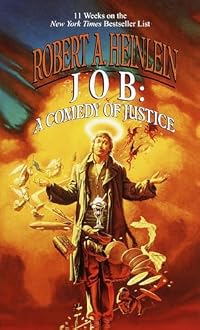
Job: A Comedy of Justice
by Robert A. Heinlein
On This Page
Description
On vacation in Polynesia, Alex Hergensheimer experiences a series of world-changes, all of which point to Armageddon and reveal him to be a pawn in the ancient feud between God and Lucifer.Tags
Recommendations










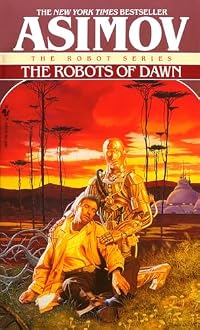

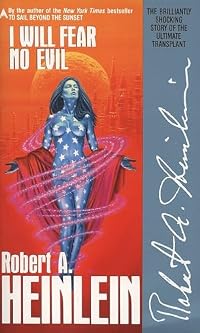
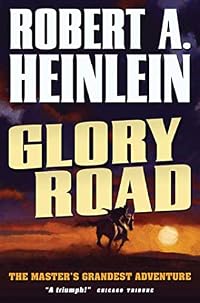



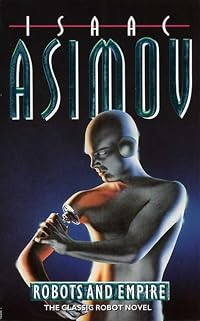










Member Recommendations




by anonymous user


paradoxosalpha Cabell says "Mundus vult decipi" while Heinlein goes with "Amor vincit omnia," but the stories are closely akin!
Member Reviews
Wikipedia currently (June 2024) mischaracterizes the late-period Robert A. Heinlein novel Job: A Comedy of Justice as "a satire about organized religion" while trivializing as "agnostic" the author's theological perspective. The book itself puts a much finer point on it. When I had read the first few chapters of Job, I decided that it was clearly written on the dimension-hopping framework of the earlier novel The Number of the Beast, except that the shifts of reality were completely involuntary. In the end, however, the book had more to do with the metaphysical premises set up in Stranger in a Strange Land, with its angelic bureaucracy and jibes at conventional morality.
Heinlein had called Stranger "a Cabellesque satire on religion and show more sex,” and Job is even closer to Heinlein's inspiration in the work of James Branch Cabell. In fact, the subtitle is the same as the one for Cabell's most successful and notorious novel Jurgen: A Comedy of Justice. Like Cabell's pawnbroker Jurgen, Heinlein's "Job" (i.e. the churchman Alexander Hergesheimer) goes on a tortuous adventure through a series of exotic realms. Then he engages the supernatural entities feared and worshiped by his ancestors, and he is ultimately judged and set to rights by Koshchei--not the mere sorcerer of Slavic folklore, but the ultimate godhead of Cabell's fictional theology, the creator of Jehovah, Satan, and other gods.
While the similarities are so strong between Job and Jurgen as to leave no doubt of conscious influence, the differences are often pointed. Jurgen travels alone and enjoys a promiscuous series of erotic liaisons, but Alec travels with Margrethe (a name evidently allusive to Goethe's Faust), whom he meets at the outset of his journeys and loves faithfully. Jurgen goes to "the Hell of his fathers" and subsequently attains to Heaven, but Alec is taken to Heaven in a pre-Millennial Rapture and thereafter quits it for Hell. In all, Heinlein's story seems more optimistic than Cabell's. Where the earlier writer would remark mundus vult decipi, the later seems convinced that amor vincit omnia.
The eschatological elements of the book reminded me more than a little of the later book Good Omens by Terry Pratchett and Neil Gaiman, and the member recommendations on LibraryThing assure me that I am not the only one. The road-trip aspect also evoked for me the still-later Gaiman novel American Gods.
The reality-transiting travel of Alec and Margrethe has for its objective Kansas, where they imagine that they will settle themselves somehow, despite the phenomenon that routinely deprives them of all of their possessions and much of their orientation in history and culture. Here the allusion is likely to "The Wizard of Oz," and they are indeed subjected to a cyclone. In each world where they find themselves, the geography is consistent, but there are differences of politics and technology. The effect in a satirical context is a sort of multiversal Persian Letters. Alec--whose native 1994 features dirigibles but no airplanes--rhapsodizes for two and a half pages about the novel wonder of traffic lights (293-5).
The first two-thirds of the book, through Chapter XXI, has a slow pace and lacks any sustained sense of progress. I feel confident that it has summoned up the demon DNF for many readers. Of course, this arc is concerned to establish the suffering of the protagonist "Job," who is moreover somewhat morally narrowminded and perhaps unsympathetic for a typical Heinlein reader. The venerable Heinlein who wrote this book was unfettered with editorial constraints, and the book is probably the worse for it. But having grumbled my way through a number of the middle chapters, I found myself satisfied at the end.
Those like me inclined to view the author as a crypto-Thelemite will find more vindication in this book than merely the reflections of Cabell and the Faustian elements of the plot. As Heinlein did in Stranger, he name-checks Aleister Crowley (380), and the very choice of "Alexander" for the protagonist's name is no chance coincidence, I think. show less
Heinlein had called Stranger "a Cabellesque satire on religion and show more sex,” and Job is even closer to Heinlein's inspiration in the work of James Branch Cabell. In fact, the subtitle is the same as the one for Cabell's most successful and notorious novel Jurgen: A Comedy of Justice. Like Cabell's pawnbroker Jurgen, Heinlein's "Job" (i.e. the churchman Alexander Hergesheimer) goes on a tortuous adventure through a series of exotic realms. Then he engages the supernatural entities feared and worshiped by his ancestors, and he is ultimately judged and set to rights by Koshchei--not the mere sorcerer of Slavic folklore, but the ultimate godhead of Cabell's fictional theology, the creator of Jehovah, Satan, and other gods.
While the similarities are so strong between Job and Jurgen as to leave no doubt of conscious influence, the differences are often pointed. Jurgen travels alone and enjoys a promiscuous series of erotic liaisons, but Alec travels with Margrethe (a name evidently allusive to Goethe's Faust), whom he meets at the outset of his journeys and loves faithfully. Jurgen goes to "the Hell of his fathers" and subsequently attains to Heaven, but Alec is taken to Heaven in a pre-Millennial Rapture and thereafter quits it for Hell. In all, Heinlein's story seems more optimistic than Cabell's. Where the earlier writer would remark mundus vult decipi, the later seems convinced that amor vincit omnia.
The eschatological elements of the book reminded me more than a little of the later book Good Omens by Terry Pratchett and Neil Gaiman, and the member recommendations on LibraryThing assure me that I am not the only one. The road-trip aspect also evoked for me the still-later Gaiman novel American Gods.
The reality-transiting travel of Alec and Margrethe has for its objective Kansas, where they imagine that they will settle themselves somehow, despite the phenomenon that routinely deprives them of all of their possessions and much of their orientation in history and culture. Here the allusion is likely to "The Wizard of Oz," and they are indeed subjected to a cyclone. In each world where they find themselves, the geography is consistent, but there are differences of politics and technology. The effect in a satirical context is a sort of multiversal Persian Letters. Alec--whose native 1994 features dirigibles but no airplanes--rhapsodizes for two and a half pages about the novel wonder of traffic lights (293-5).
The first two-thirds of the book, through Chapter XXI, has a slow pace and lacks any sustained sense of progress. I feel confident that it has summoned up the demon DNF for many readers. Of course, this arc is concerned to establish the suffering of the protagonist "Job," who is moreover somewhat morally narrowminded and perhaps unsympathetic for a typical Heinlein reader. The venerable Heinlein who wrote this book was unfettered with editorial constraints, and the book is probably the worse for it. But having grumbled my way through a number of the middle chapters, I found myself satisfied at the end.
Those like me inclined to view the author as a crypto-Thelemite will find more vindication in this book than merely the reflections of Cabell and the Faustian elements of the plot. As Heinlein did in Stranger, he name-checks Aleister Crowley (380), and the very choice of "Alexander" for the protagonist's name is no chance coincidence, I think. show less
Alexander Hergensheimer, an evangelical fundamentalist pastor, participates in a firewalking ceremony in Polynesia. Surviving it with only a small blister, he suddenly snaps into an alternate timeline where he is Alec Graham, a smuggler carrying underworld money.
Alongside Margrethe, a Danish cruise ship hostess he falls in love with, Alexander is constantly thrown into bizarre and inconvenient parallel universes. Every time the pair establishes a new life, a reality-shifting event robs them of their money and forces them to start over.
Convinced they are living through the biblical End of Days, Alexander is terrified because Margrethe, a Norse pagan, is not saved. True to his fears, the Apocalypse separates them; she is denied entry to show more Heaven, while Alexander is surprisingly rewarded for his unshaken faith.
Finding paradise miserable and incomplete without Margrethe, Alexander refuses his reward and chooses to journey into Hell to find her. In Hell, he is comfortably situated by Satan himself. He finally uncovers the cosmic truth: God and Satan are divine brothers. Earth was essentially a sibling rivalry project, and God had rigged the timelines and the apocalypse as an elaborate, ego-driven test. show less
Alongside Margrethe, a Danish cruise ship hostess he falls in love with, Alexander is constantly thrown into bizarre and inconvenient parallel universes. Every time the pair establishes a new life, a reality-shifting event robs them of their money and forces them to start over.
Convinced they are living through the biblical End of Days, Alexander is terrified because Margrethe, a Norse pagan, is not saved. True to his fears, the Apocalypse separates them; she is denied entry to show more Heaven, while Alexander is surprisingly rewarded for his unshaken faith.
Finding paradise miserable and incomplete without Margrethe, Alexander refuses his reward and chooses to journey into Hell to find her. In Hell, he is comfortably situated by Satan himself. He finally uncovers the cosmic truth: God and Satan are divine brothers. Earth was essentially a sibling rivalry project, and God had rigged the timelines and the apocalypse as an elaborate, ego-driven test. show less
The key to understanding this book lies in the subtitle, "A Comedy of Justice." It exactly mirrors the subtitle of James Branch Cabell's breakthrough best seller, "Jurgen." And the plot is similar. Dig deeper, and you will discover that Cabell was Heinlein's favorite author, and that all of Heinlein's later works, from "Stranger in a Strange Land" onward, were attempts to mimic Cabell"s 18-volume "Biography of the Life of Manuel," of which "Jurgen: A Comedy of Justice" was not the best, merely the best-known.
So how did Heinlein do? Well, Cabell repeatedly insisted that he wrote only for his own pleasure. Heinlein, in these later books, seemed to be indulging in a similar private obsession. If that is the case, he wouldn't have cared show more much what we think.
That being said, "Jurgen" is a far, far better book than "Job: A Comedy of Justice." Cabellian irony fit his mythic cosmos-building and droll story constructs. Heinlein may have aimed for irony, but his personal philosophy rubbed against the grain of that emprise. He was, in the end, a pretty straight-forward guy, if a nudist and all-around crank. This book is one of those very odd failures that may haunt unwary readers for reasons hard to grasp. The haunting, I think, is due entirely to the strange and unlikely presence of the shade of James Branch Cabell. show less
So how did Heinlein do? Well, Cabell repeatedly insisted that he wrote only for his own pleasure. Heinlein, in these later books, seemed to be indulging in a similar private obsession. If that is the case, he wouldn't have cared show more much what we think.
That being said, "Jurgen" is a far, far better book than "Job: A Comedy of Justice." Cabellian irony fit his mythic cosmos-building and droll story constructs. Heinlein may have aimed for irony, but his personal philosophy rubbed against the grain of that emprise. He was, in the end, a pretty straight-forward guy, if a nudist and all-around crank. This book is one of those very odd failures that may haunt unwary readers for reasons hard to grasp. The haunting, I think, is due entirely to the strange and unlikely presence of the shade of James Branch Cabell. show less
"Whoever designed it, the Holy City has a major shortcoming, in my opinion -- and never mind telling me that my presumption in passing judgment on God's design is blasphemous. It is a lack, a serious one. It lacks a public library. One reference librarian who had devoted her life to answering any and all questions, trivial and weighty, would be more use in Heaven than another cohort of arrogant angels." (pg. 344)
And what is missing in the Holy City is rectified elsewhere in the universe ...
"My best education started with the burning of the Library at Alexandria. Yahweh didn't want it, so Lucifer grabbed the ghosts of all those thousands of codices, took them to Hell, regenerated them carefully -- and Rahab had a picnic! And let me add: show more Lucifer has his eye on the Vatican Library, since it will be up for salvage soon. Instead of having to regenerate ghosts, in the case of the Vatican Library, Lucifer plans to pinch it off intact just before Time Stop, and take it unhurt to Hell. Won't that be grand?" (pg. 420-421) show less
And what is missing in the Holy City is rectified elsewhere in the universe ...
"My best education started with the burning of the Library at Alexandria. Yahweh didn't want it, so Lucifer grabbed the ghosts of all those thousands of codices, took them to Hell, regenerated them carefully -- and Rahab had a picnic! And let me add: show more Lucifer has his eye on the Vatican Library, since it will be up for salvage soon. Instead of having to regenerate ghosts, in the case of the Vatican Library, Lucifer plans to pinch it off intact just before Time Stop, and take it unhurt to Hell. Won't that be grand?" (pg. 420-421) show less
SPOILER FREE MINI REVIEW:
Rambling and disjointed, with a shallow love interest. Not very funny.
MILD SPOILERS FOLLOW:
This is a weird book. The protagonist Alexander Hergensheimer is a born again Christian preacher and conservative lobbyist, from a universe where "liberal" means "believing that Catholics will go to heaven too." Before the book begins he is proud of his work in outlawing or working toward outlawing abortion, contraception, and divorce.
The book doesn't talk about this until about a third of the way through, however. Instead, he is presented as a conservative but good-hearted chap who unexpectedly finds himself bounced into a universe with much looser cultural norms when it comes to sex and nudity. He takes it in stride, and show more we're supposed to laugh as he gets flustered by his situation, although it didn't strike me as all that funny. His conversations with his plain-spoken and confrontational voice of conscience were mildly amusing, but there's not a lot of genuinely funny things in the first 80% of the book or so.
Alexander also falls in love with Margrethe, a stewardess/maid on the cruise he ends up on. If you've read any Heinlein before, you'll know what to expect here. It's a heavily idealized version of love that springs up out of nothing and immediately becomes an all-consuming purpose of life for both Alexander and Margrethe. As a character, Margrethe is also what you might expect if you're familiar with how Heinlein treats female characters. She has strong opinions when it comes to some things, and she stands up to Alexander when he's explicitly obnoxious, but she's so absurdly devoted to Alexander (even through his more casually sexist moments) that it completely washes out any interesting character traits she might have otherwise developed.
Their relationship, which is the single most important feature of the book feels like it was written by a nineteen-year-old boy, not a man in his 70's. By the way, this book was released in 1984, the last of Heinlein's novels to be published during his life, for what that's worth.
After Alexander and Margrethe have spent enough time together that they've thoroughly fallen in capital-L Love, they are both subjected to the "horrible" trials that the book's title suggests. The couple are frequently dumped into situations which should be awful, but somehow they never actually face the consequences that their circumstances should imply. Heinlein has some very dumb ideas about what life is like for actual poor people, and so despite being repeatedly dropped into worlds with no money whatsoever (and twice without even any clothes), they have no trouble finding jobs (usually dishwashing). Once they end up in debt-induced indentured servitude, and while Alexander is surprised at how long it is taking to work off his debt, they actually *are* working off their debts. The end result is that it's hard to feel *too* bad for them.
Of course, in this part of the story, it’s not at all clear that these are supposed to be trials of hardship. The first half of the book barely mentions religion at all. So it’s more about the differences between the cultures, histories, and technologies of the different worlds that they visit. Which could make for an interesting read, if the book spent more time exploring these worlds. Instead, it comes across as a bit rambling and occasionally mildly amusing.
MODERATE SPOILERS FOLLOW:
And then you get Alexander’s backstory and you realize that his life’s work was collecting money to shore up the patriarchy. At first, I thought this was a clever bait-and-switch maneuver, and that we’d either continue to learn how awful Alexander actually is, or that he would have to learn to come to terms with the fact that the goals he was striving towards were really not good things at all. But that doesn’t happen. He does learn the small lesson that wives do not need to follow their husband’s orders, and he has a major turn around when it comes to having multiple sex partners, but there is no reckoning for all the ugly stuff from his early life. Oh, and I guess he does come to regret telling his employees to never accept collect calls.
At about the halfway point, the book suddenly remembers that it’s supposed to be a story about religion and the characters start discussing things like salvation, the end of the world, and biblical literalism. But the plot is still basically the same: Alexander and Margrethe are dropped penniless into a new world and through the kindness of strangers and a good work ethic, they do just fine.
And then we get to the last few chapters of the book, where it becomes a completely different novel.
MAJOR SPOILERS FOLLOW:
The last portion of the book is a journey through heaven and hell, and the book is clearly trying a lot harder to be funny here. And I guess it is a smidgen funnier, but not greatly so. Even though this is a first-person narrative, you can still see the voice of the author here. It’s really obvious which parts of Christian Fundamentalism Heinlein finds distasteful. And despite more-or-less agreeing with him on most of those topics, it’s not very interesting.
And then there’s the big reveal that Alexander hasn’t really been wandering through different universes, that it was just his immediate environment that was being changed. This has some implications that are not explored at all in the book. Most notably, this implies that Margrethe’s entire universe does not and has never existed. They clearly establish that she is a real “volitional” being, but also that there only ever was the one universe and the one history. If you take these points seriously, that implies that Margrethe’s memories are completely fabricated. Did she have her entire memory of her life altered? Or was she created whole as an adult? Or was she shunted into her own private little Truman Show world, with actors or non-volitional fake people (“golems”) filling out the roles of the other people in her life? None of these really fit well with the way the rest of the story unfolds.
The real answer is probably that Heinlein just didn’t think that hard about Margrethe’s experiences before she met Alexander. To some extend, this is also true about Alexander. Both of them ostensibly had full lives before the book began, but almost all of that is dropped as soon as they declare their love for each other. There are a few bits and pieces of their histories that have small impacts on their lives afterwards (like the desire to return to Kansas, and a brief flirtation with running off to Denmark), but there are no *people* that either Alexander or Margrethe want to see again.
Alexander only exists to have his devotion tested. And Margrethe only exists so that there is something other than God for Alexander to be devoted *to*. And I think that’s why the book doesn’t really work at all. It’s rambling and unfocused for the first two thirds of the story, and while the last third is more focused, it’s not really focused on anything interesting.
Ultimately, everything is tied up in a neat little bow, making for an unearned and unsatisfying ending. show less
Rambling and disjointed, with a shallow love interest. Not very funny.
MILD SPOILERS FOLLOW:
This is a weird book. The protagonist Alexander Hergensheimer is a born again Christian preacher and conservative lobbyist, from a universe where "liberal" means "believing that Catholics will go to heaven too." Before the book begins he is proud of his work in outlawing or working toward outlawing abortion, contraception, and divorce.
The book doesn't talk about this until about a third of the way through, however. Instead, he is presented as a conservative but good-hearted chap who unexpectedly finds himself bounced into a universe with much looser cultural norms when it comes to sex and nudity. He takes it in stride, and show more we're supposed to laugh as he gets flustered by his situation, although it didn't strike me as all that funny. His conversations with his plain-spoken and confrontational voice of conscience were mildly amusing, but there's not a lot of genuinely funny things in the first 80% of the book or so.
Alexander also falls in love with Margrethe, a stewardess/maid on the cruise he ends up on. If you've read any Heinlein before, you'll know what to expect here. It's a heavily idealized version of love that springs up out of nothing and immediately becomes an all-consuming purpose of life for both Alexander and Margrethe. As a character, Margrethe is also what you might expect if you're familiar with how Heinlein treats female characters. She has strong opinions when it comes to some things, and she stands up to Alexander when he's explicitly obnoxious, but she's so absurdly devoted to Alexander (even through his more casually sexist moments) that it completely washes out any interesting character traits she might have otherwise developed.
Their relationship, which is the single most important feature of the book feels like it was written by a nineteen-year-old boy, not a man in his 70's. By the way, this book was released in 1984, the last of Heinlein's novels to be published during his life, for what that's worth.
After Alexander and Margrethe have spent enough time together that they've thoroughly fallen in capital-L Love, they are both subjected to the "horrible" trials that the book's title suggests. The couple are frequently dumped into situations which should be awful, but somehow they never actually face the consequences that their circumstances should imply. Heinlein has some very dumb ideas about what life is like for actual poor people, and so despite being repeatedly dropped into worlds with no money whatsoever (and twice without even any clothes), they have no trouble finding jobs (usually dishwashing). Once they end up in debt-induced indentured servitude, and while Alexander is surprised at how long it is taking to work off his debt, they actually *are* working off their debts. The end result is that it's hard to feel *too* bad for them.
Of course, in this part of the story, it’s not at all clear that these are supposed to be trials of hardship. The first half of the book barely mentions religion at all. So it’s more about the differences between the cultures, histories, and technologies of the different worlds that they visit. Which could make for an interesting read, if the book spent more time exploring these worlds. Instead, it comes across as a bit rambling and occasionally mildly amusing.
MODERATE SPOILERS FOLLOW:
And then you get Alexander’s backstory and you realize that his life’s work was collecting money to shore up the patriarchy. At first, I thought this was a clever bait-and-switch maneuver, and that we’d either continue to learn how awful Alexander actually is, or that he would have to learn to come to terms with the fact that the goals he was striving towards were really not good things at all. But that doesn’t happen. He does learn the small lesson that wives do not need to follow their husband’s orders, and he has a major turn around when it comes to having multiple sex partners, but there is no reckoning for all the ugly stuff from his early life. Oh, and I guess he does come to regret telling his employees to never accept collect calls.
At about the halfway point, the book suddenly remembers that it’s supposed to be a story about religion and the characters start discussing things like salvation, the end of the world, and biblical literalism. But the plot is still basically the same: Alexander and Margrethe are dropped penniless into a new world and through the kindness of strangers and a good work ethic, they do just fine.
And then we get to the last few chapters of the book, where it becomes a completely different novel.
MAJOR SPOILERS FOLLOW:
The last portion of the book is a journey through heaven and hell, and the book is clearly trying a lot harder to be funny here. And I guess it is a smidgen funnier, but not greatly so. Even though this is a first-person narrative, you can still see the voice of the author here. It’s really obvious which parts of Christian Fundamentalism Heinlein finds distasteful. And despite more-or-less agreeing with him on most of those topics, it’s not very interesting.
And then there’s the big reveal that Alexander hasn’t really been wandering through different universes, that it was just his immediate environment that was being changed. This has some implications that are not explored at all in the book. Most notably, this implies that Margrethe’s entire universe does not and has never existed. They clearly establish that she is a real “volitional” being, but also that there only ever was the one universe and the one history. If you take these points seriously, that implies that Margrethe’s memories are completely fabricated. Did she have her entire memory of her life altered? Or was she created whole as an adult? Or was she shunted into her own private little Truman Show world, with actors or non-volitional fake people (“golems”) filling out the roles of the other people in her life? None of these really fit well with the way the rest of the story unfolds.
The real answer is probably that Heinlein just didn’t think that hard about Margrethe’s experiences before she met Alexander. To some extend, this is also true about Alexander. Both of them ostensibly had full lives before the book began, but almost all of that is dropped as soon as they declare their love for each other. There are a few bits and pieces of their histories that have small impacts on their lives afterwards (like the desire to return to Kansas, and a brief flirtation with running off to Denmark), but there are no *people* that either Alexander or Margrethe want to see again.
Alexander only exists to have his devotion tested. And Margrethe only exists so that there is something other than God for Alexander to be devoted *to*. And I think that’s why the book doesn’t really work at all. It’s rambling and unfocused for the first two thirds of the story, and while the last third is more focused, it’s not really focused on anything interesting.
Ultimately, everything is tied up in a neat little bow, making for an unearned and unsatisfying ending. show less
Noting that other reviews loved this book, I can only say that it was long winded, far too bloated and boring for most of the story.
While I often enjoy the author’s lectures that he articulates through a protagonist, here I felt that it was pointless and uninteresting.
The whole tale may have been better if edited down to a short, short story. Overall this book was a slog to finish.
Not to be reread ever again.
While I often enjoy the author’s lectures that he articulates through a protagonist, here I felt that it was pointless and uninteresting.
The whole tale may have been better if edited down to a short, short story. Overall this book was a slog to finish.
Not to be reread ever again.
This is quite possibly my favorite of Heinlein's works that I have read so far. For once he manages to write a story that is mostly plot rather than lecture that engages me; I have a bizarre fondness for being lectured by him even though it's not something I enjoy from other authors. Maybe it's because of how unusual it is for one of his protagonists to be presented as being so thoroughly wrong about the world for so much of the book. Maybe it's because I've always been a sucker for stories about following one's love beyond death. Of course, it could also be professional ego from the way he flatters librarians.
Members
- Recently Added By
Published Reviews
ThingScore 75
''Job'' may not be on a par with such classic Heinlein as ''Stranger in a Strange Land,'' ''The Moon Is a Harsh Mistress'' or the stories he wrote under the ''Future History'' rubric - but it is an exhilarating romp through the author's mental universe (or rather universes), with special emphasis on cultural relativism, dogmatic religion (treated with surprising sympathy) and the philosophical show more conundrum of solipsism. It is not necessary to share all of Mr. Heinlein's views on man and society to enjoy the bracing clarity with which he sets them forth. show less
added by jlelliott
Alex Hergensheimer, lid van een zeer strenge godsdienstige sekte, doet tijdens een cruise over de Stille Zuidzee mee aan een vuurdansceremonie. Het loopt verkeerd af en als hij bijkomt, bevindt hij zich met een andere identiteit op een andere Aarde, in gezelschap van de hoogst verleidelijke Margarethe. Dit wordt de aanvang van een queeste door verscheidene realiteiten die Alex letterlijk naar show more hemel en hel zal leiden... Robert Heinlein is een zeer bekend SF-auteur. Hij heeft 43 boeken geschreven. Vier daarvan zijn bekroond met de Hugo Award, een internationale SF-prijs. Job is een leuk, vindingrijk en charmant boek. Maar nogal ergerniswekkend zijn de veelvuldige en puberale sekstaferelen en bezinningen over de verhouding man/vrouw. Als je je daar niet te veel aan ergert, blijft een vermakelijk boek over dat op een leuke manier toch een aantal minder voor de hand liggende diepzinnigheden debiteert. Alle 29 hoofdstukken beginnen met een bijbeltekst (die nergens op slaat).
(NBD|Biblion recensie, Bob van Laerhoven.) show less
(NBD|Biblion recensie, Bob van Laerhoven.) show less
added by karnoefel
Lists

Books That Changed Me
156 works; 47 members

Religious Science Fiction
70 works; 19 members

Speculative Fiction to Read
706 works; 32 members

Faithful to Atheist: Books on your Journey
14 works; 5 members

Best Books Involving Satan
63 works; 26 members

Blue Pyramid 1,276 Best Books of All Time
1,248 works; 32 members

Novels that you shouldn't waste your time on
94 works; 50 members
Books I Read Before The Invention Of The Internet.
144 works; 1 member

Books Read in 2025
4,090 works; 97 members
Author Information

458+ Works 173,893 Members
Robert Anson Heinlein was born on July 7, 1907 in Butler, Mo. The son of Rex Ivar and Bam Lyle Heinlein, Robert Heinlein had two older brothers, one younger brother, and three younger sisters. Moving to Kansas City, Mo., at a young age, Heinlein graduated from Central High School in 1924 and attended one year of college at Kansas City Community show more College. Following in his older brother's footsteps, Heinlein entered the Navel Academy in 1925. After contracting pulmonary tuberculosis, of which he was later cured, Heinlein retired from the Navy and married Leslyn MacDonald. Heinlein was said to have held jobs in real estate and photography, before he began working as a staff writer for Upton Sinclair's EPIC News in 1938. Still needing money desperately, Heinlein entered a writing contest sponsored by the science fiction magazine Thrilling Wonder Stories. Heinlein wrote and submitted the story "Life-Line," which went on to win the contest. This guaranteed Heinlein a future in writing. Using his real name and the pen names Caleb Saunders, Anson MacDonald, Lyle Monroe, John Riverside, and Simon York, Heinlein wrote numerous novels including For Us the Living, Methuselah's Children, and Starship Troopers, which was adapted into a big-budget film for Tri-Star Pictures in 1997. The Science Fiction Writers of America named Heinlein its first Grand Master in 1974, presented 1975. Officers and past presidents of the Association select a living writer for lifetime achievement. Also, the Science Fiction and Fantasy Hall of Fame inducted Heinlein in 1998. Heinlein died in 1988 from emphysema and other related health problems. Heinlein's remains were scattered from the stern of a Navy warship off the coast of California. (Bowker Author Biography) show less
Some Editions
Awards and Honors
Awards
Distinctions
Series
Belongs to Publisher Series
Work Relationships
Has as a commentary on the text
Common Knowledge
- Canonical title*
- Il pianeta del miraggio
- Original title
- Job
- Original publication date
- 1984-09
- People/Characters
- Alexander Hergensheimer; Margrethe Svensdatter Gunderson; Lucifer; Rahab, prostitute who hid Israelite spies
- Important places
- Polynesia; Kansas, USA
- Epigraph
- Behold, happy is the man whom God correcteth: therefore despise not thou the chastening of the Almighty. Job 5:17
When thou walkest through the fire, thou shalt not be burned. Isaiah 43:2 - Dedication
- To Clifford D. Simak
- First words
- The fire pit was about twenty-five feet long by ten feet wide, and perhaps two feet deep.
- Last words
- (Click to show. Warning: May contain spoilers.)Heaven is where Margrethe is.
- Blurbers
- King, Stephen; Asimov, Isaac; Niven, Larry; Bloch, Robert; Clarke, Arthur C.; Pournelle, Jerry
- Original language
- English
- Canonical DDC/MDS
- 813/.54
- Canonical LCC
- PS3515.E288 J6 1984
- Disambiguation notice
- Please do not combine this book with 1984, Spring : A Choice of Futures
(There is an incorrectly entered ISBN connecting the books)
*Some information comes from Common Knowledge in other languages. Click "Edit" for more information.
Classifications
Statistics
- Members
- 4,557
- Popularity
- 3,179
- Reviews
- 57
- Rating
- (3.66)
- Languages
- 12 — Bulgarian, Czech, Dutch, English, Finnish, French, German, Italian, Polish, Russian, Spanish, Swedish
- Media
- Paper, Audiobook, Ebook
- ISBNs
- 33
- ASINs
- 24