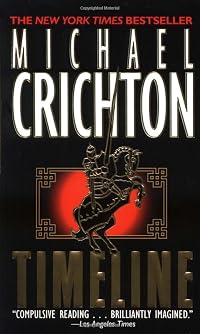
Timeline
by Michael Crichton
On This Page
Description
A Yale history professor travels back in time to 15th century France and gets stuck, unable to return to the present. His colleagues organize a rescue and on landing in France become involved in the Hundred Years War.Tags
Recommendations




Member Recommendations

Member Reviews
The main take-away from Timeline is that time travel, despite its ubiquity in fiction, is really hard to get right in a story, even for a thriller writer as able as Michael Crichton. Timeline won't be remembered as one of his best. It does have an easy Saturday-afternoon popcorn-film sort of charm, the sort of thing I would have lapped up as a child back in the Nineties, but it struggles to hit its plot points naturally.
The warnings come early on, when a random day-tripper in modern-day America almost immediately recognises a strange map as being a floorplan of a medieval monastery, and a young kid in a waiting room overhears a conversation and pipes up with everything he knows about 'quantum foam'. This forced storytelling continues show more throughout: one of the characters, for example, trains regularly in medieval combat, just because he likes it, so you know it is going to become useful when he is one of those cast back in time to medieval France. Much of the story is untidy (the old man at the start, who triggers the plot, is part of an arc that is left underdeveloped) and many plot pivots are put down to chance and 'bad luck'. The denouement of the story provides hasty comeuppance for its villains and unfulfilling development for its protagonists (though André's contribution to the Epilogue is rather affecting).
All in all, the features of the story – interesting in isolation – are cobbled together as a sort of potluck. Time travel is always fun, but this book never rises above such disposable, pulpy fun. Crichton is always willing to bring science and research into his stories, and he makes a game attempt here with quantum computing and medieval verisimilitude, but he acknowledges at the end of his book that time travel "rests firmly in the realm of fantasy" (pg. 490). Timeline, unfortunately, proves to be a potboiler. show less
The warnings come early on, when a random day-tripper in modern-day America almost immediately recognises a strange map as being a floorplan of a medieval monastery, and a young kid in a waiting room overhears a conversation and pipes up with everything he knows about 'quantum foam'. This forced storytelling continues show more throughout: one of the characters, for example, trains regularly in medieval combat, just because he likes it, so you know it is going to become useful when he is one of those cast back in time to medieval France. Much of the story is untidy (the old man at the start, who triggers the plot, is part of an arc that is left underdeveloped) and many plot pivots are put down to chance and 'bad luck'. The denouement of the story provides hasty comeuppance for its villains and unfulfilling development for its protagonists (though André's contribution to the Epilogue is rather affecting).
All in all, the features of the story – interesting in isolation – are cobbled together as a sort of potluck. Time travel is always fun, but this book never rises above such disposable, pulpy fun. Crichton is always willing to bring science and research into his stories, and he makes a game attempt here with quantum computing and medieval verisimilitude, but he acknowledges at the end of his book that time travel "rests firmly in the realm of fantasy" (pg. 490). Timeline, unfortunately, proves to be a potboiler. show less
“In other centuries, human beings wanted to be saved, or improved, or freed, or educated. But in our century, they want to be entertained. The great fear is not of disease or death, but of boredom. A sense of time on our hands, a sense of nothing to do. A sense that we are not amused.”
Wow. Even though this book was written almost thirty years ago, that quote really seems to sum up our current world fairly accurately. And this book does the trick. It’s an adventure within an adventure, and it's wildly entertaining. When a team of dedicated scholars and archeologists, currently working on a dig in France called the Dordogne project, discovers that a tech company called ITC knows more about their fourteenth-century ruins than they show more do, they want to know how. Dr. Robert Doniger, the genius who founded the company, gladly allows Edward Johnston, Regius Professor of History at Yale University, to take a look at their technology, capable of transporting people back in time. But when his colleagues at the archeological site uncover a stack of parchments in the excavation pit of an old monastery, they are stunned to discover a message dated 4/7/1347 from Johnston asking for help, and they rush to ITC headquarters to learn more.
The scholars find that a group of physicists using quantum computers has developed a way to send objects and people back in time by crossing into a new universe. They select a group to send back to 1347 to rescue the professor. The group consists of Christopher Stewart Hughes (Chris), a graduate student; Andre Marek, an assistant professor of history at Yale; Katherine Erickson (Kate), another graduate student; and two employees from ITC. Trouble breaks out in the first few seconds of their landing. It doesn’t stop for the next 37 hours as they find themselves in the middle of a medieval war, frothing with political intrigue, dangerously skillful knights, and conniving traitors.
This story, which spends most of its time on a fascinating trek back into history, is packed with spectacular events, explosive violence, and unavoidable humor, as the human experience is brought to life by a well-written narrative that only Michael Crichton can pull off. show less
Wow. Even though this book was written almost thirty years ago, that quote really seems to sum up our current world fairly accurately. And this book does the trick. It’s an adventure within an adventure, and it's wildly entertaining. When a team of dedicated scholars and archeologists, currently working on a dig in France called the Dordogne project, discovers that a tech company called ITC knows more about their fourteenth-century ruins than they show more do, they want to know how. Dr. Robert Doniger, the genius who founded the company, gladly allows Edward Johnston, Regius Professor of History at Yale University, to take a look at their technology, capable of transporting people back in time. But when his colleagues at the archeological site uncover a stack of parchments in the excavation pit of an old monastery, they are stunned to discover a message dated 4/7/1347 from Johnston asking for help, and they rush to ITC headquarters to learn more.
The scholars find that a group of physicists using quantum computers has developed a way to send objects and people back in time by crossing into a new universe. They select a group to send back to 1347 to rescue the professor. The group consists of Christopher Stewart Hughes (Chris), a graduate student; Andre Marek, an assistant professor of history at Yale; Katherine Erickson (Kate), another graduate student; and two employees from ITC. Trouble breaks out in the first few seconds of their landing. It doesn’t stop for the next 37 hours as they find themselves in the middle of a medieval war, frothing with political intrigue, dangerously skillful knights, and conniving traitors.
This story, which spends most of its time on a fascinating trek back into history, is packed with spectacular events, explosive violence, and unavoidable humor, as the human experience is brought to life by a well-written narrative that only Michael Crichton can pull off. show less
I got this at a second hand bookshop in Segovia having already seen the film.
Physics wunderkind Doniger is the owner of ITC, an advanced, but highly secretive, facility in New Mexico. Suspicions are raised when one of his employees is found wandering in the desert dressed as a monk and clutching a map of a 14th Century French church.
In France, more specifically in the Dordogne, Dr. Johnston is and his team are working on a huge archaeological dig, piecing together information from a 14th Century castle and its surroundings. Their project is being funded by ITC, making it on of the largest of its kind. More questions are being asked about why a company making chips would be interested in a long forgotten castle. When 'contamination', a show more lens from the professor's glasses, are found in a sealed room, Johnston's team are let in on the big secret, ITC have found a way to travel back in time. There is a catch though, the professor is trapped back there and needs to be rescued, but the technology is not reliable. The task is further complicated by the timing, on the eve of a battle between English and French troops. The team's knowledge of the past will be seriously put to the test.
As someone interested in history, I enjoyed the juxtaposition of the two times presented, especially as the earlier period is one which we have so little record of. As the historians are confronted with the past, they not only have to adapt to its realities face to face rather than from a safe distance of 7 centuries, they must re-evaluate their own assumptions.
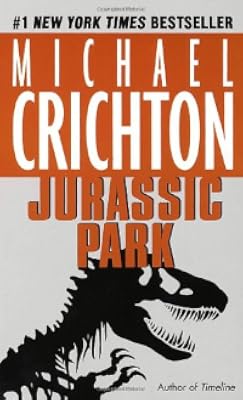
As with Jurassic Park, I liked reading about a possible scenario brought about by technological advances. Crichton doesn't only show us the alternative reality, but also seems to encourage the reader to think about its implications, such as whether time travellers can / should change the past through interference, whether the human body is too complicated to be transported as a piece of code, and also how each time has its own code for living. The historians, especially Chris, must adhere to a different set of morals. They find themselves in a world where violence is omnipresent, yet act of chivalry are made without hesitation.
Crichton packs in a lot of technological detail, adding another dimension to the plot, turning it into a page-turning sci-fi thriller. show less
Physics wunderkind Doniger is the owner of ITC, an advanced, but highly secretive, facility in New Mexico. Suspicions are raised when one of his employees is found wandering in the desert dressed as a monk and clutching a map of a 14th Century French church.
In France, more specifically in the Dordogne, Dr. Johnston is and his team are working on a huge archaeological dig, piecing together information from a 14th Century castle and its surroundings. Their project is being funded by ITC, making it on of the largest of its kind. More questions are being asked about why a company making chips would be interested in a long forgotten castle. When 'contamination', a show more lens from the professor's glasses, are found in a sealed room, Johnston's team are let in on the big secret, ITC have found a way to travel back in time. There is a catch though, the professor is trapped back there and needs to be rescued, but the technology is not reliable. The task is further complicated by the timing, on the eve of a battle between English and French troops. The team's knowledge of the past will be seriously put to the test.
As someone interested in history, I enjoyed the juxtaposition of the two times presented, especially as the earlier period is one which we have so little record of. As the historians are confronted with the past, they not only have to adapt to its realities face to face rather than from a safe distance of 7 centuries, they must re-evaluate their own assumptions.
As with Jurassic Park, I liked reading about a possible scenario brought about by technological advances. Crichton doesn't only show us the alternative reality, but also seems to encourage the reader to think about its implications, such as whether time travellers can / should change the past through interference, whether the human body is too complicated to be transported as a piece of code, and also how each time has its own code for living. The historians, especially Chris, must adhere to a different set of morals. They find themselves in a world where violence is omnipresent, yet act of chivalry are made without hesitation.
Crichton packs in a lot of technological detail, adding another dimension to the plot, turning it into a page-turning sci-fi thriller. show less
A scientist has discovered the technology which allows humans to travel in time. He is using the technology to visit sites of historical significance in the hopes of exploiting those events for history theme parks. Blinded by his greed and self-importance, he ignores the risks inherent in the technology he is developing and sends a history professor to 14th century France. The professor's students and colleagues are sent back to save him. The unlikely group have only 36 hours to retrieve the professor and return to their own time before the batteries in their time traveling devices run out.
Cricthon is not at his best with this novel. Usually, Crichton's characters are more complicated, occupying the grey edges of morality and ethics. show more And the meat of the story, whether set in corporate boardrooms or on isolated islands, is always the interaction between these fundamentally flawed characters. That dynamic has made for some great stories. This story, however, seems a lot more grounded in a fascination with history and cutting edge technology. The characters are much more one dimensional, occupying more stereotypical space in the narrative. There is the evil scientist, the fatherly professor, the nerd looking to break out, and literally the "knight in shining armor".
Try a different Crichton; his stories and characters in titles like Disclosure or Rising Sun are much more interesting.
21/2 bones!! show less
Cricthon is not at his best with this novel. Usually, Crichton's characters are more complicated, occupying the grey edges of morality and ethics. show more And the meat of the story, whether set in corporate boardrooms or on isolated islands, is always the interaction between these fundamentally flawed characters. That dynamic has made for some great stories. This story, however, seems a lot more grounded in a fascination with history and cutting edge technology. The characters are much more one dimensional, occupying more stereotypical space in the narrative. There is the evil scientist, the fatherly professor, the nerd looking to break out, and literally the "knight in shining armor".
Try a different Crichton; his stories and characters in titles like Disclosure or Rising Sun are much more interesting.
21/2 bones!! show less
This book meant a great deal to me when I was fourteen and frequently fantasized about the past. I had a passing interest in quantum science as it was expressed here as well and had a notion of understanding it. I wasn't sure if the book would keep, but I read it again last summer and had a higher understanding of the contexts (and really appreciated the "Green Knight" reference) and was still completely moved by Marek and his place in the epilogue. It's great when a book keeps so well.
This book is horrible!! It's hard to even know where to begin....
The science doesn't make much sense, or seem very well-developed, or seem to really have anything to do with anything. A lot of Crichton's other books really make you think about the implications of scientific technology, but here, it's clear that he just wanted to write a time travel book and so he came up with some dodgy science to make it possible.
The book is really badly written. There are giant plot holes all over the place, the characters are one-dimensional and uninteresting (the one character who does grow or change in the book does so in the course of 2 pages), an editor needed to spend some more time getting rid of redundant sentences, and the dialog is show more atrocious - Crichton tries to use "medieval-speak", but forgets to do it half the time, and is totally inconsistent about whether characters can understand each other or not. There are all sorts of trite and ridiculously unbelievable situations - I was rolling my eyes and saying "sheesh" all through the book.
There are way too many historical inaccuracies to go into... It is clear that Crichton researched a few medieval topics really well, and then just made assumptions about the rest of it. Clearly, he knows that everything he writes will be a bestseller, and he didn't put any effort at all into this book. show less
The science doesn't make much sense, or seem very well-developed, or seem to really have anything to do with anything. A lot of Crichton's other books really make you think about the implications of scientific technology, but here, it's clear that he just wanted to write a time travel book and so he came up with some dodgy science to make it possible.
The book is really badly written. There are giant plot holes all over the place, the characters are one-dimensional and uninteresting (the one character who does grow or change in the book does so in the course of 2 pages), an editor needed to spend some more time getting rid of redundant sentences, and the dialog is show more atrocious - Crichton tries to use "medieval-speak", but forgets to do it half the time, and is totally inconsistent about whether characters can understand each other or not. There are all sorts of trite and ridiculously unbelievable situations - I was rolling my eyes and saying "sheesh" all through the book.
There are way too many historical inaccuracies to go into... It is clear that Crichton researched a few medieval topics really well, and then just made assumptions about the rest of it. Clearly, he knows that everything he writes will be a bestseller, and he didn't put any effort at all into this book. show less
What would it be like to visit the 14th century, in the feudal society of Europe? What was life like during the 100 years war between France and England? Michael Crichton takes a stab at imagining it, using research written about the 14th century and quantum physics. Published in 1999, I read it then, and reread it now in 2020, where, compared to our inferior world under tRump and the coronavirus, midieval life doesn't look as bad as it did before.
ITC is a company based in Black Rock, New Mexico, not far from Los Alamos, that does research into quantum physics. They have found a way to record the human body, shrink it down to the size of smaller than atoms, and then, using quantum foam, to reconstruct the almost equal human copy from show more one of the multiverses, into an earlier part of the timestream. Like the 14th century, in the community of the Monastery Ste Mere.
A group of grad students and their professor have been excavating this area, employed by ITC without knowing the whole story of ITC's research. Their professor is suddenly whisked away from the excavation site by the founder of the company, to the Black Rock campus. The students carry on their work, but are suddenly notified that the top four research grad students must drop everything, to join the professor in New Mexico. Once there, they are recruited to travel to the monastery they have been excavating, but to the 14th century version of it, where the professor is now stranded.
Crichton knows how to keep the suspense and tension high in his thrillers, and in this book I found myself on the edge of my seat, so to speak, as the students and their professor become embroiled in the local struggle between two feuding nobles, and the clock to return them to their own time is counting down. Even when reading it for the second time! This was so entertaining; I highly recommend it. show less
ITC is a company based in Black Rock, New Mexico, not far from Los Alamos, that does research into quantum physics. They have found a way to record the human body, shrink it down to the size of smaller than atoms, and then, using quantum foam, to reconstruct the almost equal human copy from show more one of the multiverses, into an earlier part of the timestream. Like the 14th century, in the community of the Monastery Ste Mere.
A group of grad students and their professor have been excavating this area, employed by ITC without knowing the whole story of ITC's research. Their professor is suddenly whisked away from the excavation site by the founder of the company, to the Black Rock campus. The students carry on their work, but are suddenly notified that the top four research grad students must drop everything, to join the professor in New Mexico. Once there, they are recruited to travel to the monastery they have been excavating, but to the 14th century version of it, where the professor is now stranded.
Crichton knows how to keep the suspense and tension high in his thrillers, and in this book I found myself on the edge of my seat, so to speak, as the students and their professor become embroiled in the local struggle between two feuding nobles, and the clock to return them to their own time is counting down. Even when reading it for the second time! This was so entertaining; I highly recommend it. show less
Members
- Recently Added By
Published Reviews
ThingScore 63
''Timeline'' ends with Doniger delivering a caustic denunciation of the ''mania for entertainment'' that pervades American culture, in which jaded consumers increasingly seek an ''authenticity'' of experience that not even the most sophisticated ''artifice'' can offer. (Doniger wants to market time-travel as the ultimate amusement-park ride.) The irony, of course, is that few entertainment show more products are as artificial as Crichton's own work. Like shiny windup toys, his novels are diverting -- they're manically entertaining. (I gobbled up ''Timeline'' in a single sitting.) But like anything mechanical, they just end up repeating themselves. Whatever time Crichton is in, he's always writing the same book. show less
added by jlelliott
added by grimm
Lists

Best Science Fiction Novels
816 works; 427 members

Best Time Travel Novels
165 works; 123 members

Read the book and saw the movie
1,170 works; 195 members

Books That Will Keep You on the Edge of Your Seat
73 works; 20 members

NPRs your picks: top 100 Killer Thrillers
100 works; 17 members

My E-Book Collection - Opinions Welcome
92 works; 10 members

Book-Themed Mysteries
21 works; 5 members

Best Fantasy Novels
821 works; 361 members

Carole's List
445 works; 13 members

Genre Benders: Historical Speculative Fiction
22 works; 7 members

Books Read in 2014
2,343 works; 89 members

Books Read in 2011
684 works; 20 members

Books featured on I Don't Even Own a Television
167 works; 3 members

Books Read in 2004
210 works; 7 members

Time Travel Stories
64 works; 6 members

The Complete Rory Gilmore Reading List
506 works; 5 members

School Made Us Read It
380 works; 196 members

The Five Books That Represent Us
391 works; 149 members
Favorite Science Fiction
456 works; 218 members
Author Information

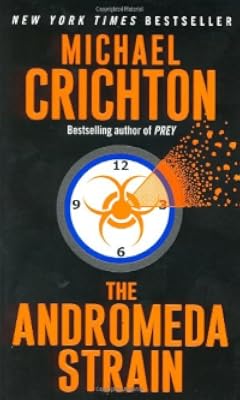
John Michael Crichton, known as Michael Crichton, was born on October 28, 1942 in Chicago, Illinois. He wrote novels while attending Harvard University and Harvard Medical School to help pay the tuition. One of these, The Andromeda Strain, which was published in 1969, became a bestseller. After graduating summa cum laude, he was a postdoctoral show more fellow at the Salk Institute in California before becoming a full-time writer and film director. His carefully researched novels included Eaters of the Dead, The Terminal Man, The Great Train Robbery, Congo, Sphere, Jurassic Park, Rising Sun, Disclosure, The Lost World, Airframe, and Micro. He also wrote non-fiction works including Five Patients: The Hospital Explained, Jasper Johns, and Travels. In the late 1960s, he also wrote under the pen names Jeffrey Hudson and John Lange. He has received several awards including Writer of the Year in 1970 from the Association of American Medical Writers and two Edgar Awards in 1968 and in 1979. Many of his novels have been made into highly successful films, six of which he directed. He was also the creator and executive producer of the Emmy Award-winning television series ER. In addition to his writing and directorial success, his expertise in information science enabled him to run a software company and develop a computer game. He died of cancer on November 4, 2008 at the age of 66. (Bowker Author Biography) show less
Some Editions
Awards and Honors
Awards
Distinctions
Series
Belongs to Publisher Series
Los jet de Plaza & Janes (202.13)
Work Relationships
Is contained in
Has the adaptation
Common Knowledge
- Canonical title
- Timeline
- Original title
- Timeline
- Alternate titles
- Timeline
- Original publication date
- 1999
- People/Characters
- Professor Edward Johnston; Chris Hughes; Kate Erickson; André Marek; David Stern; Robert Doniger (show all 7); Arnaud de Cervole
- Important places
- Castelgard, Nouvelle-Aquitaine, France; La Roque, Nouvelle-Aquitaine, France; Dordogne, Nouvelle-Aquitaine, France; England, UK; France; Black Rock, New Mexico, USA
- Important events
- Hundred Years' War (1337 | 1453)
- Related movies
- Timeline (2003 | IMDb)
- Epigraph
- "All the great empires of the future will be empires of the mind."
WINSTON CHURCHILL, 1953
"If you don't know history, you don't know anything."
EDWARD JOHNSTON, 1990
"I'm not interested in the future. I'm interested in the future of the future.
ROBERT DONIGER, 1996 - Dedication
- For Taylor
- First words
- He should never have taken that shortcut.
- Quotations
- Yet the truth was that the modern world was invented in the Middle Ages. Everything from the legal system, to nation-states, to reliance on technology, to the concept of romantic love had first been established in medieval t... (show all)imes. These stockbrokers owed the very notion of a market economy to the Middle Ages. And if they didn't know that, then they didn't know the basic facts of who they were. Why they did what they did. Where they had come from. Professor Johnston often said that if you didn't know history, you didn't know anything. You were a leaf that didn't know it was part of a tree.
Today, everybody expects to be entertained, and they expect to be entertained all the time. Business meetings must be snappy, with bullet lists and animated graphics, so executives aren't bored. Malls and stores must be eng... (show all)aging, so they amuse as well as sell us. Politicians must have pleasing video personalities and tell us only what we want to hear. Schools must be careful not to bore young minds that expect the speed and complexity of television. Students must be amused – everyone must be amused, or they will switch: switch brands, switch channels, switch parties, switch loyalties. This is the intellectual reality of Western society at the end of the century.
In other centuries, human beings wanted to be saved, or improved, or freed, or educated. But in our century, they want to be entertained. The great fear is not of disease or death, but of boredom. A sense of time on our hands, a sense of nothing to do. A sense that we are not amused. - Last words
- (Click to show. Warning: May contain spoilers.)They went back outside. They walked down the hill to the car. By now the rain had entirely stopped, but the clouds remained dark and heavy, hanging low over the distant hills.
- Original language*
- Englisch
*Some information comes from Common Knowledge in other languages. Click "Edit" for more information.
Classifications
Statistics
- Members
- 14,877
- Popularity
- 487
- Reviews
- 199
- Rating
- (3.56)
- Languages
- 22 — Catalan, Chinese, Czech, Danish, Dutch, English, Finnish, French, German, Greek, Indonesian, Italian, Korean, Latvian, Norwegian (Bokmål), Polish, Portuguese, Serbian, Slovenian, Spanish, Swedish, Turkish
- Media
- Paper, Audiobook, Ebook
- ISBNs
- 102
- ASINs
- 54