On This Page
Description
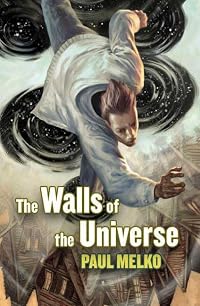
John Rayburn thought all of his problems were the mundane ones of an Ohio farm boy in his last year in high school. Then his doppelgänger appeared, tempted him with a device that let him travel across worlds, and stole his life from him. John soon finds himself caroming through universes, unable to return home--the device is broken. John settles in a new universe to unravel its secrets and fix it. Meanwhile, his doppelgänger tries to exploit the commercial technology he's stolen from other show more Earths: the Rubik's Cube! John's attempts to lie low in his new universe backfire when he inadvertently introduces pinball. It becomes a huge success. Both actions draw the notice of other, more dangerous travelers, who are exploiting worlds for ominous purposes. Fast-paced and exciting, this is SF adventure at its best from a rising star. show lessTags
Recommendations


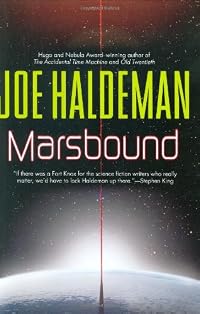
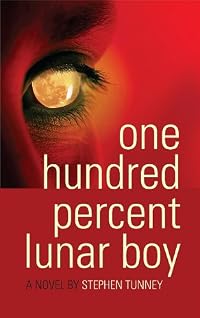
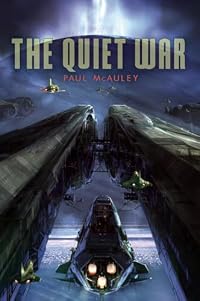

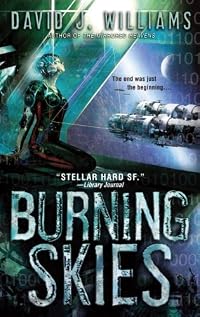







Member Recommendations

Member Reviews
This was an extremely well written, upsetting and quite moving science fiction novel. At it's heart, it's about who we (as in people in general) are. But at the same time, it's also about who we aren't. The premise is that people can travel between universes, but it comes with a rather sinister price. Melko's writing is top notch, his characters are strong and the only reason I didn't give it a full five stars is because it was at times realistically painful to read. Highly recommended, especially to be people who like to push the line between straight fiction and science fiction.
Rating: 3.75* of five
The Book Description: John Rayburn thought all of his problems were the mundane ones of an Ohio farm boy in his last year in high school. Then his doppelgänger appeared, tempted him with a device that let him travel across worlds, and stole his life from him. John soon finds himself caroming through universes, unable to return home—the device is broken. John settles in a new universe to unravel its secrets and fix it.
Meanwhile, his doppelgänger tries to exploit the commercial technology he’s stolen from other Earths: the Rubik’s Cube! John’s attempts to lie low in his new universe backfire when he inadvertently introduces pinball. It becomes a huge success. Both actions draw the notice of other, more show more dangerous travelers, who are exploiting worlds for ominous purposes. Fast-paced and exciting, this is SF adventure at its best from a rising star.
My Review: Well, THAT was fun! I have a fondness for multiverse stories, and this one's as much fun as H. Beam Piper's Paratime series. It made me think of the Star Trek: TNG episode “Lower Decks,” which shows us for the first time what the actions of the Big Boys look like from the ordinary crewmember's PoV. And like the recent success story Redshirts by John Scalzi, the hero has to figure out what's happening and how to fix it without knowing the big picture.
Why I had to knock a quarter star off the top grade the book could ever reasonably have gotten was the mega-dumb love story part...both John Wilson, the dupe, and John Rayburn or John Prime as he's called in the description above, are world-class bunglers in love. It points up the small inelegance in the book: The characters, while I liked them and invested myself in their antics, didn't always make sense as they rocketed from idea to idea. Things that should've been second nature to any reasonable semi-adult just passed right by them and caused avoidable problems for the author. It would have given him more room to flesh out the other small inelegances, like a messy sense of elapsed in-story time and a few logical gaps (like when John Wilson drags a woman and child into another universe and conveniently forgets this while trying to determine the radius his device works in) that exist.
But heck! What's a little dent and scrape among friends? I can't wait to get the next one in the series! show less
The Book Description: John Rayburn thought all of his problems were the mundane ones of an Ohio farm boy in his last year in high school. Then his doppelgänger appeared, tempted him with a device that let him travel across worlds, and stole his life from him. John soon finds himself caroming through universes, unable to return home—the device is broken. John settles in a new universe to unravel its secrets and fix it.
Meanwhile, his doppelgänger tries to exploit the commercial technology he’s stolen from other Earths: the Rubik’s Cube! John’s attempts to lie low in his new universe backfire when he inadvertently introduces pinball. It becomes a huge success. Both actions draw the notice of other, more show more dangerous travelers, who are exploiting worlds for ominous purposes. Fast-paced and exciting, this is SF adventure at its best from a rising star.
My Review: Well, THAT was fun! I have a fondness for multiverse stories, and this one's as much fun as H. Beam Piper's Paratime series. It made me think of the Star Trek: TNG episode “Lower Decks,” which shows us for the first time what the actions of the Big Boys look like from the ordinary crewmember's PoV. And like the recent success story Redshirts by John Scalzi, the hero has to figure out what's happening and how to fix it without knowing the big picture.
Why I had to knock a quarter star off the top grade the book could ever reasonably have gotten was the mega-dumb love story part...both John Wilson, the dupe, and John Rayburn or John Prime as he's called in the description above, are world-class bunglers in love. It points up the small inelegance in the book: The characters, while I liked them and invested myself in their antics, didn't always make sense as they rocketed from idea to idea. Things that should've been second nature to any reasonable semi-adult just passed right by them and caused avoidable problems for the author. It would have given him more room to flesh out the other small inelegances, like a messy sense of elapsed in-story time and a few logical gaps (
But heck! What's a little dent and scrape among friends? I can't wait to get the next one in the series! show less
I’ve always loved the notion of parallel universes. Maybe ten universes from here there’s a Terry who went to grad school in English instead of law school, earned tenure at a good university, and met her sweetheart ten or twenty years earlier than in this universe and lived happily ever after. Maybe fifty universes away is a Terry who never broke up with the guy she dated through most of college, married him right after graduation, had a bunch of kids, and was thoroughly miserable. And maybe 100 universes in the other direction is the Terry who went to law school, loved every minute of practicing law, became a famous trial lawyer, and is single, rich and happily arguing in front of a jury right this minute. I can conjure up all the show more possibilities in my imagination with great pleasure.
Even more fun, though, is reading a book like Paul Melko’s The Walls of the Universe, which plays out the consequences of being able to jump between universes. Melko starts with two versions of John Rayburn. One is a high school senior who lives on a farm and is getting ready to go to college – not at Case Institute of Technology, where he really wants to go to study physics, but at the University of Toledo, which is affordable with a year or two of farm work. He’s in a bit of trouble at the moment, having beaten up his classmate, Ted Carson, but for the most part he’s a good kid with a solid head on his shoulders.
One fall morning shortly before Halloween, though, a boy comes out of the woods to greet him with a familiar face – his own. This is John Prime, a John Rayburn from another universe who has been jumping from universe to universe and is now hungry and tired and – though he doesn’t dare say so to John Rayburn – looking for a place to settle down and call home, earn a few bucks, get it on with Casey Nicholson, who is the girl for him in every universe. John Prime tricks John Rayburn into using the device that will take him into another universe, not telling Rayburn that it works in only one direction.
The book splits into two at this point, following each John in his separate universe(s). John Prime, who never did seem like such a great guy and who solidifies that impression when he tricks John Rayburn into using the device, has a pretty difficult time of it, despite the fact that he undertakes plans to market Rubick’s Cube, which was never invented in John Rayburn’s universe. John Rayburn manages to stay a pretty straightforward sort of guy. His anger when he finds that he has no way back to his own universe nearly gets the better of him, but after a close call or two he settles down into work and college. Despite himself, he finds that he has invented pinball, something never seen in the universe he lands in.
Both Johns, however, draw the attention of forces who believe themselves to be from the original and only universe, the one of which all others are copies. These individuals have been stranded in subsidiary universes, where they despise everyone and make a cushy living putting out artworks (like the rest of Beethoven’s symphonies – didn’t he write only three in his lifetime?) and devices that were never invented in the universes in which they are exiled. These people aren’t amused when someone else treads on their new invention turf, and they are especially not amused when they learn that John Rayburn has a universe-skipping device.
The book grows darker the longer one reads, and the pace never lets up. Seeing how John Prime and John Rayburn resolve their respective problems is exciting, interesting and just plain fun. The Walls of the Universe is a great use of an old trope. show less
Even more fun, though, is reading a book like Paul Melko’s The Walls of the Universe, which plays out the consequences of being able to jump between universes. Melko starts with two versions of John Rayburn. One is a high school senior who lives on a farm and is getting ready to go to college – not at Case Institute of Technology, where he really wants to go to study physics, but at the University of Toledo, which is affordable with a year or two of farm work. He’s in a bit of trouble at the moment, having beaten up his classmate, Ted Carson, but for the most part he’s a good kid with a solid head on his shoulders.
One fall morning shortly before Halloween, though, a boy comes out of the woods to greet him with a familiar face – his own. This is John Prime, a John Rayburn from another universe who has been jumping from universe to universe and is now hungry and tired and – though he doesn’t dare say so to John Rayburn – looking for a place to settle down and call home, earn a few bucks, get it on with Casey Nicholson, who is the girl for him in every universe. John Prime tricks John Rayburn into using the device that will take him into another universe, not telling Rayburn that it works in only one direction.
The book splits into two at this point, following each John in his separate universe(s). John Prime, who never did seem like such a great guy and who solidifies that impression when he tricks John Rayburn into using the device, has a pretty difficult time of it, despite the fact that he undertakes plans to market Rubick’s Cube, which was never invented in John Rayburn’s universe. John Rayburn manages to stay a pretty straightforward sort of guy. His anger when he finds that he has no way back to his own universe nearly gets the better of him, but after a close call or two he settles down into work and college. Despite himself, he finds that he has invented pinball, something never seen in the universe he lands in.
Both Johns, however, draw the attention of forces who believe themselves to be from the original and only universe, the one of which all others are copies. These individuals have been stranded in subsidiary universes, where they despise everyone and make a cushy living putting out artworks (like the rest of Beethoven’s symphonies – didn’t he write only three in his lifetime?) and devices that were never invented in the universes in which they are exiled. These people aren’t amused when someone else treads on their new invention turf, and they are especially not amused when they learn that John Rayburn has a universe-skipping device.
The book grows darker the longer one reads, and the pace never lets up. Seeing how John Prime and John Rayburn resolve their respective problems is exciting, interesting and just plain fun. The Walls of the Universe is a great use of an old trope. show less
The first part of this novel was published as a Hugo-nominated novella in 2006 (far superior IMHO to that year's winner). The second part continues the story of John Rayburn's journey through the "walls" separating parallel universes, as he seeks to return to the "home" timeline from which one of his other selves dispossessed him.
The novella didn't try, beyond an invocation of "quantum cosmology", to rationalize trans-cosmic transport. Its virtue was the delineation of character or, rather, of the way in which one person has the potential to embody contrasting personalities. The naive, shy, good-hearted hero seems vastly different from the cynical, brash, selfish "John Prime", but one sees how both grew from the same roots.
The novel show more gradually abandons this interesting aperçu for a more conventional super-science adventure. John settles down in a promising universe where his counterpart apparently died young or wasn't born, gets involved with the girl he was too timid to approach in his original home (where she has gotten less fortunately involved with John Prime), works on reverse engineering his timeline-hopping device (as plausible, I'm afraid, as a medieval philosopher reconstructing a nuclear power plant - the one place where the author cheats), and runs into a crew of villainous exiles who aim to rebuild a vanished cosmos-spanning empire. The story comes to a definite conclusion, but room is left for a sequel in which we'll see the next stage of the conflict.
While I would have preferred a somewhat different book, the one that the author actually wrote is a fine variation on the parallel worlds theme. I'll be pleased and unsurprised if it garners a Hugo nomination and won't mind if we see more of John Rayburn in the future. show less
The novella didn't try, beyond an invocation of "quantum cosmology", to rationalize trans-cosmic transport. Its virtue was the delineation of character or, rather, of the way in which one person has the potential to embody contrasting personalities. The naive, shy, good-hearted hero seems vastly different from the cynical, brash, selfish "John Prime", but one sees how both grew from the same roots.
The novel show more gradually abandons this interesting aperçu for a more conventional super-science adventure. John settles down in a promising universe where his counterpart apparently died young or wasn't born, gets involved with the girl he was too timid to approach in his original home (where she has gotten less fortunately involved with John Prime), works on reverse engineering his timeline-hopping device (as plausible, I'm afraid, as a medieval philosopher reconstructing a nuclear power plant - the one place where the author cheats), and runs into a crew of villainous exiles who aim to rebuild a vanished cosmos-spanning empire. The story comes to a definite conclusion, but room is left for a sequel in which we'll see the next stage of the conflict.
While I would have preferred a somewhat different book, the one that the author actually wrote is a fine variation on the parallel worlds theme. I'll be pleased and unsurprised if it garners a Hugo nomination and won't mind if we see more of John Rayburn in the future. show less
Review by Christine Tursky Gordon:
The Walls of the Universe is based on a classic science fiction trope: what if there were parallel worlds, and we could travel from one to the other? Paul Melko takes the idea a step further, and asks what would happen if the travel were in one direction only, and you couldn’t go back. The main character, John Rayburn, meets his counterpart from a parallel universe, and is tricked into trying out the universe-hopping device. His counterpart settles in and slots himself into the original Rayburn’s life without anyone realising. The ‘real’ John is left desperate and unprepared, traveling from one universe to the next but never letting go of the hope that he will find some way home.
Both versions show more of John Rayburn manage to draw some unwelcome attention to themselves. They are not the only ones out there traveling between universes, and the book takes a surprising new turn.
The Walls of the Universe is a well plotted and suspenseful adventure, but it also deals with personal choices, loyalty, and the paths that we do and don’t take in life. Faced with similar choices, how do different versions of the same person respond? Which choices are better? Which ones seem inevitable? Not all the answers are the ones that we might like–something that adds depth to Melko’s book. show less
The Walls of the Universe is based on a classic science fiction trope: what if there were parallel worlds, and we could travel from one to the other? Paul Melko takes the idea a step further, and asks what would happen if the travel were in one direction only, and you couldn’t go back. The main character, John Rayburn, meets his counterpart from a parallel universe, and is tricked into trying out the universe-hopping device. His counterpart settles in and slots himself into the original Rayburn’s life without anyone realising. The ‘real’ John is left desperate and unprepared, traveling from one universe to the next but never letting go of the hope that he will find some way home.
Both versions show more of John Rayburn manage to draw some unwelcome attention to themselves. They are not the only ones out there traveling between universes, and the book takes a surprising new turn.
The Walls of the Universe is a well plotted and suspenseful adventure, but it also deals with personal choices, loyalty, and the paths that we do and don’t take in life. Faced with similar choices, how do different versions of the same person respond? Which choices are better? Which ones seem inevitable? Not all the answers are the ones that we might like–something that adds depth to Melko’s book. show less
This story has all the elements that lead to a captivating read: a quest, good guys and bad guys (and sometimes you don't know who is who), secrets, and mysteries. John Rayburn is tricked into leaving his universe by John Prime - a parallel-universe, travel-weary version of himself. The story follows both characters as John tries to get "home" and John Prime makes his current universe his home. Throughout I wondered... Will John Rayburn make it back to his universe? And if he does, would he want to be there after what John Prime did as him?
The world-building premise of this book (multiple iterations of the universe as a result of following different paths at various decision points throughout history) is one I find fascinating, and I found the book to be well written. I wanted to like this book. Unfortunately, I found the protagonists to be rather unlikable and one-dimensional, and that made it incredibly difficult to get invested in the story.
Members
- Recently Added By
Published Reviews
ThingScore 100
The Walls Of The Universe is a really fast, entertaining read, with nice, crisp prose. (At one point, Rayburn hits a guy with a tire iron, and he falls "like a suit off a rack.") The little character touches, and the parallel between the two Johns' stories in the two alternate universes, add a lot to the basic idea. But it's also refreshing to see a book about travel between universes where show more nobody's trying to change the course of history or build an empire — just make a fast buck. Highly, highly recommended. show less
added by PhoenixTerran
Lists

Unshelved Book Clubs
579 works; 5 members
Author Information

22+ Works 676 Members
Some Editions
Awards and Honors
Distinctions
Series

Common Knowledge
- Canonical title*
- Die Mauern des Universums
- Original publication date
- 2009
- People/Characters
- John Rayburn
- Dedication
- For Stacey,
of course - First words
- The screen door slammed behind John Rayburn, rattling in its frame.
- Last words
- (Click to show. Warning: May contain spoilers.)"Fuck it," he whispered, and downed his beer in one gulp.
- Disambiguation notice
- This is a novel. Do not combine it with the novella of the same name.
*Some information comes from Common Knowledge in other languages. Click "Edit" for more information.
Classifications
Statistics
- Members
- 323
- Popularity
- 97,720
- Reviews
- 18
- Rating
- (3.61)
- Languages
- English, French, German
- Media
- Paper, Ebook
- ISBNs
- 7
- ASINs
- 3