

Anne Rice (1) (1941–2021)
Author of Interview with the Vampire
For other authors named Anne Rice, see the disambiguation page.
About the Author
Anne Rice was born Howard Allen O'Brien on October 4, 1941 in New Orleans, Louisiana. She received a bachelor's degree in political science in 1964 and master's degree in English and creative writing in 1972 from San Francisco State University. She published her first short story in 1965 called show more October 4, 1948. Her first book, Interview with the Vampire, was published in 1976. It was made into a film starring Brad Pitt, Kirsten Dunst, and Tom Cruise in 1994. She wrote various series in the same genre including the rest of the Vampire Chronicles, the Mayfair Witches books, and The Wolf Gift Chronicles. Her novel, Feast of All Saints, became a Showtime mini-series in 2001. Her other works include Cry to Heaven, Servant of the Bones, and Violin. In 1998, Rice returned to the Catholic Church and for some time only wrote for Christ or about Christ. These works include Christ the Lord: Out of Egypt, Christ the Lord: The Road to Cana, and Called Out of Darkness. Anne Rice died on December 11, 2021 at the age of 80. (Bowker Author Biography) show less
Image credit: Anne Rice, 2016
Series
Works by Anne Rice
Interview with the Vampire / The Vampire Lestat / The Queen of the Damned (1975) 1,698 copies, 10 reviews
Interview With the Vampire / The Vampire Lestat / The Queen of the Damned / The Tale of the Body Thief (1989) 1,668 copies, 11 reviews
The Sleeping Beauty Novels: The Claiming of Sleeping Beauty, Beauty's Punishment, Beauty's Release (Boxed Set) (1983) 1,245 copies, 18 reviews
Anne Rice's The Master of Rampling Gate: A Graphic Tale of Unspeakable Horror by the Author of 'The Vampire Lestat' (1991) 79 copies, 3 reviews
Interview With the Vampire / The Vampire Lestat / Queen of the Damned / The Tale of the Body Thief / Memnoch the Devil / The Vampire Armand / Merrick (1990) 33 copies
Interview with the Vampire / The Vampire Lestat / The Queen of the Damned / The Tale of the Body Thief / Memnoch the Devil (2002) 24 copies
Exit to Eden / Feast of All Saints / Interview With the Vampire / Lasher / Merrick / The Mummy / Pandora / Queen of the Damned / Servant of the Bones / The Tale of the Body Thief… (1996) 13 copies, 1 review
[unidentified works] 7 copies
Interview with Anne Rice: A Conversation between Anne Rice and Michael Riley (1997) — Author — 7 copies
The Metamorphosis and Other Stories 5 copies
Vampire Companion 02 2 copies
The Gift of Cancer 2 copies
The Sand Canyon Review 2 copies
O Vampiro Lestat - Volume II 1 copy
Lasher / Cry to Heaven / Pandora / The Feast of All Saints / The Mummy / Memnoch the Devil / The Tale of the Body Thief / Taltos / Servant of the Bones — Author — 1 copy
3 Anne Rice Books! 1) Taltos 2) The Tale of the Body Thief 3) Interview With the Vampire (The Vampire Chronicles) (1998) 1 copy
Anne Rice: Birth of the Vampire (VHS) Interview with the Vampire (Book) — Author — 1 copy
Interview With the Vampire / The Mummy / Queen of the Damned / The Vampire Lestat / The Tale of Body Thief (1995) — Author — 1 copy
Night of the Wolf 1 copy
O Vampiro Lestat - Volume I 1 copy
Anne Rice 3 Pack- The Tale of the Body Thief / Memnoch the Devil / The Vampire Armand (The Vampire Chronicles, 4, 5 & 6) (1992) 1 copy
The Silver Wolf 1 copy
Associated Works
The Vampire Companion: The Official Guide to Anne Rice’s The Vampire Chronicles (1993) — Collaborator — 741 copies, 4 reviews
Anne Rice's The Vampire Lestat [graphic novel, complete] (1991) — Inspiration — 592 copies, 6 reviews
Interview with the Vampire: The Vampire Chronicles [1994 film] (1994) — Screenwriter — 544 copies, 6 reviews
The New Gothic: A Collection of Contemporary Gothic Fiction (1991) — Contributor — 273 copies, 2 reviews
The Vampire Archives: The Most Complete Volume of Vampire Tales Ever Published (2007) — Contributor — 216 copies, 5 reviews
Anne Rice's The Tale of the Body Thief [graphic novel adaptation] (2000) — Author — 209 copies, 3 reviews
Vampires, Wine and Roses: Chilling Tales of Immortal Pleasure (1997) — Contributor — 169 copies, 2 reviews
Lovers & Other Monsters: A Collection of Amorous Tales of Fantasy, Old and New (1993) — Contributor — 64 copies, 1 review
Vampires, Zombies, Werewolves and Ghosts: 25 Classic Stories of the Supernatural (Signet Classics) (2011) — Contributor — 53 copies, 1 review
Hallowed halls of greater New Orleans : historic churches, cathedrals, and sanctuaries (2013) — Foreword — 7 copies
Anne Rice's Interview with the Vampire (#1-12 collected) — Inspiration — 6 copies
Anne Rice's The Mummy, or Ramses the Damned [graphic novel adaptation] (1990) — Inspiration — 2 copies
Anne Rice's The Queen of the Damned #3 [comic book issue] — Author — 2 copies
Fear #16 — Interview — 1 copy
Tagged
Common Knowledge
- Legal name
- Rice, Howard Allan Frances O'Brien
- Other names
- Rampling, Anne
Roquelaure, A.N.
Rice, Anne O'Brien - Birthdate
- 1941-10-04
- Date of death
- 2021-12-11
- Gender
- female
- Education
- Texas Woman’s University, Denton, Texas
San Francisco State University (BA|1964|MA|1972 | Creative Writing)
North Texas State College, Texas - Occupations
- writer
insurance claims controller - Awards and honors
- World Horror Convention Grand Master Award (1994)
Bram Stoker Award (2003)
ThrillerMaster Award (2013) - Agent
- William Loverd
- Relationships
- Borchardt, Alice (sibling)
Rice, Stan (spouse)
Rice, Christopher (offspring) - Short biography
- Howard Allen Frances O'Brien was born on 04 October 1941 in New Orleans, Louisiana, USA. She was the second of four daughters of Irish Catholic parents, Katherine "Kay" Allen and Howard O'Brien. In 1961, she married Stan Rice, who passed away in 2002. They had two children, Christopher (1978) and Michele (1966-1972).
- Cause of death
- stroke
- Nationality
- USA
- Birthplace
- New Orleans, Louisiana, USA
- Places of residence
- New Orleans, Louisiana, USA
La Jolla, California, USA
San Francisco, California, USA
Richardson, Texas, USA
Denton, Texas, USA
California desert, USA - Place of death
- Rancho Mirage, California, USA
- Burial location
- Metairie Cemetery, New Orleans, Louisiana, USA
- Associated Place (for map)
- USA
Members
Discussions
New vampire chronicle! Prince lestat due in October 2014 in Anne Rice fans (June 2025)
The Wolf Gift in Anne Rice fans (June 2025)
Interview with the Vampire by Anne Rice - BOOKS ILLUSTRATED 2025 in Fine Press Forum (May 2025)
Anne Rice - Interview with the Vampire in Folio Society Devotees (November 2022)
Do you like Anne Rice's books ? in Gothic Literature (December 2021)
Anne Rice abandoned christianity! in Gay Men (November 2020)
Favorite Anne Rice in Book talk (November 2016)
Anne Rice 'quits being a Christian' in Christianity (November 2013)
Boycott Anne Rice in Anne Rice fans (December 2009)
A new interview with Anne in Anne Rice fans (February 2009)
Memnoch the Devil in Anne Rice fans (June 2008)
Anne Rice promises 1 more vampire book in Thing(amabrarian)s That Go Bump in the Night (April 2008)
Anne Rice fans Message Board in Anne Rice fans (January 2008)
Reviews
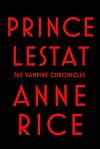
It is about 1:45a.m. and I have just finished Prince Lestat. I was thrilled, to say the least, when I found out Queen Anne was letting Lestat back out into the world this year to run amok. But, then, you start thinking, "could it really be as good as before? Can Lestat, our Lestat of old, really stage a comeback after his final bow over ten years ago?" Why did I waste time worrying? Of course he's back, and doing his thing, his way, as always. The moment in the story when, after a long show more absence on his part, he is walking along with David in deep discussion about events and decides, in Lestat fashion, that he desperately needs a drink, of David, now. Of course, David, is angry at being manhandled and resists. But it's the line, the beautiful, perfectly Lestat delivered line, "oh yes, please, despise me" before taking his drink that made me smile from ear to ear. THAT is Lestat, our beloved Brat Prince, with a sly wink at the audience, telling all of us what we've known from the beginning: " Go ahead and despise me, but you know you really love me, especially when I am being bad." I loved it! Thank you Anne Rice! I am with you, as always, on whatever new journey you are taking us on, especially with such a charming host to lead the way. Long live the Prince! show less
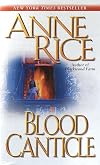
I first got into Anne Rice’s Vampire Chronicles many years ago now, reading everything up to QUEEN OF THE DAMNED and THE MUMMY before putting her works aside. But being a diehard horror fan, and someone who in the years since has tried their own hand at writing stories of the supernatural, I found my way back to Rice a few years ago and started making up for lost time, plowing through both The Vampire Chronicles and The Mayfair Witches series. And now I have come to the end of the line, so show more to speak, with BLOOD CANTICLE, a book I must conclude was written solely for the fans. First of all, if the reader hasn’t read most of her previous vampire epics, and the tales of the witches, then they will be completely lost. And any fan who hasn’t read her last book, BLACKWOOD FARM, won’t know what is going on, as that story introduces some new characters and locations in Louisiana, and because BLOOD CANTICLE, picks up right where the previous book left off.
My paperback copy come in at just over 400 pages, a pretty quick read compared to some of Rice’s other epics, and that might be the book’s weakness. To me, the whole project felt like Rice trying to tie up a bunch of loose ends leftover from earlier works by jamming Lestat, Rowan Mayfair, and the Taltos, into one quick story before bidding farewell for now to this world. The book opens at Blackwood Farm where the Vampire Lestat saves Mona Mayfair from a wasting death by making her a vampire, thus allowing Mona to join her beloved Quinn Blackwood (the main character of BLACKWOOD FARM) in the ranks of the Undead. This leads to a lot of interaction with Rowan Mayfair, the witch who heads the powerful and rich Mayfair family, and ultimately a search for the Taltos, an ancient race of non-human creatures who are the spawn of the incestuous Mayfair bloodline. Both Rowan and Mona have given birth to a Taltos, who come into the world with full knowledge of their species history, and grow to maturity in a matter of hours, in previous books. This being a crossover, there comes a point where the vampires and witches sit down and relate all the history we’ve previously read in other books, but it wouldn’t be an Anne Rice novel if it didn’t have characters going on and on to one another. But for a book filled with some of Rice’s more larger than life characters, the action always felt small time compared to the epic possibilities raised in her other books.
BLOOD CANTICLE got a lot of negative reviews from many of Rice’s ardent fans. Many complained that the characterizations in this book were not consistent with earlier books. Lestat seems obsessed with being heroic, of being a saint whom the Pope in Rome would turn to, while Mona, once a tough, determined and precocious young girl (she was only 13 when she seduced Michael Curry, Rowan’s husband) is now given to emotional outbursts and dressing like a slut as a vampire. Rowan is tough in one scene, an emotional wreck in another. Some have implied that BLOOD CANTICLE was ghost written, but I think Rice had just grown tired of these characters, even if she still loved them dearly, and just didn’t have the heart or drive at that point in her career to write a large enough story to do them justice. Lestat and Rowan fall madly in love, surely that plot alone could have powered its own book. The Taltos, specifically Ashler and Morrigan, were characters to content with in the Mayfair books, but their story is merely dispensed with in the final third of BLOOD CANTICLE. Quinn (who is reduced to the background here) and Mona could have carried their own book as newly made, and newlywed, Blood Hunters finding their way in the world. Even Lestat versus Oncle Julian Mayfair (a great sinister character) should have been more than a subplot. But I have no doubt that Rice wrote this book. It’s filled with the kind of minute detail, especially descriptions of clothing that was her hallmark, not to mention her obsession with Creoles. I have no doubt that some of her depictions of non-Caucasians would make those with certain sensibilities wince.
In the end, I didn’t dislike BLOOD CANTICLE, but I understand the feelings of fans who really expected more from their beloved author. I have no doubt that Rice felt she owed us this book and what we got is what we got. I remember seeing an interview on TV where she said Lestat had bidden her farewell, and simply rode off out her imagination, and that the Vampire Chronicles were done with BLOOD CANTICLE. Looking back, I think that was just burnout talking, for as we know, it was not the end of the road for Rice and her most famous creation. A decade later, PRINCE LESTAT returned. There’s a copy on my shelf waiting to be read. show less
My paperback copy come in at just over 400 pages, a pretty quick read compared to some of Rice’s other epics, and that might be the book’s weakness. To me, the whole project felt like Rice trying to tie up a bunch of loose ends leftover from earlier works by jamming Lestat, Rowan Mayfair, and the Taltos, into one quick story before bidding farewell for now to this world. The book opens at Blackwood Farm where the Vampire Lestat saves Mona Mayfair from a wasting death by making her a vampire, thus allowing Mona to join her beloved Quinn Blackwood (the main character of BLACKWOOD FARM) in the ranks of the Undead. This leads to a lot of interaction with Rowan Mayfair, the witch who heads the powerful and rich Mayfair family, and ultimately a search for the Taltos, an ancient race of non-human creatures who are the spawn of the incestuous Mayfair bloodline. Both Rowan and Mona have given birth to a Taltos, who come into the world with full knowledge of their species history, and grow to maturity in a matter of hours, in previous books. This being a crossover, there comes a point where the vampires and witches sit down and relate all the history we’ve previously read in other books, but it wouldn’t be an Anne Rice novel if it didn’t have characters going on and on to one another. But for a book filled with some of Rice’s more larger than life characters, the action always felt small time compared to the epic possibilities raised in her other books.
BLOOD CANTICLE got a lot of negative reviews from many of Rice’s ardent fans. Many complained that the characterizations in this book were not consistent with earlier books. Lestat seems obsessed with being heroic, of being a saint whom the Pope in Rome would turn to, while Mona, once a tough, determined and precocious young girl (she was only 13 when she seduced Michael Curry, Rowan’s husband) is now given to emotional outbursts and dressing like a slut as a vampire. Rowan is tough in one scene, an emotional wreck in another. Some have implied that BLOOD CANTICLE was ghost written, but I think Rice had just grown tired of these characters, even if she still loved them dearly, and just didn’t have the heart or drive at that point in her career to write a large enough story to do them justice. Lestat and Rowan fall madly in love, surely that plot alone could have powered its own book. The Taltos, specifically Ashler and Morrigan, were characters to content with in the Mayfair books, but their story is merely dispensed with in the final third of BLOOD CANTICLE. Quinn (who is reduced to the background here) and Mona could have carried their own book as newly made, and newlywed, Blood Hunters finding their way in the world. Even Lestat versus Oncle Julian Mayfair (a great sinister character) should have been more than a subplot. But I have no doubt that Rice wrote this book. It’s filled with the kind of minute detail, especially descriptions of clothing that was her hallmark, not to mention her obsession with Creoles. I have no doubt that some of her depictions of non-Caucasians would make those with certain sensibilities wince.
In the end, I didn’t dislike BLOOD CANTICLE, but I understand the feelings of fans who really expected more from their beloved author. I have no doubt that Rice felt she owed us this book and what we got is what we got. I remember seeing an interview on TV where she said Lestat had bidden her farewell, and simply rode off out her imagination, and that the Vampire Chronicles were done with BLOOD CANTICLE. Looking back, I think that was just burnout talking, for as we know, it was not the end of the road for Rice and her most famous creation. A decade later, PRINCE LESTAT returned. There’s a copy on my shelf waiting to be read. show less
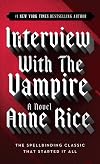
You can't underestimate the influence of Anne Rice's Vampire Chronicles, and Interview with the Vampire, the first of the trio of novels, kicked it all off in the mid-70s. Its vampire spawn include, perhaps, the Broadway play Dracula, and later, countless teen vampire shows on television, not to mention other monstrous offspring cousins like Zombies. Before Rice the vampire was a caricature of a monster: evil, bloodthirsty, scary, demonic, the centerpiece of a typical horror movie. Rice show more flipped the formula and created a much more complex, dare I say human, protagonist. Sure Louis, the main character, and his companions Lestat, Claudia, and later Armand, are blood-thirsty and murderous. And most of Louis's fellow vampires are much less conflicted than he is. But they all, to one extent or another, retain some vestige of their former humanity, even if it a purely aesthetic attachment. Louis, on the other hand, is truly tortured by questions of morality, good, and evil. Beyond the philosophizing, the book has a lot of entertainment value. Rice was a native of New Orleans and has a good feel for bringing an earlier century alive in Gothic overtones. Most of the time her prose is pretty straight forward but every now and then it is woozy and poetic, as if she has ingested some opium and let her mind and pen wander freely taking the reader along for the ride. It's fun fiction, but has its serious side. While I will take a break for a while, I am sure Chronicle Two, The Vampire Lestat, awaits me soon. show less
Where I got the book: my local library. ***SPOILER WARNING: THERE WILL BE COPIOUS SPOILERS. DON’T READ THIS REVIEW IF YOU DON’T WANT TO KNOW WHAT HAPPENS IN THE BOOK*** Also, longest review ever.
Prologue: why I even read the damn thing in the first place
Somewhere around my early thirties, I became a huge Anne Rice fan. I think it started with the Interview with the Vampire movie—my attention having been riveted by Brad Pitt in a long black wig, I then got intrigued by the idea of show more vampires with souls and relationships, and read the book in pretty much one sitting. And dived into my one and only flirtation with pure fandom—the internet had just begun, and I was able to find out lots about Anne Rice, who seemed interesting. I read the biography! I even ventured into Vampire Chronicles chat rooms, but soon backed out again when I encountered people who thought they were Lestat & Co. OK, I wasn’t THAT into it.
I loved The Vampire Lestat. I thought The Queen of the Damned was pretty overblown and all the Lestat-as-rock-star stuff kind of made me squirm, but I was reconciled to the series by The Tale of the Body Thief. I read a bunch of the other books, possibly more than once—these were years when books in English weren’t readily available to me so I re-read a lot. I tended to find that they started well, but things got a bit silly toward the end—like The Witching Hour, which is three-quarters awesomeness about ghosts in New Orleans and one-quarter awfulness about titty-sucking aliens. But hey, you know how it is when you decide you like an author—you try to get your head around their world. (Incidentally, the only two books of Rice’s that to me have any lasting value are her standalones, Cry To Heaven and The Feast Of All Saints—nobody ever mentions those.)
The silliness started to lose me, and I’m not sure I read all the vampire books. I listened to the audiobook of Blood Canticle but seem to remember finding it pretty dire. Eh, my fandom was over. It happens. You grow, you move on.
Anne Rice came back on my radar a couple of years ago, and in fact I was quite excited to Like her Facebook page. But the excitement soon palled, and I Unliked after exposure to her campaign against negative reviews. And yet (or because of) I felt drawn to read her latest book. After all, in the ten years or so since Blood Canticle, she’d renounced her vampires and embraced her lapsed Catholicism in a blaze of publicity, written some religious books, and then equally publicly renounced her Catholicism and re-embraced her bloodsuckers. Her online rants suggested that she was becoming, er, an ever more colorful character with age. And once noted, there’s something strangely irresistible about an overhyped, overmarketed fan-fodder book—it just cries out to be evaluated.
The plot, if applicable
Prince Lestat proceeds along these lines: Lestat and various other vampires are receiving telepathic messages from a mysterious Voice, which gradually solidify into a Kill! Kill! command seemingly directed against the seething mass of unruly young vampires (the redshirts of the Chronicles) who are getting worried about the body count and begging their elders to do something. The Elders dress up in nice clothes, think about how pretty they are and how pretty everyone else is, hang out in exotic locations and talk endlessly about the Voice and the meaning of life in general. Eventually the Voice picks one of them to be the bad guy/recipient of the Sacred Core of All Vampireness, and he immediately starts sneering and delivering bad guy lines in a stage-villain manner and tries to get control of the only two scientist vampires in history by kidnapping their favorite human, who happens to be Lestat’s son (the consequence of possibly the most ridiculous laboratory-sex scene EVAH—in a mock bedroom with “blue toile wallpaper and bedding, and frilly shaded lamps”—that even Lestat finds funny). Lestat overpowers the bad guy with ludicrous ease and then assumes power over all vampirekind, whereupon they decide that they’re no longer evil and will love each other for eternity.
The Ridiculous
There’s so much ridiculous in this novel that it doesn’t even compute. For one thing, its sense of its own importance is staggering. There’s a page of dedications, a page of quotes (FROM ANNE RICE’S BOOKS!), a four-page Contents section, a story-so-far announced as Blood Genesis, and a Blood Argot section of definitions (four pages) for those who can’t work out what Mind Gift and Fire Gift might mean. And that’s before we even get to the novel itself. After the novel, there are two Appendices, a list of vampires and a list of the books with mini-synopses. The text uses many Capitals to highlight Terms of Importance, so that you don’t miss Them. The text references the books of the Vampire Chronicles on several occasions, and all the characters think they’re super-awesome, for example:
And the stories in truth amazed her, not only by their complexity and depth, but by the peculiar dark turns they took, and the chronology they laid out for the main character's moral development.
Their "deep current of psychological observation" and "profound romanticism and melancholy."
We have brand-name dropping and place-name dropping aplenty, to remind us ordinary mortals that there are some authors among us who have been places. Anne seems to like Bon Jovi and iPhones. All vampires have iPhones, preferably with a Bose dock to amplify the classical music or the broadcasts of kiddie vampire Benji, through whom they can communicate at a pitch conveniently too low for humans to hear. All old vampires have superpowers. And iPhones.
We are introduced to a character called Rose, who at one point ends up in a Christian institution for naughty girls that HAS to be Rice’s payback for criticism of her religious books. She also gets to have the shortest and most perfunctory sex scene I’ve come across:
They had taken it slowly, kissing, tumbling under the white sheets, and then it had been rough, almost divinely rough, and then it was over.
No seriously, that was it. Rice spends a little longer on vampire sex, i.e. sucking each other’s blood (averaging two short paragraphs per suck), but the erotic build-up and lingering dark sexual tension of the earlier books is completely gone. Her vampires admire and love each other like a bunch of smartly-dressed seniors at a dinner party in Hollywood, but that’s as far as it usually goes.
The Middle of the Book: ancient vampires who like scented candles
Then we move on to the Ancient Vampire Stories—each one gets a chapter. Cyril, Antoine, Marius, Gregory, Everard de Landen, Gremt Stryker Knollys (I suppose long names are one way of padding your word count), Rhoshamandes and Benedict, Fareed—don’t try to remember them, they’re all gorgeous, powerful, anguished and whatever. I seriously have almost no memory of this part of the book because it was basically repetitive—the Voice, Akasha, Maharet, the Voice, iPhone, Akasha, Armand, classical music is so great, Maharet, let’s mention a few exotic destinations, Akasha, kissy kissy I love Lestat. As the novel crawls slowly onward we learn that even nasty ugly old vampires like Magnus can redo themselves into beautiful ghosts—it’s as if Rice has decided that nobody, absolutely nobody, is going to be evil or ugly in her books. Once again I feel like I’ve wandered into a sort of supernatural Hollywood, where everyone looks good and is so old that sin isn’t interesting any more, so now all they’re bothered about is being nice to everyone so they’ll get a good obituary.
This impression is reinforced by the sheer mundanity of Rice’s portrayal of eternity:
Everard liked the shops and wished more were open after dark. He often sent his mortal servants down to purchase stationery for him, on which to write his occasional poems, which he then framed and hung on his walls. And he purchased scented candles and bright silk neckties.
Seriously? If I had a perfect ageless vampire body I’d be snowboarding on Everest or swimming with the dolphins, not pottering around at home with scented candles.
There are unintentionally hilarious moments, mostly due to Rice’s apparent dislike of research. She doesn’t know the Italian currency is the Euro, that the Palace of the Popes in Avignon is a building not a ruin, or that the South of France isn’t chilly in September. But those are little blips of happiness in the midst of a desert of dreck, sprinkled with laugh-out-loud writing:
Ah, but what is Heaven but a silent and indifferent void through which the shattering noise of explosions echo forever or are heard not at all?
...we are the sum of all we've seen and all we've appreciated and understood. You were the sum of sunshine on marble floors filled with pictures of divine beings who laughed and loved and drank the fruit of the vine as surely as you were the sum of the poets and historians and philosophers you'd read. You were the sum and the fount of what you'd cherished and chosen to abide and all you had loved.
And to think--on rising we would go into the Kingdom of Greater Shocks...All my struggles, my triumphs, my losses, were being eclipsed by what was being revealed now. Had ever ennui and despair been banished by such revelations, such precious gifts of truth?
His Blood Wife, Zenobia, was a delicately built female with voluminous black hair and exquisite features; she brought into the house a universe of new learning, having been brought up in the palace of the Emperor of the East before being brought into the Blood by a wicked female named Eudoxia who had made war on Marius and ultimately lost.
Chapter 22, which should be a lesson to us all
And then, on page 340, something finally happens that hasn’t happened before, and we lurch—at long last!—into a hundred pages of finale. Some blood and gore, a kidnapping, much yapping by the aged vampires. Lestat is called in to save the day! And I’m so happy, because now we get a chapter that should be read out loud in front of a huge audience of writers well supplied with buckets and tissues, five pages of purple posturing and Lestat-love that must surely be the nadir of Rice’s career. I quote extensively:
Gregory had to admire this enigmatic Lestat. Never mind that Gregory was in love with him. Who could not admire a creature with such perfect poise, such perfect pitch for what to say to each and every blood drinker who approached him...
“…The Voice is inheriting the wind, and we have to hold this tent together against it!" Gregory was tempted to applaud. It was fireworks in the front hallway. Armand had agreed at once as though it were the most natural thing in the world to do what Lestat wanted. But wasn't it what they all wanted?
And what a dashing and beautiful figure Lestat was. The James Bond of the Vampires indeed. How had he managed under such pressure to show up...in a fresh and show-stopping ensemble of Ralph Lauren wool plaids and pastel linen and silk, with brown-and-white wing-tip shoes...
...and his full shining mane of blond hair--just possibly the most fabled head of hair in the vampire world--tied at the back of his neck in black silk beneath a diamond brooch that might have ransomed a king but likely not his son, Viktor?
Oh, this was the blood drinker of *now*, the vampire of *now*, for certain. Who else could better grasp that *now* was the Golden Time for all the Undead, transcending all ages past, and who else better to take the helm at this perfect moment?
Deep in my mind a thought did flash for a moment that one who commands must of necessity be wildly imperfect, boldly pragmatic, capable of compromises impossible for the truly wise and the truly good.
I was pretty much in hysterics by the end of this chapter; fortunately Rice then proceeded to get on with the plot (see above), of which there wasn’t much left but she spun it out over a hundred pages anyway.
The Resolution: ashes in my mouth
If Rice had stopped at the ridiculous, I might not have minded so much and just ended here, leaving her babbling in the corner like a mildly demented aunt. But her attempts to rehabilitate her vampires into creatures of light and love creeps me out. Back in the old days, we knew they were evil; that was it. They were just there, being evil, a revelation without explanation as I remember her writing, which was a pretty good line. Their transformation was a tragedy, only effected in dire circumstances and often with a struggle.
Now, we have the only two humans in the story—young, healthy and in love—begging to become vampires and remain forever fixed in youth, casting aside any possibility of exploring the lives they were born to have, nixing the idea of having children (OK, apart from the ludicrous tubes and wires thing from early in the book, but they’d have to use a human surrogate, wouldn’t they?)
“‘It is the finest gift,’ I whispered, the tears tinting my vision. ‘It is the gift that we can give, which means life everlasting.’”
The last chapter of the book has Louis, the narrator of Interview With The Vampire (and I seem to remember the vampire that Rice identifies with), quoting himself from that book:
I wanted love and goodness in this which is living death. It was impossible from the beginning, because you cannot have love and goodness when you do what you know to be evil, what you know to be wrong.
But now Louis asks himself:
What if the old sensibilities that had forged him had not been the sacrosanct revelation that he had once assumed? What if it were possible to invest every cell of his being with a gratitude and acceptance of self that could bring not mere contentment but certain joy?…And he wanted this, this future, this time in which ‘Hell would have no dominion’ and in which the Devil’s Road had become the Road of the People of Darkness…
Immediately after which elevated thoughts, Louis kills an evildoer. Yum yum, lovely blood, etc. Because it’s perfectly OK for a vampire to kill someone who’s committed a crime or two and you don’t have to be a murderer or anything like that—early on, Lestat licks his lips over the petty criminal he’s just dispatched. Never mind the possibility of redemption—that people who commit crimes often turn their lives around later. Nope, if you’re not a pure perfect saint, you’re vampire meat; some undead person gets to decide your fate. It’s a good job there are no vampires in real life—99 percent of the population would be at risk.
And now that they’ve decided they’re not going to be damned any more but good citizens who sit around dressed perfectly lighting scented candles and writing little poems, they’re still going to kill people because that’s basically all Rice’s vampires do: kill people, make other vampires, be poetic and artistic and look nice. Rice has stripped her series of everything that made it interesting in the first place, presumably because the whole damnation thing was part of the Catholicism she’d lapsed from when she started the series and now, I suppose, rejects utterly. I keep coming back to the Hollywood analogy because that’s how it seems to me—she’s turned her dark and gothic world into something resembling a Beverly Hills retirement home where absolutely everyone’s had tons of plastic surgery. I predict in the next installment (because, oh God, there’s going to be one) there’ll be more pseudo-science, with stuff injected into the vampires so they can go out into sunlight and have children and be normal but much better looking.
But I won’t be reading it. There was barely any plot in this book. There was very little in the way of editing—Rice has told her fans that they get a first draft, and if they don’t understand how insulting that is, well, that’s their lookout. So don’t blame her poor editor, if you find out who that is—and I noted that among all that extraneous material there were no acknowledgements of anyone else’s role in the book. When someone sells books like Rice does, as the New York Times found out, publishing companies tend to allow their egos to swell to the size of Scotland because it’s all about the bottom line:
Writers like Ms. Rice, who produce many books and consistently bring in a great deal of money for their publishers, are often given far wider editorial latitude than other authors. Ms. Rice has been a best seller for Knopf since 1976, when it published Interview With the Vampire.
Later Rice books have not done as well as Interview, but they still sell about a half-million copies apiece in hardcover, said Paul Bogaards, a Knopf spokesman. He said that Blood Canticle had sold about 375,000 hardcover copies and that Ms. Rice always “has a built-in audience waiting for her next novel.”
An executive at a rival publishing house, who spoke on the condition of anonymity, said publishers often took a hands-off editorial approach with stars like Ms. Rice and Stephen King, another prolific, best-selling author, particularly as their careers matured. “Ultimately it's the author's book,” the executive said. “With an author of a certain stature, they're the artist; we're the amanuensis.”
So there you go, Anne Rice fans: neither she or the publisher really gives a damn about you, for all her People of the Page schtick. It was an interesting exercise to read this novel and think about my own history with one author, but I’m so happy to be done. show less
Prologue: why I even read the damn thing in the first place
Somewhere around my early thirties, I became a huge Anne Rice fan. I think it started with the Interview with the Vampire movie—my attention having been riveted by Brad Pitt in a long black wig, I then got intrigued by the idea of show more vampires with souls and relationships, and read the book in pretty much one sitting. And dived into my one and only flirtation with pure fandom—the internet had just begun, and I was able to find out lots about Anne Rice, who seemed interesting. I read the biography! I even ventured into Vampire Chronicles chat rooms, but soon backed out again when I encountered people who thought they were Lestat & Co. OK, I wasn’t THAT into it.
I loved The Vampire Lestat. I thought The Queen of the Damned was pretty overblown and all the Lestat-as-rock-star stuff kind of made me squirm, but I was reconciled to the series by The Tale of the Body Thief. I read a bunch of the other books, possibly more than once—these were years when books in English weren’t readily available to me so I re-read a lot. I tended to find that they started well, but things got a bit silly toward the end—like The Witching Hour, which is three-quarters awesomeness about ghosts in New Orleans and one-quarter awfulness about titty-sucking aliens. But hey, you know how it is when you decide you like an author—you try to get your head around their world. (Incidentally, the only two books of Rice’s that to me have any lasting value are her standalones, Cry To Heaven and The Feast Of All Saints—nobody ever mentions those.)
The silliness started to lose me, and I’m not sure I read all the vampire books. I listened to the audiobook of Blood Canticle but seem to remember finding it pretty dire. Eh, my fandom was over. It happens. You grow, you move on.
Anne Rice came back on my radar a couple of years ago, and in fact I was quite excited to Like her Facebook page. But the excitement soon palled, and I Unliked after exposure to her campaign against negative reviews. And yet (or because of) I felt drawn to read her latest book. After all, in the ten years or so since Blood Canticle, she’d renounced her vampires and embraced her lapsed Catholicism in a blaze of publicity, written some religious books, and then equally publicly renounced her Catholicism and re-embraced her bloodsuckers. Her online rants suggested that she was becoming, er, an ever more colorful character with age. And once noted, there’s something strangely irresistible about an overhyped, overmarketed fan-fodder book—it just cries out to be evaluated.
The plot, if applicable
Prince Lestat proceeds along these lines: Lestat and various other vampires are receiving telepathic messages from a mysterious Voice, which gradually solidify into a Kill! Kill! command seemingly directed against the seething mass of unruly young vampires (the redshirts of the Chronicles) who are getting worried about the body count and begging their elders to do something. The Elders dress up in nice clothes, think about how pretty they are and how pretty everyone else is, hang out in exotic locations and talk endlessly about the Voice and the meaning of life in general. Eventually the Voice picks one of them to be the bad guy/recipient of the Sacred Core of All Vampireness, and he immediately starts sneering and delivering bad guy lines in a stage-villain manner and tries to get control of the only two scientist vampires in history by kidnapping their favorite human, who happens to be Lestat’s son (the consequence of possibly the most ridiculous laboratory-sex scene EVAH—in a mock bedroom with “blue toile wallpaper and bedding, and frilly shaded lamps”—that even Lestat finds funny). Lestat overpowers the bad guy with ludicrous ease and then assumes power over all vampirekind, whereupon they decide that they’re no longer evil and will love each other for eternity.
The Ridiculous
There’s so much ridiculous in this novel that it doesn’t even compute. For one thing, its sense of its own importance is staggering. There’s a page of dedications, a page of quotes (FROM ANNE RICE’S BOOKS!), a four-page Contents section, a story-so-far announced as Blood Genesis, and a Blood Argot section of definitions (four pages) for those who can’t work out what Mind Gift and Fire Gift might mean. And that’s before we even get to the novel itself. After the novel, there are two Appendices, a list of vampires and a list of the books with mini-synopses. The text uses many Capitals to highlight Terms of Importance, so that you don’t miss Them. The text references the books of the Vampire Chronicles on several occasions, and all the characters think they’re super-awesome, for example:
And the stories in truth amazed her, not only by their complexity and depth, but by the peculiar dark turns they took, and the chronology they laid out for the main character's moral development.
Their "deep current of psychological observation" and "profound romanticism and melancholy."
We have brand-name dropping and place-name dropping aplenty, to remind us ordinary mortals that there are some authors among us who have been places. Anne seems to like Bon Jovi and iPhones. All vampires have iPhones, preferably with a Bose dock to amplify the classical music or the broadcasts of kiddie vampire Benji, through whom they can communicate at a pitch conveniently too low for humans to hear. All old vampires have superpowers. And iPhones.
We are introduced to a character called Rose, who at one point ends up in a Christian institution for naughty girls that HAS to be Rice’s payback for criticism of her religious books. She also gets to have the shortest and most perfunctory sex scene I’ve come across:
They had taken it slowly, kissing, tumbling under the white sheets, and then it had been rough, almost divinely rough, and then it was over.
No seriously, that was it. Rice spends a little longer on vampire sex, i.e. sucking each other’s blood (averaging two short paragraphs per suck), but the erotic build-up and lingering dark sexual tension of the earlier books is completely gone. Her vampires admire and love each other like a bunch of smartly-dressed seniors at a dinner party in Hollywood, but that’s as far as it usually goes.
The Middle of the Book: ancient vampires who like scented candles
Then we move on to the Ancient Vampire Stories—each one gets a chapter. Cyril, Antoine, Marius, Gregory, Everard de Landen, Gremt Stryker Knollys (I suppose long names are one way of padding your word count), Rhoshamandes and Benedict, Fareed—don’t try to remember them, they’re all gorgeous, powerful, anguished and whatever. I seriously have almost no memory of this part of the book because it was basically repetitive—the Voice, Akasha, Maharet, the Voice, iPhone, Akasha, Armand, classical music is so great, Maharet, let’s mention a few exotic destinations, Akasha, kissy kissy I love Lestat. As the novel crawls slowly onward we learn that even nasty ugly old vampires like Magnus can redo themselves into beautiful ghosts—it’s as if Rice has decided that nobody, absolutely nobody, is going to be evil or ugly in her books. Once again I feel like I’ve wandered into a sort of supernatural Hollywood, where everyone looks good and is so old that sin isn’t interesting any more, so now all they’re bothered about is being nice to everyone so they’ll get a good obituary.
This impression is reinforced by the sheer mundanity of Rice’s portrayal of eternity:
Everard liked the shops and wished more were open after dark. He often sent his mortal servants down to purchase stationery for him, on which to write his occasional poems, which he then framed and hung on his walls. And he purchased scented candles and bright silk neckties.
Seriously? If I had a perfect ageless vampire body I’d be snowboarding on Everest or swimming with the dolphins, not pottering around at home with scented candles.
There are unintentionally hilarious moments, mostly due to Rice’s apparent dislike of research. She doesn’t know the Italian currency is the Euro, that the Palace of the Popes in Avignon is a building not a ruin, or that the South of France isn’t chilly in September. But those are little blips of happiness in the midst of a desert of dreck, sprinkled with laugh-out-loud writing:
Ah, but what is Heaven but a silent and indifferent void through which the shattering noise of explosions echo forever or are heard not at all?
...we are the sum of all we've seen and all we've appreciated and understood. You were the sum of sunshine on marble floors filled with pictures of divine beings who laughed and loved and drank the fruit of the vine as surely as you were the sum of the poets and historians and philosophers you'd read. You were the sum and the fount of what you'd cherished and chosen to abide and all you had loved.
And to think--on rising we would go into the Kingdom of Greater Shocks...All my struggles, my triumphs, my losses, were being eclipsed by what was being revealed now. Had ever ennui and despair been banished by such revelations, such precious gifts of truth?
His Blood Wife, Zenobia, was a delicately built female with voluminous black hair and exquisite features; she brought into the house a universe of new learning, having been brought up in the palace of the Emperor of the East before being brought into the Blood by a wicked female named Eudoxia who had made war on Marius and ultimately lost.
Chapter 22, which should be a lesson to us all
And then, on page 340, something finally happens that hasn’t happened before, and we lurch—at long last!—into a hundred pages of finale. Some blood and gore, a kidnapping, much yapping by the aged vampires. Lestat is called in to save the day! And I’m so happy, because now we get a chapter that should be read out loud in front of a huge audience of writers well supplied with buckets and tissues, five pages of purple posturing and Lestat-love that must surely be the nadir of Rice’s career. I quote extensively:
Gregory had to admire this enigmatic Lestat. Never mind that Gregory was in love with him. Who could not admire a creature with such perfect poise, such perfect pitch for what to say to each and every blood drinker who approached him...
“…The Voice is inheriting the wind, and we have to hold this tent together against it!" Gregory was tempted to applaud. It was fireworks in the front hallway. Armand had agreed at once as though it were the most natural thing in the world to do what Lestat wanted. But wasn't it what they all wanted?
And what a dashing and beautiful figure Lestat was. The James Bond of the Vampires indeed. How had he managed under such pressure to show up...in a fresh and show-stopping ensemble of Ralph Lauren wool plaids and pastel linen and silk, with brown-and-white wing-tip shoes...
...and his full shining mane of blond hair--just possibly the most fabled head of hair in the vampire world--tied at the back of his neck in black silk beneath a diamond brooch that might have ransomed a king but likely not his son, Viktor?
Oh, this was the blood drinker of *now*, the vampire of *now*, for certain. Who else could better grasp that *now* was the Golden Time for all the Undead, transcending all ages past, and who else better to take the helm at this perfect moment?
Deep in my mind a thought did flash for a moment that one who commands must of necessity be wildly imperfect, boldly pragmatic, capable of compromises impossible for the truly wise and the truly good.
I was pretty much in hysterics by the end of this chapter; fortunately Rice then proceeded to get on with the plot (see above), of which there wasn’t much left but she spun it out over a hundred pages anyway.
The Resolution: ashes in my mouth
If Rice had stopped at the ridiculous, I might not have minded so much and just ended here, leaving her babbling in the corner like a mildly demented aunt. But her attempts to rehabilitate her vampires into creatures of light and love creeps me out. Back in the old days, we knew they were evil; that was it. They were just there, being evil, a revelation without explanation as I remember her writing, which was a pretty good line. Their transformation was a tragedy, only effected in dire circumstances and often with a struggle.
Now, we have the only two humans in the story—young, healthy and in love—begging to become vampires and remain forever fixed in youth, casting aside any possibility of exploring the lives they were born to have, nixing the idea of having children (OK, apart from the ludicrous tubes and wires thing from early in the book, but they’d have to use a human surrogate, wouldn’t they?)
“‘It is the finest gift,’ I whispered, the tears tinting my vision. ‘It is the gift that we can give, which means life everlasting.’”
The last chapter of the book has Louis, the narrator of Interview With The Vampire (and I seem to remember the vampire that Rice identifies with), quoting himself from that book:
I wanted love and goodness in this which is living death. It was impossible from the beginning, because you cannot have love and goodness when you do what you know to be evil, what you know to be wrong.
But now Louis asks himself:
What if the old sensibilities that had forged him had not been the sacrosanct revelation that he had once assumed? What if it were possible to invest every cell of his being with a gratitude and acceptance of self that could bring not mere contentment but certain joy?…And he wanted this, this future, this time in which ‘Hell would have no dominion’ and in which the Devil’s Road had become the Road of the People of Darkness…
Immediately after which elevated thoughts, Louis kills an evildoer. Yum yum, lovely blood, etc. Because it’s perfectly OK for a vampire to kill someone who’s committed a crime or two and you don’t have to be a murderer or anything like that—early on, Lestat licks his lips over the petty criminal he’s just dispatched. Never mind the possibility of redemption—that people who commit crimes often turn their lives around later. Nope, if you’re not a pure perfect saint, you’re vampire meat; some undead person gets to decide your fate. It’s a good job there are no vampires in real life—99 percent of the population would be at risk.
And now that they’ve decided they’re not going to be damned any more but good citizens who sit around dressed perfectly lighting scented candles and writing little poems, they’re still going to kill people because that’s basically all Rice’s vampires do: kill people, make other vampires, be poetic and artistic and look nice. Rice has stripped her series of everything that made it interesting in the first place, presumably because the whole damnation thing was part of the Catholicism she’d lapsed from when she started the series and now, I suppose, rejects utterly. I keep coming back to the Hollywood analogy because that’s how it seems to me—she’s turned her dark and gothic world into something resembling a Beverly Hills retirement home where absolutely everyone’s had tons of plastic surgery. I predict in the next installment (because, oh God, there’s going to be one) there’ll be more pseudo-science, with stuff injected into the vampires so they can go out into sunlight and have children and be normal but much better looking.
But I won’t be reading it. There was barely any plot in this book. There was very little in the way of editing—Rice has told her fans that they get a first draft, and if they don’t understand how insulting that is, well, that’s their lookout. So don’t blame her poor editor, if you find out who that is—and I noted that among all that extraneous material there were no acknowledgements of anyone else’s role in the book. When someone sells books like Rice does, as the New York Times found out, publishing companies tend to allow their egos to swell to the size of Scotland because it’s all about the bottom line:
Writers like Ms. Rice, who produce many books and consistently bring in a great deal of money for their publishers, are often given far wider editorial latitude than other authors. Ms. Rice has been a best seller for Knopf since 1976, when it published Interview With the Vampire.
Later Rice books have not done as well as Interview, but they still sell about a half-million copies apiece in hardcover, said Paul Bogaards, a Knopf spokesman. He said that Blood Canticle had sold about 375,000 hardcover copies and that Ms. Rice always “has a built-in audience waiting for her next novel.”
An executive at a rival publishing house, who spoke on the condition of anonymity, said publishers often took a hands-off editorial approach with stars like Ms. Rice and Stephen King, another prolific, best-selling author, particularly as their careers matured. “Ultimately it's the author's book,” the executive said. “With an author of a certain stature, they're the artist; we're the amanuensis.”
So there you go, Anne Rice fans: neither she or the publisher really gives a damn about you, for all her People of the Page schtick. It was an interesting exercise to read this novel and think about my own history with one author, but I’m so happy to be done. show less
Lists
Guilty Pleasures (1)
First Novels (1)
Kayla (1)
Magic Realism (1)
To Read - Horror (1)
100 Hemskaste (1)
Comfort Reads (1)
1970s Horror (1)
mom (1)
Page Turners (1)
Erotic Fiction (1)
Southern Fiction (1)
Gen X Library (1)
Kink Classics (1)
BDSM Erotica (1)
Read in 2014 (1)
Unread books (3)
Guilty Pleasures (5)
Witchy Fiction (4)
Luetut kirjat (4)
Wish List (4)
Female Author (3)
al.vick-series (2)
1970s (1)
io9 Book Club (1)
New Orleans (1)
BitLife (1)
Read in 2008 (2)
Eerie eTales (2)
Overdue Podcast (2)
el (1)
Awards


You May Also Like


Associated Authors
Statistics
- Works
- 132
- Also by
- 80
- Members
- 190,903
- Popularity
- #23
- Rating
- 3.6
- Reviews
- 2,129
- ISBNs
- 1,697
- Languages
- 29
- Favorited
- 20


