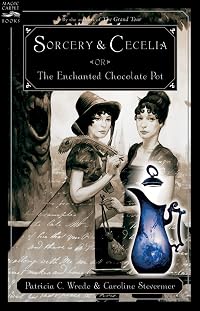
Sorcery and Cecelia or The Enchanted Chocolate Pot
by Patricia C. Wrede, Caroline Stevermer, Caroline Stevermore
Cecelia and Kate (1)
On This Page
Description
Since they were children, cousins Kate and Cecelia have been inseparable. But in 1817, as they approach adulthood, their families force them to spend a summer apart. As Cecelia fights boredom in her small country town, Kate visits London to mingle with the brightest lights of English society. At the initiation of a powerful magician into the Royal College of Wizards, Kate finds herself alone with a mysterious witch who offers her a sip from a chocolate pot. When Kate refuses the drink, the show more chocolate burns through her dress and the witch disappears. It seems that strange forces are convening to destroy a beloved wizard, and only Kate and Cecelia can stop the plot. But for two girls who have to contend with the pressures of choosing dresses and beaux for their debuts, deadly magic is only one of their concerns. show lessTags
Recommendations
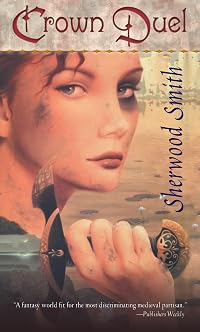
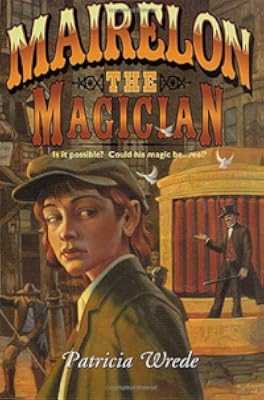
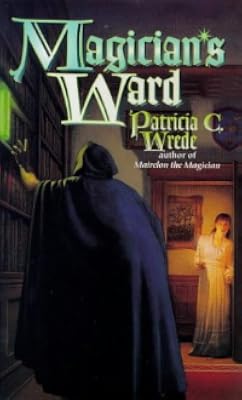
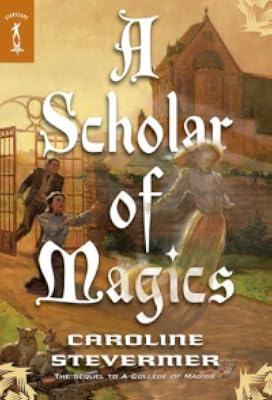

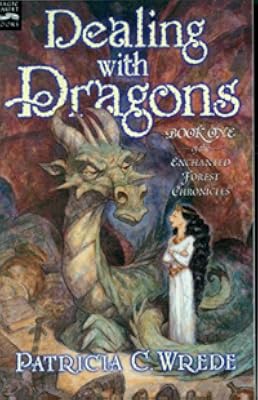

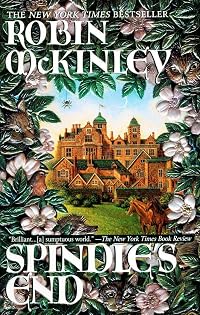
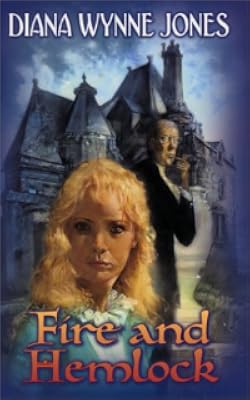

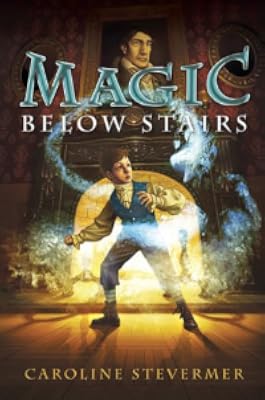

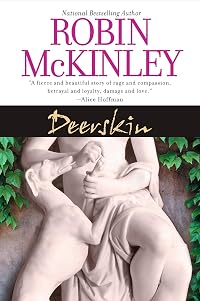

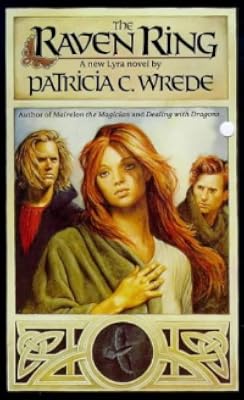
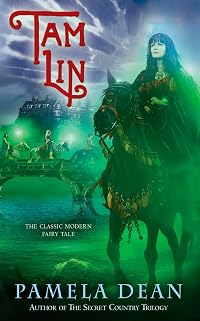
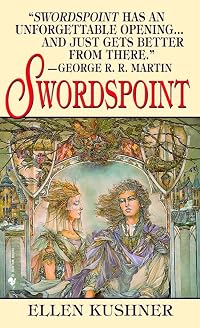



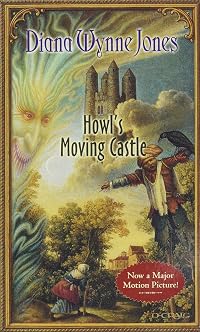
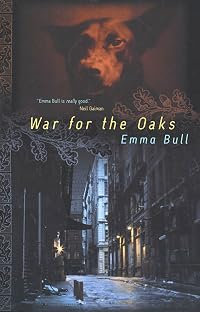
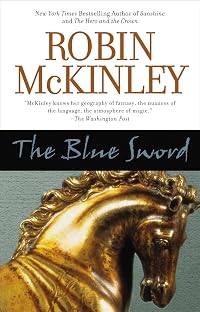
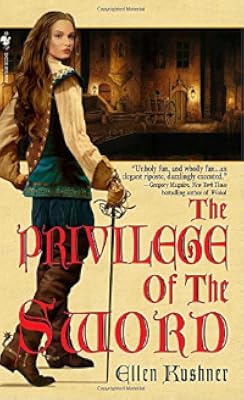
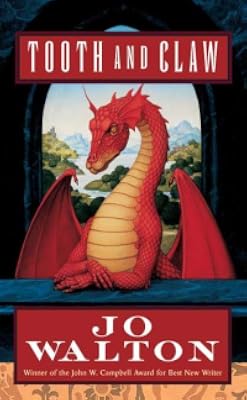


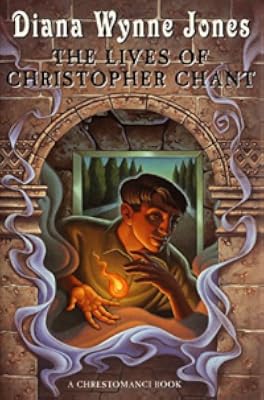
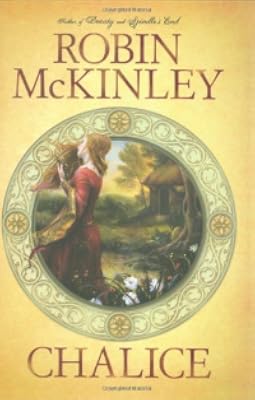
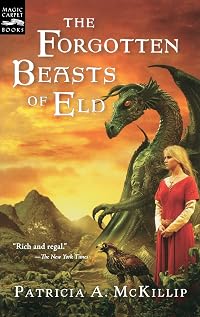
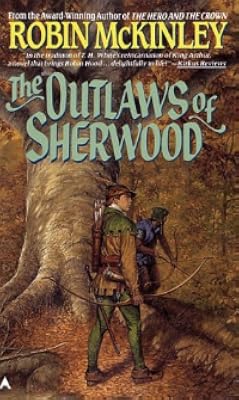
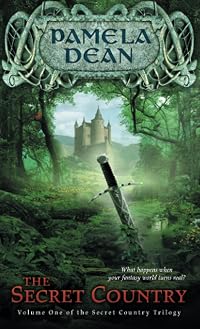
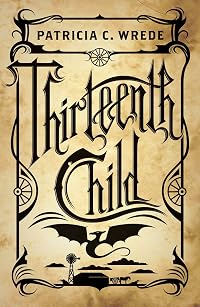
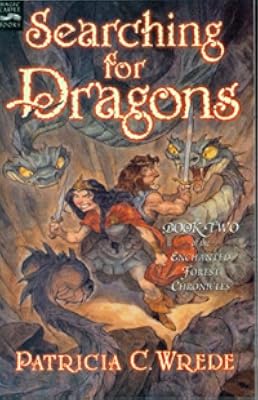
Member Recommendations
fyrefly98 Both have the same "Jane-Austen-meets-Harry-Potter" vibe to them; "Jonathan Strange" is denser and more grown-up, while "Sorcery & Cecelia" is funnier and more of a romp.
Also recommended by ThatArtGirl
152
Jean_Sexton Both take place in a Regency England where magic works.
Also recommended by sandstone78
50
rarm Sorcery and Cecelia was the first Regency-set fantasy I read, and still my favorite. Of the ones I've read since then, Newt's Emerald resembles it most, perhaps because they both draw on Heyer as much as Austen.
Heather39 Another light young adult fantasy rendition of a Regency romance. Thoroughly delightful and fun.
20
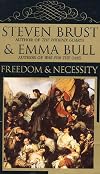
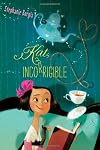
keristars These are somewhat similar - a Regency-era girl discovers that she has magic ability by accident and then gets into a bit of an adventure as a result. S&C is more of a mystery/romance/adventure while Kat is a do-gooder Emma type. In my biased opinion, the Burgis book is far and away the better of the two, but if you liked one, you're likely to enjoy the other.
41
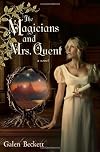
MyriadBooks For commonplace magic and properly brought-up young Englishwomen.
Also recommended by anonymous user
42
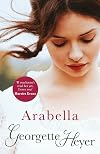
allisongryski Let me preface this recommendation by acknowledging that Arabella does not have the fantasy element of Sorcery & Cecilia. However, I think many readers of S & C will enjoy this excellently written Regency story, following the impetuous, charming Arabella when she goes to London for the Season. There is some light romance, similar in tone to that in S & C, but the story is more focused on the characters and the humour in their interactions and misadventures.
42
wordcauldron Same epistolary style and similarly entertaining
Caramellunacy A similar fun historical fantasy feel. Bewitching Season has twins Persephone & Penelope Leland using their (secret) magical skills to protect the teenaged princess Victoria from a dastardly magical plot.

anonymous user Both light fantasy comedies-of-manners, combining Heyer-world with magical colleges
missmaddie Both books contain letter correspondence, and they also both have supernatural/fantasy elements. Likable girls as the main characters.
13
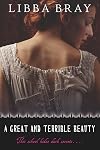
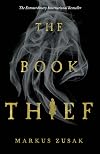
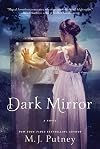

MyriadBooks For fans of epistolary elements.
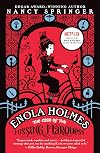

joiedelivre Another fantasy of manners, but set in an interplanetary milieu.
Member Reviews
Utterly delightful; I do love an epistolary novel, especially one with some magic! Cousins Cecy (in the country) and Kate (in London) exchange frequent letters - at first simply to keep in touch and stave off boredom, but events in both places quickly grow more interesting.
It's England after the Napoleonic wars, and an England where magic is practiced (although Aunt Elizabeth doesn't approve). After Kate is briefly abducted by Miranda, Dorothea's (step)mama, Kate and Cecy begin to suspect that Miranda is in league with Sir Hilary Bedrick, working against the Marquis of Schofield (Thomas). Thomas proposes to Kate in order to protect himself from Dorothea/Miranda, while Cecy makes charm-bags, studies magic with Mr. Wrexton, and show more criticizes James Tarleton's attempts at sneaking and spying.
The authors' dedication - to Jane Austen, Georgette Heyer, JRR Tolkien, and Ellen Kushner - conveys with perfect accuracy the type of story they have written, and who will enjoy it. I requested The Grand Tour right away!
Recommended by Ella S.
Quotes
It seems there are a great many magicians who, in order to use their magic most effectively, must have an object through which to focus their power. This object must be kept nearby when casting spells. (I believe it works along the same lines as wearing spectacles - some people need them, others don't; every pair is different and it does no good to try to use someone else's; one can see without them, but not nearly so well; and they do one no good whatever if they are not in place when one requires them.) (161)
"...the enchantment merely animates the pieces. It doesn't instruct them on the finer points of play."
"How dreadful," I replied, "to be caught up in a game and have no idea of the rules."
"It's not a plight unique to this chess set," Lady Sylvia observed dryly. (276) show less
It's England after the Napoleonic wars, and an England where magic is practiced (although Aunt Elizabeth doesn't approve). After Kate is briefly abducted by Miranda, Dorothea's (step)mama, Kate and Cecy begin to suspect that Miranda is in league with Sir Hilary Bedrick, working against the Marquis of Schofield (Thomas). Thomas proposes to Kate in order to protect himself from Dorothea/Miranda, while Cecy makes charm-bags, studies magic with Mr. Wrexton, and show more criticizes James Tarleton's attempts at sneaking and spying.
The authors' dedication - to Jane Austen, Georgette Heyer, JRR Tolkien, and Ellen Kushner - conveys with perfect accuracy the type of story they have written, and who will enjoy it. I requested The Grand Tour right away!
Recommended by Ella S.
Quotes
It seems there are a great many magicians who, in order to use their magic most effectively, must have an object through which to focus their power. This object must be kept nearby when casting spells. (I believe it works along the same lines as wearing spectacles - some people need them, others don't; every pair is different and it does no good to try to use someone else's; one can see without them, but not nearly so well; and they do one no good whatever if they are not in place when one requires them.) (161)
"...the enchantment merely animates the pieces. It doesn't instruct them on the finer points of play."
"How dreadful," I replied, "to be caught up in a game and have no idea of the rules."
"It's not a plight unique to this chess set," Lady Sylvia observed dryly. (276) show less
A really fun epistolary novel, written by two authors who each took on a character without planning out a plot together (which itself sounds rather fun). Kate and Cecy are funny and arch, and the Regency-plus-magc setting is rendered in a familiar, breezy, enjoyable way. The magic is unconvincing and (worse) pretty uninteresting, though, and the ending falls quite flat, losing narrative momentum and fully embracing the obvious.
Absolutely splendid. This is just as delightful now as it was when I originally read it. Two spirited heroines, plenty of stirring adventures, and a believable system of magic, all add up to a wonderful trouncing of romantic conventions.
"...We are to return and take tea on Thursday. I am determined to have the headache Thursday, if I have to hit myself with a rock to do it."
"... he turned my hand over again and brushed a kiss across my knuckles. I experienced a nearly overpowering desire to hit him in the eye."
"...We are to return and take tea on Thursday. I am determined to have the headache Thursday, if I have to hit myself with a rock to do it."
"... he turned my hand over again and brushed a kiss across my knuckles. I experienced a nearly overpowering desire to hit him in the eye."
This story - told entirely in epistolary form consisting of the correspondence between two cousins, Kate (written by Caroline Stevermer) in London with Aunt Charlotte for her Season, and Cecilia (Patricia Wrede) left behind at home with Aunt Elizabeth in Rushton, Essex - tells their interrelated adventures in an alternative England where magic exists as an honourable profession (to the extent that Wizard Wellington uses it in the war).
There are nefarious doings afoot, revolving around an enchanted (of all things) chocolate pot. Kate meets the Mysterious Marquis of Schofield, who has never bothered to visit his country manor near Rushton, while Cecy helps untangle his affairs at the Essex end, no thanks to a certain Mr. Tarleton - who is show more quite hopeless at spying from the shrubbery.
The two cousins, with long experience of getting into and out of scrapes in their childhood with their siblings (vis à vis the episode with the goat), find themselves involved in more serious affairs. They conduct themselves with their customary sang froid (developed over years of explanations to their aunts) and adventuresome curiosity - not to mention collecting beaux and attending balls along the way - and rescue not only themselves but their friends; in spite of the gentlemen's well-intentioned efforts to protect them.
This was a delightfully lighthearted romp in an alternative Regency England. I've had this book on my TBR pile for a while, and I wish I had picked up The Grand Tour, so I could continue reading the cousins' adventures without having to wait.
I also like the afterword, in which the two authors (Patricia C. Wrede and Caroline Stevermer) take turns to tell us how the book came into being, as they wrote letters to each other in the personae of the two heroines, with no knowledge of the other writer's plot.
Absolutely fun!
Four and a half stars. show less
There are nefarious doings afoot, revolving around an enchanted (of all things) chocolate pot. Kate meets the Mysterious Marquis of Schofield, who has never bothered to visit his country manor near Rushton, while Cecy helps untangle his affairs at the Essex end, no thanks to a certain Mr. Tarleton - who is show more quite hopeless at spying from the shrubbery.
The two cousins, with long experience of getting into and out of scrapes in their childhood with their siblings (vis à vis the episode with the goat), find themselves involved in more serious affairs. They conduct themselves with their customary sang froid (developed over years of explanations to their aunts) and adventuresome curiosity - not to mention collecting beaux and attending balls along the way - and rescue not only themselves but their friends; in spite of the gentlemen's well-intentioned efforts to protect them.
This was a delightfully lighthearted romp in an alternative Regency England. I've had this book on my TBR pile for a while, and I wish I had picked up The Grand Tour, so I could continue reading the cousins' adventures without having to wait.
I also like the afterword, in which the two authors (Patricia C. Wrede and Caroline Stevermer) take turns to tell us how the book came into being, as they wrote letters to each other in the personae of the two heroines, with no knowledge of the other writer's plot.
Absolutely fun!
Four and a half stars. show less
Sept. 2019 addendum to original review (dated Oct 2010): Over the last few years, I have been hesitant to read books by two authors, especially if there are dual protagonists, and when I do take a chance on them, I often find myself looking for certain things as though I'm expecting to be disappointed. I am possibly harder on those books than I should be, and I have just realized it is because of Sorcery and Cecelia. This book has ruined other books for me, and I really truly hate it. Since submitting my original review, I have learned more about how the novel was written, and I understand better why some of the plot and narrative elements worked the way they did (eg: harum-scarum), which of course only makes me more frustrated by the show more praise it gets.
-------------------
What an awful, pretentious, utterly twee little novel this is. I really don't understand the effusive praise for it that I have seen these last few years whenever the question of good YA fantasy comes up. Perhaps my dislike of the book is stronger because of all the praise, but I had to force myself to finish it, and the whole time that I was reading it, I was nitpicking at just about every aspect of the writing and plot.
The story begins when cousins Kate and Cecy are split apart - Kate is going to London for her Season along with sister Georgiana and Aunt Charlotte, while Kate must stay at home in Essex with brother Oliver and Aunt Elizabeth. It is immediately evident that this is an alternate version of history, because in the opening letter of the novel, Cecy informs Kate that their neighbor Sir Hilary Bedrick has been named to the Royal College of Wizards. In Kate's reply, she informs Cecy that she has snuck into the ceremony, and in doing so, entangled herself in some sort of mysterious and dangerous plot.
As the girls continue to exchange letters throughout the Season of 1817, the plot escalates like a runaway train heading down a hill, with events piling on top of each other and all sorts of close scrapes. The girls attempt to unravel the magic plot while keeping all knowledge of it from their guardians and their enemies, and meanwhile they must attend all sorts of balls and teas and other fashionable events of the time, with so much concern over deportment and dress. Of course, romance plays a part as well, with a false engagement that seems to cover-up a true love even from the beginning (no one could tell me that it isn't completely obvious from the start, even if Kate claims to utterly loathe Thomas from the moment they meet - likewise, the young man that Cecy argues with and claims to have complete distaste for).
There seems to be no sign of the story coming to a climax or final section until it suddenly does, with the sudden and precipitous arrival of adults who Know Everything and are Capable of Handling the Problem, which of course neither Cecy nor Kate nor any of the other people they were conspiring with to solve the plot could do. Shortly thereafter, each of the villains plays the stereotypical evil villain role and monologues about their plots, giving outsiders just enough time to come in and save the day. There was hardly any foreshadowing or build-up for any of the main plot points, and they just kept piling up.
Because of the way the story is structured, there are two plots which link to each other. The plots are mirrors, somewhat, and you can see them progressing as the opposite girl's letter gives details that she discovered on her side. I suppose that it's not unrealistic, but it is awkward and feels entirely too contrived in the novel. There is often no sign of something being a particular way until suddenly the other girl's letter says "oh, right, did you know...?" and then that's the way things always are. It just didn't feel polished or like it has a good pace of story. One of the severe downfalls of this type of exposition: I have no idea how Kate and Cecy are related to each other, other than being cousins, and when one character does talk about the Rushton and Talgarth families, I only became more confused. The way they are related might not be important to the story, but it is a detail that kept coming up without being explained, particularly because I couldn't quite figure out how Charlotte and Elizabeth were related to them, or why they had such control over the girls.
I was also a bit annoyed at some of the references made to known historical figures, especially at the beginning of the book. Kate would mention that Lord Byron, for example, had been in a certain place, or that she had seen Lady Caroline at a ball - while it makes sense that the girls would tell each other about famous people they have encountered, there isn't a lot of gossip about anyone else, and if there is gossip, it's someone intimately related to the story. There are no middle-ground names, even invented ones, to give verisimilitude to the practice. It came across as the authors trying to force the reader to recall that the setting is Regency Era England, as is also done with comments about clothing styles (though as those are mentioned more regularly and in a more off-handed sort of way, they seem more natural and less glaring).
Speaking of historicity, while I have not read many modern romance novels set in the Regency era, I have read many novels from the early 19th century, and I kept being struck by how 1980s the vocabulary of the girls sounded. There was something about the word choice and pattern that said "we are teenage girls from the late 20th century attempting to sound like we're from the early 19th century". The language didn't seem to flow naturally, like it was too practiced. This is a complaint about the other Regency Romance I have read recently, too.
So, in short, I did not find this book to live up to the expectations I had for it. The plot was too rushed and uneven, the characters a little too twee and planned, and the resolution of the mystery/suspense part of the plot was too perfectly staged. The writing feels too affected and stilted to be able to fall into that space where I forget that I'm reading words on a page.
I can see a few reasons why this book could be popular - it is a historical fantasy where the main characters are girls who are mostly capable of solving their own problems instead of relying on men (though, ultimately, this is not true), and it is an Elizabeth-and-Darcy style romance for both Kate and Cecy. But I think the plot is too weak and the girls too ineffectual to really be strong characters, and I do not like the Elizabeth-and-Darcy romance at all from Pride and Prejudice. show less
-------------------
What an awful, pretentious, utterly twee little novel this is. I really don't understand the effusive praise for it that I have seen these last few years whenever the question of good YA fantasy comes up. Perhaps my dislike of the book is stronger because of all the praise, but I had to force myself to finish it, and the whole time that I was reading it, I was nitpicking at just about every aspect of the writing and plot.
The story begins when cousins Kate and Cecy are split apart - Kate is going to London for her Season along with sister Georgiana and Aunt Charlotte, while Kate must stay at home in Essex with brother Oliver and Aunt Elizabeth. It is immediately evident that this is an alternate version of history, because in the opening letter of the novel, Cecy informs Kate that their neighbor Sir Hilary Bedrick has been named to the Royal College of Wizards. In Kate's reply, she informs Cecy that she has snuck into the ceremony, and in doing so, entangled herself in some sort of mysterious and dangerous plot.
As the girls continue to exchange letters throughout the Season of 1817, the plot escalates like a runaway train heading down a hill, with events piling on top of each other and all sorts of close scrapes. The girls attempt to unravel the magic plot while keeping all knowledge of it from their guardians and their enemies, and meanwhile they must attend all sorts of balls and teas and other fashionable events of the time, with so much concern over deportment and dress. Of course, romance plays a part as well, with a false engagement that seems to cover-up a true love even from the beginning (no one could tell me that it isn't completely obvious from the start, even if Kate claims to utterly loathe Thomas from the moment they meet - likewise, the young man that Cecy argues with and claims to have complete distaste for).
There seems to be no sign of the story coming to a climax or final section until it suddenly does, with the sudden and precipitous arrival of adults who Know Everything and are Capable of Handling the Problem, which of course neither Cecy nor Kate nor any of the other people they were conspiring with to solve the plot could do. Shortly thereafter, each of the villains plays the stereotypical evil villain role and monologues about their plots, giving outsiders just enough time to come in and save the day. There was hardly any foreshadowing or build-up for any of the main plot points, and they just kept piling up.
Because of the way the story is structured, there are two plots which link to each other. The plots are mirrors, somewhat, and you can see them progressing as the opposite girl's letter gives details that she discovered on her side. I suppose that it's not unrealistic, but it is awkward and feels entirely too contrived in the novel. There is often no sign of something being a particular way until suddenly the other girl's letter says "oh, right, did you know...?" and then that's the way things always are. It just didn't feel polished or like it has a good pace of story. One of the severe downfalls of this type of exposition: I have no idea how Kate and Cecy are related to each other, other than being cousins, and when one character does talk about the Rushton and Talgarth families, I only became more confused. The way they are related might not be important to the story, but it is a detail that kept coming up without being explained, particularly because I couldn't quite figure out how Charlotte and Elizabeth were related to them, or why they had such control over the girls.
I was also a bit annoyed at some of the references made to known historical figures, especially at the beginning of the book. Kate would mention that Lord Byron, for example, had been in a certain place, or that she had seen Lady Caroline at a ball - while it makes sense that the girls would tell each other about famous people they have encountered, there isn't a lot of gossip about anyone else, and if there is gossip, it's someone intimately related to the story. There are no middle-ground names, even invented ones, to give verisimilitude to the practice. It came across as the authors trying to force the reader to recall that the setting is Regency Era England, as is also done with comments about clothing styles (though as those are mentioned more regularly and in a more off-handed sort of way, they seem more natural and less glaring).
Speaking of historicity, while I have not read many modern romance novels set in the Regency era, I have read many novels from the early 19th century, and I kept being struck by how 1980s the vocabulary of the girls sounded. There was something about the word choice and pattern that said "we are teenage girls from the late 20th century attempting to sound like we're from the early 19th century". The language didn't seem to flow naturally, like it was too practiced. This is a complaint about the other Regency Romance I have read recently, too.
So, in short, I did not find this book to live up to the expectations I had for it. The plot was too rushed and uneven, the characters a little too twee and planned, and the resolution of the mystery/suspense part of the plot was too perfectly staged. The writing feels too affected and stilted to be able to fall into that space where I forget that I'm reading words on a page.
I can see a few reasons why this book could be popular - it is a historical fantasy where the main characters are girls who are mostly capable of solving their own problems instead of relying on men (though, ultimately, this is not true), and it is an Elizabeth-and-Darcy style romance for both Kate and Cecy. But I think the plot is too weak and the girls too ineffectual to really be strong characters, and I do not like the Elizabeth-and-Darcy romance at all from Pride and Prejudice. show less
(#32 in the 2004 book challenge)
This was super adorable, in a Jane Austen meets Philip Pullman vein. YA story, told in letters sent back and forth between two cousins, who live in an England where magic is real. The only thing more powerful than magic is the Regency social etiquette; the girls come up with more elaborate schemes to get around that than they do for foiling evil wizards. On the whole, very snappy and cute.
Grade: A
Recommended: for people who like light YA fantasy books, the romance parts are very appropriate for all ages, too.
This was super adorable, in a Jane Austen meets Philip Pullman vein. YA story, told in letters sent back and forth between two cousins, who live in an England where magic is real. The only thing more powerful than magic is the Regency social etiquette; the girls come up with more elaborate schemes to get around that than they do for foiling evil wizards. On the whole, very snappy and cute.
Grade: A
Recommended: for people who like light YA fantasy books, the romance parts are very appropriate for all ages, too.
In an alternate 19th-century England, cousins Kate (in London for her Season) and Cecelia (at home in the countryside) exchange letters about the strange magical hijinks they've discovered, the best color to wear with their complexions, and the two dark and brooding young men which they both keep tripping over at every turn.
Sorcery and Cecelia has all the charm and complexity of chirping birds. The thin plot is beside the point -- the novel (which arose from a letter-writing game between the authors) is a confection of Regency romance tropes and magical props. You don't judge a book like this by its gut-wrenching truths or delicate nuances; you judge it by the number of sham engagements and drawing-room confrontations it contains. By show more those limited standards, Sorcery and Cecelia succeeds adorably. show less
Sorcery and Cecelia has all the charm and complexity of chirping birds. The thin plot is beside the point -- the novel (which arose from a letter-writing game between the authors) is a confection of Regency romance tropes and magical props. You don't judge a book like this by its gut-wrenching truths or delicate nuances; you judge it by the number of sham engagements and drawing-room confrontations it contains. By show more those limited standards, Sorcery and Cecelia succeeds adorably. show less
Members
- Recently Added By
Lists

Best Fantasy Novels
821 works; 361 members

Best Young Adult
399 works; 101 members

Top Five Books of 2013
1,562 works; 721 members

Books I've Read More Than Once
602 works; 49 members

Female Protagonist
1,056 works; 57 members

wolves in wimples + vampires in veils (hist paranormal romance)
17 works; 2 members

Fantasy of manners
54 works; 4 members

Fantasy novels with a female protagonist
76 works; 15 members
Historical Fantasy
93 works; 14 members
Books tagged favorites
390 works; 30 members
Female Author
1,235 works; 67 members

Books Read in 2023
5,547 works; 145 members
Speculative Fiction to Read
706 works; 32 members

Readers Guide to Steampunk
65 works; 1 member

Favorite Epistolary Fiction
143 works; 144 members

Books to read
18 works; 1 member

Vlogbrothers Book Recommendations
307 works; 4 members

Books Read in 2025
4,091 works; 97 members
Our Favorite Comfort Reads
334 works; 200 members

Best Cozy Fantasy
46 works; 8 members

Books Read in 2022
5,166 works; 112 members
Favorite Romance Fiction
247 works; 115 members

COMFORT READS. ~ Feelgood fic
13 works; 1 member

Books whose title names an object usually found in the kitchen
171 works; 14 members

Books Read in 2021
5,361 works; 114 members
Comedy of Manners
73 works; 1 member

Books Read in 2020
4,379 works; 124 members

Epistolary Books
105 works; 24 members

Books Read in 2014
2,343 works; 86 members

Espistolary
20 works; 1 member
Author Information

42+ Works 41,563 Members
Patricia Collins Wrede is an American fantasy writer, born 1953 in Chicago, Illinois; she is the eldest of five children. She graduated from Carleton College in 1974 with a BA in Biology. She earned an MBA from University of Minnesota in 1977. She finished her first book in 1978. She is a full-time writer. She is a vegetarian and lives in show more Minneapolis, Minnesota with her three cats. (Bowker Author Biography) show less

19+ Works 10,061 Members
2 Works 3,589 Members
Some Editions
Awards and Honors
Series

Work Relationships
Is contained in
Common Knowledge
- Original publication date
- 1988
- People/Characters
- Cecelia "Cecy" Rushton; Elizabeth Rushton; Oliver Rushton; Lady Sylvia Schofield; Thomas Schofield; Georgina "Georgy" Talgarth (show all 12); Katherine "Kate" Talgarth; Dorothea Griscomb; Miranda Griscomb nee Tanistry; Hilary Bedwick; James Tarleton; Charlotte Rushton
- Important places
- Essex, England, UK; London, England, UK; Rushton, Essex, England, UK
- Dedication
- The authors wish to dedicate this book to Jane Austen, Georgette Heyer, J. R. R. Tolkien, and Ellen Kushner, all of whom, in their several ways, inspired us to create it.
- First words
- Dearest Kate, It is dreadfully flat here since you have been gone, and it only makes it worse to imagine all the things I shall be missing.
- Last words
- (Click to show. Warning: May contain spoilers.)In fact, I'm looking forward to it very much. (Not the canal, though.)
Love,
Kate
Classifications
- Genres
- Teen, Fiction and Literature, Fantasy, Young Adult
- DDC/MDS
- 813.54 — Literature & rhetoric American literature in English American fiction in English 1900-1999 1945-1999
- LCC
- PZ7 .W915 .S — Language and Literature Fiction and juvenile belles lettres Fiction and juvenile belles lettres Juvenile belles lettres
- BISAC
Statistics
- Members
- 3,456
- Popularity
- 4,814
- Reviews
- 144
- Rating
- (4.05)
- Languages
- English
- Media
- Paper, Audiobook, Ebook
- ISBNs
- 14
- ASINs
- 13