On This Page
Description
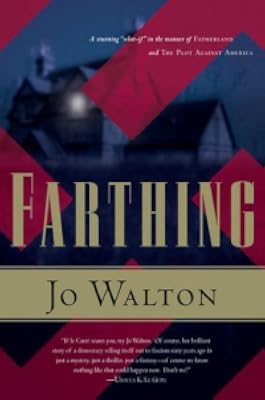
One summer weekend in 1949--but not our 1949--the well-connected "Farthing set," a group of upper-crust English families, enjoy a country retreat. Lucy is a minor daughter in one of those families; her parents were both leading figures in the group that overthrew Churchill and negotiated peace with Herr Hitler eight years before. Despite her parents' evident disapproval, Lucy is married--happily--to a London Jew. It was therefore quite a surprise to Lucy when she and her husband David found show more themselves invited to the retreat. It's even more startling when, on the retreat's first night, a major politician of the Farthing set is found gruesomely murdered, with abundant signs that the killing was ritualistic. It quickly becomes clear to Lucy that she and David were brought to the retreat in order to pin the murder on him. Major political machinations are at stake, including an initiative in Parliament, supported by the Farthing set, to limit the right to vote to university graduates. But whoever's behind the murder, and the frame-up, didn't reckon on the principal investigator from Scotland Yard being a man with very private reasons for sympathizing with outcasts and looking beyond the obvious. As the trap slowly shuts on Lucy and David, they begin to see a way out--a way fraught with peril in a darkening world." show lessTags
Recommendations

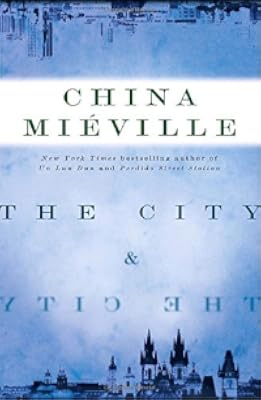
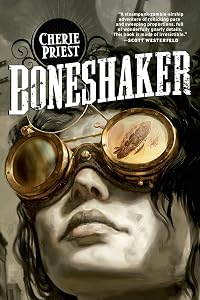
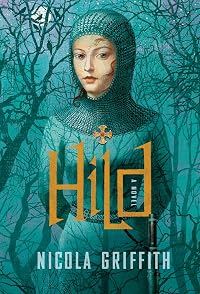
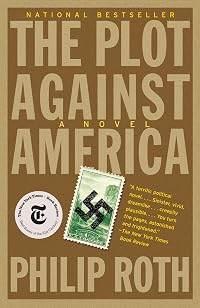
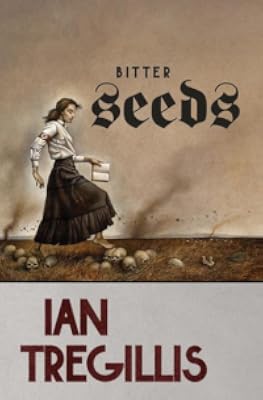
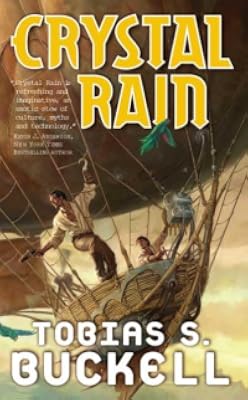
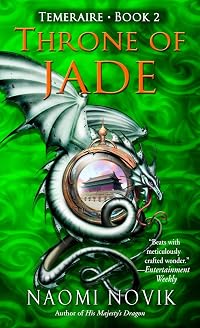
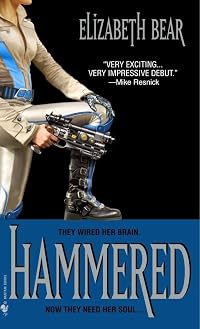
Member Recommendations
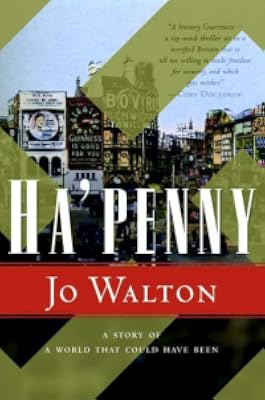
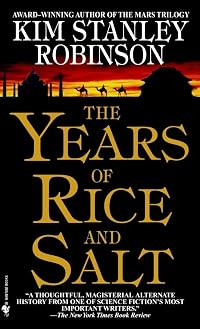
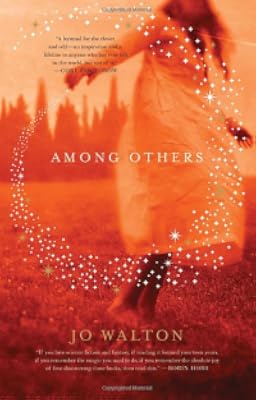
aulsmith Two alternate wwii mysteries. Walton's is more literary and thematically more complex.
61
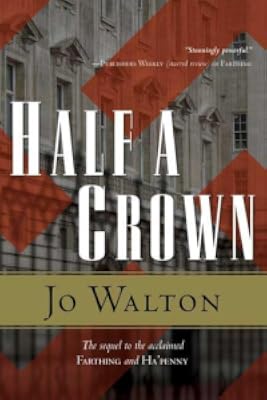
sturlington Both mashups of classic British mysteries and science fiction.
42

Member Reviews
For all your fascism-escapism-by-reading-about-fascism needs.
I read once that the genre-defining 'purpose' of a mystery novel is to show the world upended through murder so that the detective can put it right by solving the case and bringing the murderer to justice. Does it then quite count as a mystery if the case is solved but there is no justice, or is mystery as a genre a bit more flexible than romance where you absolutely must have your happily ever after?
Lucy is delightful. Carmichael is a perfectly fine narrator but suffers in comparison. This may be the novel where I realised that *all* mothers in Jo Walton novels are toxic people, like uncles in Diana Wynne Jones books.
I read once that the genre-defining 'purpose' of a mystery novel is to show the world upended through murder so that the detective can put it right by solving the case and bringing the murderer to justice. Does it then quite count as a mystery if the case is solved but there is no justice, or is mystery as a genre a bit more flexible than romance where you absolutely must have your happily ever after?
Lucy is delightful. Carmichael is a perfectly fine narrator but suffers in comparison. This may be the novel where I realised that *all* mothers in Jo Walton novels are toxic people, like uncles in Diana Wynne Jones books.
It was Hitler in Poland with the blitzkrieg what done it. Meanwhile, in an English country house, a genteel gathering is disturbed by a genteel, if suspiciously complicated, murder. It turns out that nice Mr Hitler has the right idea about them Jews and bolsheviks, so let's slide into fascism, yay! I may be suffering from mental exhaustion, but at least I'm not in a universe where Hitler won and a single murder is set to bring England in line! Can the doughty Scotland Yard Inspector solve the murder? Can the sensible aristocratic daughter who peeved her mother and society no end by marrying a Jew save her husband and herself? Is the future as bleak as a blasted heath? Five yellow stars pinned to a dead anti-semite and covered in fake show more blood for this! show less
Summary: Lucy Kahn and her husband David were surprised to be invited to her parents' country estate for a summer retreat in 1949: Her parents are party of the elite "Farthing set," a party of upper-class British politicians, and they've never approved of her marriage to David, who is a Jew. They do their best to blend in, Lucy slipping more or less easily back into the wealth and priviledge with which she grew up... until on the first night of the party, one of the Farthing Set's most prominent men is murdered. It immediately becomes clear that David intended to be framed for the murder, as the scene involved several elements that indicated that a Jewish conspiracy was involved. Now it's up to Lucy, and to Inspector Carmichael from show more Scotland Yard, to prove that David is innocent, or else the political and social consequences could be devastating... because while the 1949 England of Farthing is largely the same as the 1949 England we're familiar with, the small change is that the Allies did not in fact win World War II, and the members of the Farthing Set were responsible for brokering peace with Herr Hitler.
Review: This book made me intensely uncomfortable, but uncomfortable in the best way possible. Everything about this book is sharp - the writing, the mystery, the pacing, and most of all the social commentary. So sharp that it manages to cut to the bone before you're even aware of what's happened. It starts out like a more-or-less standard murder mystery, where you're thinking "okay, Lucy's parents are a little bit racist, but that probably wasn't unusual for upper-class Brits at the time," and then gradually you start to accumulate hints that something's gone wrong, something's not quite right about this world and about these people, as Walton keeps filling in little details about how the world got to be the way it is. This subtle wrongness is accentuated with a horrifying (but equally slowly building) sense of just how close this world is to our world. How easy it is to slide from "normal" prejudice into outright fascism, and how few people would actually stand to oppose it, if they recognized what was happening at all. It's incisive social commentary, masterfully handled so that it's never spelled out (and thus never runs the risk of getting preachy), and trusts the reader enough to understand the point and draw the parallels on their own.
I do wonder how this book would have read when it first came out a decade ago. Reading it last summer, it was, as I said, equal parts horrifying and cutting and fascinating, and certainly relevant. But as much as I enjoyed it (maybe not the right word, it's too uncomfortable-making to really be "enjoyed"), after the U.S. Presidential election in November, I couldn't bring myself to listen to the next books in the series... it seems like we are now even closer to the world of Farthing, and it had gone from uncomfortable to anxiety-inducing just how thin the veil that separates us from them had now become. I'm working myself back up to it, though, because this really was an excellent book, in spite of (or in addition to?) how sharply it cuts. The characters are interesting and compelling and sympathetic (Lucy, David, and the inspector, at any rate), the mystery is well constructed, and it's easy to read and incredibly easy to get absorbed in; I tore through the audiobook in only a few days, needing to find out what happened next. I did have a bit of a problem keeping some of the names of some of the secondary character straight (one that probably would have been alleviated if I'd read the paper version rather than the audiobook, so it would be easier to flip back and check.) I also think there's probably some subtleties regarding British politics and their parliamentary system that went over my head, that might have made things even more complex. But even so, this book was an incredible read, and one that sticks with you, haunts you, long after you've read it. And even when you might want to just dismiss it as just speculative fiction, alternative history, fantasy, there's always that lingering doubt that it's not... not quite. 4.5 out of 5 stars.
Recommendation: It's not a light read, especially not in the current political climate, but it is an excellent and compelling one. If you don't need your reading to be too escapist, I highly recommend it. show less
Review: This book made me intensely uncomfortable, but uncomfortable in the best way possible. Everything about this book is sharp - the writing, the mystery, the pacing, and most of all the social commentary. So sharp that it manages to cut to the bone before you're even aware of what's happened. It starts out like a more-or-less standard murder mystery, where you're thinking "okay, Lucy's parents are a little bit racist, but that probably wasn't unusual for upper-class Brits at the time," and then gradually you start to accumulate hints that something's gone wrong, something's not quite right about this world and about these people, as Walton keeps filling in little details about how the world got to be the way it is. This subtle wrongness is accentuated with a horrifying (but equally slowly building) sense of just how close this world is to our world. How easy it is to slide from "normal" prejudice into outright fascism, and how few people would actually stand to oppose it, if they recognized what was happening at all. It's incisive social commentary, masterfully handled so that it's never spelled out (and thus never runs the risk of getting preachy), and trusts the reader enough to understand the point and draw the parallels on their own.
I do wonder how this book would have read when it first came out a decade ago. Reading it last summer, it was, as I said, equal parts horrifying and cutting and fascinating, and certainly relevant. But as much as I enjoyed it (maybe not the right word, it's too uncomfortable-making to really be "enjoyed"), after the U.S. Presidential election in November, I couldn't bring myself to listen to the next books in the series... it seems like we are now even closer to the world of Farthing, and it had gone from uncomfortable to anxiety-inducing just how thin the veil that separates us from them had now become. I'm working myself back up to it, though, because this really was an excellent book, in spite of (or in addition to?) how sharply it cuts. The characters are interesting and compelling and sympathetic (Lucy, David, and the inspector, at any rate), the mystery is well constructed, and it's easy to read and incredibly easy to get absorbed in; I tore through the audiobook in only a few days, needing to find out what happened next. I did have a bit of a problem keeping some of the names of some of the secondary character straight (one that probably would have been alleviated if I'd read the paper version rather than the audiobook, so it would be easier to flip back and check.) I also think there's probably some subtleties regarding British politics and their parliamentary system that went over my head, that might have made things even more complex. But even so, this book was an incredible read, and one that sticks with you, haunts you, long after you've read it. And even when you might want to just dismiss it as just speculative fiction, alternative history, fantasy, there's always that lingering doubt that it's not... not quite. 4.5 out of 5 stars.
Recommendation: It's not a light read, especially not in the current political climate, but it is an excellent and compelling one. If you don't need your reading to be too escapist, I highly recommend it. show less
Not sure what to call this beautiful mash-up of genres: an "alternate mystery," perhaps? Whatever it is, I found it compelling, not only for the styles, but for the chilling content of this alternate history. Alternate, maybe, but disturbingly close to home. Can only hope that these histories don't intersect...or that they haven't already. Beautifully understated, it increased the impact for me.
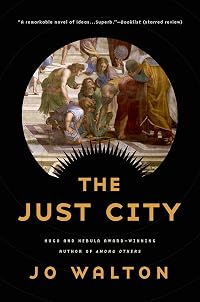
I couldn't see how Walton could do a novel about Athena and Apollo setting up an experiment to implement Plato's ideal city (The Just City), and yet I loved the result. Walton has done it again with an alternate history novel, a genre of low interest for me, and yet another one about Nazi Germany. In this variant, England has made a truce with Hitler, and, eight years later, it appears to be holding its own while Jews die in concentration camps and Hitler battles the Bolsheviks. But the novel is not about that, at least initially, but is a well-done Dorothy Sayers homage, with murder at the manor. Chapters alternate between the first-person diary of a rebellious, smart, but somewhat insulated rich heroine, and the third-person detective show more tale of Inspector Peter Carmichael -- whose name presumably connects Sayers' Lord Peter Wimsey with his best known portrayer, Ian Carmichael. Another character is named Angela Thirkie, a tip of the hat I assume to Angela Thirkell. I'm sure there are a zillion other such tidbits I missed. Mixing a cosy mystery with Nazis, anti-Semitism, and homophobia, shouldn't have worked, but it does brilliantly.
Highly recommended. show less
Highly recommended. show less
In Walton’s alternate history , 1949 sees the ruling Conservative Party dominated by the “Farthing Set”, a clique of high Tories credited with negotiating “Peace with Honour” between the Third Reich and the British Empire in response to Hess’ overture on behalf of Hitler in 1941. On the eve of an important vote in Commons, the Farthing Set is gathered at the house after which it is named, the country seat of Viscount Eversley, when Sir James Thirkie, chief negotiator of the peace, is murdered.
From this premise Walton builds a story that uses the solidly-decent meme of an English Country House murder (à la Sayers or Christie) to expose the fascist underbelly of the British Empire, built on anti-Semitism, xenophobia, show more misogyny, homophobia and an entrenched class system that places the powerful above the law.
Walton tells the story through the eyes of two protagonists, Lucy Eversley Kahn, daughter of Viscount Eversley and Inspector Peter Carmichael of Scotland Yard. These characters are inspired choices that humanize what might have turned into a political rant, give an insight into the choices made by “decent” people confronted with Fascism at home, and make the world that Walton has drawn, much more chilling by being much more credible.
One cannot help but like Lucy. She is the acceptable face of the English aristocracy: a kind, intelligent, self-deprecating, independent woman, who loves her father and survived the disdain verging on hatred of her mother and who has sacrificed her privileged position in society to marry and English Jew. As the story unfolds and the true nature of the evil that is behind Thirkie’s death is understand, Lucy leads us from shock through revulsion and on to pragmatic action and a search for hope.
In another world, our world perhaps, Inspector Carmichael, with his sharp mind and his need to find the truth would be righting wrongs and improving the capabilities of the Metropolitan Police. In this world, it quickly becomes clear that he is more vulnerable than powerful and that “doing the right thing” may not be a choice that is available to him.
I admire Walton’s ability to show what Fascism really does to freedom by showing the damage it does to those who our laws and our democracy ought to make safe.
I find her alternate history very credible. In my view, modern Britain was fundamentally shaped by the decision of the British people in the “Khaki Election” of 1945, the first election in ten years, held on the heels of Victory in Europe Day, to put their trust in Labour Party, rather than the Conservatives, to rebuild Britain. By imagining a Britain in which this choice was never made and where Fascism in Europe was colluded with rather than challenged and defeated, Walton reminds us that the freedoms we enjoy today were hard-won and could be easily lost.
I listened to the audio version of this book. Bianca Amato, who reads the chapters written from Lucy’s point of view, does an excellent job. Her accent is perfect as is her finely nuanced use of emotion. John Keating reads the chapters written Peter Carmichael’s point of view. He does a fine job of the voices of most of the characters but I thought the voice he used for Peter was a little off. His accent was too working class for someone educated at a minor public school. Nevertheless he was easy to listen to and handled both emotion and factual exposition well.
I recommend this book both as a good read, it is an excellent murder mystery, and as a reminder of the sources of power Fascism draws upon. show less
From this premise Walton builds a story that uses the solidly-decent meme of an English Country House murder (à la Sayers or Christie) to expose the fascist underbelly of the British Empire, built on anti-Semitism, xenophobia, show more misogyny, homophobia and an entrenched class system that places the powerful above the law.
Walton tells the story through the eyes of two protagonists, Lucy Eversley Kahn, daughter of Viscount Eversley and Inspector Peter Carmichael of Scotland Yard. These characters are inspired choices that humanize what might have turned into a political rant, give an insight into the choices made by “decent” people confronted with Fascism at home, and make the world that Walton has drawn, much more chilling by being much more credible.
One cannot help but like Lucy. She is the acceptable face of the English aristocracy: a kind, intelligent, self-deprecating, independent woman, who loves her father and survived the disdain verging on hatred of her mother and who has sacrificed her privileged position in society to marry and English Jew. As the story unfolds and the true nature of the evil that is behind Thirkie’s death is understand, Lucy leads us from shock through revulsion and on to pragmatic action and a search for hope.
In another world, our world perhaps, Inspector Carmichael, with his sharp mind and his need to find the truth would be righting wrongs and improving the capabilities of the Metropolitan Police. In this world, it quickly becomes clear that he is more vulnerable than powerful and that “doing the right thing” may not be a choice that is available to him.
I admire Walton’s ability to show what Fascism really does to freedom by showing the damage it does to those who our laws and our democracy ought to make safe.
I find her alternate history very credible. In my view, modern Britain was fundamentally shaped by the decision of the British people in the “Khaki Election” of 1945, the first election in ten years, held on the heels of Victory in Europe Day, to put their trust in Labour Party, rather than the Conservatives, to rebuild Britain. By imagining a Britain in which this choice was never made and where Fascism in Europe was colluded with rather than challenged and defeated, Walton reminds us that the freedoms we enjoy today were hard-won and could be easily lost.
I listened to the audio version of this book. Bianca Amato, who reads the chapters written from Lucy’s point of view, does an excellent job. Her accent is perfect as is her finely nuanced use of emotion. John Keating reads the chapters written Peter Carmichael’s point of view. He does a fine job of the voices of most of the characters but I thought the voice he used for Peter was a little off. His accent was too working class for someone educated at a minor public school. Nevertheless he was easy to listen to and handled both emotion and factual exposition well.
I recommend this book both as a good read, it is an excellent murder mystery, and as a reminder of the sources of power Fascism draws upon. show less
Lucy Eversley married David Kahn, not a popular choice for a deb of the Farthing set to do in the aftermath of World War 2. The Farthing set brokered a peace with Hitler, who on the Continent continues waging war with Russia. Even though England is free, Jews are not popular. Then at a house party her mother puts on, one of the guests - the very one who brokered that peace - is killed, and all the evidence points rather sloppily to David. Inspector Carmichael of Scotland Yard is called in, and in alternating chapters he and Lucy try to get to the bottom of who killed James Thirkie and who stands to profit.
Welcome to a world that could have been - where governments are corrupt, power is in the hands of the few, and there is one law for show more the rich and another for the poor. What are you willing to compromise to keep yourself and the people you love free? Who is guilty or innocent, and what are an individual's responsibilities in a society that couldn't care less about certain unpopular groups? I generally prefer books to have characters I can really get to know and get behind, and I spent most of the book wondering what on earth was going on. The ending will not be satisfying for traditional mystery readers, but certainly gives a lot of food for thought. I would be interested in seeing where the trilogy goes from here. show less
Welcome to a world that could have been - where governments are corrupt, power is in the hands of the few, and there is one law for show more the rich and another for the poor. What are you willing to compromise to keep yourself and the people you love free? Who is guilty or innocent, and what are an individual's responsibilities in a society that couldn't care less about certain unpopular groups? I generally prefer books to have characters I can really get to know and get behind, and I spent most of the book wondering what on earth was going on. The ending will not be satisfying for traditional mystery readers, but certainly gives a lot of food for thought. I would be interested in seeing where the trilogy goes from here. show less
Members
- Recently Added By
Lists

Best Alternate History
111 works; 60 members

Best Science Fiction Novels
816 works; 426 members

Favorite Science Fiction by Women Authors
741 works; 203 members

Best 21st Century Books (So Far)
679 works; 86 members

Crime and Mysteries to Read
746 works; 31 members

Survey of Mysteries and Crime Fiction
96 works; 17 members

Dystopian and Apocalyptic Literature
350 works; 74 members

Diversity in Fantasy and Science Fiction
219 works; 33 members

British Mystery
469 works; 14 members
Recommended Speculative Fiction by Women and People of Color
298 works; 45 members

Alternate Englands
34 works; 7 members

Books Set in Great Britain
191 works; 13 members

Genre Benders: Alternate History + Crime
10 works; 4 members

Top Five Books of 2020
982 works; 350 members

Female Author
1,234 works; 66 members

Speculative Fiction to Read
706 works; 32 members
LGBTQ+ Speculative Fiction
821 works; 51 members

Recommended AltHist
24 works; 1 member

Overdue Podcast
808 works; 9 members

Books Read in 2021
5,361 works; 114 members

Books Read in 2014
2,344 works; 89 members

Best books read in 2011
200 works; 50 members

Five star books
1,767 works; 110 members

Books Read in 2019
4,052 works; 110 members

Top Five Books of 2017
757 works; 231 members

KayStJ's to-read list
1,616 works; 11 members

Good LGBT fiction for LGBT folk and friends
553 works; 55 members

Books about World War II
241 works; 22 members

Books Read in 2012
816 works; 34 members

Best Mysteries With a Historical Setting
292 works; 160 members
Talk Discussions
Past Discussions
"Farthing" Group Discussion in Group Reads - Sci-Fi (February 2009)
Author Information

61+ Works 14,737 Members

Jo Walton is a LibraryThing Author, an author who lists their personal library on LibraryThing.
Some Editions
Awards and Honors
Awards
Distinctions
Notable Lists
Series

Belongs to Publisher Series
Gallimard, Folio SF (572)
Common Knowledge
- Canonical title*
- Le cercle de Farthing
- Original title
- Farthing
- Original publication date
- 2006
- People/Characters
- Lucy Eversley Kahn; David Kahn; Peter Anthony Carmichael (Inspector); Lord Eversley; Viscountess Lady Eversley; Sir James Thirkie (show all 9); Lady Angela Thirkie; Mark Normanby; Sergeant Royston
- Important places
- Castle Farthing, Hampshire, England, UK; Bethnal Green, London, England, UK; Portsmouth, Hampshire, England, UK; London, England, UK; England, UK
- Important events
- World War II (1939 | 1945)
- Epigraph
- Every farthing of the cost,
All the dreaded cards foretell,
Shall be paid, but from this night,
Not a whisper, not a thought,
Not a kiss nor look be lost.
—W.H. Auden, "Lullaby (Lay You... (show all)r Sleeping Head, My Love)" (1937)
All the brass instruments and big drums in the world cannot turn "God Save the King" into a good tune, but on the very rare occasions when it is sung in full it does spring to life in the two lines:
Confound thei... (show all)r politics,
Frustrate their knavish tricks!
And, in fact, I had always imagined that this second verse is habitually left out because of a vague suspicion on the part of the Tories that these lines refer to themselves.
—George Orwell, "As I Please" (December 31, 1943) - Dedication
- This novel is for everyone who has ever studied any monstrosity of history, with the serene satisfaction of being horrified while knowing exactly what was going to happen, rather like studying a dragon anatomised upon a table... (show all), and then turning around and finding the dragon's present-day relations standing close by, alive and ready to bite.
- First words
- It started when David came in from the lawn absolutely furious.
- Last words
- (Click to show. Warning: May contain spoilers.)Carmichael waved once to the child and walked away up the dirty London street.
- Publisher's editor
- Nielsen Hayden, Patrick
- Blurbers
- Wilson, Robert Charles; Goldstein, Lisa; Turtledove, Harry; Doctorow, Cory; Lindskold, Jane; Palwick, Susan (show all 10); Bull, Emma; McHugh, Maureen F.; Yolen, Jane; Le Guin, Ursula K.
- Original language
- English
- Canonical DDC/MDS
- 823.92
- Canonical LCC
- PR6073.A448
*Some information comes from Common Knowledge in other languages. Click "Edit" for more information.
Classifications
Statistics
- Members
- 1,700
- Popularity
- 13,125
- Reviews
- 125
- Rating
- (3.88)
- Languages
- 5 — English, French, German, Hungarian, Spanish
- Media
- Paper, Audiobook, Ebook
- ISBNs
- 18
- ASINs
- 7