
SS-GB
by Len Deighton
On This Page
Description
In February 1941 British Command surrendered to the Nazis. Churchill has been executed, the King is in the Tower and the SS are in W For nine months Britain has been occupied-a blitzed, depressed and dingy country. However, it's `business as usual' at Scotland Yard run by the SS when Detective Inspector Archer is assigned to a routine murder case. Life must go on. But when SS Standartenfuhrer Huth arrives from Berlin with orders from the great Himmler himself to supervise the investigation, show more the resourceful Archer finds himself caught up in a high level, all action, espionage battle. This is a spy story quite different from any other. Only Deighton, with his flair for historical research and his narrative genius, could have written it. show lessTags
Recommendations
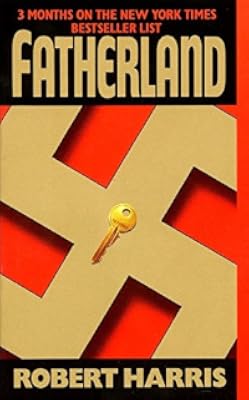

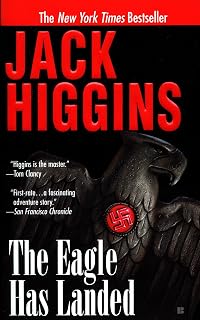























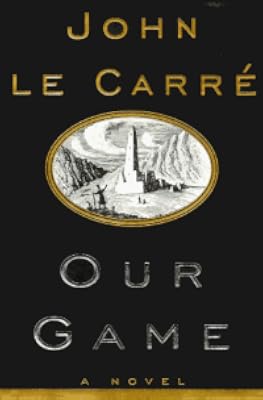
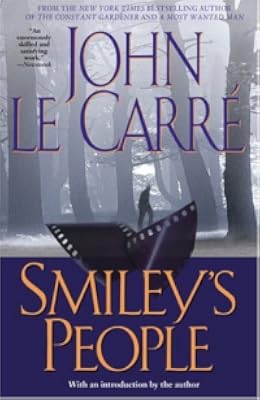


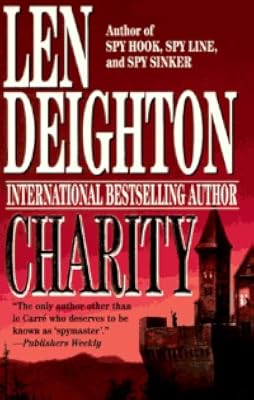
Member Recommendations

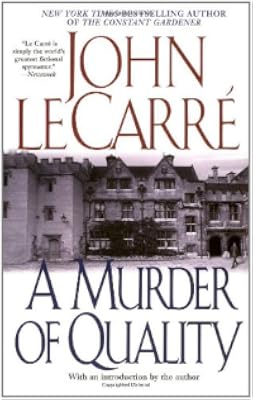
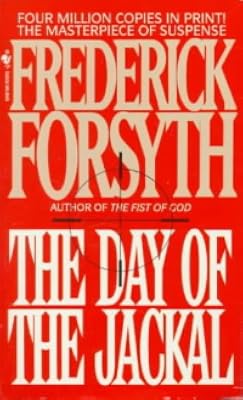
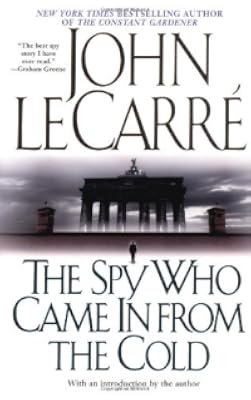
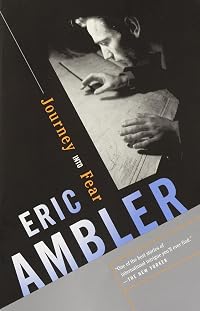
Sr_Moreno Another detective story set in an alternate past, Fatherland is far better written and plotted.
70
Bookwomble Alternate History: Axis powers won WWII



allthegoodbooks Similar idea of the England ruled by the Nazis but told with a focus on how the women were treated.
allthegoodbooks Alternative history following WWII
Member Reviews
I picked this up on a whim, having heard Deighton described as a master of the understated spy thriller. This is all that, and more. Even in alt-hist Nazi occupied England, people are shot and murders have to be investigated. But this being an espionage novel, nothing is simple, and our protagonist, Douglas Archer, finds himself drawn into a deadly web of intrigue between factions in the SS, Wehrmacht, and the struggling British Resistance.
The characters and plot are nothing that stands out, but that's all part of the subtle English charm of the book. It is a very, very gray novel. Even the Nazis refuse to be cast as genocidal monsters; merely self-interested conquerors who are taking advantage of the moment to loot everything not show more nailed down. And of course, there is little honor or glory in collaboration--even collaboration which might soften the iron grip of the Third Reich.
And as for the setting, it's great alternate history. It skips the part when Operation Sea Lion works (military history consensus: lol, nope), to focus on the bitter aftermath of life under occupation, and trying to salvage some sort of dignity from the wreckage of defeat. Great book, lots of fun, if that level of grimness is your thing. show less
The characters and plot are nothing that stands out, but that's all part of the subtle English charm of the book. It is a very, very gray novel. Even the Nazis refuse to be cast as genocidal monsters; merely self-interested conquerors who are taking advantage of the moment to loot everything not show more nailed down. And of course, there is little honor or glory in collaboration--even collaboration which might soften the iron grip of the Third Reich.
And as for the setting, it's great alternate history. It skips the part when Operation Sea Lion works (military history consensus: lol, nope), to focus on the bitter aftermath of life under occupation, and trying to salvage some sort of dignity from the wreckage of defeat. Great book, lots of fun, if that level of grimness is your thing. show less
A very nice thriller, set in a Britain occupied by the Nazis. Len Deighton is not only good at building a sharp plot -a murder investigation linked to one of the most crucial scientific discovery of the time- he also displays a great understanding of how was the Nazi system, using the rivalries between Wehrmacht, SD and SS to fit them all like magic in his very clever story. The puzzle thus being built is a thrilling achievement that, his constant play with human psychology and motivations in such a context makes even more remarkable. I am not usually keen on detective nor spy story but, such an intelligent and intricate plot truly deserves a hat off.
I love alternative histories, and this thriller is set in 1940s England, but in a world where the Germans won the war in 1941. What would life have been like? This is GB, but with POW camps, British Jewish citizens wearing stars and the SS in control of Scotland Yard.
The Yard's finest, Superintendant Archer is called in on a murder trial which has both national and political ramifications. The case is multi-layered, bringing together the resistance, the in-fighting between the SS and the army, as well as a defeated king in the Tower of London.
Archer is under a lot of pressure, seen as a collaborator by his own people, he justifies his working for the the authorities as still working for justice. This is not to say that Archer is happy show more with his lot, while he accepts his new masters, he resists sending his own son to a school with the children of his overlords.
Interesting, but the plot got overcomplicated by the end. One thing that I did like was the fact that there is no real hero, rather people coping with the new reality, much more realistic and human. show less
The Yard's finest, Superintendant Archer is called in on a murder trial which has both national and political ramifications. The case is multi-layered, bringing together the resistance, the in-fighting between the SS and the army, as well as a defeated king in the Tower of London.
Archer is under a lot of pressure, seen as a collaborator by his own people, he justifies his working for the the authorities as still working for justice. This is not to say that Archer is happy show more with his lot, while he accepts his new masters, he resists sending his own son to a school with the children of his overlords.
Interesting, but the plot got overcomplicated by the end. One thing that I did like was the fact that there is no real hero, rather people coping with the new reality, much more realistic and human. show less
What happens when one's commitment to their duty conflicts with their loyalty to their country? That is the dilemma facing Detective Superintendent Douglas Archer in Len Deighton's alternate history thriller. A leading member of Scotland Yard's Murder Squad, he finds himself working for the German occupation in the aftermath of their conquest of Great Britain. This tension becomes unavoidable when Archer is called upon to investigate the murder of a man found in an apartment in Shepherd Market. Though initially unremarkable, the case quickly draws attention from the highest circles of the German government, as Archer finds himself pulled into a dangerous world of political intrigue that forces him to resolve his priorities and take a show more side - no matter what the cost.
Deighton's book is an dramatic story of intrigue in a world that might have been. He does not explain up front how Britain was defeated or what the point of divergence was, leaving details to trickle out naturally as they would in a normal conversation, without any of the clunky exposition too many writers adopt when explaining the worlds they have constructed. Instead his focus is on the plot and characters, as he constructs a grim yet plausible world in which a depressed population is still coming to terms with their defeat. The mystery itself unfolds gradually, and while some readers may figure out the particulars fairly quickly Deighton still puts together an ending that is difficult to forecast before getting there. Taken together, it makes for one of the best alternate history novels ever written, as well as a suspenseful tale that readers who are not familiar with the genre will enjoy nonetheless. show less
Deighton's book is an dramatic story of intrigue in a world that might have been. He does not explain up front how Britain was defeated or what the point of divergence was, leaving details to trickle out naturally as they would in a normal conversation, without any of the clunky exposition too many writers adopt when explaining the worlds they have constructed. Instead his focus is on the plot and characters, as he constructs a grim yet plausible world in which a depressed population is still coming to terms with their defeat. The mystery itself unfolds gradually, and while some readers may figure out the particulars fairly quickly Deighton still puts together an ending that is difficult to forecast before getting there. Taken together, it makes for one of the best alternate history novels ever written, as well as a suspenseful tale that readers who are not familiar with the genre will enjoy nonetheless. show less
I think reading a classic Len Deighton must be like watching one of the old master painters in action. There's the preparation, the background, the deft brushstrokes, building up layer on layer of colours and nuance in perfect harmony. And then you finally take a step back, reveals a masterpiece.
Or maybe it's like watching a master magician? There's slight of hand, deception, concealment and finally slapping of the forehead 'oh, you got me!'
That apart...
SS-GB is set in 1941 and the book opens with a 'copy' of an 'official' German document. OK so far. It's just that it is in fact 'the instrument of surrender…of all English armed forces in United Kingdom of Great Britain and Northern Ireland including all islands.' This happened in show more February 1941. It's now November. Churchill has been executed. King George VI is in the Tower of London - and not as a visitor. The SS are now running the province of England. And to make matters worse…there's suddenly a murder case for Superintendent Douglas Archer of Scotland Yard to solve. A routine one, a black-marketeer murdered in London, of the open and shut kind, it would seem. But if the case is so routine, why have the Germans, Himmler himself no less, sent an SS Standartenführer Huth over from Berlin to take control? Huth is a thoroughly nasty piece of work, confident to arrogance and especially irritating if you're the nice General Kellerman, with a taste for all the trappings of the English aristocracy and are trying to run Scotland Yard as your own little fiefdom. But as the story progresses, one begins to wonder who is outmanoeuvring who here. It all boils down to a trial of strength between the German Army and the up-starts, as they see them, at the SS and SD. And Archer, a thoroughly able and professional Policeman, gets caught in the middle. His professionalism means he will solve the case, no matter who does or doesn't want him to. And the 'doesn't' doesn't always come from where you might expect it to.
SS-GB builds up with matter of fact, nothing unusual about this, description of how things are in the wrong kind of post-war Britain. Deighton has created a thoroughly believable world here, with all the sights and sounds - and smells - brought vividly to alternate life. He describes a horrendously war-torn Britain, its population bombed and blitzed into submission and run (rings round) by the Germans. As it would have been, had it been that way. But, look under the surface, as Archer with the help of his rather more typical, flat-footed colleague Harry Woods is forced to do as the investigation progresses, and we find that perhaps not everyone has actually surrendered. What Len Deighton has created here is not just a look at how things might have been, a simple description of the situation - as he imagines it - would suffice there. He has created a rather more subtle, layered and nuanced look at both the German's inner power struggles and the British attitude to 'getting on with it' no matter what. It is a world that I found myself so taken in by, that I sometimes had to almost tell myself it didn't really happen this way.
If I had to try really hard and pick a nit (and it really feels like telling Leonardo Ms Lisa's smile should be a little brighter), it would be that the main man Douglas Archer does seem to have got used to working for Germans and integrated into all things German, very quickly, given that this novel takes place only a matter of nine months after their victory. I could well have missed the bit that said he was (previous to being a Policeman) a German scholar or spent his formative years in Germany, but it was one little thing that bugged me (see the link with 'nit' there?)
Other than that, SS-GB is a classic partly because it is a great idea well executed and partly because (published first in 1980) I think you could probably argue, that this one kicked off the whole range of 'what if…' novels of the 'what if the Germans HADN'T lost?' variety. I stand to be corrected on that one of course, but even if SS-GB wasn't the first, in my opinion it's certainly the best. show less
Or maybe it's like watching a master magician? There's slight of hand, deception, concealment and finally slapping of the forehead 'oh, you got me!'
That apart...
SS-GB is set in 1941 and the book opens with a 'copy' of an 'official' German document. OK so far. It's just that it is in fact 'the instrument of surrender…of all English armed forces in United Kingdom of Great Britain and Northern Ireland including all islands.' This happened in show more February 1941. It's now November. Churchill has been executed. King George VI is in the Tower of London - and not as a visitor. The SS are now running the province of England. And to make matters worse…there's suddenly a murder case for Superintendent Douglas Archer of Scotland Yard to solve. A routine one, a black-marketeer murdered in London, of the open and shut kind, it would seem. But if the case is so routine, why have the Germans, Himmler himself no less, sent an SS Standartenführer Huth over from Berlin to take control? Huth is a thoroughly nasty piece of work, confident to arrogance and especially irritating if you're the nice General Kellerman, with a taste for all the trappings of the English aristocracy and are trying to run Scotland Yard as your own little fiefdom. But as the story progresses, one begins to wonder who is outmanoeuvring who here. It all boils down to a trial of strength between the German Army and the up-starts, as they see them, at the SS and SD. And Archer, a thoroughly able and professional Policeman, gets caught in the middle. His professionalism means he will solve the case, no matter who does or doesn't want him to. And the 'doesn't' doesn't always come from where you might expect it to.
SS-GB builds up with matter of fact, nothing unusual about this, description of how things are in the wrong kind of post-war Britain. Deighton has created a thoroughly believable world here, with all the sights and sounds - and smells - brought vividly to alternate life. He describes a horrendously war-torn Britain, its population bombed and blitzed into submission and run (rings round) by the Germans. As it would have been, had it been that way. But, look under the surface, as Archer with the help of his rather more typical, flat-footed colleague Harry Woods is forced to do as the investigation progresses, and we find that perhaps not everyone has actually surrendered. What Len Deighton has created here is not just a look at how things might have been, a simple description of the situation - as he imagines it - would suffice there. He has created a rather more subtle, layered and nuanced look at both the German's inner power struggles and the British attitude to 'getting on with it' no matter what. It is a world that I found myself so taken in by, that I sometimes had to almost tell myself it didn't really happen this way.
If I had to try really hard and pick a nit (and it really feels like telling Leonardo Ms Lisa's smile should be a little brighter), it would be that the main man Douglas Archer does seem to have got used to working for Germans and integrated into all things German, very quickly, given that this novel takes place only a matter of nine months after their victory. I could well have missed the bit that said he was (previous to being a Policeman) a German scholar or spent his formative years in Germany, but it was one little thing that bugged me (see the link with 'nit' there?)
Other than that, SS-GB is a classic partly because it is a great idea well executed and partly because (published first in 1980) I think you could probably argue, that this one kicked off the whole range of 'what if…' novels of the 'what if the Germans HADN'T lost?' variety. I stand to be corrected on that one of course, but even if SS-GB wasn't the first, in my opinion it's certainly the best. show less
After losing the Battle of Britain, Britain is now an occupied country, with the Germans assuming superior roles in all offices of influence, including the police. Detective Inspector Douglas Archer of Scotland Yard is not happy with the state of affairs but he keeps his head down, only wanting to do his job, which causes some of his colleagues to accuse him of being a collaborator. One day he is called to investigate the shooting of an art dealer in Shepherd Market, which at first looks like a routine murder inquiry but quickly turns into anything but. When the Resistance begins to take an interest in Archer, he must decide once and for all where his loyalties lie.
Surely one of the earliest alternative history novels, it surprised me show more to find out that it was written nearly 40 years ago, as the writing and the plot have barely dated. It is a political thriller with a superb evocation of Britain as it would have been had the Germans not lost the Battle of Britain – the fear and suspicion, and the internal conflict between resisting the Germans and allowing some degree of cooperation are explored convincingly and in great detail. Unfortunately some of the characters' motivations become heavily muddled so that it's not always easy to understand what's going on. (I'm hoping that the current BBC TV series will partially illuminate this side of the novel. - Alas, it didn't.) The beginning is quite slow but then the book picks up pace, and there are some genuine surprises in store for the reader. Almost uniquely, the murderer isn't revealed until the very last page, and the solution wouldn't have occurred to me, though whether that's the author's ingenuity or just the result of a muddled plot, I don't know.
The author has clearly researched the hierarchy of the German command structure very well, to the extent that the plot was slightly neglected, in my opinion. A glossary in the appendix would have been of enormous benefit to understand some of the power struggles that lie at the heart of the novel. show less
Surely one of the earliest alternative history novels, it surprised me show more to find out that it was written nearly 40 years ago, as the writing and the plot have barely dated. It is a political thriller with a superb evocation of Britain as it would have been had the Germans not lost the Battle of Britain – the fear and suspicion, and the internal conflict between resisting the Germans and allowing some degree of cooperation are explored convincingly and in great detail. Unfortunately some of the characters' motivations become heavily muddled so that it's not always easy to understand what's going on. (I'm hoping that the current BBC TV series will partially illuminate this side of the novel. - Alas, it didn't.) The beginning is quite slow but then the book picks up pace, and there are some genuine surprises in store for the reader. Almost uniquely, the murderer isn't revealed until the very last page, and the solution wouldn't have occurred to me, though whether that's the author's ingenuity or just the result of a muddled plot, I don't know.
The author has clearly researched the hierarchy of the German command structure very well, to the extent that the plot was slightly neglected, in my opinion. A glossary in the appendix would have been of enormous benefit to understand some of the power struggles that lie at the heart of the novel. show less
My first Len Deighton — very enjoyable, though feels a division below my favourite, John Le Carré (even in his weaker works). The setting is occupied London, in the aftermath of a shorter World War Two where the Nazis won, and the protagonist is a conflicted but professional Scotland Yard detective. It starts as a normal-enough murder investigation, but with inevitably more significant implications and repercussions. The story is solid, and enjoyable, though slightly overly convoluted at times, mystery. Motivations get very muddied, though there is some realism in that. My worst complaint is that some of the characters — particularly our hero — are a bit wooden. He is described as unemotional by others, but it felt like that was show more a smokescreen for him not having been written more convincingly. The less said of the unnecessary romance the better. Minor gripes, though. I enjoyed the story, and much of the detail of this particular 'what-if' scenario was done very well. show less
Members
- Recently Added By
Published Reviews
ThingScore 83
If anyone can make one of those if-history-had-been-different concoctions really click, it's Len Deighton--right? Well, almost. The idea is that Germany (SS) invaded and conquered Britain (GB) in 1940, so now it's 1941--ravaged London under Nazi occupation. ... [t]he conspiracies ... are less than convincing, more than a bit confusing, unsatisfying at the close -- below par for Deighton. But show more Deighton's feel for atmosphere is unrivaled, and his flair for character has never been surer; the Germans especially are a varied and perversely sympathetic lot. ... You may not much care -- or even understand -- what's going on, suspense-wise, in Deighton's make-believe England; but you'll find it a wonderfully creepy place for a visit. show less
added by Roycrofter
Len Deighton's splendid and, as it at once proved to be, absorbing para-historical novel SS-GB. (They came here in 1941.) With its honour and barbarity, schoolboy's-fantasy uniforms and outlandishly-named ranks, it has always struck me as the most fascinating of all iniquitous organisations. Until Mr Deighton told me I had no idea that you could be a member of the Gestapo as well as of the SS show more and still not be a member of the Party...
SS-GB is distinguished also by a skill I have never seen so highly developed elsewhere. A large part of the dialogue naturally consists of what is supposedly German presented in English. Any self-respecting author in that position faces the difficulty of keeping his readers reminded that this is indeed the case, that the characters are not simply talking English. The comic-strip or 'Mein Gott!' solution is often to be found a surprising distance up the market... Mr Deighton solves the problem triumphantly by writing fully idiomatic English but now and then deviating into an expression which is just a little wrong for the speaker or the situation, thus evoking in a flash the conscientious 'translator' grappling manfully with a refractory German colloquialism. It must have been fun to write those passages and they are certainly a joy to read.
This excellence and others notwithstanding, SS-GB remains an example of what we usually understand by escape fiction; it grips the reader far too firmly and uninterruptably for a straight novel. show less
SS-GB is distinguished also by a skill I have never seen so highly developed elsewhere. A large part of the dialogue naturally consists of what is supposedly German presented in English. Any self-respecting author in that position faces the difficulty of keeping his readers reminded that this is indeed the case, that the characters are not simply talking English. The comic-strip or 'Mein Gott!' solution is often to be found a surprising distance up the market... Mr Deighton solves the problem triumphantly by writing fully idiomatic English but now and then deviating into an expression which is just a little wrong for the speaker or the situation, thus evoking in a flash the conscientious 'translator' grappling manfully with a refractory German colloquialism. It must have been fun to write those passages and they are certainly a joy to read.
This excellence and others notwithstanding, SS-GB remains an example of what we usually understand by escape fiction; it grips the reader far too firmly and uninterruptably for a straight novel. show less
added by SnootyBaronet
Deighton being the sort of realistic writer he is, the nightmare is both more and less frightening than it is, or could be, in a free fantasy of absolute tyranny. The occupying Nazis are human beings, vulnerable men with problems. The occupied Britons are not, except for the small force of the Resistance, particularly heroic...
Cigarettes are damnably dear on the black market. Churchill, it show more seems, was shot making the V-sign. The Mirabelle is reserved for high officers of Air Fleet 8 headquarters. There is no blackout. Fried turnip slices are sold in the streets. The beer is watery. Business as usual and life going on. This is one of Len Deighton's best. show less
Cigarettes are damnably dear on the black market. Churchill, it show more seems, was shot making the V-sign. The Mirabelle is reserved for high officers of Air Fleet 8 headquarters. There is no blackout. Fried turnip slices are sold in the streets. The beer is watery. Business as usual and life going on. This is one of Len Deighton's best. show less
added by SnootyBaronet
Lists

Best Alternate History
111 works; 60 members

Best Dystopias
280 works; 277 members

What if... a speculative history list
25 works; 2 members
Alternate Englands
34 works; 7 members

Genre Benders: Alternate History + Crime
10 works; 4 members

Books about World War II
241 works; 22 members

Alternate History Stories
11 works; 1 member

Book Club read
9 works; 1 member
Reading LIst
648 works; 1 member
Author Information

81+ Works 24,342 Members
Len Deighton was born in London, England on February 18, 1929. He served in the Royal Air Force Special Investigations Branch and graduated from the Royal College of Art in 1955. Before becoming the master of the modern spy thriller, he worked as an airline steward and as an illustrator. His first novel, The Ipcress File, was published in 1962. show more His other novels include Funeral in Berlin, Berlin Game, Mexico Set, London Match, Spy Hook, Spy Line, and Spy Sinker. He also writes television plays and cookbooks. (Bowker Author Biography) show less
Some Editions
Awards and Honors
Distinctions
Series
Belongs to Publisher Series
Colección Naranja (Bruguera) (1501/34)
Gallimard, Folio SF (601)
Work Relationships
Is contained in
Has the adaptation
Common Knowledge
- Original title
- SS-GB
- Original publication date
- 1978
- People/Characters
- Douglas Archer; Harry Woods; Fritz Kellerman; Oskar Huth; Colonel Mayhew; Barbara Barga (show all 8); George VI, King of the United Kingdom; Albert Einstein
- Important places
- London, England, UK
- Important events
- World War II (1939 | 1945)
- Related movies
- SS-GB (2017 | IMDb)
- Epigraph
- 'In England they're filled with curiosity and keep asking, "Why doesn't he come?' Be calm. Be calm. He's coming! He's coming! --Adlof Hitler 4 September, 1940 at a rally of nurses and social workers in Berlin.
- First words
- "Himmler's got the King locked up in the Tower of London," said Harry Woods.
- Quotations
- “Why do these people love you, Archer? Is it simply because you show little or no response to their affection?' He shook his head and did not pursue the conundrum.”
- Last words
- (Click to show. Warning: May contain spoilers.)The pennants were flying.
- Blurbers
- Anthony Burgess; Michael Howard
- Original language
- English
- Canonical DDC/MDS
- 823.08768
Classifications
- Genres
- Fiction and Literature, Science Fiction, Suspense & Thriller
- DDC/MDS
- 823.08768 — Literature & rhetoric English & Old English literatures English fiction By type Genre fiction Adventure fiction Speculative fiction Alternate history
- LCC
- PR6054 .E37 .S — Language and Literature English English Literature 1961-2000
- BISAC
Statistics
- Members
- 1,509
- Popularity
- 15,390
- Reviews
- 34
- Rating
- (3.63)
- Languages
- 13 — Czech, Danish, Dutch, English, Finnish, French, German, Italian, Norwegian, Polish, Spanish, Swedish, Turkish
- Media
- Paper, Audiobook, Ebook
- ISBNs
- 67
- ASINs
- 20