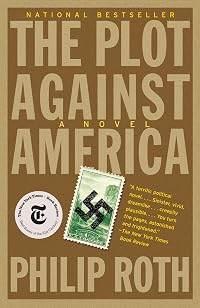
The Plot Against America
by Philip Roth
On This Page
Description
Fiction. Literature. Historical Fiction. In an astonishing feat of empathy and narrative invention, our most ambitious novelist imagines an alternate version of American history. In 1940 Charles A. Lindbergh, heroic aviator and rabid isolationist, is elected president. Shortly thereafter, he negotiates a cordial "understanding" with Adolf Hitler, while the new government embarks on a program of folksy antisemitism. For one boy growing up in Newark, Lindbergh's election is the first in a show more series of ruptures that threaten to destroy his small, safe corner of America—and with it, his mother, his father, and his older brother. show lessTags
Recommendations
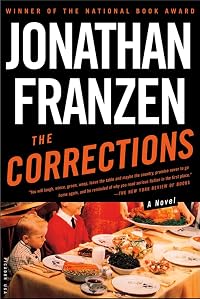
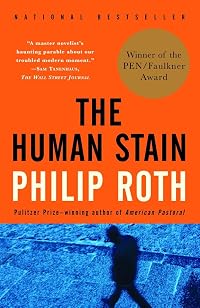
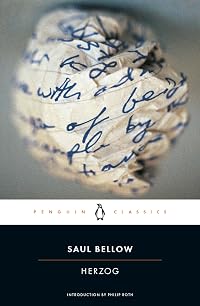
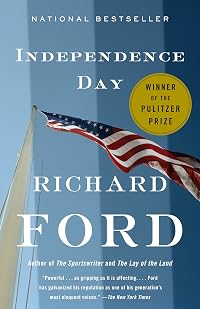
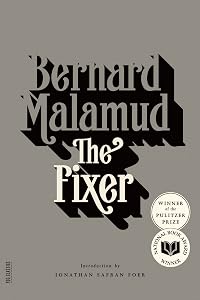
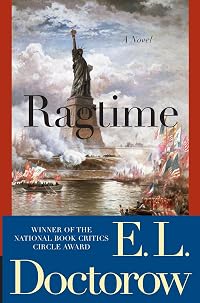
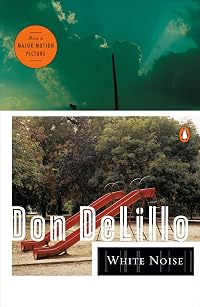

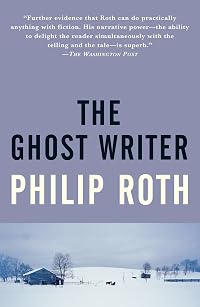
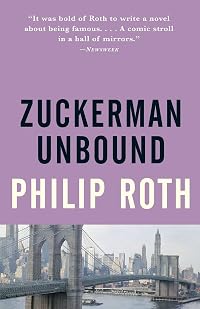
Member Recommendations
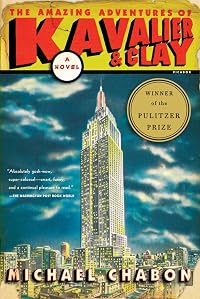
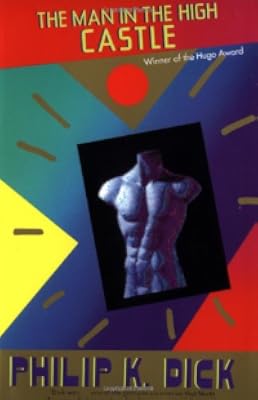
ljbwell Alternate history based in the US where WWII has had a different outcome.
100
TLCrawford Similar plot written by a winner of the Nobel Prize for Literature at a time when it could, in fact, have happened here. Lewis' wife, journalist Dorthy Thompson was stationed in Berlin during Hitler's early years.
51

by anonymous user
Member Reviews
This book tells an alternative history, featuring the presidency of Nazi-sympathiser flying ace, Charles Lindberg. While it does indulge the pleasures of near-farcical what-if scenarios (what if a reactionary US government came up with a sufficiently plausible excuse to invade Canada, say), at heart it's not at all playful. It's not just alternative history; it at least has the trappings of alternative autobiography: the narrator's name is Philip Roth, and I'm pretty sure his life matches that of the author in any number of ways. So this isn't so much speculative fiction as a deeply felt nightmare of what might have been.
Ostensibly a what-if historic novel based on the premise that Nazi-friendly Lindbergh wins the US presidency (and worth reading for that alone), this brave and perspicacious book contains a deeper analysis of America's political system and culture, which - if the "right" people come along, could just as easily be turned into a police state where Jews were persecuted as was the case in some European countries before WWII. Roth indicates that the people's urge to conform which is typical of a society based on immigration, the strong and vocal patriotism, and institutions such as the FBI and the police can easily be used for nefarious goals. In that light, it is hard not to read this as a parable on US politics in the first decade of the show more 21st century. In the book, the right-leaning president is originally well-intended, but is almost powerless against evil, such as the Nazis and the vice-president who takes over after him, but lets the country erupt in antisemitic riots.
One high-ranking person takes a stand and sends out the following message, which might almost have been spoken in 2004, when this book was published: "I ask no more of the American people than that they follow my example and refuse to accept or support government conduct that is indefensible. The history of the present administration is a history of repeated injuries and usurpations, all having in direct object the establishment of an absolute tyranny over these states. This government has been deaf to the voice of justice and has extended over us an unwarrantable jurisdiction".
Lastly, Roth has a brilliant writing style. His intricate sentences have a mesmerizing rhythm and meander over the page like an endless Latin period, so that it makes you want to read them out aloud. show less
One high-ranking person takes a stand and sends out the following message, which might almost have been spoken in 2004, when this book was published: "I ask no more of the American people than that they follow my example and refuse to accept or support government conduct that is indefensible. The history of the present administration is a history of repeated injuries and usurpations, all having in direct object the establishment of an absolute tyranny over these states. This government has been deaf to the voice of justice and has extended over us an unwarrantable jurisdiction".
Lastly, Roth has a brilliant writing style. His intricate sentences have a mesmerizing rhythm and meander over the page like an endless Latin period, so that it makes you want to read them out aloud. show less
This is one of the most engrossing novels I’ve ever read. At its core, Philip Roth’s remarkable alternate history tale, “The Plot Against America,” imagines an America in which aviation hero and fierce isolationist Charles A. Lindbergh defeats Franklin Delano Roosevelt in the 1940 presidential election. Within that framework, Roth focuses on the consequences for Jews in America as Lindbergh’s Nazi sympathizing becomes increasingly evident and a wave of antisemitism stealthily builds, and most particularly the plight of the Jewish community in Newark, New Jersey, largely illustrated by drawing autobiographically on his own family and childhood experiences. The result is a richly drawn and finely detailed narrative presented show more from the viewpoint of young Philip at seven years old but told by him as an older man with many years of perspective to elucidate the fears that shrouded these events. Roth seamlessly weaves together the day’s historical figures with the incidents that occur at the national, local, and family levels into an all too plausible nightmare scenario. The novel does, however, have a few lighter moments of Philip’s youthful hijinks that serve to occasionally break the tension. I can quibble that Roth reveals the historical end-game a bit too soon, and that the ending is rather abrupt; nevertheless, this is a riveting tour de force.
I must also note the absolute artistry of Roth’s dynamic and complex sentence structure. Like fine works of handicraft, Roth’s sentences, albeit long, are beautiful little works of art, carefully molded and shaped with just the right embellishment and detail, resulting in highly polished nuggets of prose that place the particular events, characters, situations, and emotions in clear and illuminated context. show less
I must also note the absolute artistry of Roth’s dynamic and complex sentence structure. Like fine works of handicraft, Roth’s sentences, albeit long, are beautiful little works of art, carefully molded and shaped with just the right embellishment and detail, resulting in highly polished nuggets of prose that place the particular events, characters, situations, and emotions in clear and illuminated context. show less
A very well written book that, despite being an outright Alternate History novel, ended up in the Literature section rather than the Sci-fi section because of the critical popularity of the author (see Vonnegut as well.)
I'd never read Philip Roth before, but his talent is such that at times I would forget this was about the pro-Nazi Charles Lindberg being elected president in the 40's and not a coming-of-age type autobiography. It centers around a Jewish family in Newark as they face the changes Lindberg forces upon the America they used to know and love.
One of the books greatest strengths is how the alternate history aspects are toned down, letting the reader in on how terrifying things could have been had someone like Lindberg used show more his popularity to become president. However, I think that its subtlety is perhaps its greatest flaw; I felt Roth sacrificed action for pathos and created a story that, while very memorable and engaging, isn't really full of the kind of entertaining climaxes one would have expected in a book where a Nazi sympathizer becomes President of the United States. The characters, however, are all human and deeply written. A really good book. show less
I'd never read Philip Roth before, but his talent is such that at times I would forget this was about the pro-Nazi Charles Lindberg being elected president in the 40's and not a coming-of-age type autobiography. It centers around a Jewish family in Newark as they face the changes Lindberg forces upon the America they used to know and love.
One of the books greatest strengths is how the alternate history aspects are toned down, letting the reader in on how terrifying things could have been had someone like Lindberg used show more his popularity to become president. However, I think that its subtlety is perhaps its greatest flaw; I felt Roth sacrificed action for pathos and created a story that, while very memorable and engaging, isn't really full of the kind of entertaining climaxes one would have expected in a book where a Nazi sympathizer becomes President of the United States. The characters, however, are all human and deeply written. A really good book. show less
I first read this in the early aughts when I had a small child, a demanding job, and a limited amount of intellectual energy to lend, and still I really loved it. As I recall what I liked most were the parts that were clearly autobiographical. It was novel to see Roth writing about a good mother (a great mother actually) and a loving father with moral strength. Roth's fictional mothers are largely pathological and overbearing and his fictional fathers, where they exist at all, are like ghosts. As i recall I thought the alternate history element of this book was interesting, but seemed far-fetched.
Fast-forward to 2019 - Not only is this alternate history not far-fetched, it has ceased to be particularly alternate. Sure its not the show more 1940's. the players are different, but holy mackerel the Lindbergh presidency in this book looks a whole lot like the Trump presidency. Lindbergh even runs on an "America First" platform. The white power rallies in the book are our alt-right rallies. In the book the focus was on antisemitism alone, rather than the current war on all people not white, straight and christian, but wow, did Roth have Americans pegged or what?!?!
I recommend this to all. I didn't love the ending, but I understood the point; there is no ending to this story. A book to be admired, but also a gripping story, beautifully written (as one expects from Philip Roth) about the danger of principles, the uncertainty and joy of childhood, the many kinds of loss, the depth of familial love, the ravages of guilt, and the hate that people choose to embrace so they do not have to face fear. I know this is an unpopular opinion, but I am going to call this a masterpiece. show less
Fast-forward to 2019 - Not only is this alternate history not far-fetched, it has ceased to be particularly alternate. Sure its not the show more 1940's. the players are different, but holy mackerel the Lindbergh presidency in this book looks a whole lot like the Trump presidency. Lindbergh even runs on an "America First" platform. The white power rallies in the book are our alt-right rallies. In the book the focus was on antisemitism alone, rather than the current war on all people not white, straight and christian, but wow, did Roth have Americans pegged or what?!?!
I recommend this to all. I didn't love the ending, but I understood the point; there is no ending to this story. A book to be admired, but also a gripping story, beautifully written (as one expects from Philip Roth) about the danger of principles, the uncertainty and joy of childhood, the many kinds of loss, the depth of familial love, the ravages of guilt, and the hate that people choose to embrace so they do not have to face fear. I know this is an unpopular opinion, but I am going to call this a masterpiece. show less
I'm a Roth fan; have been since about 1969, and have read several of his books. A particular favorite is his early novel, LETTING GO. Philip Roth's THE PLOT AGAINST AMERICA came out about a dozen years ago, and it was a national bestseller at the time. How I missed it, I'm not sure, but I kinda wish I'd read it then instead of now. Because reading it this past week, deep into the nastiness of the current national election cycle - indeed, during the last presidential debate - has been an eerily chilling experience.
To explain: PLOT is the kind of fiction known as "alternate history." Set in the early forties, a major offstage character is Charles Lindbergh. We all remember 'Lucky Lindy,' of course, national hero that he was, following his show more heroic trans-Atlantic flight in his small aircraft, 'The Spirit of St. Louis.' Well this Lindbergh is not quite so heroic, and what's really spooky is that much of what has to tell us about Lindbergh in these pages was absolutely true. Most Americans won't remember the Lindy presented here, i.e. that he was an admitted admirer of Adolph Hitler. That he visited Germany and was awarded a special medal by the Third Reich. That he was, as evidenced by his diaries, an anti-Semite. That he was openly critical of FDR's administration and was also associated with the isolationist 'America First' movement before and during the war.
Well, keep all of these things in mind when you learn that, very early in PLOT, Lindbergh defeats FDR in the 1940 election and becomes President of the USA, and gradually begins instituting programs that oh-so subtly target the Jewish population, relocating families and attempting to influence their children.
The 'hero' of the novel is a seven (to nine) year-old Jewish boy, Philip Roth, who lives with his older brother and parents in Newark, NJ. Yup, Philip Roth, who, as any Roth reader knows, did grow up in Newark. And because of this, the details of the Roth family's Newark neighborhood and the times (1940-42) are strikingly convincing.
Filled with real-life historical figures - FDR, La Guardia, Walter Winchell, Burton K. Wheeler, Henry Ford, and others - THE PLOT AGAINST AMERICA presents us with very real details on how history might have been vastly different, in a very frightening way. And, seen from the perspective of a small boy, this is especially true. (Although Roth offers a kind of double lens, as he is also looking back at these years from a present-day perspective.)
Consider this: Lindberg admired Hitler; Trump admires Putin. Lindberg was anti-Semitic; Trump is anti-Muslim, and anti-Mexican, and maybe anti-just-about-everyone else too. Lindberg was an active voice in the infamous 'America First' isolationist movement; Trump - ditto; he's brought it back. There are other parallels that I kept seeing as I made my way through Roth's alternate history of Newark, the U.S., and the world in the early forties.
Roth wrote THE PLOT AGAINST AMERICA at least a dozen years before the Trump bid for the presidency, which makes it even more eerily prescient. But, in any case, I think you get what I mean. Chilling, spooky, frightening. A great book. Very highly recommended. (four and a half stars)
- Tim Bazzett, author of the memoir, BOOKLOVER show less
To explain: PLOT is the kind of fiction known as "alternate history." Set in the early forties, a major offstage character is Charles Lindbergh. We all remember 'Lucky Lindy,' of course, national hero that he was, following his show more heroic trans-Atlantic flight in his small aircraft, 'The Spirit of St. Louis.' Well this Lindbergh is not quite so heroic, and what's really spooky is that much of what has to tell us about Lindbergh in these pages was absolutely true. Most Americans won't remember the Lindy presented here, i.e. that he was an admitted admirer of Adolph Hitler. That he visited Germany and was awarded a special medal by the Third Reich. That he was, as evidenced by his diaries, an anti-Semite. That he was openly critical of FDR's administration and was also associated with the isolationist 'America First' movement before and during the war.
Well, keep all of these things in mind when you learn that, very early in PLOT, Lindbergh defeats FDR in the 1940 election and becomes President of the USA, and gradually begins instituting programs that oh-so subtly target the Jewish population, relocating families and attempting to influence their children.
The 'hero' of the novel is a seven (to nine) year-old Jewish boy, Philip Roth, who lives with his older brother and parents in Newark, NJ. Yup, Philip Roth, who, as any Roth reader knows, did grow up in Newark. And because of this, the details of the Roth family's Newark neighborhood and the times (1940-42) are strikingly convincing.
Filled with real-life historical figures - FDR, La Guardia, Walter Winchell, Burton K. Wheeler, Henry Ford, and others - THE PLOT AGAINST AMERICA presents us with very real details on how history might have been vastly different, in a very frightening way. And, seen from the perspective of a small boy, this is especially true. (Although Roth offers a kind of double lens, as he is also looking back at these years from a present-day perspective.)
Consider this: Lindberg admired Hitler; Trump admires Putin. Lindberg was anti-Semitic; Trump is anti-Muslim, and anti-Mexican, and maybe anti-just-about-everyone else too. Lindberg was an active voice in the infamous 'America First' isolationist movement; Trump - ditto; he's brought it back. There are other parallels that I kept seeing as I made my way through Roth's alternate history of Newark, the U.S., and the world in the early forties.
Roth wrote THE PLOT AGAINST AMERICA at least a dozen years before the Trump bid for the presidency, which makes it even more eerily prescient. But, in any case, I think you get what I mean. Chilling, spooky, frightening. A great book. Very highly recommended. (four and a half stars)
- Tim Bazzett, author of the memoir, BOOKLOVER show less
Technically an alternate history novel, be prepared for some ominous overtones with the current political reality. Where "what-if" meets "wtf." Especially chilling in showing how unacceptable actions become normalized, oppression is justified, and dissent is considered suspicious and dangerous. Ron Silver is a great Roth narrator (I listened to his rendition of American Pastoral, too). Proceed at your own risk (but you might as well dive in...might help us navigate the years ahead).
Members
- Recently Added By
Published Reviews
ThingScore 100
Philip Roth has written a terrific political novel, though in a style his readers might never have predicted — a fable of an alternative universe, in which America has gone fascist and ordinary life has been flattened under a steamroller of national politics and mass hatreds.
added by danielx
But hilarious and terrifying by turns, it’s a sumptuous interweaving of narrative, characterization, speculation, and argument that joins The Ghost Writer (1979) and Operation Shylock (1993) at the summit of Roth’s achievement.
An almost unbelievably rich book, and another likely major prizewinner.
An almost unbelievably rich book, and another likely major prizewinner.
added by Richardrobert
Young Philip's greatest epiphany is to recognise the difference between history as taught in school - harmless and inevitable - and history as it's lived through, "the relentless unforeseen". His novel is a different kind of history again, an imagined past which, if we learn from it, might save us from a calamitous future. It's not Roth's funniest novel (and there's hardly any sex). But in its show more sweep and chutzpah, it ranks with his great trilogy of the late-90s. Isn't it time they gave him the Nobel? show less
added by danielx
Lists

1001 Books You Must Read Before You Die
1,448 works; 1,134 members
Best Dystopias
280 works; 271 members

Best 21st Century Books (So Far)
670 works; 86 members

Best Alternate History
111 works; 60 members

Best Political Fiction
92 works; 12 members

Top Five Books of 2013
1,562 works; 721 members

Unread books
1,063 works; 87 members

Best Contemporary Literary Fiction (Around the Last 30 Years)
388 works; 124 members

The Guardian's 100 best books of the 21st century
100 works; 21 members

Significant works of postmodern fiction
86 works; 25 members

2000s (the decade, not the century)
184 works; 11 members

Vulture's 100 Best Books of the 21st Century (So Far)
98 works; 9 members

Top Five Books of 2022
736 works; 272 members

Jewish Books
367 works; 24 members

Blue Pyramid 1,276 Best Books of All Time
1,248 works; 32 members

Unbound Worlds 100 Best SF Books
100 works; 8 members

Books Featured on Readers' Review of the Diane Rehm Show
161 works; 8 members

2000s decade
85 works; 7 members

Books Read in 2020
4,379 works; 123 members

Books Set in New Jersey
22 works; 4 members

llibres que he llegit el 2005
12 works; 1 member

Book Club suggestions
20 works; 1 member

Biggest Disappointments
606 works; 168 members

.
184 works; 1 member

NYT Readers best of 21st C
100 works; 8 members

Books Read in 2026
1,938 works; 66 members

Broderick and Di Filippo's Science Fiction: The 101 Best Novels 1985-2010
103 works; 7 members
NYT 100 best books of 21st C
100 works; 31 members

Books Read in 2021
5,361 works; 114 members

Recommended AltHist
24 works; 1 member

Books With Place Names in the Title
215 works; 10 members

04
34 works; 1 member
Author Information

117+ Works 74,720 Members
Philip Milton Roth was born in Newark, New Jersey on March 19, 1933. He attended Rutgers University for one year before transferring to Bucknell University where he completed a B.A. in English with highest honors in 1954. He received an M.A. from the University of Chicago in 1955. His first book, Goodbye, Columbus, received the National Book Award show more in 1960. His other books include Letting Go, When She Was Good, Portnoy's Complaint, My Life as a Man, The Ghostwriter, Zuckerman Unbound, I Married a Communist, The Plot Against America, The Facts, The Anatomy Lesson, Exit Ghost, Deception, Nemesis, Everyman, Indignation, and The Humbling. He won the National Book Critic Circle Awards in 1987 for his novel The Counterlife and in 1992 for his memoir Patrimony: A True Story. He won the PEN/Faulkner Award for Fiction in 1993 for Operation Shylock: A Confession and in 2001 for The Human Stain, the National Book Award in 1995 for Sabbath's Theater, and the Pulitzer Prize in 1998 for American Pastoral. He stopped writing in 2010. He died from congestive heart failure on May 22, 2018 at the age of 85. (Bowker Author Biography) show less
Some Editions
Awards and Honors
Series
Belongs to Publisher Series
Work Relationships
Is contained in
Has as a commentary on the text
Common Knowledge
- Canonical title
- The Plot Against America
- Original title
- The Plot Against America
- Alternate titles*
- Het complot tegen Amerika : roman
- Original publication date
- 2004
- People/Characters
- Philip Roth; Charles A. Lindbergh; Walter Winchell; Franklin Delano Roosevelt
- Important places
- Newark, New Jersey, USA; Washington, D.C., USA; Detroit, Michigan, USA; Kentucky, USA; Louisville, Kentucky, USA
- Important events
- World War II (1939 | 1945)
- Related movies
- The Plot against America (2020 | IMDb)
- Dedication
- To S.F.R.
- First words
- Fear presides over these memories, a perpetual fear.
- Quotations*
- Et je n'avais jamais aussi bien compris à quel point la vanité éhontée des imbéciles peut faire le malheur d'autrui.
- Last words
- (Click to show. Warning: May contain spoilers.)The boy himself was the stump, and until he was taken to live with his mother's married sister in Brooklyn ten months later, I was the prosthesis.
- Original language
- English
- Canonical DDC/MDS
- 813.54
- Canonical LCC
- PS3568.O855
- Disambiguation notice*
- Original title: The Plot Against America
*Some information comes from Common Knowledge in other languages. Click "Edit" for more information.
Classifications
- Genres
- General Fiction, Fiction and Literature, Science Fiction, Historical Fiction
- DDC/MDS
- 813.54 — Literature & rhetoric American literature in English American fiction in English 1900-1999 1945-1999
- LCC
- PS3568 .O855 — Language and Literature American literature American literature Individual authors 1961-
- BISAC
Statistics
- Members
- 9,922
- Popularity
- 1,012
- Reviews
- 236
- Rating
- (3.72)
- Languages
- 16 — Catalan, Czech, Danish, Dutch, English, Finnish, French, German, Hungarian, Italian, Norwegian (Bokmål), Polish, Portuguese, Spanish, Swedish, Turkish
- Media
- Paper, Audiobook, Ebook
- ISBNs
- 91
- UPCs
- 3
- ASINs
- 32